
August 14, 2026
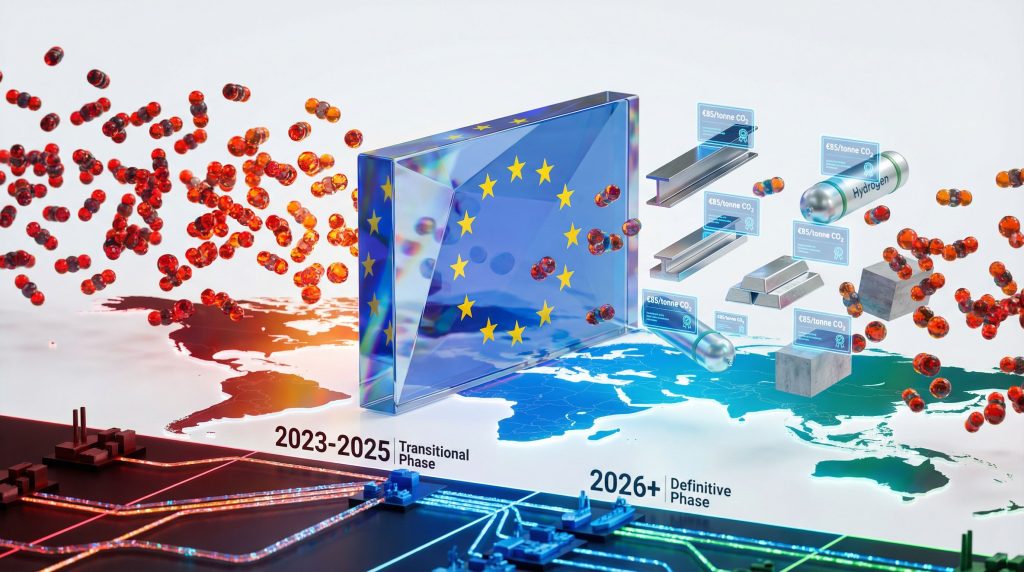
Europe's Carbon Border Adjustment Mechanism (CBAM) represents a transformative shift in global trade policy, fundamentally altering how carbon-intensive goods move across international borders. This groundbreaking mechanism extends EU climate policy beyond European boundaries, creating unprecedented challenges and opportunities for businesses worldwide. Furthermore, the implementation demonstrates how environmental regulations can reshape entire industries while promoting global decarbonisation efforts.
The mechanism operates within a complex framework of international trade law, climate policy, and economic considerations. Moreover, its success depends on careful coordination between regulatory authorities, industry stakeholders, and international partners committed to achieving meaningful climate outcomes.
CBAM's Regulatory Architecture and Foundation
Europe's Carbon Border Adjustment Mechanism establishes a comprehensive framework designed to prevent carbon leakage while protecting EU industries from unfair competition. The mechanism integrates seamlessly with the existing European Union Emissions Trading System (ETS), creating a unified approach to carbon pricing across both domestic production and imports.
The regulatory foundation rests on three core principles: environmental integrity, trade compatibility, and administrative feasibility. Unlike traditional trade barriers that focus primarily on protecting domestic industries, CBAM aims to create level playing conditions based on environmental standards rather than economic protectionism.
Key Regulatory Components:
- Integration with EU ETS pricing mechanisms
- Mandatory emissions verification from accredited third parties
- Quarterly reporting during transitional implementation
- Annual certificate purchasing requirements in the definitive phase
- Anti-circumvention measures to prevent selective compliance
The mechanism applies initially to six carbon-intensive sectors: cement, steel, aluminum, fertilizers, electricity, and hydrogen. These industries were selected based on their carbon intensity, trade exposure, and risk of carbon leakage. Industry analysis suggests these sectors represent approximately 25% of EU manufacturing emissions while accounting for significant import volumes from non-EU countries.
Understanding these European supply chain insights becomes crucial as companies navigate the evolving regulatory landscape. Additionally, the mechanism's design considers broader implications for Europe's strategic metals projects and their competitiveness in global markets.
When big ASX news breaks, our subscribers know first
Implementation Timeline and Compliance Phases
The CBAM implementation follows a carefully structured two-phase approach designed to allow market adaptation while ensuring environmental effectiveness. The transitional period, which began in October 2023, focuses on data collection and system establishment without imposing financial obligations on importers.
| Implementation Phase | Duration | Key Requirements | Financial Obligations | Penalty Structure |
|---|---|---|---|---|
| Transitional | Oct 2023 – Dec 2025 | Quarterly emissions reporting | None | Up to €50/tonne CO2 |
| Definitive | Jan 2026 onwards | Annual certificate purchase | Full ETS price (~€85/tonne) | Linked to ETS pricing |
Transitional Phase Operations (2023-2025)
During the transitional period, importers must submit quarterly reports detailing embedded emissions in their imported goods. This phase serves multiple purposes: familiarising market participants with requirements, testing administrative systems, and gathering baseline data for policy refinement.
The reporting obligations require importers to provide detailed information about production processes, energy consumption, and carbon content. Penalties for non-compliance during this phase remain limited to €50 per tonne of CO2 equivalent, providing a relatively low-cost learning environment for companies adjusting to new requirements.
Definitive Phase Requirements (2026+)
Beginning January 2026, the mechanism transitions to full financial implementation. Importers must purchase CBAM certificates corresponding to the carbon content of their imports, with certificate prices linked directly to EU ETS allowance values.
Critical Changes in Definitive Phase:
- Annual certificate purchasing based on verified emissions data
- Full integration with EU ETS pricing (approximately €85 per tonne CO2)
- Enhanced verification requirements from EU-accredited bodies
- Expansion of coverage to include all embedded emissions by 2034
Emissions Calculation and Verification Standards
The technical complexity of Europe's Carbon Border Adjustment Mechanism lies primarily in accurately measuring embedded carbon emissions across diverse production processes and supply chains. The mechanism employs a hierarchical approach to emissions calculation, prioritising actual facility-level data over default values.
How Are Embedded Emissions Calculated?
Embedded emissions encompass both direct emissions from production processes and indirect emissions from electricity consumption. This comprehensive approach ensures that carbon pricing reflects the full environmental impact of imported goods.
Emissions Categories:
- Direct emissions: CO2 released during manufacturing processes
- Indirect emissions: Carbon content of consumed electricity
- Precursor emissions: Carbon content of input materials (planned for 2034)
The calculation methodology allows for three levels of data quality: actual facility-specific emissions, regional averages, and EU default values. Default values are typically set 10-15% higher than regional averages to incentivise accurate reporting and prevent gaming of the system.
Verification and Documentation Requirements
All emissions data must be verified by independent, accredited verification bodies. The EU maintains a registry of approved verifiers, with recognition processes for third-country verification bodies that meet equivalent standards.
Consequently, companies must adapt their compliance strategies to meet these rigorous documentation standards. The EU Carbon Border Adjustment Mechanism official guidelines provide comprehensive details about verification requirements and acceptable documentation formats.
Required Documentation:
- Verified emissions certificates from approved bodies
- Production facility identification and capacity data
- Carbon pricing evidence from countries of origin
- Supply chain traceability documentation
Anti-Circumvention Measures: Recent regulatory amendments include specific provisions to prevent selective low-emission product shipping and supply chain manipulation designed to circumvent CBAM obligations through creative compliance strategies.
Strategic Compliance and Cost Optimisation
Companies facing CBAM obligations can employ various strategies to minimise costs while ensuring full compliance. The mechanism's design includes several deduction possibilities that reward genuine climate action in origin countries.
Carbon Pricing Deductions
Importers can claim deductions for carbon pricing already paid in the country of origin, provided such pricing meets EU standards for monitoring, reporting, and verification. This provision recognises legitimate climate policies while preventing double taxation.
Eligible Carbon Pricing Mechanisms:
- Emissions trading systems with comparable coverage
- Carbon taxes applied to production processes
- Carbon credits purchased through recognised programs
- Regulatory fees linked to emissions levels
The deduction process requires comprehensive documentation proving that carbon pricing was actually paid and corresponds to the specific production processes involved in imported goods. Countries with carbon pricing systems typically see 40-70% reductions in CBAM certificate requirements.
Supply Chain Optimisation Strategies
Forward-thinking companies are restructuring supply chains to minimise CBAM exposure while maintaining operational efficiency. These strategies often involve diversifying supplier bases, investing in cleaner production technologies, and developing long-term partnerships with low-carbon producers.
Understanding the broader decarbonisation benefits helps companies align their strategies with both CBAM requirements and sustainable development goals. Furthermore, the energy transition in minerals sector provides valuable insights for resource-intensive industries.
Optimisation Approaches:
- Sourcing from countries with established carbon pricing
- Investing in supplier emissions reduction projects
- Developing direct relationships with clean energy producers
- Implementing comprehensive emissions tracking systems
What Impact Will CBAM Have on Global Trade?
Europe's Carbon Border Adjustment Mechanism creates significant shifts in global trade patterns, particularly affecting carbon-intensive exporters to the European market. The mechanism essentially extends EU climate policy beyond European borders, creating incentives for global decarbonisation.
Country-Specific Exposure Assessment
Different countries face varying levels of CBAM exposure based on their export profiles, carbon intensity, and existing climate policies. Major steel and cement exporters without domestic carbon pricing face the highest potential costs.
High-Exposure Countries:
- Major steel exporters: Turkey, Russia, Ukraine, India
- Cement producers: Turkey, Morocco, Algeria
- Aluminum suppliers: Russia, Bahrain, Iceland
- Fertilizer exporters: Russia, Trinidad and Tobago, Algeria
Analysis suggests that exporters from countries without carbon pricing could face cost increases of 15-25% for carbon-intensive products, potentially triggering significant shifts in trade flows and investment patterns. However, understanding how tariffs' market impact affects global commerce provides additional context for CBAM's economic implications.
Investment Flow Implications
CBAM creates powerful incentives for clean technology investment in exporting countries. The mechanism effectively makes low-carbon production a competitive advantage in accessing the valuable EU market, worth approximately €3.4 trillion annually.
Investment Drivers:
- Clean electricity generation in manufacturing regions
- Energy efficiency improvements in production facilities
- Carbon capture and storage technologies
- Process innovation for emissions reduction
Policy Integration and International Coordination
The mechanism operates within a broader framework of international climate policy, requiring careful coordination with global initiatives while maintaining compatibility with international trade rules.
Paris Agreement Alignment
Europe's Carbon Border Adjustment Mechanism aligns with Article 6 of the Paris Agreement by creating incentives for international cooperation on carbon pricing. The mechanism recognises and rewards climate action in third countries while avoiding punitive measures against developing nations.
International Cooperation Elements:
- Technical assistance programmes for developing countries
- Capacity building for verification infrastructure
- Technology transfer facilitation
- Climate finance integration possibilities
WTO Compatibility Considerations
The mechanism's design incorporates specific measures to ensure compatibility with World Trade Organisation rules. These include non-discriminatory application, environmental justification, and provision for equivalent measures in origin countries.
WTO Compliance Features:
- Most-favoured-nation treatment for all countries
- National treatment principles for domestic vs. imported goods
- Recognition of equivalent environmental measures
- Transparent and predictable implementation procedures
The next major ASX story will hit our subscribers first
Future Expansion and Development Plans
The European Commission has outlined ambitious plans for expanding CBAM coverage beyond the initial six sectors. This expansion will significantly broaden the mechanism's impact on global trade while addressing additional sources of carbon leakage.
Planned Sector Extensions
By 2030, CBAM is expected to cover all sectors included in the EU ETS, potentially adding chemicals, paper, glass, and other energy-intensive industries. This expansion could affect an additional €150 billion in annual imports.
Expansion Timeline:
- 2027: Chemicals and petrochemicals
- 2028: Paper and pulp products
- 2029: Glass and ceramics
- 2030: All remaining ETS sectors
Technological Integration Developments
Future CBAM iterations may incorporate digital technologies to improve verification accuracy and reduce administrative burdens. These developments include blockchain-based certification systems and automated emissions monitoring.
Technological Enhancements:
- Digital product passports with embedded carbon data
- Automated verification through satellite monitoring
- Blockchain-based certificate trading platforms
- AI-powered emissions calculation tools
Market Psychology and Investor Perspectives
Europe's Carbon Border Adjustment Mechanism fundamentally alters investment risk assessment in carbon-intensive industries. Investors increasingly view carbon costs as permanent features of global trade, requiring comprehensive integration into financial models and strategic planning.
Asset Valuation Implications
The mechanism creates clear distinctions between high-carbon and low-carbon assets, with significant implications for asset valuations and investment returns. Carbon-intensive facilities without access to clean energy or carbon pricing may face valuation discounts of 20-30%.
Risk Management Evolution
Financial institutions are developing sophisticated risk management frameworks to address CBAM-related uncertainties. These frameworks consider regulatory changes, carbon price volatility, and supply chain disruption possibilities.
The OECD analysis of CBAM effects provides valuable insights into long-term economic implications and market adjustments expected across different regions.
Key Risk Factors:
- Carbon price volatility and policy changes
- Supply chain concentration in high-carbon regions
- Technology transition costs and timelines
- Regulatory uncertainty in third countries
Compliance Challenges and Practical Considerations
Companies implementing CBAM compliance face numerous practical challenges, from data collection complexities to verification cost management. Understanding these challenges is crucial for developing effective compliance strategies.
Administrative Burden Management
The mechanism requires sophisticated data management systems capable of tracking emissions across complex supply chains. Many companies are investing significantly in new IT infrastructure and personnel training to meet these requirements.
Common Implementation Challenges:
- Limited availability of facility-specific emissions data
- High verification costs for small importers
- Complex documentation requirements
- Coordination with suppliers in multiple countries
Cost-Benefit Analysis Framework
Successful CBAM compliance requires careful analysis of costs versus benefits across different sourcing strategies. Companies must balance compliance costs against market access benefits while considering long-term strategic implications.
Cost-Benefit Considerations:
- Direct certificate purchase costs vs. supplier switching costs
- Verification expenses vs. data quality improvements
- Administrative burden vs. competitive advantages
- Short-term compliance costs vs. long-term market positioning
Note: This analysis is based on current regulatory frameworks and market conditions. Future developments in carbon pricing, international climate policy, and trade relations may significantly affect CBAM implementation and impact. Companies should conduct thorough risk assessments and seek professional advice before making strategic decisions based on these considerations.
Want to Position Yourself Ahead of CBAM's Market Impacts?
Discovery Alert's proprietary Discovery IQ model delivers real-time insights on significant mineral discoveries that could benefit from Europe's carbon border policies, helping investors identify opportunities in clean technology and sustainable mining ventures. Explore how major discoveries can generate substantial returns by visiting Discovery Alert's discoveries page and begin your 30-day free trial today to secure your market advantage.