June 16, 2026
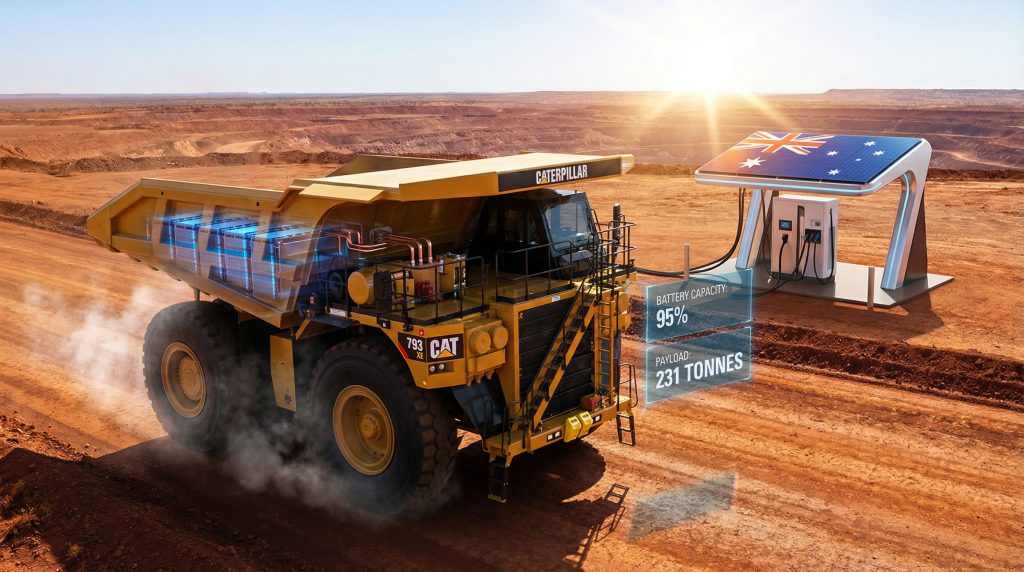
The adoption of Cat battery-electric haul trucks in Pilbara operations marks a pivotal moment in mining industry transformation. This groundbreaking initiative, led by BHP and Rio Tinto in partnership with Caterpillar, represents the first major deployment of battery-electric haulage systems in Australia's iron ore heartland. Furthermore, the trials demonstrate how electric vehicles transforming mining operations requires comprehensive infrastructure development and operational reimagining.
Understanding the Technical Foundation of Electric Haulage Systems
The transition from diesel to battery-electric haul trucks in iron ore mining represents more than a simple powertrain swap. It demands a complete reimagining of mining operations, infrastructure, and supply chains. The Caterpillar 793 XE Early Learner units currently undergoing trials in the Pilbara demonstrate how mining companies are evaluating fundamental changes to equipment specifications, operational workflows, and site infrastructure.
Battery Technology Specifications and Performance Parameters
Battery-electric haul trucks utilise large-format lithium-ion systems designed to withstand extreme mining conditions. While specific megawatt-hour capacity specifications for the Cat 793 XE remain proprietary, these systems must deliver consistent power output across demanding operational cycles. The standard diesel Cat 793 baseline maintains a 231-tonne payload capacity, establishing the performance benchmark that electric variants must match or exceed.
Energy density requirements become critical when considering the weight trade-offs between battery systems and payload capacity. Mining operations depend on maximising tonnes moved per cycle, making any reduction in hauling capacity economically significant. The Early Learner designation indicates these are developmental prototypes, suggesting current units prioritise data collection over optimised commercial specifications.
Key Technical Considerations:
• Power delivery consistency across varying terrain gradients
• Torque characteristics during loaded uphill climbs
• Battery thermal management in extreme temperature conditions
• Regenerative braking systems for energy recovery during descents
• Weight distribution changes affecting vehicle stability and tyre wear
Charging Infrastructure Integration Challenges
The scale of charging infrastructure required for battery-electric mining fleets far exceeds typical industrial applications. Rio Tinto's 18 Pilbara mines represent a massive electrification challenge, requiring coordinated infrastructure development across geographically dispersed operations. Each mine site must accommodate megawatt-scale charging stations while maintaining continuous production schedules.
Charging cycle integration with production workflows becomes a critical operational challenge. Traditional diesel trucks operate continuously for 20-22 hours daily, with brief refuelling stops that don't significantly impact production scheduling. Electric systems require longer charging periods, necessitating strategic placement of charging infrastructure at loading points, dumping locations, or dedicated charging stations.
Infrastructure Development Requirements:
• Grid connection capacity upgrades to handle simultaneous charging loads
• Renewable energy solutions for sustainable power generation
• Energy storage systems to manage intermittent charging demands
• Backup power systems ensuring continuous operations during grid outages
• Distribution network modifications for high-voltage charging equipment
When big ASX news breaks, our subscribers know first
Operational Integration in Large-Scale Mining Operations
Performance Metrics Under Real-World Conditions
The joint BHP-Rio Tinto-Caterpillar trial focuses on establishing comprehensive performance baselines for Cat battery-electric haul trucks in Pilbara conditions. These evaluations must account for extreme environmental factors, including temperature variations from 5°C to 50°C, dust ingress challenges, and the demanding terrain characteristics of open-pit iron ore operations.
| Performance Category | Diesel Baseline | Electric Target | Trial Focus Areas |
|---|---|---|---|
| Daily Operating Hours | 20-22 hours | Under evaluation | Charging downtime optimisation |
| Payload Capacity | 231 tonnes | To be determined | Battery weight impact assessment |
| Fuel/Energy Costs | Variable diesel pricing | Grid electricity rates | Total cost of ownership modelling |
| Maintenance Intervals | Standard schedules | Extended intervals expected | Reduced mechanical complexity benefits |
Battery cycling behaviour under continuous Pilbara workloads represents a key evaluation metric. Unlike controlled testing environments, real mining conditions subject batteries to variable load patterns, temperature extremes, and vibration stress that can significantly impact performance and lifespan. The trial aims to establish realistic expectations for battery replacement schedules and performance degradation over time.
Fleet Management System Transformations
Electric haul truck integration requires sophisticated fleet management systems capable of monitoring battery state-of-charge across multiple units simultaneously. Traditional diesel fleet coordination focuses on fuel efficiency and mechanical maintenance scheduling, while electric systems demand real-time energy management and charging optimisation.
Route optimisation algorithms become essential for maximising energy efficiency. Electric trucks must consider elevation changes, load weights, and remaining battery capacity when selecting optimal paths between loading and dumping locations. These calculations require integration with existing mine planning software and real-time communication systems.
Advanced Fleet Management Features:
• Predictive battery health monitoring and replacement scheduling
• Dynamic load balancing between electric and diesel units during transition periods
• Automated charging queue management to minimise production disruptions
• Energy consumption analytics for continuous efficiency improvements
• Operator training protocols for electric vehicle-specific procedures
The collaborative nature of the trial suggests shared fleet management standards may emerge across industry participants. As noted by Rio Tinto Iron Ore Pilbara Mines Managing Director Andrew Wilson, achieving zero emissions haulage requires industry-wide cooperation rather than individual company efforts.
Infrastructure Transformation Requirements
Power Generation and Grid Integration Challenges
Electrifying Pilbara iron ore operations requires massive power generation capacity increases. Both BHP and Rio Tinto have committed to net-zero operational greenhouse gas emissions by 2050, making renewable energy integration essential for achieving these targets. The current trial phase establishes baseline data on actual power consumption patterns and grid connection requirements.
However, renewable energy integration presents unique challenges in remote mining locations. Solar and wind resources in the Pilbara region offer significant potential, but intermittent generation patterns must align with continuous mining operations. Energy storage systems become critical for maintaining 24/7 production schedules when renewable generation is unavailable.
Power System Infrastructure Requirements:
• Transmission line upgrades to handle increased electrical loads
• Substation modifications for high-voltage charging equipment
• Grid stability systems managing variable charging demands
• Renewable energy generation facilities sized for fleet electrification
• Battery storage systems providing grid-scale energy buffering
Maintenance Facility Adaptations
Converting maintenance facilities for electric haul truck support requires comprehensive infrastructure modifications. WesTrac, Caterpillar's regional dealer providing local support for the trial, represents the beginning of facility adaptation processes across the Pilbara region.
High-voltage safety protocols become paramount when servicing battery-electric equipment. Technician certification requirements expand beyond traditional mechanical skills to include electrical safety procedures, battery handling protocols, and specialised diagnostic equipment operation. These changes demand significant training investments and facility modifications to ensure worker safety.
Facility Transformation Elements:
- Electrical Safety Infrastructure: High-voltage isolation systems, emergency shutdown procedures, and personal protective equipment specifications
- Battery Handling Equipment: Specialised lifting systems, battery replacement areas, and end-of-life recycling preparation facilities
- Diagnostic Technology: Advanced software systems, battery health monitoring equipment, and predictive maintenance capabilities
- Parts Inventory Changes: Transition from mechanical components to electronic systems, requiring different storage conditions and supply chain relationships
Economic Analysis of Electric Fleet Transition
Total Cost of Ownership Considerations
The economic viability of Cat battery-electric haul trucks in Pilbara operations extends far beyond initial purchase prices. Capital expenditure requirements include truck acquisition costs, charging infrastructure development, power generation facilities, and maintenance system upgrades. These investments must be evaluated against long-term operational savings and environmental compliance benefits.
Infrastructure development costs represent a significant portion of total transition expenses. Each mine site requires megawatt-scale charging stations, grid connection upgrades, and renewable energy generation capacity. While these costs are substantial, they provide the foundation for fleet-wide electrification and long-term operational sustainability.
Economic Evaluation Framework:
• Capital Costs: Equipment acquisition, infrastructure development, facility modifications
• Operational Savings: Reduced fuel consumption, decreased maintenance requirements, extended component lifecycles
• Environmental Benefits: Carbon credit potential, regulatory compliance advantages, ESG investment premiums
• Risk Factors: Technology obsolescence, battery replacement costs, performance uncertainty
The collaborative trial structure suggests cost-sharing mechanisms between industry participants. BHP Western Australia Iron Ore Asset President Tim Day emphasised that replacing diesel involves understanding how battery technologies, generation infrastructure, power management, and supply chains integrate to deliver scalable solutions.
Financing Models and Investment Strategies
Electric mining equipment financing requires different approaches compared to traditional diesel truck acquisitions. Battery technology evolution rates create obsolescence risks that financing models must address through leasing arrangements, upgrade pathways, or technology refresh provisions.
Government incentive programmes may influence financing decisions as Australia pursues net-zero emission targets. Federal and state support mechanisms could include direct subsidies, tax incentives, or accelerated depreciation schedules for clean technology investments. These programmes would improve project economics and encourage faster adoption rates.
Financing Structure Considerations:
• Battery leasing versus ownership models to manage technology risks
• Equipment upgrade pathways accommodating rapid battery technology improvements
• Joint industry financing arrangements sharing development costs
• Carbon credit revenue streams offsetting capital investments
• ESG-focused investment funds providing favourable financing terms
Technical Performance Under Pilbara Conditions
Environmental Stress Testing and Adaptation
Pilbara operating conditions present extreme challenges for battery-electric systems. Temperature variations from dawn's cool conditions to midday heat above 45°C test battery thermal management systems. Dust ingress protection becomes critical as fine iron ore particles can penetrate electrical systems and compromise performance.
Battery performance degrades predictably under high-temperature conditions, reducing both capacity and charging efficiency. Thermal management systems must maintain optimal operating temperatures while minimising energy consumption. This balance becomes crucial when considering total operational efficiency and battery lifespan.
Environmental Challenge Factors:
• Temperature Management: Cooling system efficiency, battery thermal stability, charging rate adjustments
• Dust Protection: Sealed electrical enclosures, filtration systems, maintenance access considerations
• Vibration Resistance: Battery mounting systems, connection reliability, structural integrity
• Humidity Effects: Coastal proximity corrosion, electrical insulation performance, long-term reliability
What Are the Key Charging Pattern Integration Challenges?
Coordinating charging cycles with production demands requires sophisticated scheduling systems. Traditional mining operations optimise equipment utilisation by minimising downtime, but electric systems must accommodate charging periods within production workflows. The trial evaluates optimal charging strategies including fast-charging during shift changes and opportunity charging at loading locations.
Battery degradation management becomes essential for maintaining fleet availability. Charging patterns significantly influence battery lifespan, with factors including charging speed, depth of discharge, and temperature during charging affecting long-term performance. Optimising these parameters requires balancing immediate operational needs with long-term asset value preservation.
Industry-Wide Implications and Competitive Dynamics
Collaborative Development and Technology Sharing
The joint BHP-Rio Tinto-Caterpillar collaboration represents unprecedented cooperation between traditionally competitive mining companies. This partnership suggests the scale of electrification challenges requires industry-wide coordination rather than individual company initiatives. Consequently, shared technical specifications, safety protocols, and infrastructure standards may emerge from this collaborative approach.
Technology standardisation across industry participants could accelerate adoption rates while reducing individual company risks. Common charging interfaces, maintenance procedures, and operator training programmes would create economies of scale benefiting all participants. The mining industry evolution demonstrates how collaborative approaches support this standardisation strategy.
Collaboration Benefits:
• Reduced individual company development costs and technical risks
• Accelerated technology validation through shared testing resources
• Industry-standard safety protocols and operational procedures
• Supply chain efficiencies through coordinated procurement strategies
• Knowledge sharing accelerating problem-solving and optimisation
Global Mining Sector Transformation Potential
Success in Pilbara trials could influence electric haulage adoption across global iron ore operations. Other mining regions face similar decarbonisation pressures and may adopt proven technologies and methodologies developed through these collaborative trials. The scale of potential transformation extends beyond Australia to major mining operations worldwide.
Equipment manufacturers like Caterpillar benefit from real-world testing data that improves product development and competitive positioning. The insights gained from extreme Pilbara conditions provide valuable engineering data for optimising electric haul truck designs for diverse global applications.
The next major ASX story will hit our subscribers first
Regulatory Framework and Safety Considerations
Safety Protocol Development for Electric Mining Equipment
Battery-electric haul trucks introduce new safety considerations requiring comprehensive protocol development. High-voltage electrical systems demand specialised training programmes for operators and maintenance personnel. Emergency response procedures must address battery-related incidents, including thermal runaway events and electrical system failures.
Fire suppression systems require modification for lithium-ion battery applications. Traditional mining equipment firefighting techniques may be ineffective or dangerous when applied to battery systems. Specialised suppression agents and evacuation procedures become necessary safety infrastructure components.
Safety System Requirements:
- Electrical Safety Training: High-voltage awareness, lockout/tagout procedures, personal protective equipment specifications
- Emergency Response: Battery incident protocols, evacuation procedures, specialised firefighting equipment
- Maintenance Safety: Isolation procedures, battery handling protocols, diagnostic equipment safety features
- Operator Training: Electric vehicle-specific operating procedures, emergency shutdown systems, system status monitoring
Environmental Compliance and Regulatory Alignment
Net-zero operational greenhouse gas emission commitments by 2050 create regulatory pressure driving electric equipment adoption. Australian federal and state governments support decarbonisation initiatives through various policy mechanisms, including carbon pricing, renewable energy targets, and clean technology incentives.
Environmental impact assessments for mining operations increasingly consider emission reduction strategies and technology adoption timelines. Electric haul truck implementation demonstrates proactive environmental management and may influence permitting processes for future mining developments or expansions.
How Will Future Technology Development Shape Mining Operations?
Advanced Integration Capabilities
Beyond basic electric drive systems, future developments may integrate autonomous operation capabilities with battery-electric platforms. Combined electrification and automation could optimise energy consumption through precise route planning, load management, and coordinated fleet operations. These synergies represent significant efficiency improvements over current manual diesel operations.
Vehicle-to-grid integration offers potential for using haul truck batteries as grid-scale energy storage during non-operational periods. This capability could provide additional revenue streams while supporting renewable energy integration and grid stability. The scale of mining fleet batteries represents substantial distributed storage capacity.
Innovation Development Areas:
• Autonomous Integration: Self-driving electric trucks with optimised energy management
• Predictive Analytics: Battery health monitoring, replacement scheduling, performance optimisation
• Wireless Charging: Continuous operation without manual charging connections
• Advanced Materials: Lighter battery systems, improved energy density, enhanced durability
• Grid Integration: Vehicle-to-grid energy storage, renewable energy buffering, peak load management
Next-Generation Mining Equipment Evolution
Trial data from Cat battery-electric haul trucks in Pilbara operations will inform next-generation mining equipment development. Battery chemistry optimisation for mining-specific applications may emerge from extreme operating condition testing. Modular battery systems allowing flexible capacity scaling could address varying operational requirements across different mine sites.
Integration with renewable energy microgrids represents a significant development opportunity. Mining operations could become energy-independent through coordinated solar, wind, and battery storage systems. This integration would reduce operational costs while achieving environmental targets and improving energy security.
The first electric haul truck trials highlight how data-driven operations will influence broader mining equipment electrification beyond haul trucks. Excavators, dozers, and auxiliary equipment may follow similar electrification pathways, creating comprehensive electric mining ecosystems. This sustainability transformation could fundamentally alter mining operations, supply chains, and workforce requirements across the industry.
Disclaimer: This analysis includes forward-looking statements and projections based on current trial developments. Actual performance, costs, and adoption timelines may vary significantly from projections. The collaborative trial results will provide validated data for more accurate future assessments. Investment decisions should consider the experimental nature of current electric mining technology and associated risks.
Ready to Invest in the Next Major Mineral Discovery?
Discovery Alert instantly alerts investors to significant ASX mineral discoveries using its proprietary Discovery IQ model, turning complex mineral data into actionable insights. Begin your 30-day free trial today to position yourself ahead of the market whilst major mining companies like BHP and Rio Tinto transform their operations with breakthrough technologies.