
August 12, 2026
The Engineering Frontier: Why Ultra-Class Electric Haulage Is Harder Than It Looks
The history of mining mechanisation is punctuated by moments where an emerging technology promises transformation but delivers it far more slowly than anticipated. Diesel-electric haul trucks, now the workhorses of open-cut mining globally, took decades to displace rope shovels and rail haulage systems as the dominant ore-moving paradigm. Battery-electric propulsion at ultra-class scale is following a similarly demanding trajectory, and understanding why requires a clear-eyed look at the engineering, infrastructure, and operational realities that prototype trials are only now beginning to illuminate.
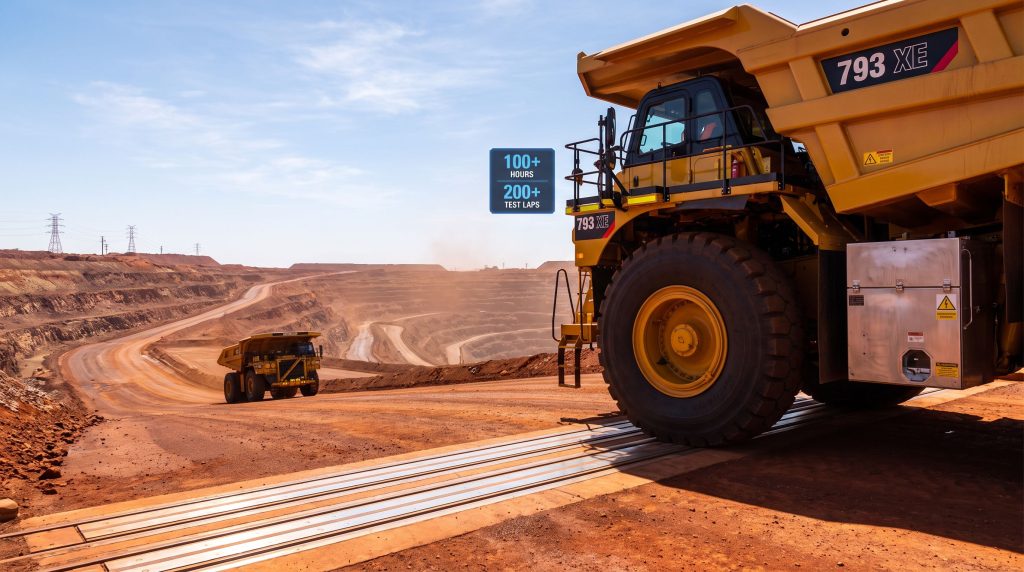
The deployment of Caterpillar battery-electric trucks at BHP's Jimblebar mine in Western Australia's Pilbara region is one of the most closely watched trials in global mining right now. However, to understand what it does and does not represent, investors, operators, and industry observers need to separate genuine technical progress from premature commercialisation optimism. Broader mining electrification and decarbonisation goals are central to why trials like this matter so much.
When big ASX news breaks, our subscribers know first
What the Caterpillar 793 XE Early Learner Platform Actually Is
The Caterpillar 793 XE sits within the ultra-class haul truck category, a segment defined by payload capacities exceeding 200 tonnes. The diesel-powered 793 series has been a Caterpillar flagship product for decades, making the choice to base the battery-electric platform on this proven architecture a logical starting point for engineering validation.
The Early Learner designation is not marketing language. It carries a precise technical meaning within Caterpillar's product development framework.
"These trucks are purpose-engineered for structured data collection under live operational conditions. They are not pre-production models awaiting minor refinement before commercial release. Each unit is intended to generate engineering insight that feeds directly into subsequent design iterations."
Key technical features of the 793 XE platform that differentiate it from its diesel predecessors include:
- Replacement of the combustion drivetrain with a high-capacity battery storage architecture
- Integration of electric motors capable of sustaining continuous duty cycles across loaded haul road gradients
- Surface-based high-power charging compatibility, designed to accommodate future charging infrastructure upgrades
- An engineering pathway toward dynamic in-motion charging capability, which remains a critical unresolved challenge
| Feature | Diesel Haul Truck | Caterpillar 793 XE Battery-Electric |
|---|---|---|
| Primary energy source | Diesel combustion | High-capacity battery pack |
| Direct operational emissions | Significant CO₂ and particulate | Zero at point of operation |
| Refuelling/charging speed | Fast, established infrastructure | High-power charging (infrastructure evolving) |
| Dynamic charging capability | Not applicable | Under active trial development |
| Maintenance focus areas | Engine, exhaust, cooling systems | Battery management, electric drivetrain |
| Operational noise level | High | Substantially reduced |
Why Jimblebar Was Chosen, and What That Tells Us
Site Selection Is Never Arbitrary in Engineering Trials
Jimblebar is not simply the nearest BHP iron ore operation to a capital city. Its selection as the host site for the Caterpillar battery-electric trucks at BHP's Jimblebar mine reflects a deliberate set of engineering and logistical criteria.
The Pilbara region of Western Australia is among the world's most productive iron ore corridors, and Jimblebar operates at a scale that generates statistically meaningful performance data across diverse conditions. However, scale alone does not qualify a site for a trial of this technical complexity.
Factors that made Jimblebar suitable include:
- Existing electrical transmission infrastructure that could be upgraded to support high-power charging demands without a complete greenfield build
- Haul road configurations that lend themselves to the eventual testing of dynamic charging systems embedded in or alongside road surfaces
- Operational continuity at a level that allows prototype trucks to complete hundreds of test cycles without disrupting overall mine productivity to unacceptable levels
BHP has confirmed that electrical transmission and distribution upgrades are actively underway at Jimblebar specifically to meet the power delivery requirements of the battery-electric fleet trial. This infrastructure investment is significant — not because it signals imminent commercial deployment, but because it demonstrates the scale of site preparation required before electric haul trucks can operate at all.
The Infrastructure Gap Nobody Talks About Enough
One of the least-discussed dimensions of the battery-electric haulage transition is the sheer power delivery challenge. An ultra-class haul truck operating on a loaded ramp can consume energy at rates that dwarf most industrial applications. Providing sufficient electrical capacity to charge multiple trucks within operationally acceptable timeframes demands grid infrastructure that most remote mine sites simply do not currently possess.
The Pilbara presents particular challenges in this regard. Mine sites in the region rely on a combination of on-site gas-fired generation and, increasingly, renewable energy in mining applications, but neither has historically been engineered to deliver the high-power, high-reliability charging loads that battery-electric ultra-class trucks require.
Operational Milestones: What the Numbers Mean
From Arizona to the Pilbara: A Structured Validation Pathway
Before any Caterpillar battery-electric trucks arrived at BHP's Jimblebar mine, the 793 XE units underwent extensive controlled performance and safety validation at Caterpillar's Tucson Proving Ground in Arizona. This pre-deployment phase is standard practice for prototype-grade mining equipment, allowing engineers to identify failure modes and operational limits in a controlled environment before exposure to the variables of a live mine site.
Once deployed at Jimblebar, the trial progressed to accumulate:
- More than 100 hours of live operational running time under real mine conditions
- Over 200 test laps completed across the mine's active haul road network
Crossing the 100-hour threshold in live iron ore mining conditions is a more meaningful milestone than it might appear. It confirms that the battery-electric propulsion system can sustain continuous duty cycling through loaded and unloaded haul segments, gradient transitions, and the thermal management demands of a Pilbara operating environment — none of which can be fully replicated at a proving ground.
Dynamic Charging: The Next Frontier
The upcoming phase of the Jimblebar trial is focused on dynamic charging validation, which represents the single most technically ambitious component of the entire programme.
Dynamic charging refers to the delivery of electrical power to a vehicle's battery system while that vehicle remains in motion, using electrified infrastructure embedded in or running alongside haul roads. In theory, this approach could eliminate the productivity penalty associated with stationary charging stops, which is currently the most significant operational disadvantage of battery-electric haulage compared to diesel.
No major mining operation globally has achieved dynamic charging at commercial scale for ultra-class vehicles. The Jimblebar trial's next phase consequently puts it at the technical frontier of what the industry is attempting.
The Seven-Truck Global Network: Understanding the Bigger Picture
How Caterpillar Is Structuring Its Learning Curve
The two 793 XE units at Jimblebar are part of a broader fleet of seven Caterpillar Early Learner battery-electric haul trucks distributed across global mining operations. This distributed testing model is architecturally important.
By placing prototype units across diverse operating environments, Caterpillar can simultaneously gather performance data across:
- Contrasting climatic profiles, from arid Pilbara heat to cooler temperate and high-altitude conditions
- Varying haul road gradients, surface conditions, and cycle distances
- Different shift structures, utilisation rates, and operator behaviour patterns
- Distinct grid connection types and emerging charging infrastructure configurations
This multi-site data collection strategy compresses the engineering learning curve considerably compared to single-site testing. Furthermore, each truck's operational data informs the others, and collectively they build the performance envelope that will define the specification of subsequent design generations. The broader mining automation trends emerging in parallel are creating additional pressure on manufacturers to accelerate this timeline.
What This Means for Commercialisation Timelines
The honest answer to when commercially available battery-electric ultra-class haul trucks will reach the market is: nobody knows with confidence, and any operator or investor building procurement plans around near-term availability assumptions is taking on material risk.
Caterpillar has not announced a commercial release timeline for the 793 XE platform. The Early Learner programme is explicitly structured as a precursor to further design iterations, not as a pre-commercial validation phase. The pathway from current prototype to production-scale manufacturing involves:
- Completion of dynamic charging validation at sites including Jimblebar
- Engineering redesign incorporating Early Learner operational learnings
- Subsequent prototype generation testing, potentially across additional global sites
- Charging infrastructure standardisation negotiations across the mining industry
- Regulatory and safety framework development for battery-electric ultra-class vehicles
- Manufacturing capacity build-out for battery systems, electric drivetrains, and supporting components
The Collaboration Model: Why BHP, Caterpillar, and Rio Tinto Are Working Together
Competitors Sharing Data Is Historically Unusual in Mining
The Jimblebar trial is structured as a collaboration between BHP as the mine operator and trial host, Caterpillar as the original equipment manufacturer and technology developer, and Rio Tinto as a co-investor and data-sharing participant. BHP, Rio Tinto and Caterpillar formally launched this battery-electric haul truck trial in the Pilbara as a landmark industry initiative.
The involvement of Rio Tinto alongside BHP is strategically notable. These are direct competitors in the global iron ore market, yet both have recognised that the scale of the battery-electric haulage challenge exceeds what any single operator can efficiently solve alone. Shared early-stage trial data reduces duplicated research and development expenditure across the sector and accelerates the timeline to engineering maturity.
This collaborative model mirrors similar multi-party arrangements seen in the development of autonomous haulage systems, where the infrastructure and safety framework costs were too large for any individual miner to absorb without industry-wide coordination. In a similar vein, hydrogen-powered autonomous trucks are emerging as another technology strand attracting collaborative development interest across the sector.
The Decarbonisation Imperative Driving the Investment
Haul truck fleets represent one of the largest single contributors to Scope 1 carbon emissions across open-cut mining operations globally. For major miners with mid-century net-zero commitments, the electrification of haulage is not optional in the long run; it is a structural requirement of their emissions reduction roadmaps.
Beyond the emissions rationale, successful battery-electric haulage adoption would deliver additional operational advantages:
- Reduced long-term exposure to diesel fuel price volatility, a cost that can meaningfully affect operating margins across commodity cycles
- Improved occupational health outcomes through the elimination of diesel exhaust particulates and a significant reduction in operational noise levels
- Potential alignment with increasingly stringent ESG reporting frameworks that institutional investors apply to large-cap miners
The next major ASX story will hit our subscribers first
Charging Infrastructure: The Critical Bottleneck
Four Approaches, Four Different Maturity Levels
The charging infrastructure challenge for ultra-class battery-electric haulage is multidimensional. There is no single established solution, and the maturity levels of available approaches vary considerably.
| Charging Method | Operational Description | Current Maturity | Primary Challenge |
|---|---|---|---|
| Stationary high-power charging | Truck parks at dedicated bay between cycles | Early commercial pilots | Productivity downtime during charging |
| Pantograph overhead charging | Roof-mounted arm connects at fixed road points | Pilot stage globally | Infrastructure cost and spatial coverage |
| Dynamic in-motion charging | Power delivered via electrified road surface while moving | Trial phase (Jimblebar and others) | Engineering complexity and capital expenditure |
| Battery swap systems | Depleted pack replaced with fully charged unit | Conceptual and limited pilots | Logistics complexity and pack standardisation |
The absence of a dominant, proven charging standard creates an additional layer of uncertainty for mine operators evaluating fleet electrification. Capital investment in site charging infrastructure consequently carries the risk of technological stranding if a different charging approach ultimately prevails commercially.
Key Risks That Could Delay Industry-Wide Adoption
Even if the Jimblebar trial and its global counterparts deliver strong engineering outcomes, several structural risks remain capable of extending the timeline to widespread battery-electric haul truck adoption:
- Battery energy density constraints relative to diesel's established volumetric and gravimetric energy advantage remain a fundamental physics challenge at ultra-class scale
- The capital cost premium of battery-electric platforms versus proven diesel equivalents is currently substantial and will require significant volume-driven cost reduction to reach economic parity
- Grid capacity limitations at remote mine sites, particularly in regions like the Pilbara where transmission infrastructure is not designed for high-power industrial charging loads
- Critical mineral supply chain vulnerabilities affecting battery cell production, with critical minerals demand for lithium, cobalt, nickel, and manganese all subject to geopolitical and geological concentration risks
- The absence of established end-of-life frameworks for ultra-class mining battery packs, which present both environmental liability and residual value uncertainty for operators
Frequently Asked Questions: Caterpillar Battery-Electric Trucks at BHP Jimblebar Mine
Are the Caterpillar 793 XE Trucks Commercially Available in 2026?
No. As of mid-2026, no commercially available ultra-class battery-electric haul truck has been released by Caterpillar or any other major original equipment manufacturer. The units operating at Jimblebar are prototype-grade Early Learner vehicles designed explicitly for engineering data collection, not production deployment.
How Many Early Learner Battery-Electric Haul Trucks Exist Globally?
Seven Caterpillar Early Learner battery-electric haul trucks are currently deployed across global mining operations. Two of those units are operating at BHP's Jimblebar mine in Western Australia's Pilbara region.
What Does Exceeding 100 Operating Hours at Jimblebar Confirm?
Surpassing 100 hours of live operational running time in an active iron ore mine environment confirms that battery-electric propulsion systems can sustain continuous duty cycling under real-world conditions. This is a meaningful engineering validation milestone that clears the path toward more technically demanding trial phases, particularly dynamic charging.
When Will Battery-Electric Ultra-Class Haul Trucks Be Commercially Available?
No confirmed commercial release timeline has been announced. The Early Learner programme is structured to generate learnings that will inform subsequent design generations, each of which will require its own validation phase before production-scale commitment becomes feasible.
Why Is Dynamic Charging So Important for Mining Applications?
Dynamic charging — which delivers power to a vehicle's battery system while it remains in motion via electrified haul road infrastructure — is potentially transformative because it addresses the most significant operational disadvantage of battery-electric haulage: productivity loss during stationary charging stops. No mining operation has yet demonstrated this capability at commercial scale, making the Jimblebar trial's next phase one of the most technically significant experiments in the global mining industry.
Disclaimer: This article contains forward-looking assessments regarding technology development timelines and industry trends. These assessments involve inherent uncertainty and should not be interpreted as investment advice or guarantees of commercial outcomes. Readers should conduct independent due diligence before making any investment or procurement decisions related to battery-electric mining equipment.
Want to Track the ASX Miners Positioned for the Electrification Revolution?
As battery-electric haulage and critical mineral demand reshape the mining landscape, Discovery Alert's proprietary Discovery IQ model delivers real-time alerts on significant ASX mineral discoveries — instantly identifying actionable opportunities in the commodities driving this transition. Explore historic discoveries and their returns or start your 14-day free trial today to position yourself ahead of the broader market.