May 20, 2026
The global energy storage landscape continues to evolve rapidly as battery manufacturers establish increasingly sophisticated supply chain partnerships that extend far beyond simple procurement relationships. Rather than operating within traditional supplier-buyer frameworks, leading companies are now creating integrated ecosystem approaches that coordinate technology development, manufacturing capacity, and market deployment strategies across multiple industry tiers simultaneously. Furthermore, this transformation reflects critical developments in energy transition essentials as the sector matures from experimental deployments to infrastructure-scale implementations.
This transformation reflects the maturation of energy storage markets from experimental deployments to infrastructure-scale implementations requiring unprecedented levels of supply chain coordination and technological standardisation. However, successful implementation depends significantly on access to green transition materials that enable these advanced battery technologies.
Strategic Partnership Framework Analysis: CATL's Multi-Billion Dollar Energy Storage Expansion
Understanding the Scale of Modern Battery Supply Agreements
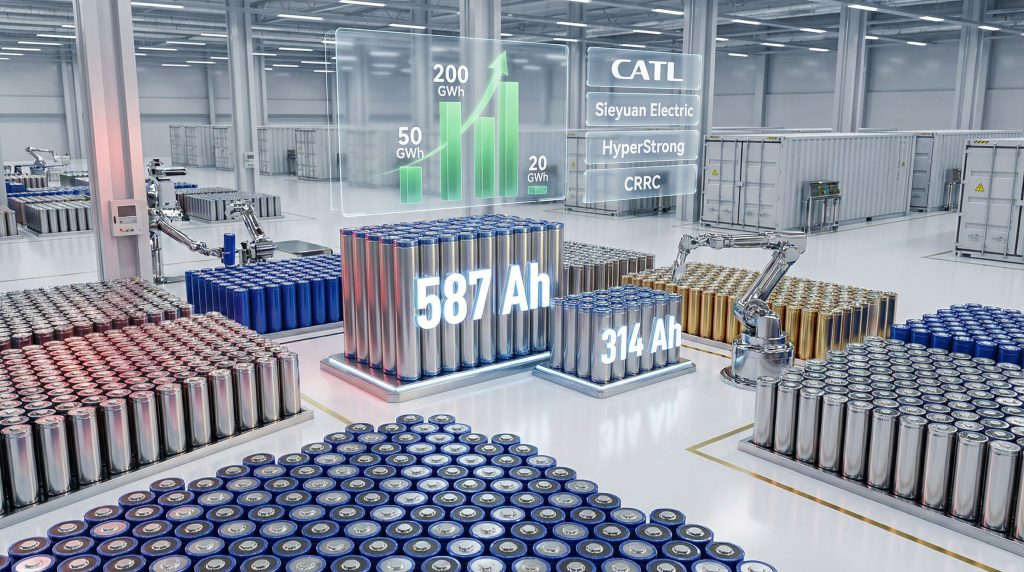
Contemporary CATL energy storage agreement structures demonstrate how battery manufacturers are reshaping industry partnerships through multi-dimensional procurement frameworks that integrate technical development with market coordination. The recent Sieyuan Electric collaboration establishes a 50 GWh cumulative capacity framework spanning three years, representing one of the most comprehensive supply chain integration models in the energy storage sector.
This partnership, formalised on December 25, 2025, builds upon an existing relationship established in 2022, illustrating how successful battery supply arrangements evolve from transactional procurement toward strategic industrial coordination. The three-year timeline provides sufficient stability for both manufacturers and integrators to align production planning, technology roadmaps, and market development strategies.
The scale becomes more significant when contextualised within CATL's broader procurement ecosystem. The company's November 2025 agreement with HyperStrong commits to supplying at least 200 GWh of energy storage batteries between 2026 and 2028 under a 10-year cooperation framework, while CRRC's direct procurement order totals 20 GWh across two distinct cell formats.
| Partner | Capacity | Duration | Key Applications | Strategic Focus |
|---|---|---|---|---|
| Sieyuan Electric | 50 GWh | 3 years | Grid-scale systems | Market coordination |
| HyperStrong | 200+ GWh | 10 years | Energy storage integration | Long-term supply |
| CRRC | 20 GWh | Direct order | Rail & power equipment | Industrial applications |
Technical Specifications Behind the CRRC Battery Cell Order
The CRRC procurement demonstrates sophisticated battery technology differentiation within industrial applications. The order encompasses 8 million 314 Ah cells at 3.2V nominal voltage delivering approximately 8 GWh capacity, alongside 6.4 million 587 Ah cells at the same voltage specification contributing approximately 12 GWh capacity.
This dual-format approach reflects CRRC's recognition that different equipment platforms require optimised battery specifications rather than standardised solutions. The 314 Ah cells represent proven technology with established deployment history, while the 587 Ah format represents next-generation advancement offering significantly higher energy density within similar physical footprints.
The newer 587 Ah cells, unveiled in April 2025, achieved large-scale commercialisation with shipments projected at 3 GWh by end of 2025. CRRC's substantial order for 6.4 million units of this format indicates confidence in the technology's performance characteristics and manufacturing scalability, while simultaneously providing CATL with demand certainty that justifies continued production capacity expansion. Additionally, these developments complement ongoing lithium refinery innovations that support the broader battery supply chain.
The mixed procurement strategy enables CRRC to optimise cost-performance ratios across different application requirements while maintaining supply chain flexibility for both established and emerging product lines.
When big ASX news breaks, our subscribers know first
How Do These Agreements Reshape China's Energy Storage Value Chain?
Supply Chain Integration and Market Coordination Models
Modern CATL energy storage agreement frameworks transcend traditional buyer-supplier relationships by establishing what industry participants describe as market-oriented dual-procurement models. These structures coordinate battery supply with complementary system components, creating integrated deployment capabilities that reduce project development timelines and technical integration risks.
The Sieyuan partnership explicitly encompasses coordination of full supply chains covering energy storage systems and supporting equipment such as transmission and distribution gear. This approach addresses a critical bottleneck in large-scale energy storage deployment: the complexity of coordinating multiple technology suppliers with different delivery schedules, technical specifications, and quality standards.
Rather than forcing system integrators to independently coordinate battery deliveries with power electronics, grid interface equipment, and mechanical balance-of-system components, the partnership creates structured coordination mechanisms. Technical exchange protocols between battery producers and system integrators enable optimisation of system-level performance characteristics rather than individual component specifications.
Industrial Policy Implications for New-Type Power Networks
The agreements explicitly reference supporting high-quality development of China's energy storage sector and accelerating deployment of energy storage systems in new-type power networks. This terminology indicates alignment with Chinese government objectives for grid modernisation and renewable energy integration, suggesting these partnerships function as implementation mechanisms for broader industrial policy goals.
State-owned enterprises like CRRC and major electrical equipment manufacturers like Sieyuan provide stable, large-scale demand that enables battery manufacturers to invest confidently in next-generation technology development and manufacturing capacity expansion. This creates positive feedback loops where industrial policy objectives, commercial procurement strategies, and technology advancement reinforce each other.
The coordinated approach reduces market fragmentation risks that could emerge from uncoordinated procurement decisions across multiple state-owned and private enterprises, while ensuring Chinese energy storage deployment maintains technological coherence and supply chain efficiency.
What Battery Technologies Are Driving These Massive Procurement Orders?
Lithium Iron Phosphate (LFP) Cell Evolution and Market Dominance
The technical foundation underlying these massive CATL energy storage agreement commitments centres on lithium iron phosphate chemistry optimisation that balances energy density improvements with safety characteristics essential for grid-scale applications. The evolution from 314 Ah to 587 Ah cell formats represents an 87% capacity increase while maintaining the thermal stability profile that makes LFP technology preferred over higher-energy-density chemistries like NCM or NCA for stationary storage applications.
This capacity advancement enables higher energy density storage systems while preserving safety margins critical for utility-scale deployments where thermal runaway risks must be minimised. Grid operators and system integrators prioritise battery technologies that demonstrate predictable failure modes and manageable safety protocols over maximum energy density, creating market demand for high-capacity LFP cells rather than alternative chemistries.
Moreover, these technological advances demonstrate the importance of efficient battery recycling breakthrough solutions that ensure long-term sustainability of large-scale battery deployments.
The 587 Ah LFP cells represent a 87% capacity increase over standard 314 Ah formats, enabling higher energy density storage systems while maintaining the safety profile that makes LFP technology preferred for grid-scale applications.
Manufacturing Scale and Production Capacity Analysis
CATL's production trajectory for the 587 Ah cells targeted 3 GWh annual shipments by end of 2025, establishing the foundation for scaling to meet growing procurement commitments. The company's ability to achieve large-scale commercialisation within months of product unveiling demonstrates manufacturing flexibility that enables rapid technology transition from development to volume production.
CRRC's order for 6.4 million 587 Ah cells represents substantial demand relative to CATL's initial production volumes, indicating the procurement agreements serve dual functions as demand certainty for manufacturers and supply security for major industrial customers. This creates incentives for continued capacity expansion while reducing market risks associated with new technology adoption.
Quality control standards for multi-GWh supply agreements require standardised performance metrics, testing protocols, and reliability documentation that extend beyond individual cell specifications to encompass system-level integration characteristics. The partnerships establish technical exchange mechanisms that align manufacturer capabilities with integrator requirements, reducing the likelihood of compatibility issues during large-scale deployment.
Which Market Segments Benefit Most from These Supply Chain Partnerships?
Grid-Scale Energy Storage Applications and Revenue Streams
The CATL energy storage agreement frameworks primarily target utility-scale battery storage system integration requirements where massive procurement volumes enable economies of scale that reduce per-unit costs while ensuring supply chain reliability. Grid operators increasingly require energy storage systems that provide multiple services simultaneously, including peak shaving, frequency regulation, and renewable energy firming applications.
These applications generate diverse revenue streams that justify large capital investments in battery storage infrastructure:
- Peak shaving operations that reduce electricity costs during high-demand periods
- Frequency regulation services that maintain grid stability and power quality
- Renewable energy firming that transforms intermittent solar and wind generation into dispatchable resources
- Transmission deferral applications that delay expensive grid infrastructure upgrades
The coordinated supply chain approach enables system integrators to optimise battery specifications for specific revenue applications rather than deploying generic storage solutions across diverse use cases. Furthermore, these opportunities attract significant battery metals investment as investors recognise the growing market potential.
Industrial and Transportation Sector Battery Demand
CRRC's procurement strategy illustrates how industrial equipment manufacturers leverage battery storage technology across multiple product lines beyond traditional energy storage applications. The company's rail equipment electrification initiatives require high-capacity, reliable battery systems that can operate under demanding environmental conditions while maintaining performance characteristics over extended operational periods.
Power equipment manufacturing applications benefit from standardised battery platforms that can be adapted for different industrial use cases while maintaining common supply chain relationships, maintenance protocols, and operational procedures. This cross-sector technology transfer creates opportunities for battery manufacturers to achieve higher utilisation rates across diverse market segments.
The industrial adoption of advanced battery technologies often precedes broader market deployment due to industrial customers' ability to absorb higher initial costs in exchange for superior performance characteristics and operational flexibility.
How Do These Agreements Compare to Global Energy Storage Market Trends?
Competitive Positioning Against International Battery Manufacturers
CATL's strategic approach to CATL energy storage agreement structures reflects broader competitive dynamics in global battery markets where Chinese manufacturers leverage scale advantages, integrated supply chains, and coordinated industrial policy to establish dominant market positions. The company's ability to commit to multi-year, multi-GWh supply agreements demonstrates manufacturing confidence and financial resources that challenge international competitors.
International battery manufacturers including LG Energy Solution, SK Innovation, and Panasonic typically operate within more fragmented supply chain environments where coordination between battery producers, system integrators, and equipment manufacturers requires more complex negotiation and coordination mechanisms. Chinese manufacturers benefit from domestic market integration that enables streamlined partnership development and reduced transaction costs.
The pricing strategies underlying these agreements likely reflect manufacturing scale economies that enable Chinese battery producers to offer competitive pricing while maintaining margins sufficient to support continued technology development and capacity expansion investments. Vena Energy has signed similar agreements with CATL for Indonesian and Singaporean renewable energy projects, demonstrating the global reach of these partnerships.
Regional Market Development and Export Potential
China's domestic energy storage market provides the foundation for developing supply chain capabilities and technology optimisation that can subsequently be applied to international markets. The experience gained through large-scale domestic deployments creates competitive advantages for Chinese companies pursuing export opportunities in markets with similar technical requirements and regulatory frameworks.
Technology export opportunities for Chinese battery systems depend partly on the ability to demonstrate successful domestic deployment at scale, operational reliability under diverse conditions, and cost competitiveness relative to locally manufactured alternatives. The CATL energy storage agreement commitments provide evidence of domestic market confidence that supports international market development efforts.
Regulatory compliance requirements for global deployments vary significantly across different national markets, requiring adaptation of battery systems, safety protocols, and operational procedures to meet local standards while maintaining cost competitiveness. In addition, ACEnergy's partnership with CATL for a 3 GWh Australian battery portfolio demonstrates successful international expansion strategies.
Key Market Growth Factors:
- Grid modernisation initiatives driving utility-scale storage demand
- Renewable energy integration requirements creating immediate market opportunities
- Industrial electrification trends expanding commercial and industrial applications
- Regulatory support mechanisms providing policy certainty for long-term investments
Investment and Market Implications for Energy Storage Stakeholders
Supply Chain Security and Long-Term Procurement Strategies
The multi-year CATL energy storage agreement structures provide stakeholders with enhanced supply chain security through predictable pricing, delivery schedules, and technical specifications that enable more accurate project development planning and financial modelling. Risk mitigation through extended supply agreements becomes increasingly valuable as energy storage markets scale beyond experimental deployments toward infrastructure-scale implementations.
Technology roadmap alignment between manufacturers and integrators creates opportunities for coordinated product development that optimises system-level performance rather than individual component characteristics. This approach reduces the likelihood of compatibility issues, performance gaps, or obsolescence risks that can emerge when system components are developed independently.
Market consolidation trends in battery supply chains favour companies that can establish long-term partnership relationships with major customers while maintaining technological leadership and manufacturing scalability. Smaller manufacturers may find it increasingly difficult to compete for major procurement opportunities without similar partnership capabilities.
| Factor | Impact Level | Timeline | Market Segment |
|---|---|---|---|
| Grid modernisation | High | 2026-2030 | Utility-scale |
| Renewable integration | Very High | Immediate | All segments |
| Industrial electrification | Medium | 2026-2028 | Commercial/Industrial |
Financial Impact on Energy Storage Project Development
Cost predictability benefits for project developers and investors emerge from structured supply agreements that establish pricing frameworks, performance guarantees, and delivery commitments extending across multiple years. This enables more sophisticated financial modelling and risk assessment for large-scale energy storage investments where battery costs typically represent 40-60% of total project capital requirements.
Technology upgrade pathways built into supply agreements provide mechanisms for incorporating improved battery technologies without renegotiating fundamental partnership structures. This flexibility becomes valuable as battery technology continues advancing rapidly and project developers seek to optimise performance characteristics while maintaining supply chain relationships.
Market pricing implications of large-volume procurement deals may influence broader energy storage market pricing as successful partnership models demonstrate cost reduction opportunities through coordinated supply chain management and reduced transaction costs.
The next major ASX story will hit our subscribers first
Future Outlook: What These Agreements Signal for Energy Storage Evolution
Technology Development Priorities and Innovation Pathways
The CATL energy storage agreement frameworks indicate that future battery technology development will increasingly focus on system-level optimisation rather than individual cell performance improvements in isolation. Next-generation battery chemistry research directions must consider integration requirements with power electronics, grid interface equipment, and operational management systems.
System integration improvements driving efficiency gains extend beyond battery technology to encompass power conversion efficiency, thermal management optimisation, and operational software advancement. The partnerships create mechanisms for coordinating development across these multiple technical domains rather than optimising individual components independently.
Manufacturing scale economics enabling cost reductions benefit from demand certainty provided by long-term supply agreements that justify investments in production capacity expansion, process optimisation, and quality control enhancement. This creates positive feedback loops where larger procurement commitments enable manufacturing improvements that further reduce costs and improve competitiveness.
Market Maturation and Competitive Landscape Changes
Consolidation trends among battery manufacturers and system integrators reflect the emergence of energy storage as an established industrial sector requiring substantial capital investments, technical expertise, and operational scale to maintain competitiveness. Companies unable to establish similar partnership relationships may find market access increasingly challenging as preferred supplier relationships solidify.
Specialised applications requiring custom battery solutions create opportunities for manufacturers that can develop differentiated products for specific use cases while maintaining partnerships with major customers across broader market segments. The ability to serve both high-volume standard applications and specialised requirements becomes a competitive advantage.
International market expansion strategies for Chinese energy storage companies depend partly on the ability to replicate successful domestic partnership models in markets with different regulatory frameworks, customer requirements, and competitive dynamics. Success in domestic markets provides the foundation for international expansion but requires adaptation to local market conditions.
Disclaimer: This analysis is based on publicly available information and industry trends. Projections and assessments regarding future market developments involve uncertainty and should be considered alongside other sources of information when making investment or business decisions. Battery technology and market conditions continue evolving rapidly, and actual outcomes may differ from current expectations.
The transformation of energy storage supply chains from transactional relationships toward integrated partnership frameworks reflects the sector's evolution from emerging technology to critical infrastructure component. As these relationships mature, they will likely establish the foundation for the next phase of global energy storage market development, where technological advancement, supply chain efficiency, and market deployment become increasingly interconnected.
Looking to Invest in the Critical Minerals Behind Energy Storage Growth?
Discovery Alert's proprietary Discovery IQ model identifies significant ASX mineral discoveries in real-time, including lithium, cobalt, nickel, and other battery metals driving the energy storage revolution. With major partnerships like CATL's multi-billion dollar agreements highlighting the massive demand for critical raw materials, investors need instant access to discovery opportunities that could transform portfolios before the broader market recognises their potential.