August 11, 2026
How CATL Sodium-Ion Battery Chemistry Works in Electric Vehicles
Battery chemistry fundamentals determine how energy storage systems deliver power to electric vehicles. CATL sodium-ion batteries in cars operate through electrochemical processes where sodium ions migrate between cathode and anode materials during charging and discharging cycles. Unlike traditional lithium-based systems, sodium-ion batteries utilise abundant sodium resources combined with hard carbon anodes and layered oxide cathodes to create electrical potential differences.
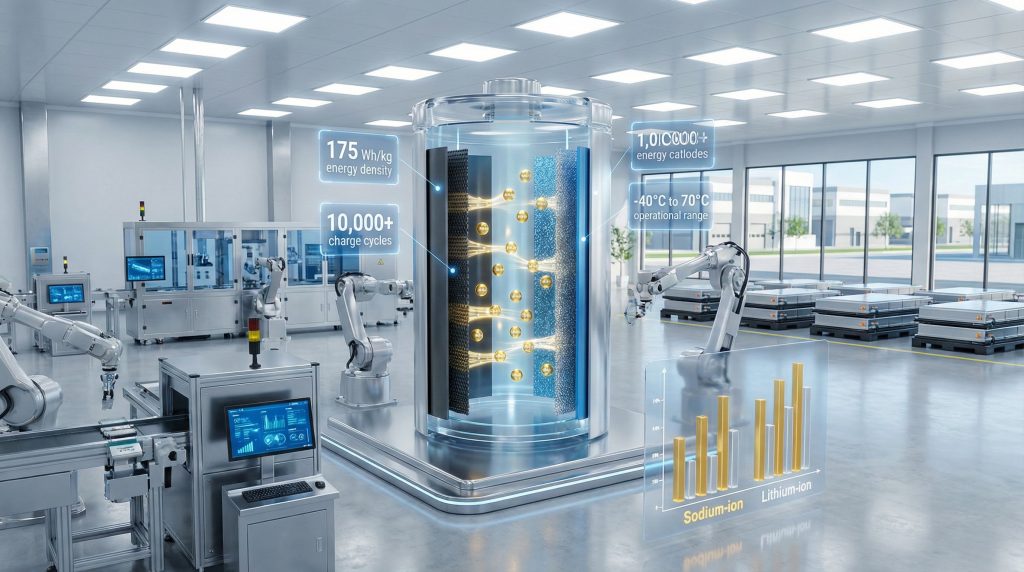
The cell architecture in CATL sodium-ion batteries achieves 175 Wh/kg energy density, matching lithium iron phosphate performance levels whilst maintaining operational capability at extreme temperatures. Temperature tolerance specifications demonstrate functionality at -30°C for charging operations and 90% capacity retention at -40°C, representing significant advantages over conventional battery systems that require thermal management complexity.
Advanced Thermal Management Integration
CATL's sodium-ion battery design eliminates additional cooling system requirements through inherent thermal stability characteristics. During 5C charging rates, temperature rise remains below 5°C, allowing simplified thermal management architecture compared to lithium-ion systems requiring active cooling mechanisms.
This thermal behaviour stems from sodium-ion electrochemical properties that demonstrate reduced fire risk and enhanced safety margins during overcharge conditions. Furthermore, the battery management system integration benefits from simplified monitoring requirements whilst maintaining pack-level safety through improved fault tolerance mechanisms.
When big ASX news breaks, our subscribers know first
Performance Characteristics of Sodium-Ion Technology
Cold weather performance represents the primary advantage driving CATL sodium-ion batteries in cars deployment across commercial and passenger vehicle segments. Laboratory testing validates functional charging capability at -30°C ambient temperature with sustained 90% usable capacity at -40°C, specifications that address critical operational gaps in northern climate vehicle operations.
High-rate discharge capability enables 5C charging protocols without thermal management complexity, distinguishing sodium-ion technology from lithium-ion systems requiring sophisticated cooling infrastructure. Consequently, this characteristic translates to simplified vehicle integration with reduced electrical system complexity and improved reliability in extreme operating conditions.
Power Delivery and Cycle Life Specifications
Sustained high-power output characteristics support commercial vehicle duty cycles requiring consistent power delivery over extended operational periods. The elimination of thermal management complexity during rapid charging represents significant mechanical and electrical system simplification for vehicle manufacturers.
Cycle life performance targets exceed 10,000 charge-discharge cycles, though specific validation data for this specification requires independent verification beyond current commercial deployment announcements. This extended lifecycle capability directly impacts total cost of ownership calculations for fleet operators prioritising long-term operational economics.
Vehicle Application Segmentation Strategy
CATL's deployment timeline positions Q2 2026 for passenger vehicle integration with GAC Aion providing the first production model featuring sodium-ion battery technology. This timeline represents aggressive acceleration from commercial vehicle applications to consumer market segments, indicating confidence in manufacturing scalability and performance validation.
Commercial vehicle applications lead deployment strategy through July 2026 mass production of Tectrans II series batteries for light commercial vehicles. The 45-kWh battery pack specification addresses urban delivery and short-haul transportation requirements where cold-weather reliability and total cost of ownership provide competitive advantages over lithium-ion alternatives.
Market Segmentation Analysis
Light Commercial Vehicles:
- Delivery van applications requiring cold-weather operational capability
- Urban freight operations with daily charging cycles
- Fleet applications prioritising reduced thermal management complexity
- Municipal vehicle operations in northern climate regions
Passenger Vehicle Integration:
- Entry-level EV segments targeting cost-conscious consumers
- Urban mobility solutions with moderate range requirements
- Replacement market opportunities for aging lithium-ion systems
- Alternative positioning to premium battery technologies
Fleet Operation Benefits:
- Taxi services requiring extended cycle life performance
- Ride-sharing platforms emphasising total cost of ownership
- Commercial fleet operations with predictable duty cycles
- Public transportation systems prioritising safety and reliability
Manufacturing Process Development and Scaling
Production capacity expansion enables sequential deployment across multiple vehicle segments following July 2026 commercial vehicle mass production initiation. CATL's manufacturing timeline demonstrates transition from pilot production to industrial-scale operations with integrated quality validation protocols.
Winter testing completion in Anhui Jianghuai Automobile Group (JAC) light trucks and mid-size vans represents production qualification milestones indicating manufacturing design progression beyond prototype development stages. In addition, this validation methodology demonstrates real-world performance confirmation rather than laboratory-only testing protocols.
The development of this technology parallels other advancements in the sector, including ongoing battery recycling breakthrough initiatives that support sustainable manufacturing practices. Moreover, the growth in battery metals investment demonstrates industry confidence in next-generation battery technologies.
Quality Assurance and Production Standards
| Manufacturing Milestone | Timeline | Application |
|---|---|---|
| Winter Testing Completion | Q1 2026 | Commercial Vehicles |
| Mass Production Start | July 2026 | Light Commercial Vehicles |
| Passenger Vehicle Deployment | Q2 2026 | GAC Aion Models |
| Production Scale Expansion | 2026-2027 | Multiple Vehicle Segments |
GB 38031-2025 safety standard compliance represents regulatory framework alignment for Chinese market deployment, though specific testing protocols and certification details remain under development. However, manufacturing automation systems and production line specifications require additional validation for industrial-scale capacity assessment.
Energy Density Evolution and Third-Generation Technology
Current 175 Wh/kg energy density represents second-generation sodium-ion technology achieving parity with lithium iron phosphate batteries rather than exceeding performance specifications. CATL's development roadmap targets energy density convergence with current LFP chemistry within three years, establishing 2029 as the timeline for performance parity achievement.
Third-generation sodium battery development focuses on advanced cathode and anode material compositions to address energy density limitations whilst maintaining thermal stability advantages. Furthermore, research initiatives emphasise balancing energy density improvements with safety characteristics that distinguish sodium-ion technology from lithium-ion alternatives.
Performance Improvement Roadmap
Current Generation Performance:
- 175 Wh/kg energy density matching LFP specifications
- Operational temperature range from -40°C to 70°C
- 5C charging rates with minimal thermal management requirements
- Commercial vehicle qualification through JAC testing programs
Future Development Targets:
- Energy density convergence with advanced lithium-ion systems
- Enhanced volumetric efficiency for improved vehicle packaging
- Reduced manufacturing costs through material optimisation
- Performance optimisation maintaining safety characteristics
Material science advancement focuses on sodium-based cathode chemistry evolution and hard carbon anode improvements to achieve higher energy storage capacity without compromising thermal stability benefits that define sodium-ion technology advantages.
Economic Analysis and Cost Structure Comparison
Manufacturing cost reduction represents ongoing development priority as CATL transitions sodium-ion technology from laboratory development to commercial production scale. Raw material availability advantages position sodium-ion batteries as alternative to lithium-dependent supply chains subject to geographic concentration and price volatility.
Total cost of ownership calculations for fleet operators emphasise extended cycle life performance and reduced thermal management system complexity offsetting current energy density limitations. Commercial vehicle applications particularly benefit from operational cost advantages in cold-weather environments where lithium-ion systems require additional heating infrastructure.
The broader industry transformation includes EV transformation in mining operations and the development of renewable energy solutions that complement battery storage systems.
Economic Comparison Framework
| Cost Factor | Sodium-Ion Advantages | Market Impact |
|---|---|---|
| Raw Material Availability | Abundant sodium resources | Reduced supply chain risk |
| Thermal Management | Simplified cooling systems | Lower vehicle integration costs |
| Cycle Life Performance | 10,000+ charge cycles | Extended replacement intervals |
| Cold Weather Operation | No heating requirements | Reduced operational complexity |
Price trajectory expectations through 2030 depend on production volume scaling and material cost optimisation as manufacturing processes mature from pilot production to industrial scale operations. Geographic distribution of sodium resources provides strategic independence from concentrated lithium supply sources.
The next major ASX story will hit our subscribers first
Safety Features and Thermal Stability Advantages
Fire safety characteristics distinguish sodium-ion technology through reduced thermal runaway risk compared to lithium-ion systems. The elimination of cooling system requirements during 5C charging operations demonstrates inherent thermal stability preventing overheating conditions that require active thermal management intervention.
Overcharge tolerance provides enhanced safety margins during charging operations with improved fault isolation capabilities at pack level. Consequently, emergency response protocols benefit from safer handling characteristics during accidents or maintenance procedures compared to lithium-ion systems requiring specialised safety procedures.
System Integration Safety Benefits
Thermal Management Simplification:
- Reduced cooling system complexity and failure points
- Simplified battery management system architecture
- Enhanced reliability through fewer active thermal components
- Lower maintenance requirements for thermal control systems
Operational Safety Advantages:
- Functional charging capability in extreme cold without heating
- Reduced fire risk during overcharge or physical damage
- Enhanced fault tolerance preventing cascade failures
- Simplified regulatory compliance for transportation safety
Battery management system requirements benefit from reduced monitoring complexity whilst maintaining pack-level safety through improved thermal stability characteristics inherent to sodium-ion electrochemical properties.
Production Timeline and Commercial Deployment Schedule
CATL's ambitious deployment schedule positions Q2 2026 passenger vehicle integration following July 2026 commercial vehicle mass production initiation. This timeline represents rapid acceleration from development phase to consumer market availability within six-month intervals.
GAC Aion partnership provides the commercial pathway for passenger vehicle market entry, though specific model designations and pricing strategies remain under development. Sequential deployment across passenger vehicles, commercial vehicles, energy storage, and construction machinery depends upon production capacity expansion and manufacturing yield optimisation.
The integration of new technologies also extends to supporting infrastructure, including developments in battery-grade lithium refinery operations that complement sodium-ion production capabilities.
Capacity Development Strategy
2026 Production Milestones:
- Q1 2026: Winter testing completion and production qualification
- Q2 2026: Passenger vehicle deployment with GAC Aion partnership
- July 2026: Commercial vehicle mass production initiation
- Q4 2026: Production scaling across multiple vehicle segments
2027-2030 Expansion Planning:
- International market entry strategies and regulatory approval
- Production facility multiplication and automation enhancement
- Technology transfer to partner manufacturing locations
- Global supply chain development for component procurement
Manufacturing automation advancement and robotics integration represent critical factors determining production cost reduction and quality consistency achievement at industrial scale operations.
Market Penetration Analysis Across Vehicle Segments
Commercial fleet applications provide initial market penetration pathway where total cost of ownership advantages and cold-weather performance benefits deliver immediate operational value. Delivery vehicle operations in northern climates particularly benefit from -30°C charging capability and 90% capacity retention at -40°C.
Entry-level passenger vehicle segments represent secondary market opportunity where cost positioning and simplified thermal management provide competitive differentiation against premium lithium-ion systems. Urban mobility applications with moderate range requirements align with current energy density specifications whilst benefiting from enhanced safety characteristics.
Adoption Timeline and Consumer Acceptance
Phase 1 Deployment (2026-2027):
- Commercial fleet validation and operational experience development
- Early passenger vehicle models in cost-sensitive segments
- Performance validation in real-world operating conditions
- Consumer education regarding sodium-ion technology benefits
Phase 2 Expansion (2027-2029):
- Market segment diversification across vehicle categories
- Energy density improvements approaching lithium-ion parity
- Manufacturing cost reduction through production scaling
- Infrastructure compatibility validation and charging optimisation
Consumer acceptance factors include performance expectation management and market education regarding cold-weather advantages and safety benefits offsetting current energy density limitations compared to premium lithium-ion alternatives.
Long-Term Industry Impact and Supply Chain Transformation
Resource diversification through CATL sodium-ion batteries in cars deployment reduces automotive industry dependence on concentrated lithium supply sources subject to geopolitical risks and price volatility. Geographic distribution of sodium resources enables manufacturing localisation and strategic independence from centralised supply chains.
Technology evolution pathways suggest dual-chemistry strategies where sodium-ion and lithium-ion systems serve specialised applications optimised for specific operational requirements. Application specialisation enables performance optimisation rather than direct competition between battery technologies.
Strategic Independence and Innovation Acceleration
Supply Chain Rebalancing:
- Reduced lithium dependency and price exposure
- Distributed sodium resource utilisation and processing
- Regional production capabilities and technology transfer
- Manufacturing localisation reducing transportation costs
Research Investment Acceleration:
- Material science advancement in sodium-ion chemistry
- Manufacturing process optimisation and automation
- Performance improvement targeting energy density convergence
- Safety enhancement and regulatory standard development
Innovation acceleration through research investment and breakthrough potential positions CATL sodium-ion batteries in cars as complementary rather than replacement technology for lithium-ion systems, enabling application-specific optimisation across diverse vehicle segments and operational requirements.
Disclaimer: This analysis contains forward-looking statements regarding battery technology development, production timelines, and market deployment schedules. Actual performance specifications, commercial availability dates, and market adoption rates may vary from projected timelines. Investment decisions should consider technological, regulatory, and market risks associated with emerging battery technologies.
Ready to Capitalise on the Next Battery Technology Breakthrough?
Discovery Alert's proprietary Discovery IQ model delivers instant notifications on significant ASX mineral discoveries, particularly in the critical battery minerals sector driving next-generation technologies like sodium-ion batteries. Explore how major mineral discoveries can generate exceptional market returns by visiting Discovery Alert's dedicated discoveries page, then begin your 30-day free trial today to position yourself ahead of the rapidly evolving energy storage market.