
June 13, 2026
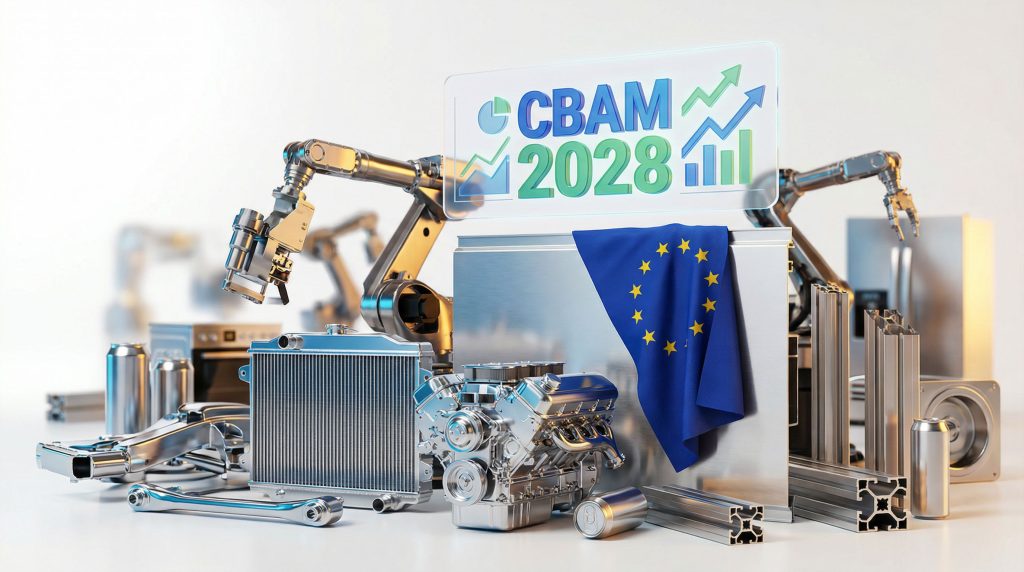
The European Union's Carbon Border Adjustment Mechanism stands poised to revolutionise global trade dynamics through its upcoming CBAM extension into downstream aluminium products, fundamentally transforming how manufacturers approach carbon accounting and supply chain management. This regulatory evolution extends beyond primary materials to encompass entire value chains, creating unprecedented transparency requirements throughout international commerce. Furthermore, the downstream extension addresses critical gaps in carbon leakage prevention whilst establishing competitive parity between EU and non-EU manufacturers. The comprehensive approach signals a paradigm shift where environmental performance becomes integral to market access and commercial viability.
What Is CBAM's Downstream Extension and Why Does It Matter for Global Trade?
Understanding the Carbon Border Adjustment Mechanism Framework
The Carbon Border Adjustment Mechanism operates as a sophisticated policy instrument designed to impose equivalent carbon pricing on imports of carbon-intensive goods entering the European Union. The framework functions through a certificate-based system requiring importers to purchase CBAM certificates representing the embedded carbon content within imported products. Consequently, this mechanism ensures that foreign manufacturers face comparable carbon costs to their EU counterparts operating under the Emissions Trading System (ETS).
The CBAM extension into downstream aluminium products represents a critical evolution from the original framework that entered its definitive phase on January 1, 2026. The initial implementation focused exclusively on primary materials including iron, steel, cement, fertilizers, hydrogen, and electricity. However, this narrow scope created significant regulatory gaps where manufacturers could circumvent carbon costs by relocating downstream production activities to jurisdictions outside EU oversight.
The certificate pricing mechanism links directly to carbon content calculations based on production methodologies and energy sources utilised during manufacturing processes. Moreover, importers must demonstrate compliance through detailed documentation proving carbon intensity levels. This approach transforms carbon accounting from an abstract environmental consideration into a concrete financial obligation with direct impact on product competitiveness.
The Strategic Shift from Primary to Downstream Product Coverage
The expansion from primary to downstream products addresses fundamental flaws in carbon leakage prevention that emerged during initial CBAM implementation. When only primary aluminium faced carbon pricing upon EU import, manufacturers retained economic incentives to relocate energy-intensive processing operations to low-carbon jurisdictions. Consequently, this production arbitrage undermined climate policy effectiveness by shifting emissions rather than reducing total global carbon output.
Metal Packaging Europe's Chief Executive Officer Krassimira Kazashka articulated the industry perspective supporting comprehensive coverage: the current framework charges primary steel and aluminium while leaving loopholes for semi-finished and finished products containing identical materials. Furthermore, this regulatory inconsistency perpetuates carbon leakage risks that weaken fair competition principles underlying EU climate policy architecture.
The downstream extension targets 180 additional products across iron, steel, and aluminium categories, significantly expanding regulatory scope beyond primary material boundaries. This comprehensive approach eliminates opportunities for manufacturers to escape carbon costs through value chain positioning strategies. Additionally, the expansion ensures that carbon pricing applies throughout manufacturing processes rather than only at extraction or primary production stages, supporting Australia's green metals leadership initiatives globally.
Timeline and Implementation Phases for Extended CBAM Rules
The CBAM extension into downstream aluminium products follows a carefully structured implementation timeline designed to provide adequate preparation periods for affected industries. The downstream extension becomes effective January 1, 2028, providing manufacturers and importers approximately two years to establish compliance systems. However, critical compliance deadlines precede full implementation, with Authorised Declarant Status applications required by March 31, 2026.
This designation enables qualified importers to manage CBAM obligations directly rather than relying on third-party compliance services. The application process requires demonstrated expertise in carbon accounting methodologies and regulatory compliance capabilities. In addition, the phased approach recognises the complexity of extending carbon pricing mechanisms throughout multi-tiered supply chains.
Implementation begins with six carbon-intensive sectors: iron and steel, aluminium, cement, fertilizers, hydrogen, and electricity. This sectoral focus enables concentrated regulatory attention on industries with highest carbon intensity and greatest potential for leakage-driven production relocation. Meanwhile, the EU Commission extends CBAM scope to strengthen global decarbonisation efforts whilst maintaining fair competition principles.
When big ASX news breaks, our subscribers know first
Which Downstream Aluminium Products Will Face CBAM Requirements from 2028?
Automotive Components Under CBAM Scope
The automotive sector represents one of the most significant application areas for downstream aluminium products within the extended CBAM framework. Vehicle chassis, engines, and radiators comprise the primary categories identified for inclusion, reflecting aluminium's critical role in modern vehicle manufacturing. Furthermore, weight reduction drives fuel efficiency improvements and emissions reduction strategies.
Vehicle chassis components have progressively incorporated higher aluminium content as manufacturers pursue lightweighting strategies to meet increasingly stringent fuel economy standards. Modern automotive chassis systems utilise aluminium extensively in several key areas:
- Structural frame components providing load-bearing capacity whilst reducing overall vehicle weight
- Suspension mounting points leveraging aluminium's strength-to-weight ratio for improved handling characteristics
- Cross-member assemblies integrating multiple chassis functions into single aluminium fabrications
- Body reinforcement panels enhancing structural integrity without mass penalties
Engine applications represent another major automotive aluminium consumption category where thermal management properties provide functional advantages over alternative materials. Aluminium engine blocks, cylinder heads, and cooling system components will face CBAM requirements reflecting the material's prevalence in modern powertrain design. Additionally, radiators and cooling systems demonstrate how downstream coverage extends beyond major structural components.
The regulatory scope encompasses both original equipment manufacturer (OEM) components and aftermarket replacement parts, creating comprehensive coverage across automotive supply chains. This breadth ensures that carbon pricing applies uniformly regardless of component distribution channels or end-use applications within vehicle manufacturing.
Industrial Machinery and Equipment Coverage
Industrial machinery represents a substantial downstream application segment where aluminium's combination of structural properties, thermal conductivity, and corrosion resistance provides competitive advantages. Manufacturing robots, casting machines, and industrial cylinders exemplify the equipment categories falling within extended CBAM scope. These applications increasingly incorporate aluminium components to reduce energy consumption during operation.
Manufacturing automation equipment demonstrates the growing importance of data-driven operations in modern industrial settings. Key applications include:
- Robotic arm structures utilising aluminium extrusions for lightweight, high-strength frameworks
- Precision machinery housings protecting sensitive equipment whilst enabling thermal management
- Automated assembly systems integrating aluminium components throughout conveying and positioning mechanisms
- Processing equipment frames supporting heavy industrial loads whilst minimising installation complexity
Casting machines and foundry equipment represent specialised industrial applications where aluminium's thermal properties enable efficient heat transfer during metal forming processes. These capital equipment categories typically involve substantial aluminium content in furnace linings, casting moulds, and thermal management systems.
Industrial cylinders used throughout pneumatic and hydraulic systems constitute high-volume aluminium applications in manufacturing automation. These components appear across diverse industrial sectors from food processing to automotive assembly, creating broad regulatory impact throughout manufacturing supply chains.
Construction and Household Products Integration
The construction sector encompasses diverse aluminium applications ranging from structural components to finishing materials, representing significant downstream product volumes within CBAM coverage. Building materials, consumer appliances, and packaging containers demonstrate the breadth of construction and household applications affected by downstream extension, particularly relevant to initiatives like bauxite project benefits in resource development.
Architectural aluminium applications include:
- Window and door systems incorporating aluminium frames, hardware, and glazing components
- Roofing materials utilising aluminium's weather resistance and longevity characteristics
- Cladding systems providing building envelope solutions with integrated thermal performance
- Structural glazing components enabling modern curtain wall and facade designs
Consumer appliances represent another major application category where aluminium appears throughout refrigeration systems, cooking surfaces, and internal mechanisms. White goods manufacturers utilise aluminium extensively in heat exchangers, compressor components, and decorative surfaces where appearance and durability requirements drive material selection.
Packaging containers constitute one of the highest-volume aluminium applications globally, with beverage cans, food containers, and industrial packaging all potentially subject to CBAM requirements. The specific reference to can ends classified under Combined Nomenclature code 83099090 demonstrates the regulatory precision applied to downstream product categorisation.
How Will CBAM Extension Address Carbon Leakage in Aluminium Value Chains?
The Carbon Leakage Problem in Current CBAM Implementation
Carbon leakage represents the fundamental policy challenge that downstream CBAM extension aims to address through comprehensive value chain coverage. The mechanism operates through economic incentives that encourage production relocation to jurisdictions with lower environmental standards rather than driving actual emissions reductions. When carbon pricing applies only to primary materials, manufacturers can circumvent costs by relocating downstream manufacturing operations whilst importing lower-cost primary inputs.
The current framework creates what industry experts describe as regulatory loopholes where primary steel and aluminium face carbon charges whilst semi-finished and finished products containing identical materials remain exempt. This asymmetric treatment enables manufacturers to maintain EU market access whilst avoiding carbon costs through strategic supply chain positioning. The implications become particularly significant amid ongoing global trade tensions affecting international commerce.
Manufacturing sectors demonstrate varying vulnerability to carbon leakage based on several factors:
- Energy intensity of downstream processing operations
- Transportation costs relative to product value
- Technical complexity of manufacturing processes
- Capital mobility enabling production relocation
- Regulatory arbitrage opportunities across jurisdictions
The automotive and industrial machinery sectors exhibit particularly high leakage risk due to energy-intensive manufacturing processes and established global supply chain networks that enable rapid production relocation. Construction materials face lower immediate risk due to transportation cost considerations but remain vulnerable for higher-value architectural applications.
Value Chain Displacement Risks Without Downstream Coverage
Manufacturing displacement occurs when carbon pricing differentials create sufficient economic incentives to justify relocating production facilities to lower-cost jurisdictions. Without downstream coverage, the CBAM extension into downstream aluminium products addresses specific displacement mechanisms that undermine both climate policy effectiveness and EU industrial competitiveness.
The displacement process operates through several stages:
- Initial assessment of carbon cost impact on product competitiveness
- Jurisdiction evaluation identifying alternative production locations
- Capital investment analysis comparing relocation costs against ongoing carbon obligations
- Supply chain restructuring establishing new distribution networks
- Production migration transferring manufacturing capabilities
Industries facing highest displacement risk include automotive component manufacturing, precision machinery production, and specialised packaging fabrication. These sectors combine high energy intensity with established global supply networks that facilitate production relocation. Moreover, the risk extends beyond direct manufacturing to encompass research and development capabilities, technical expertise, and innovation capacity.
Economic modelling suggests that comprehensive downstream coverage reduces displacement incentives by eliminating cost advantages from production relocation. When carbon pricing applies uniformly across primary materials and downstream products, manufacturers face equivalent environmental costs regardless of production location. Consequently, this neutralises the economic rationale for carbon-driven relocation whilst supporting industry insights from events like the innovation expo insights.
Competitive Dynamics Between EU and Non-EU Manufacturers
The competitive landscape reflects fundamental asymmetries between EU manufacturers operating under comprehensive carbon pricing and non-EU producers facing fragmented environmental regulations. EU manufacturers experience dual carbon costs through both input materials (via CBAM on imports or ETS on domestic production) and their own manufacturing processes under EU environmental standards.
Non-EU manufacturers historically benefited from cost advantages through:
- Lower energy costs in jurisdictions with subsidised fossil fuel pricing
- Reduced environmental compliance requirements in less stringent regulatory environments
- Carbon-free input access through imports of primary materials without embedded carbon costs
- Production process flexibility enabling higher-emission manufacturing methods
The downstream extension aims to establish competitive parity by extending carbon pricing to non-EU manufacturers' products entering EU markets. This approach neutralises cost advantages derived from environmental regulatory arbitrage whilst maintaining market access for manufacturers demonstrating equivalent environmental performance.
Industry analysis reveals that comprehensive regulatory frameworks recognising downstream efforts toward circularity and decarbonisation benefit manufacturers investing in low-carbon technologies. The extension creates incentives for global adoption of cleaner production methods by linking market access to environmental performance rather than production location.
What Are the Financial and Compliance Implications for Importers?
Certificate Requirements and Pricing Mechanisms
The CBAM certificate system establishes direct financial obligations for importers through carbon pricing mechanisms that reflect embedded emissions in downstream aluminium products. Importers must purchase certificates representing the carbon intensity of their imported products, creating immediate cost impacts that vary based on manufacturing processes and energy sources used in production.
Certificate pricing mechanisms operate through several key components:
- Carbon content assessment based on production methodology documentation
- Energy source evaluation reflecting electricity grid carbon intensity
- Process efficiency factors accounting for technological differences across facilities
- Transportation emissions from production location to EU borders
- Verification requirements ensuring accuracy of carbon intensity calculations
The pricing structure links to EU Emissions Trading System (ETS) carbon prices, creating dynamic cost relationships that fluctuate with European carbon market conditions. This connection ensures that CBAM certificate costs reflect current carbon pricing levels within EU markets, maintaining competitive parity between domestic and imported products.
Financial planning for importers requires sophisticated carbon accounting capabilities to predict certificate costs across product portfolios. Furthermore, companies with diverse sourcing strategies face particular complexity in managing carbon cost variability across different suppliers and production regions.
Exemptions for Small-Volume Importers (Under 50 Tonnes)
The regulatory framework includes specific provisions for small-volume importers handling less than 50 tonnes annually, creating compliance exemptions that reduce administrative burdens for smaller market participants. This threshold recognises the disproportionate impact that comprehensive carbon accounting requirements would impose on companies with limited import volumes.
The exemption structure provides several benefits:
- Administrative cost reduction for companies lacking extensive compliance infrastructure
- Market access preservation for smaller importers serving niche applications
- Competition maintenance preventing consolidation driven by compliance costs
- Proportionality principles aligning regulatory burden with business scale
However, the 50-tonne threshold creates potential opportunities for supply chain fragmentation where larger importers might restructure operations through multiple smaller entities to access exemption benefits. Regulatory authorities monitor for compliance arbitrage strategies that undermine policy effectiveness whilst maintaining legitimate protections for genuinely small-scale operations.
The exemption applies to total annual volumes across all CBAM-covered products, requiring importers to track combined imports across aluminium, steel, cement, and other regulated categories. Companies approaching the threshold must carefully manage import volumes to maintain exemption status or prepare for full compliance requirements.
Authorised Declarant Status Application Process
The Authorised Declarant Status represents a critical compliance designation enabling qualified importers to manage CBAM obligations directly rather than relying on third-party services. Applications must be submitted by March 31, 2026, providing approximately two months from current dates for companies to complete required documentation and demonstrate compliance capabilities.
Application requirements include:
- Technical expertise demonstration in carbon accounting methodologies
- Financial capacity verification for certificate purchase obligations
- Compliance history documentation showing regulatory adherence across relevant jurisdictions
- Internal control systems ensuring accurate emissions reporting and verification
- Professional qualifications of staff responsible for CBAM compliance management
The designation provides operational advantages including direct certificate acquisition, simplified reporting procedures, and enhanced supply chain control over carbon intensity documentation. Companies with Authorised Declarant Status can integrate CBAM compliance into existing import procedures rather than coordinating with external service providers.
Failure to obtain Authorised Declarant Status by the application deadline requires importers to work through approved third-party declarants, potentially increasing costs and reducing operational flexibility. The limited application window creates urgency for companies seeking direct control over their CBAM compliance processes.
How Will Recycled Aluminium Be Treated Under Extended CBAM Rules?
Pre-Consumer vs Post-Consumer Scrap Distinctions
The treatment of recycled aluminium under extended CBAM rules reflects sophisticated approaches to carbon accounting that recognise the environmental benefits of circular economy practices. Pre-consumer scrap generated during manufacturing processes receives different regulatory treatment compared to post-consumer scrap recovered from end-of-life products, acknowledging varying environmental impacts across recycling streams.
Pre-consumer scrap typically exhibits:
- Lower contamination levels due to controlled generation conditions
- Simplified processing requirements with reduced energy intensity
- Consistent chemical composition enabling predictable alloy production
- Reduced transportation distances from integrated manufacturing operations
Post-consumer scrap faces additional challenges including:
- Collection and sorting complexity requiring specialised infrastructure
- Contamination removal necessitating energy-intensive processing
- Quality variability demanding flexible production processes
- Extended supply chains with higher transportation emissions
The regulatory framework acknowledges these distinctions through differentiated carbon intensity calculations that reflect actual energy consumption and emissions associated with each recycling stream. This approach incentivises manufacturers to utilise recycled content whilst maintaining accuracy in carbon accounting methodologies.
Circular Economy Incentives and Challenges
CBAM's treatment of recycled aluminium creates powerful incentives for circular economy adoption by recognising the significantly lower carbon footprint associated with recycling compared to primary production. Aluminium recycling requires approximately 95% less energy than primary production from bauxite ore, creating substantial carbon cost advantages for manufacturers utilising recycled content.
The incentive structure operates through several mechanisms:
| Incentive Type | Mechanism | Impact |
|---|---|---|
| Lower Certificate Costs | Reduced carbon intensity for recycled content | Direct cost savings on CBAM obligations |
| Supply Chain Premiums | Market value for low-carbon materials | Revenue enhancement for recycling operations |
| Competitive Advantage | Cost differential versus primary material users | Market positioning benefits |
| Innovation Investment | R&D in recycling technology improvement | Long-term competitiveness enhancement |
However, significant challenges remain in expanding recycled aluminium utilisation including quality specifications for high-performance applications, supply chain reliability ensuring consistent recycled material availability, and contamination management maintaining alloy integrity across recycling cycles.
The regulatory framework aims to support recycling and the circular economy whilst avoiding distortions that might compromise product quality or safety standards. This balance requires sophisticated carbon accounting that accurately reflects environmental benefits without creating perverse incentives for inferior materials utilisation.
Emissions Calculation Methodologies for Recycled Content
Carbon accounting for recycled aluminium requires complex methodological approaches that accurately attribute emissions across multiple lifecycle stages whilst avoiding double counting. The calculation framework addresses primary production emissions, recycling process emissions, and transportation impacts throughout extended supply chains.
Key methodological considerations include:
- Allocation approaches distributing primary production emissions across multiple product lifecycles
- System boundaries defining which emissions are attributed to recycling operations
- Energy source assessment evaluating electricity grid carbon intensity at recycling facilities
- Transportation accounting measuring emissions from scrap collection through final delivery
- Quality adjustments reflecting energy requirements for achieving specified alloy compositions
The framework typically employs mass balance approaches that track material flows throughout recycling processes whilst maintaining connections to original production emissions. This methodology ensures that environmental benefits from recycling are accurately captured whilst maintaining comprehensive carbon accounting across all material sources.
Verification requirements for recycled content claims necessitate detailed documentation throughout supply chains, creating administrative complexity that particularly impacts smaller recycling operations. The challenge involves balancing accuracy requirements with practical implementation constraints across diverse recycling infrastructure capabilities.
What Industry Reactions Reveal About CBAM's Effectiveness?
Metal Packaging Europe's Support and Strategic Positioning
Metal Packaging Europe (MPE) has emerged as a prominent advocate for CBAM downstream extension, viewing comprehensive coverage as essential for maintaining competitive equilibrium across European manufacturing sectors. The organisation's support reflects strategic recognition that partial carbon pricing creates market distortions favouring manufacturers operating outside EU regulatory scope.
MPE's position emphasises that effective implementation requires balanced and comprehensive coverage that recognises downstream manufacturers' investments in decarbonisation and circular economy practices. This perspective reflects broader industry consensus that fragmented carbon pricing undermines climate policy effectiveness whilst creating unfair competitive disadvantages for companies operating under stricter environmental standards.
The organisation specifically advocates for regulatory frameworks that:
- Recognise circularity efforts through differentiated treatment for recycled content utilisation
- Support decarbonisation investments by providing competitive advantages for low-carbon manufacturers
- Ensure transparent implementation with clear guidance for compliance requirements
- Maintain proportionality avoiding excessive burdens on smaller market participants
This strategic positioning reflects MPE's assessment that comprehensive CBAM implementation ultimately benefits European manufacturers by eliminating cost disadvantages relative to imports from jurisdictions with less stringent environmental standards. Furthermore, the organisation views downstream extension as correcting market failures that previously undermined investments in cleaner production technologies.
European Aluminium Association's Concerns and Recommendations
Whilst supporting CBAM's climate objectives, industry associations have raised specific concerns regarding implementation complexity and potential unintended consequences. The European Aluminium Association emphasises the need for product-specific emissions benchmarking systems that accurately reflect technological diversity across aluminium applications and production methods.
Primary concerns include:
- Administrative complexity for companies managing diverse product portfolios
- Benchmarking accuracy ensuring carbon intensity calculations reflect actual production conditions
- Innovation incentives maintaining rewards for technological improvements
- Global competitiveness preventing disadvantages for EU-based manufacturers
- Implementation timing providing adequate preparation periods for complex compliance systems
The association advocates for benchmarks based on production methodologies that support recycling, circular economy practices, and advanced manufacturing technologies. This approach would reward manufacturers investing in environmental improvements whilst maintaining accuracy in carbon accounting across diverse production systems.
Technology transfer incentives represent another key recommendation, with industry experts suggesting that CBAM implementation should encourage knowledge sharing with developing countries to support global decarbonisation rather than simply imposing trade barriers. Additionally, the CBAM extension is backed by multiple industry stakeholders recognising its importance for fair competition.
Global Manufacturer Adaptation Strategies
International manufacturers face complex strategic decisions regarding production location, technology investment, and supply chain restructuring in response to CBAM downstream extension. Adaptation strategies vary significantly based on company size, product portfolio, geographic exposure, and existing environmental performance.
Common adaptation approaches include:
- Production relocation assessment evaluating costs and benefits of facility repositioning
- Technology upgrading investing in lower-carbon production methods
- Supply chain optimisation sourcing materials from low-carbon suppliers
- Documentation systems establishing comprehensive carbon tracking capabilities
- Market diversification reducing dependence on EU sales
Larger multinational corporations typically pursue comprehensive decarbonisation strategies that position them favourably under carbon pricing regimes whilst maintaining global operational flexibility. These companies often view CBAM as accelerating inevitable transitions toward lower-carbon manufacturing that will eventually extend beyond European markets.
Smaller manufacturers face more constrained options, often focusing on supply chain partnerships with low-carbon suppliers rather than major capital investments in production technology. This approach enables compliance whilst avoiding substantial financial commitments that might not be economically justified for companies with limited EU exposure.
The next major ASX story will hit our subscribers first
Which Countries and Regions Face the Highest CBAM Impact?
Major Aluminium Exporting Nations at Risk
The geographic distribution of CBAM impact reflects global aluminium production patterns and trade flows, with carbon-intensive manufacturing regions facing disproportionate effects from downstream extension. Countries with electricity grids dominated by coal-fired generation experience highest certificate costs due to elevated carbon intensity in aluminium production processes.
Primary risk factors for exporting nations include:
| Risk Factor | High-Risk Regions | CBAM Impact |
|---|---|---|
| Coal-Dependent Electricity | China, India, Eastern Europe | High certificate costs |
| Energy-Intensive Production | Middle East, Russia | Significant compliance burden |
| Limited Renewable Energy | Southeast Asia, Africa | Carbon intensity disadvantages |
| Export Dependency | Gulf States, Australia | Market access concerns |
China represents the most significant case study as the world's largest aluminium producer with substantial downstream manufacturing capacity. The country's heavy reliance on coal-fired electricity creates high carbon intensity levels that translate directly into CBAM certificate costs for products exported to European markets.
India and Southeast Asian nations face similar challenges with coal-dependent electricity grids and rapidly expanding aluminium industries. These countries must balance economic development priorities with carbon intensity considerations that increasingly influence export competitiveness.
Trade Flow Disruption Potential by Geographic Region
CBAM implementation creates potential for significant trade flow disruptions as cost structures shift to reflect carbon intensity rather than traditional labour and material cost advantages. Regional manufacturing hubs built around energy-intensive industries may experience reduced competitiveness in EU markets.
North African and Middle Eastern regions face complex trade implications given their proximity to European markets combined with carbon-intensive energy systems. These regions historically served European manufacturers through cost-competitive production but now confront additional carbon costs that may offset traditional advantages.
Latin American countries with hydroelectric-dominant electricity grids may experience relative improvements in competitiveness as their lower carbon intensity translates into reduced CBAM obligations. Brazil, in particular, could benefit from its renewable energy profile in aluminium production.
Australia presents a mixed scenario with substantial aluminium production capacity but varying carbon intensity across different facilities. Smelters powered by renewable energy sources maintain competitive advantages whilst those relying on fossil fuels face increased costs.
Bilateral Trade Agreement Implications
Existing trade agreements require careful examination to address potential conflicts between CBAM requirements and established trade relationship terms. World Trade Organisation (WTO) compatibility remains a subject of ongoing analysis as affected countries assess options for challenging carbon border measures through international trade dispute mechanisms.
Free trade agreements may require modification to accommodate carbon pricing mechanisms without violating most-favoured-nation principles or non-discrimination requirements. The complexity increases when bilateral agreements include environmental cooperation provisions that could conflict with unilateral carbon border measures.
Regional trade partnerships face particular scrutiny as CBAM implementation may create advantages for some members whilst disadvantaging others based purely on carbon intensity differences. These dynamics could influence future trade agreement negotiations and regional economic integration strategies.
The African Continental Free Trade Agreement (AfCFTA) and similar regional arrangements must consider how carbon border measures affect intra-regional trade flows and economic development strategies that rely on energy-intensive manufacturing for economic growth.
How Do CBAM Benchmarks Support Low-Carbon Manufacturing?
Product-Specific Emissions Benchmarking Systems
The CBAM framework employs sophisticated benchmarking methodologies that establish carbon intensity standards for downstream aluminium products based on production processes, energy sources, and technological efficiency levels. These benchmarks serve as reference points for calculating certificate requirements whilst providing incentives for manufacturers to adopt cleaner production methods.
Benchmarking systems address several critical functions:
- Standardisation of carbon intensity measurements across diverse production facilities
- Fairness ensuring comparable treatment for similar products regardless of origin
- Incentivisation rewarding manufacturers achieving below-benchmark performance
- Transparency providing clear targets for environmental improvement
- Accuracy reflecting actual production conditions rather than theoretical standards
Product-specific benchmarks recognise that different downstream applications require varying production processes with distinct carbon intensity profiles. Automotive components demand different manufacturing approaches compared to packaging materials, necessitating tailored benchmarking that reflects actual industry practices.
The methodology typically establishes benchmarks based on performance levels achievable by the 10% best-performing installations within each product category. This approach ensures that benchmarks reflect commercially viable technology whilst creating incentives for continuous improvement across manufacturing sectors.
Technology Transfer Incentives for Developing Countries
CBAM implementation creates opportunities for technology cooperation between developed and developing countries as carbon pricing mechanisms reward investments in cleaner production technologies. The framework incentivises technology transfer by creating market advantages for manufacturers demonstrating environmental performance improvements.
Technology transfer mechanisms include:
- Joint venture partnerships between EU and non-EU manufacturers sharing advanced technologies
- Investment programmes supporting renewable energy infrastructure in aluminium-producing regions
- Technical assistance providing expertise for implementing cleaner production methods
- Financing arrangements enabling capital investment in low-carbon manufacturing equipment
Developing countries benefit from technology transfer through reduced CBAM certificate costs that improve export competitiveness whilst simultaneously advancing environmental objectives. This creates alignment between economic development goals and climate policy requirements.
The framework particularly supports renewable energy deployment in energy-intensive industries by creating direct financial incentives for clean electricity utilisation. Countries investing in hydroelectric, solar, or wind power for aluminium production gain measurable competitive advantages in EU markets.
Innovation Drivers in Aluminium Production Methods
CBAM benchmarks accelerate innovation in aluminium production by creating market rewards for technological improvements that reduce carbon intensity. Research and development investments in cleaner production methods generate direct financial returns through reduced certificate costs and enhanced market competitiveness.
Key innovation areas receiving enhanced focus include:
- Electrolysis efficiency improvements reducing energy consumption per tonne of production
- Renewable energy integration directly powering smelting operations with clean electricity
- Process optimisation minimising waste and energy losses throughout production
- Recycling technology advancement improving quality and efficiency of secondary aluminium production
- Alternative reduction methods developing novel approaches to primary aluminium production
Artificial intelligence and machine learning applications in process optimisation receive particular attention as manufacturers seek to minimise energy consumption whilst maintaining product quality standards. These technologies enable real-time adjustment of production parameters to optimise both efficiency and environmental performance.
Advanced recycling technologies benefit significantly from CBAM incentives as the framework rewards manufacturers utilising recycled content through reduced carbon intensity calculations. Innovation in sorting, purification, and quality control for recycled aluminium becomes economically attractive through regulatory advantages.
What Future Expansions Could Follow the 2028 Implementation?
Additional Sectors Under Consideration (Cement, Fertilizers, Hydrogen)
The downstream extension represents the beginning of broader CBAM evolution that may encompass additional carbon-intensive sectors beyond the initial six categories. Cement, fertilizers, and hydrogen are specifically identified as sectors under consideration for similar downstream product coverage, reflecting comprehensive approaches to carbon leakage prevention.
Cement applications in construction and infrastructure development create extensive downstream product categories including precast concrete, building materials, and infrastructure components. The sector's high carbon intensity and substantial global trade volumes make it a logical candidate for expanded CBAM coverage.
Fertilizer applications throughout agricultural and chemical industries present complex regulatory challenges given the essential nature of food production and agricultural trade. Downstream coverage might encompass processed agricultural inputs, specialised chemical formulations, and industrial applications of fertilizer-derived materials.
Hydrogen applications are rapidly expanding across energy storage, industrial processes, and transportation sectors. As hydrogen production scales increase, downstream products incorporating hydrogen-derived materials may require carbon accounting that reflects production methods and energy sources used in hydrogen generation.
The expansion timeline remains subject to impact assessment results from the initial downstream implementation and stakeholder consultation processes that will evaluate administrative feasibility and economic implications of broader sector coverage.
Potential for Further Downstream Product Integration
The logical progression of CBAM development suggests continued expansion into increasingly complex downstream applications as carbon accounting methodologies mature and administrative systems demonstrate capability to handle sophisticated compliance requirements. Future expansions may encompass multi-material products, complex assemblies, and complete manufactured systems.
Consumer electronics represent a potential expansion category given their incorporation of CBAM-covered materials including aluminium housings, steel components, and various chemical inputs. The challenge involves developing carbon accounting methodologies for products containing multiple regulated materials from diverse supply chains.
Transportation equipment beyond automotive components might include aircraft parts, marine equipment, and rail systems that incorporate substantial quantities of carbon-intensive materials. The complexity of aerospace applications, in particular, creates significant technical challenges for accurate carbon intensity calculation.
Industrial equipment categories could expand to encompass complete manufacturing systems, processing plants, and infrastructure installations that integrate multiple CBAM-covered materials into complex engineered systems.
Global Climate Policy Alignment Opportunities
CBAM evolution occurs within broader international climate policy development that may create opportunities for harmonisation and cooperation rather than unilateral trade measures. Future expansions could incorporate multilateral frameworks that address carbon leakage through coordinated international approaches.
Article 6 of the Paris Agreement provides mechanisms for international cooperation on carbon pricing that could complement or potentially replace unilateral border measures. Future CBAM development might integrate with international carbon market mechanisms to create globally coordinated approaches to carbon pricing.
OECD initiatives on carbon pricing and international tax coordination offer frameworks for addressing carbon leakage through multilateral rather than unilateral approaches. These initiatives could influence future CBAM evolution toward more cooperative international mechanisms.
Regional carbon pricing systems in North America, Asia, and other regions create opportunities for mutual recognition agreements that could reduce administrative complexity whilst maintaining environmental integrity across different carbon pricing jurisdictions.
How Should Companies Prepare for CBAM Downstream Requirements?
Supply Chain Mapping and Emissions Tracking Systems
Successful CBAM compliance requires comprehensive supply chain visibility that enables accurate carbon intensity calculation throughout complex manufacturing networks. Companies must establish systems tracking material flows, energy consumption, and production processes across multiple tiers of suppliers and subcontractors.
Essential mapping components include:
- Material origin documentation tracing aluminium content to primary production sources
- Processing stage identification cataloguing all manufacturing steps adding value or carbon intensity
- Energy source verification confirming electricity grid carbon intensity at each production facility
- Transportation tracking measuring emissions from inter-facility transfers and final delivery
- Quality control systems ensuring accuracy of carbon intensity calculations
Digital transformation initiatives become critical enablers of CBAM compliance as manual tracking systems cannot accommodate the complexity and scale of carbon accounting requirements. Blockchain technology, IoT sensors, and integrated ERP systems provide necessary infrastructure for comprehensive emissions tracking.
Companies with complex international supply chains face particular challenges requiring coordination across multiple countries, regulatory systems, and cultural contexts. Success requires establishing standardised protocols that function consistently regardless of geographic location or local business practices.
Documentation and Verification Protocols
CBAM compliance necessitates sophisticated documentation systems that provide verifiable evidence of carbon intensity calculations throughout supply chains. Third-party verification becomes essential for establishing credibility of emissions data whilst meeting regulatory requirements for accuracy and transparency.
Documentation protocols must encompass:
- Production facility certifications confirming manufacturing processes and energy sources
- Carbon intensity calculations based on verified production data
- Audit trails linking final products to primary material sources
- Quality assurance procedures ensuring data accuracy and completeness
- Regulatory compliance evidence demonstrating adherence to applicable standards
Verification bodies require accreditation to provide CBAM-compliant assessments, creating new market opportunities for environmental consultancies and certification organisations. Companies must select qualified verifiers with appropriate technical expertise and regulatory recognition.
The CBAM extension into downstream aluminium products creates unprecedented demands for transparent, verifiable carbon accounting that extends far beyond traditional environmental reporting requirements. Success requires treating carbon intensity as a core business metric requiring the same rigour applied to financial accounting and quality control systems.
Ready to Capitalise on Emerging Opportunities in Carbon-Conscious Markets?
The CBAM extension creates unprecedented shifts in global aluminium markets, potentially reshaping trade flows and investment opportunities across ASX-listed resource companies. Discovery Alert's proprietary Discovery IQ model instantly identifies significant mineral discoveries that could benefit from evolving regulatory landscapes, ensuring subscribers stay ahead of market-moving announcements as carbon pricing mechanisms transform international competitiveness. Begin your 14-day free trial today to position yourself advantageously in these rapidly evolving commodity markets.