
May 14, 2026
Underground Mining's Quiet Comeback: Why Contracting Businesses Are the First to Feel the Turn
Mining capital expenditure cycles move slowly, but the signals that mark an inflection point tend to arrive quickly and cluster together. After years of suppressed underground mining investment across sub-Saharan Africa, those signals are now accumulating. Capital investment announcements are accelerating, order books that were thin for the better part of a decade are beginning to fill, and the specialist contractors who kept their equipment fleets, skilled workforces, and technical platforms intact through the lean years are emerging as the clearest beneficiaries of the recovery.
This dynamic sits at the heart of understanding the Cementation Africa ownership transition. The story is not simply one of corporate restructuring. It is a case study in counter-cyclical investing, skills preservation, and the strategic value of institutional knowledge in one of the world's most technically demanding industries.
When big ASX news breaks, our subscribers know first
What the Cementation Africa Ownership Transition Actually Represents
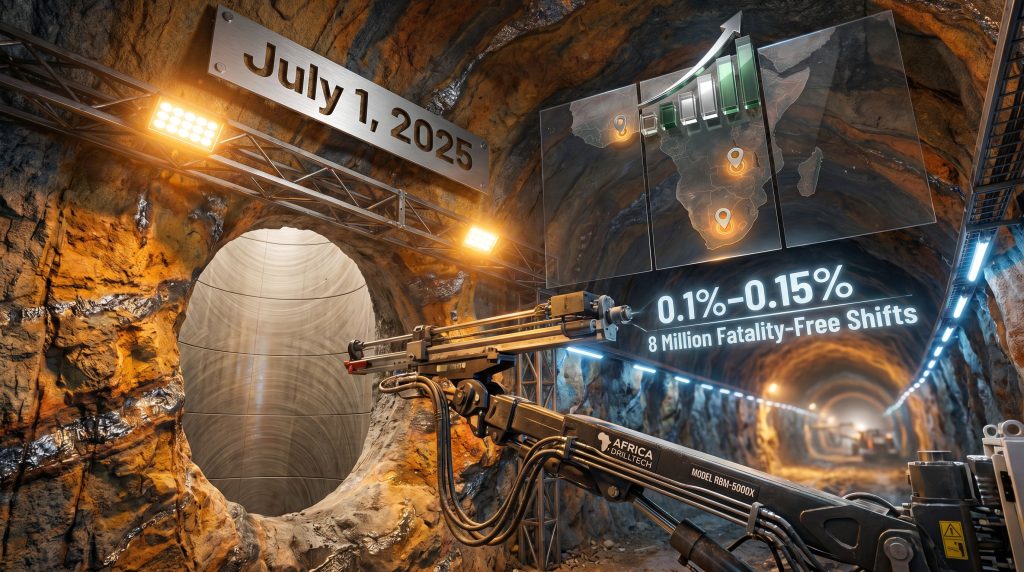
When Differential Capital, through its Special Situations Fund, completed its acquisition of Cementation Africa's assets out of the Murray & Roberts Limited business rescue process on July 1, 2025, the timing was precise in more than one sense. July 1 marked the company's 21st anniversary, a symbolic alignment that underscored continuity rather than disruption.
The transaction was not driven by opportunistic asset stripping. Differential Capital's investment thesis, articulated by Special Situations Fund Head Mark Salmon, had been forming for roughly two years before the deal closed. The reasoning was straightforward but required conviction to act on: prolonged underinvestment in mining creates a structural deficit in contractor capacity, and the businesses best positioned to capture the recovery are those that have preserved both their physical assets and their human capital through the trough.
Salmon noted in a May 2026 interview with Mining Weekly that capital investment announcements had already started picking up in the months preceding publication, with order books becoming increasingly robust across the underground mining contracting sector.
What makes this observation significant is its source. Differential Capital's primary domain is big data and artificial intelligence applied within financial services, not traditional mining sector private equity. The fund's decision to pivot into mining contracting represents a genuinely cross-disciplinary investment call, one grounded in macro cycle analysis rather than sectoral familiarity.
Two Decades of Specialisation: Why the Company's History Matters
Cementation Africa's formation through a 2004 merger created a contractor with a very specific operational identity: deep underground mining, conducted in technically complex environments, using integrated engineering design and execution capabilities. Over the following two decades, the company built expertise across shaft sinking, raise boring, underground development, and contract mining, accumulating institutional knowledge that cannot be replicated quickly or cheaply.
This point is critical to understanding why skills retention was the primary value preservation mechanism during the ownership transition. In underground mining contracting, the difference between a business that can win premium contracts and one that cannot often comes down to whether experienced engineers, shift supervisors, and specialist operators are still in place. Physical assets can be replaced or leased. The human infrastructure that knows how to use them in non-routine, high-risk environments cannot be rebuilt on short notice.
Managing Director Japie du Plessis remained in his role through the transition, and the core leadership team maintained continuity of operations throughout the business rescue period. This was not accidental. As Salmon emphasised to Mining Weekly, helping to retain vital skills for the benefit of all stakeholders is a central function of the capital Differential Capital provides.
The Murray & Roberts Chapter: Context Behind the Rescue
Murray & Roberts Limited's liquidity challenges created a situation familiar in South African corporate history: a high-performing subsidiary carrying reputational risk from its parent entity's distress. Business rescue under South African company law is a formal statutory process designed to facilitate the rehabilitation of a financially distressed company. For subsidiaries caught within a rescue process, the operational and commercial consequences can be severe even when the subsidiary itself is performing.
Cementation Africa's position was precisely this: operationally sound, technically capable, but commercially constrained by association with a distressed group. The Cementation Africa ownership transition resolved this by allowing the business to, as du Plessis described to Mining Weekly, shake off negative connotations and re-establish itself as an independent underground mining contractor.
The separation also clarified strategic focus. Furthermore, with no obligation to navigate group-level financial complexities, management could direct all attention toward winning and executing underground mining contracts across Africa.
The Transition Timeline: From Rescue to Independence
| Milestone | Date | Significance |
|---|---|---|
| Cementation Africa formation | 2004 | Merger creating specialised underground contractor |
| Murray & Roberts business rescue initiated | 2024–2025 | Triggered asset acquisition opportunity |
| Differential Capital acquisition completed | July 1, 2025 | Marked company's 21st anniversary |
| Rebranding and operational independence established | July 2025 | Full autonomy restored across jurisdictions |
| Tharisa Minerals five-year contract signed | May 7, 2026 | First major post-transition anchor contract |
| Mopani copper mine re-engagement, Zambia | 2025–2026 | African footprint expansion confirmed |
The one-week gap between the Tharisa contract formalisation (May 7, 2026) and the Mining Weekly interview (May 14, 2026) suggests the contract announcement was deliberately timed to demonstrate post-transition commercial credibility to the market.
Geographic Expansion: A Deliberate Multi-Jurisdiction Strategy
The Cementation Africa ownership transition did not simply preserve the status quo. It established a platform for active pan-African expansion. The company's geographic footprint as of mid-2026 spans three countries, each representing a distinct strategic rationale.
| Country | Current Activity | Strategic Rationale |
|---|---|---|
| South Africa | Five-year contract at Tharisa Minerals (chrome and PGMs) | Anchor contract; demonstrates post-rescue credibility |
| Zambia | Office reopened; executing work at Mopani copper mine | Copper belt exposure aligned with energy transition demand |
| Ghana | Fully compliant local business registered | West African market entry; regulatory readiness established |
The Zambia re-engagement is particularly notable. Mopani copper mine has been the subject of significant restructuring and investment activity in recent years, and copper market trends driven by global electrification and energy transition requirements have made the Zambian copper belt one of the more watched destinations for mining capital in Africa. Cementation Africa's office reopening signals a deliberate commitment to this market rather than opportunistic project-by-project presence.
Ghana's business registration, while not yet tied to a specific announced project, reflects a compliance-first approach to market entry. Registering a fully compliant local entity before securing contracts indicates a medium-term investment in market development rather than reactive pursuit of individual tenders.
The Tharisa Minerals Contract: What It Signals
The five-year underground mining development and construction contract at Tharisa Minerals' chrome and platinum group metals operation in South Africa carries significance beyond its commercial value. It is the company's most visible post-transition credential, demonstrating that clients are willing to commit to long-duration contracts with Cementation Africa under its new ownership structure.
The strategic purpose of the work itself is also instructive. Accessing deeper orebodies to extend a mine's productive life is economically justified only when the underlying commodity economics support the capital expenditure, and when the contractor executing the work has demonstrated both technical capability and operational reliability. A five-year commitment from Tharisa Minerals represents a client-side endorsement of both.
Technical Differentiation: The Capabilities That Win Contracts
RVDS Raise Boring Accuracy: A Tenfold Improvement
One of the most technically distinctive capabilities in Cementation Africa's service offering is its Rotary Vertical Drilling System, or RVDS, developed in collaboration with German engineering partners. The accuracy advantage this technology delivers over standard unguided drilling methods is substantial and quantifiable.
| Drilling Method | Shorter Holes (Accuracy) | Longer Holes (Accuracy) |
|---|---|---|
| Standard unguided drilling | ~1% deviation | ~2% deviation |
| RVDS guided drilling | 0.1% deviation | 0.15% deviation |
This represents roughly a tenfold improvement in drilling precision. In practical underground mining terms, this matters enormously. Inaccurate raise drilling requires costly corrective work, compromises schedule certainty, and can create safety hazards in complex geological environments. The ability to pilot into excavations over extended distances and hit targets with RVDS-level accuracy reduces all three risks simultaneously.
Du Plessis confirmed to Mining Weekly that the raise drilling division is viewed as a significant growth platform, with the company intending to pursue the market more aggressively to improve utilisation of its large fleet of raise boring assets.
In-House Engineering Design: From Prefeasibility to Execution
The integrated engineering design office differentiates Cementation Africa from contractors who rely on third-party consultants for prefeasibility and feasibility work. The company's internal capability spans the full project development spectrum, from early-stage prefeasibility analysis through to detailed engineering design and full underground execution.
The Ivanplats Platreef project illustrates this capability at scale. Converting a ventilation shaft into a fully operational rock hoisting shaft required not only engineering design expertise but also the operational experience to understand what a client needs to unlock underground development productivity. The design solution delivered by Cementation Africa's team enabled Ivanplats to progress development operations that would otherwise have been delayed or required a separate contractor engagement.
Cross-jurisdictional collaboration between Cementation Africa and its American sister company is also being developed, with steps underway to leverage shared engineering design strengths across time zones. This creates a combined intellectual resource for clients whose projects require around-the-clock engineering support.
The Training Academy: Skills as a Competitive Moat
In a sector where skilled underground workers are chronically undersupplied relative to demand, Cementation Africa's internal training academy functions as both a workforce development engine and a competitive differentiator.
The skills produced by the academy span:
- Trackless equipment engineers and operators (identified as the highest-demand category)
- Miners, shift supervisors, and mine overseers
- Riggers, boilermakers, electricians, and mechanical technicians
The academy's dual function is worth highlighting. Internally, it builds the specific competency profiles that underground mining contracting requires. Externally, it supports client obligations under Social Labour Plans, which require mining companies operating in South Africa to demonstrate measurable contributions to local employment development. By providing training that supports client SLP compliance, Cementation Africa transforms its academy from a cost centre into a client relationship asset.
The next major ASX story will hit our subscribers first
Safety Performance: Eight Million Reasons to Take Notice
Underground mining safety statistics can be abstract until they are contextualised against the specific work being performed. Cementation Africa's achievement of eight million fatality-free shifts over approximately ten to twelve years is a remarkable figure in isolation. Measured against the nature of the work conducted during that period, it is exceptional.
Five vertical shaft sinking projects were executed within this timeframe. Vertical shaft sinking is among the most hazardous activities in underground mining. It combines confined working environments, heavy equipment operations, blasting, and the constant management of water ingress and ground instability. Fatality-free performance across five such projects, alongside all other contract mining activities, reflects systematic engineering rather than statistical fortune.
Du Plessis attributed this record to two parallel efforts: engineering historical injury and fatality risks out of operations through systematic hazard elimination, and building a workplace culture where employees feel safe to raise concerns about unsafe conditions before incidents occur.
The next target is nine million fatality-free shifts, a goal that maintains the psychological momentum of continuous improvement rather than treating the eight-million milestone as an endpoint.
Technology Modernisation and the Path Toward Autonomous Operations
Cementation Africa's modernisation agenda goes beyond incremental efficiency improvements. Du Plessis outlined to Mining Weekly that the company is already identifying projects and operations where it can challenge itself to achieve autonomous and even remote mining operations. In addition, mining automation trends are increasingly shaping client expectations, and technology partnerships with leading providers are in place, with further details expected to be shared in due course.
The framing is deliberate: technology adoption is positioned as a continuous, evolving commitment rather than a fixed programme with defined endpoints. This is strategically important in a sector where AI mining efficiency tools are accelerating and clients increasingly expect contractors to demonstrate a credible modernisation pathway.
The Investment Thesis: Counter-Cyclical Logic in Mining Contracting
For investors and analysts watching the mining services sector, the structure of Differential Capital's acquisition deserves attention as a model rather than an isolated transaction.
The investment logic rested on three observations:
- Capital investment in mining had been suppressed for an extended period, reducing demand for underground contracting services.
- This suppression had created distress among contracting businesses, making quality assets available at valuations that did not reflect their recovery-phase potential.
- The recovery, when it came, would disproportionately benefit contractors with intact asset bases, retained skilled workforces, and established client relationships.
All three observations are now being validated. Capital investment announcements are picking up. Order books are strengthening. Furthermore, critical minerals demand is accelerating the need for expanded underground production capacity across the continent. Cementation Africa, with its retained assets, preserved skills, and newly secured anchor contract, is consequently positioned on the right side of the cycle.
Disclaimer: The scenario analysis and forward-looking commentary in this section involve forecasts and assumptions that may not materialise. Readers should not interpret this content as financial advice. Mining capital expenditure cycles are subject to commodity price volatility, geopolitical factors, regulatory changes, and financing conditions that can alter projected outcomes materially.
The broader implication for institutional investors is that mining industry consolidation and distress situations at the trough of capital investment cycles represent a structurally interesting asset class, provided the core operational capabilities have been preserved. The risk-adjusted return profile depends almost entirely on whether skills and assets survived the distress period intact. In Cementation Africa's case, both did.
What to Watch as Cementation Africa Grows Its African Footprint
The trajectory from here involves several visible indicators worth monitoring:
- Progress toward nine million fatality-free shifts as a continuing safety benchmark
- Technology partnership announcements related to autonomous and remote underground operations
- Additional contract wins across South Africa, Zambia, Ghana, and potential new African jurisdictions
- Further development of the collaborative engineering model between Cementation Africa and its American counterpart
- Capital investment trend data from major African mining projects as a leading indicator of order book growth for the sector
The Cementation Africa ownership transition is, in the most fundamental sense, a story about preserving operational capability through a period of financial turbulence and emerging with the focus and independence needed to compete effectively. The 21-year history of specialised underground mining expertise, the RVDS technology platform, the training academy, the safety record, and the freshly secured five-year anchor contract collectively define a business that arrived at its independence with its competitive position not just intact, but strengthened by the clarity of purpose that independence provides.
Source: Mining Weekly, Martin Creamer, May 14, 2026. This article contains forward-looking statements and scenario projections that are subject to uncertainty. They should not be construed as investment advice or predictions of future performance.
Want to Catch the Next Major Mineral Discovery Before the Broader Market Does?
Discovery Alert's proprietary Discovery IQ model scans ASX announcements in real time, instantly identifying significant mineral discoveries across more than 30 commodities — turning complex data into actionable opportunities for both short-term traders and long-term investors. Explore Discovery Alert's discoveries page to see how historic finds have generated exceptional returns, and begin your 14-day free trial today to position yourself ahead of the market.