July 24, 2026
Understanding Central Africa's Strategic Position in Critical Battery Supply Networks
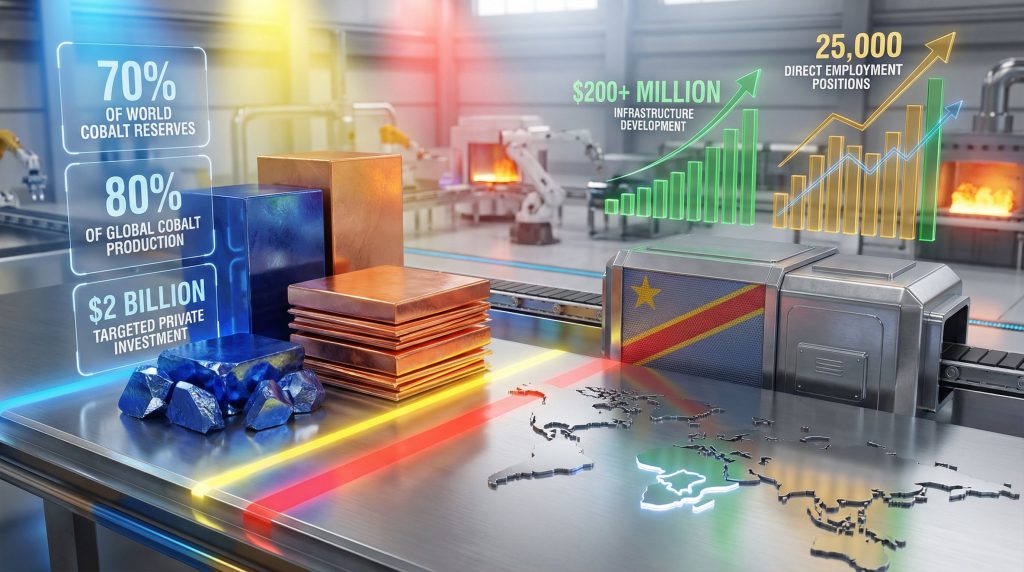
Central Africa sits at the epicenter of a profound transformation reshaping global energy systems. While electric vehicles capture headlines and renewable energy installations accelerate worldwide, the region's mineral endowments represent the foundational building blocks enabling this transition. The Democratic Republic of Congo controls more than two-thirds of the world's verified cobalt reserves, with production exceeding 80% of global output through a network of mining operations concentrated in the Copperbelt region.
This geological advantage extends far beyond cobalt extraction. The DRC battery mineral value chain development encompasses substantial copper deposits that frequently occur as cobalt by-products, creating integrated extraction opportunities. Emerging lithium projects scattered across multiple provinces demonstrate expanding critical mineral portfolios, while strategic coltan deposits containing tantalum and niobium add complexity to the region's resource matrix.
Critical Mineral Assets Driving Value Chain Opportunities
The concentration of battery-essential materials within DRC borders creates unprecedented opportunities for vertical integration. Current extraction focuses primarily on raw material export, with minimal domestic processing capabilities. This creates significant value-addition potential across multiple processing stages:
- Primary Processing: Converting raw cobalt ore into refined concentrates and hydroxides
- Secondary Refining: Producing battery-grade cobalt sulfate meeting strict purity specifications
- Precursor Manufacturing: Synthesising cathode materials for lithium-ion battery production
- Component Integration: Potential battery cell and module assembly operations
Most significantly, Chinese entities control approximately 80% of cobalt mining operations within DRC while simultaneously managing 60-90% of global cobalt refining capacity. This creates both partnership opportunities and competitive challenges for domestic value chain development initiatives.
Furthermore, recent advances in battery recycling breakthrough technology may influence future supply dynamics, though current recycling volumes remain insufficient to impact primary mineral demand substantially.
Supply Chain Integration Complexities
Current mineral flows follow established export channels optimised for raw material shipment rather than domestic processing. Cobalt ore typically travels through Zambian rail networks or regional port facilities without significant value addition within DRC borders. This export-oriented structure reflects infrastructure limitations, processing technology gaps, and established commercial relationships rather than geological constraints.
Copper production presents a different dynamic, with some domestic refining capacity already operational through facilities managed by major international mining companies. However, most copper cathode production occurs outside DRC despite substantial ore reserves. This situation aligns with broader trends affecting the global copper supply forecast, indicating similar value-addition opportunities exist across multiple mineral categories.
When big ASX news breaks, our subscribers know first
Strategic Development Pathways for Industrial Integration
The transformation of DRC battery mineral value chain development requires coordinated implementation across multiple strategic pathways. Two primary approaches have emerged from recent government initiatives and private sector engagement.
Accelerated Industrial Zone Strategy
The Musompo Special Economic Zone represents the most ambitious attempt to create integrated battery mineral processing capabilities. Located in Lualaba province and covering more than 900 hectares, this development targets comprehensive value-addition from precursor materials through potential final assembly operations.
Investment Framework and Scale:
| Component | Investment Requirement | Timeline | Employment Impact |
|---|---|---|---|
| Infrastructure Development | $200+ million | Construction phase | 25,000 direct jobs |
| Private Industrial Investment | $2 billion target | Mobilisation stage | 60,000 indirect positions |
| Processing Equipment | Undisclosed | Planning phase | Technical workforce expansion |
| Transportation Networks | Assessment ongoing | Multi-year horizon | Regional connectivity benefits |
The March 2025 construction launch under then-Industry Minister Louis Watum Kabamba established initial momentum, though progress has encountered coordination challenges. The zone's design encompasses multiple processing stages, from basic mineral concentration through refined metal production and potentially extending to component manufacturing.
Additionally, similar initiatives across Africa are establishing critical raw materials facility projects that may provide valuable benchmarks for implementation approaches.
International Partnership Integration Framework
Recognition of technical and market access limitations has driven engagement with specialised international organisations. The collaboration between DRC's Congolese Battery Council and the International Trade Centre reflects this strategic approach.
Partnership objectives focus on bridging gaps between domestic processing capabilities and international market requirements:
- Market Intelligence: Identifying export channels and end-user specifications for processed materials
- Technical Assistance: Supporting processing technology selection and optimisation
- Standards Compliance: Ensuring products meet international quality and traceability requirements
- Investment Facilitation: Connecting domestic projects with international financial and technical partners
The February 2026 meeting between Prime Minister Judith Suminwa Tuluka and officials from both organisations signals high-level political commitment to this partnership approach. However, operational details regarding timelines, deliverables, and specific industrial segments remain undefined in public statements.
Technology Transfer and Capability Building
Successful value chain development requires substantial technology transfer across multiple processing stages. Current domestic capabilities concentrate on extraction and basic concentration, with limited experience in:
- Hydrometallurgical Processing: Acid leaching, purification, and crystallisation for battery-grade materials
- Quality Control Systems: Meeting strict specifications for cobalt sulfate, copper cathodes, and lithium compounds
- Environmental Management: Waste treatment and emissions control for processing operations
- Supply Chain Integration: Coordinating ore feed, processing schedules, and export logistics
International partnerships provide access to established processing technologies and operational expertise. However, successful transfer requires substantial local capacity building and workforce development programmes. Moreover, emerging AI in mining innovation technologies may offer opportunities to leapfrog traditional operational approaches.
Coordination Challenges and Implementation Barriers
The complexity of DRC battery mineral value chain development extends far beyond technical and financial considerations. Institutional coordination requirements across multiple government ministries create significant implementation challenges that have already impacted project timelines.
Interministerial Synchronisation Requirements
Value chain development necessitates unprecedented coordination across distinct governmental departments, each with separate priorities and operational frameworks. The scope of required coordination includes:
Ministry of Mines: Ore supply agreements, royalty structures, and extraction oversight
Ministry of Energy: Power allocation, electricity pricing, and grid connectivity
Ministry of Industry: SEZ regulations, manufacturing licences, and quality standards
Ministry of Infrastructure: Transportation networks, port access, and logistics coordination
Ministry of Trade: Export permits, international agreements, and market access protocols
Ministry of Finance: Investment incentives, fiscal policies, and revenue optimisation
Each ministry operates with distinct timelines, budgets, and performance metrics, creating coordination complexity that has already affected project implementation. The departure of Industry Minister Louis Watum Kabamba in August 2025 directly impacted Musompo SEZ progress, according to assessments from project developers.
Stakeholder Alignment Challenges
Romain Deniel, CEO of Arise IIP, the special economic zone developer involved in multiple DRC projects including Musompo, identified critical stakeholder challenges at the November 2025 Makutano forum. "Establishing special economic zones requires involvement of four to six ministries and demands significant coordination capacity," Deniel emphasised.
More significantly, Deniel noted that "the battery value chain represents a very strategic segment requiring buy-in from existing operators, given potential impacts on current value chain structures." This observation highlights a fundamental challenge: incumbent mining operators, predominantly Chinese-controlled entities, may view domestic processing as competing with their established export-oriented business models.
Timeline Impact and Continuity Risks
The correlation between ministerial leadership changes and project momentum demonstrates institutional vulnerability. The Musompo SEZ experienced noticeable slowdown following the August 2025 ministerial transition, suggesting that project continuity depends heavily on individual leadership rather than embedded institutional processes.
Timeline of Critical Events:
- March 2025: Construction launch under Minister Kabamba
- August 2025: Ministerial departure from Industry portfolio
- November 2025: Project slowdown reported at industry forum
- February 2026: High-level meeting with international partners seeking support
This sequence indicates that while political will exists at the highest levels, operational continuity requires more robust institutional frameworks that can sustain momentum through leadership transitions.
Investment Requirements and Infrastructure Constraints
The scale of capital requirements for DRC battery mineral value chain development reflects both the ambition and complexity of vertical integration objectives. Financial barriers extend beyond direct industrial investment to encompass comprehensive infrastructure development across multiple sectors.
Capital Mobilisation Framework
Current investment requirements span multiple categories with varying degrees of public and private sector responsibility:
Infrastructure Development: The $200+ million SEZ infrastructure investment covers basic utilities, transportation connections, and regulatory frameworks. This public sector investment creates the foundation for private industrial development but requires sustained government commitment over multi-year construction periods.
Private Industrial Investment: The $2 billion private investment target for Musompo SEZ reflects the capital intensity of battery mineral processing operations. Individual processing facilities for battery-grade cobalt sulfate typically require $50-150 million for commercially viable production capacity, while integrated copper refining adds substantial additional requirements.
Supporting Infrastructure: Power generation, transmission networks, water supply systems, and waste management facilities represent additional investment categories not fully quantified in public statements. These supporting systems often determine project viability more than direct processing equipment costs.
Technical Infrastructure Gaps
Current infrastructure limitations create bottlenecks across multiple operational dimensions:
- Power Supply: Battery mineral processing requires consistent, high-quality electricity supply often exceeding local grid capacity
- Transportation Networks: Efficient movement of raw materials, processed products, and equipment depends on rail, road, and port connectivity improvements
- Water Resources: Processing operations require substantial water supply and treatment capabilities
- Telecommunications: Modern industrial operations depend on reliable data connectivity for process control and international coordination
Consequently, addressing these infrastructure gaps becomes essential for successful value chain implementation. Similar to developments in India's battery-grade lithium refinery projects, comprehensive infrastructure planning must precede industrial investment.
Processing Technology Investment Requirements
Different processing stages require distinct technology platforms and capital commitments:
| Processing Stage | Capital Requirement | Technical Complexity | Timeline to Operation |
|---|---|---|---|
| Cobalt Hydroxide Production | $30-50 million | Moderate | 18-24 months |
| Battery-Grade Cobalt Sulfate | $75-150 million | High | 24-36 months |
| Copper Cathode Refining | $200-400 million | Very High | 36-48 months |
| Lithium Carbonate Processing | $100-250 million | High | 30-42 months |
| Integrated Precursor Facility | $300-600 million | Very High | 48-60 months |
These estimates reflect international benchmarks for similar facilities, though local conditions may affect both costs and timelines significantly.
Global Market Dynamics and Competitive Positioning
The evolution of global battery markets creates both opportunities and risks for DRC battery mineral value chain development. Understanding these dynamics is essential for strategic positioning and investment decision-making.
Demand Growth Trajectories and Technology Evolution
Electric vehicle adoption drives exponential growth in battery mineral demand, with cobalt requirements projected to increase substantially through 2030. However, technological evolution introduces complexity through multiple mechanisms:
Nickel Substitution Trends: Battery chemistry development increasingly emphasises nickel-rich formulations that reduce cobalt content per battery unit. While total demand growth may offset this trend, cobalt intensity per vehicle is declining.
Recycling Technology Development: Advancing recycling capabilities create secondary supply sources that may moderate primary extraction demand over longer timeframes. However, recycling requires substantial existing battery stock, limiting near-term impact.
Alternative Chemistry Research: Lithium iron phosphate (LFP) and other cobalt-free chemistries gain market share in specific applications, though high-performance applications continue requiring cobalt-containing formulations.
Supply Chain Security and Strategic Partnerships
Geopolitical considerations increasingly influence battery mineral sourcing decisions. Consuming nations seek to diversify supply sources and develop strategic partnerships outside Chinese-controlled channels. This creates opportunities for DRC to position itself as a reliable, responsible supplier through:
Traceability System Implementation: Blockchain-based tracking and certification systems that demonstrate responsible sourcing throughout the supply chain.
Environmental Standards Compliance: Meeting international environmental and social governance (ESG) requirements that increasingly influence procurement decisions.
Long-term Offtake Agreements: Structured supply contracts that provide revenue certainty for processing investments while ensuring supply security for battery manufacturers.
Furthermore, international initiatives supporting global value chain integration demonstrate growing recognition of Africa's strategic importance in battery mineral supply chains.
Regional Competition and Competitive Advantages
DRC's competitive position reflects both geological advantages and operational challenges:
Geological Advantages: Unmatched cobalt reserve concentrations and established mining infrastructure provide fundamental competitive benefits.
Cost Structure Challenges: Labour costs remain competitive, but energy, transportation, and regulatory compliance costs may offset geological advantages.
Quality Considerations: Ore grades and consistency affect processing economics and product quality, areas where DRC operations must demonstrate competitive performance.
Artisanal Mining Integration and Formalization Strategies
Artisanal mining contributes an estimated 15-20% of DRC cobalt production, representing both a significant supply source and a complex governance challenge for DRC battery mineral value chain development. Integration of artisanal production into formal value chains requires comprehensive strategies addressing economic, social, and technical dimensions.
Formalisation Pathway Development
Successful artisanal mining integration requires structured approaches that balance economic opportunity with safety and environmental standards:
Cooperative Development Programmes: Organising individual artisanal miners into formal cooperatives provides economies of scale, improved safety protocols, and better market access. Cooperatives can aggregate production volumes sufficient for processing facility feed requirements.
Technology Transfer Initiatives: Introducing appropriate-scale processing technologies allows artisanal operations to add value beyond raw ore extraction. Simple concentration and purification techniques can significantly improve product quality and pricing.
Market Access Facilitation: Connecting artisanal producers directly to processing facilities eliminates intermediary markups while ensuring supply chain transparency and traceability.
Risk Mitigation and Standards Compliance
Artisanal mining integration must address international standards and due diligence requirements:
- Child Labour Elimination: Comprehensive monitoring and alternative livelihood programmes to eliminate child labour from cobalt supply chains
- Environmental Rehabilitation: Restoration of artisanal mining sites and implementation of environmentally responsible extraction practices
- Health and Safety Standards: Training programmes, protective equipment provision, and medical support systems for artisanal miners
- Traceability Integration: Digital systems tracking cobalt from artisanal extraction through processing and export
Financial inclusion mechanisms, including access to credit and savings programmes, support artisanal miner transition to formal economy participation while providing economic stability during formalisation processes.
In addition, research on battery industry development in Central Africa emphasises the importance of regional coordination in addressing artisanal mining challenges across the Copperbelt.
The next major ASX story will hit our subscribers first
Technology Transfer Mechanisms and Innovation Development
Successful DRC battery mineral value chain development requires comprehensive technology transfer that extends beyond equipment procurement to include operational expertise, process optimisation, and innovation capabilities.
Strategic Partnership Technology Transfer Models
The International Trade Centre partnership provides access to multiple technology transfer mechanisms:
Processing Technology Access: Connection to established hydrometallurgical and pyrometallurgical processing technologies proven in similar geological conditions.
Operational Expertise Transfer: Access to experienced technical personnel and operational management systems that can accelerate learning curves and optimise performance.
Quality Assurance Systems: Implementation of international quality control standards and certification processes required for battery-grade material production.
Market Intelligence Networks: Real-time access to pricing, specification, and demand information that enables responsive production planning and marketing strategies.
Innovation Ecosystem Development Requirements
Long-term competitiveness requires domestic innovation capabilities rather than complete dependence on technology transfer:
Research and Development Centres: Materials science research focused on optimising processing techniques for DRC ore characteristics and developing new applications for regional mineral resources.
Technical Training Institutions: Comprehensive workforce development programmes producing skilled technicians, engineers, and managers capable of operating and maintaining advanced processing equipment.
Quality Assurance Laboratories: Independent testing and certification capabilities that verify product specifications and support continuous improvement programmes.
Technology Incubation Programmes: Support systems for local innovation and entrepreneurship in mining technology, processing optimisation, and related services.
Success Factors and Implementation Framework
The transformation of DRC battery mineral value chain development from strategic concept to operational reality depends on sustained execution across multiple critical dimensions. Success requires coordinated action that addresses both technical requirements and institutional capacity constraints.
Governance Framework and Policy Coherence
Effective implementation requires robust governance mechanisms that ensure coordination and accountability:
Integrated Sectoral Strategies: Alignment of mining, energy, industrial, and trade policies around value chain development objectives rather than sector-specific optimisation.
Performance Monitoring Systems: Regular assessment of progress against quantitative targets, with clear accountability mechanisms for both public and private sector participants.
Regulatory Harmonisation: Streamlined permitting, licensing, and compliance processes that reduce administrative burden while maintaining essential standards.
Stakeholder Engagement Platforms: Regular consultation mechanisms that include government, private sector, civil society, and international partner perspectives in decision-making processes.
Market Competitiveness and Commercial Viability
Long-term success requires competitive positioning in global markets through multiple mechanisms:
Cost Structure Optimisation: Comprehensive analysis and improvement of energy costs, transportation expenses, labour productivity, and regulatory compliance costs relative to international competitors.
Supply Chain Reliability: Consistent delivery performance, specification adherence, and quality assurance that builds customer confidence and supports premium pricing.
Innovation and Continuous Improvement: Ongoing investment in process optimisation, product quality enhancement, and new product development that maintains competitive advantage over time.
The collaboration with international organisations represents a crucial step toward market access and partnership facilitation. However, ultimate success requires translating strategic frameworks into operational industrial projects that demonstrate commercial viability and competitive advantage in global markets.
Risk Management and Scenario Planning
Multiple risk factors could affect implementation success, requiring comprehensive risk management strategies:
Political Risk: Ministerial changes, policy reversals, or political instability that affects project continuity or international partnership relationships.
Market Risk: Demand fluctuations, technology substitution, or competitive pressure that affects product pricing and market access.
Operational Risk: Technical challenges, supply disruptions, or operational performance below expectations that affects financial viability.
Financial Risk: Currency fluctuations, capital availability, or debt sustainability issues that constrain investment or operational funding.
Effective risk management requires diversified strategies, contingency planning, and adaptive implementation approaches that can respond to changing conditions while maintaining strategic direction.
The path forward for DRC battery mineral value chain development requires sustained commitment across multiple stakeholder groups, comprehensive coordination mechanisms, and adaptive strategies that can navigate both opportunities and challenges in rapidly evolving global markets. Success will depend on translating strategic vision into concrete operational achievements that demonstrate the viability of African mineral value chain integration in the global energy transition.
Investment decisions involve substantial risk. This analysis is for informational purposes only and should not be considered investment advice. Readers should conduct independent research and consult qualified advisors before making investment decisions related to DRC mineral sector opportunities.
Ready to Capitalise on Africa's Critical Mineral Opportunities?
Discovery Alert's proprietary Discovery IQ model delivers real-time alerts on significant ASX mineral discoveries, instantly empowering subscribers to identify actionable opportunities ahead of the broader market. With major discoveries in battery minerals and critical resources driving substantial returns, begin your 14-day free trial today to position yourself ahead of the market and discover why historic mineral discoveries can generate exceptional outcomes by exploring our dedicated discoveries page.