
June 13, 2026
Central European Energy Infrastructure at a Critical Juncture
Regional energy networks across Central and Eastern Europe face unprecedented transformation pressures as geopolitical tensions intersect with domestic policy shifts. The infrastructure systems that have dominated energy flows for decades now confront fundamental reconfiguration demands, driven by security considerations, supply chain diversification imperatives, and evolving regulatory frameworks. These shifts reflect broader strategic realignments that extend far beyond individual national boundaries, particularly as countries navigate energy transition challenges in an increasingly complex global marketplace.
Traditional energy dependency patterns established during previous geopolitical eras are increasingly viewed as strategic vulnerabilities rather than economic conveniences. The interconnected nature of regional energy systems means that policy changes in one jurisdiction create ripple effects across neighbouring markets, affecting everything from pricing mechanisms to long-term investment planning. Understanding these dynamics requires examining both the technical infrastructure constraints and the political economy factors that shape energy policy decision-making.
When big ASX news breaks, our subscribers know first
Parliamentary Transformation Reshapes Energy Strategy
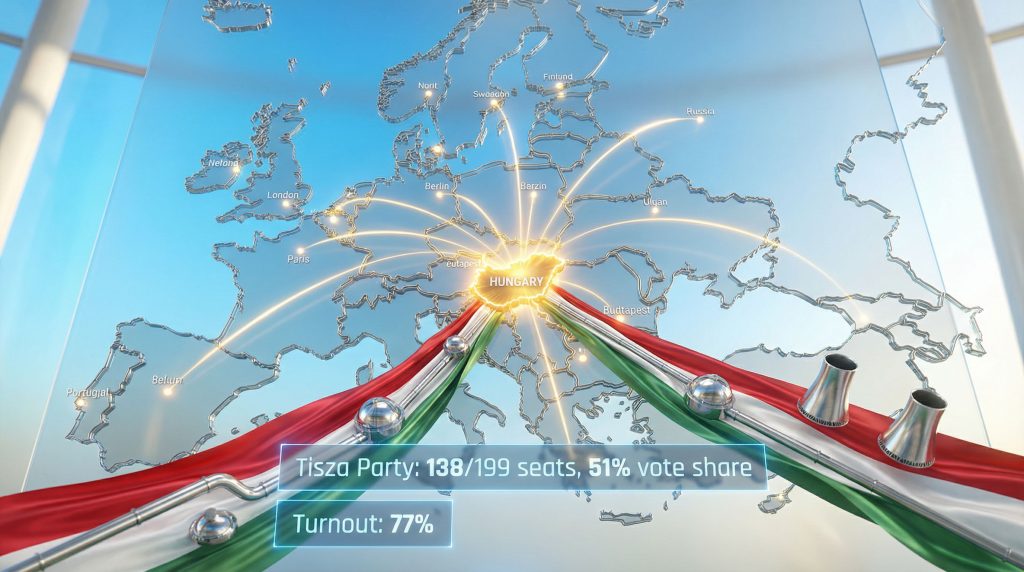
The hungary orban election results from April 12, 2026 delivered a decisive shift in political control, with the Tisza party securing 138 of 199 seats representing approximately 51% of the vote share. This outcome provides a constitutional supermajority capable of amending fundamental legislation enacted during the previous administration's tenure. Viktor Orbán's Fidesz party captured only 55 seats with 40% vote share, marking the end of his 16-year leadership period.
The electoral mechanics revealed substantial voter engagement, with turnout reaching 77% – significantly above typical European parliamentary election participation rates of 40-60%. This elevated participation suggests voters perceived the contest as consequential for Hungary's strategic direction. The 26-percentage-point gap between Tisza and Fidesz represents one of the most decisive electoral shifts in recent Central European political history.
| Party | Seats Won | Vote Share | Strategic Position |
|---|---|---|---|
| Tisza | 138/199 | 51% | Constitutional majority |
| Fidesz | 55/199 | 40% | Opposition |
| Mi Hazánk | 6/199 | 3% | Minor opposition |
The far-right Mi Hazánk party obtained 6 seats with 3% vote share, indicating that nationalist alternatives failed to capture significant voter support. Peter Magyar's leadership of the Tisza party emphasised EU integration and energy security diversification, contrasting sharply with the previous administration's approach to Russian energy relationships and institutional governance.
International Diplomatic Context
The hungary orban election results occurred amid significant international attention, including U.S. political involvement that ultimately proved ineffective in influencing the outcome. U.S. President Donald Trump had endorsed Viktor Orbán's re-election campaign, whilst Vice President JD Vance visited Budapest on April 7-8, 2026, to support Orbán's candidacy. The failure of this international diplomatic pressure to prevent Orbán's defeat suggests that domestic concerns about energy security and institutional governance outweighed external political influences.
This diplomatic context reveals the limitations of international endorsements when domestic policy priorities diverge from external expectations. The Tisza party's victory occurred despite, rather than because of, international pressure, indicating that Hungarian voters prioritised EU solidarity over traditional transatlantic political alignments whilst considering broader trade war impacts on regional stability.
Energy Dependency Framework Under Review
Hungary currently maintains one of the most extensive Russian energy import relationships among EU member states, encompassing both crude oil through the Druzhba pipeline system and natural gas supply arrangements. This dependency framework reflects decades of infrastructure integration and contractual relationships that extend well beyond simple commodity purchases.
The Tisza party has committed to eliminating what it characterises as the "systemic risk" of Russian energy dependence by 2035, establishing a nine-year transition timeline from the current date. However, party leadership has indicated it does not categorically rule out future Russian imports if deemed necessary for energy security, suggesting a pragmatic rather than ideological approach to supply diversification.
Current Import Infrastructure
The technical complexity of Hungary's energy infrastructure creates significant transition challenges, particularly given current oil price trends and market volatility:
- Crude Oil: Druzhba pipeline capacity handles substantial volumes of Russian crude, requiring alternative supply route development
- Natural Gas: Existing pipeline infrastructure and long-term supply contracts create contractual and technical complications
- Nuclear Energy: Russian entity Rosatom involvement in multiple projects creates strategic dependency concerns
The party's position regarding EU timelines for complete Russian energy phase-out remains ambiguous. The European Union has proposed eliminating Russian gas imports by autumn 2027 and crude oil by end-2027, creating potential timeline conflicts with Hungary's proposed 2035 target whilst considering LNG supply implications across regional markets.
Nuclear Energy Strategy and Russian Partnerships
The planned Paks 2 nuclear facility represents a critical component of Hungary's energy security framework, designed with 2.4 gigawatts of generating capacity. Peter Magyar has explicitly stated that Tisza supports construction of this facility, recognising its strategic importance for both decarbonisation objectives and baseload electricity supply security.
However, the party intends to conduct comprehensive reviews of Russian contracts linked to the project, particularly those involving Rosatom as technical and financial partner. This approach balances nuclear energy development priorities against concerns about strategic dependence on Russian entities for critical infrastructure.
Contractual Complexity and Alternative Options
Rosatom's involvement encompasses multiple dimensions that complicate simple contract cancellation:
- Technical Expertise: Nuclear reactor design and construction capabilities
- Financial Arrangements: Funding mechanisms that may include Russian government backing
- EU Compliance: State aid implications under European regulatory frameworks
- Timeline Constraints: Project delays from contract restructuring or technology changes
"The review process must balance strategic autonomy objectives with practical delivery timelines and cost considerations for critical energy infrastructure."
Alternative reactor technology options from France, South Korea, Japan, and other sources provide potential pathways for reducing Russian involvement whilst maintaining project viability. However, such changes would likely require significant contract renegotiation, timeline adjustments, and additional regulatory approvals.
EU Sanctions Coordination and Diplomatic Realignment
Viktor Orbán's previous administration repeatedly leveraged Hungary's position within EU decision-making frameworks to secure energy import exemptions and block sanctions measures. Most notably, Orbán blocked a proposed €90 billion EU loan for Ukraine until crude oil deliveries resumed on the Druzhba pipeline, demonstrating willingness to use institutional leverage for energy security objectives.
The hungary orban election results suggest the Tisza party will reaffirm Hungary's commitment to EU solidarity, though specific positions on Russian sanctions remain undefined. The party has previously expressed opposition to Ukraine's accelerated EU accession, suggesting a nuanced approach to Ukraine-related policies rather than wholesale alignment with all EU Ukraine support measures.
Institutional Decision-Making Changes
EU sanctions decisions typically require unanimous consent from all member states, providing individual countries with significant leverage over collective policy. Hungary's previous veto threats demonstrated how a single member state could extract concessions or secure exemptions from sanctions frameworks, particularly when considering tariff economic implications across trade relationships.
The shift toward greater EU alignment under Tisza leadership could significantly accelerate EU decision-making processes on sanctions and financial assistance measures. However, the party's commitment to maintaining regulated household energy pricing and ensuring industrial competitiveness may limit full sanctions alignment if such measures threaten domestic economic stability.
Regional Geopolitical Dynamics and Alliance Structures
Hungary's political transformation occurs within broader Central European geopolitical realignments that affect the Visegrád Group dynamics (Hungary, Poland, Czech Republic, Slovakia). The hungary orban election results suggest regional movement toward greater EU integration and Western alignment, contrasting with previous positioning as a bridge between East and West.
The failure of U.S. diplomatic intervention to influence Hungary's election outcome indicates shifting transatlantic relationship dynamics. U.S.-Hungary bilateral relations may require recalibration from the previous alignment with conservative political movements toward greater emphasis on institutional governance and EU partnership frameworks.
NATO and Defense Cooperation Implications
The political shift creates opportunities for enhanced NATO cooperation and defence spending commitments that align with broader alliance objectives. Previous tensions over defence procurement decisions and military cooperation frameworks may diminish under leadership that prioritises Western institutional integration.
Investment and trade relationships with the United States could benefit from improved diplomatic alignment, particularly in technology sectors and energy infrastructure development that supports diversification objectives.
The next major ASX story will hit our subscribers first
Infrastructure Development Requirements for Energy Independence
Achieving the proposed 2035 timeline for Russian energy independence requires substantial infrastructure investment and alternative supply arrangement negotiations. The technical scope of required changes extends across multiple energy sectors and regional coordination mechanisms.
LNG Terminal and Pipeline Infrastructure
Hungary's geographic position requires either direct LNG terminal development or enhanced pipeline connections to existing regional facilities. Key infrastructure priorities include:
- LNG Import Capacity: Terminal construction or access agreements with neighbouring facilities
- Cross-Border Connections: Pipeline infrastructure linking to EU energy networks
- Storage Facilities: Strategic reserves for supply security during transition periods
- Grid Modernisation: Electrical infrastructure supporting renewable energy integration
The investment requirements for comprehensive infrastructure development likely exceed domestic financing capabilities, necessitating EU funding mechanisms and international partnership arrangements. European recovery and resilience funds provide potential financing sources, though accessing such support requires meeting EU regulatory and environmental standards.
Economic Feasibility and Market Integration Challenges
The nine-year timeline for energy independence presents significant economic and technical feasibility challenges that extend beyond infrastructure development. Market integration requirements include pricing mechanism adjustments, industrial competitiveness considerations, and regulatory framework harmonisation with EU standards.
Tisza's commitment to maintaining regulated household energy pricing whilst ensuring industrial competitiveness creates policy balancing challenges during the transition period. Higher alternative energy costs during infrastructure development could pressure both household affordability and manufacturing sector competitiveness.
Supply Chain Diversification Costs
Transitioning from established Russian supply relationships to alternative sources involves multiple cost factors:
- Price Premiums: Alternative suppliers may command higher prices than existing Russian contracts
- Transportation Costs: New supply routes may involve higher logistics expenses
- Contract Restructuring: Legal and financial costs from existing agreement modifications
- Technology Adaptation: Industrial process adjustments for different energy specifications
The economic impact assessment requires balancing short-term transition costs against long-term strategic security benefits. EU financial assistance mechanisms and energy solidarity frameworks provide potential support for managing these transition costs.
Implementation Timeline and Priority Framework
The new government's first 100 days will likely focus on contract reviews, stakeholder consultations, and EU coordination on support mechanisms for energy transition objectives. Priority framework development requires balancing immediate energy security maintenance with long-term diversification goals.
Strategic Planning Components
Effective implementation requires coordinated planning across multiple policy domains:
- Contract Analysis: Comprehensive review of existing Russian energy agreements
- Alternative Sourcing: Negotiation of replacement supply arrangements
- Infrastructure Planning: Detailed timeline for facility construction and upgrades
- Regulatory Alignment: Harmonisation with EU energy security frameworks
- Financial Coordination: Securing funding for transition investments
The success of Hungary's energy independence strategy depends significantly on broader EU energy policy coordination and regional infrastructure development initiatives that extend beyond national boundaries.
Disclaimer: This analysis involves forecasts and speculation about future policy developments that are subject to significant uncertainty. Energy transition timelines and costs discussed represent preliminary estimates that may change substantially based on technological developments, market conditions, and international policy coordination. Readers should consider these factors when evaluating the feasibility and implications of proposed energy policy changes.
Looking for Strategic Opportunities in Energy Transition Markets?
Discovery Alert's proprietary Discovery IQ model delivers real-time alerts on significant mineral discoveries across the ASX, including critical materials essential for energy infrastructure development. With major shifts in Central European energy policy creating new demand for strategic minerals, exploring historic discovery returns demonstrates the potential for substantial market gains when positioned ahead of major announcements.