May 21, 2026
Understanding Centrifugal Mechanics in Industrial Mineral Processing
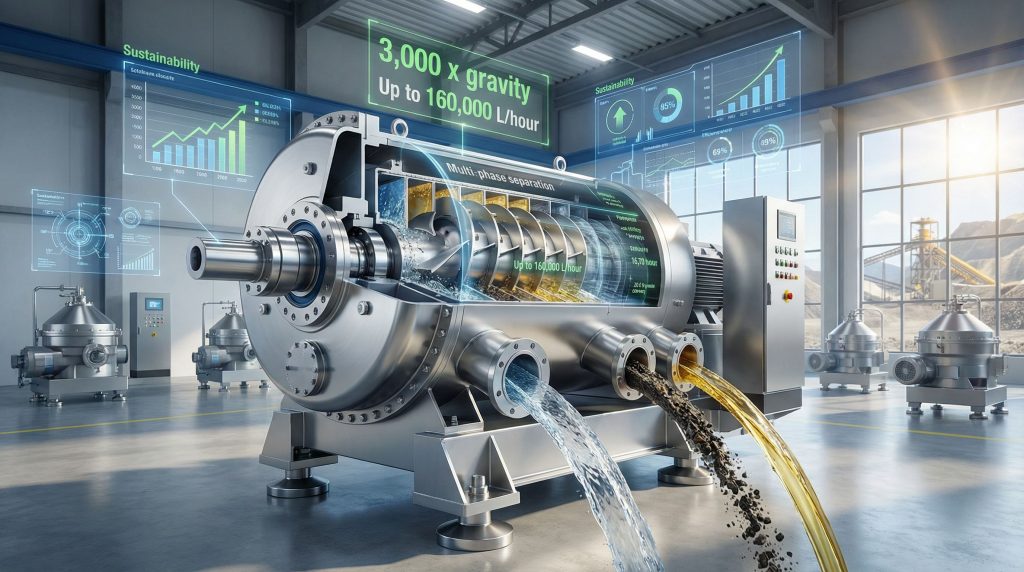
Modern mining operations face unprecedented pressure to maximise resource recovery while minimising environmental impact. The Flottweg centrifugal revolution has fundamentally transformed mineral processing by addressing the limitations of traditional gravity-based separation methods. Furthermore, industrial centrifugal technology applies controlled rotational forces that can exceed 3,000 times Earth's gravitational pull, revolutionising how minerals are separated from process water.
The Physics Behind High-Force Separation Systems
Centrifugal acceleration operates on the principle of converting rotational energy into separation force. When materials enter a spinning chamber, particles experience radial acceleration proportional to their mass and the square of the rotation speed. Consequently, this creates stratified layers based on density differences, enabling precise separation of solid particles from liquid carriers.
Key Physics Parameters:
- Centrifugal force generation up to 3,000 x standard gravity
- Variable rotation speeds for different material characteristics
- Controlled pressure differentials for multi-phase separation
- Continuous processing without batch limitations
Why Conventional Settling Methods Create Operational Bottlenecks
Traditional settling ponds require extensive land use, long residence times, and create significant environmental liabilities. These systems become increasingly inadequate as ore grades decline and processing volumes increase. Moreover, water scarcity concerns in major mining regions further compound the limitations of conventional approaches, driving the need for waste management solutions.
Conventional Method Limitations:
- Land requirements of 10-50 hectares for large operations
- Settling times measured in hours rather than minutes
- Water loss through evaporation and seepage
- Long-term environmental remediation obligations
When big ASX news breaks, our subscribers know first
Advanced Decanter Engineering and Performance Specifications
High-performance industrial centrifuges integrate sophisticated mechanical systems designed for continuous operation under demanding conditions. The engineering focuses on optimising separation efficiency while maintaining operational reliability across varying feed conditions and material types.
Bowl Configuration and Separation Mechanisms
The separation chamber design incorporates precisely machined internal surfaces that guide material flow patterns. Solid particles migrate outward under centrifugal force, accumulating along the bowl wall before discharge via a helical conveyor system. In addition, clarified liquid flows in the opposite direction, creating counter-current separation that maximises efficiency.
Critical Design Elements:
- Hardened wear-resistant bowl surfaces for abrasive materials
- Variable-pitch conveyor screws for different discharge rates
- Adjustable weir plates for liquid overflow control
- Differential speed control between bowl and conveyor components
SIMP-DRIVE® Technology and Operational Control
Independent drive systems for bowl rotation and conveyor advancement enable precise control over separation parameters. This advanced centrifuge technology allows operators to adjust the residence time of solids within the separation zone without stopping the equipment, optimising performance for varying feed conditions.
Operational Advantages:
- Real-time adjustment of separation parameters
- Enhanced energy efficiency through variable speed control
- Reduced mechanical stress during startup and shutdown
- Extended component life through controlled acceleration profiles
Performance Specifications and Capacity Ratings
| Specification | Range | Application Impact |
|---|---|---|
| Maximum G-Force | Up to 3,000 x gravity | Enhanced fine particle recovery |
| Processing Capacity | 10,000-160,000 L/hour | Scalable to operation size |
| Solids Content | 0.1%-40% by weight | Handles varying feed concentrations |
| Particle Size Range | 0.5-50 micrometers | Captures ultra-fine minerals |
Three-Phase Separation Technology and Complex Material Processing
Tricanter® systems represent a significant advancement in the Flottweg centrifugal revolution, enabling simultaneous separation of three distinct phases from a single feed stream. This capability addresses the complex material compositions commonly encountered in mining operations, where traditional two-phase systems prove inadequate.
Multi-Phase Processing Applications
Mining operations frequently encounter feed materials containing solid particles, process water, and oil-based reagents or hydrocarbon contaminants. Three-phase separation technology processes these complex mixtures in a single pass, eliminating the need for multiple processing stages and associated equipment. Furthermore, this technology supports renewable energy transformations by reducing overall energy consumption.
Common Three-Phase Applications:
- Oil-contaminated mine water treatment
- Flotation concentrate dewatering with reagent recovery
- Coal preparation plant fine coal recovery
- Tailings processing with hydrocarbon separation
Impeller Systems and Dynamic Separation Control
Advanced impeller technology enables operators to modify separation parameters during operation without equipment shutdown. Hydraulically adjustable impellers control the interface between light and heavy liquid phases, adapting to variations in feed composition and flow rates.
Modern three-phase centrifuges incorporate four decades of engineering development, enabling processing of complex slurries that would require multiple conventional separation stages, significantly reducing capital investment and operational complexity.
Energy Recovery Systems and Sustainability Integration
The RECUVANE® energy recovery system captures kinetic energy from discharged centrate water, converting this otherwise wasted energy back into usable power for the centrifuge drive system. This technology addresses growing concerns about energy consumption in mining operations while providing measurable cost savings.
Power Consumption Reduction Mechanisms
Energy recovery systems utilise the pressure and flow energy of separated water to assist in driving the centrifuge rotor. By harnessing this energy that would otherwise be dissipated, the system can achieve substantial reductions in overall power consumption. This innovation aligns with broader industry innovation trends toward more efficient operations.
Energy Efficiency Benefits:
- Up to 20% reduction in total power requirements
- Lower operating temperatures through reduced heat generation
- Extended component life due to reduced mechanical stress
- Improved process stability through consistent energy supply
Environmental Compliance and Water Management
Centrifugal separation technology directly supports environmental compliance objectives by maximising water recovery and minimising tailings volumes. This becomes increasingly critical as regulatory frameworks tighten and communities demand higher environmental standards from mining operations.
Sustainability Metrics:
- Water recovery rates exceeding 95% in many applications
- Tailings volume reduction of 30-50% compared to conventional methods
- Elimination or significant reduction of permanent tailings storage facilities
- Reduced groundwater contamination risks
Specialized Mining Applications and Performance Data
Different mining sectors require specialised approaches to centrifugal separation, with equipment configurations optimised for specific material characteristics and processing objectives. Understanding these applications enables operators to select appropriate technology and maximise operational benefits through data-driven mining operations.
Dewatering Applications Across Mining Sectors
Coal Processing Operations:
- Fine coal recovery from preparation plant waste streams
- Separation efficiency improvements of 15-25% over conventional methods
- Processing capacities ranging from 50-500 tonnes per hour
- Moisture content reduction to below 10% in final products
Iron Ore Concentrate Processing:
- Thickening of magnetite and hematite concentrates
- Handling of ultra-fine particles below 20 micrometers
- Water recovery enabling closed-loop processing systems
- Concentrate grade improvements through enhanced separation
Copper Flotation Integration:
- Processing of flotation concentrates and tailings
- Recovery of copper-bearing fine particles from waste streams
- Integration with existing flotation circuits without major modifications
- Enhanced reagent recovery reducing operational costs
Tailings Management and Water Recovery Systems
Centrifugal technology transforms tailings management from a disposal challenge into a resource recovery opportunity. High-efficiency separation enables production of thickened tailings suitable for paste backfill operations while maximising water recovery for process reuse.
Tailings Processing Benefits:
- Tailings density increase from 20-30% to 60-70% solids
- Water recovery rates exceeding 90% in most applications
- Reduced tailings storage facility requirements
- Enhanced geotechnical stability of stored tailings
Specialized Centrifuge Models and Applications
| Model Series | Primary Application | Key Performance Advantage |
|---|---|---|
| C7E Environmental | Municipal and industrial sludge processing | High-volume continuous operation |
| Sorticanter® | Material sorting and recycling | Density-based separation precision |
| Sedicanter® | Difficult-to-settle fine particles | Enhanced clarification efficiency |
| Flottweg Z Series | Standard mining dewatering | Robust construction for abrasive materials |
Operational Optimization and Maintenance Requirements
Successful implementation of centrifugal separation technology requires understanding of material characteristics, proper equipment sizing, and systematic maintenance protocols. These factors determine both immediate performance and long-term operational success.
Material Characterization and Equipment Selection
Proper centrifuge selection depends on comprehensive analysis of feed material properties, including particle size distribution, density characteristics, and chemical composition. Laboratory testing using representative samples ensures optimal equipment specification and performance prediction.
Critical Material Properties:
- Particle size range and distribution curves
- Specific gravity differences between solid and liquid phases
- Chemical compatibility with equipment materials
- Abrasiveness and wear characteristics
- Temperature and pH operating ranges
Flow Rate Optimization and Process Control
Centrifuge performance depends critically on maintaining optimal feed rates that balance throughput with separation efficiency. Operating above design capacity compromises separation quality, while under-loading reduces economic efficiency. However, modern separation technology innovations continue to address these challenges.
Optimization Parameters:
- Feed rate adjustment based on solids concentration
- Differential speed control for varying material types
- Pool depth modification for different separation requirements
- Discharge consistency monitoring and control
German Engineering Standards and Quality Assurance
Manufacturing standards emphasise precision machining, materials selection, and quality control throughout the production process. These standards ensure equipment reliability under demanding mining conditions and provide predictable performance over extended operating periods.
Quality Control Elements:
- Precision balancing for high-speed rotating components
- Materials testing and certification for wear-resistant applications
- Factory testing under simulated operating conditions
- Comprehensive documentation and performance validation
Return on Investment Analysis Framework
Economic justification for centrifugal separation technology requires comprehensive analysis of capital costs against operational savings and environmental benefits. This analysis must consider both direct cost impacts and indirect benefits from improved environmental compliance.
ROI Calculation Components:
- Initial capital investment including installation and commissioning
- Operating cost reductions through automated processing and reduced labour
- Water cost savings from enhanced recovery and reuse
- Environmental compliance cost avoidance
- Potential revenue from recovered materials or reduced waste disposal fees
The next major ASX story will hit our subscribers first
Future Technology Integration and Industry Transformation
The mining industry faces increasing pressure to adopt technologies that enable zero liquid discharge and minimise environmental impact. The Flottweg centrifugal revolution serves as a foundation for these advanced processing systems while supporting broader sustainable mining transformation objectives.
Advanced Tailings Management Systems
Evolution toward zero liquid discharge requires integration of multiple separation technologies, with centrifugal systems providing primary dewatering before final treatment stages. This approach enables near-complete water recovery while producing dry-stackable tailings that eliminate traditional storage requirements.
Technology Integration Elements:
- Multi-stage separation with increasing concentration at each stage
- Integration with filter presses for maximum water removal
- Paste backfill preparation for underground operations
- Real-time monitoring and process optimisation
Automation and Digital Integration
Modern centrifugal systems incorporate sophisticated control systems that enable remote monitoring, predictive maintenance, and performance optimisation. These capabilities become essential as mining operations expand and skilled operator availability becomes limited.
Digital Technology Features:
- Remote monitoring and control through secure internet connections
- Predictive maintenance using vibration and temperature sensors
- Automated adjustment of operating parameters based on feed conditions
- Integration with plant-wide process control systems
Regulatory and ESG Compliance Drivers
Regulatory frameworks increasingly emphasise water conservation, waste minimisation, and long-term environmental stewardship. Mining companies recognise that advanced separation technology provides competitive advantages in obtaining permits and maintaining social licence to operate.
Compliance Advantages:
- Reduced water consumption in water-scarce regions
- Minimised long-term environmental liabilities
- Enhanced community relations through visible environmental improvements
- Alignment with corporate sustainability commitments and investor expectations
Implementation Strategies and Technology Deployment
Successful deployment of centrifugal separation technology requires systematic planning, comprehensive site assessment, and phased implementation approaches that minimise operational disruption while maximising benefits.
Site Assessment and Technology Selection
Proper technology selection begins with comprehensive characterisation of existing operations, material flows, and processing objectives. This assessment identifies optimisation opportunities and ensures equipment specification matches operational requirements.
Assessment Components:
- Detailed material flow analysis and mass balance calculations
- Laboratory testing using representative samples
- Infrastructure evaluation for equipment installation requirements
- Integration planning with existing process circuits
Phased Implementation and Risk Management
Large-scale technology implementation benefits from phased approaches that allow operational learning and system optimisation before full deployment. This strategy reduces technical risks while providing operational experience.
Implementation Phases:
- Pilot Testing: Small-scale trials using actual process materials
- Partial Integration: Installation on specific process streams
- System Expansion: Gradual capacity increases based on performance data
- Full Integration: Complete replacement of conventional systems
Training and Operational Support
Technology success depends on comprehensive operator training and ongoing technical support. This includes both initial training programmes and continuous professional development to maintain optimal performance.
Training Programme Elements:
- Equipment operation and safety procedures
- Routine maintenance and troubleshooting protocols
- Performance monitoring and optimisation techniques
- Emergency response and system recovery procedures
Long-Term Support and Continuous Improvement
Sustained operational success requires ongoing manufacturer support, regular performance monitoring, and systematic improvement initiatives. These elements ensure equipment continues meeting performance objectives throughout its operational life.
Support System Components:
- Regular performance audits and optimisation recommendations
- Predictive maintenance programmes using equipment monitoring data
- Spare parts inventory management and supply chain optimisation
- Technology upgrades and modernisation programmes
The Flottweg centrifugal revolution represents more than technological advancement; it signifies a fundamental shift toward sustainable, efficient mineral processing that addresses both operational and environmental challenges facing the modern mining industry. As regulatory pressures increase and environmental stewardship becomes central to mining operations, centrifugal separation technology provides proven solutions that deliver measurable benefits across multiple operational dimensions.
Disclaimer: This article presents technical information for educational purposes and should not be considered as specific operational advice. Performance specifications and operational results may vary based on site-specific conditions, material characteristics, and operating procedures. Readers should consult with qualified engineers and equipment manufacturers before making technology selection or implementation decisions. Investment returns and operational benefits discussed are illustrative and may not reflect actual performance in specific applications.
Looking to Capitalise on Next-Generation Mining Technologies?
Discovery Alert's proprietary Discovery IQ model provides instant notifications on significant ASX mining discoveries, including companies pioneering advanced processing technologies that could revolutionise industry operations. Begin your 14-day free trial today and position yourself ahead of technological breakthroughs that could drive substantial market returns.