
May 22, 2026
How Will Centrus's Oak Ridge Expansion Transform U.S. Nuclear Fuel Manufacturing?
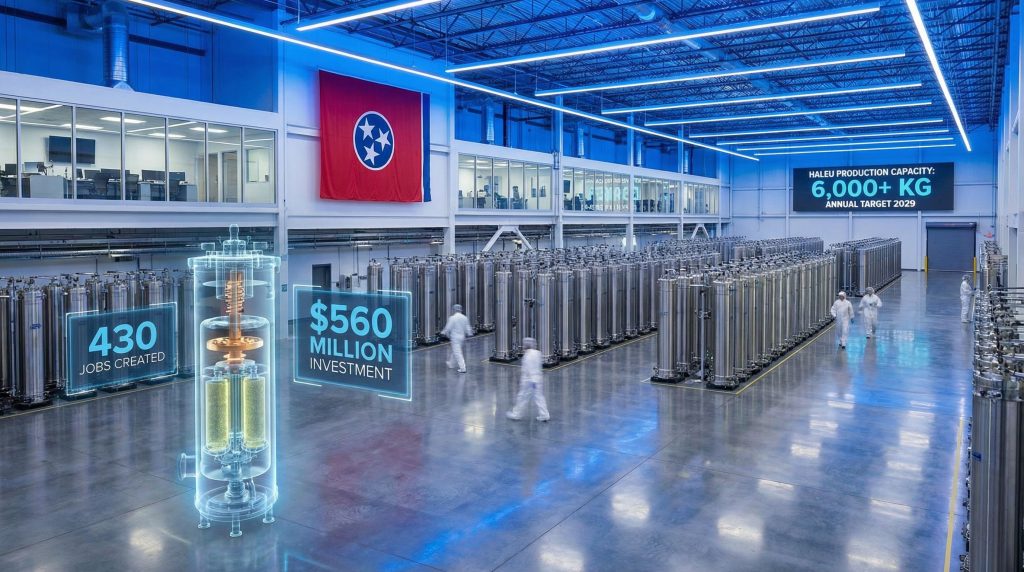
The nuclear energy sector faces unprecedented challenges as geopolitical tensions reshape global supply chains and advanced reactor technologies demand specialised fuel sources. Against this backdrop, the decision by Centrus to expand Oak Ridge facility represents a transformative moment for American nuclear independence. This $560 million investment signals the revival of domestic uranium enrichment capabilities that could fundamentally alter the strategic landscape of nuclear fuel production.
When big ASX news breaks, our subscribers know first
Macro Trends Shaping U.S. Nuclear Fuel Strategy
Over the last decade, surging global energy demand and shifts in geopolitics have amplified the strategic imperative for reliable, independent nuclear fuel supply chains. Advanced reactors—heralded for their safety, scalability, and low-carbon credentials—are at the centre of U.S. ambitions to revitalise domestic energy infrastructure.
Yet, the lack of domestic high-assay low-enriched uranium (HALEU) production has emerged as a bottleneck, threatening to undermine industry innovation and energy security trends. As the nuclear sector seeks to fortify its position against supply chain risks and import dependencies, the decision by Centrus to expand Oak Ridge facility marks a pivotal step in transforming America's nuclear competitiveness.
Furthermore, recent legislative actions including the US Senate uranium ban have created additional urgency for domestic supply solutions. These regulatory changes underscore the critical importance of establishing robust domestic uranium enrichment capabilities.
What Makes Centrus's Oak Ridge Facility Critical to Nuclear Energy Independence?
Understanding the Strategic Importance of Domestic Centrifuge Manufacturing
For decades, the United States excelled in uranium enrichment, operating state-of-the-art gaseous diffusion and centrifuge facilities across sites in Tennessee, Kentucky, and Ohio. However, after the closure of its last enrichment operation at the Portsmouth Gaseous Diffusion Plant in 2013, the U.S. ceded vital technical and supply chain ground to overseas suppliers.
Today, approximately 80% of HALEU—crucial for advanced reactors—relies on imports, much of it from geopolitically sensitive regions. This dependency has created significant vulnerabilities, particularly as trade war impacts continue to reshape international commercial relationships.
When Centrus completed its 16-machine demonstration cascade in Piketon, Ohio, in 2023, it became the first U.S.-technology-based enrichment facility to produce fuel in seven decades, rekindling the nation's legacy of nuclear innovation. This demonstration cascade employs a series of interconnected centrifuges (a cascade) to gradually concentrate uranium-235 isotopes through high-speed rotation and selective mass transfer of uranium hexafluoride gas (UF₆).
With the Oak Ridge expansion, the U.S. regains not just manufacturing capability but foundational control over a sector tied to energy security and national defence. Oak Ridge's position as the sole domestic centrifuge manufacturing hub enables flexible responses to both market and geopolitical disruptions.
Table: U.S. HALEU Production Timeline
| Year | Facility/Initiative | Capacity | Milestone |
|---|---|---|---|
| 2013 | Portsmouth Closure | 0 | U.S. enrichment ceases |
| 2023 | Piketon Demo | 16 machines, 900 kg/yr | First production in 70 years |
| 2026–28 | Oak Ridge Build-out | Ramp-up | Large-scale manufacturing begins |
| 2029 | Planned Commercial Ops | 6,000+ kg/yr (projected) | First commercial cascades online |
| 2030+ | Full Domestic | 10,000+ kg/yr (potential) | Import dependence recedes |
Economic Impact Analysis for Anderson County
The planned $560 million investment in the Oak Ridge expansion is anticipated to ignite a wave of broad-based economic revitalisation across Anderson County and the broader Tennessee Valley.
Key highlights include:
- Creation of around 430 direct, skilled jobs spanning machinists, centrifuge assembly, materials science, quality inspection, welding, and security.
- Multiplicative employment effects: Economic modelling for the region's advanced manufacturing sector suggests each direct nuclear manufacturing job could spur 1.5-2.2 additional jobs in supporting industries, from component supply to logistics.
- Development of nuclear workforce training: Partnerships with the University of Tennessee-Knoxville, Oak Ridge Associated Universities, and technical colleges aim to sustain a pipeline of engineers, technicians, and regulatory specialists trained for advanced nuclear applications.
- Supplier ecosystem expansion: The project will attract parts suppliers, materials vendors, and innovative fabrication startups to Tennessee, further embedding high-value manufacturing capacity within the region.
Why Is Advanced Centrifuge Technology Essential for Modern Nuclear Operations?
Technical Specifications of Next-Generation Enrichment Systems
A central innovation of the Oak Ridge facility centres on the transition to modern gas centrifuge enrichment. Unlike the energy-intensive diffusion plants of the past, gas centrifuge technology delivers:
- Radically improved energy efficiency (gas centrifuges can be 50x more efficient per separative work unit compared to legacy gaseous diffusion processes*).
- Higher product throughput, with Oak Ridge designed to multiply capacity from the demonstration scale (900 kg/yr) to projected commercial scales exceeding 6,000 kg/yr of HALEU.
- Tighter quality control measures for nuclear-grade purity, especially for HALEU requirements (19.75% uranium-235 enrichment).
- Robustness to upscaling, with modular cascades enabling phased expansion depending on market or national security needs.
*Source: IAEA, Uranium Enrichment Technology, NE Series NF-T-5.4
Technical Requirements for HALEU Manufacturing
- Uranium Hexafluoride (UF₆) Processing: Handling UF₆ at optimal temperatures and pressures without material degradation requires corrosion-resistant alloys or carbon composites in rotor systems.
- Precision Engineering: Each centrifuge rotor must be balanced to within a few grams at peak speeds exceeding 50,000 RPM, eliminating vibration and minimising catastrophic failure risk.
- Quality Assurance: Every step, from assembly to dynamic balancing and UF₆ loading, adheres to rigorous NRC and international standards, including real-time monitoring of output isotopic content.
Manufacturing Process Innovation at Oak Ridge
Oak Ridge leverages cross-disciplinary advances in machine tooling, automated assembly, materials joining, and nuclear regulatory compliance established through decades of Department of Energy operations. This approach aligns with broader industry evolution trends that emphasise technological integration and operational efficiency.
Key elements of the manufacturing workflow include:
- High-precision fabrication of centrifuge rotors, end caps, and magnetic bearings
- Automated assembly lines coupled with sensor-based quality checks
- ISO-compliant testing for rotor balance and corrosion resistance
- Security clearance protocols and established NRC oversight for all critical roles
- Integration with existing Oak Ridge infrastructure (utilities, handling facilities, contamination control) to streamline construction and minimise cost
How Does This Expansion Address Critical HALEU Supply Chain Gaps?
Current HALEU Production Bottlenecks in the United States
The limited U.S. capacity for HALEU—a fuel type vital for next-generation reactors—presents significant supply chain risk. Before 2023, the U.S. had zero operational HALEU enrichment, with roughly 80% of supply dependent on imports. This dependency creates substantial exposure to uranium market volatility and geopolitical disruptions.
| Production Facility | Annual Capacity (kg) | Operational Status | Technology Type |
|---|---|---|---|
| Centrus Piketon Demo | 900 | Active | Gas Centrifuge |
| Planned Commercial Scale | 6,000+ | 2029 Target | Advanced Centrifuge |
| Import Dependency | ~80% | Current Reality | Foreign Sources |
As of late 2023, the only U.S. HALEU output came from Centrus's 16-machine demonstration cascade. The commercial Oak Ridge scale-up targets over 6,000 kg annually by 2029, enough to supply several advanced reactor projects slated for construction—and ultimately to cut foreign fuel reliance.
Strategic Timeline for Domestic HALEU Independence
- 2026-2028: Ramp-up of Oak Ridge centrifuge manufacturing, including equipment commissioning and workforce expansion.
- 2029: First sets of commercial centrifuges shipped to the Piketon, Ohio site; initial commercial HALEU deliveries anticipated.
- 2030 and beyond: Full domestic supply for accredited advanced reactors; import dependency diminishes, and the U.S. can contemplate strategic reserves and export opportunities.
What Are the Technical Challenges in Scaling Centrifuge Manufacturing?
Engineering Complexities in High-Speed Rotating Equipment
- Rotor Fabrication: Manufacturing rotors with precise tolerances (micron-scale), zero material flaws, and extraordinary balance is essential to minimise catastrophic failure.
- Materials Science: Construction requires advanced alloys or carbon composites that resist UF₆ corrosion, sustain high mechanical stress, and maintain stability under thermal cycling.
- Cascading & Control: Ensuring uniform enrichment across expanding cascades calls for sophisticated vibration, flow, and process control systems.
Regulatory Compliance Framework
- Department of Energy security protocols (physical protection, cyber-defences)
- Nuclear Regulatory Commission (NRC) licensing and oversight of every enrichment stage (notably Part 70 and Part 73 rules)
- International Atomic Energy Agency (IAEA) safeguards, ensuring all HALEU is tracked and accounted for per non-proliferation commitments
According to the Nuclear News report from the American Nuclear Society, "The expansion of enrichment capacity is contingent upon rigorous compliance with domestic and international safeguards—delays or lapses can trigger major operational risk or loss of export eligibility."
The next major ASX story will hit our subscribers first
How Will This Investment Impact Advanced Reactor Development?
HALEU Requirements for Next-Generation Nuclear Technologies
Advanced reactor designs such as Small Modular Reactors (SMRs) and Generation IV concepts require fuel enriched to between 5% and 20% uranium-235 (compared to 3–5% for conventional pressurised water reactors). HALEU is fundamental for:
- Achieving superior burnup and fuel efficiency
- Enabling innovative core geometries and passive safety systems
- Supporting flexibility in load-following scenarios vital for a renewables-dominated grid
Projected data suggest HALEU demand could increase five- to tenfold by 2035 as next-generation reactors move from demonstration to deployment.
Supply Chain Resilience for Nuclear Innovation
By developing domestic HALEU capacity, Centrus to expand Oak Ridge facility and the U.S. nuclear sector as a whole are positioned to:
- Eliminate exposure to foreign supply shocks, particularly in light of geopolitical shifts affecting uranium-rich states
- Support the roll-out of commercial-scale SMRs and advanced reactors, accelerating decarbonisation goals
- Build out strategic reserves to enhance energy resilience in the face of market disruption
Furthermore, as noted by Centrus Energy, this expansion represents a critical milestone in restoring American leadership in uranium enrichment technology.
What Economic Benefits Will Tennessee Realise from This Expansion?
Workforce Development and Skills Training Programs
The Oak Ridge expansion creates robust demand for technical and engineering skill sets, many transferable across high-tech and advanced manufacturing industries.
- Job categories: Machinists, assembly technicians, chemical engineers, quality control, logistics, and regulatory specialists
- Partnerships: Institutions such as the University of Tennessee have the chance to develop new nuclear manufacturing and materials science curriculums
- Careers: Employees benefit from clear career pathways and competitive compensation, drawing on models established by similar nuclear manufacturing projects nationwide
Regional Industrial Ecosystem Development
- Growth of a supplier network catering to nuclear-grade materials, sensors, and quality assurance systems
- Potential for technology transfer as manufacturing techniques are adopted by aerospace, biomedical, and defence firms seeking precision manufacturing expertise
- Oak Ridge's status as an innovation hub will be further reinforced, attracting additional federal research, venture investment, and collaborative development with industrial partners
How Does This Project Align with Federal Nuclear Energy Policy?
Department of Energy Strategic Initiatives
The Department of Energy (DOE) has identified domestic uranium enrichment as pivotal within its Nuclear Energy Fund allocations and Energy Security strategies. Key goals include:
- Reestablishing the U.S. as an independent enrichment supplier
- Supporting deployment of advanced reactors for carbon-free baseload electricity
- Fostering public-private partnerships to ensure robust supply chain development
Legislative Support Framework
Federal policy, through tools like the Infrastructure Investment and Jobs Act and National Defence Authorisation Act, has prioritised funding for strategic fuel capability, including cost-share contracts for demonstration plants and the build-out of infrastructure for both energy and defence fuel needs.
Bipartisan legislative consensus now underpins the drive for a revitalised uranium fuel sector, offering stability and momentum.
What Are the Long-Term Implications for U.S. Nuclear Competitiveness?
Global Market Position Analysis
With current enrichment markets led by Russia and China, the U.S. has lagged in both capacity and technical innovation. However, by pursuing next-generation centrifuge technology and domestic manufacturing, Centrus to expand Oak Ridge facility may help unlock:
- Regained U.S. market share in enrichment services for advanced nuclear fuel
- Export opportunities for American enrichment technologies to allies and new nuclear markets
- Lowered dependence on politically sensitive sources, boosting security for domestic utilities and global partners
Technology Leadership Restoration
Throughout the latter half of the 20th century, the U.S. set benchmarks in enrichment innovation. The Oak Ridge expansion enables American engineers, material scientists, and process specialists to renew that leadership, especially as they collaborate with national labs and global partners on both HALEU and next-gen enrichment methods.
Investment in enrichment infrastructure enables advances likely to benefit related fields—ranging from isotope production for medicine to materials engineering for aerospace or defence.
Conclusion: Transforming America's Nuclear Fuel Independence
Key Success Metrics for the Oak Ridge Expansion
- Manufacturing capacity: Moving from demonstration-scale (16 machines, 900 kg/yr) to commercial-scale (potentially 6,000+ kg/yr) cascades by 2029
- Job creation: More than 430 new positions, with regional economic spillover
- Supply chain security: Significantly reduced import dependence and stronger domestic enrichment capability
Strategic Outlook for U.S. Nuclear Energy Sector
- The Oak Ridge expansion materially reduces U.S. reliance on enriched uranium imports for HALEU applications
- It underpins the nation's ability to commercialise advanced reactors, catalysing a new wave of domestic and export market opportunities
- Most critically, it forms a cornerstone of national energy security, resilience, and technical autonomy in an increasingly competitive and unpredictable world
Disclaimer: This article is for informational purposes only. All timelines, production capacities, and policy impacts are subject to change based on regulatory approvals, market dynamics, and evolving U.S. government policy. Current projections and investment implications should not be interpreted as guarantees of future performance.
Further Exploration: Those seeking deeper insights can consult technical publications from the IAEA, U.S. Department of Energy historical overviews, and recent legislative texts on nuclear infrastructure development.
Looking for Strategic Opportunities in Critical Minerals and Energy Security?
Discovery Alert's proprietary Discovery IQ model delivers real-time alerts on significant ASX mineral discoveries, instantly empowering subscribers to identify actionable opportunities in critical minerals and energy security stocks ahead of the broader market. Begin your 30-day free trial today and secure your market-leading advantage in this rapidly evolving sector.