June 24, 2026
The Hidden Architecture Behind China's Alumina Supply Chain
Most investors tracking the aluminium sector focus on smelter capacity, LME prices, or downstream demand cycles. Far less attention lands on the refining layer sitting between raw bauxite and the smelting pot, yet it is precisely at this stage where cost structures are locked in, quality standards are either met or missed, and supply chain resilience is either built or left exposed. Understanding how China's major alumina refineries are structured, where they sit within corporate hierarchies, and how their operational choices ripple through to finished metal is essential context for anyone seeking a complete picture of the global aluminium industry.
The Chalco Guangxi Huayin refinery represents a useful case study in how these dynamics play out at industrial scale, and why a single facility can carry outsized significance within an integrated producer's portfolio.
When big ASX news breaks, our subscribers know first
Unpacking the Corporate Structure: JV Mechanics and What They Mean
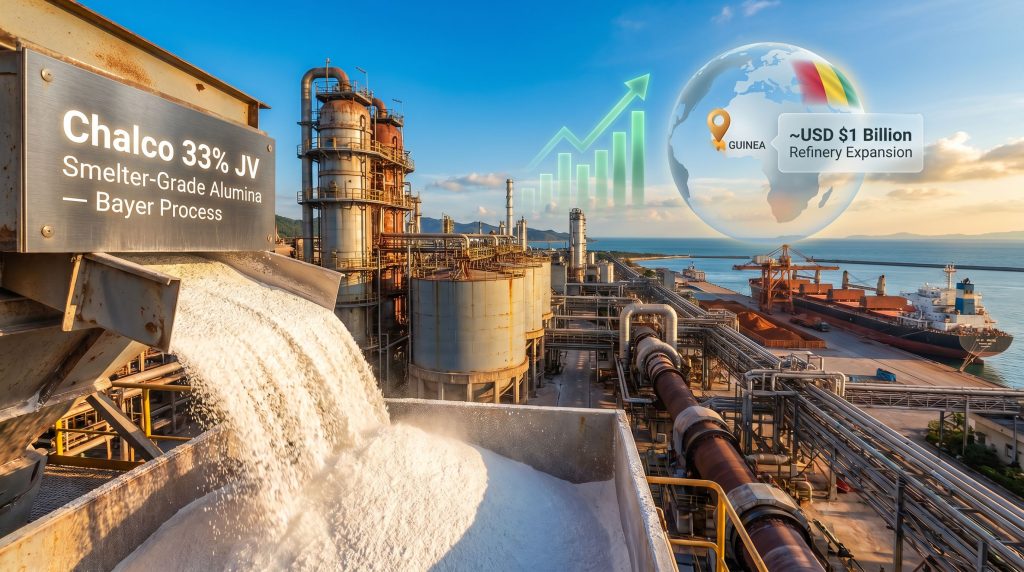
One of the most commonly misunderstood aspects of the Chalco Guangxi Huayin refinery is its ownership architecture. Guangxi Huayin Aluminum Co., Ltd. is not a wholly-owned Chalco asset. It operates as a joint venture, with Chalco holding a 33% equity interest alongside co-investors Minmetals Resources Ltd and Baotou Aluminum.
This distinction carries real analytical weight. A proportionally consolidated JV asset behaves differently in financial reporting than a majority-controlled subsidiary. Chalco's revenue, cost exposure, and operational decision-making authority at Guangxi Huayin are all scaled to its minority stake, meaning investors who conflate this facility with Chalco's wholly-operated assets risk misreading the company's direct production exposure.
For comparison, Chalco's Huasheng alumina refinery, located at Fangchenggang Port in Guangxi, is a separately operated facility with approximately 2 million tonnes per annum of production capacity, with its second production line becoming fully operational in November 2020. These two Guangxi-based operations serve complementary roles within Chalco's broader alumina footprint but should not be treated as interchangeable.
| Facility | Structure | Chalco Ownership | Capacity | Location |
|---|---|---|---|---|
| Guangxi Huayin Aluminum Co., Ltd. | Joint Venture | 33% | Multi-million tpa | Guangxi, China |
| Huasheng Alumina Refinery | Chalco-operated | Majority | ~2 million tpa | Fangchenggang Port, Guangxi |
Analysts reviewing Chalco's alumina segment should apply proportional consolidation principles when assessing Guangxi Huayin's contribution to group-level production metrics and margin performance.
The Bayer Process: Why Refining Is More Complex Than It Appears
The chemistry underpinning the Chalco Guangxi Huayin refinery's core output is the Bayer process, a technology developed in the 1880s that remains the dominant global method for producing smelter-grade alumina (SGA). While the process is well-established, executing it at consistent quality across multi-million tonne annual throughputs requires continuous engineering discipline.
The key production stages proceed as follows:
-
Bauxite digestion involves dissolving aluminium-bearing minerals in a pressurised caustic soda solution at elevated temperatures, releasing aluminate ions into solution while leaving silica, iron oxides, and titanium compounds behind.
-
Clarification and settling separates the insoluble red mud residue from the sodium aluminate liquor through a combination of gravity settling, flocculant addition, and filtration.
-
Precipitation seeds the clarified liquor with fine aluminium hydroxide crystals, triggering controlled crystallisation of gibbsite particles whose size distribution is carefully managed for downstream processability.
-
Calcination drives off chemically bound water from the aluminium hydroxide through rotary kilns or fluid bed calciners, producing the white, free-flowing alumina powder that smelters consume.
Why Quality Control Is the Defining Operational Challenge
Smelting operations impose strict chemical and physical specifications on incoming alumina. Deviations from these parameters create measurable downstream problems:
-
Elevated soda (Na₂O) content disrupts the cryolite bath chemistry in electrolytic cells, increasing the frequency of anode incidents and reducing current efficiency.
-
Excessive moisture adds unnecessary thermal load during the early stages of smelting, driving up energy consumption per tonne of metal produced.
-
Off-specification particle size distribution creates handling problems in conveying systems and slows dissolution rates in smelting pots, contributing to bath instability.
One of the most closely watched process variables is the caustic-to-alumina ratio, sometimes referred to as the A/C ratio. In the Bayer circuit, the concentration of free caustic soda relative to dissolved alumina governs both the efficiency of digestion and the particle characteristics of the precipitated product. Maintaining this ratio within tight operating bands requires continuous measurement and adjustment across multiple unit operations simultaneously.
Off-specification alumina arriving at a smelter does not simply result in a rejected shipment. In many cases, blending requirements force smelters to dilute substandard material with higher-grade stock, adding inventory management complexity and cost pressure that can persist for weeks.
Geographic Positioning as a Strategic Asset
The location of the Chalco Guangxi Huayin refinery within southern Guangxi Province is not incidental. China's coastal alumina refinery cluster in this region was deliberately developed to take advantage of seaborne bauxite import infrastructure, given that domestic high-grade bauxite reserves in southern China are geologically limited compared to the Shanxi and Guizhou deposits further north.
The Bauxite Import Dependency Driving Coastal Refinery Strategy
China's alumina industry has undergone a fundamental geographic reorientation over the past two decades. Domestic bauxite, predominantly sourced from Shanxi, Henan, and Guizhou, is predominantly of the diaspore variety, which requires higher digestion temperatures and pressures than the gibbsite-dominant ores imported from Guinea and Australia. This creates an important technical divergence:
-
Imported gibbsite bauxite (Guinea, Australia, Indonesia) dissolves more easily under lower temperature Bayer conditions, reducing energy consumption and caustic soda requirements per tonne of alumina produced.
-
Domestic diasporic bauxite requires higher-pressure digestion circuits, increasing capital and operating costs but allowing refineries to remain independent of seaborne supply volatility.
Coastal Guangxi refineries are specifically configured and positioned to handle imported gibbsite ores, with port proximity enabling lower demurrage costs and faster vessel turnaround times. When seaborne bauxite markets tighten, as occurred during periods of Indonesian export restriction and Guinean supply disruption driven by infrastructure constraints, coastal refineries with diversified supplier relationships hold a structural flexibility advantage over their landlocked counterparts. Furthermore, global bauxite production trends directly influence which coastal facilities are best positioned to secure favourable raw material contracts over the medium term.
Fangchenggang Port, adjacent to Chalco's Huasheng refinery, is one of China's primary bauxite receiving terminals, and the broader Guangxi port corridor underpins the raw material logistics model for the entire regional alumina cluster.
Environmental Compliance: Red Mud Management and the Dual Carbon Imperative
The environmental footprint of the Bayer process is significant and increasingly subject to regulatory scrutiny within China's industrial policy framework. For every tonne of alumina produced, the Bayer process generates approximately 1.0 to 1.5 tonnes of red mud, an iron-rich alkaline residue containing residual caustic soda, heavy metals, and in some bauxite types, elevated concentrations of radioactive thorium and uranium at trace levels.
At multi-million tonne annual production scales, red mud accumulation becomes a major operational and liability management challenge. Historically, Chinese alumina refineries relied on wet impoundment, but the risk profile of large-scale wet tailings storage, including dam failure potential and groundwater contamination risk, has driven a regulatory push toward alternative management approaches.
Emerging Solutions and Their Limitations
-
Dry-stack tailings management reduces the volume of liquid requiring containment and lowers long-term seepage risk, but requires significant capital investment in filtration and transport infrastructure.
-
Construction material utilisation incorporating red mud into cement, brick, and road base formulations is the most commercially advanced utilisation pathway, though market uptake is constrained by concerns over residual alkalinity and heavy metal leaching in finished products.
-
Iron recovery from high-iron red mud streams using magnetic separation or smelting routes is technically viable and under active development in China, potentially converting a waste stream into a secondary iron ore source.
-
Rare earth element (REE) extraction from bauxite residue is an area attracting growing research interest. Certain bauxite deposits, particularly those from lateritic origins, carry elevated concentrations of scandium, lanthanum, and cerium that concentrate in the red mud fraction during Bayer processing.
China's dual carbon policy commitments, targeting peak emissions before 2030 and carbon neutrality by 2060, are accelerating compliance timelines for heavy industry operators. Industrial decarbonisation efforts across sectors like steel and alumina refining are increasingly interlinked within China's broader emissions policy architecture. Alumina refining, as an energy-intensive sector, sits directly in the scope of these policy trajectories, creating ongoing capital allocation pressure for facilities operating within China's regulatory environment.
Refinery Economics: The Three-Variable Cost Equation
The financial performance of any alumina refinery, including the Chalco Guangxi Huayin refinery, can be reduced to three primary cost drivers that interact dynamically across market cycles.
| Cost Driver | Key Variables | Margin Impact |
|---|---|---|
| Bauxite input costs | Origin geography, contract terms, spot prices | High in volatile seaborne markets |
| Energy tariffs | Electricity, thermal fuel, regional grid pricing | Significant; alumina refining is energy-intensive |
| Regional alumina pricing | Spot and contract demand, smelting activity levels | Determines revenue ceiling against fixed costs |
During periods of elevated aluminium pricing, refineries with locked-in raw material supply agreements and favourable energy tariff structures can generate outsized margin contributions to integrated producers. The inverse also holds: in downturns, the primary levers available to refinery operators are renegotiating ore procurement contracts, improving process energy efficiency through heat integration, and deferring non-critical capital expenditure.
Chalco's 2025 interim reporting identified Guangxi Huayin as a key operational contributor within its alumina segment, signalling that the facility's production volumes carry material weight in Chalco's group-level alumina output reporting, even accounting for the proportional consolidation effect of the 33% JV stake.
The Guinea Investment: What Upstream Diversification Signals
Chalco's commitment of approximately USD $1 billion toward a new alumina refinery in Guinea represents a strategic evolution rather than a tactical adjustment. Guinea holds the world's largest known bauxite reserves, with estimates placing proven reserves in excess of 7.4 billion tonnes according to United States Geological Survey data. Processing bauxite into alumina at the point of origin rather than shipping raw ore to Chinese coastal refineries offers several structural advantages:
-
Reduced seaborne freight costs for the higher-value processed product versus raw ore.
-
Access to Guinea's abundant hydroelectric potential, offering a lower-carbon and potentially lower-cost energy source for refinery operations.
-
Reduced exposure to the policy and logistics risks associated with long-haul raw bauxite supply chains.
This offshore investment trajectory complements rather than displaces the role of coastal Chinese refineries like Guangxi Huayin, which will continue processing diverse bauxite origins for the domestic smelting market. In addition, aluminium decarbonisation pressures are making energy source selection a central strategic variable for any new refinery investment decision.
The next major ASX story will hit our subscribers first
The Smelter Supply Chain Connection: Quality Over Volume
The operational output of the Chalco Guangxi Huayin refinery feeds into one of the world's most concentrated aluminium smelting corridors. Southern China's industrial clusters along the Pearl River Delta and the broader Guangdong-Guangxi zone represent a substantial captive demand base for smelter-grade alumina.
As a joint venture involving multiple shareholders, Guangxi Huayin's alumina output is distributed across both internal transfer arrangements to Chalco's affiliated smelting operations and third-party commercial sales into the open market. The balance between these two channels influences how refinery margins are reported and how much exposure the JV carries to spot alumina price movements, which can be considerably more volatile than long-term contract pricing.
What experienced smelter operators consistently emphasise is that alumina supply reliability matters as much as price. Smelters running on inconsistent alumina quality face elevated pot relining frequency, reduced current efficiency, and compressed metal quality windows. These operational penalties accumulate into measurable cost disadvantages that can persist across an entire smelting campaign lasting months. However, aluminium industry leaders with vertically integrated refining operations are generally better positioned to manage these risks than smelters relying entirely on third-party supply.
A refinery's true value to an integrated producer is not simply tonnes delivered, but tonnes delivered on-spec, on-time, and without forcing downstream process adjustments that erode smelter efficiency.
The broader demand context also matters here. Fluctuations in the China steel market and adjacent heavy industries can shift energy pricing dynamics and logistics capacity in ways that indirectly affect alumina refinery operating costs across the region.
Frequently Asked Questions
Is the Chalco Guangxi Huayin refinery the same as Chalco's Huasheng refinery in Guangxi?
No. These are two operationally and legally distinct facilities. Guangxi Huayin Aluminum Co., Ltd. is a joint venture in which Chalco holds a 33% equity stake alongside Minmetals Resources Ltd and Baotou Aluminum. The Huasheng alumina refinery at Fangchenggang Port is a separately operated Chalco facility with approximately 2 million tonnes per annum of capacity, with its second production line fully operational from November 2020.
What refining technology does Guangxi Huayin use?
The facility employs the Bayer process, the globally dominant alumina refining method, converting bauxite feedstock through digestion, clarification, precipitation, and calcination stages to produce smelter-grade alumina powder.
Why does southern Guangxi's location matter for alumina refining?
Coastal positioning in southern Guangxi provides direct access to seaborne bauxite import terminals, reducing logistics costs and enabling raw material blending flexibility across multiple bauxite-producing nations as market conditions evolve.
What are the primary environmental challenges facing Guangxi alumina refineries?
Red mud management at scale and compliance with China's dual carbon policy targets represent the two most structurally significant environmental pressure points for facilities operating in this region.
How does the Guinea refinery investment relate to Guangxi Huayin's role?
Chalco's approximately USD $1 billion Guinea refinery investment represents an upstream geographic diversification strategy, producing alumina at the bauxite source rather than importing raw ore. This extends Chalco's integrated production footprint globally without displacing the domestic supply role served by facilities like Guangxi Huayin.
Key Dimensions at a Glance
| Dimension | Key Finding |
|---|---|
| Ownership | Chalco 33% in JV with Minmetals Resources and Baotou Aluminum |
| Core Output | Smelter-grade alumina via Bayer process |
| Location Advantage | Coastal Guangxi access to seaborne bauxite routes |
| Quality Imperative | Strict SGA specifications require continuous process engineering |
| Environmental Pressure | Red mud management and China dual carbon compliance |
| Financial Role | Key contributor to Chalco's alumina segment in 2025 interim results |
| Global Context | Complemented by Chalco's ~USD $1B Guinea upstream refinery expansion |
Disclaimer: This article is intended for informational and educational purposes only and does not constitute financial or investment advice. Statements regarding future projects, capital investments, and market conditions involve uncertainty and should not be relied upon as forecasts. Readers should conduct independent due diligence before making investment decisions.
Want to Identify the Next Major Mineral Discovery Before the Market Does?
Discovery Alert's proprietary Discovery IQ model delivers real-time alerts on significant ASX mineral discoveries across commodities including aluminium and bauxite, turning complex mineral data into actionable investment insights for both short-term traders and long-term investors — explore historic discovery returns to understand the potential on offer, then begin your 14-day free trial to position yourself ahead of the broader market.