July 31, 2026
The Hidden Complexity Behind Polymetallic Critical Minerals Development
Most investors understand the basic logic of a mining project: find the ore, prove it up, build the mine, sell the metal. What this framework consistently underestimates is the compounding difficulty of projects that produce multiple metals simultaneously, where the processing chemistry, offtake negotiations, and financing structures all interact in ways that single-commodity projects never face. Polymetallic systems sit at the intersection of these complexities, and for developers attempting to navigate them in 2026, the path from feasibility to shovels in the ground is far more nuanced than share price movements tend to reflect.
The Chalice Mining Gonneville project update for the June 2026 quarter offers a useful window into exactly this challenge. With a A$58.9 million cash position as at 30 June 2026, no debt on the balance sheet, and a Feasibility Study now actively underway, the project is progressing through what is arguably the most technically and commercially demanding phase of its development lifecycle.
When big ASX news breaks, our subscribers know first
What Makes Gonneville Genuinely Unusual in the Global Critical Minerals Landscape
Gonneville is not a typical platinum group metals deposit, and it is not a typical battery metals project either. It occupies a rare geological category where both mineral families coexist within a single open-pittable system, hosted in a mafic-ultramafic intrusion located approximately 70 kilometres north of Perth in Western Australia's South West Yilgarn region.
The deposit targets palladium, platinum, and gold (collectively referred to as 3E metals), alongside nickel and copper. This combination is commercially significant because it creates multiple revenue streams from a single mining operation, providing natural diversification against single-commodity price cycles. Furthermore, understanding mineral deposit tiers is essential context for appreciating how Gonneville compares globally, particularly given its polymetallic character and scale.
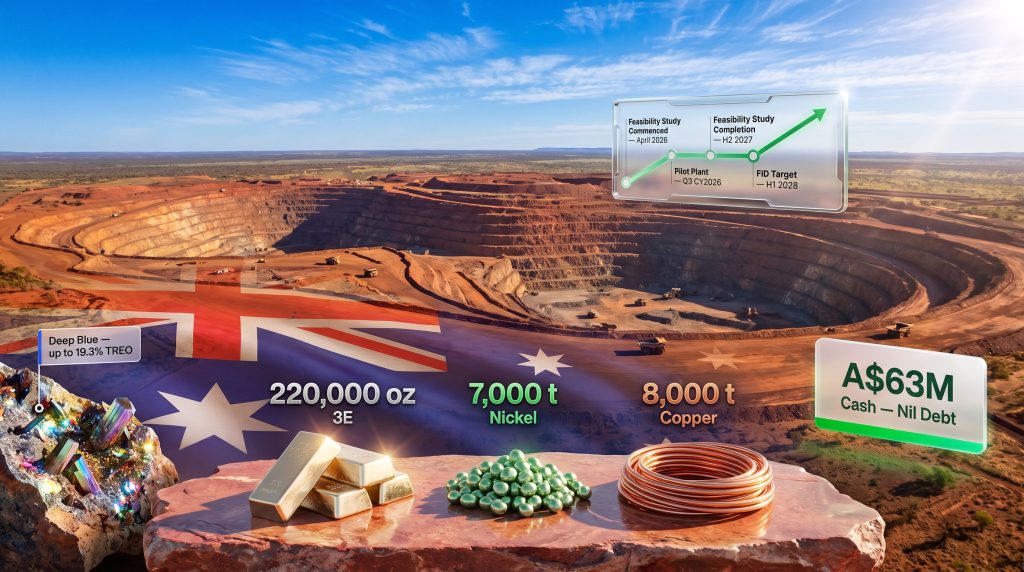
The Pre-Feasibility Study projects annual production of approximately 220,000 ounces of 3E metals, together with 7,000 tonnes of nickel and 8,000 tonnes of copper, across a 23-year operational mine life using a two-stage open-pit design.
The Mineralogy Challenge: Why Two Concentrates Matter
One of the less-discussed technical breakthroughs at Gonneville relates to metallurgical processing. The deposit's mineralogy is complex because palladium, platinum, and base metals do not always behave cooperatively in flotation circuits. A key concern for any polymetallic sulphide system is whether the minerals can be effectively liberated and separated without sacrificing overall recovery rates.
Chalice confirmed in 2025 that the Gonneville deposit is capable of producing two distinct smelter-grade flotation concentrates. This finding is more significant than it might appear to a general audience. Producing two marketable concentrates means the project can present separate products to separate smelting and refining markets, which simplifies offtake negotiations considerably.
A single mixed concentrate carrying palladium, nickel, copper, and precious metals would face significant smelting penalties and fewer interested buyers. Two clean concentrates create commercial flexibility and reduce downstream processing risk. In addition, understanding cut-off grade economics helps contextualise why achieving strong recoveries across multiple metals is so commercially critical at this stage.
Production Metrics at a Glance
| Production Metric | Annual Target |
|---|---|
| 3E Output (Palladium, Platinum, Gold) | 220,000 oz |
| Nickel | 7,000 tonnes |
| Copper | 8,000 tonnes |
| Mine Life | 23 years |
| Mining Method | Open-pit, two-stage |
Feasibility Study Progress: Where the Project Stands in Mid-2026
The Chalice Mining Gonneville project update confirms the Feasibility Study commenced in April 2026, following completion of the Pre-Feasibility Study in December 2025. Understanding the distinction between these two study phases is important for investors assessing project risk.
A Pre-Feasibility Study (PFS) typically achieves a project cost accuracy of roughly plus or minus 25%, drawing on conceptual engineering and preliminary test work. A definitive feasibility study tightens that accuracy to approximately plus or minus 15% or better, and is the foundation upon which final investment decisions, project financing, and binding offtake agreements are typically built. The step from PFS to FS is therefore not a formality; it is where the majority of remaining technical risk is either resolved or identified.
The Feasibility Study Development Timeline
| Milestone | Date |
|---|---|
| Environmental Approvals Referral (State and Commonwealth) | March 2024 |
| WA Strategic Project Designation | September 2024 |
| Australian Government Major Project Status | October 2024 |
| Pre-Feasibility Study Completed | December 2025 |
| Feasibility Study Commenced | April 2026 |
| Pilot Plant Commencement (Targeted) | Q3 CY2026 |
| Feasibility Study Completion (Targeted) | H2 2027 |
| Final Investment Decision (Targeted) | H1 2028 |
Active Workstreams Inside the Current Study
The Feasibility Study is not a sequential exercise. Multiple engineering and scientific workstreams run concurrently, which is part of what makes this phase capital-intensive even before any construction begins. Currently active workstreams include:
- Geology and resource modelling refinement, aimed at converting inferred material into measured and indicated categories
- Mining engineering and pit optimisation, including detailed geotechnical assessment of pit wall angles across both planned stages
- Processing plant design incorporating the two-concentrate flowsheet and supporting metallurgical testing programmes
- Infrastructure corridor planning, including power, water, and concentrate haulage routes, alongside environmental field surveys
The pilot plant, targeting commencement in the third quarter of calendar year 2026, is a critical component of this phase. Pilot plants generate bulk concentrate samples that can be sent to potential smelting partners for evaluation. The results of this testing directly influence offtake negotiations and, by extension, the terms of project finance.
Balance Sheet Analysis: Can Chalice Fund Its Way to FID?
For pre-production mining companies, the question of financial runway is often as important as the quality of the underlying asset. Gonneville may be technically compelling, but a depleted balance sheet before FID would force dilutive equity raises at precisely the moment when share prices for development-stage miners tend to be most vulnerable.
Current Financial Position
| Financial Metric | Value |
|---|---|
| Cash and Listed Investments (30 June 2026) | A$58.9 million |
| Cash and Listed Investments (July 2026 Conference) | A$63 million |
| Debt | Nil |
| Exploration Expenditure (June Quarter) | ~A$1.3 million |
The increase from A$58.9 million at 30 June to approximately A$63 million reported at a July 2026 investor conference suggests that movements in listed investment valuations provided a positive contribution in early July. Importantly, the company has publicly indicated that this funding position is expected to carry operations through to the targeted FID in the first half of 2028, without requiring near-term equity issuance.
Investor note: No debt obligation means all available capital is directed toward project advancement rather than debt servicing, which is a meaningful structural advantage for a development-stage company operating in a capital-intensive industry. That said, investors should independently assess whether the stated runway assumptions remain valid if commodity prices shift materially or study costs escalate.
How Chalice Plans to Finance Construction
The funding strategy for construction extends well beyond the current balance sheet. Chalice is pursuing a multi-channel approach that reflects the sophisticated financing structures increasingly common in critical minerals project development:
- Byproduct stream monetisation: Streaming agreements, typically involving precious metals, allow a developer to receive upfront capital in exchange for selling a portion of future production at a predetermined price. For Gonneville, with meaningful palladium and gold production, this is a logical instrument.
- Offtake-linked project finance: Lenders to mining projects increasingly require binding offtake agreements before committing debt. Securing offtake partners early therefore unlocks the debt financing layer.
- Strategic equity investment: Equity participation from an industrial or commercial partner, such as a smelter, technology manufacturer, or metals trader, can provide both capital and commercial validation.
- Institutional and government-aligned financiers: Engagement is ongoing with financiers whose mandates include critical minerals supply chain investment.
Environmental and Regulatory Progress
Gonneville's dual regulatory pathway involves both State (Western Australian Environmental Protection Authority) and Commonwealth (EPBC Act, now administered under the Nature Positive reforms) processes. These two systems do not always move in synchrony, and managing them concurrently requires dedicated regulatory expertise.
Referrals to both bodies were made in March 2024. The Western Australian Government designated the project a Strategic Project in September 2024, and the Australian Government granted Major Project Status in October 2024. These designations reflect the project's scale and commodity mix but do not constitute approvals or guarantees of regulatory outcomes.
Environmental review document preparation is advancing, with the draft Environmental Review document expected to be a critical near-term submission milestone. Infrastructure corridor planning has also reached a meaningful stage, with a preferred route identified and a second phase of community and landholder engagement underway as of the June 2026 quarter. The outcome of these environmental processes represents one of the three non-negotiable gating factors before an FID can be made.
Deep Blue and the Emerging Rare Earth Story
Separate from Gonneville, Chalice's exploration portfolio has produced a result at the Deep Blue prospect in Western Australia that deserves attention in its own right. Rock chip sampling returned values of up to 19.3% Total Rare Earth Oxides (TREO), with evidence of enrichment in the high-value magnet rare earth elements, specifically neodymium and praseodymium.
To contextualise that grade: commercial rare earth deposits are typically considered economically interesting above roughly 1–3% TREO at scale, with higher-grade surface samples often reflecting mineralised veins or float material rather than bulk deposit grades. The 19.3% TREO result from rock chips warrants follow-up drilling to establish whether depth and continuity support a meaningful resource.
However, the magnet rare earth enrichment signature is the more strategically significant observation. Neodymium and praseodymium are primary inputs for permanent magnets used in electric vehicle motors and wind turbine generators. The rare earth supply chain for these elements remains structurally unresolved, and the broader critical minerals demand outlook continues to strengthen the case for new domestic sources.
Upcoming Exploration Drilling Programmes
| Project | Location | Activity Planned |
|---|---|---|
| Deep Blue | Western Australia | Follow-up RC and diamond drilling |
| Warrego North | Northern Territory | RC drilling campaign |
| Callabonna JV | South Australia | RC drilling campaign |
The next major ASX story will hit our subscribers first
Leadership Appointments Signal Execution Readiness
The appointments made during the June 2026 quarter reflect a deliberate shift from study-phase management to execution-focused leadership. Paul De Ponte joined as Project Director for Gonneville, a role specifically created to lead the project through feasibility and into construction readiness. Tim Langmead was appointed as General Manager Corporate Affairs, reinforcing the company's capacity to manage the increasingly complex stakeholder environment surrounding the project.
The engagement of Odin Partnership Limited as strategic advisor on project development and financing indicates that Chalice is actively structuring the commercial framework needed to support an FID, rather than waiting for the Feasibility Study to conclude before beginning those conversations.
Scenario Analysis: What Could Move the FID Timeline?
| Scenario | Potential Impact on FID |
|---|---|
| Environmental approvals granted ahead of schedule | Could advance FID toward late 2027 |
| Binding offtake agreements secured with major counterparties | Strengthens financing position, reduces schedule risk |
| Commodity price deterioration in palladium or nickel | May require feasibility re-optimisation, delaying timeline |
| Pilot plant results exceed metallurgical benchmarks | Increases lender and offtake partner confidence |
| Regulatory delays at State or Commonwealth level | Pushes FID beyond H1 2028 |
Share Price Context and Investor Positioning
Over the 12 months to July 2026, Chalice Mining shares declined approximately 34%, a period during which the broader All Ordinaries Index posted a modest gain of around 1%. This underperformance is not unusual for feasibility-stage critical minerals developers, where the absence of near-term cash flows and the presence of binary regulatory and technical risks create a persistent valuation discount relative to the theoretical net present value of the underlying resource.
Investors in this sector often experience what market practitioners describe as the "development trough," a period where a project's de-risking milestones are well understood but not yet catalytic for sentiment. Re-rating events for companies in this position typically require:
- Positive feasibility outcomes demonstrating improved project economics over PFS estimates
- Binding offtake agreements with creditworthy counterparties that remove revenue uncertainty
- Environmental approval grants that eliminate a major source of regulatory overhang
- Strategic partnership announcements that validate the project's commercial attractiveness
None of these catalysts have yet materialised for the Chalice Mining Gonneville project update period reviewed here, which explains much of the gap between the project's stated potential and its current market valuation. The coming 18 months, as the Feasibility Study advances toward its H2 2027 targeted completion, represent the window during which several of these catalysts could converge.
This article is intended for informational purposes only and does not constitute financial advice. Investments in pre-production mining companies carry significant risk, including potential loss of capital. Past share price performance is not indicative of future returns. Readers should conduct their own due diligence and seek independent financial advice before making investment decisions.
Frequently Asked Questions: Chalice Mining Gonneville Project Update
What is the Gonneville project's expected annual production output?
The Pre-Feasibility Study projects annual production of approximately 220,000 ounces of 3E metals (palladium, platinum, and gold), along with 7,000 tonnes of nickel and 8,000 tonnes of copper across a 23-year mine life.
When is Chalice Mining's Final Investment Decision expected?
Chalice is targeting an FID in the first half of 2028, contingent on Feasibility Study completion, environmental approvals, and finalisation of offtake and financing arrangements.
How much cash does Chalice Mining currently hold?
As at 30 June 2026, Chalice held A$58.9 million in cash and listed investments with no debt. This was reported as approximately A$63 million at a July 2026 investor conference.
What is the Deep Blue prospect and why does it matter?
Deep Blue is a Western Australian exploration prospect where rock chip sampling has returned rare earth oxide values of up to 19.3% TREO, with indications of high-value magnet rare earth mineralisation alongside copper. Follow-up drilling is planned for the September quarter.
What is Chalice's construction financing strategy?
Chalice is pursuing a multi-channel approach incorporating byproduct stream arrangements, offtake-linked project finance, and strategic equity investment, supported by engagement with commercial and institutional financing partners.
Key Project Status Summary
| Category | Current Status |
|---|---|
| Feasibility Study | In progress (commenced April 2026) |
| Pilot Plant | Targeting commencement Q3 CY2026 |
| Environmental Approvals | Advancing through State and Commonwealth processes |
| Infrastructure Corridor | Preferred route identified; stakeholder engagement Phase 2 underway |
| Cash Position | A$58.9M (June 2026); ~A$63M (July 2026 conference) |
| Debt | Nil |
| FID Target | H1 2028 |
| Key Exploration Result | Deep Blue: up to 19.3% TREO |
Want to Track the Next Major Critical Minerals Discovery Before the Market Moves?
Discovery Alert's proprietary Discovery IQ model delivers real-time alerts on significant ASX mineral discoveries — cutting through the complexity of polymetallic systems and multi-commodity projects to surface actionable opportunities the moment they are announced. Explore historic discoveries and the substantial returns they have generated, then begin your 14-day free trial to position yourself ahead of the broader market.