July 9, 2026
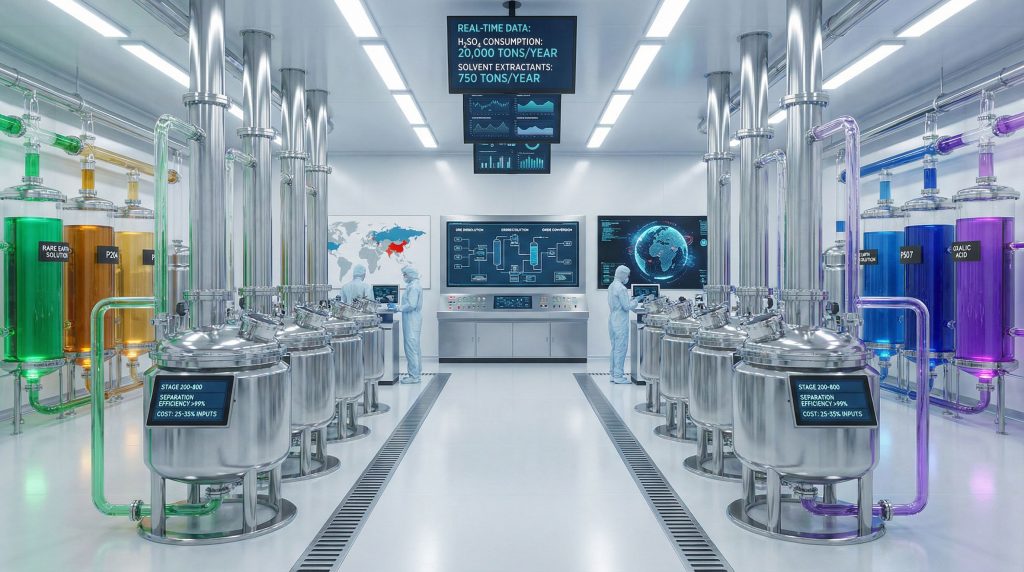
Modern industrial economies rest upon a hidden foundation of specialized chemicals that most strategic planners overlook when designing critical minerals strategy. The transition to clean energy technologies, electric vehicles, and advanced defense systems depends not merely on securing rare earth mining operations, but on understanding the complex chemical processing networks that transform raw ore concentrates into refined materials suitable for permanent magnets and electronic components.
This chemical dependency creates profound vulnerabilities that extend far beyond traditional mining risk assessments. Nations pursuing strategic autonomy in rare earth elements must confront an uncomfortable reality: building new mines without securing corresponding rare earth chemical supply chain infrastructure merely shifts dependence from one bottleneck to another, potentially more fragile one.
Why Chemical Processing Dominates Rare Earth Value Chains
The rare earth chemical supply chain represents one of modern industry's most technically demanding separation processes, requiring precise control over dozens of specialized reagents and hundreds of individual processing steps. Unlike conventional mineral extraction that produces saleable commodities directly from ore, rare earth refining demands sophisticated chemical transformation networks that few global regions can support independently.
Furthermore, the energy transition security requires understanding these complex chemical dependencies. The separation stage alone can require 200 to 800 individual extraction steps, each demanding precise chemical control and specialized reagents that only a handful of manufacturers worldwide produce at commercial scale.
The Multi-Stage Chemical Transformation Process
Primary Processing Stages:
• Ore Dissolution: Mixed rare earth concentrates undergo acid leaching using sulfuric acid (H₂SO₄) or hydrochloric acid (HCl), dissolving the mineral matrix and releasing rare earth ions into solution
• Impurity Removal: Sodium hydroxide and calcium-based compounds precipitate unwanted metals and adjust solution chemistry for subsequent separation steps
• Element Separation: Solvent extraction circuits employing organophosphorus compounds selectively transfer individual rare earth elements between aqueous and organic phases
• Precipitation: Oxalic acid converts dissolved rare earths into solid oxalate compounds suitable for final processing
• Oxide Conversion: High-temperature calcination transforms oxalates into rare earth oxides ready for metal production or permanent magnet manufacturing
This complexity distinguishes rare earth refining from most other mineral processing operations, creating unique supply chain vulnerabilities that intersect with broader industry evolution trends.
Chemical Reagent Dependencies
Critical Solvent Extractants:
• D2EHPA (P204): Primary extractant for light rare earth separation, requiring specialised manufacturing capabilities and technical expertise
• PC-88A (P507): Advanced organophosphorus compound essential for heavy rare earth processing, particularly dysprosium and terbium separation
• Cyanex 272: Organophosphinic acid used for specific rare earth purification applications where conventional extractants prove insufficient
These compounds represent highly specialised chemical products that cannot be easily substituted without completely redesigning refinery flowsheets. Manufacturing them requires advanced organic chemistry capabilities, stringent quality control, and substantial technical knowledge that has accumulated over decades of industrial development.
When big ASX news breaks, our subscribers know first
Geographic Concentration Creates Strategic Vulnerabilities
Current global rare earth processing exhibits extreme geographic concentration that creates systemic risks extending beyond primary mining operations. This concentration encompasses not only refining facilities but also the specialised chemical suppliers that enable their operation.
Consequently, understanding raw materials supply vulnerabilities becomes essential for strategic planning. Even if new Western refineries successfully commence operations, they may remain dependent on Asian chemical suppliers for essential processing inputs, effectively shifting rather than eliminating strategic dependencies.
Light Rare Earth Processing Dependencies
Market Concentration Analysis:
• Neodymium and Praseodymium Processing: Approximately 85% of global separation capacity remains concentrated within East Asia
• Primary Separation Facilities: Fewer than 15 major industrial-scale plants worldwide possess the capability to process light rare earth concentrates
• Chemical Reagent Suppliers: Six dominant manufacturers control the majority of specialised solvent extractant production
This concentration creates multiple points of potential supply disruption. Furthermore, the development of critical minerals recycling capabilities becomes increasingly important as traditional supply chains face mounting pressure.
Heavy Rare Earth Processing Challenges
Heavy rare earth processing presents even more severe concentration risks due to the specialised technology required for ion-clay deposit processing and the extreme scarcity of alternative supply sources.
Critical Constraints:
• Technology Access: Ion-clay processing methodologies remain closely guarded, with limited technology licensing available to Western operators
• Processing Complexity: Heavy rare earth separation requires 400 or more individual extraction stages, demanding extraordinary precision and reagent purity
• Geographic Specificity: Approximately 95% of dysprosium and terbium refining capacity remains concentrated within a single country
"The combination of technological barriers, chemical dependencies, and geographic concentration creates a supply chain architecture that resists simple diversification efforts," according to supply chain resilience analysis.
Chemical Supply Chokepoints
Primary Reagent Dependencies:
• Oxalic Acid: China exported approximately 299 million kilograms in 2023, representing the dominant global source for rare earth precipitation
• Ammonium Chloride: Essential for ion-clay leaching operations, with 85% of global exports controlled by a single region
• Specialised Extractants: P204 and P507 production remains concentrated among a small number of manufacturers with decades of accumulated expertise
These chemical inputs represent hidden chokepoints that can affect refinery operations regardless of ore supply security. However, a disruption in oxalic acid availability could halt precipitation operations across multiple facilities simultaneously.
Economic Implications of Chemical Supply Concentration
Chemical inputs constitute 25-35% of total rare earth processing costs, making reagent pricing and availability critical factors in refinery economics. This cost structure creates significant vulnerability to supply disruptions and price manipulation.
In addition, recent analysis of critical minerals export controls demonstrates how quickly geopolitical tensions can transform into economic pressures throughout the rare earth chemical supply chain.
Cost Structure Analysis
Chemical Cost Components (per ton REO):
| Chemical Category | Cost Range | Criticality Level |
|---|---|---|
| Solvent Extractants | $800-1,200 | Very High |
| Acids and Bases | $300-500 | High |
| Precipitation Chemicals | $200-400 | High |
| Speciality Reagents | $400-800 | Very High |
| Waste Treatment | $150-300 | Medium |
Solvent extractants represent the largest chemical cost component, reflecting their specialised nature and limited supplier base. Unlike commodity acids that can be sourced from multiple suppliers, advanced extractants require specific manufacturing capabilities and quality certifications.
Price Volatility and Supply Security
Recent supply chain disruptions have demonstrated the vulnerability of chemical pricing to geopolitical tensions and trade restrictions:
Historical Price Volatility:
• Specialised Extractants: Supply constraints during 2021-2022 led to significant price increases as alternative suppliers struggled to meet demand
• Precipitation Agents: Export restrictions on key chemicals created regional price disparities exceeding 150%
• Industrial Acids: Geographic availability differences generated 40-60% regional price variations
"Chemical supply disruptions can transform profitable rare earth operations into loss-making enterprises within months, regardless of ore grade or mining efficiency."
New Project Financial Modelling
Capital Requirements for Chemical Infrastructure:
Modern rare earth refineries require substantial chemical procurement and storage capabilities that significantly impact project economics:
• Chemical Supply Contracts: Long-term agreements spanning 15-20 years to ensure reagent availability
• Storage Infrastructure: Specialised facilities for handling corrosive and flammable chemicals under strict environmental controls
• Backup Supply Arrangements: Multiple supplier relationships to mitigate single-source dependencies
These requirements add complexity and cost to new project development while creating ongoing operational risks that traditional mining projects do not face.
Alternative Technologies for Chemical Independence
Emerging separation technologies offer potential pathways to reduce chemical dependencies, though most remain in early development stages with uncertain commercial timelines.
Electrochemical Separation Methods
Process Advantages:
• Reduced Solvent Requirements: Electrochemical methods can decrease organic extractant consumption by 60-80%
• Energy Substitution: Electrical energy replaces some chemical inputs, potentially improving supply chain security
• Process Simplification: Fewer chemical handling and waste treatment requirements
Current Limitations:
• Energy Intensity: Higher electricity consumption increases operating costs and infrastructure requirements
• Scale Demonstration: Most systems remain at pilot scale with uncertain commercial viability
• Selectivity Challenges: Achieving the separation precision required for permanent magnet applications
Membrane-Based Extraction
Selective ion transport membranes represent another potential avenue for reducing traditional chemical dependencies:
Technology Benefits:
• Selective Separation: Membranes can potentially achieve high purity levels with reduced chemical inputs
• Continuous Processing: May eliminate batch processing requirements that complicate chemical management
• Waste Reduction: Lower volumes of chemical waste requiring treatment and disposal
Development Challenges:
• Membrane Durability: Chemical compatibility with aggressive rare earth processing environments
• Throughput Limitations: Scaling membrane systems to industrial processing rates
• Cost Competition: Achieving cost parity with established solvent extraction methods
Recycling and Urban Mining Opportunities
Secondary Supply Pathways:
| Source Material | Chemical Reduction Potential | Technical Readiness |
|---|---|---|
| Permanent Magnets | 70-80% | Commercial demonstration |
| Electronic Components | 50-60% | Early commercial |
| Manufacturing Scrap | 80-90% | Commercial |
Recycling operations typically require fewer chemical inputs than primary processing because they start with concentrated rare earth materials rather than low-grade ore concentrates. This chemical efficiency makes recycling an attractive option for reducing supply chain dependencies.
Building Resilient Chemical Supply Networks
Achieving rare earth supply chain independence requires coordinated efforts to build alternative chemical manufacturing capabilities and develop strategic reserves of critical reagents.
Domestic Chemical Manufacturing Development
Investment Requirements:
• Small-Scale Extractant Production (1,000 tons/year): $50-80 million capital investment
• Regional Acid Manufacturing Hub: $200-400 million for integrated facility
• Specialised Chemical Complex: $800-1,200 million for comprehensive reagent production
• Research and Development: $100-200 million annually for alternative technology development
These capital requirements reflect the substantial investment needed to establish independent chemical supply capabilities, but they pale in comparison to the strategic costs of continued dependency.
Strategic Stockpiling Programmes
Critical Reagent Reserves:
• Buffer Quantities: 6-12 month supply reserves for essential chemicals
• Quality Preservation: Climate-controlled storage facilities to maintain chemical specifications
• Rotation Protocols: Regular inventory turnover to prevent degradation
• Emergency Release: Predetermined criteria for strategic reserve deployment
Stockpiling provides immediate protection against supply disruptions whilst longer-term manufacturing capabilities develop. However, it requires substantial upfront investment and ongoing management costs.
International Cooperation Frameworks
Allied Chemical Supply Networks:
• Joint Investment Programmes: Shared financing for chemical manufacturing facilities amongst allied nations
• Technology Sharing Agreements: Collaborative development of alternative separation methods
• Emergency Supply Protocols: Mutual assistance arrangements during supply crises
• Standards Harmonisation: Compatible chemical specifications across allied supply chains
International cooperation can reduce individual country investment requirements whilst building collective resilience against supply manipulation.
Implementation Timelines and Strategic Priorities
Building chemical supply chain independence requires sustained effort over multiple years, with careful sequencing of investments and policy initiatives.
Phase 1: Emergency Preparedness (Years 1-2)
Immediate Actions:
• Strategic Stockpile Establishment: Begin accumulating critical reagent reserves
• Supplier Diversification: Identify and qualify alternative chemical suppliers
• Emergency Protocols: Develop contingency plans for supply disruptions
• Industry Coordination: Establish communication networks amongst chemical users
Phase 2: Manufacturing Development (Years 3-5)
Infrastructure Construction:
• Site Selection: Identify locations for domestic chemical manufacturing
• Regulatory Preparation: Streamline permitting processes for chemical facilities
• Technology Transfer: Acquire or develop chemical manufacturing expertise
• Workforce Development: Train personnel for specialised chemical production
Phase 3: Commercial Operations (Years 6-10)
Full-Scale Implementation:
• Production Ramp-Up: Achieve commercial-scale chemical manufacturing
• Quality Certification: Establish chemical products that meet industry specifications
• Cost Optimisation: Reduce production costs through experience and scale
• Market Integration: Ensure domestic chemical production integrates with refinery operations
The next major ASX story will hit our subscribers first
Future Scenarios and Strategic Implications
The evolution of rare earth chemical supply chains will significantly impact global strategic balance, technological development, and economic competitiveness over the coming decades.
Scenario Analysis
Continued Concentration Scenario:
If current chemical supply patterns persist, nations attempting rare earth independence may find themselves trading mining dependencies for chemical dependencies, achieving little strategic improvement whilst incurring substantial costs.
Diversification Success Scenario:
Successful development of alternative chemical supply networks could fundamentally alter global rare earth markets, reducing price volatility and improving supply security for critical technology industries.
Technology Disruption Scenario:
Breakthrough developments in alternative separation technologies could potentially eliminate many traditional chemical dependencies, but would create new requirements for specialised equipment and technical expertise.
Investment Strategy Implications
Corporate Decision-Making:
• Supply Chain Integration: Companies may increasingly seek vertical integration into chemical manufacturing
• Technology Hedging: Investment in multiple processing technologies to reduce dependency risks
• Geographic Diversification: Development of processing capabilities in multiple regions
• Financial Risk Management: Enhanced insurance and hedging strategies for chemical supply risks
Government Policy Priorities:
• Industrial Policy Coordination: Alignment between mining, refining, and chemical manufacturing support
• Research Investment: Sustained funding for alternative separation technology development
• International Partnerships: Diplomatic efforts to build allied chemical supply networks
• Regulatory Reform: Streamlined approval processes for strategic chemical manufacturing
Strategic Recommendations for Stakeholders
The complex nature of the rare earth chemical supply chain requires coordinated action across multiple stakeholder groups to achieve meaningful progress toward supply chain independence.
For Policymakers
Priority Actions:
• Comprehensive Mapping: Conduct detailed analysis of chemical supply dependencies in domestic rare earth processing
• Investment Incentives: Develop targeted support for domestic chemical manufacturing development
• Regulatory Streamlining: Reduce bureaucratic barriers to strategic chemical facility development
• International Coordination: Establish formal partnerships with allied nations for chemical supply security
For Industry Leaders
Strategic Considerations:
• Supply Chain Auditing: Conduct thorough assessment of chemical dependencies throughout operations
• Diversification Planning: Develop relationships with multiple chemical suppliers across different regions
• Technology Investment: Support research and development of alternative processing methods
• Collaborative Approaches: Participate in industry-wide initiatives to build collective chemical supply resilience
For Investors
Investment Opportunities:
• Chemical Manufacturing: Consider investments in specialised rare earth chemical production
• Alternative Technologies: Support development of novel separation and processing methods
• Infrastructure Projects: Evaluate opportunities in chemical storage and logistics facilities
• Recycling Operations: Assess urban mining and magnet recycling ventures that reduce chemical intensity
The path toward rare earth chemical supply chain independence represents both a significant challenge and a substantial opportunity for nations and companies willing to make the necessary investments in infrastructure, technology, and international cooperation.
Disclaimer: This analysis is based on publicly available information and industry estimates. Chemical supply chain dynamics evolve rapidly, and specific investment decisions should incorporate current market conditions and expert consultation. Forward-looking statements regarding technology development and market evolution involve inherent uncertainties that may affect actual outcomes.
Ready to Invest in the Next Major Mineral Discovery?
Discovery Alert instantly alerts investors to significant ASX mineral discoveries using its proprietary Discovery IQ model, turning complex mineral data into actionable insights. Understand why historic discoveries can generate substantial returns by visiting Discovery Alert's dedicated discoveries page, showcasing exceptional outcomes, and begin your 30-day free trial today to position yourself ahead of the market.