
July 17, 2026
Strategic Positioning Within Iraq's Energy Infrastructure
Global energy markets face unprecedented reshaping as geopolitical tensions create strategic openings for Western oil majors to reclaim influence in critical resource regions. Chevron's new deals in Iraq represent a pivotal moment in this transformation, offering the company substantial opportunities to expand its Middle Eastern portfolio. Traditional power structures across Middle Eastern petroleum assets have undergone dramatic shifts, with sanctions regimes forcing major reallocations of development rights and operational control.
These macro-level transformations extend far beyond simple corporate asset transfers, fundamentally altering regional energy security calculations and long-term supply chain dynamics. Furthermore, the implications of these developments ripple through global markets, influencing everything from oil price rally dynamics to strategic partnerships.
Geographic Advantages and Regional Connectivity
Iraq's positioning within the global energy system offers unique strategic advantages that extend well beyond its substantial hydrocarbon reserves. The nation occupies a central location along critical energy transportation corridors, providing access to multiple export routes including:
• Persian Gulf terminals enabling direct crude shipments to Asian markets
• Mediterranean pipeline connections through Turkey to European refineries
• Regional pipeline networks linking to Jordan and Syrian transit systems
• Cross-border infrastructure facilitating integrated regional energy projects
This geographic positioning creates significant transportation cost advantages compared to other major producing regions. Iraqi crude can reach key Asian refineries approximately 2-3 days faster than comparable West African grades, while European deliveries benefit from established pipeline infrastructure reducing shipping dependencies.
The country's central role within what analysts term the Shia Crescent corridor adds layers of geopolitical complexity and opportunity. This positioning provides access to coordinated regional energy policies while maintaining strategic buffer status between major regional powers including Iran, Saudi Arabia, and Turkey.
Reserve Quality and Extraction Economics
Iraq's hydrocarbon resources demonstrate exceptional economic characteristics that distinguish them from global alternatives. The nation maintains some of the world's lowest lifting costs, averaging $2-4 per barrel across major fields, compared to global averages exceeding $15-20 per barrel for unconventional resources.
| Cost Comparison | Iraq Conventional | U.S. Shale | Deepwater | Oil Sands |
|---|---|---|---|---|
| Lifting Cost/Barrel | $2-4 | $35-45 | $25-35 | $45-55 |
| Breakeven Price | $25-30 | $50-60 | $45-55 | $65-75 |
| Reserve Life | 50+ years | 10-15 years | 15-25 years | 40+ years |
These massive conventional reserves require minimal enhanced recovery techniques, relying primarily on natural reservoir pressure and water injection systems. Associated gas potential creates opportunities for integrated energy projects, with significant volumes currently being flared due to infrastructure limitations.
Technical assessments indicate that Iraqi fields contain substantial undeveloped conventional resources requiring conventional drilling and completion techniques rather than expensive enhanced oil recovery methods employed in mature basins elsewhere. In addition, this contrasts sharply with trends in US oil production decline affecting global supply calculations.
When big ASX news breaks, our subscribers know first
Asset Portfolio Analysis and Production Potential
West Qurna 2 Field Development Prospects
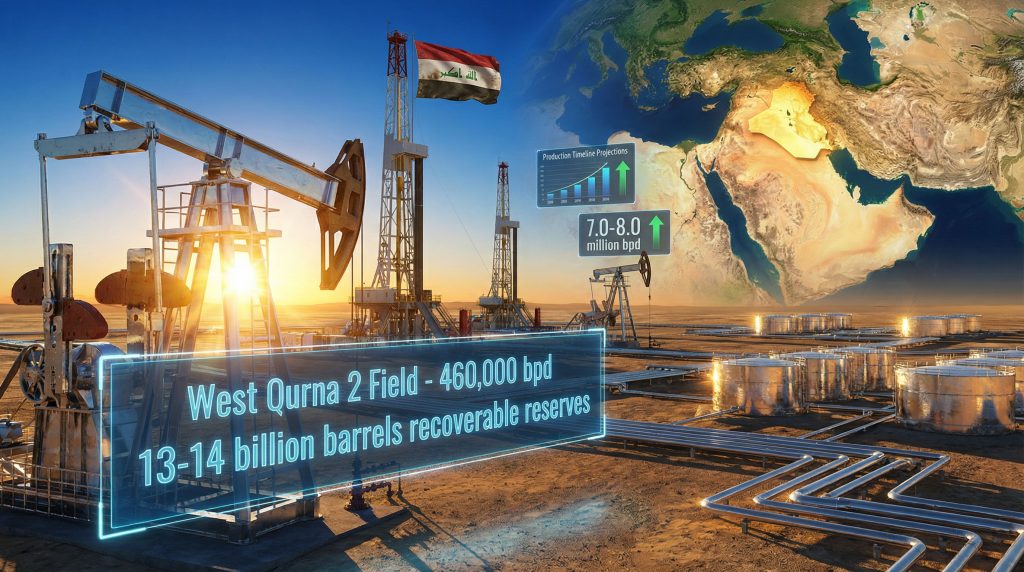
The West Qurna 2 field represents one of the world's most significant underdeveloped petroleum assets, with recoverable reserves estimated at 13-14 billion barrels. Current production capacity reaches approximately 460,000 barrels per day, representing roughly 10% of Iraq's total national output.
Historical performance data suggests substantial optimization potential exists within current infrastructure. Previous operational constraints limited production despite reservoir capabilities supporting significantly higher output levels. Technical evaluations indicate the field could sustain production levels exceeding 900,000 barrels per day with appropriate pressure maintenance and enhanced recovery implementation.
"The field's reservoir characteristics support sustained high-volume production over decades, with multiple productive zones offering development flexibility and operational redundancy," according to industry sources.
Operational optimization scenarios for doubling current output include:
• Enhanced water injection systems for reservoir pressure maintenance
• Additional production wells targeting under-developed reservoir sections
• Improved gathering and processing infrastructure
• Advanced drilling techniques accessing previously uneconomical zones
Nasiriyah Development Complex Potential
The Nasiriyah development encompasses 4.36 billion barrels of reserves in place across multiple formations within the greater Dhi Qar region. This complex includes four exploratory blocks offering significant upside potential beyond current reserve estimates.
Integration opportunities with existing regional infrastructure provide substantial capital efficiency advantages. Proximity to established pipeline networks, processing facilities, and export terminals reduces required development investments compared to greenfield projects in remote locations.
Timeline projections for first oil production suggest:
• Phase 1 (2026-2027): Initial development drilling and infrastructure construction
• Phase 2 (2027-2028): Production startup and ramp-up operations
• Phase 3 (2028-2030): Full field development and optimization
The project's strategic positioning within southern Iraq's established petroleum corridor enables shared infrastructure utilization and operational synergies with adjacent developments. Moreover, this positioning becomes increasingly important as global energy dynamics shift, particularly considering Saudi exploration licenses and regional competition.
Northern Assets and Regional Integration
The Balad field in northern Iraq provides strategic diversification beyond southern region concentration. This positioning offers potential access to Kurdistan pipeline networks and alternative export routes reducing single-point-of-failure risks.
However, security considerations and operational challenges in northern regions require careful risk assessment and mitigation strategies. Political complexities between federal and regional authorities create additional coordination requirements for development activities.
Geopolitical Sanctions Impact and Market Restructuring
Russian Asset Divestment Timeline and Implications
Sanctions targeting major Russian petroleum companies have created unprecedented asset divestment requirements across Iraqi energy projects. The February 2026 divestment deadline established by U.S. Treasury sanctions forces the disposal of approximately $8 billion in Russian investments within West Qurna 2 alone.
Lukoil's forced exit represents a fundamental shift in project ownership and operational control. The Russian company had invested substantially in field development over nearly a decade, establishing production infrastructure and technical capabilities that require seamless operational transition.
Compensation mechanisms for Russian asset disposition remain complex, involving:
• Valuation assessments of existing infrastructure and development investments
• Outstanding payment obligations from Iraqi government entities
• Technology transfer requirements and operational handover procedures
• Contractual term negotiations for replacement operators
Western Energy Security Calculations
The strategic implications extend well beyond individual project transfers, fundamentally reshaping regional energy security dynamics. Russian petroleum export capacity faces reduction of approximately 3.1 million barrels per day across various international projects affected by expanding sanctions regimes.
This capacity reduction serves multiple Western strategic objectives:
• Weakening Moscow's Middle East influence networks through reduced economic presence
• Disrupting Chinese access to discounted Russian crude supplies
• Enhancing Western strategic petroleum reserve replenishment options
• Strengthening alliance partnerships with regional energy producers
The broader implications create opportunities for Western energy companies to rebuild influence in strategically important petroleum regions previously dominated by Russian and Chinese firms. Consequently, these developments also intersect with US policy on Venezuela and broader hemispheric energy strategies.
Infrastructure Synergies and Production Scaling Scenarios
Common Seawater Supply Project Integration
TotalEnergies' $27 billion Common Seawater Supply Project represents critical infrastructure enabling massive production increases across southern Iraqi oil fields. The project's 5 million barrels per day seawater processing capacity provides essential pressure maintenance for reservoir optimization.
This infrastructure development addresses fundamental freshwater conservation requirements for agricultural and municipal needs while enabling petroleum industry expansion. Treated seawater injection systems replace freshwater withdrawals from the Tigris and Euphrates river systems, freeing up to 250,000 cubic meters daily for alternative uses.
Technical specifications include:
• Advanced seawater treatment facilities removing corrosive elements
• High-pressure injection systems maintaining optimal reservoir conditions
• Distribution networks connecting multiple major oil fields
• Monitoring and control systems ensuring operational efficiency
Production Pathway Modeling and Scenarios
Comprehensive analysis of Iraq's production scaling potential reveals multiple development pathways based on infrastructure completion timelines and investment levels:
| Scenario | Timeline | Target Output | Key Dependencies | Investment Required |
|---|---|---|---|---|
| Conservative | 2027-2029 | 5.5-6.0 million bpd | Current infrastructure optimization | $15-20 billion |
| Moderate Growth | 2028-2030 | 7.0-8.0 million bpd | CSSP Phase 1 completion | $35-45 billion |
| Accelerated Expansion | 2029-2032 | 9.0+ million bpd | Full Western technology integration | $65-85 billion |
Conservative scenario assumptions rely primarily on optimization of existing infrastructure and incremental capacity additions. This pathway minimizes capital requirements while achieving meaningful production increases through operational efficiency improvements.
Moderate growth projections depend heavily on successful completion of major infrastructure projects including the Common Seawater Supply Project. This scenario requires coordinated investment across multiple international operators and sustained Iraqi government support.
Accelerated expansion represents maximum production potential assuming full Western technology integration and unrestricted capital deployment. Achievement requires resolution of political and security challenges while maintaining operational coordination across multiple major projects.
Historical Context and Lessons Learned
Previous Iraqi production targets provide important context for current expansion planning. The 2012 Integrated National Energy Strategy projected potential output reaching 13 million barrels per day under optimal conditions, though these targets were never achieved due to various constraints.
Factors preventing previous target achievement included:
• Insufficient infrastructure investment and maintenance
• Security disruptions affecting operations and development
• Political instability creating regulatory uncertainty
• Limited water injection capacity constraining reservoir performance
• Export bottlenecks restricting production growth
Current planning incorporates these historical lessons through enhanced risk mitigation strategies and more realistic timeline assumptions. Infrastructure development receives priority attention, while political risk management becomes integral to project planning processes.
Regional Power Dynamics and Strategic Realignment
Iran-Iraq Energy Interdependence Complexities
The relationship between Iran and Iraq creates unique challenges for Western energy investment within the broader Shia Crescent political alignment. Natural gas import dependency from Iran reaches approximately 1.5 billion cubic feet per day, representing critical infrastructure interdependence.
Balancing Western investment with regional relationships requires careful navigation of:
• U.S. sanctions compliance requirements affecting Iranian energy trade
• Regional political coordination within Shia-majority alliance structures
• Economic integration benefits versus Western strategic alignment
• Energy security considerations balancing multiple supply sources
Sanctions compliance requirements for international partners create operational complexities, requiring legal frameworks ensuring adherence to U.S. Treasury regulations while maintaining regional energy cooperation agreements. These considerations also affect US natural gas forecasts and broader energy trade patterns.
Gulf State Competitive Responses
Saudi Arabia and other Gulf Cooperation Council members face strategic challenges from expanded Iraqi production capacity. OPEC+ production coordination mechanisms require adjustment to accommodate substantial Iraqi output increases without destabilizing global petroleum markets.
Regional market share competition dynamics intensify as Iraqi production scaling threatens traditional Gulf export market positions. This competition creates pressure for:
• Enhanced production efficiency improvements across Gulf producers
• Diversification into downstream refining and petrochemical sectors
• Strategic alliance formation for coordinated market development
• Investment flow redirection toward non-petroleum economic sectors
Crude oil pricing power considerations become increasingly complex as Iraqi volumes approach levels affecting global supply-demand balances. Traditional OPEC influence faces potential dilution from increased non-OPEC production cooperation requirements.
Investment Framework and Financial Projections
Capital Expenditure Requirements and Return Analysis
Estimated investment needs for doubling West Qurna 2 output range from $8-12 billion over a 5-7 year development period. These requirements include drilling programs, infrastructure expansion, and advanced recovery system implementation.
Infrastructure upgrade costs across new assets involve:
• Drilling and completion programs: $4-6 billion
• Surface facilities and processing: $2-3 billion
• Pipeline and export infrastructure: $1-2 billion
• Support facilities and logistics: $1 billion
Technology transfer and local content obligations create additional cost considerations while providing long-term operational advantages. Iraqi government requirements typically mandate 30-40% local content participation, creating workforce development and supply chain localization needs.
Revenue Optimization and Contract Structures
Per-barrel compensation negotiations with Iraqi government entities typically range from $1.50-$5.50 per barrel depending on field characteristics and development complexity. West Qurna 2 historical compensation levels suggest potential for improved terms reflecting enhanced operational performance.
Export route diversification benefits provide additional revenue optimization opportunities through:
• Premium pricing for guaranteed delivery schedule adherence
• Transportation cost optimization through multiple export pathway utilization
• Market timing flexibility enabling optimal pricing window capture
• Risk mitigation reducing single-point-of-failure export dependencies
Integrated gas monetization opportunities offer substantial revenue upside through associated gas capture and processing rather than routine flaring. Current flaring rates suggest potential annual revenue additions exceeding $500 million from gas utilization projects.
The next major ASX story will hit our subscribers first
Timeline Expectations and Development Phases
Phase 1: Immediate Optimization (2026-2027)
Existing well productivity enhancement represents the fastest path to meaningful production increases. Technical optimization includes:
• Artificial lift system installation and optimization
• Well stimulation programs improving individual well performance
• Gathering system optimization reducing production bottlenecks
• Processing capacity utilization maximizing existing facility throughput
Quick-win production additions target 50,000-75,000 barrel per day increases within 12-18 months through operational efficiency improvements requiring minimal capital investment.
Cash flow generation milestones enable funding of subsequent development phases while demonstrating operational capabilities to Iraqi government partners and international stakeholders.
Phase 2: Infrastructure Expansion (2027-2029)
Major capital project implementation during this phase focuses on foundational infrastructure supporting long-term production growth. Priority investments include enhanced water injection systems and expanded processing capabilities.
Seawater injection system integration connects field operations with the Common Seawater Supply Project infrastructure, enabling sustained high-volume production through optimal reservoir pressure maintenance.
Export capacity enhancement addresses potential bottlenecks constraining production growth, including pipeline capacity upgrades and terminal facility improvements. These developments have been highlighted in recent industry analysis.
Phase 3: Strategic Growth (2029-2032)
New field development completions across the broader asset portfolio enable production portfolio diversification and risk distribution. Multiple field operations provide operational flexibility and market supply reliability.
Regional hub establishment positions operations as anchor tenant within southern Iraq's petroleum corridor, creating economies of scale and operational synergies with adjacent developments.
Technology leadership demonstration through advanced drilling techniques, enhanced recovery methods, and environmental performance standards establishes competitive advantages for future development opportunities.
Market share consolidation objectives target sustained production levels exceeding 1.5 million barrels per day across the combined asset portfolio. This represents significant influence within regional and global petroleum markets, positioning Chevron's new deals in Iraq as a cornerstone of the company's Middle Eastern strategy.
In conclusion, Chevron's new deals in Iraq represent far more than simple asset acquisitions. These strategic investments position the company at the centre of a fundamental realignment in Middle Eastern energy dynamics, offering substantial production growth potential while strengthening Western influence in critical petroleum regions.
Disclaimer: This analysis contains forward-looking projections and investment considerations that involve substantial risks and uncertainties. Production targets, timeline estimates, and financial projections are based on current technical assessments and market conditions that may change significantly. Geopolitical developments, regulatory changes, and operational challenges could materially affect actual results. Investors should conduct independent due diligence and consider professional advice before making investment decisions.
Looking to Capitalise on Energy Sector Opportunities?
Discovery Alert's proprietary Discovery IQ model delivers real-time alerts on significant ASX mineral discoveries, instantly empowering subscribers to identify actionable opportunities ahead of the broader market. Begin your 14-day free trial today and secure your market-leading advantage whilst positioning yourself strategically within evolving global energy dynamics.