June 17, 2026
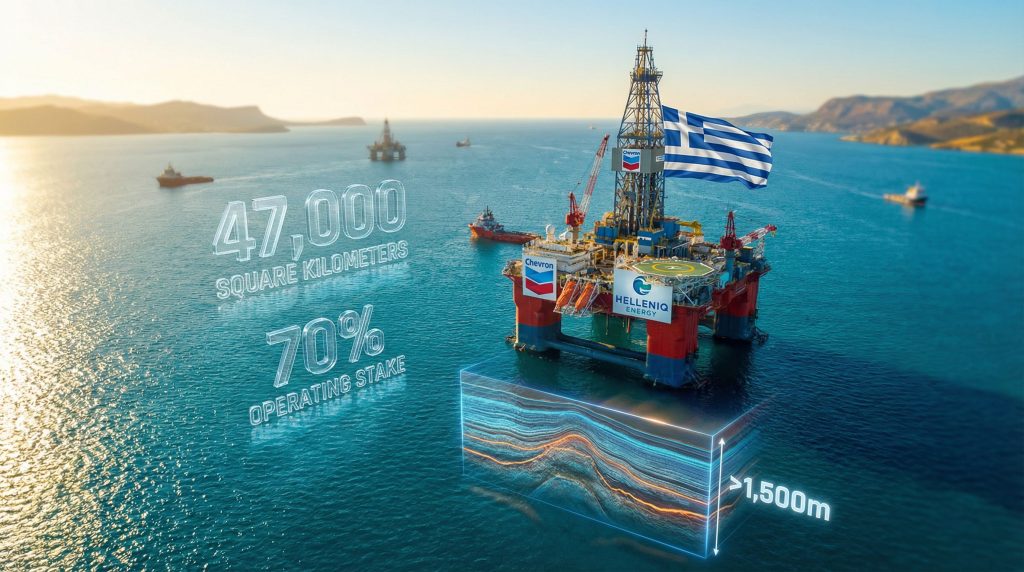
The Mediterranean's ultra-deepwater exploration landscape has transformed dramatically, with energy transition strategies playing a pivotal role in shaping regional hydrocarbon development. Chevron and HelleniQ Energy offshore Greece exploration leases represent a landmark development in this evolution, spanning 47,000 square kilometres across four strategically positioned blocks. This partnership establishes Greece as a significant player in Mediterranean energy security, furthermore creating potential synergies with existing regional gas infrastructure.
The convergence of geopolitical factors and technological capabilities has created unprecedented opportunities for offshore exploration across multiple Mediterranean jurisdictions. Advanced seismic imaging technologies now enable detailed subsurface mapping in water depths exceeding 1,500 metres, while specialised drilling platforms can operate efficiently in the region's challenging environmental conditions.
Strategic Market Entry Analysis: Chevron's Mediterranean Expansion
Chevron's strategic positioning across the Eastern Mediterranean represents a methodical approach to portfolio diversification within high-potential hydrocarbon basins. The company's 47,000 square kilometre offshore Greece acquisition spans four distinct exploration blocks, establishing operational presence across geologically diverse settings south of Crete and offshore the Peloponnese peninsula.
This substantial acreage position integrates seamlessly with Chevron's existing Mediterranean assets, which include the producing Leviathan natural gas field offshore Israel and the developing Aphrodite gas project offshore Cyprus. The Greek exploration leases create geographic connectivity across the region's most prospective hydrocarbon provinces, consequently enabling potential infrastructure synergies and operational efficiencies.
Portfolio Integration Within Eastern Mediterranean Gas Hub Strategy
The 70% operating stake allocation to Chevron, with HelleniQ Energy maintaining 30% partnership interest, reflects optimised risk-sharing structures typical of frontier exploration territories. This arrangement provides Chevron with operational control while ensuring local expertise and regulatory navigation capabilities through its Greek partner.
Chevron's Mediterranean portfolio now encompasses three distinct asset categories:
• Producing assets: Leviathan natural gas field generating commercial cash flows since 2019
• Development projects: Aphrodite gas development advancing through engineering and permitting phases
• Exploration prospects: Egyptian offshore acreage and newly acquired Greek blocks providing reserve replacement potential
The strategic logic centres on creating an integrated Mediterranean gas supply system, where successful Greek discoveries could utilise existing or planned infrastructure connections across the region. Ultra-deepwater exploration technologies deployed at Leviathan provide direct technical applicability to the Greek blocks, which feature similar geological complexity and operational water depths.
Competitive Landscape Assessment Following ExxonMobil's November 2025 Entry
The simultaneous entry of multiple major international operators validates the attractiveness of Greece's offshore exploration opportunities. ExxonMobil's concurrent acquisition of northwestern Ionian Sea blocks creates a competitive dynamic that may accelerate exploration timelines and increase technical innovation across Greek waters.
Market positioning analysis reveals strategic differentiation between operators:
• Chevron's southern blocks: Focus on geological formations analogous to successful Cyprus and Israeli discoveries
• ExxonMobil's northwestern position: Access to different stratigraphic sequences and structural settings
• Geographic risk distribution: Multiple operators across diverse geological provinces reduce single-operator dependency for Greek energy development
This competitive environment typically drives more aggressive exploration programmes, enhanced technical approaches, and improved commercial terms for host governments. The presence of established Mediterranean operators with proven ultra-deepwater capabilities suggests higher probability of successful exploration outcomes compared to single-operator scenarios.
When big ASX news breaks, our subscribers know first
What Makes Greece's 2025 Licensing Round a Game-Changer for Mediterranean Energy?
Greece's comprehensive licensing initiative represents the most significant Mediterranean offshore opportunity since Cyprus's initial licensing rounds in the early 2010s. The 2025 international licensing round attracted competitive bidding from multiple qualified international operators, demonstrating confidence in both the geological prospectivity and regulatory framework stability.
The licensing structure incorporates lessons learned from regional precedents, establishing transparent evaluation criteria and mandatory parliamentary ratification processes that enhance long-term contract security for international investors. Furthermore, this approach aligns with current natural gas forecasts showing sustained demand across European markets.
Regulatory Framework Evolution and Parliamentary Ratification Process
Greece's adoption of parliamentary ratification requirements for major offshore exploration agreements represents a significant evolution in Mediterranean energy governance. This mechanism provides enhanced contract sanctity compared to purely administrative approval processes, though it introduces additional timeline considerations for deal finalisation.
The ratification process serves multiple strategic objectives:
• Political legitimacy: Parliamentary approval creates broader political consensus supporting long-term hydrocarbon development
• Contract security: Legislative ratification provides stronger legal foundations than executive agreements alone
• Transparency enhancement: Public parliamentary debate ensures comprehensive stakeholder awareness of exploration commitments
Comparative analysis with regional frameworks reveals Greece's approach as more comprehensive than some Mediterranean jurisdictions, potentially attracting operators seeking stable, long-term exploration environments.
Technical Specifications of the Four Awarded Blocks
The awarded exploration blocks encompass diverse geological settings across Greece's most prospective offshore regions. All blocks operate in ultra-deepwater environments requiring specialised offshore drilling capabilities and advanced subsea infrastructure. The geological complexity reflects Mediterranean rift system characteristics, where hydrocarbon accumulations occur within sophisticated structural and stratigraphic traps.
Seismic acquisition across 47,000 square kilometres represents one of the largest Mediterranean exploration programmes undertaken by private operators. The scale requires coordinated deployment of multiple seismic vessels and sophisticated data processing capabilities to generate actionable drilling recommendations.
How Does This Partnership Reshape Regional Energy Security Dynamics?
The Chevron and HelleniQ Energy offshore Greece exploration leases create strategic implications extending beyond bilateral commercial arrangements. This partnership establishes a framework for enhanced Mediterranean energy interconnectivity, potentially reducing European dependence on traditional supply sources while diversifying regional energy security infrastructure.
The timing aligns with European Union objectives for increased energy independence and supply chain resilience, positioning successful Greek discoveries as contributions to broader continental energy security initiatives. In addition, comprehensive drilling program insights suggest increasing investor confidence in Mediterranean exploration activities.
HelleniQ Energy's Strategic Value Proposition as Local Partner
HelleniQ Energy's 30% partnership stake provides critical local capabilities that complement Chevron's technical and financial resources. As Greece's established energy sector participant, HelleniQ brings institutional knowledge of domestic regulatory processes, stakeholder relationships, and infrastructure integration possibilities.
Key value contributions include:
• Regulatory navigation: Established relationships with Greek energy ministries and parliamentary committees handling ratification processes
• Infrastructure connectivity: Potential integration pathways with existing Greek gas distribution networks and LNG facilities
• Stakeholder management: Local expertise in addressing environmental concerns, fishing industry coordination, and community engagement requirements
• Risk mitigation: Domestic partnership structure reduces political risk perception and demonstrates commitment to local economic participation
The partnership model reflects industry best practices for entering new jurisdictions, where local operators provide regulatory expertise while international partners contribute technical capabilities and financial resources for ultra-deepwater exploration programmes.
Three-Phase Exploration Program: Timeline and Investment Implications
The structured exploration programme follows established ultra-deepwater development protocols, with each phase contingent on positive results from preceding activities:
Phase 1: Comprehensive Seismic Survey Deployment (2026)
• Scope: 2D and 3D seismic data acquisition across entire 47,000 square kilometre acreage
• Technical requirements: Multiple seismic vessels with advanced streamer arrays capable of imaging complex geological structures
• Duration: 6-12 months depending on weather conditions and vessel availability
• Deliverable: Processed seismic data with structural interpretations identifying optimal drilling locations
Phase 2: Exploratory Drilling Campaign (Late 2026/Early 2027)
• Trigger: Successful seismic interpretation identifying drillable prospects with commercial potential
• Requirements: Ultra-deepwater drilling vessels capable of operations exceeding 1,500-metre water depths
• Technical complexity: Extended drilling durations (90-180 days per well) due to water depth and geological complexity
• Success metrics: Hydrocarbon discovery in commercially viable volumes with suitable reservoir characteristics
Phase 3: Development Decision Framework (Contingent on Discovery)
• Evaluation period: 2-3 years post-discovery for engineering design and regulatory approvals
• Commercial thresholds: Typically requiring 500+ million barrels of oil equivalent for Mediterranean ultra-deepwater development economics
• Infrastructure assessment: Transportation and processing facility requirements based on discovery characteristics
• Regulatory completion: Greek government approvals for development and production operations
This phased approach enables systematic risk management while maintaining capital discipline throughout the exploration process.
What Are the Broader Implications for Mediterranean Gas Market Development?
The expansion of exploration activities across Greek offshore waters contributes to a fundamental transformation in Mediterranean hydrocarbon supply dynamics. Successful discoveries could establish Greece as a significant regional gas supplier, complementing existing production from Israel, Cyprus, and Egypt while enhancing European energy security infrastructure.
The competitive entry of multiple international operators suggests sustained investment flows into Mediterranean exploration, potentially accelerating the timeline for commercial discoveries and infrastructure development across the region. However, investors must remain aware of potential investment risk factors inherent in ultra-deepwater exploration ventures.
Supply Chain Integration Opportunities Across Chevron's Regional Portfolio
Chevron's integrated Mediterranean strategy creates potential synergies across producing, developing, and exploration assets. The geographic proximity of Greek exploration blocks to existing Leviathan production and Aphrodite development enables shared infrastructure utilisation and operational coordination.
Potential integration opportunities include:
• Processing facilities: Shared gas processing and conditioning infrastructure reducing individual project capital requirements
• Transportation networks: Pipeline system connectivity enabling economic gas delivery to European markets
• Operational support: Consolidated drilling, subsea installation, and maintenance capabilities across multiple assets
• Market diversification: Multiple production sources providing enhanced supply security and commercial flexibility
The scale of Chevron's regional presence positions the company to develop integrated Mediterranean gas supply systems, potentially improving project economics through infrastructure sharing and operational synergies.
Investment Risk Assessment: Ultra-Deepwater Exploration Challenges
Mediterranean ultra-deepwater exploration presents several categories of technical, commercial, and regulatory risks that require sophisticated management approaches:
Technical Risk Factors:
• Geological complexity: Structural formations exceeding 1,500-metre depths with sophisticated trap geometries
• Operational challenges: Extended drilling durations and specialised equipment requirements
• Environmental conditions: Mediterranean weather patterns affecting drilling and seismic operations
• Infrastructure requirements: Substantial capital investments for subsea development systems
Regulatory and Political Considerations:
• Parliamentary ratification: Legislative approval requirements introducing timeline uncertainties
• Environmental permitting: Comprehensive impact assessments and stakeholder consultation processes
• Fiscal terms: Potential changes to taxation and revenue sharing arrangements over project lifetimes
• Regional coordination: Cross-border infrastructure and export arrangements with multiple jurisdictions
These risks require comprehensive mitigation strategies including partnership structures, insurance arrangements, and flexible development approaches adaptable to changing market conditions.
How Does This Development Impact European Energy Transition Strategies?
The Mediterranean gas exploration expansion occurs within the broader context of European energy transition planning, where natural gas serves as a bridge fuel supporting renewable energy integration while maintaining supply security during the transition period. Greek offshore exploration contributes to European Union objectives for reduced dependence on traditional supply sources while supporting infrastructure development necessary for long-term energy security.
Furthermore, this development aligns with broader industry evolution insights showing increasing integration between traditional hydrocarbon exploration and renewable energy infrastructure planning.
Natural Gas Bridge Fuel Role in Mediterranean Energy Mix
Natural gas exploration and development across the Mediterranean aligns with European energy transition strategies that recognise gas as a transitional fuel enabling renewable energy expansion. The infrastructure developed for gas production can potentially be adapted for future hydrogen or other clean energy applications.
Strategic considerations include:
• Supply diversification: Reduced dependence on traditional gas suppliers through domestic Mediterranean production
• Infrastructure investment: Pipeline and LNG facilities supporting both current gas needs and future clean energy applications
• Economic transition: Revenue generation from hydrocarbon development funding renewable energy infrastructure investments
• Technology development: Ultra-deepwater exploration technologies applicable to offshore wind and other marine renewable projects
The timeline for potential Greek gas production (2028-2030 if discoveries occur) aligns with European energy transition milestones, providing supply security during the most critical transition phases.
Economic Impact Projections for Greek Energy Sector
Successful hydrocarbon exploration could generate substantial economic benefits for Greece across multiple sectors:
Direct Investment Flows:
• Exploration phase: Seismic surveys and drilling programmes requiring specialised vessels and technical services
• Development investments: Multi-billion dollar capital expenditures for successful discoveries
• Operational spending: Long-term employment and procurement from Greek suppliers during production phases
Revenue Generation Potential:
• Government royalties: Direct payments to the Greek state from hydrocarbon production
• Tax revenues: Corporate income taxes from successful exploration and development companies
• Economic multipliers: Indirect economic activity from energy sector expansion
Technology and Employment Benefits:
• Technical skills development: Training and technology transfer from international operators
• Industrial capacity building: Local content requirements supporting Greek manufacturing and services sectors
• Energy security enhancement: Reduced import dependence improving Greece's balance of payments
These economic impacts depend on successful exploration outcomes and appropriate development of discovered resources.
What Should Investors Monitor in This Developing Story?
The Chevron and HelleniQ Energy offshore Greece exploration leases represent a multi-year investment thesis requiring careful monitoring of technical, regulatory, and commercial milestones. Investors should track specific indicators that will determine the ultimate success of this Mediterranean exploration initiative.
The complexity of ultra-deepwater exploration creates multiple decision points where project trajectories can change significantly, making systematic milestone tracking essential for investment analysis.
Key Milestones and Decision Points Through 2027
Immediate Term Catalysts (2026):
• Parliamentary ratification timeline: Greek legislative approval process and potential political developments affecting ratification
• Seismic survey initiation: Deployment of marine seismic vessels and commencement of data acquisition across 47,000 square kilometres
• Technical partnerships: Selection of seismic contractors, data processing companies, and drilling service providers
• Environmental permitting: Approval of impact assessment studies and stakeholder consultation processes
Critical Technical Milestones (2026-2027):
• Seismic data interpretation: Processing results identifying drillable prospects with commercial potential
• Drilling programme design: Engineering specifications for exploration wells and rig contracting decisions
• First exploration well results: Initial drilling outcomes determining geological prospectivity and reservoir characteristics
• Resource assessment: Preliminary estimates of hydrocarbon volumes and reservoir quality from successful discoveries
Development Decision Factors (2027+):
• Commercial viability assessment: Economic analysis of discovered resources under various price and development scenarios
• Infrastructure planning: Transportation and processing facility requirements for potential development
• Regulatory approvals: Greek government permits for development and production operations
• Market arrangements: Gas sales agreements and export infrastructure development
Comparative Analysis: Mediterranean Exploration Success Rates
Historical Mediterranean offshore exploration provides context for evaluating the probability of successful outcomes in Greek waters:
Regional Discovery Statistics:
• Cyprus offshore: Multiple discoveries including Aphrodite (2011), with estimated success rates of 30-40% for wells drilled in similar geological settings
• Israeli waters: Leviathan (2010) and other significant discoveries, though success rates vary significantly by geological province
• Egyptian offshore: Mixed results with several major discoveries but also numerous dry wells in ultra-deepwater settings
Economic Development Thresholds:
• Minimum commercial volumes: Mediterranean ultra-deepwater projects typically require 500+ million barrels of oil equivalent for economic development
• Development timelines: 7-10 years from discovery to first production based on regional precedents
• Capital intensity: $3-5 billion typical for major Mediterranean gas field development including subsea infrastructure
Success Rate Considerations:
• Geological risk: Complex rift structures require sophisticated seismic interpretation and drilling techniques
• Technical risk: Ultra-deepwater operations subject to equipment failures and weather-related delays
• Commercial risk: Gas market conditions and pricing affecting project economics
These factors suggest that while the potential rewards are substantial, investors should maintain realistic expectations regarding exploration timelines and success probabilities.
The next major ASX story will hit our subscribers first
Strategic Positioning for Long-Term Mediterranean Energy Development
The Chevron and HelleniQ Energy partnership represents more than an individual exploration venture, establishing a foundation for sustained Mediterranean energy development that could reshape regional supply dynamics over the next decade. The strategic positioning integrates technical capabilities, regulatory expertise, and market access in a framework designed for long-term value creation.
According to official statements, the partnership's success will depend on effective execution of the phased exploration programme while maintaining flexibility to adapt to changing technical, regulatory, and market conditions throughout the multi-year development process.
Integration Within Chevron's Global Exploration Portfolio
Chevron's Mediterranean expansion aligns with the company's broader international growth strategy emphasising high-potential offshore basins where technical expertise provides competitive advantages. The Greek exploration leases complement existing global positions in similar geological settings while leveraging established operational capabilities.
Portfolio Synergies:
• Technical expertise: Ultra-deepwater drilling and subsea completion technologies applicable across multiple geographic regions
• Risk management: Geographic diversification reducing dependence on individual exploration provinces
• Capital efficiency: Shared infrastructure and operational capabilities improving overall exploration economics
• Market access: Regional supply chain development supporting multiple Mediterranean and global operations
The structured approach to Mediterranean exploration provides a model for similar expansion initiatives in other high-potential offshore basins, where local partnerships and phased development programmes manage risk while maximising discovery potential.
Disclaimer: This analysis is based on publicly available information and industry research. Offshore exploration involves substantial risks including technical challenges, regulatory uncertainties, and market volatility. Investment decisions should be based on comprehensive due diligence and professional financial advice. Exploration timelines and success probabilities are estimates based on industry precedents and may vary significantly based on actual geological, technical, and market conditions.
Ready to Capitalise on the Next Major Energy Discovery?
Discovery Alert's proprietary Discovery IQ model delivers instant alerts on significant ASX mineral and energy discoveries, empowering subscribers to identify actionable opportunities ahead of the broader market. See how historic discoveries have generated exceptional returns by exploring Discovery Alert's dedicated discoveries page, then begin your 14-day free trial today to secure your market-leading advantage.