June 10, 2026
The Legal Foundation That Makes Latin American Nuclear Cooperation Possible
Long before any bilateral agreement between two neighbouring states can take effect, the deeper architecture of international nuclear law shapes what cooperation is permissible, how far it can extend, and what safeguards must accompany it. In Latin America, that architecture is unusually robust. The region holds a rare distinction: it was the first densely populated area on Earth to voluntarily establish a nuclear-weapon-free zone through a binding multilateral treaty.
That foundational commitment, now more than five decades old, continues to define the policy environment within which all subsequent bilateral nuclear relationships operate. Understanding the Chile and Argentina nuclear cooperation agreement signed in June 2026 requires starting not with the agreement itself, but with the layered legal framework that surrounds it.
How Bilateral Frameworks Sit Within the Multilateral Treaty Architecture
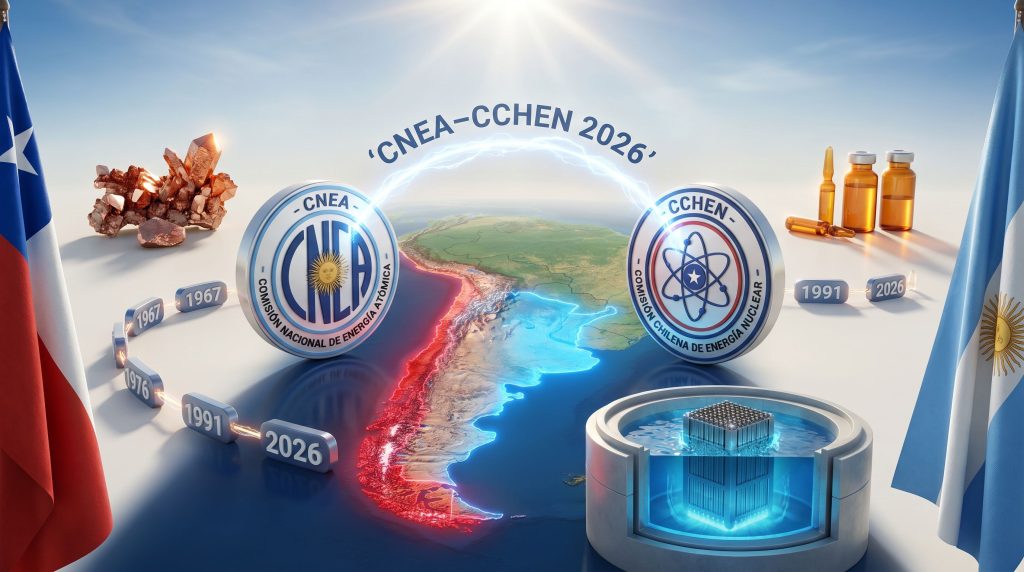
The Treaty of Tlatelolco, opened for signature on 14 February 1967 and administered by OPANAL (the Agency for the Prohibition of Nuclear Weapons in Latin America and the Caribbean), covers all 33 states in Latin America and the Caribbean. Both Argentina and Chile are parties, though their respective paths to full treaty compliance differed. Chile signed in 1967 and completed ratification and waiver of restrictive provisions through the 1970s and 1990s.
Argentina also signed in 1967 but did not bring the treaty into full force for its territory until the early 1990s, following a lengthy period during which it maintained a more autonomous nuclear posture. Both nations are furthermore parties to the Nuclear Non-Proliferation Treaty (NPT), which entered into force in 1970 and currently has 191 states parties. Argentina's accession came in 1995, reflecting a significant shift in its foreign policy orientation. Chile joined in 1974.
The result is that both states operate under an overlapping dual-layer regime: the global non-proliferation obligations of the NPT reinforced by the regional denuclearisation commitments of the Tlatelolco framework. Bilateral cooperation agreements like the 2026 CNEA-CCHEN framework do not exist in isolation from this architecture. They function as operational instruments that translate broad treaty-level peaceful-use commitments into specific, programmatic activity.
National atomic energy commissions, rather than foreign ministries or defence departments, typically serve as the executing bodies for such agreements precisely because their mandates are technically defined and institutionally separate from weapons-adjacent state functions. For context on how such uranium market dynamics influence bilateral energy policy decisions, the broader market environment is worth examining alongside these treaty frameworks.
Latin America was the first densely populated region in the world to establish a nuclear-weapon-free zone under the Treaty of Tlatelolco. The Chile-Argentina cooperation framework operates within, and is reinforced by, this foundational legal architecture.
A further legal layer is provided by the 1991 Mendoza Agreement, a trilateral commitment signed by Argentina, Brazil, and Chile that affirmed their shared dedication to exclusively peaceful nuclear activities. Though it never fully entered into force as originally framed in terms of its institutional provisions, it nonetheless shaped regional norms around safeguards transparency and became an important reference point for subsequent bilateral and multilateral arrangements.
Chile's membership in the Treaty on the Prohibition of Nuclear Weapons (TPNW) adds a further political constraint, reinforcing its commitment to non-weaponisation and limiting the scope of any bilateral cooperation to civilian and scientific applications.
When big ASX news breaks, our subscribers know first
A Timeline of Half a Century: How the Chile-Argentina Nuclear Relationship Developed
The 2026 agreement is frequently described as a new milestone, but it is more accurately understood as the latest formalisation in a relationship that has been accumulating institutional depth for fifty years. The following timeline traces the key developments:
| Milestone Year | Agreement or Event | Significance |
|---|---|---|
| 1974 | Argentina's first commercial nuclear reactor becomes operational | Establishes Argentina as Latin America's first commercial nuclear power state |
| 1974 | Chile's RECH-1 research reactor commissioned | Chile acquires its first operational nuclear research capability |
| 1976 | Initial Chile-Argentina peaceful nuclear cooperation agreement signed | Foundational bilateral framework established |
| 1983 | Supplementary nuclear agreement | Radioisotopes from Chile's RECH-1 reactor to be supplied to Argentina |
| 1991 | Mendoza Agreement (Argentina, Brazil, Chile) | Trilateral peaceful-use commitment; regional transparency benchmark |
| 1995 | Argentina accedes to the NPT | Completes Argentina's integration into the global non-proliferation regime |
| 2026 | CNEA-CCHEN formal cooperation agreement signed | Expanded operational framework across eight defined domains |
The 1983 Radioisotope Agreement: A Quiet but Consequential Precedent
One of the least-discussed episodes in this bilateral history is the 1983 supplementary agreement under which Chile's RECH-1 reactor would supply radioisotopes to Argentina. This arrangement was an early example of what might be called functional nuclear diplomacy: the creation of technical interdependency through isotope supply chains. When two states become mutually reliant for medical or research isotope supply, that reliance itself reinforces peaceful-use commitments in ways that declarations and treaties alone cannot.
The 1983 arrangement also established a precedent for radiopharmaceutical cooperation that is directly relevant to the 2026 agreement's emphasis on that same sector. The institutional memory embedded in these historical agreements is not merely symbolic; it informs how both CNEA and CCHEN approach joint programming today.
Dissecting the 2026 CNEA-CCHEN Agreement: Eight Domains of Structured Cooperation
The agreement signed on 10 June 2026 between Argentina's National Atomic Energy Commission (CNEA) and Chile's Nuclear Energy Commission (CCHEN) establishes cooperation across eight explicitly defined domains. Three operational mechanisms underpin all activity: information exchange, technical visits, and joint research and technological development programmes.
The eight domains are:
- Research reactors and their applications – joint utilisation of existing and future reactor infrastructure
- Radiopharmaceuticals – collaborative production and development of medical isotopes
- Nuclear technology in health – diagnostic and therapeutic applications across both nations
- Nuclear technology in agriculture and industry – irradiation techniques and tracer methodologies
- Nuclear technology in mining – geological analysis using radioactive tracing and activation techniques
- Nuclear and radiological safety – regulatory alignment and safety culture exchange
- Human resource training – knowledge transfer and workforce capacity development
- Used fuel management and reactor aging – lifecycle and operational management cooperation
The inclusion of the eighth domain, covering the modernisation and management of technological aging, is particularly revealing. Chile's RECH-1 reactor has been operational since 1974, meaning it has been running for over five decades. Argentina's reactor fleet faces comparable lifecycle pressures. Acknowledging aging management as a formal cooperation domain signals a pragmatic, operationally grounded approach rather than a purely aspirational one.
The agreement's inclusion of modernisation and management of technological aging signals a pragmatic recognition that both nations operate aging nuclear infrastructure, and that managing this challenge cooperatively is more efficient than doing so in isolation.
The agreement also references alignment with the IAEA's Latin American Research Reactor Network, positioning the bilateral framework within a broader multilateral scaffolding. This layering is significant: it means the bilateral arrangement both draws on and contributes to a regional knowledge-sharing ecosystem that no single national programme could sustain alone.
Argentina's Nuclear Capability Profile: Strengths, Tensions, and Strategic Ambitions
The Operational Foundation: Three Reactors and a Fifty-Year Commercial History
Argentina's nuclear programme is by far the most developed in Latin America. Its three operational commercial reactors collectively supply approximately 7% of national electricity, a contribution that has remained broadly stable for decades. Commercial nuclear power in Argentina dates to 1974, giving it the longest track record of any Latin American state in this domain.
The country also carries an extensive research reactor heritage and a history of uranium exploration stretching back to the mid-1950s. The last uranium mine closed in 1997 for economic reasons rather than resource depletion, leaving open the possibility of resumption under different market or policy conditions. For a broader perspective, the copper and uranium outlook for 2025 highlights how shifting commodity dynamics are influencing energy and resource policy across the region.
The CAREM25 Suspension: Strategic Tension at the Domestic Level
Argentina had been developing the CAREM25 small modular reactor, a domestically designed pressurised water SMR intended to demonstrate Argentine nuclear technology on the global stage. The current government has halted work on the CAREM25 programme, citing fiscal constraints. This decision creates a notable tension: Argentina has publicly identified nuclear exports as a key national policy objective, yet the suspension of its most visible domestic SMR development initiative undermines the technological credibility that export ambitions require.
For the bilateral cooperation framework with Chile, this tension has a specific implication. If Argentina's advanced reactor development capacity is curtailed domestically, the near-term value it can offer Chile will be weighted more heavily toward research reactor expertise, radioisotope production know-how, and nuclear safety regulatory knowledge rather than power reactor technology transfer.
The RA-10 Research Reactor: The Agreement's Most Significant Future Asset
Currently under construction, the RA-10 is Argentina's next-generation multipurpose research reactor. Its planned capabilities include neutron activation analysis, radioisotope production at scale, and materials testing. Once operational, the RA-10 will significantly enhance the practical content of the bilateral cooperation framework, offering Chile access to substantially greater research reactor capacity than either country's existing assets can currently provide.
| Dimension | Argentina | Chile |
|---|---|---|
| Commercial Nuclear Power | Yes (3 reactors, ~7% of electricity) | No commercial nuclear plants |
| Research Reactor Status | RA-10 under construction + existing assets | RECH-1 (5 MW, operational since 1974) |
| Uranium Mining History | Active from 1950s; last mine closed 1997 | No significant uranium mining history |
| SMR Development | CAREM25 (currently halted) | No active SMR programme |
| Nuclear Export Ambition | Stated national policy objective | Technology recipient and capacity builder |
| IAEA Network Participation | Active | Active |
Chile's Nuclear Infrastructure: Technically Focused, Medically Oriented
The RECH-1 Reactor: Technical Profile and Operational Role
Chile's nuclear capability centres on a single research reactor with a clear applied mission. The RECH-1, located at the La Reina Nuclear Centre in Santiago, has been operational since 1974 and presents the following technical characteristics:
- Reactor type: Pool-type research reactor
- Power output: 5 MW
- Fuel: Low-enriched uranium fuel assemblies
- Moderator and coolant: Light water
- Reflector: Beryllium
- Primary function: Radioisotope production, predominantly for medical applications
- Secondary functions: Sample irradiation for chemical analysis, geological material dating, and radioactive tracer preparation
Over five decades of continuous operation, the RECH-1 has established Chile's CCHEN as an institution with genuine technical depth in radioisotope production and applied nuclear science. This operational history is precisely what makes Chile a meaningful bilateral partner rather than merely a recipient of Argentine expertise. The exchange is, consequently, substantive in both directions.
Why Chile Has No Commercial Nuclear Power
Multiple proposals for commercial nuclear power development in Chile have been considered over the decades, none of which advanced to construction. Chile's energy landscape has historically been shaped by its significant hydroelectric and, more recently, solar and wind resources. Energy security concerns have prompted periodic reconsideration of nuclear power, particularly during periods of drought that reduce hydroelectric generation.
Chile's membership in the Treaty on the Prohibition of Nuclear Weapons further reinforces a political environment in which nuclear power development, while not prohibited under the TPNW, requires careful navigation of public and diplomatic perceptions. The 2026 cooperation agreement with Argentina could, over time, contribute to a more informed domestic policy conversation about nuclear energy options, though no such development is on the near-term policy agenda.
The Radiopharmaceutical Dimension: A Strategic Gap Both Nations Can Help Close
Latin America's Structural Dependence on Imported Medical Isotopes
The global radioisotope supply chain has long been concentrated among a small number of aging research reactors located primarily in North America and Europe. Latin America has historically been a net importer of medical radioisotopes, including the widely used technetium-99m precursor molybdenum-99, which is essential for millions of diagnostic nuclear medicine procedures annually.
This structural dependence creates vulnerability. Supply disruptions at key Northern Hemisphere reactors have caused periodic shortfalls in isotope availability that affect patient care. The Chile and Argentina nuclear cooperation agreement's emphasis on collaborative radiopharmaceutical production and development directly targets this structural gap.
If Argentina's RA-10 reactor, once operational, is combined with Chilean RECH-1 production capacity and bolstered through cooperative technical development, the two countries could meaningfully reduce Latin America's dependence on imported medical isotopes.
This scenario is not speculative in principle; it reflects a straightforward extension of existing capabilities. The RA-10's planned radioisotope production capacity, combined with Chile's five decades of RECH-1 operational experience, could position the region as a partial but meaningful alternative supply node for Latin American nuclear medicine programmes.
The next major ASX story will hit our subscribers first
Mining and Geology: The Underreported Dimension of the Agreement
Why Nuclear Techniques Matter to Chile's Mining Sector
The agreement's inclusion of nuclear technology applications in mining is often treated as a secondary detail. In the context of Chile's resource economy, however, it deserves more careful attention. Chile is the world's largest copper producer, and the copper market trends emerging in 2025 are already placing fresh pressure on operators to improve ore characterisation efficiency.
Chile also holds the largest known Chile lithium resources globally, making geological precision increasingly valuable. Geological analysis using nuclear techniques, particularly neutron activation analysis, offers high-precision elemental characterisation of ore samples that conventional analytical methods cannot always match.
Radioactive tracer methodologies also have applications in mine hydrology, tracking groundwater movement in arid mining regions where water management is critical. Argentina's legacy of uranium exploration from the mid-1950s through to 1997 generated substantial expertise in the application of nuclear techniques to geological survey work. That expertise is directly transferable through the human resource training and joint research provisions of the 2026 agreement.
For Chilean mining operators, access to Argentine nuclear analytical expertise could improve ore characterisation efficiency and contribute to more precise resource estimates, particularly relevant as the lithium sector scales up exploration activity in the Atacama region.
Regional Governance Implications: Could This Become a Template?
South-South Nuclear Cooperation as a Non-Proliferation Instrument
Nuclear cooperation between two non-nuclear-weapon states carries a distinct policy character. Neither Argentina nor Chile possesses or pursues nuclear weapons. Their cooperation reinforces rather than complicates the Treaty of Tlatelolco's regional denuclearisation framework. This stands in contrast to North-South nuclear cooperation arrangements, which often involve technology transfer from nuclear-weapon states and carry a different set of proliferation sensitivities.
The CNEA-CCHEN agreement could serve as a replicable model for other regional pairs. A potential trilateral expansion involving Brazil's CNEN (National Nuclear Energy Commission) would create a significantly larger cooperative ecosystem, given that Brazil operates a substantially more powerful nuclear research infrastructure than either Argentina or Chile. The radiopharmaceutical supply chain logic that drives much of the Chile-Argentina framework would apply equally to a broader regional arrangement.
Both CNEA and CCHEN participate in the IAEA's Latin American Research Reactor Network, which provides an existing multilateral coordination mechanism through which bilateral cooperation outputs, such as co-published research or jointly developed protocols, can be shared with the wider regional community. Bilateral depth and multilateral breadth are, in this framework, mutually reinforcing rather than competing approaches. Furthermore, the growth of critical minerals demand across the energy transition is adding fresh urgency to the kind of resource-focused nuclear analytical cooperation this agreement enables.
FAQ: Chile and Argentina Nuclear Cooperation Agreement
What is the Chile and Argentina nuclear cooperation agreement?
A formal bilateral agreement signed on 10 June 2026 between Argentina's National Atomic Energy Commission (CNEA) and Chile's Nuclear Energy Commission (CCHEN), establishing structured cooperation across eight defined domains of peaceful nuclear technology.
How long have Chile and Argentina cooperated on nuclear matters?
Bilateral nuclear cooperation frameworks between the two countries date to 1976, making the 2026 agreement the latest development in a fifty-year institutional relationship.
What areas does the 2026 agreement cover?
Research reactors, radiopharmaceuticals, nuclear applications in health, agriculture, industry, and mining, nuclear and radiological safety, human resource training, used fuel management, and reactor modernisation and aging management.
Does Chile have nuclear power plants?
No. Chile operates the RECH-1 research reactor at La Reina Nuclear Centre in Santiago but has no commercial nuclear power plants.
What nuclear reactors does Argentina operate?
Three commercial nuclear reactors supplying approximately 7% of national electricity, plus research reactor infrastructure including the RA-10 multipurpose reactor currently under construction.
What is the IAEA Latin American Research Reactor Network?
A regional coordination initiative under the International Atomic Energy Agency facilitating collaboration among research reactor operators across Latin America, in which both CNEA and CCHEN are active participants.
How does this agreement relate to the Treaty of Tlatelolco?
The Treaty of Tlatelolco established Latin America as a nuclear-weapon-free zone in 1967. The Chile-Argentina cooperation agreement operates entirely within this legal framework and reinforces the region's exclusive commitment to peaceful nuclear applications.
Key Takeaways
- The 2026 CNEA-CCHEN agreement represents the deepening of a fifty-year institutional relationship, formalised across eight operationally specific domains
- Both nations operate under overlapping treaty obligations: the NPT and the Treaty of Tlatelolco, which together define the legal boundaries of permissible cooperation
- Radiopharmaceutical collaboration is the agreement's most strategically significant near-term dimension, targeting Latin America's structural dependence on imported medical isotopes
- Argentina's RA-10 research reactor, once operational, will materially enhance the practical value the bilateral framework can deliver to Chile
- The suspension of the CAREM25 SMR programme creates tension between Argentina's stated nuclear export ambitions and its current domestic programme trajectory
- Chile's mining sector, particularly copper and lithium, stands to benefit from the application of Argentine nuclear analytical expertise to geological characterisation work
- The agreement's alignment with the IAEA Latin American Research Reactor Network ensures that bilateral outputs can contribute to a broader regional knowledge base
- The model established here carries genuine potential for trilateral expansion, most logically to include Brazil's CNEN within a wider Latin American nuclear research ecosystem
This article is intended for informational and educational purposes. It does not constitute investment advice. Readers interested in further context on Latin American nuclear policy and international nuclear cooperation frameworks are encouraged to consult World Nuclear News at world-nuclear-news.org and the World Nuclear Association's country profile resources.
Want To Stay Ahead of ASX Mineral Discoveries Linked to Latin America's Resource Boom?
As nuclear analytical techniques gain traction in copper and lithium exploration across Chile and Argentina, the race to identify significant mineral discoveries is intensifying — Discovery Alert's proprietary Discovery IQ model delivers real-time ASX mineral discovery alerts, turning complex geological data into actionable investment insights the moment they are announced. Start your 14-day free trial at Discovery Alert today, or explore historic discovery returns to understand just how transformative early positioning in major mineral finds can be.