May 14, 2026
Chile's Strategic Response to Global Copper Demand
The global copper market faces an unprecedented transformation as demand for renewable energy infrastructure, electric vehicles, and grid modernisation creates supply pressures across traditional mining regions. This shift toward electrification has fundamentally altered the strategic calculus for copper producers, particularly in Chile, where geological advantages and established infrastructure provide unique positioning advantages in an increasingly competitive landscape. Furthermore, the Codelco Adani Partnership represents a significant development in international copper market dynamics.
Chile's dominance in global copper production stems from decades of strategic resource development and favourable geological conditions. The country's copper sector contributes approximately 50% of total merchandise exports and represents a cornerstone of national economic stability. As global copper demand is projected to nearly double by 2050 due to clean energy transitions, Chile's strategic response centres on expanding production capacity through targeted infrastructure investments rather than entirely new mining developments.
State-owned enterprises like Codelco possess distinct advantages in executing long-term capital deployment strategies that extend beyond typical private sector planning horizons. The ability to undertake counter-cyclical investments during commodity downturns, combined with direct alignment with national strategic priorities, enables more comprehensive expansion planning that addresses both immediate market opportunities and long-term resource security objectives.
When big ASX news breaks, our subscribers know first
Understanding Chile's Strategic Copper Expansion Framework
The Macroeconomic Imperative Behind State-Led Mining Investment
Chile maintains its position as the world's leading copper producer, accounting for approximately 27-28% of global copper production according to the United States Geological Survey. This dominance translates into substantial economic leverage, with copper exports representing roughly half of the country's total merchandise exports and contributing significantly to government revenues through royalties and corporate taxation.
The strategic importance of maintaining production leadership becomes evident when examining global copper supply forecast projections. The International Energy Agency has projected cumulative copper deficits of approximately 9.8 million tons between 2022-2035 due to energy transition requirements and accelerating electrification across multiple sectors. This supply pressure creates both opportunity and necessity for established producers to expand capacity strategically.
Key Market Drivers Creating Supply Pressure:
• Renewable energy infrastructure: Global renewable electricity capacity additions require approximately 12 million tons of cumulative copper through 2027
• Electric vehicle market expansion: Battery production alone demands 3.2 million tons of copper cumulatively from 2023-2030
• Grid modernisation projects: Smart grid and transmission upgrades across developed economies
• Industrial electrification: Manufacturing sectors transitioning from fossil fuel-based processes
State ownership provides Codelco with unique advantages in addressing these market dynamics. Unlike publicly traded mining companies operating under quarterly earnings pressure, state enterprises can execute long-term investment strategies that extend beyond typical 3-5 year financial planning cycles. This institutional advantage enables larger-scale expansions during optimal market timing while maintaining strategic focus on national resource security objectives.
Codelco's Portfolio Optimisation Strategy
The company's strategic framework addresses the ageing profile of certain mining assets through targeted brownfield expansions rather than entirely new greenfield developments. This approach capitalises on existing infrastructure, established workforce expertise, and proven geological resources while reducing capital requirements and permitting timelines.
Current portfolio management focuses on assets with varying ore grades ranging from 0.6% to 1.4% copper content, requiring different extraction and processing methodologies optimised for specific geological conditions. The transition strategy emphasises extending operational life at mature sites while developing higher-grade resources that improve overall portfolio economics.
Portfolio Optimisation Benefits:
• Infrastructure leverage: Utilising existing processing facilities, transportation networks, and utility connections
• Workforce continuity: Maintaining specialised mining expertise and community relationships
• Permitting efficiency: Brownfield expansions typically require 2-4 years less approval time than new mining developments
• Capital efficiency: Reducing development costs by 20-35% compared to greenfield projects
What Makes the Ministro Hales Development Project Critical for Chile's Mining Future?
Technical Infrastructure Transformation
The Ministro Hales development represents a significant expansion of Codelco copper expansion projects in Chile, focusing on brownfield optimisation that leverages existing operational infrastructure while introducing advanced processing technologies. The project's strategic importance extends beyond immediate production capacity increases to encompass long-term competitive positioning in global copper markets.
Environmental permit approval for the project demonstrates successful navigation of Chile's comprehensive Environmental Impact Assessment framework, which requires extensive baseline studies, public consultation processes, and regulatory review spanning typically 16-27 months for major mining projects. This approval represents validation of the project's technical feasibility and environmental compliance standards.
Advanced processing technology integration focuses on enhanced recovery rates through several key innovations:
Heap Leaching Optimisation:
• Improved acid distribution systems increasing recovery rates from 55-65% to 70-82% for oxide ores
• Enhanced percolation management achieving 10-15% higher acid utilisation efficiency
• Temperature optimisation maintaining leach pile temperatures at 50-60°C for improved dissolution kinetics
Solvent Extraction-Electrowinning (SX-EW) Integration:
• Reduced energy consumption through optimised electrolytic processes
• Increased cathode copper purity meeting London Metal Exchange Grade A specifications
• Raffinate recycling systems reducing water consumption by 20-25% and acid requirements by 15-20%
Environmental Compliance as Competitive Advantage
Water management systems represent a critical component of the project's environmental framework, particularly given northern Chile's arid conditions and competing water demands across mining operations. The region's mining activities currently utilise approximately 65% of water concessions in the Antofagasta Region, necessitating advanced conservation and recycling technologies.
Typical copper processing in northern Chile requires 2-3 tons of water per ton of copper produced, making water efficiency a key operational and environmental priority. The project incorporates several water conservation innovations:
| Water Management Technology | Efficiency Gain | Implementation Scope |
|---|---|---|
| Closed-loop processing systems | 25-30% reduction in freshwater requirements | Primary processing circuits |
| Advanced tailings management | 15-20% improved water recovery | Waste processing operations |
| Desalination integration | 100% alternative water source | Coastal facility connections |
Carbon footprint reduction strategies focus on operational efficiency gains rather than solely renewable energy adoption. Process optimisation, equipment efficiency improvements, and waste heat recovery systems contribute to emissions reductions while improving overall project economics.
How Does the Radomiro Tomic Continuity Plan Extend Mine Life Economics?
Operational Capacity Enhancement Framework
The Radomiro Tomic continuity plan exemplifies strategic mine life extension through targeted capital investment that defers closure costs while maximising return on existing infrastructure. Located approximately 230 kilometres north of Calama in the Antofagasta Region, the operation has maintained production since 1982 through multiple expansion phases addressing changing geological and market conditions.
Current operational capacity processes approximately 50,000-55,000 tons of copper annually from an ore mill handling 675,000 tons per day. The continuity plan, as detailed in recent mining industry reports, proposes increasing daily processing capacity to 725,000 tons while extending operational timeline through 2058, demonstrating the economic viability of mature asset optimisation.
Mine Life Extension Economic Benefits:
• Deferred decommissioning costs: Avoiding 5-10% of total project lifecycle costs through extended operations
• Infrastructure utilisation: Maximising return on fully depreciated processing facilities and equipment
• Employment stability: Maintaining approximately 3,000-3,500 direct workers with 2.5-3.0x regional multiplier effects
• Administrative efficiency: Amortising overhead costs across extended production periods
Leaching Technology Optimisation
Enhanced ore transport integration with Chuquicamata operations, located 40 kilometres south, creates synergies through shared infrastructure utilisation and coordinated logistics management. This integration encompasses several operational advantages:
Shared Infrastructure Benefits:
• Combined concentrator facilities reducing equipment duplication costs
• Unified port logistics at Antofagasta port (160 kilometres distance) improving shipping efficiency
• Integrated power and water infrastructure management reducing utility costs
• Coordinated maintenance scheduling optimising equipment availability
Hydraulic barrier systems employ geosynthetic clay liners (GCLs) providing permeability ratings of 10⁻⁹ cm/s to prevent environmental seepage from tailings and waste storage areas. These systems incorporate:
• Pore pressure management through engineered toe drainage systems
• Real-time slope monitoring using inclinometers and GPS deformation detection
• Engineered waste dump slopes utilising 1:2 (vertical to horizontal) angles for stability
• Temperature and moisture monitoring preventing spontaneous combustion risks
Why Are Underground Mining Transitions Reshaping Chile's Copper Landscape?
Geological Resource Access Strategies
Open-pit mining limitations become economically constraining when stripping ratios (waste-to-ore ratios) exceed 3.5-4.0:1, meaning extraction of 3.5-4.0 tons of waste rock per ton of ore becomes economically unviable. At this threshold, underground mining becomes competitive despite higher per-ton extraction costs averaging $55-75 per ton compared to $15-25 per ton for open-pit operations.
Deep ore bodies typically contain copper grades 30-50% higher than remaining pit ore, improving extraction economics despite elevated operational costs. This grade differential enables selective mining of higher-value zones while maintaining overall project profitability through optimised resource allocation. Additionally, understanding copper price growth drivers becomes essential for evaluating these transitions.
Underground Transition Advantages:
• Extended mine life: Accessing mineralisation below pit floor depths, potentially adding 20-40 years of operations
• Reduced environmental footprint: Minimising surface land disturbance compared to expanded open-pit operations
• Grade optimisation: Selective extraction of higher-grade ore zones improving overall recovery economics
• Operational continuity: Maintaining workforce and production during transition phases
Technology Integration for Operational Efficiency
Automated extraction systems represent a fundamental shift in underground mining operations, improving both safety and productivity through technological advancement. Modern underground copper mining employs several key automation technologies:
Load-Haul-Dump (LHD) Automation:
• Remote operation capabilities reducing operator exposure to hazardous conditions
• Autonomous vehicle systems achieving 20-30% productivity improvements through optimised routing
• Real-time positioning via RFID and underground GPS ensuring accurate ore/waste separation
• Predictive maintenance scheduling reducing equipment downtime
Production Drilling Advancement:
• Automated drill jumbos with laser-guided positioning improving blast fragmentation by 10-15%
• Real-time hole depth monitoring preventing overdrilling and reducing explosive consumption
• Integrated geological mapping systems optimising blast design for specific rock characteristics
Integration of renewable energy sources focuses on hybrid power systems combining grid electricity with solar installations during daylight hours. Underground operations' consistent power demands align well with energy storage systems that capture excess renewable generation for use during peak operational periods.
What Role Does Water Management Play in Sustainable Copper Expansion?
Resource Conservation Technologies
Water scarcity in northern Chile creates operational constraints that require innovative conservation approaches across all Codelco copper expansion projects in Chile. The Atacama Desert's extreme aridity, combined with competing demands from urban areas and agricultural sectors, necessitates comprehensive water management strategies that extend beyond traditional mining practices.
Closed-loop water systems implementation represents the most significant conservation opportunity, enabling substantial reductions in freshwater requirements through advanced recycling technologies. These systems incorporate multiple treatment stages:
Advanced Water Treatment Technologies:
| Treatment Stage | Purpose | Efficiency Rate |
|---|---|---|
| Primary clarification | Suspended solids removal | 85-92% particle elimination |
| Secondary biological treatment | Dissolved organics reduction | 90-95% contamination removal |
| Tertiary filtration | Final polishing and disinfection | 99%+ water quality standards |
Desalination integration for coastal operations provides alternative water sources independent of regional precipitation patterns. Modern reverse osmosis systems achieve energy consumption rates of 3.5-4.0 kWh per cubic metre of treated water, making desalination economically competitive with long-distance freshwater transport in water-scarce regions.
Regional Water Security Considerations
Drought mitigation strategies address both immediate operational needs and long-term regional sustainability. Northern Chile experiences periodic drought cycles that can extend for multiple years, requiring robust contingency planning and diversified water sourcing strategies.
Water Security Framework Components:
• Emergency water storage: Maintaining 6-12 months operational reserves during drought periods
• Alternative source development: Deep aquifer exploration and development for backup supplies
• Demand management: Process optimisation reducing water intensity per ton of copper produced
• Regional cooperation: Shared infrastructure development with other mining operations
Community water rights protection protocols ensure mining operations maintain social licence through responsible resource management. Indigenous communities and rural populations depend on limited groundwater resources, requiring careful coordination between industrial and domestic water usage.
Industrial water efficiency benchmarking against international standards drives continuous improvement in water conservation practices. Leading global copper operations achieve water recycling rates of 85-90%, establishing targets for Chilean operations to optimise resource utilisation.
The next major ASX story will hit our subscribers first
How Will These Projects Impact Global Copper Market Dynamics?
Supply Chain Security Enhancement
Chile's market share protection strategy addresses emerging competition from African and Asian copper producers through sustained investment in production capacity and operational efficiency. Furthermore, developments such as the Argentine copper system create additional regional competition. Maintaining technological advantages and cost competitiveness requires continuous capital deployment that extends beyond basic capacity maintenance to encompass next-generation mining technologies.
Strategic reserve development enables Chile to influence global price stability during periods of supply disruption or demand volatility. The country's substantial geological resources, combined with advanced extraction capabilities, provide natural buffering capacity against market shocks that affect smaller producing regions.
Global Market Positioning Factors:
• Production cost competitiveness: Chilean operations maintain among the lowest cash costs globally
• Infrastructure quality: Established port facilities and transportation networks reducing logistics costs
• Geological advantages: High-grade ore bodies and proven resource base supporting long-term planning
• Political stability: Established regulatory framework providing operational certainty for international buyers
Long-term contract negotiation leverage improves through sustained production capacity and reliable delivery performance. Major consuming countries, particularly in Asia, prioritise supply security relationships with established producers offering consistent quality and delivery reliability.
Investment Returns and Economic Multiplier Effects
The combined portfolio impact of Codelco copper expansion projects in Chile creates substantial economic multiplier effects extending beyond direct mining employment. Analysis of regional economic development demonstrates that mining operations generate 2.5-3.0x employment multipliers through supplier networks, service providers, and induced economic activity.
Economic Impact Analysis:
| Impact Category | Direct Effect | Multiplier Effect | Total Regional Impact |
|---|---|---|---|
| Employment | 6,500-7,000 direct jobs | 2.8x multiplier | 18,200-19,600 total jobs |
| Local procurement | $800M-900M annual | 1.6x multiplier | $1.3B-1.4B economic activity |
| Tax revenues | $250M-300M annual | 1.4x multiplier | $350M-420M total contribution |
Investment returns demonstrate the strategic value of brownfield expansion compared to greenfield development alternatives. According to recent industry analysis, comparative analysis with recent major copper projects shows:
Benchmark Project Economics:
• Escondida expansion (2009-2015): $3.6 billion for 400,000 ton annual capacity increase = $9,000 per ton of annual capacity
• Antamina expansion (2012-2020): $3.3 billion for 515,000 tons annually = $6,400 per ton (copper and molybdenum combined)
• Chilean brownfield projects: Estimated $6,000-8,000 per ton of annual capacity through infrastructure leverage
What Are the Risk Factors Threatening Project Success?
Regulatory and Political Challenges
Environmental Impact Assessment compliance represents the primary regulatory risk factor for major mining expansions. Chile's comprehensive evaluation framework requires extensive documentation across multiple assessment categories:
EIA Timeline Components:
• Environmental baseline studies: 6-12 months data collection and analysis
• Public consultation processes: 4-6 months stakeholder engagement and feedback incorporation
• Regulatory review and approval: 6-9 months government agency evaluation
• Total typical timeline: 16-27 months for major mining projects
Policy continuity across government transitions creates uncertainty for long-term capital investments. Mining royalty rates, environmental regulations, and water allocation policies can change with political transitions, affecting project economics and operational planning. Chile's established democratic institutions provide relative stability, but mining companies must account for potential policy shifts in long-term planning.
Community consultation requirements extend beyond formal regulatory processes to encompass ongoing social licence maintenance. Indigenous communities, environmental groups, and local residents maintain influence over project approval and continued operations through various legal and social mechanisms.
Operational Execution Risks
Construction cost inflation in remote locations poses significant risks to project economics, particularly given recent global commodity price increases and supply chain disruptions. Northern Chile's remote geography compounds these challenges through:
• Limited local contractor availability requiring imported expertise and equipment
• Extended supply chains for specialised mining equipment and materials
• Higher labour costs due to remote location allowances and rotation schedules
• Infrastructure development costs for accessing isolated mining sites
Skilled labour availability represents a critical constraint for specialised mining operations. Underground mining transitions require expertise in automated systems, geological engineering, and advanced processing technologies that may not be readily available in regional labour markets.
Technical Integration Complexity Risks:
• Automation system integration requiring specialised commissioning and maintenance expertise
• Process optimisation challenges during technology transition periods
• Equipment compatibility issues between legacy and advanced systems
• Cybersecurity vulnerabilities in automated mining systems
How Do These Expansions Position Chile Against Global Competition?
Comparative Advantage Analysis
Chilean copper operations maintain cost competitiveness through geological advantages, established infrastructure, and operational expertise developed over decades of mining experience. Production cost benchmarking against international peers demonstrates sustainable cost advantages:
Global Cost Comparison (Cash Costs per Pound):
| Producing Region | Average Cash Cost | Infrastructure Quality | Political Risk Rating |
|---|---|---|---|
| Chile | $1.85-2.10 | High (established) | Low (stable democracy) |
| Peru | $1.95-2.25 | Medium (developing) | Medium (political uncertainty) |
| Democratic Republic of Congo | $1.60-1.90 | Low (limited infrastructure) | High (political instability) |
| Indonesia | $2.10-2.40 | Medium (improving) | Medium (regulatory changes) |
Infrastructure quality provides sustainable competitive advantages that are difficult for emerging producers to replicate quickly. Chile's integrated transportation networks, established port facilities, and reliable power supply create operational efficiencies that reduce total delivered costs to international buyers.
Geological resource quality and accessibility represent Chile's most significant long-term advantage. The Andes Mountains contain extensive copper mineralisation with grades and geological characteristics that support large-scale, long-life mining operations.
Strategic Market Positioning
Response to increasing demand from renewable energy sectors requires strategic positioning across the copper value chain. Electric vehicle battery production, wind turbine manufacturing, and solar panel assembly create new demand patterns that favour suppliers offering consistent quality and reliable delivery performance.
Competition with emerging producers in Africa and Asia intensifies as global demand growth creates opportunities for new market entrants. However, Chilean operations maintain advantages through:
Strategic Positioning Factors:
• Established customer relationships with major consuming countries
• Quality consistency meeting international specification requirements
• Delivery reliability supported by advanced logistics infrastructure
• Technical expertise enabling custom product specifications
Long-term supply agreement negotiations leverage Chile's production reliability and quality consistency to secure premium pricing arrangements. Major copper consumers prioritise supply security relationships that extend beyond spot market transactions to encompass strategic partnerships ensuring long-term availability.
What Investment Opportunities Emerge from Codelco's Expansion Strategy?
Downstream Value Chain Development
Processing technology advancement opportunities emerge from the specialised requirements of Codelco copper expansion projects in Chile. Advanced leaching systems, automated extraction equipment, and environmental compliance technologies create market opportunities for specialised suppliers and service providers. Additionally, comprehensive copper investment strategies can help investors capitalise on these developments.
Technology Development Opportunities:
• Heap leaching optimisation systems improving recovery rates by 10-15%
• Underground automation equipment reducing operational costs by 20-30%
• Water treatment technologies achieving 85-90% recycling efficiency
• Real-time monitoring systems enhancing safety and productivity
Equipment and services provider market expansion creates opportunities for companies offering specialised mining solutions. The technical complexity of modern copper operations requires ongoing support for maintenance, optimisation, and technology upgrades throughout project lifecycles.
Infrastructure development supporting mining operations extends opportunities to construction, logistics, and utility companies. Power supply reliability, transportation network enhancement, and communication system development represent substantial investment requirements that create business opportunities across multiple sectors.
Regional Economic Development Impact
Employment creation in northern Chile regions generates both direct mining jobs and indirect opportunities across supporting industries. Skills development programmes and technology transfer initiatives create long-term human capital improvements that benefit regional economic development beyond the mining sector.
Regional Development Impacts:
• Local supplier network development: Preference programmes supporting regional business growth
• Infrastructure investment: Roads, utilities, and communication systems benefiting entire regions
• Technology transfer: Knowledge sharing improving regional technical capabilities
• Educational partnerships: University and technical school collaboration developing skilled workforce
Skills development and technology transfer programmes create lasting benefits extending beyond project lifecycles. Training initiatives for advanced mining technologies, environmental management, and operational safety establish regional expertise that supports continued economic development.
Key Takeaways: Chile's Copper Expansion Strategic Outlook
Production Capacity Transformation
The strategic expansion framework positions Chile to address projected global copper supply deficits through targeted capacity increases at proven mining operations. Combined project implementation creates substantial production capacity additions while leveraging existing infrastructure and operational expertise.
Strategic Production Targets:
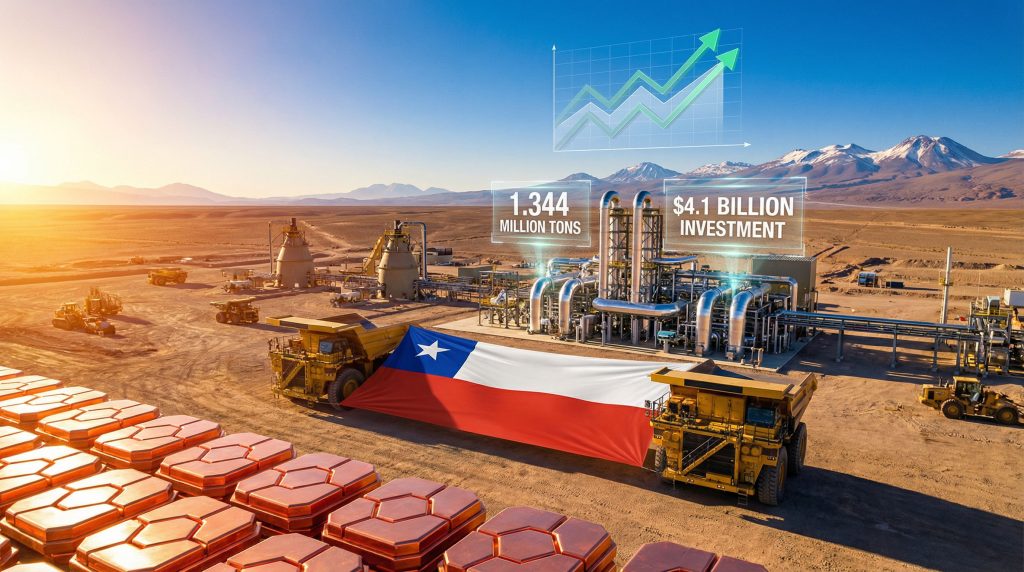
• 2026 production target: 1.344 million tons annual capacity from expanded operations
• National capacity contribution: Supporting Chile's goal of 5.6 million tons national production by 2034
• Global market significance: Addressing projected supply deficits through established, reliable production sources
The brownfield expansion approach provides economic advantages over greenfield development while reducing project risk through utilisation of proven resources and established operational infrastructure. This strategy enables faster implementation timelines and improved return on invested capital.
Long-term Sustainability Framework
Environmental compliance integration demonstrates Chile's commitment to sustainable mining practices that maintain social licence and regulatory approval for long-term operations. Water conservation, waste management, and emissions reduction technologies establish operational standards that ensure continued viability amid evolving environmental regulations.
Technology advancement drives operational efficiency improvements that enhance competitiveness while reducing environmental impact. Automation, process optimisation, and resource conservation technologies create synergies between profitability and sustainability objectives.
Sustainability Implementation Framework:
• Water management: Closed-loop systems and desalination reducing freshwater consumption
• Waste processing: Advanced tailings management and engineered containment systems
• Energy efficiency: Process optimisation and renewable energy integration reducing carbon footprint
• Community engagement: Stakeholder consultation and benefit-sharing programmes maintaining social licence
Disclaimer: This analysis is based on publicly available information and industry research as of January 2026. Mining project timelines, investment costs, and production targets are subject to change based on regulatory approvals, market conditions, and operational factors. Readers should consult official company announcements and regulatory filings for the most current project information.
Looking to Capitalise on Major Copper Discoveries?
Chile's strategic copper expansions highlight the massive investment opportunities created by significant mineral discoveries worldwide. Discovery Alert's proprietary Discovery IQ model delivers real-time alerts on major ASX mineral discoveries, instantly empowering subscribers to identify actionable opportunities ahead of the broader market. Begin your 30-day free trial today and position yourself to capitalise on the next major copper discovery before the market catches up.