May 23, 2026
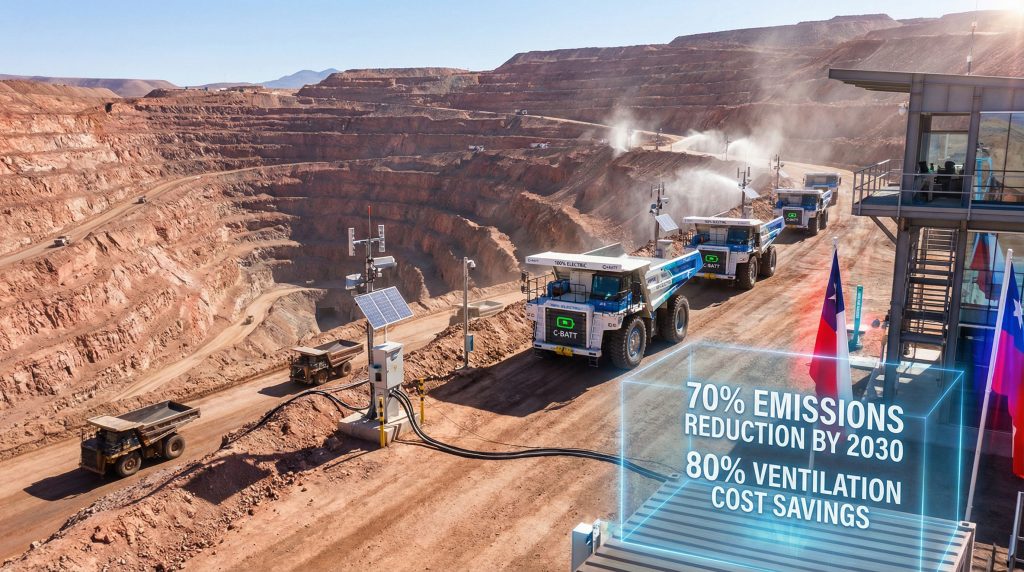
Chile copper miners sustainable transport and monitoring has become a central focus as the global copper mining industry navigates unprecedented environmental pressures. Furthermore, mining operations worldwide consume approximately 3-5% of global electricity and generate substantial greenhouse gas emissions through heavy equipment usage. This transformation becomes particularly critical in water-scarce regions where operational sustainability directly impacts long-term viability.
Chilean mining companies operate within one of the world's most challenging environments, where the Atacama Desert's extreme conditions demand innovative solutions for both equipment durability and environmental stewardship. The convergence of climate commitments, regulatory pressures, and technological advancement has created an unprecedented opportunity for sustainable mining practices to reshape the industry's operational framework.
Understanding Chile's Copper Mining Sustainability Imperative
The Carbon Footprint Challenge in Copper Extraction
Chile's mining sector contributes approximately 6-8% of national greenhouse gas emissions, with copper mining representing the largest component within this figure. The scale of this environmental impact reflects the energy-intensive nature of copper extraction, where massive haul trucks, processing facilities, and support equipment operate continuously across expansive mining concessions.
Transport equipment emerges as the dominant emission source, typically accounting for 60-85% of direct operational emissions in mining operations. However, innovative copper investment strategies are driving significant changes in how companies approach sustainability challenges. Heavy haul trucks, loaders, and auxiliary vehicles burn substantial quantities of diesel fuel while navigating challenging terrain and carrying massive payloads across mine sites that can span dozens of square kilometers.
Major Chilean copper operators have established varying decarbonization timelines:
- Codelco (state-owned): Committed to 25% reduction in intensity by 2030
- Antofagasta Minerals: Targeting 50% emissions reduction by 2030
- BHP (Escondida operation): Net-zero aspiration by 2050
These commitments reflect the industry's recognition that sustainable practices have become essential for maintaining operational licenses and accessing capital markets where environmental performance increasingly influences investment decisions.
Regulatory Drivers and Market Pressures
The Chilean Mining Council (Consejo Minero) facilitates voluntary greenhouse gas reporting among major operators, though this framework operates primarily through participants' individual sustainability initiatives rather than mandatory compliance requirements. This industry association includes prominent members such as Codelco, BHP, Antofagasta Minerals, and Albemarle.
International market pressures intensify sustainability requirements through multiple channels:
- EU Green Mining Initiative: Establishes sustainability criteria for imported copper
- S&P Dow Jones Sustainability Index: Inclusion requirements affecting major Chilean operators
- MSCI ESG Ratings: Direct impact on capital access and financing costs
Institutional investors managing over $130 trillion globally have endorsed the Climate Action 100+ initiative, which specifically targets mining companies for emissions reductions. In addition, the broader mining industry evolution demonstrates how coordinated investor pressure creates substantial financial incentives for Chilean copper miners to accelerate Chile copper miners sustainable transport and monitoring implementation.
When big ASX news breaks, our subscribers know first
Transformative Transport Electrification Technologies in Chilean Mining Operations
Battery-Electric Vehicle Implementation Metrics
Electric vehicle deployment in mining applications delivers measurable environmental and operational benefits across multiple performance categories. Battery-electric trucks eliminate direct tailpipe emissions while reducing the complex infrastructure requirements associated with diesel fuel storage, handling, and combustion exhaust management.
| Technology Type | Direct Emission Impact | Infrastructure Benefits | Operational Changes |
|---|---|---|---|
| All-Electric Trucks | 100% elimination of tailpipe emissions | Removes underground ventilation requirements | 20-40% reduction in routine maintenance |
| Hybrid Systems | 40-60% reduction in fuel consumption | Reduced fuel storage infrastructure | Improved energy recovery during braking |
| Renewable Diesel | 30-90% lifecycle emission reduction | Existing infrastructure compatibility | Minimal operational modification required |
Underground mining operations experience particularly significant benefits from electric vehicle adoption, as diesel exhaust ventilation systems become unnecessary. This infrastructure change reduces energy consumption for ventilation fans while improving air quality for mine workers operating in confined spaces.
Electric powertrains feature fewer moving parts compared to internal combustion engines, eliminating oil changes, transmission complexity, and combustion system maintenance. However, battery replacement costs represent a substantial capital consideration that mining operators must factor into total cost of ownership calculations.
Hydrogen Fuel Cell Development Pathways
Hydrogen fuel cell technology offers potential solutions for heavy-duty mining applications where battery weight and charging infrastructure limitations constrain electric vehicle deployment. Major equipment manufacturers have developed prototype systems specifically designed for mining environments:
- Ballard Power Systems: Supplying fuel cell systems to mining equipment manufacturers
- Toyota Industries: Expanding hydrogen applications from warehouse forklifts to mining equipment
- Plug Power: Developing hydrogen infrastructure and equipment partnerships
Fuel cell vehicles produce only water vapor and heat as operational byproducts, eliminating direct emissions while maintaining the operational range and payload capacity required for large-scale mining operations. This technology becomes particularly valuable for applications requiring extended operational periods without refueling breaks.
Infrastructure Development Requirements
Large-scale mining electrification demands substantial infrastructure investment to support fleet transition. A mid-size copper mine operating 50,000-100,000 tonnes per day typically requires:
Charging Infrastructure Specifications:
- 15-30 primary charging stations for 80-150 vehicle fleets
- DC fast-charging systems capable of 300-500 kW power delivery
- Individual station costs ranging from $500,000-$2,000,000 including installation
- Total infrastructure investment between $10-60 million per mining operation
Grid Capacity Enhancement:
- Additional capacity of 30-50 MW during peak charging periods
- Integration with renewable energy contracts (solar and wind farms in northern Chile)
- Connection upgrades to existing transmission infrastructure
Chile's northern mining region has contracted for approximately 10.8 GW renewable energy capacity as of 2024, providing the foundation for sustainable mining electrification. This renewable energy infrastructure enables mining companies to power electric vehicle fleets with clean electricity rather than grid power derived from fossil fuel sources.
Advanced Monitoring Systems Enhancing Mining Sustainability
IoT-Based Water Resource Management
Water scarcity in the Atacama Desert region makes precise water management critical for sustainable mining operations. Real-time piezometer networks measure pore water pressure across mining concessions, enabling operators to optimise water extraction while complying with regulatory limitations imposed by Chile's Directorate General of Waters (DGA).
Modern piezometric monitoring systems deploy wireless pressure sensors transmitting data at 15-30 minute intervals with accuracy of ±0.5% of full-scale measurement. This continuous data stream allows mining engineers to:
- Monitor groundwater depletion across permitted aquifer zones
- Model long-term water availability for 20-30 year mine planning horizons
- Optimise water extraction rates to maximise operational efficiency
- Detect anomalies indicating potential environmental compliance issues
Centralised SCADA (Supervisory Control and Data Acquisition) systems integrate hydrogeological data with production planning, enabling real-time operational adjustments. Major mining operators utilise platforms from ABB, Siemens, or Aveva for comprehensive operational visibility across distributed mine sites.
Structural Integrity Surveillance Technologies
Tailings storage facilities require continuous monitoring to prevent environmental contamination and ensure structural stability. Furthermore, modern surveillance systems deploy multiple sensor types across liner systems to detect potential integrity issues before they develop into environmental hazards.
Multi-Sensor Deployment Strategy:
- Moisture sensors embedded within geosynthetic and concrete liners
- Electrical conductivity monitoring for liquid seepage detection
- Automated alert systems activated when detection thresholds are exceeded
- Redundant sensor networks providing backup monitoring capability
Industrial monitoring sensors designed for mining applications tolerate pH ranges from 0-14, enabling operation in the highly acidic conditions typical of copper processing environments. These systems require regular replacement every 5-10 years as part of ongoing maintenance protocols.
Advanced monitoring networks deployed across Chilean copper operations have achieved significant incident reduction through real-time hazard detection, automated environmental compliance verification, and predictive maintenance capabilities that identify potential issues before they develop into operational disruptions.
Worker Safety and Environmental Compliance Integration
Artificial Intelligence of Things (AIoT) systems combine sensor networks with machine learning algorithms to enhance both worker safety and environmental monitoring across mining operations. Moreover, AI in mining technology integration provides these integrated platforms:
- Real-time hazard detection through environmental sensor arrays
- Worker vital sign monitoring via wearable technology
- Automated personal protective equipment compliance verification
- Predictive analytics for equipment maintenance scheduling
Integration of safety and environmental monitoring creates operational synergies where single sensor networks serve multiple compliance and safety objectives, reducing infrastructure costs while improving comprehensive risk management.
Remote Sensing Technologies Optimising Environmental Impact Assessment
Satellite-Based Land Use Analysis
Machine learning algorithms process Sentinel-2 satellite imagery to achieve 91% accuracy in environmental impact mapping across mining concessions. This remote sensing capability enables mining companies to monitor land use changes, vegetation impacts, and compliance with environmental restoration commitments.
Automated change detection systems identify alterations in land use patterns, enabling rapid response to environmental issues while providing documentation for regulatory compliance reporting. This technology becomes particularly valuable for monitoring large mining concessions where traditional ground-based surveying would be prohibitively expensive and time-consuming.
Seismic Monitoring for Tailings Dam Safety
Triaxial accelerometer networks monitor tailings dam structural stability through continuous seismic surveillance. GSR-18 recorders and similar equipment detect ground motion that could indicate structural instability or slope failure risks.
Real-time structural stability assessment enables early warning systems for geotechnical risks, providing mining operators with advance notice of potential safety hazards. This monitoring capability becomes essential for tailings facilities located in seismically active regions where earthquake activity could compromise structural integrity.
Economic Analysis of Sustainable Mining Technology Implementation
Investment Returns for Transport Electrification
Sustainable transport solutions generate measurable economic returns through operational cost reductions and efficiency improvements. Return on investment calculations must consider multiple factors including energy costs, maintenance requirements, and infrastructure development expenses.
| Investment Category | Initial Cost Premium | Typical Payback Period | 10-Year Value Creation |
|---|---|---|---|
| Electric Haul Trucks | 40-60% above diesel equivalent | 3-5 years | 25-35% additional value |
| Hydrogen Fuel Cell Systems | 80-120% above conventional | 7-10 years | 15-25% additional value |
| Hybrid Vehicle Solutions | 20-30% above diesel baseline | 2-3 years | 40-50% additional value |
These financial projections reflect current technology costs and operational parameters, though rapid technological advancement continues to improve economic viability. Battery cost reductions and infrastructure scaling effects are expected to accelerate payback periods for electric vehicle adoption.
Operational Efficiency Gains from Advanced Monitoring
Monitoring system investment generates returns through multiple operational improvement channels:
Predictive Maintenance Benefits:
- Reduced unplanned downtime through early problem detection
- Optimised maintenance scheduling based on actual equipment condition
- Extended equipment life through proactive component replacement
Environmental Compliance Advantages:
- Automated reporting reduces regulatory compliance costs
- Early detection prevents expensive environmental remediation
- Improved stakeholder relations through demonstrated environmental stewardship
Insurance and Risk Management:
- Lower insurance premiums for operations with advanced safety monitoring
- Reduced liability exposure through comprehensive environmental surveillance
- Enhanced social licence to operate in local communities
Addressing Atacama Desert Operational Challenges
Environmental Adaptation Strategies
The Atacama Desert presents unique challenges for mining technology deployment, requiring specialised engineering solutions for equipment durability and reliability. Environmental conditions include:
- Temperature extremes: Daily fluctuations from -5°C to +50°C
- Dust exposure: Silica particles ranging 1-100 micrometers
- Solar radiation: Among the highest levels globally
- Water scarcity: Limited availability for equipment cooling and cleaning
Electronic monitoring systems require specialised enclosures and filtration to prevent particulate contamination while maintaining operational reliability. Solar exposure necessitates UV-resistant materials and thermal management systems to prevent equipment degradation.
Connectivity Solutions for Remote Operations
Mining operations in remote desert locations face significant connectivity challenges that impact monitoring system effectiveness and data transmission capabilities. Modern solutions employ multiple approaches:
Edge Computing Deployment:
- Local data processing reduces bandwidth requirements
- Critical safety systems operate independently of external connectivity
- Automated decision-making continues during communication interruptions
Satellite Communication Integration:
- Backup connectivity for critical safety and environmental monitoring
- Real-time data transmission to central operations centres
- Emergency communication systems for worker safety
Mesh Network Architecture:
- Equipment-to-equipment communication networks
- Redundant data paths across distributed mining operations
- Self-healing network topologies that adapt to equipment movement
The next major ASX story will hit our subscribers first
Future Outlook for Sustainable Copper Mining in Chile
Technology Development Roadmap Through 2030
Chilean copper mining sustainability targets align with broader industry decarbonisation commitments and technological advancement timelines. Consequently, the global copper production forecast indicates key milestones include:
Renewable Energy Integration:
- 90% renewable electricity targets by 2030 for major operators
- Continued expansion of solar and wind power contracting
- Grid storage integration for renewable energy reliability
Fleet Electrification Progress:
- Phase 1: Light vehicle and auxiliary equipment electrification (2025-2027)
- Phase 2: Medium-duty truck transition (2027-2029)
- Phase 3: Heavy haul truck electrification pilot programmes (2028-2030)
Advanced Monitoring Integration:
- Complete IoT sensor network deployment across major operations
- AI-powered predictive analytics for comprehensive operational optimisation
- Integrated environmental and safety monitoring platforms
Industry Collaboration and Innovation Development
Chilean mining companies increasingly engage in collaborative research and development initiatives to accelerate sustainable technology adoption. Key partnerships include:
Academic Research Collaboration:
- Universidad de Chile engineering programmes focused on mining electrification
- Pontificia Universidad Católica research initiatives in environmental monitoring
- International university partnerships for technology transfer
Cross-Industry Knowledge Sharing:
- Technology pilot programmes shared among multiple operators
- Industry association coordination through Consejo Minero
- International mining conference participation for best practice exchange
Startup Ecosystem Engagement:
- Venture capital investment in mining technology startups
- Incubator programmes for environmental monitoring innovations
- Technology demonstration projects at operating mine sites
Frequently Asked Questions About Chilean Copper Mining Sustainability
How do electric mining trucks perform in extreme desert conditions?
Electric mining vehicles designed for Atacama Desert operations incorporate specialised thermal management systems and dust protection measures. Battery cooling systems maintain optimal operating temperatures during extreme heat, while sealed electrical components prevent particulate contamination. Field testing demonstrates reliable operation across the full temperature range typical of desert mining environments.
What are the main barriers to hydrogen adoption in copper mining?
Hydrogen fuel cell adoption faces several technical and economic challenges including higher initial capital costs (80-120% premium over conventional equipment), limited refuelling infrastructure, and the need for specialised maintenance capabilities. Additionally, hydrogen storage and transportation in remote mining locations requires substantial infrastructure investment that extends payback periods compared to battery-electric alternatives.
How do monitoring systems integrate with existing mine operations?
Modern monitoring systems utilise standardised communication protocols that integrate with existing SCADA platforms and enterprise resource planning systems. Wireless sensor networks transmit data to centralised databases where it combines with production, maintenance, and safety information. This integration enables comprehensive operational visibility without disrupting established operational procedures.
What role does artificial intelligence play in sustainable mining practices?
Artificial intelligence enhances sustainable mining through predictive analytics that optimise equipment performance, reduce energy consumption, and prevent environmental incidents. Machine learning algorithms analyse sensor data patterns to predict equipment failures, optimise maintenance scheduling, and identify opportunities for operational efficiency improvements. AI systems also process satellite imagery and environmental monitoring data to assess ecological impacts and ensure regulatory compliance.
Chile copper miners sustainable transport and monitoring continues to evolve as the industry embraces technological innovation and environmental responsibility. The comprehensive adoption of sustainable mining practices in Chile demonstrates how major operators are transforming their operations to meet both regulatory requirements and market expectations for environmental performance.
Furthermore, innovative copper & uranium investments in sustainable technologies position Chilean mining companies as global leaders in responsible resource extraction. This technological advancement ensures the industry's long-term viability while maintaining Chile's position as the world's leading copper producer.
Disclaimer: This analysis contains forward-looking projections and industry estimates that involve inherent uncertainties. Technology performance, economic returns, and implementation timelines may vary significantly based on site-specific conditions, regulatory changes, and technological developments. Readers should conduct independent analysis and consult with qualified professionals before making investment or operational decisions based on this information.
Want to Capitalise on Mining's Sustainable Revolution?
Sustainable mining innovations like those transforming Chile's copper sector create significant investment opportunities as companies transition to cleaner technologies and enhanced monitoring systems. Discovery Alert's proprietary Discovery IQ model identifies emerging mineral discoveries across the ASX, helping investors position themselves ahead of market movements as the industry evolves towards greater sustainability and operational efficiency. Start your 14-day free trial today to gain instant access to real-time discovery alerts and secure your competitive advantage in this rapidly changing sector.