July 30, 2026
The Structural Shift Redefining How Nations Secure Battery Materials
The global race to lock in battery-grade lithium supply is no longer simply a procurement exercise. It has evolved into something far more architecturally complex: a competition between industrial economies to build durable, institutionalised relationships with the nations that hold the world's most concentrated reserves. The question is no longer just who can access lithium, but how those access arrangements are structured, governed, and futureproofed against tightening environmental standards.
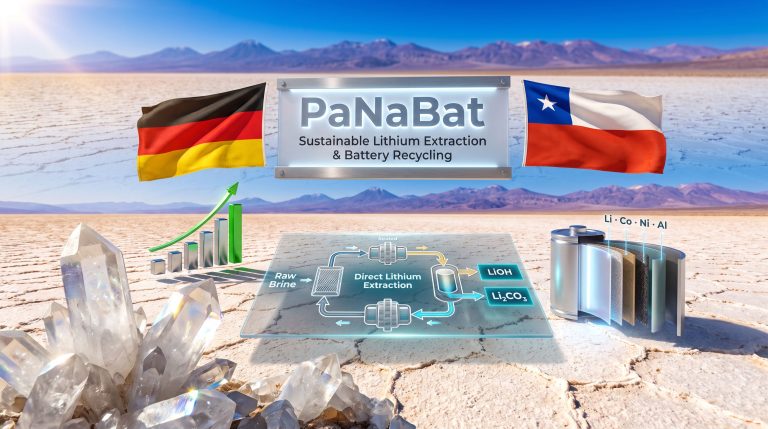
The Chile and Germany lithium extraction partnership, formalised through the PaNaBat platform, represents one of the most technically sophisticated bilateral critical mineral frameworks yet established between a resource-holding economy and a major industrial consumer. Understanding why this partnership was built, what it actually does, and what it signals about the future of battery supply chains requires looking well beyond the headline announcement.
When big ASX news breaks, our subscribers know first
Latin America's Lithium Dominance and the Supply Concentration Problem
The Arithmetic of Reserve Geography
According to the USGS Mineral Commodity Summaries 2025, more than 50% of the world's identified lithium reserves are concentrated across Latin America, primarily within Chile, Bolivia, and Argentina. This geographic clustering, often described using the shorthand Lithium Triangle, is not simply a commercial fact. It is a geopolitical reality that shapes industrial policy on multiple continents simultaneously.
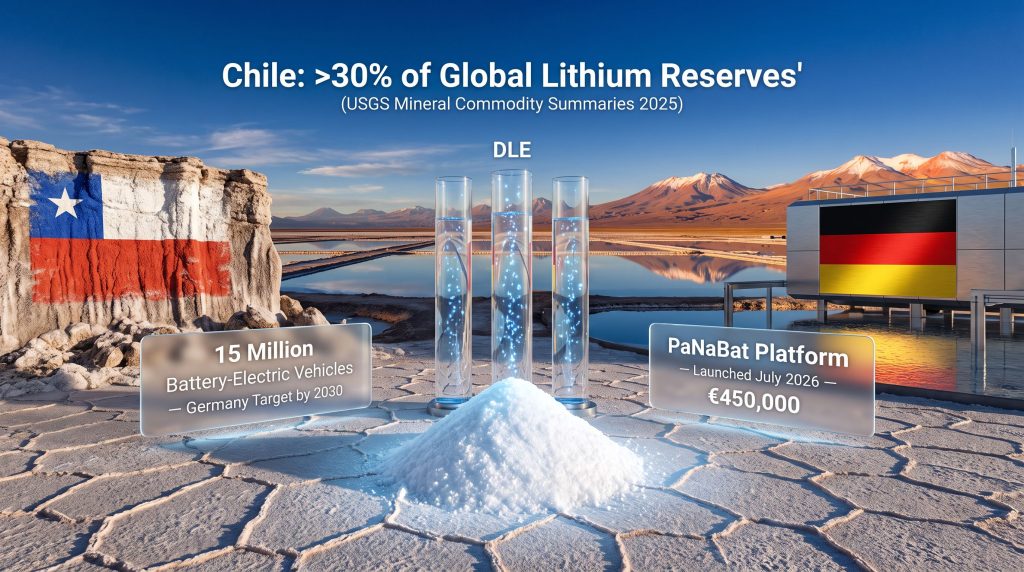
Chile alone holds over 30% of global lithium reserves, making it the single largest national reserve holder on earth. The Salar de Atacama has been the operational heart of Chilean lithium production since lithium-rich brine deposits were first identified there in 1962, giving the region more than six decades of extraction history. That depth of operational knowledge is itself a strategic asset, one that bilateral partners like Germany are explicitly seeking to access. Chile's broader Chile lithium strategy further reinforces this position as a dominant force in global supply.
Germany's Position: Industrial Power Without Domestic Supply
Germany's exposure to lithium supply risk is structurally acute. The country has committed to placing 15 million battery-electric vehicles on domestic roads by 2030, a target established by the Federal Government in 2024. That commitment creates direct, quantifiable demand pressure on lithium supply chains at precisely the moment global competition for battery-grade material is intensifying.
With zero domestic lithium production, Germany's path to meeting its EV and industrial decarbonisation targets runs directly through partnerships with reserve-holding nations. German industrial policy has increasingly reframed critical mineral access not as a logistics question, but as a matter of economic sovereignty. The Chile and Germany lithium extraction partnership is the most structurally developed expression of that policy reorientation.
Critical mineral dependency is no longer framed in Germany as a supply chain management issue. It is treated as a sovereign industrial risk, placing bilateral resource partnerships at the centre of national economic strategy.
What PaNaBat Actually Is and How It Operates
Institutional Architecture and Funding
PaNaBat launched in July 2026 as a formally structured bilateral platform, established following an intergovernmental declaration signed in April 2025 under the broader Partnering in Business with Germany initiative. The German Federal Government committed €450,000 (approximately US$517,601) to fund the platform's inaugural operational phase.
That figure is modest in the context of global mining investment, but it is deliberate. PaNaBat is explicitly designed as a long-term networking and research infrastructure rather than a capital-intensive extraction project. Its purpose is to create the institutional scaffolding through which larger industrial and commercial collaboration can subsequently develop.
The Research Institutions Anchoring the Platform
| Institution | Country | Core Function Within PaNaBat |
|---|---|---|
| Fraunhofer Institute for Silicate Research (ISC) | Germany | Materials science, mineral processing innovation |
| Fraunhofer Institute for Solar Energy Systems (ISE) | Germany | Energy systems integration, battery application research |
| Fraunhofer Institute for Thin Film and Surface Technology (IST) | Germany | Surface chemistry, electrode and coating technologies |
| Universidad Católica del Norte, Lithium I+D+i Center | Chile | In-situ lithium research, Atacama-region expertise |
The Fraunhofer network is Germany's largest applied research organisation, with a global reputation for bridging fundamental science and industrial application. Its involvement in PaNaBat signals that this partnership is oriented toward deployable technology outcomes, not purely academic knowledge exchange.
What the Platform Is Designed to Deliver
PaNaBat's operational mandate covers four interconnected domains:
- Development of a circular economy framework spanning battery-grade minerals including lithium, cobalt, nickel, and aluminium
- Creation of structured industrial collaboration pathways connecting German technology firms with Chilean mining operators
- Advancement of sustainable extraction methodologies calibrated to the unique hydrogeological conditions of the Atacama region
- Establishment of shared research protocols and knowledge transfer mechanisms between German engineering institutions and Chilean academic centres
The Broader Bilateral Framework: PaNaBat in Context
A Multi-Layered Relationship Pre-Dating the Platform
PaNaBat does not exist in isolation. The Chile and Germany lithium extraction partnership is the most recent and institutionally mature layer within a bilateral relationship that has been building for several years.
The countries ratified a formal bilateral partnership in 2023 covering mining, raw materials strategy, and circular economy development. CORFO, Chile's economic development agency, and Germany's Federal Ministry for Economic Affairs and Climate Action (BMWK) have maintained cooperative agreements focused on applied lithium research and industrial development standards.
The BRIDGE initiative, a separate German-Chilean research programme, investigates raw material extraction from brine systems, evaluating fluid reservoir management techniques across both Chilean and German geological contexts. Institutional participants include KIT, BGR, DERA, the University of Chile, and SERNAGEOMIN, giving the initiative a deep technical grounding in brine reservoir science.
Earlier work under the Responsible Lithium Partnership, led by German industry actors and GIZ, concentrated on environmental stewardship in the Salar de Atacama, with emphasis on water resource governance and multi-stakeholder dialogue processes.
The progression from environmental governance work toward active extraction innovation is significant. PaNaBat represents the industrialisation phase of what began as a sustainability dialogue, reflecting a maturation of the bilateral relationship from principle to practice.
The Relationship Architecture at a Glance
German-Chilean Bilateral Partnership (Ratified 2023)
│
├── PaNaBat Platform (Launched July 2026)
│     ├── Fraunhofer ISC / ISE / IST (Germany)
│     └── UCN Lithium I+D+i Center (Chile)
│
├── BRIDGE Initiative
│     ├── KIT, BGR, DERA (Germany)
│     └── University of Chile, SERNAGEOMIN (Chile)
│
└── Responsible Lithium Partnership (Earlier Phase)
      └── GIZ-led environmental stewardship, Atacama
The Environmental Crisis Driving the Technology Transition
Why Conventional Atacama Extraction Is Under Mounting Pressure
Traditional lithium brine extraction in the Atacama relies on large-scale evaporation ponds. Brine is pumped from underground reservoirs and left to concentrate under the desert sun over periods of 12 to 18 months, after which lithium-rich concentrate is processed into battery-grade material. The method is low-cost and technically straightforward, but its environmental consequences have become impossible to ignore.
A 2024 study published in IEEE Transactions on Geoscience and Remote Sensing documented groundwater level declines exceeding 10 metres across the Atacama region over the preceding 15 years, directly attributable to brine extraction activity. The Atacama is one of the driest environments on earth; water depletion at this scale carries severe consequences for both local ecosystems and the indigenous communities whose livelihoods and cultural practices depend on stable water access.
Regulatory conditions attached to extraction concessions in Chile have become progressively more stringent, and social licence risk for operators has grown considerably as community opposition to water-intensive methods has intensified.
Direct Lithium Extraction: The Technology Redefining the Industry
Direct lithium extraction, or DLE, has moved from a niche research topic to the central technology debate within the global lithium industry over the past several years. Rather than concentrating lithium through evaporation, DLE technologies use selective adsorption, ion exchange, or membrane-based processes to isolate lithium ions directly from brine solutions.
The operational advantages are substantial:
- Extraction timelines compress from the conventional 12 to 18 month evaporation cycle to a matter of hours or days, enabling supply to respond more dynamically to demand conditions
- Water consumption is dramatically reduced relative to evaporation-pond methods, addressing the Atacama's most acute environmental constraint
- DLE processes produce higher-purity lithium concentrate at the point of extraction, reducing downstream refining requirements and improving economics for battery-grade end products
- The reduced land footprint of DLE infrastructure lowers surface disruption and associated regulatory exposure
What is Direct Lithium Extraction (DLE)? DLE is a family of technologies that selectively remove lithium ions from brine using adsorption, ion exchange, or membrane-based methods, eliminating the need for traditional evaporation ponds. According to IDTechEx Research, DLE technologies can extract lithium from brines in hours or days due to their selectivity, creating far greater market flexibility to match lithium supply with demand conditions. This responsiveness is increasingly valued by both producers and industrial consumers navigating volatile battery-grade lithium markets.
One less widely appreciated dimension of DLE relates to its brine selectivity characteristics. Conventional evaporation concentrates all dissolved minerals indiscriminately, meaning the final concentrate contains a range of impurities requiring removal. DLE processes can be engineered to target lithium with high specificity, which has important downstream implications for carbonate and hydroxide conversion quality.
For battery manufacturers requiring battery-grade lithium hydroxide monohydrate (LiOH·H₂O) with tightly controlled impurity profiles, DLE-sourced feedstock may carry a quality premium over conventionally extracted material — a dynamic not yet fully priced into most commodity market analyses.
Supply Chain Implications and Geopolitical Positioning
Circular Economy Integration as a Structural Differentiator
PaNaBat's mandate explicitly encompasses battery recycling and secondary material recovery, placing it in a distinct category from conventional bilateral offtake agreements. The circular economy dimension is not peripheral. It addresses a growing investor and regulatory concern that new lithium supply built on environmentally unsustainable extraction methods will face stranded asset risk as standards tighten globally.
Furthermore, the broader battery raw materials market is increasingly pricing in recycling infrastructure as a long-term supply stabiliser. By incorporating recycling into the partnership's scope from the outset, Chile and Germany are designing a supply chain capable of recovering and reprocessing lithium from end-of-life batteries, progressively reducing long-term primary extraction dependency as the European battery fleet matures and secondary lithium volumes grow. A stronger battery recycling outlook globally also reinforces the strategic logic of embedding this capability early.
What This Partnership Signals to Global Markets
| Metric | Data Point | Source |
|---|---|---|
| Chile's share of global lithium reserves | Over 30% | USGS Mineral Commodity Summaries 2025 |
| Latin America's share of global lithium reserves | Over 50% | USGS Mineral Commodity Summaries 2025 |
| Atacama groundwater decline over 15 years | Over 10 metres | IEEE Transactions on Geoscience and Remote Sensing, 2024 |
| German EV deployment target by 2030 | 15 million battery-electric vehicles | German Federal Government, 2024 |
| PaNaBat opening phase funding | €450,000 (~US$517,601) | PaNaBat Platform, 2026 |
| Salar de Atacama brine discovery year | 1962 | Historical record |
| PaNaBat launch date | July 2026 | Official announcement |
The Chile and Germany lithium extraction partnership represents one of the most institutionally structured bilateral critical mineral arrangements between a resource-holding nation and a major industrial consumer economy currently in operation. It offers a replicable template for other European industrial economies, including France, the Netherlands, and Italy, seeking equivalent supply chain security arrangements with Latin American resource states.
For Chile, the partnership accelerates a longer-term national objective: moving up the battery materials value chain from raw lithium exporter toward active participation in processing, technology development, and recycling. This value chain ascent carries significant economic implications, as downstream processing steps capture substantially higher margins than primary extraction alone.
The timing of PaNaBat's July 2026 launch also aligns with intensifying global competition for critical mineral supply agreements. Parallel frameworks are being constructed by China, the United States, and the European Union under the Critical Raw Materials Act, all targeting the same concentrated reserve base. The bilateral architecture that Chile and Germany have built may prove increasingly valuable as competition for reserve access tightens. Initiatives such as InvestChile's mining partnership programme further signal Chile's commitment to deepening these industrial ties with Germany.
The next major ASX story will hit our subscribers first
Frequently Asked Questions: Chile and Germany Lithium Extraction Partnership
What is the PaNaBat platform?
PaNaBat is a bilateral research and industrial collaboration platform established jointly by Chile and Germany, launched in July 2026. It brings together three German Fraunhofer research institutes alongside Chile's Universidad Católica del Norte Lithium I+D+i Center to advance sustainable lithium extraction, battery raw material processing, and battery recycling within a circular economy framework.
How much has Germany invested in PaNaBat?
The German Federal Government committed €450,000 (approximately US$517,601) to fund the initial operational phase of the PaNaBat platform.
Why does Germany need Chilean lithium?
Germany has no domestic lithium production but has committed to placing 15 million battery-electric vehicles on its roads by 2030. Securing a sustainable, long-term lithium supply from Chile, which holds over 30% of global reserves, is central to Germany's industrial and climate policy objectives.
What environmental problems has lithium extraction caused in the Atacama?
Conventional evaporation-pond extraction in the Atacama has contributed to groundwater level declines of more than 10 metres over the past 15 years, according to a 2024 IEEE study. The region's extreme aridity makes water depletion a critical environmental and social licence risk for operators.
How does DLE differ from conventional lithium extraction?
Conventional extraction uses large evaporation ponds requiring 12 to 18 months to concentrate lithium from brines, consuming significant water and land in the process. DLE uses selective chemical, adsorption, or membrane-based processes to isolate lithium in hours or days, with a substantially reduced environmental footprint and the capacity to produce higher-purity output.
Is PaNaBat the only Germany-Chile lithium initiative?
No. PaNaBat operates within a broader bilateral framework that includes the BRIDGE initiative focused on brine reservoir research, earlier Responsible Lithium Partnership work addressing environmental governance in the Atacama, and formal CORFO-BMWK cooperation agreements ratified in 2023.
A Blueprint for the Next Generation of Critical Mineral Diplomacy
The PaNaBat platform represents more than a research initiative. It reflects a structural evolution in how resource-holding and resource-consuming nations are choosing to engage with one another in an era defined by battery material scarcity and tightening environmental accountability.
The explicit inclusion of sustainability standards, DLE research, and battery recycling within a single bilateral framework distinguishes this arrangement from the transactional supply agreements that have historically characterised commodity diplomacy. For the broader mining industry, the institutional architecture of PaNaBat — linking government funding, applied research institutions, and industrial operators across national borders — signals a clear direction of travel for how critical mineral supply chains will be governed through the coming decade and beyond. Research institutions such as KIT's international lithium programme further illustrate the depth of academic commitment underpinning this evolving bilateral model.
This article contains references to forward-looking government targets and research findings. Readers should note that EV deployment targets, reserve estimates, and technology assessments are subject to revision as conditions evolve. This content is intended for informational purposes and does not constitute financial or investment advice.
Want to Stay Ahead of the Next Major Mineral Discovery on the ASX?
Discovery Alert's proprietary Discovery IQ model scans ASX announcements in real time, instantly identifying significant mineral discoveries — including lithium and other critical battery materials — and delivering actionable alerts to subscribers before the broader market catches on. Explore how historic discoveries have generated substantial returns on Discovery Alert's dedicated discoveries page, and begin your 14-day free trial today to position yourself at the forefront of the next major find.