May 21, 2026
Understanding Chile's Environmental Assessment Framework for Major Lithium Developments
Chile's lithium mining sector operates within one of South America's most stringent environmental regulatory frameworks, designed to balance resource extraction with ecological preservation in the fragile Atacama Desert ecosystem. The SQM-Codelco lithium project environmental study represents a critical gateway that determines whether massive lithium projects can proceed, creating a complex intersection of economic opportunity and environmental stewardship.
The Role of Environmental Impact Studies in Chilean Mining Policy
Environmental impact assessments serve as the primary regulatory mechanism controlling large-scale lithium development in Chile. These comprehensive studies must demonstrate that proposed mining operations can meet strict environmental standards while contributing to national economic objectives. Furthermore, the assessment framework requires detailed analysis of water consumption patterns, biodiversity impact projections, and community engagement protocols.
The regulatory approach reflects Chile's position as a global lithium leader seeking to maintain competitive advantages while addressing international scrutiny regarding sustainable mining practices. Additionally, environmental studies must prove that projects can operate within the carrying capacity of hyperarid ecosystems, particularly regarding water resource allocation and wildlife habitat preservation.
Timeline Requirements for EIA Submissions in the Lithium Sector
The environmental review process for major lithium projects typically spans 18 to 24 months, encompassing multiple phases of technical evaluation and public consultation. Initial assessments focus on baseline environmental conditions, followed by detailed impact modelling and mitigation strategy development. Moreover, public consultation periods extend the timeline, ensuring community input shapes final project designs.
Regulatory agencies prioritise thoroughness over speed, recognising that inadequate environmental planning can result in operational disruptions and legal challenges that prove more costly than extended review periods. Consequently, the timeline allows for iterative refinement of project designs based on environmental feedback and regulatory guidance.
Key Regulatory Bodies Overseeing Lithium Project Approvals
Chile's Environmental Assessment Service coordinates the multi-agency review process, working alongside water resource authorities, biodiversity protection agencies, and Indigenous affairs departments. This collaborative approach ensures comprehensive evaluation of all environmental dimensions while maintaining regulatory consistency across different government entities.
The regulatory framework emphasises coordinated decision-making to prevent conflicting agency requirements that could delay project approvals or create compliance uncertainties for mining companies. For instance, understanding mining permitting insights becomes crucial when navigating these complex approval processes.
When big ASX news breaks, our subscribers know first
What Makes the Salar Futuro Project Environmentally Significant?
The Salar Futuro lithium development represents an unprecedented scale of extraction within Chile's strategic mineral sector, positioning the country to capture growing global demand for battery materials while testing the limits of environmental management in desert ecosystems.
Production Scale Analysis: 280,000-300,000 Tons LCE Capacity
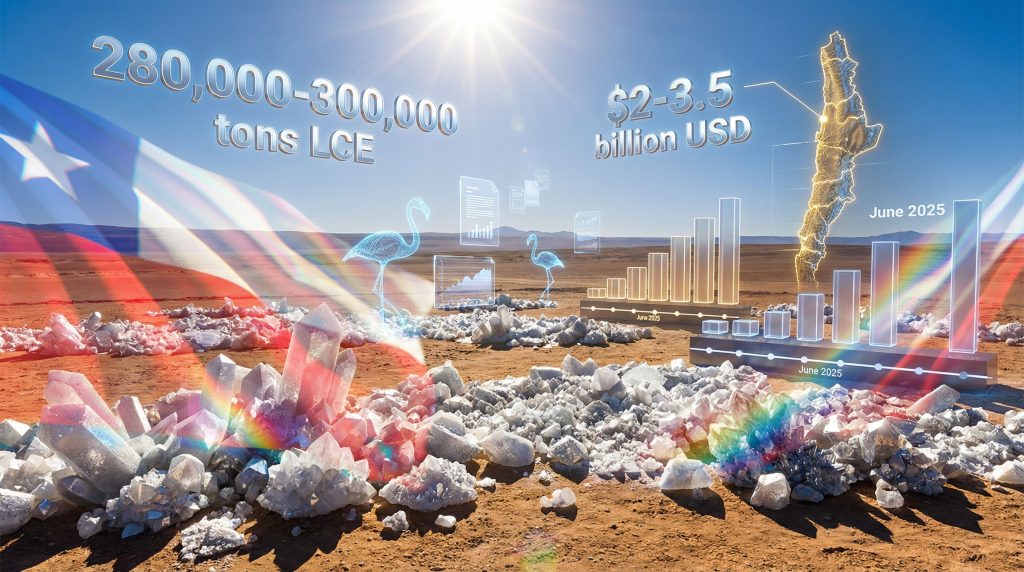
The Novandino Litio joint venture between Chile's Codelco and SQM plans to establish annual production capacity reaching 280,000 to 300,000 metric tons of lithium carbonate equivalent. This production target places Salar Futuro among the world's largest lithium operations, fundamentally reshaping global supply dynamics and establishing Chile's dominant position in battery material markets.
The massive scale creates proportional environmental challenges, requiring extraction and processing systems capable of handling enormous volumes of brine while minimising ecological disruption. In addition, production at this magnitude demands innovative water management approaches and comprehensive wildlife protection measures.
Investment Magnitude and Environmental Compliance Costs
Project development costs range between $2 billion and $3.5 billion, reflecting the substantial infrastructure requirements and environmental compliance investments necessary for responsible lithium extraction. This capital commitment demonstrates the partnership's recognition that environmental stewardship requires significant financial resources and technological innovation.
The investment scale enables deployment of advanced extraction technologies and comprehensive environmental monitoring systems that smaller operations cannot afford. Furthermore, higher capital requirements also create economic incentives for long-term operational planning that considers environmental sustainability alongside production efficiency.
Strategic Location Within Chile's Lithium Triangle
Salar Futuro's position within the lithium-rich Atacama Desert provides access to high-grade brine deposits while presenting unique ecological management challenges. The location's extreme aridity and specialised wildlife populations require carefully calibrated extraction approaches that maintain ecosystem integrity.
The geographic positioning offers logistical advantages for export infrastructure while demanding innovative solutions for workforce housing, equipment maintenance, and environmental monitoring in one of the world's most challenging operating environments.
Table: Salar Futuro Project Key Metrics
| Metric | Value | Industry Context |
|---|---|---|
| Annual Production Target | 280,000-300,000 tons LCE | Top tier global capacity |
| Investment Range | $2-3.5 billion USD | Major Chilean mining investment |
| Environmental Study Submission | June 2025 | 18-month review period anticipated |
How Do Joint Venture Structures Impact Environmental Accountability?
The partnership between state-owned Codelco and private mining giant SQM creates a unique governance model that combines public sector environmental responsibility with private sector operational efficiency, establishing precedents for future lithium development collaborations.
Codelco-SQM Partnership Governance Model
The Novandino Litio joint venture represents a strategic alliance between Chile's national mining champion and an established lithium industry leader, combining complementary capabilities while sharing environmental compliance obligations. Codelco chairman Máximo Pacheco characterised Salar Futuro as representing the most important challenge for the partnership, emphasising the project's complexity and strategic significance.
This collaboration model enables resource pooling for environmental management while creating dual accountability structures that potentially enhance compliance oversight. Additionally, the partnership structure requires coordinated decision-making processes that must balance commercial objectives with environmental stewardship responsibilities.
Shared Responsibility Framework for Environmental Compliance
Joint venture environmental accountability distributes compliance obligations across both partners, creating multiple checkpoints for environmental decision-making while potentially complicating regulatory oversight. The shared responsibility model requires clear protocols for environmental incident response and mitigation strategy implementation.
Dual ownership structures can enhance environmental performance by leveraging each partner's specialised capabilities while creating redundant oversight mechanisms that reduce the likelihood of compliance failures. However, this approach must also consider frameworks such as the mining claims framework to ensure proper regulatory compliance.
State Ownership Implications for Regulatory Oversight
Codelco's state ownership adds government accountability dimensions to environmental compliance, creating political incentives for exemplary environmental performance that exceed private sector standards. Public ownership ensures that environmental costs and benefits are internalised within national economic planning rather than externalised to communities or ecosystems.
State participation can facilitate regulatory coordination while creating transparency expectations that private operators might not face, potentially establishing higher environmental standards for the broader lithium mining sector.
Critical Environmental Challenges Facing Atacama Desert Lithium Operations
Lithium extraction in the Atacama Desert confronts some of the world's most challenging environmental conditions, requiring innovative approaches to water management, biodiversity protection, and community engagement within an ecosystem characterised by extreme scarcity and specialised adaptation.
Water Resource Management in Hyperarid Ecosystems
Water scarcity represents the fundamental constraint on sustainable lithium development in the Atacama Desert, where annual precipitation averages less than 1 millimetre and groundwater resources support fragile ecological networks. Effective water management requires comprehensive understanding of aquifer dynamics and ecosystem water dependencies.
- Brine extraction sustainability protocols must account for natural recharge rates and interconnected water systems
- Freshwater consumption reduction targets drive technological innovation in processing and workforce support systems
- Hydrological impact monitoring systems provide early warning of ecosystem stress and operational adjustments
Advanced extraction technologies aim to minimise freshwater consumption while maximising brine utilisation efficiency, reducing pressure on scarce water resources that support both mining operations and natural ecosystems.
Biodiversity Protection Requirements
The Atacama Desert hosts specialised wildlife populations adapted to extreme conditions, including flamingo species that depend on specific salinity levels and chemical compositions in salt flat environments. Mining operations must maintain habitat conditions that support these unique ecological communities.
- Flamingo habitat preservation measures require careful management of brine salinity and water level fluctuations
- Endemic species conservation protocols protect plant and animal populations found nowhere else on Earth
- Ecosystem restoration obligations establish requirements for habitat rehabilitation following mining activities
Biodiversity protection strategies must account for slow ecosystem recovery rates in arid environments, where vegetation establishment and wildlife population recovery can require decades rather than years. These considerations align closely with contemporary mine reclamation innovations being implemented worldwide.
Indigenous Community Consultation Mandates
Indigenous communities maintain cultural and economic connections to Atacama Desert landscapes that predate modern mining development, creating legal obligations for meaningful consultation and benefit-sharing arrangements. Effective community engagement requires understanding traditional land use patterns and cultural values.
- Traditional land use recognition acknowledges historical relationships between communities and mining areas
- Benefit-sharing agreement structures ensure that resource extraction provides tangible advantages to affected populations
- Cultural impact assessment requirements evaluate mining effects on sacred sites and traditional practices
Community consultation processes must accommodate different cultural approaches to decision-making while meeting regulatory requirements for informed consent and ongoing engagement throughout project lifecycles.
What Are the Key Components of a Lithium Project Environmental Study?
Comprehensive environmental impact assessments for lithium projects must address multiple interconnected environmental systems while demonstrating compliance with regulatory standards and international best practices for sustainable mining development.
Hydrological Impact Assessment Methodologies
Water impact analysis requires sophisticated modelling of aquifer systems, surface water flows, and ecosystem water dependencies to predict mining effects and design appropriate mitigation measures. Hydrological assessments must account for seasonal variations, climate change projections, and cumulative impacts from multiple mining operations.
Advanced groundwater modelling techniques enable prediction of drawdown effects and development of sustainable extraction protocols that maintain ecosystem water availability while supporting mining operations. In this context, understanding lithium brine market insights can provide valuable perspectives on industry best practices.
Biodiversity and Ecosystem Evaluation Protocols
Ecological impact assessments require detailed baseline studies of plant and animal populations, habitat connectivity, and ecosystem functioning to identify sensitive areas and design protective measures. Biodiversity evaluations must consider species migration patterns, breeding cycles, and habitat requirements across different life stages.
Long-term monitoring protocols establish benchmarks for ecosystem health and provide early warning systems for environmental degradation that require operational adjustments or enhanced mitigation measures.
Socioeconomic Impact Analysis Requirements
Social impact assessments evaluate mining effects on local communities, employment patterns, infrastructure demands, and cultural practices to ensure that development provides net benefits while minimising disruption to traditional ways of life.
Economic analysis must consider direct employment creation, supply chain opportunities, and government revenue generation alongside potential costs such as infrastructure strain and social service demands.
Climate Change Adaptation Planning
Climate resilience planning addresses potential environmental changes that could affect mining operations and ecosystem stability over project lifecycles spanning several decades. Adaptation strategies must account for temperature increases, precipitation pattern changes, and extreme weather frequency variations.
Environmental impact studies for major lithium projects in Chile typically require 12-18 months for comprehensive review, with public consultation periods extending the process to 24 months in complex cases involving multiple stakeholder groups and sensitive ecosystems.
How Does Chile's Lithium Policy Balance Development and Conservation?
Chile's approach to lithium development reflects attempts to maximise economic benefits from natural resource endowments while maintaining environmental standards that ensure long-term ecosystem sustainability and international market acceptance.
National Lithium Strategy Implementation
Chilean lithium policy seeks to establish the country as a global leader in responsible battery material production, emphasising technological innovation and environmental excellence as competitive advantages. The national strategy prioritises value-added processing over raw material exports to capture greater economic benefits from lithium resources.
Strategic planning recognises that environmental reputation increasingly influences market access and pricing premiums, creating economic incentives for exceeding minimum regulatory requirements. Moreover, initiatives focused on lithium industry innovations are becoming increasingly important for maintaining competitive advantages.
Export Revenue vs. Environmental Protection Trade-offs
Government policy must balance immediate economic benefits from lithium exports against long-term environmental costs that could undermine future development opportunities. Revenue generation from lithium operations provides funding for environmental protection programmes while creating political pressures for production maximisation.
Effective policy frameworks establish environmental performance standards that maintain production capacity while ensuring ecosystem integrity over multi-decade timeframes.
International Market Pressures on Regulatory Standards
Global battery manufacturers increasingly demand environmental certification and sustainability documentation from lithium suppliers, creating market-based incentives for enhanced environmental performance. International environmental, social, and governance (ESG) requirements influence Chilean regulatory approaches and industry best practices.
Supply chain sustainability requirements from automotive and electronics manufacturers establish de facto environmental standards that can exceed domestic regulatory minimums.
The next major ASX story will hit our subscribers first
Comparative Analysis: Global Environmental Standards for Lithium Mining
International lithium development approaches vary significantly in environmental stringency, review timelines, and community engagement requirements, reflecting different regulatory philosophies and environmental priorities across major producing regions.
Australian Regulatory Framework Comparison
Australia's environmental assessment processes emphasise detailed technical analysis and extensive public consultation, typically requiring 12-18 months for major project reviews. The Australian approach prioritises water resource protection and indigenous heritage preservation while accommodating mining development within established environmental parameters.
Australian regulations feature comprehensive baseline studies and long-term monitoring requirements that establish environmental performance benchmarks throughout project lifecycles.
Argentine Environmental Assessment Protocols
Argentina's environmental review processes generally provide faster approvals with 6-12 month timelines, focusing on provincial-level decision-making and streamlined permitting procedures. The Argentine approach emphasises economic development benefits while maintaining basic environmental protections.
Provincial regulatory variation creates different environmental standards across Argentina's lithium-producing regions, potentially creating competitive advantages for projects in jurisdictions with more flexible requirements.
North American Lithium Project Requirements
North American environmental assessments feature extensive federal and state agency coordination, comprehensive indigenous consultation requirements, and detailed climate impact analysis. The regulatory approach prioritises environmental justice considerations and cumulative impact evaluation across multiple projects and jurisdictions.
Table: International EIA Comparison
| Country | Average Review Time | Key Focus Areas | Public Consultation Period |
|---|---|---|---|
| Chile | 18-24 months | Water, biodiversity, Indigenous rights | 60 days minimum |
| Australia | 12-18 months | Water, heritage, emissions | 30 days standard |
| Argentina | 6-12 months | Water, soil, air quality | 30 days minimum |
What Are the Long-term Implications of the June 2025 Submission?
The planned June 2025 environmental impact study submission for the SQM-Codelco lithium project environmental study represents a critical milestone that will influence global lithium markets, Chilean mining policy, and international environmental standards for battery material production.
Market Timing and Global Lithium Demand Projections
The environmental study submission timeline positions Salar Futuro to enter production during projected peak lithium demand growth driven by electric vehicle adoption and grid-scale energy storage deployment. Market timing advantages could provide significant economic benefits while establishing operational precedents for subsequent lithium developments.
Global lithium supply constraints create premium pricing opportunities for projects that demonstrate reliable production capacity and environmental compliance, potentially justifying higher development costs for comprehensive environmental management. Environmental studies for the Salar Futuro project will play a crucial role in demonstrating this compliance.
Technological Innovation Requirements for Sustainable Extraction
The project's scale and environmental sensitivity demands deployment of advanced extraction technologies that minimise ecological impacts while maintaining economic viability. Innovation requirements include water recycling systems, selective brine extraction methods, and automated environmental monitoring technologies.
Technological developments at Salar Futuro could establish industry standards for sustainable lithium production while creating intellectual property advantages for future project development.
Precedent-Setting Potential for Future Chilean Lithium Projects
Environmental standards and community engagement approaches established at Salar Futuro will likely influence regulatory expectations for subsequent Chilean lithium developments. The project's prominence ensures close scrutiny from environmental organisations, Indigenous communities, and international markets.
Successful environmental management could facilitate faster approvals for future projects while environmental failures could result in more stringent regulatory requirements across the Chilean lithium sector. Furthermore, the SQM-Codelco partnership deal demonstrates the strategic importance of this environmental assessment.
Risk Assessment Framework for Large-Scale Lithium Development
Major lithium projects face complex risk profiles that encompass environmental uncertainties, regulatory changes, community relations, and market volatility, requiring sophisticated risk management approaches that address multiple interconnected challenges.
Environmental Risk Mitigation Strategies
Environmental risk management requires comprehensive monitoring systems, adaptive management protocols, and contingency planning for ecosystem disruption or regulatory violations. Effective mitigation strategies incorporate redundant protection measures and rapid response capabilities for environmental incidents.
Risk mitigation planning must account for cumulative environmental impacts from multiple mining operations and climate change effects that could alter ecosystem dynamics over project lifecycles.
Regulatory Compliance Monitoring Systems
Continuous compliance monitoring enables early detection of environmental parameter deviations and proactive adjustment of operational practices before regulatory violations occur. Advanced monitoring systems integrate real-time data collection with automated reporting and alert mechanisms.
Compliance systems must accommodate regulatory changes and evolving environmental standards while maintaining operational efficiency and cost-effectiveness.
Community Engagement Success Metrics
Effective community relations require measurable outcomes that demonstrate tangible benefits for affected populations while maintaining ongoing dialogue and conflict resolution mechanisms. Success metrics include employment creation, infrastructure development, educational opportunities, and cultural preservation support.
Community engagement strategies must evolve throughout project lifecycles to address changing needs and priorities while maintaining social licence to operate.
Future Outlook: Environmental Standards Evolution in Chilean Lithium Mining
Chilean lithium mining environmental standards will likely become more stringent as international market demands, climate change impacts, and technological capabilities drive continuous improvement in sustainable mining practices.
Emerging Technologies for Reduced Environmental Impact
Direct lithium extraction technologies offer potential alternatives to traditional evaporation pond methods, reducing water consumption and land use requirements while accelerating production timelines. Advanced processing technologies could minimise chemical inputs and waste generation while improving resource recovery efficiency.
Technological innovation will likely focus on closed-loop systems that eliminate environmental discharges while maximising resource utilisation and minimising operational footprints.
Policy Adaptation to Climate Change Challenges
Climate change impacts on Atacama Desert ecosystems will require adaptive management approaches that account for changing precipitation patterns, temperature extremes, and ecosystem stress factors. Policy frameworks must incorporate climate resilience planning and ecosystem adaptation support measures.
Regulatory adaptation will likely emphasise flexibility and adaptive management rather than static environmental standards that cannot accommodate changing environmental conditions.
International Certification and Sustainability Standards
Global sustainability certification requirements will increasingly influence Chilean lithium mining practices, creating market-based incentives for environmental performance that exceed domestic regulatory minimums. International standards development will likely establish comprehensive lifecycle environmental assessment requirements.
Certification systems will probably emphasise supply chain transparency, environmental performance verification, and community benefit documentation as prerequisites for access to premium battery material markets. Consequently, the SQM-Codelco lithium project environmental study serves as a critical test case for these evolving international standards.
This analysis is based on publicly available information and should not be considered as investment advice. Environmental assessments and regulatory processes may change based on technical findings and stakeholder input. Prospective investors should conduct independent research and consult qualified advisors before making investment decisions.
Ready to Capitalise on Chile's Booming Lithium Sector?
Chile's lithium developments like the SQM-Codelco Salar Futuro project represent massive opportunities for investors positioned ahead of major announcements and regulatory approvals. Discovery Alert's proprietary Discovery IQ model delivers instant notifications on significant ASX mineral discoveries, including lithium developments, empowering subscribers to identify actionable opportunities before the broader market responds to critical environmental study submissions and production milestones.