August 23, 2026
Chile's Strategic Lithium Framework: Understanding the CEOL Process
Chile's lithium sector is experiencing a fundamental transformation through the implementation of Special Lithium Operating Contracts (CEOL), a streamlined regulatory framework designed to accelerate strategic lithium development while maintaining government oversight. The CleanTech Lithium operating contract in Chile represents a significant milestone in this evolving landscape, as this innovative approach departs from traditional mining permitting guides to offer qualified operators extended production rights aligned with project economics rather than fixed timeframes.
What Makes Chile's Special Lithium Operating Contract Unique
The CEOL framework establishes a direct pathway for qualified operators to secure commercial lithium production rights for the entire economic life of their projects. Unlike conventional mining concessions that operate under predetermined durations, CEOL agreements adapt to the natural lifecycle of lithium operations, providing operators with long-term certainty essential for major capital investments and strategic partnerships.
The Chilean government implemented strict eligibility criteria that effectively filter applications to serious operators with demonstrated capability. Applicants must control more than 80% of mining concessions within government-defined polygon areas, possess documented experience in mining and lithium extraction operations, and maintain audited financial accounts showing minimum accounting equity of $30 million, either independently or through consortium arrangements.
Government Criteria and Selection Requirements
Chile's Ministry of Mining established three primary evaluation pillars for CEOL applications:
- Concession Control: Minimum 80% ownership of mining rights within designated polygon boundaries
- Operational Experience: Demonstrated expertise in mining and lithium extraction, both domestically and internationally
- Financial Capability: Audited accounts showing $30 million minimum equity through direct ownership or consortium partnership
These requirements ensure only well-capitalised, experienced operators advance through the selection process, reducing regulatory risk while maintaining competitive standards. The concession control threshold particularly favours companies with established land positions, creating natural barriers to speculative applications.
Timeline for CEOL Applications and Approvals
The Chilean government established January 30, 2026, as the application deadline for the initial CEOL round, with review processes commencing immediately upon submission. Early applicants can expect Ministry feedback by February 2026, subject to regular dialogue during the evaluation period. This compressed timeline reflects government priorities to accelerate strategic lithium development while maintaining thorough technical and financial review standards.
When big ASX news breaks, our subscribers know first
CleanTech Lithium's Competitive Position in Laguna Verde
CleanTech Lithium operating contract in Chile demonstrates the strategic advantages available to well-prepared operators with established concession portfolios. The company's subsidiary, Atacama Salt Lakes (ASL), submitted its CEOL application on January 5, 2026, nearly a month ahead of the regulatory deadline, signalling operational readiness and competitive confidence.
Mining Concession Holdings Analysis
| Metric | CleanTech Lithium | Government Requirement | Competitive Advantage |
|---|---|---|---|
| Concession Control | 97%+ | 80% minimum | 17+ percentage points |
| Third-Party Applications | None expected | Multiple possible | Exclusive position |
| Polygon Coverage | Comprehensive | Majority required | Strategic dominance |
CleanTech Lithium's control of over 97% of relevant mining concessions within the Laguna Verde CEOL polygon creates a substantial competitive moat. This concentration exceeds the 80% minimum requirement by 17 percentage points, effectively eliminating the possibility of competing CEOL applications for the same designated area.
The company's extensive concession holdings represent years of strategic land acquisition and exploration investment, positioning it as the sole eligible applicant for the Laguna Verde CEOL. Furthermore, this exclusivity provides negotiating leverage with the Chilean government and reduces regulatory uncertainty compared to contested applications in other regions.
Consortium Partnership Strategy
CleanTech Lithium structured a sophisticated consortium arrangement to satisfy CEOL financial requirements while maintaining operational control. The partnership involves an anonymous experienced minerals company that provides the $30 million equity backing in exchange for an agreed fee and minimal equity participation.
The consortium structure includes several protective mechanisms:
- Minimal Dilution: Partner receives less than 0.01% shareholding in ASL
- Call Option Rights: CleanTech retains exclusive rights to require share transfer to strategic partners
- Price Protection: Transfer occurs at original acquisition price, preventing financial penalty
- Guarantee Structure: Partner serves as joint guarantor for financial obligations during shareholding period
This arrangement enables CleanTech to meet CEOL financial criteria without surrendering meaningful control or diluting existing shareholders. However, the transfer provision allows the company to transition to strategic partners once CEOL approval is secured, potentially upgrading capital backing and operational capabilities.
How Do CEOL Applications Transform Lithium Development?
The CEOL framework represents a paradigm shift in Chilean lithium development, moving from exploration-focused concessions to production-oriented contracts that align regulatory timelines with project economics. In addition, this transformation provides operators with enhanced certainty while enabling government oversight of strategic resource development.
From Exploration to Commercial Production Rights
CEOL approval grants recipients comprehensive commercial production rights for the full economic life of their projects, eliminating the uncertainty associated with permit renewals and regulatory transitions. This structure contrasts sharply with traditional exploration permits that require multiple approvals and renewals as projects advance through development phases.
The streamlined process enables operators to engage more effectively with strategic partners, investors, and equipment suppliers, as the regulatory pathway to commercial production becomes clearly defined. This certainty is particularly valuable for lithium projects that require substantial upfront investment in direct lithium extraction technology and supporting infrastructure.
Economic Life Duration vs. Traditional Mining Permits
CEOL contracts align regulatory timelines with project economics rather than arbitrary permit durations. This approach recognises that lithium projects may operate profitably for 20-30 years or longer, depending on resource quality, market conditions, and technological advances. Traditional permits often require multiple renewals and regulatory reviews that can create operational disruptions and investment uncertainty.
The economic life approach provides operators with the regulatory certainty needed to justify long-term capital investments in advanced extraction technology, renewable energy systems, and sustainable production infrastructure. Consequently, this alignment between regulatory and economic timelines supports more efficient project development and operation.
Regulatory Advantages of the Streamlined Process
The CEOL streamlined process consolidates multiple regulatory approvals into a single comprehensive framework, reducing administrative burden and timeline uncertainty. Once approved, operators can focus on technical execution rather than ongoing regulatory compliance across multiple agencies and permit categories.
This efficiency gain is particularly important for international operators and strategic partners evaluating Chilean lithium opportunities. The streamlined approach reduces due diligence complexity and provides clearer regulatory risk assessment for investment decisions.
Laguna Verde Project Economics and Technical Specifications
The Laguna Verde project represents CleanTech Lithium's flagship development opportunity, combining substantial resource estimates with advanced extraction technology and strategic positioning within Chile's lithium triangle. For instance, the project's technical specifications and economic projections demonstrate the potential for significant value creation through the CEOL framework.
Resource Estimates and Grade Analysis
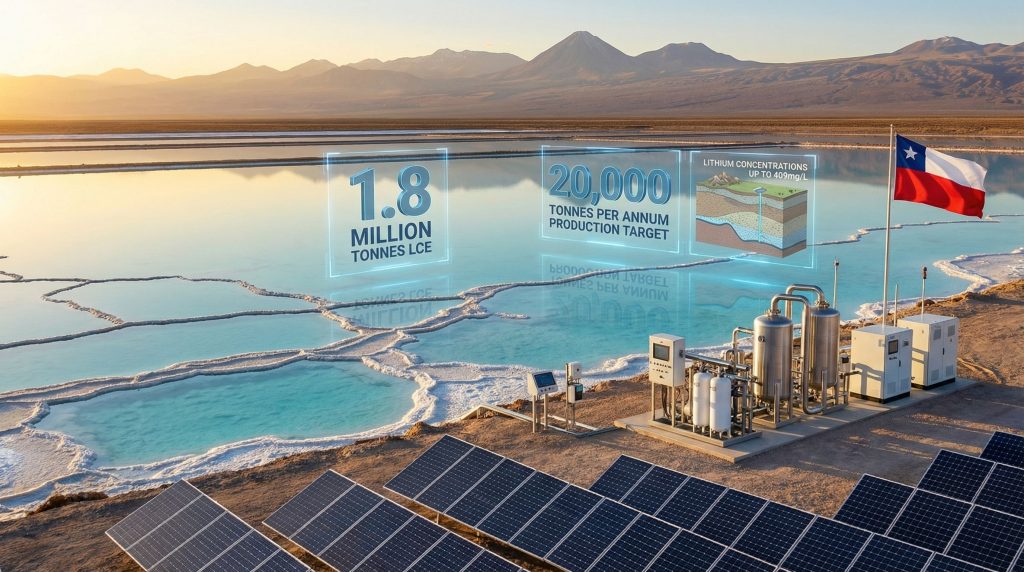
Industry reports suggest Laguna Verde contains estimated resources of 1.8 million tonnes lithium carbonate equivalent (LCE) with average grades of 200mg/L. High-grade drilling results have reportedly reached 409mg/L in certain areas, indicating significant grade variability and potential for selective extraction optimisation.
These grade levels position Laguna Verde competitively within Chile's lithium triangle, where successful operations typically require sustained grades above 150mg/L for economic viability. However, the project's 30-year operational timeline projections align with CEOL economic life provisions, providing regulatory certainty for long-term development planning.
Direct Lithium Extraction Technology Implementation
CleanTech Lithium's commitment to low-impact extraction technologies positions the project favourably within Chile's sustainability-focused regulatory environment. The company's approach emphasises environmental responsibility while maintaining production efficiency and cost competitiveness through advanced geothermal brine extraction methods.
| Technology Comparison | Direct Lithium Extraction | Traditional Evaporation |
|---|---|---|
| Water Consumption | Significantly reduced | High volume requirements |
| Processing Timeline | Accelerated production | 12-24 month evaporation |
| Environmental Impact | Minimal surface disturbance | Large evaporation pond systems |
| Recovery Rates | Optimised extraction | Weather-dependent variability |
The implementation of direct lithium extraction technology reportedly reduces water consumption by up to 50 times compared to traditional evaporation methods. This efficiency gain addresses environmental concerns while improving operational reliability and reducing weather dependency.
Pre-Feasibility Study Outcomes
CleanTech Lithium engaged international engineering firm Worley to conduct the prefeasibility study for Laguna Verde, lending technical credibility to the project's development planning. The study addresses operational parameters, economic projections, and technical specifications necessary for CEOL evaluation and strategic partner discussions.
The PFS is expected to be published shortly after CEOL admission into direct negotiations, providing detailed technical and economic analysis to support investment decisions and partnership arrangements. Therefore, this timing aligns with CleanTech's strategy to leverage CEOL approval for enhanced strategic partner engagement.
"Industry reports suggest net cash flow projections of US$6.3 billion and production targets of 20,000 tonnes per annum, though these figures require verification through published PFS documentation."
What Are the Investment Implications of CEOL Success?
CEOL approval would fundamentally transform CleanTech Lithium's investment profile, providing regulatory certainty and strategic positioning that enhances partnerships opportunities and capital market access. Furthermore, the implications extend beyond immediate project development to long-term strategic value creation and market positioning.
Market Position in Global Lithium Supply Chain
Chile's position as the world's largest lithium producer provides CEOL recipients with strategic advantages in global supply chain integration. Successful CEOL applicants gain access to established export infrastructure, experienced service providers, and proximity to other major lithium operations that enable cost optimisation and operational efficiency.
The global lithium market's rapid expansion, driven by electric vehicle adoption and energy storage demand, creates substantial value potential for new production capacity. CEOL approval positions operators to capture this growth through long-term supply agreements and strategic partnerships with battery manufacturers and automotive companies, despite ongoing lithium supply challenges affecting the broader market.
Strategic Partnership Opportunities
CEOL approval enables more substantive discussions with strategic partners, as regulatory uncertainty diminishes and production timelines become clearly defined. Potential partners include battery manufacturers, automotive companies, chemical processors, and mining companies seeking to expand lithium exposure.
The consortium structure established for CEOL qualification provides a framework for transitioning to strategic partners while maintaining operational control. This flexibility allows CleanTech to optimise partnership arrangements based on market conditions and strategic priorities throughout 2026 and beyond.
Risk Mitigation Through Regulatory Certainty
CEOL approval significantly reduces regulatory risk by providing clear production rights for the project's economic life. This certainty enables more accurate financial modelling, reduces due diligence complexity for investors, and supports debt financing arrangements that depend on regulatory stability.
The streamlined regulatory framework also reduces ongoing compliance costs and administrative burden compared to traditional permit structures. These efficiency gains improve project economics and operational focus on technical execution rather than regulatory management.
Chile's National Lithium Strategy: Broader Context
Chile's National Lithium Strategy represents a comprehensive approach to strategic resource development that balances economic growth with environmental sustainability and indigenous community rights. The CEOL framework operates within this broader policy context, which shapes both opportunities and obligations for successful applicants while contributing to global lithium brine market insights.
Government Sustainability Requirements
Chilean lithium policy emphasises sustainable production methods that minimise environmental impact and support long-term resource stewardship. CEOL applicants must demonstrate commitment to low-impact extraction technologies, water conservation, and environmental restoration practices.
These requirements align with global trends toward sustainable battery supply chains and corporate environmental responsibility. Companies that exceed minimum sustainability standards may gain competitive advantages in strategic partnerships and market positioning.
Indigenous Consultation Processes
Chile's lithium development framework includes mandatory consultation processes with indigenous communities in project areas. These consultations address environmental concerns, economic participation, and cultural preservation issues that affect project social licence to operate.
Successful CEOL applicants must navigate these consultation requirements effectively, building positive community relationships that support long-term operational stability. Community engagement becomes particularly important as projects transition from exploration to commercial production phases, as demonstrated by recent developments showing completed indigenous consultations for the Laguna Verde project.
What Are the 2026 Operational Targets for New Projects?
The Chilean government has established 2026 as a target year for new lithium projects to achieve operational status, supporting national economic growth and global supply chain diversification. This timeline creates urgency for CEOL applicants to advance development activities and secure strategic partnerships.
The 2026 operational targets align with global lithium demand growth projections and provide government incentives for efficient project development. Companies that meet these targets may benefit from additional policy support and regulatory flexibility, particularly in light of emerging lithium industry innovations across the sector.
What happens if CleanTech receives CEOL approval?
CEOL approval grants CleanTech commercial lithium production rights for Laguna Verde's economic life, typically 20-30 years. The company can then publish its prefeasibility study, initiate strategic partner discussions, and advance project development activities. The approval also validates the consortium partnership structure and enables transition to strategic partners through the established call option mechanism.
How does the consortium structure protect investor interests?
The consortium arrangement ensures CleanTech maintains operational control while meeting CEOL financial requirements. The anonymous partner receives less than 0.01% equity, preventing meaningful dilution of existing shareholders. CleanTech retains exclusive rights to require share transfer to strategic partners at the original acquisition price, enabling partnership optimisation without financial penalty.
What are the environmental compliance requirements?
CEOL recipients must implement low-impact extraction technologies, minimise water consumption, and maintain environmental restoration standards. The framework emphasises sustainable production methods that align with Chile's National Lithium Strategy and global supply chain sustainability requirements. Ongoing compliance monitoring ensures adherence to environmental standards throughout the project's operational life.
The next major ASX story will hit our subscribers first
Competitive Analysis: Other CEOL Applications in Chile
The Chilean government's CEOL framework extends beyond Laguna Verde to multiple salar systems throughout the lithium triangle, creating a competitive landscape where concession holders compete for streamlined production rights. This broader context shapes strategic positioning and partnership dynamics across the sector.
Expected Application Volume for Laguna Verde
CleanTech Lithium's dominant concession position in the Laguna Verde polygon effectively eliminates competing CEOL applications for the same designated area. The company's 97% concession control far exceeds the 80% minimum requirement, creating practical barriers to third-party applications and providing exclusive negotiating position with Chilean authorities.
This exclusivity contrasts with other CEOL polygon areas where multiple concession holders may submit competing applications, requiring government selection between qualified applicants. CleanTech's strategic land position provides significant competitive advantages in the CEOL process.
Advantages of Early Submission Strategy
CleanTech's January 5, 2026 submission, nearly a month ahead of the January 30 deadline, demonstrates operational readiness and may provide processing advantages. Early submission allows for extended dialogue with Ministry officials during the review process and signals serious commitment to Chilean lithium development, as confirmed by official company announcements regarding the application submission.
The early submission strategy also provides additional time for prefeasibility study completion and strategic partner discussions, enabling more comprehensive preparation for potential CEOL approval and subsequent development activities.
Government Review Process and Timeline
The Chilean Ministry of Mining initiates review processes immediately upon application submission, with feedback expected by February 2026 for early applicants. The review encompasses technical capabilities, financial qualifications, and operational experience evaluation across the three primary CEOL criteria.
Regular dialogue between applicants and Ministry officials during the review period enables clarification of requirements and demonstration of project readiness. This collaborative approach supports efficient evaluation and reduces regulatory uncertainty for qualified applicants.
Future Outlook: Chile's Position in Global Lithium Markets
Chile's strategic positioning within global lithium supply chains continues to strengthen through policy innovation and resource development optimisation. The CEOL framework represents a significant evolution in Chilean mining policy that may influence regulatory approaches in other major lithium-producing jurisdictions.
Supply Chain Security for Battery Manufacturing
Chile's stable political environment and established mining infrastructure provide supply chain security advantages for international battery manufacturers and automotive companies. The CEOL framework enhances this positioning by providing long-term production certainty and streamlined regulatory processes that support strategic partnership development.
The country's lithium production capacity expansion through CEOL projects contributes to global supply chain diversification and reduces dependence on single-source suppliers. This diversification benefits both Chilean economic development and international supply chain resilience.
Sustainable Production Standards Setting Precedent
Chile's emphasis on low-impact extraction technologies and environmental sustainability establishes precedents for responsible lithium development that may influence global industry standards. Companies that demonstrate superior environmental performance in Chilean operations may gain competitive advantages in international markets.
The integration of sustainability requirements into CEOL frameworks creates incentives for technological innovation and operational excellence that benefit both environmental protection and long-term profitability.
Investment Climate for International Mining Companies
The CEOL framework demonstrates Chile's commitment to attracting international investment through regulatory innovation and streamlined approval processes. This approach may encourage additional foreign direct investment in Chilean lithium development and expand the country's role in global supply chain integration.
International mining companies evaluating Chilean opportunities benefit from reduced regulatory complexity and enhanced long-term certainty provided by the CEOL structure. These advantages support capital allocation decisions and strategic planning for South American resource development, positioning the CleanTech Lithium operating contract in Chile as a significant milestone in this evolving investment landscape.
Disclaimer: This analysis contains forward-looking statements and projections that are subject to significant risks and uncertainties. Resource estimates, production targets, and financial projections require verification through published technical studies and official company disclosures. Investment decisions should be based on comprehensive due diligence and professional financial advice.
Looking for opportunities in Chile's evolving lithium sector?
Discovery Alert's proprietary Discovery IQ model delivers real-time alerts on significant lithium and mineral discoveries across the ASX, instantly empowering subscribers to identify actionable opportunities ahead of the broader market. Understand why major mineral discoveries can lead to significant market returns by exploring historic examples of exceptional outcomes, then begin your 30-day free trial today to position yourself ahead of emerging opportunities in the critical minerals space.