June 29, 2026
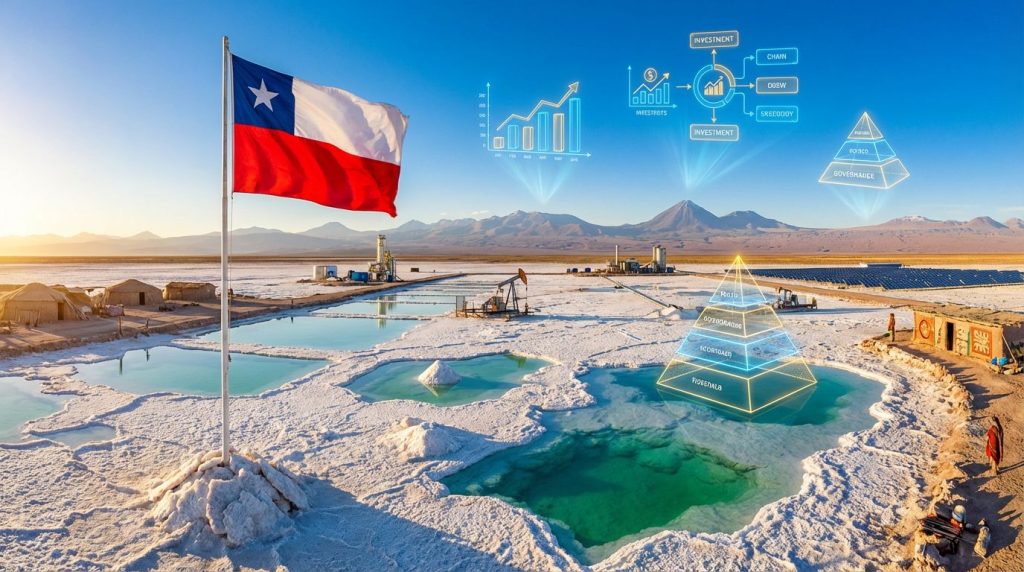
Chilean lithium governance issues have become increasingly complex as global demand for battery materials continues to surge, creating substantial regulatory and operational challenges that threaten to undermine Chile's position as the world's dominant lithium producer. Traditional mining jurisdictions face unprecedented pressure to optimise regulatory structures while balancing state revenue objectives, environmental sustainability, and private sector participation. These macro-economic forces create complex governance challenges that extend beyond simple supply-demand relationships, fundamentally altering how resource-rich nations approach strategic mineral management.
Chile's position as controller of over half the world's lithium reserves places the nation at the centre of these evolving dynamics. However, constitutional constraints, property rights conflicts, and regulatory bottlenecks have created a governance framework that paradoxically limits the country's ability to capitalise on its resource advantage.
Constitutional Mining Law Constraints on Private Sector Participation
Chile's lithium governance operates under restrictive constitutional frameworks that create fundamental barriers to private sector engagement. The 1982 Constitutional Organic Law of Mining Concessions established lithium as a non-concessionable strategic mineral, effectively preventing traditional mining concession structures from applying to this critical resource.
This classification forces all private sector participation through Special Lithium Operation Contracts (CEOLs), which mandate state majority ownership in all strategic lithium developments. Industry analysis reveals that zero new CEOLs have been awarded since 2023 despite multiple bidding rounds, creating a regulatory paralysis that prevents both state and private capital deployment.
The Clean Technologies Institute exemplifies this governance dysfunction. Despite receiving US$120 million in funding from Corfo, the state development agency, the institute focuses primarily on battery recycling research and university project reviews rather than developing operational infrastructure. This misallocation of resources highlights the broader strategic confusion within Chilean lithium governance issues.
Furthermore, the regulatory framework creates additional complexity through comprehensive mining permitting insights that affect both traditional mining operations and strategic mineral developments. Key regulatory constraints include:
- Mandatory 51% state ownership requirements in all projects
- Incomplete legal frameworks governing contract terms and conditions
- Overlapping jurisdictions between mining concessions and state lithium rights
- Extended environmental impact assessment requirements averaging 18-24 months
Pre-1979 mining concessions represent the only pathway for direct private ownership, creating a two-tier system where historical concession holders maintain significant advantages over new market entrants.
When big ASX news breaks, our subscribers know first
Investment Approval Process Bottlenecks
The CEOL approval system has evolved into a significant market entry barrier, particularly affecting smaller companies lacking diversified capital reserves to absorb prolonged assessment phases. Environmental impact assessments alone require 18-24 months on average, while administrative litigation timelines remain undefined.
These extended review processes function as de facto competitive advantages for state entities and multinational corporations with sustained funding capacity. The CleanTech Laguna Verde project demonstrates this dynamic, where despite constructing a pilot plant in Copiapó and investing heavily in research, the company cannot advance due to overlapping property claims.
Similarly, the partnership between Simco and Grupo Errázuriz has held concessions for years in the Salar de Maricunga without securing state contracts, preventing legal exploitation despite long-term property holdings. This regulatory uncertainty has created a system where property acquisition does not guarantee operational rights.
Administrative bottlenecks include:
- Undefined contract termination conditions
- Unclear royalty structure escalation mechanisms
- Indigenous consultation process requirements (duration unspecified)
- Appeals and administrative litigation procedures lacking standardised timelines
The absence of expedited property rights adjudication mechanisms specific to strategic minerals compounds these delays, forcing companies to navigate multiple overlapping regulatory frameworks without clear resolution pathways.
Property Rights Conflicts in High-Value Salt Flats
Chile's most valuable lithium deposits face complex ownership disputes that threaten project viability across multiple salt flat regions. The Maricunga Salt Flat contains 20-40 concurrent property holders claiming extraction rights, forcing the Codelco-Rio Tinto joint venture to pursue capital-intensive acquisition strategies.
The government mandates 80% polygon control for Maricunga development, leading Codelco to pay approximately US$200 million to Lithium Power International Ltd. to acquire the 5,000-hectare Salar Blanco project. This acquisition combined with existing holdings approaches but does not eliminate the ownership fragmentation challenge.
Maricunga Property Structure:
| Entity | Area (Hectares) | Acquisition Cost |
|---|---|---|
| Codelco (existing) | 5,000 | Historical holdings |
| SQM (existing) | 5,000 | Historical holdings |
| Salar Blanco (acquired) | 5,000 | US$200 million |
| Other holders | Variable | Ongoing disputes |
The Salares Altoandinos project faces similar complications, with the Enami-Rio Tinto partnership confronting active litigation from competing concession holders. Eramet invested approximately US$100 million in property acquisition from the Vecchiola family but subsequently filed lawsuits regarding overlapping claims.
This legal complexity constrains the Salares Altoandinos development to approximately 60 hectares, significantly smaller than established operations like Salar de Atacama's 3,200 hectares. The restricted area limits realistic production potential to 7,000-12,000 tonnes annually, well below proposed capacity targets.
Consequently, these property rights disputes exemplify the broader challenges within Chilean lithium governance issues that continue to constrain sector development despite substantial resource potential.
Technical Feasibility Challenges in Priority Regions
Government-designated priority salt flats contain significant technical challenges that complicate extraction feasibility. Lithium concentrations vary dramatically across these regions, with some areas presenting extraction difficulties that may not justify development costs.
Regional Concentration Analysis:
| Salt Flat | Lithium Concentration (ppm) | Primary Challenges |
|---|---|---|
| Quillagua | <200 | Extreme aridity, protected wetlands |
| Ascotán | 120-150 (surface level) | Multi-stakeholder ownership |
| Maricunga | 300-400 | Property fragmentation |
Quillagua represents the most technically problematic option, featuring evaporite-based mineralogy that creates exceptionally difficult lithium recovery processes. Located in one of Earth's driest regions within the Atacama Desert, the salt flat borders protected wetlands under environmental designation.
The concentration levels in Quillagua require enormous water evaporation volumes to reach the 10,000 ppm levels necessary for carbonate production. Combined with water access limitations and environmental constraints, these factors make project financing extremely challenging.
What Makes Ascotán Salt Flat Attractive Despite Lower Concentrations?
Ascotán Salt Flat presents more manageable technical challenges despite lower lithium concentrations due to established operational precedent. Historical ulexite extraction by Quiborax for borate production demonstrates operational feasibility, though processing complexity increases with lower concentrations.
However, multi-stakeholder ownership involving Eramet and Quiborax partnerships creates ongoing governance complications. Indigenous consultation requirements add approval complexity, while property fragmentation creates legal uncertainties similar to other priority regions.
Maricunga offers the highest lithium concentrations among priority salt flats, making it the most technically feasible extraction option. Nevertheless, the property fragmentation issues discussed earlier continue to create development barriers despite technical advantages.
Several saline systems contain polymetallic compositions beyond lithium, including boron, potassium, and magnesium. These additional metals require supplementary processing stages and environmental management protocols, increasing operational complexity beyond single-commodity extraction models.
Direct Extraction Technology Requirements
Water scarcity across Chile's salt flat regions makes direct extraction technologies essential for viable lithium operations. Conventional evaporation-based processing requires 500,000-2,000,000 litres of water per tonne of lithium carbonate, quantities unavailable in most priority salt flat environments.
Direct extraction technologies offer 70-90% water consumption reduction compared to traditional methods, though implementation increases project capital expenditure by 15-25%. This trade-off becomes essential in water-scarce regions where conventional processing proves impossible.
For low-concentration deposits like Ascotán, reaching carbonate production levels through evaporation would require immense water volumes. Direct extraction processes enable maximum water removal from brines while achieving superior solution concentration, making otherwise uneconomical deposits potentially viable.
In addition, innovative approaches like geothermal lithium extraction demonstrate alternative technology pathways that could address both water scarcity and energy requirements. Technology Implementation Considerations:
- Enhanced capital requirements (15-25% increase)
- Reduced environmental impact profiles
- Improved water resource conservation
- Enhanced processing efficiency for low-grade deposits
The technology's necessity extends beyond environmental considerations to basic operational feasibility. Salt flats like Quillagua cannot support traditional evaporation methods regardless of lithium concentrations due to extreme aridity and environmental restrictions.
Environmental Compliance and Sustainability Mandates
Chile's environmental governance framework imposes comprehensive requirements on lithium operations, reflecting growing global pressure for sustainable battery material production. These mandates extend beyond traditional mining environmental standards to address specific challenges associated with brine extraction.
Mandatory Environmental Protocols:
- Comprehensive groundwater monitoring systems
- Renewable energy integration targets (minimum 70% clean energy by 2030)
- Land restoration bonding requirements
- Indigenous community consultation processes
Environmental impact assessments require 18-24 months on average, with additional time needed for appeals and administrative review processes. The extended timeline reflects the complexity of assessing impacts on fragile desert ecosystems and protected wetland areas.
Water resource management presents particular challenges given the scarcity of renewable water supplies in salt flat regions. Companies must demonstrate sustainable extraction limits that prevent environmental degradation while maintaining operational viability.
The renewable energy mandate aligns with Chile's broader clean energy transition security objectives but adds infrastructure requirements in remote locations. Solar energy potential in the Atacama Desert offers advantages, though transmission infrastructure development increases project complexity.
Land restoration bonding ensures companies maintain responsibility for site rehabilitation following extraction completion. These financial guarantees protect against environmental damage while creating additional capital requirements for operators.
The next major ASX story will hit our subscribers first
Revenue Maximisation Through State Participation
Chile's lithium governance model prioritises long-term fiscal benefits through mandatory state participation rather than immediate foreign investment attraction. The 51% minimum state ownership requirement ensures government revenue capture from all strategic lithium developments.
Royalty structures range from 3-8% depending on production volumes, with export tax mechanisms providing additional government revenue streams. This multi-layered fiscal approach maximises state benefits while creating predictable revenue models for private sector partners.
Financial Structure Components:
- State majority ownership (51%+ revenue capture)
- Volume-based royalty rates (3-8%)
- Export taxation mechanisms
- Technology transfer requirements
The revenue maximisation strategy reflects Chile's recognition that lithium represents a finite strategic resource requiring optimal value extraction. However, the governance framework's complexity has created approval paralysis, potentially reducing total long-term revenues through delayed project development.
State participation through entities like Codelco and Enami provides technical expertise and project development capabilities while ensuring public benefit capture. However, the partnership selection process has prioritised financial capacity over technical specialisation, potentially limiting innovation integration.
Global Market Positioning Strategy
Chile maintains 52% of global lithium reserves, creating significant strategic leverage in international battery material markets. This resource concentration provides natural competitive advantages, though governance challenges may limit the country's ability to capitalise on market position.
Competitive Cost Analysis:
- Chilean brine extraction: US$6,000-7,000 per tonne
- Australian spodumene processing: US$10,500 per tonne
- Current market price: US$11,500 per tonne (December 2025)
Chile's production cost advantages provide substantial margins even at current market pricing, supporting the economic viability of most projects despite governance complications. The cost differential versus Australian operations creates sustainable competitive positioning regardless of short-term price fluctuations.
Market analysts anticipate lithium price recovery toward 2030 as electric vehicle adoption accelerates globally. European regulations mandating electric vehicle sales by 2035 support long-term demand projections, though prices are unlikely to reach previous peak levels.
Furthermore, Australian lithium innovations continue to challenge Chile's market dominance through technological advancement and streamlined regulatory frameworks. Chile's strategic positioning benefits from proximity to major consuming markets and established export infrastructure.
The concentration of global reserves in Chile creates potential for strategic resource diplomacy with major consuming nations, particularly as supply chain security becomes increasingly important for battery manufacturing industries.
Processing Capacity Constraints
Chile's lithium sector faces significant downstream processing limitations that constrain value-added production capabilities. Current infrastructure capacity remains concentrated among established operators, creating bottlenecks for new market entrants.
Existing Processing Infrastructure:
| Facility | Annual Capacity (Tonnes) | Location |
|---|---|---|
| SQM Atacama | 120,000 | Atacama Region |
| Albemarle Operations | 80,000 | Atacama Region |
Limited cathode material manufacturing capabilities restrict Chile's participation in higher-value battery supply chain segments. Previous attempts to establish Chinese-funded cathode manufacturing plants were abandoned due to profitability challenges associated with shipping finished products to Asian markets.
Building lithium carbonate processing plants for 20,000 tonnes annual capacity requires US$800 million to US$1.5 billion in capital investment. These substantial capital requirements create barriers to processing capacity expansion, particularly for smaller operators.
The economics of battery manufacturing in Chile remain challenging due to the 8% lithium content in batteries and requirements for graphite and other materials unavailable domestically. Manufacturing must typically locate near vehicle assembly operations rather than raw material sources.
However, lithium applications extend beyond batteries into pharmaceutical and industrial uses, creating opportunities for value-added processing in specialised market segments. These alternative applications could support domestic processing development while building technical capabilities.
Transportation and Export Logistics
Salt flat locations in Chile's northern regions create logistical challenges that affect operational costs and export capabilities. Remote locations require extensive transportation infrastructure development while distance to ports adds complexity to supply chain management.
Logistics Characteristics:
- Average distance from salt flats to ports: 200-400 kilometres
- Limited rail infrastructure requiring truck-based transportation
- Port capacity constraints during peak export periods
Transportation costs represent significant operational expenses, particularly for bulk commodity exports like lithium carbonate. Truck-based transportation increases carbon footprint and operational complexity compared to rail alternatives.
Port infrastructure in northern Chile requires capacity expansion to accommodate growing lithium export volumes. Current facilities face congestion during peak periods, potentially creating export delays and additional costs for producers.
The development of dedicated lithium export facilities could optimise handling processes while reducing contamination risks. However, infrastructure investment requirements create additional capital demands for sector development.
Road maintenance in desert conditions presents ongoing challenges, with extreme temperatures and limited precipitation affecting transportation route viability. Regular maintenance requirements add operational complexity for remote operations.
Strategic Foreign Investment Patterns
Chile's lithium sector demonstrates selective international partnership approaches, prioritising financial capacity and technical expertise while maintaining state control objectives. Major international collaborations reflect strategic resource development priorities rather than open market access.
Major International Partnerships:
| Partnership | Investment Value | Project Focus |
|---|---|---|
| Codelco-Rio Tinto | US$2.8 billion | Maricunga development |
| Enami-Rio Tinto | US$3.2 billion | Salares Altoandinos |
| SQM-Tianqi | Ongoing | Atacama operations |
The partner selection process has favoured established mining companies with substantial financial resources over specialised lithium technology providers. This approach prioritises project financing capabilities while potentially limiting technological innovation integration.
Rio Tinto's selection for both major state partnerships reflects the company's financial capacity rather than specialised lithium expertise. The US$420 million contribution requested by Enami from Rio Tinto for Salares Altoandinos may prove insufficient for required processing facilities.
Foreign investment patterns show preference for joint ventures with state entities rather than independent private sector development. This structure ensures state revenue participation while accessing private sector technical capabilities and financing.
Technology transfer requirements increasingly emphasise local content and research development investment obligations. These mandates aim to build domestic capabilities while ensuring knowledge transfer from international partners.
Technology Transfer Requirements
Government policy increasingly emphasises technology localisation and capability building within Chile's lithium sector. These requirements extend beyond traditional mining technology transfer to encompass processing innovation and research development capabilities.
Localisation Framework Components:
- Mandatory local content requirements for major projects
- Research and development investment obligations
- University partnership requirements for advanced extraction technologies
- Technology transfer agreements with international partners
The emphasis on domestic capability development reflects recognition that Chile's lithium advantage requires more than resource control. Building technical expertise and innovation capabilities ensures sustainable competitive advantages beyond raw material exports.
However, the US$120 million Clean Technologies Institute allocation demonstrates challenges in translating funding into operational capabilities. Focus on battery recycling research rather than extraction technology development may limit practical applications for domestic projects.
University partnerships with Universidad de Atacama and Universidad de Antofagasta provide research infrastructure, though dedicated laboratories and pilot-scale facilities remain limited. Enhanced investment in practical research capabilities could support technological advancement.
International partners increasingly face requirements to establish local research facilities and training programs. These obligations ensure technology transfer extends beyond equipment provision to knowledge and capability development.
How Do These Requirements Affect Project Timelines?
Technology transfer obligations add complexity to project approval processes while creating additional investment requirements for international partners. Enhanced due diligence and compliance verification procedures extend approval timelines beyond standard environmental and technical assessments.
Companies must demonstrate comprehensive technology sharing plans before receiving final project approvals. These requirements include detailed training programs, research facility development, and knowledge transfer protocols that satisfy government objectives.
Indigenous Rights and Consultation Processes
Chile's lithium governance must navigate complex indigenous land rights and consultation requirements that affect project approval timelines and community relations. These obligations reflect constitutional recognition of indigenous rights while creating operational challenges for developers.
Consultation Framework Elements:
- Free, prior, and informed consent protocols
- Revenue-sharing agreements with affected communities
- Cultural heritage protection measures
- Traditional water usage rights recognition
Wealth Minerals represents the only company to establish formal revenue-sharing agreements with indigenous communities, committing 5% of revenues to affected groups in the Ollagüe salt flat region. This agreement demonstrates successful community engagement models while setting precedents for other developers.
However, despite community agreements, Wealth Minerals has not received state contracts due to Codelco's ownership of half the Ollagüe salt flat and reluctance to establish partnerships. This situation highlights disconnects between community engagement and regulatory approval processes.
Indigenous consultation requirements add approval complexity and timeline uncertainty to project development. Duration specifications remain undefined, creating planning challenges for developers and potential delays for project advancement.
Water access represents a particular concern for indigenous communities whose traditional livelihoods depend on limited water resources in desert regions. Consultation processes must address sustainable water sharing arrangements that protect both community needs and extraction requirements.
Social Licence Challenges
Community opposition has emerged as a significant governance factor affecting project viability beyond formal regulatory requirements. Social licence challenges reflect broader concerns about environmental impact, economic benefits, and community participation in decision-making processes.
Primary Community Concerns:
- Water access competition with agricultural communities
- Environmental impact on traditional livelihoods
- Limited local employment generation from automated extraction
- Insufficient community benefit participation
Water scarcity creates inherent conflicts between lithium extraction and existing community water uses. Agricultural communities particularly concern themselves with groundwater depletion and quality impacts from brine processing operations.
Environmental impacts extend beyond immediate extraction sites to affect traditional livestock grazing areas and cultural landscapes. Community concerns about ecosystem disruption require comprehensive mitigation strategies and ongoing monitoring programs.
Limited employment generation from modern lithium extraction technologies reduces direct community economic benefits. Automated processing systems require specialised technical skills often unavailable in rural communities, limiting local participation opportunities.
Revenue sharing arrangements like Wealth Minerals' 5% commitment provide models for community benefit programs, though standardised frameworks remain undeveloped. Enhanced community participation in economic benefits could improve social licence acceptance.
Regulatory Evolution Scenarios
Chile's lithium governance framework faces several potential development paths as pressure mounts to resolve current bottlenecks and capitalise on resource advantages. Evolution scenarios range from liberalisation to enhanced state control, each presenting distinct implications for sector development.
Scenario Analysis:
- Liberalisation Path: Reformed CEOL processes enabling increased private sector access
- State Consolidation: Enhanced government control through National Lithium Company expansion
- Hybrid Model: Balanced public-private partnerships with streamlined regulatory frameworks
The liberalisation scenario would require constitutional reforms to enable traditional mining concession structures for lithium extraction. Such changes could accelerate private investment but might reduce state revenue capture and control over strategic resources.
State consolidation through expanded National Lithium Company operations could provide greater government control while potentially limiting technological innovation and financing capacity. This approach aligns with resource nationalism trends but may reduce sector efficiency.
Hybrid models offer potential compromise solutions, maintaining state participation while streamlining approval processes and clarifying property rights. Success requires comprehensive regulatory reform addressing current bottlenecks and inconsistencies.
Timeline pressures from global lithium demand growth and competing jurisdiction developments create urgency for governance evolution. Delays in resolving current challenges risk permanent market share erosion and reduced strategic positioning, as evidenced by Argentina lithium insights showing rapid sector development in neighbouring jurisdictions.
Global Supply Chain Integration
Chile's governance decisions significantly impact international lithium markets and electric vehicle battery supply chain security. The country's resource concentration creates potential bottlenecks for global clean energy transition objectives while providing strategic leverage opportunities.
Projected Production Capacity:
- Potential annual production by 2030: 300,000-500,000 tonnes
- Current combined SQM/Albemarle capacity: 200,000 tonnes
- Market share implications for global EV supply chains
Supply chain integration challenges extend beyond production capacity to encompass processing capabilities, transportation infrastructure, and quality standards. International battery manufacturers require consistent supply volumes and specifications that current governance uncertainty threatens.
Strategic resource diplomacy opportunities emerge as consuming nations seek supply chain security guarantees. Chile's resource concentration enables bilateral agreements and strategic partnerships that extend beyond commercial relationships to broader economic cooperation.
However, governance delays and property rights conflicts create supply uncertainty that may drive international consumers toward alternative sources. Australia's spodumene operations and Argentina's expanding brine projects provide supply diversification options despite higher costs.
The resolution of Chilean lithium governance issues affects global lithium pricing and availability, particularly as demand growth accelerates through 2030. Continued delays could create market tightening and price volatility affecting electric vehicle adoption rates.
Chile's ability to maintain its position as the world's leading lithium producer depends fundamentally on resolving governance challenges while meeting growing global demand. Success requires coordinated efforts to streamline regulatory processes, resolve property rights conflicts, and enhance community engagement frameworks.
The resolution of these governance issues will determine whether Chile can capitalise on its resource advantages while contributing to global clean energy transition objectives. Failure to address current challenges risks permanent competitive disadvantage despite the country's substantial natural resource endowment.
Seeking Market-Leading Insights on Strategic Mineral Opportunities?
Discovery Alert's proprietary Discovery IQ model delivers instant notifications when significant ASX mineral discoveries are announced, transforming complex geological data into actionable investment insights for both experienced and novice investors. Explore how major mineral discoveries can generate substantial returns by examining historic examples on our discoveries page, then begin your 30-day free trial to position yourself ahead of market movements.