June 4, 2026
Global commodity markets operate within complex geopolitical frameworks where state-controlled purchasing mechanisms can dramatically reshape trade relationships overnight. The iron ore sector, representing one of the world's largest commodity markets by volume, demonstrates how centralized procurement decisions by major importers create ripple effects across international supply chains. Understanding these dynamics requires examining both the immediate operational impacts and the broader strategic implications for global steel production networks.
Understanding China's Strategic Resource Procurement Framework
The Role of State-Controlled Mineral Purchasing in Economic Diplomacy
China's mineral procurement system operates through sophisticated state-enterprise coordination mechanisms that extend far beyond simple commercial transactions. The China Mineral Resources Group (CMRG) functions as a critical intermediary between government policy objectives and private sector steel mill operations, creating a unique hybrid model where commercial decisions carry diplomatic weight.
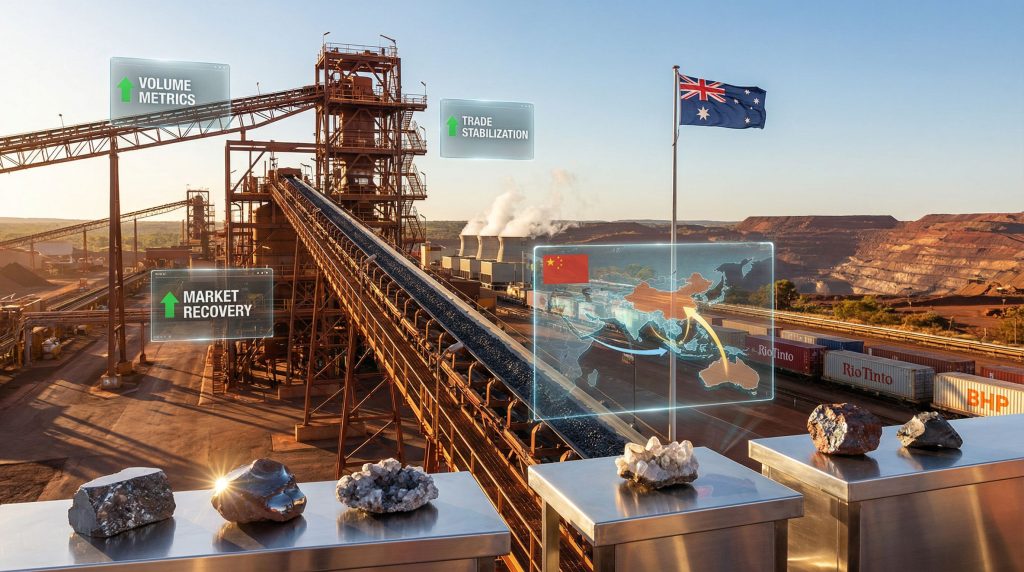
Recent policy adjustments demonstrate how quickly these mechanisms can shift market dynamics. When china eases bhp iron ore ban through CMRG directives to steel mills, the decision reflects coordinated state-level strategy rather than purely market-driven procurement choices. This centralised approach allows Chinese authorities to use commodity purchasing as a diplomatic tool whilst maintaining the appearance of commercial decision-making.
The effectiveness of this system lies in its ability to create immediate market responses without requiring formal trade policy announcements. Steel mills receiving CMRG guidance can adjust purchasing patterns rapidly, creating supply chain disruptions or relief depending on policy objectives. This mechanism has proven particularly effective in managing relationships with major exporters like Australia, where iron ore represents a significant portion of bilateral trade volume. Furthermore, these trends align with broader geopolitical mining trends affecting resource sectors globally.
How China Mineral Resources Group Shapes Global Commodity Flows
The scope of CMRG's influence extends across multiple commodity sectors, but iron ore procurement represents its most visible and market-moving function. With China importing approximately 1.0-1.1 billion tonnes of iron ore annually, representing roughly 70% of global seaborne trade, CMRG's purchasing decisions create immediate price and availability impacts worldwide.
The organisation's ability to coordinate purchasing across hundreds of Chinese steel mills creates unprecedented market concentration. Unlike traditional commodity markets where purchasing decisions remain fragmented across multiple buyers, CMRG's guidance system allows coordinated responses to supply disruptions, quality issues, or diplomatic tensions.
Key operational mechanisms include:
- Selective cargo approval: Allowing purchases of specific grades whilst restricting others
- Volume coordination: Managing total import levels to support domestic pricing objectives
- Quality standardisation: Establishing preferred supplier relationships based on technical specifications
- Contract timing: Coordinating spot market versus long-term contract purchasing patterns
This coordination capability explains why the September 2025 to April 2026 restriction period created such significant market attention despite representing a relatively small portion of total Chinese iron ore consumption. Additionally, these developments reflect broader patterns in iron ore demand insights that influence global market dynamics.
Strategic Timing: Why April 2026 Marks a Pivotal Shift
The timing of policy reversals in commodity procurement often reflects broader economic and diplomatic considerations beyond the immediate supply and demand fundamentals. The seven-month duration of restrictions followed by selective relaxation in April 2026 suggests carefully calibrated policy management rather than reactive decision-making.
Several factors typically influence such timing decisions:
Domestic steel industry conditions: Chinese steel mill operating rates, inventory levels, and margin pressures directly impact procurement policy flexibility. When domestic mills face capacity constraints or raw material shortages, CMRG guidance tends toward more flexible import policies.
Seasonal demand patterns: Steel production in China typically follows seasonal cycles, with spring construction activity creating increased demand for iron ore imports. April timing aligns with traditional seasonal procurement increases.
Diplomatic relationship management: Trade restrictions often serve as negotiating tools in broader bilateral relationships. The timing of relaxation may reflect progress in diplomatic discussions or changing geopolitical priorities.
Market stability considerations: Extended restrictions can create price volatility that ultimately impacts Chinese steel production costs, creating incentives for policy moderation.
When big ASX news breaks, our subscribers know first
What Economic Factors Drive China's Iron Ore Import Restrictions?
Steel Industry Margin Pressures and Government Response Mechanisms
Chinese steel industry profitability directly influences government policy toward iron ore imports, creating a complex relationship between domestic economic conditions and international trade patterns. When steel mills experience margin compression, typically caused by declining finished steel prices or rising input costs, government agencies often implement procurement guidance to stabilise operating conditions.
The mechanism operates through several channels:
Cost management support: Import restrictions on premium-priced grades can force steel mills toward lower-cost alternatives, improving short-term margins at the expense of product quality or operational efficiency.
Inventory level optimisation: Coordinated purchasing restrictions can help reduce excess inventory when demand softens, preventing the working capital strain that accompanies oversupply situations.
Price negotiation leverage: Temporary restrictions create bargaining power in long-term contract negotiations with major suppliers, potentially securing better pricing terms for future periods.
Historical data indicates that Chinese steel mill margins typically compress during periods of infrastructure investment slowdown or property sector weakness. These economic cycles often correlate with increased import restriction activity as government policy aims to support domestic industry profitability during challenging market conditions. However, this approach must be balanced against iron ore price trends that affect global market stability.
Domestic vs. International Supply Balance Considerations
China's approach to iron ore procurement reflects ongoing tension between maximising domestic production utilisation and securing reliable international supply sources. Domestic Chinese iron ore production, whilst significant in absolute terms, suffers from substantially lower grade quality compared to Australian and Brazilian imports.
Domestic production characteristics:
- Average iron content: 32-35% Fe content
- Higher processing costs due to beneficiation requirements
- Limited production scalability due to geographical constraints
- Environmental compliance costs affecting production economics
Imported ore advantages:
- Premium grades: 64-67% Fe content (Pilbara region)
- Lower processing requirements reducing steel mill operating costs
- Consistent quality specifications supporting predictable operations
- Scalable supply volumes supporting large-scale production
The economic calculation becomes complex when considering total production costs rather than simple commodity pricing. Whilst imported ore carries higher per-tonne costs, the reduced processing requirements and higher productivity often result in lower total steel production costs. Import restrictions therefore require careful calibration to avoid creating higher total system costs despite apparent raw material savings.
The Economics of Selective Product Targeting
Different iron ore grades command varying price premiums based on their chemical composition and processing characteristics, creating opportunities for targeted import restrictions that balance cost management with operational requirements. The selection of specific products for restriction typically reflects detailed analysis of substitution possibilities and production impact.
Premium grade characteristics and pricing:
| Grade Type | Fe Content | Typical Premium | Processing Advantage |
|---|---|---|---|
| Newman Fines | 64-65% | $8-12/tonne | Low silica, high productivity |
| Jimblebar Fines | 63-64% | $5-8/tonne | Consistent quality, good sintering |
| Brazilian Vale Fines | 65-67% | $12-18/tonne | Highest grade, premium applications |
The economics of selective targeting allows Chinese purchasers to maintain steel production volumes whilst reducing input costs through grade substitution. Lower-grade ores require additional processing and reduce blast furnace productivity, but can provide significant cost savings when steel margins face pressure.
Substitution analysis considerations:
- Productivity impact: Lower grades reduce tonnes per day production capacity
- Energy consumption: Inferior grades require higher energy input per tonne of steel
- Environmental impact: Lower quality ores typically generate higher emissions per unit output
- Logistics complexity: Managing multiple grade inventories increases operational complexity
How Do Iron Ore Trade Restrictions Function as Economic Leverage?
Spot Market vs. Term Contract Differentiation Strategies
Iron ore trade operates through two primary channels that serve different strategic purposes for both buyers and sellers. Understanding these mechanisms explains how import restrictions can create targeted market pressure whilst maintaining essential supply relationships.
Long-term contracts characteristics:
- Contract duration: Typically 3-5 years with annual price negotiations
- Volume commitments: Fixed annual tonnage obligations
- Price mechanisms: Usually tied to quarterly benchmark pricing with negotiated premiums/discounts
- Supply security: Guaranteed delivery schedules supporting production planning
Spot market characteristics:
- Transaction timing: Individual cargo purchases for immediate delivery
- Price volatility: Daily price fluctuations based on immediate supply/demand balance
- Volume flexibility: Opportunistic purchasing based on availability and pricing
- Quality variability: Access to different grades based on current availability
Import restrictions targeting spot market purchases allow maximum policy flexibility whilst maintaining long-term contractual relationships. This approach enables Chinese buyers to create immediate supply pressure without violating existing commercial agreements, providing diplomatic leverage whilst preserving essential trade relationships.
The strategic advantage emerges from the psychological impact on sellers who recognise that spot market restrictions could potentially expand to include long-term contract volumes. This implicit threat creates negotiating leverage in annual price discussions and broader commercial relationship management. Moreover, these dynamics increasingly intersect with us-china trade war impact on global commodity markets.
Volume Impact Analysis in Global Market Context
The scale of volume impacts from Chinese import restrictions requires careful analysis within the broader context of global iron ore trade flows. Whilst absolute tonnages may appear modest, the concentration of Chinese demand creates amplified market effects.
Global iron ore market scale:
- Total seaborne trade: 1.3-1.4 billion tonnes annually
- Chinese import share: 70-75% of global trade
- Daily trading volume: 3.5-4.0 million tonnes
- Major supplier concentration: Top iron ore mines 2025 control 85% of exports
When analysing restriction impacts, several multiplier effects amplify the apparent volume significance:
Inventory management responses: Steel mills and trading companies typically maintain 30-45 days of iron ore inventory. Restriction announcements trigger immediate inventory building among unrestricted suppliers, creating demand spikes that exceed the actual restricted volumes.
Shipping and logistics impacts: Iron ore vessels typically operate on 45-60 day round-trip cycles between Australia and China. Supply disruptions create immediate vessel availability issues that affect pricing across multiple trade routes.
Price discovery mechanisms: Iron ore pricing relies heavily on daily spot market transactions despite most volume moving through long-term contracts. Even modest spot market disruptions can create significant benchmark price volatility affecting billions of dollars in annual contract values.
Price Volatility Creation Through Supply Chain Disruption
Iron ore markets demonstrate extreme price sensitivity to supply disruption expectations, often creating volatility that far exceeds the fundamental supply-demand balance changes. This sensitivity stems from the market's structural characteristics and the limited short-term substitution possibilities available to steel producers.
Market structure factors amplifying volatility:
- Limited storage capacity: Most steel mills operate with minimal iron ore inventory due to working capital constraints
- Production inflexibility: Blast furnace operations cannot easily adjust to raw material quality variations
- Transportation constraints: Capesize vessel availability often becomes a bottleneck during supply disruptions
- Financial market participation: Commodity funds and trading firms amplify price movements through speculative positioning
Historical analysis reveals that supply restrictions affecting 2-3% of total Chinese imports can create price movements of 10-15% within days of announcement. This price leverage explains why relatively modest volume restrictions can achieve significant economic and diplomatic impact.
Volatility transmission mechanisms:
- Immediate futures market response: Commodity exchanges react within hours to restriction announcements
- Inventory hoarding behaviour: Steel mills accelerate purchasing from unrestricted suppliers
- Logistics premium emergence: Shipping costs increase due to route changes and timing pressures
- Quality premium adjustments: Alternative grades experience price increases due to sudden demand shifts
What Are the Broader Implications for Australia-China Trade Relations?
Diplomatic Engagement Effectiveness in Resource Sector Negotiations
The resolution of iron ore import restrictions demonstrates how economic interdependence creates effective channels for diplomatic engagement even during periods of broader bilateral tension. Resource sector negotiations often provide neutral ground for relationship management when political dialogue becomes challenging.
Engagement framework characteristics:
Technical-commercial focus: Resource sector discussions typically centre on operational issues rather than broader political disagreements, allowing productive dialogue to continue during diplomatic difficulties.
Mutual economic benefits: Both countries recognise the substantial economic value created by resource trade, providing strong incentives for practical problem-solving approaches.
Private sector involvement: Mining companies and steel mills often maintain relationships that transcend government-level tensions, creating informal communication channels.
Predictable resolution mechanisms: Resource sector disputes typically follow established patterns of escalation and de-escalation, allowing experienced negotiators to manage outcomes effectively.
The seven-month timeline from restriction implementation to selective relaxation suggests structured negotiation processes rather than arbitrary policy changes. This timeframe allows both sides to demonstrate resolve whilst providing sufficient space for face-saving compromise solutions.
Executive-Level Relationship Building in Commodity Trade
Senior executive relationships between mining companies and Chinese state enterprises often provide crucial stability during periods of government-level tension. These relationships, built through years of commercial interaction, can facilitate communication and problem-solving when formal diplomatic channels become constrained.
Relationship building mechanisms include:
- Regular commercial meetings: Annual contract negotiations require extensive executive interaction
- Technical collaboration: Joint development projects and technology sharing create ongoing partnerships
- Cultural exchange programmes: Long-term relationship building through educational and cultural initiatives
- Industry forum participation: Neutral venues for relationship maintenance during difficult periods
The effectiveness of these relationships becomes evident when china eases bhp iron ore ban selectively rather than comprehensively. The fact that some BHP cargoes received purchasing approval suggests that established relationships provided pathways for partial resolution even when broader policy tensions remained unresolved.
What Does Selective Policy Relaxation Signal?
The pattern of restriction implementation and resolution creates important precedents for managing future trade tensions in the resource sector. Both sides gain experience in calibrating economic pressure whilst maintaining essential commercial relationships.
Key precedent elements include:
Graduated response mechanisms: Rather than complete trade cutoffs, restrictions target specific products or market segments, allowing controlled escalation and de-escalation.
Time-bounded pressure: Restrictions implemented with implicit understanding that resolution pathways remain available through negotiation.
Commercial relationship preservation: Long-term contracts and strategic partnerships receive protection even during policy disputes.
Face-saving resolution opportunities: Selective relaxation allows both sides to claim partial victory whilst moving toward normalised relations.
Historical context for precedent analysis:
| Dispute Period | Product | Duration | Resolution Mechanism |
|---|---|---|---|
| 2020-2021 | Coal imports | 18 months | Gradual permit restoration |
| 2020-2021 | Wine tariffs | 12 months | WTO dispute resolution |
| 2025-2026 | Iron ore restrictions | 7 months | Commercial negotiation |
How Will This Policy Shift Affect Global Iron Ore Market Dynamics?
Immediate Supply Chain Relief and Price Stabilisation Potential
The selective relaxation of import restrictions creates immediate relief in global iron ore supply chains, though the effects vary significantly across different market segments and geographical regions. Understanding these impacts requires analysing both the direct supply effects and the broader psychological market responses.
Immediate market relief mechanisms:
Shipping logistics normalisation: Vessel scheduling becomes more predictable when Chinese demand patterns stabilise, reducing transportation costs and delivery timing uncertainty for all market participants.
Inventory rebalancing: Steel mills can optimise inventory levels when supply security improves, reducing the precautionary stockpiling that creates artificial demand spikes during restriction periods.
Price premium compression: Quality premiums for restricted grades typically decline when purchasing restrictions ease, creating cost savings for steel producers worldwide.
Futures market stabilisation: Commodity futures markets typically experience reduced volatility when political supply risks diminish, improving price discovery mechanisms for long-term planning.
The scale of price stabilisation depends heavily on broader market conditions beyond the specific restriction policies. During periods of strong steel demand, restriction relaxation may have minimal price impact, whilst weak demand periods can see substantial price relief.
Competitive Positioning Among Major Iron Ore Producers
Policy changes affecting Chinese procurement create immediate competitive implications among major global iron ore suppliers, influencing market share distribution and pricing power across the industry.
Competitive landscape impacts:
Australian producers (BHP, Rio Tinto, Fortescue): Benefit from improved access to Chinese markets, but face intensified competition as normalised trade reduces artificial scarcity premiums.
Brazilian suppliers (Vale): May experience competitive pressure as Australian production regains market access, particularly in premium grade segments where Vale traditionally commanded pricing advantages.
Indian exporters: Could face reduced demand as Chinese buyers return to preferred Australian suppliers, particularly affecting lower-grade ore markets where Indian producers compete most directly.
Emerging suppliers (Africa, other regions): May lose opportunistic market share gained during restriction periods as established trade patterns resume.
Market share implications by grade category:
| Grade Category | Primary Beneficiaries | Competitive Pressure |
|---|---|---|
| Premium (65%+ Fe) | Australian producers | Brazilian Vale competition |
| Standard (62-64% Fe) | All major suppliers | Increased price competition |
| Low grade (<62% Fe) | Indian/other suppliers | Australian displacement risk |
Steel Manufacturing Cost Implications Across Asian Markets
Changes in Chinese iron ore procurement policies create ripple effects across Asian steel markets through multiple transmission mechanisms, affecting production costs, competitive positioning, and investment decisions throughout the region.
Regional impact transmission:
Direct cost effects: Steel producers in Japan, South Korea, India, and Southeast Asia benefit from improved iron ore availability and pricing stability when Chinese demand patterns normalise.
Competitive rebalancing: Chinese steel exports become more price-competitive when domestic production costs decline due to improved raw material access, affecting regional steel market dynamics.
Investment decision impacts: Steel capacity expansion decisions across Asia reflect expectations about long-term raw material availability and pricing stability.
Logistics optimisation: Regional steel producers can optimise supply chains when shipping patterns stabilise, reducing transportation costs and delivery timing risks.
Asian steel market cost structure analysis:
- Raw material costs: Typically 60-70% of total steel production costs
- Iron ore component: 35-40% of total steel production costs
- Price sensitivity: 10% iron ore price change affects steel margins by 3-4%
- Regional variations: Transportation costs create 5-15% regional price differentials
The next major ASX story will hit our subscribers first
What Does This Signal About China's Economic Strategy Going Forward?
Resource Security vs. Trade Relationship Balance
China's approach to iron ore import management reflects broader strategic thinking about balancing resource security objectives with the maintenance of essential trade relationships. This balance requires sophisticated policy coordination across multiple government agencies and time horizons.
Strategic considerations include:
Long-term supply security: China requires reliable access to approximately 1.1 billion tonnes of iron ore annually to support domestic steel production, creating fundamental dependence on international suppliers regardless of diplomatic tensions.
Economic interdependence management: Bilateral trade relationships worth hundreds of billions of dollars annually require careful management to preserve economic benefits whilst maintaining policy flexibility.
Alternative supplier development: Ongoing investment in mining projects across Africa, South America, and other regions aims to reduce dependence on any single supplier country, though these alternatives require years to develop meaningful production capacity.
Domestic production optimisation: Continued investment in domestic mining and steel recycling capabilities reduces import dependence but cannot eliminate the need for international supply sources.
The selective nature of restriction relaxation suggests that Chinese policymakers recognise the limitations of trade restrictions as policy tools when applied to essential industrial inputs. Complete supply cutoffs would create domestic economic disruption exceeding any diplomatic benefits achieved. Furthermore, developments like China lifts iron ore ban on BHP cargoes demonstrate the practical constraints on sustained trade restrictions for critical commodities.
State Enterprise Decision-Making in Global Commodity Markets
The role of state-owned enterprises like CMRG in global commodity markets represents a unique hybrid model that combines commercial efficiency with government policy coordination. Understanding this model provides insights into how Chinese decision-making processes may evolve in other commodity sectors.
Operational characteristics of the state enterprise model:
Commercial expertise: CMRG maintains professional commodity trading capabilities comparable to private sector organisations, ensuring decisions reflect market realities rather than purely political considerations.
Policy coordination: Direct government communication channels allow rapid implementation of policy changes without requiring formal regulatory processes that might affect other market participants.
Risk management: State backing provides financial stability during volatile market periods whilst maintaining operational flexibility for complex trading strategies.
Market intelligence: Access to comprehensive domestic demand information allows sophisticated supply planning that private traders cannot replicate.
Global implications for commodity markets:
- Increased state participation in commodity trading worldwide
- Potential for coordinated purchasing strategies among state buyers
- Greater integration between commercial and diplomatic objectives
- Enhanced importance of government-to-government relationships in commodity trade
Long-term Supply Diversification Considerations
Chinese supply diversification efforts extend far beyond immediate trade dispute management, reflecting comprehensive strategic planning for resource security over decades. These initiatives will fundamentally reshape global mining investment patterns and trade flows. However, when china eases bhp iron ore ban, it also signals pragmatic recognition that diversification takes time whilst existing relationships remain economically essential.
Diversification strategy components:
Geographic diversification: Investment in mining projects across multiple continents reduces concentration risk associated with any single region or political relationship.
Grade and quality diversification: Development of processing technologies that can utilise lower-grade domestic and imported ores reduces dependence on premium grade imports.
Supply chain integration: Direct investment in mining operations, transportation infrastructure, and processing facilities creates greater supply chain control.
Alternative technology development: Investment in steel production technologies that reduce iron ore consumption or utilise alternative inputs (scrap steel, direct reduced iron) decreases overall import requirements.
Timeline for diversification impact:
- Near-term (2026-2030): Limited impact as existing projects reach production
- Medium-term (2030-2035): Meaningful supply addition from African and South American projects
- Long-term (2035+): Potential fundamental shift in global iron ore trade patterns
The development of alternative supply sources creates competitive pressure on established suppliers whilst providing Chinese policymakers with greater flexibility in managing trade relationships. However, recent analysis suggests that domestic mills can purchase BHP iron ore under specific conditions, indicating that pragmatic commercial considerations often override long-term diversification objectives in the short term.
Investment Risk Disclaimer: Commodity market investments carry substantial risks including price volatility, political instability, and supply disruption. Past performance does not guarantee future results. Investors should conduct thorough due diligence and consider professional investment advice before making commodity-related investment decisions.
Looking to Capitalise on Iron Ore Market Movements?
Discovery Alert's proprietary Discovery IQ model delivers real-time notifications on significant ASX mineral discoveries, including iron ore opportunities that could benefit from China's evolving trade policies and global supply chain shifts. With major discoveries historically generating substantial returns, subscribers gain immediate access to actionable investment opportunities ahead of broader market recognition. Start your 14-day free trial today and position yourself to identify the next major mineral discovery in this dynamic commodity landscape.