May 13, 2026
When Chokepoints Become Flashpoints: Understanding India's Energy Reserve Position
Few concepts in global energy security carry more weight than the idea of a maritime chokepoint. These narrow corridors of water, threading between continents and coastlines, represent the physical infrastructure through which modern industrial economies sustain themselves. When geopolitical tension threatens to disrupt these corridors, the ripple effects move from naval strategy into kitchen budgets almost overnight.
For India, a nation whose economic growth trajectory demands ever-increasing energy inputs, the events of mid-2026 in West Asia brought this vulnerability into sharp relief. The situation triggered a public debate about reserve adequacy that reached the highest levels of government communication, and India has 60 days of crude and 60 days of LNG says Hardeep Puri became the headline statement that shaped that debate.
Understanding what India actually holds in reserve, how those reserves function operationally, and where genuine vulnerabilities persist requires moving beyond headline figures into the architecture of the country's energy security system itself.
When big ASX news breaks, our subscribers know first
India Has 60 Days of Crude and 60 Days of LNG: What Hardeep Puri Actually Said
At the CII Annual Summit on 13 May 2026, Union Minister for Petroleum and Natural Gas Hardeep Singh Puri delivered a detailed account of India's fuel reserve position against the backdrop of escalating West Asia tensions. The core message was direct: India has 60 days of crude and 60 days of LNG, alongside 45 days of LPG rolling stock, and no supply-side crisis exists.
This statement was not delivered in a vacuum. It was a deliberate response to what the Minister described as circulating misinformation, including claims that India held as few as six days of fuel stocks.
The statement carries significant weight precisely because it was made by the Minister responsible for petroleum policy, at a high-profile industry forum, with specific numerical figures attached. However, understanding its full implications requires unpacking what these reserve durations actually represent operationally, what fiscal pressures accompany them, and how they compare against global energy security benchmarks.
The Minister's public communication strategy distinguished explicitly between two separate problems: physical supply adequacy, which he described as under control, and fiscal sustainability, which he characterised as increasingly difficult to maintain given prevailing crude price levels.
The Three-Tier Reserve Structure India Is Maintaining
India's fuel reserve position is not a single number but a layered system covering different commodity types, storage mechanisms, and consumption profiles.
| Fuel Type | Reserve Duration | Primary Use Case | Storage Mechanism |
|---|---|---|---|
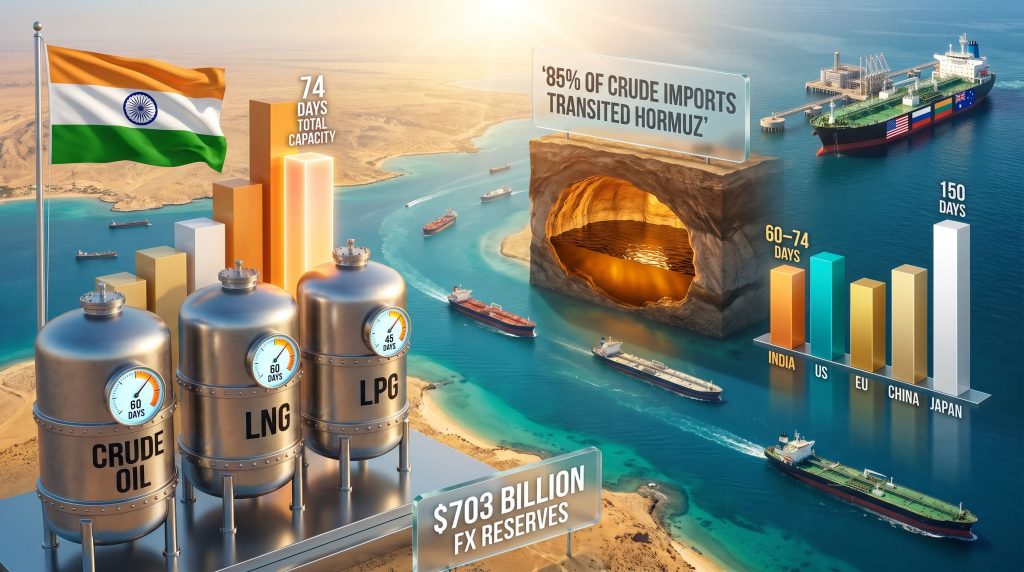
| Crude Oil | 60 days (operational) | Refinery feedstock | Strategic caverns + commercial tanks |
| LNG | 60 days | Industrial and power generation | Regasification terminals |
| LPG | 45 days | Household cooking (~80,000 MT/day national need) | Import terminals + domestic output |
The asymmetry between the 60-day crude and LNG buffers compared to the 45-day LPG position is notable. LPG presents a structurally distinct challenge because it combines significant import dependency, directly visible household consumption patterns, and infrastructure constraints that differ from crude storage.
The shorter buffer for LPG likely reflects both storage capacity limitations and the extraordinary complexity of ramping up alternative supply chains quickly enough to extend the rolling stock window.
When strategic cavern reserves operated by the Indian Strategic Petroleum Reserves Limited (ISPRL) are incorporated alongside commercial refinery inventory, total crude storage capacity extends to approximately 74 days. This creates a meaningful 14-day operational cushion above the stated 60-day figure, providing buffer against unexpected demand spikes or procurement delays.
The Fiscal Reality Behind Price Freeze: ₹1,000 Crore Daily and Counting
The physical reserve numbers tell only half the story. The financial architecture sustaining India's current supply security is under considerable strain, a point Minister Puri addressed candidly at the CII summit.
India's state-owned oil marketing companies (OMCs), primarily Indian Oil Corporation (IOC), Bharat Petroleum Corporation Limited (BPCL), and Hindustan Petroleum Corporation Limited (HPCL), are absorbing ₹1,000 crore in daily losses as retail fuel prices remain frozen while global crude costs have surged dramatically. Furthermore, the broader oil price shock reverberating through global markets has compounded the pressure on these institutions.
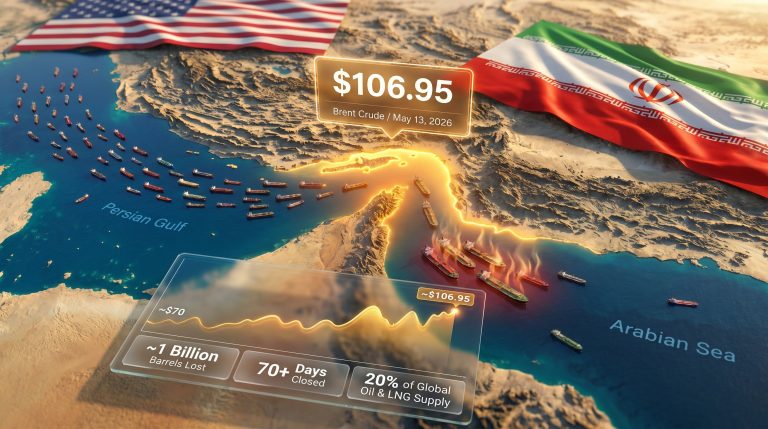
The price trajectory is stark. Benchmark crude basket prices climbed from approximately $64–$65 per barrel to as high as $115 per barrel during the mid-2026 West Asia supply disruption. That represents a price appreciation of roughly 75–77% within a compressed timeframe, while the prices Indian consumers pay at the pump have not moved. Indeed, current crude prices at these elevated levels place enormous strain on any price-frozen system.
- Projected annual under-recovery across the OMC sector: approximately ₹1,98,000 crore
- Quarterly loss trajectory: tracking toward ₹1 lakh crore
- Last retail price adjustment for petrol and diesel: 2022, making the freeze approximately four years old as of May 2026
Minister Puri directly addressed speculation that price adjustments are tied to electoral cycles, noting that the 2024 general election and subsequent state elections passed without price revisions. His position frames the pricing decision as a consumer protection measure structurally independent of political timing, though the fiscal trajectory of sustained OMC losses at current crude price levels raises legitimate questions about long-term sustainability.
The longer global crude prices remain elevated above the $64–$65 baseline from which current losses are calculated, the more acute the pressure on public sector energy companies becomes. A prolonged price environment at or above $115 per barrel would represent a fundamentally different fiscal reality than a temporary spike.
One useful contextual indicator: petrol consumption in India grew approximately 6% during this period, confirming that demand destruction has not occurred. This growth figure simultaneously demonstrates consumer confidence in supply continuity and deepens the fiscal challenge by expanding the volume base against which under-recovery losses accumulate.
How India Engineered a 50% LPG Production Surge During a Live Crisis
Perhaps the most operationally significant development described by Minister Puri at the CII summit was India's rapid domestic LPG production expansion. Prior to the West Asia disruption, domestic LPG output stood at approximately 35,000 to 36,000 metric tons per day. In response to the crisis, that figure was scaled to 54,000 metric tons per day, representing a roughly 50% production increase within a compressed operational timeframe that the Minister himself described as remarkable.
To contextualise this achievement, consider what a 50% surge in daily industrial output during an active geopolitical supply shock actually requires:
- Rapid reallocation of refinery processing streams to prioritise LPG extraction from crude runs
- Operational reconfiguration of cracking and fractionation units to maximise LPG yield
- Coordination across multiple state-owned enterprises simultaneously
- Logistics recalibration to move increased volumes from production facilities to bottling plants and distribution terminals
- Quality management protocols maintained throughout accelerated throughput
This domestic production push was complemented by aggressive alternative import procurement. India secured approximately 800,000 metric tons of inbound LPG cargoes from suppliers outside the Middle Eastern supply chain, specifically from the United States, Russia, and Australia. The operational footprint supporting these alternative flows now encompasses 22 LPG import terminals, reflecting significant infrastructure investment in supply chain resilience.
The domestic production ramp-up now covers approximately 60% of the national LPG requirement of 80,000 MT per day, with imports bridging the remaining 30,000 MT per day gap. Before the crisis, the ratio was substantially more import-dependent, making this shift a meaningful structural rebalancing even if conditions partly reflect emergency necessity rather than permanent policy.
India's Structural Hormuz Dependency: Honest Numbers
Historical routing data cited by Minister Puri illustrates the depth of India's structural exposure to the Strait of Hormuz corridor. Consequently, any analysis of the LNG supply outlook or crude routing must account for this concentration risk:
- Approximately 85% of India's crude oil imports historically transited through the Strait
- Around 60% of India's LPG supply (the cylinder gas used in household kitchens) sourced through this route
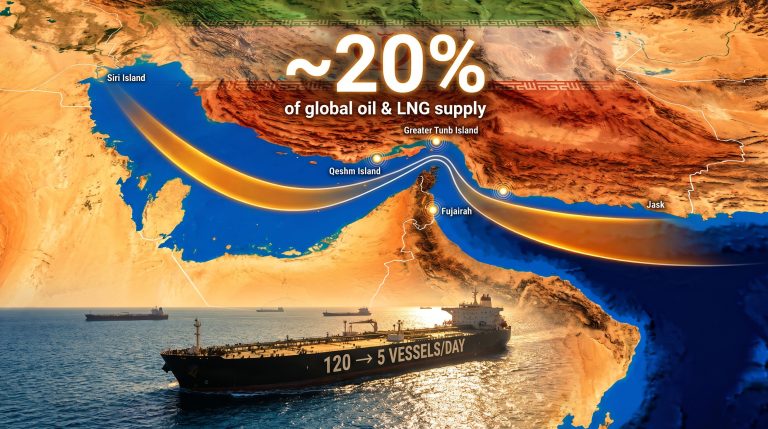
- Roughly 20% of all global energy flows passed through the Strait at peak, making it one of the most consequential maritime chokepoints in existence
These figures explain why even a partial or temporary disruption to Hormuz transit carries outsized implications for Indian energy consumers. Unlike commodity markets that might source from dozens of interchangeable suppliers, energy import infrastructure reflects decades of pipeline routes, port agreements, shipping contracts, and refinery configurations optimised for specific crude grades that happen to originate in the Gulf.
India's proven crude oil reserves of approximately 4.98 billion barrels (2025 data, placing India 23rd globally) provide only about 2.9 years of domestic consumption cover at current usage rates. This makes import dependency a permanent structural condition rather than a cyclical choice, regardless of policy preferences. Monitoring crude oil price trends therefore remains essential to India's forward planning.
Scenario Analysis: What Extended Disruption Would Mean
| Disruption Duration | Reserve Status | Primary Risk |
|---|---|---|
| 0 to 30 days | Existing 60-day buffer absorbs shock | Manageable with current stocks |
| 30 to 60 days | Reserves fully engaged; alternative procurement critical | Procurement logistics and premium pricing |
| 60 to 90 days | SPR drawdown begins; emergency procurement required | Fiscal pressure accelerates sharply |
| Beyond 90 days | Strategic reserves depleted; demand management required | Systemic energy security risk |
The current reserve position provides genuine protection in the short term but does not eliminate systemic vulnerability in an extended disruption scenario. The 60 to 74-day crude buffer, while meaningful, falls short of the International Energy Agency's recommended minimum of 90 days of net import cover for member states.
Global Reserve Benchmarks: Where India Stands
Contextualising India's reserve position against comparable energy-importing economies reveals both the progress made and the distance remaining toward internationally recognised security thresholds.
| Country or Bloc | Strategic Reserve Duration | Import Dependency Level |
|---|---|---|
| India | 60 to 74 days (crude) | More than 80% |
| United States | 90 or more days (SPR plus commercial) | Moderate (net exporter) |
| European Union | Approximately 90 days (IEA mandate) | High |
| China | Approximately 90 days (estimated) | Approximately 75% |
| Japan | Approximately 150 days (IEA mandate) | Nearly 100% |
Japan's 150-day reserve benchmark illustrates what ambitious strategic reserve targets look like in practice. India's trajectory toward extending its buffer beyond the current 60 to 74-day range represents a medium-term infrastructure and procurement challenge that will require sustained investment in both underground cavern capacity and alternative supply chain development.
The next major ASX story will hit our subscribers first
The Conservation Mandate: Crisis Signal or Structural Policy?
One element of the May 2026 energy security communication that generated significant public interpretation was the national fuel conservation initiative launched alongside the reserve adequacy statements. The apparent tension between asserting ample reserves and simultaneously urging conservation prompted speculation about whether the government was managing perceptions rather than reflecting operational reality.
Minister Puri's framing, however, offers a more nuanced explanation. The conservation mandate serves two distinct objectives that do not require a supply emergency to justify:
- Fiscal management: Every metric ton of LPG not consumed domestically directly reduces import volumes, which directly reduces the under-recovery burden on OMCs absorbing ₹1,000 crore in daily losses
- Strategic prudence: Moderating consumption while reserves are adequate extends the effective duration of those reserves as insurance against scenarios that have not yet materialised
The Minister referenced Prime Minister Narendra Modi's public appeal for lifestyle-level energy conservation, framing it as a long-term behavioural policy rather than a crisis-mode directive. Supporting this interpretation: no rationing measures have been implemented, no fuel station dry-outs have been reported, and petrol and diesel remain continuously available at every pump in the country.
India's foreign exchange reserves, standing at approximately $703 billion in mid-2026, provide substantial import financing capacity. Even at $115 per barrel crude, India's FX position offers meaningful insulation against acute import payment stress, though sustained elevated prices would gradually erode this cushion.
What the Reserve Position Means in Practice: A Balanced Assessment
Synthesising the available information reveals a picture that is neither the catastrophe implied by circulating misinformation nor an unqualified endorsement of energy security sufficiency. In addition, the broader context of oil market disruption across 2025–2026 makes India's reserve management all the more significant to evaluate carefully.
Operational strengths in the current position:
- The 60 to 74-day crude buffer provides genuine short-term protection against temporary Hormuz disruptions
- Rapid domestic LPG production scaling from 36,000 to 54,000 MT per day demonstrates downstream sector agility
- Procurement diversification toward the US, Russia, and Australia reduces concentration risk in Gulf supply chains
- $703 billion in foreign exchange reserves provides strong import payment capacity
- The expansion to 22 LPG import terminals reflects tangible infrastructure investment in supply resilience
Structural vulnerabilities that persist:
- More than 80% crude import dependency is a permanent structural condition given domestic reserve limitations
- The 60 to 74-day buffer remains below the 90-day IEA benchmark maintained by comparable major energy importers
- Daily losses of ₹1,000 crore at OMCs are not indefinitely sustainable without either crude price normalisation or retail price adjustment
- Despite diversification efforts, the Strait of Hormuz remains a critical node in India's import supply chain with no complete alternative routing available
Disclaimer: This article presents analysis based on public statements by government officials and publicly available energy sector data. Commodity price figures, reserve estimates, and financial projections involve inherent uncertainty and may change rapidly based on geopolitical and market developments. Nothing in this article constitutes financial or investment advice. Forward-looking assessments regarding supply scenarios and fiscal impacts are analytical projections, not confirmed outcomes.
Frequently Asked Questions: India's Fuel Reserve Position Explained
How many days of crude oil does India currently hold in reserve?
India holds approximately 60 days of crude oil as confirmed by the Petroleum Minister's statement in May 2026. When strategic cavern reserves managed by the Indian Strategic Petroleum Reserves Limited are incorporated alongside commercial refinery stocks, total storage capacity extends to approximately 74 days, providing operational flexibility beyond the headline figure.
What is the current LNG reserve duration in India?
India maintains approximately 60 days of liquefied natural gas stock, ensuring supply continuity for industrial users and power generation facilities through short to medium-term import disruptions.
Why does India have fewer days of LPG than crude oil or LNG?
LPG presents distinct infrastructure and procurement challenges compared to crude oil. The 45-day rolling stock position reflects storage capacity constraints at import terminals, the complexity of alternative supply chain sourcing, and the household consumption profile of LPG, which creates large, geographically distributed demand that is harder to manage than industrial crude inputs.
Why have petrol and diesel prices not changed since 2022?
India's retail fuel prices have remained unchanged since 2022, resulting in state-owned oil marketing companies absorbing projected losses of approximately ₹1,98,000 crore annually as global crude costs have surged. The government has maintained this position as a consumer protection measure, with the Ministry of Petroleum characterising pricing decisions as structurally independent of electoral cycle timing.
How dependent is India on the Strait of Hormuz for energy imports?
Historically, approximately 85% of India's crude oil imports and around 60% of its LPG supply transited through the Strait of Hormuz, according to figures cited by the Minister of Petroleum and Natural Gas. Diversification efforts toward suppliers in the United States, Russia, and Australia are reducing but not eliminating this concentration risk.
Does India meet the IEA's 90-day strategic reserve standard?
India is not a full IEA member but participates as an Association Country. The current 60 to 74-day crude buffer positions India below the IEA's recommended 90-day net import cover standard maintained by major energy-importing economies, representing a strategic gap that longer-term reserve expansion programmes aim to address.
Want To Stay Ahead Of The Commodity Trends Shaping Global Energy Markets?
Discovery Alert's proprietary Discovery IQ model delivers real-time alerts on significant ASX mineral discoveries — turning complex commodity and resource data into actionable investment insights for both short-term traders and long-term investors. Explore Discovery Alert's discoveries page to see how historic mineral discoveries have generated substantial returns, and begin your 14-day free trial today to secure a market-leading edge.