May 21, 2026
The Hidden Fiscal Engine Powering China's Aluminium Wire Export Surge
Most discussions about commodity trade flows focus on demand fundamentals, shipping logistics, or currency fluctuations. But some of the most powerful forces reshaping global trade are hiding in plain sight inside national tax codes. China aluminium wire exports throughout 2025 are a textbook example of how a fiscal architecture, when intersected with a geopolitical shock, can redirect entire commodity supply chains almost overnight.
Understanding why this is happening requires looking at three converging forces simultaneously: a Middle East conflict that disrupted primary aluminium production capacity, a London Metal Exchange pricing response that widened the gap between international and domestic Chinese aluminium prices, and a longstanding but underappreciated tax structure that financially rewards Chinese producers for exporting aluminium in processed rather than raw form.
When big ASX news breaks, our subscribers know first
Gulf Region Disruption and the LME Price Response
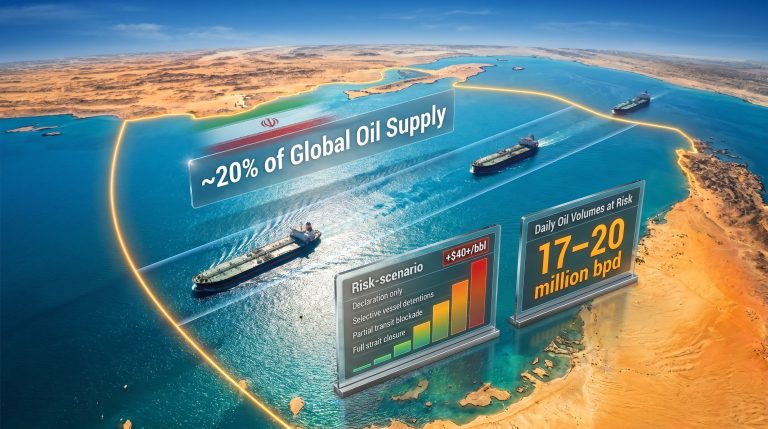
When conflict escalated across the Gulf region, global aluminium markets absorbed the shock through price. LME aluminium climbed more than 13% above pre-conflict price levels, driven by fears over supply chain continuity and real physical damage to smelting infrastructure in the region. Iranian strikes on facilities operated by Emirates Global Aluminium and Aluminium Bahrain removed meaningful primary aluminium production capacity from the global supply equation at a time when markets were already navigating post-pandemic demand recovery pressures.
The ripple effects extended far beyond the Gulf itself. Bahrain had been a significant aluminium wire exporter, particularly for infrastructure projects across the Middle East and broader emerging markets. The disruption to EGA and Alba operations created a supply vacuum in processed aluminium products that importing nations needed to fill quickly. Chinese producers and traders, watching LME prices climb while their own domestic prices remained comparatively anchored, recognised a rare commercial window.
Importantly, China's aluminium output remained elevated throughout this period, maintaining a domestic surplus condition even as international prices rose. This divergence between high domestic supply and rising international pricing created the arbitrage conditions necessary for the export surge that followed. Investments in European casthouse capacity have also shifted competitive dynamics in processed aluminium products globally, further influencing where buyers sought supply alternatives.
The 43-Point Fiscal Gap: China's Tax Architecture Explained
To understand why China aluminium wire exports specifically surged rather than raw ingot exports, the tax structure is everything. China operates two fundamentally different fiscal treatments for aluminium exports depending on the product form:
| Export Category | Tax Treatment | Net Export Impact |
|---|---|---|
| Unwrought aluminium ingots | 30% export tariff applied | Heavily penalised |
| Aluminium stranded wire and cables | 13% VAT rebate received | Financially incentivised |
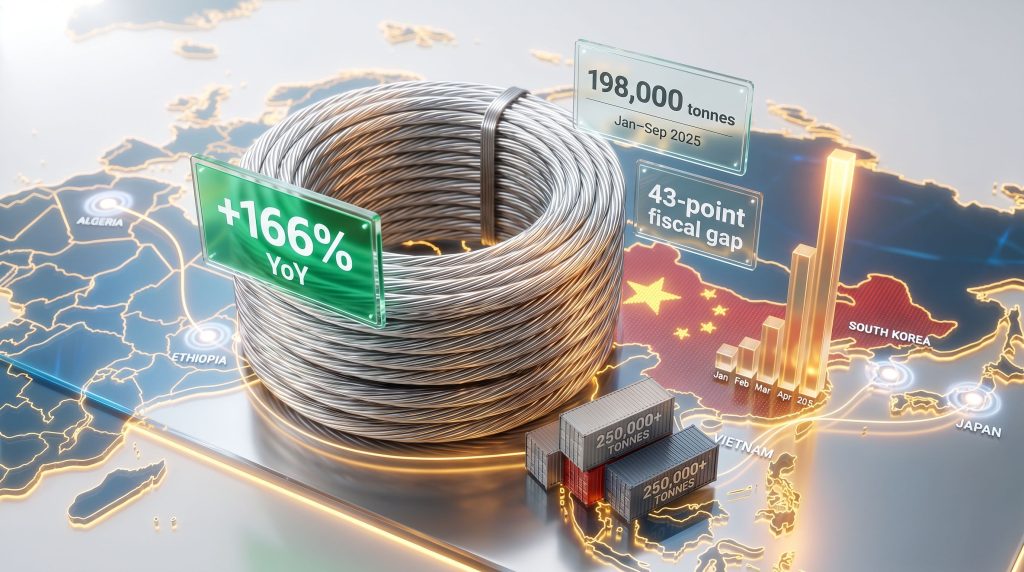
The effective 43-percentage-point fiscal differential between these two categories creates one of the most powerful trade incentives in the global metals market. Exporting a tonne of aluminium as stranded wire rather than as an ingot is not merely preferable under this framework; it is, in many market conditions, the difference between a profitable and an unprofitable trade.
The mechanics of what trade insiders describe as the conversion trade work through a straightforward sequence:
- Domestic ingot procurement: Traders purchase aluminium ingots on China's domestic spot market at prevailing prices.
- Tolling to wire fabricators: The ingots are transferred to wire manufacturing facilities for conversion into aluminium stranded wire or cable products.
- Export under processed goods classification: Finished wire is exported under HS codes that qualify for the 13% VAT rebate, dramatically improving trade economics.
- Overseas remelting: Importing buyers in markets like South Korea, Vietnam, and Algeria remelt the wire to produce aluminium alloy products, bars, and other downstream goods.
The wire's engineering function as a power transmission conductor becomes secondary in this trade model. The product is functioning as a financial instrument for aluminium metal export, with its technical specifications serving primarily as the basis for a more favourable tax classification.
This practice is not new within Chinese commodity trade circles, but the scale of its deployment accelerated sharply in 2025 as the geopolitical pricing environment made the arbitrage exceptionally lucrative. Furthermore, sources familiar with the trade flows have confirmed that the conversion model was being actively employed by multiple traders and producers during this period.
How Have US Tariffs Influenced This Dynamic?
The impact of US aluminium tariffs in 2025 has added another layer of complexity to Chinese export strategy. By effectively closing off the American market as a direct destination, these tariffs have redirected Chinese export volumes toward Southeast Asia, Africa, and other regions, intensifying the fiscal arbitrage model in those corridors.
The April 2025 Data: Understanding the Scale of the Spike
The customs data published for April 2025 captured the full force of these converging dynamics. According to industry data, China exported 15,565 tonnes of aluminium stranded wire, cables, and related products (excluding steel-core material) during the month, representing a year-on-year increase of more than 166% and a near-doubling relative to March volumes.
| Period | Export Volume | Change |
|---|---|---|
| April 2025 (YoY) | 15,565 tonnes | +166% |
| April vs. March 2025 | 15,565 tonnes | +95% MoM |
| January to April 2025 | 82,800 tonnes | +16.08% YoY |
| January to September 2025 | 198,000 tonnes | +30.6% YoY |
| September 2025 alone | 23,000 tonnes | +145% YoY |
The near-doubling of volumes on a month-on-month basis is analytically significant. Gradual trend growth does not produce 95% monthly jumps. What the April data captures is reactive, opportunistic trade behaviour responding to a sudden and acute arbitrage window. Traders with existing relationships with wire fabricators and overseas buyers activated those networks rapidly once the pricing and fiscal conditions aligned.
Full-year 2025 export volumes were tracking toward 250,000 tonnes or above, a trajectory that would represent a record level for this product category in China's trade history. Broader China aluminium wire export analysis confirms that this momentum extended consistently across multiple quarters rather than being confined to a single spike month.
Product Composition: What China Is Actually Shipping
Within the total export mix, steel-core aluminium stranded wire accounts for roughly two-thirds of total volumes, with standard aluminium stranded wire making up the remaining third. Steel-core products are designed for high-voltage long-distance transmission lines and carry the infrastructure-grade specifications demanded by power grid operators globally. Their dominance in the export mix reflects both Chinese manufacturing strength in this product category and the infrastructure-driven import demand present in many destination markets.
Destination Market Analysis: New Buyers and Emerging Trade Routes
The geographic pattern of where Chinese aluminium wire exports landed in April 2025 reveals as much about the trade as the volume figures themselves.
| Destination | April Volume | Prior Period Context |
|---|---|---|
| South Korea | 2,911 tonnes | Near-zero in March |
| Vietnam | 2,288 tonnes | Approximately 30x the 2025 baseline |
| Algeria | 1,340 tonnes | Up from 36.7 tonnes in March |
| Ethiopia | 1,124 tonnes | Up from 254 tonnes in March |
| Japan | 457 tonnes | Only ~4 tonnes purchased over prior 15 months |
South Korea and Vietnam emerged as the two dominant buyers, together absorbing over 33% of total April export volume. Both countries have active aluminium downstream processing industries capable of accepting and remelting imported wire material, which aligns directly with the conversion trade model described above. Vietnam's near-thirty-fold increase relative to its 2025 baseline is particularly striking and suggests the activation of new supply relationships rather than expansion of existing ones.
The rapid emergence of African destinations, particularly Algeria and Ethiopia, carries its own analytical significance. Both countries are navigating substantial grid electrification programmes and broader energy infrastructure buildouts. While some portion of these imports may be destined for remelting, a meaningful share likely reflects genuine infrastructure procurement for transmission and distribution network expansion. This creates an important distinction between purely arbitrage-driven flows and demand-fundamentals-driven flows within the same overall export surge.
Japan's re-emergence as a buyer after approximately 15 months of near-inactivity is harder to explain through a single lens. It may reflect opportunistic procurement by Japanese trading houses at attractive prices, or it could signal underlying infrastructure-driven demand catch-up tied to Japan's ongoing grid modernisation investment programme.
Across the broader 2025 export period, destinations including Mexico, Portugal, Iraq, Australia, Finland, and Pakistan have featured as significant buyers. This geographic breadth across Latin America, Europe, the Middle East, and developed Asia-Pacific economies demonstrates that China's aluminium wire export base is genuinely diversified rather than concentrated in any single trade corridor.
Is This Trade Pattern Sustainable? Structural vs. Tactical Drivers
One of the more nuanced questions raised by the 2025 export data is whether this represents a durable structural shift or an acute tactical response to temporary conditions. The honest answer is that it is both, operating simultaneously at different layers.
The case for a primarily tactical, geopolitics-driven spike:
- April's 166% year-on-year surge is disproportionate to any plausible organic demand growth rate
- The conversion trade model is explicitly arbitrage-driven, not infrastructure-demand-driven
- If Gulf region tensions ease and LME prices return toward pre-conflict levels, the fiscal arbitrage narrows and the incentive to deploy the conversion trade diminishes
The case for a structural, long-term export growth trajectory:
- The full-year 2025 trajectory toward 250,000+ tonnes reflects acceleration that predates the April spike and extends well beyond it
- Global energy transition requirements, including grid upgrades for renewable energy integration, EV charging infrastructure, and emerging market electrification, create durable long-term import demand for aluminium wire products
- China's manufacturing cost competitiveness in wire fabrication is structural, not cyclical, and the VAT rebate framework has been in place for years
The most analytically coherent interpretation recognises a two-layer dynamic: a genuine structural export growth trend driven by global grid demand that was sharply amplified by a geopolitical arbitrage spike in April 2025. The underlying growth trajectory is likely to persist even as the tactical component fades.
How Do Steel and Iron Ore Markets Compare?
It is worth noting that similar dynamics — where US tariffs reshape iron ore and steel trade flows — have played out across multiple commodity sectors in 2025. However, the aluminium wire case is distinctive because of the fiscal mechanism at its core, which has no direct equivalent in ferrous metals trade. Consequently, the pace and scale of the aluminium wire reorientation has been particularly acute.
The next major ASX story will hit our subscribers first
Trade Policy Risks: What Could Disrupt the Flow
The conversion trade model carries embedded regulatory risk that is frequently underappreciated in coverage of the raw volume data. Several distinct risk vectors are worth tracking closely.
US Section 301 and Section 232 Exposure
Chinese aluminium wire and cable products face Section 301 tariffs in the U.S. market, effectively pricing them out of direct American import competition. U.S. Section 232 duties on aluminium wire rod inputs were raised to 25% in 2025, increasing cost pressure on downstream wire and cable producers globally, including those who source Chinese semi-fabricated products as inputs.
Circumvention Investigation Risk
The ingot-to-wire conversion model sits in a regulatory grey zone in multiple jurisdictions. If trade authorities in importing countries determine that wire exports are functionally equivalent to primary metal exports designed to circumvent China's ingot export tariff, reclassification actions or retaliatory measures could follow. This risk is most acute in South Korea and Vietnam, both of which have sophisticated trade compliance frameworks and both of which surged dramatically as buyers in April 2025.
Third-Country Routing Scrutiny
Circumvention investigations in the U.S. and EU have increasingly targeted supply chains where Chinese aluminium goods are routed through third-country processors before entering Western markets. The remelting model central to the conversion trade creates potential exposure to this type of scrutiny, particularly if the finished downstream products eventually flow toward tariff-protected Western markets.
Participants in the conversion trade, whether as exporters or importers, are operating in a compliance environment that is actively tightening. Trade classification rulings and circumvention investigation outcomes in key destination markets represent the primary structural headwind to continued volume growth at current rates.
China's Position in the Global Aluminium Wire Export Landscape
China's rise to dominance in global aluminium wire exports did not happen in isolation. It occurred against a backdrop of shifting competitive dynamics among the world's major aluminium processing economies.
| Exporter | Global Position | Core Competitive Advantage |
|---|---|---|
| China | Dominant and accelerating | Scale, fabrication cost, VAT rebate mechanism, domestic surplus |
| India | Growing challenger | Competitive labour costs, regional demand proximity |
| Bahrain | Significantly disrupted | Historical proximity to Gulf infrastructure demand |
Bahrain's export capacity has been materially compromised by conflict-related facility damage, creating a meaningful supply vacuum in Gulf and African markets that Chinese exporters moved rapidly to fill. India's expanding wire export base competes with China in Southeast Asian and African markets, but China's fiscal incentive structure provides a cost advantage that is extremely difficult for competitors to replicate without equivalent domestic policy support.
The broader implication is that the geopolitical disruption has accelerated a market share transition that was already underway, giving Chinese producers entrenched positions in new buyer relationships that may prove durable even after the immediate arbitrage conditions normalise. In addition, the outlook for global crude steel and China's broader metals sector in 2025 suggests that commodity trade reorientation at this scale is a recurring theme rather than an isolated event. Furthermore, challenges in China's steel and iron ore markets have pushed Chinese producers to seek overseas revenue streams aggressively, a dynamic that reinforces the aluminium wire export incentive.
FAQ: China Aluminium Wire Exports Explained
Why is China exporting aluminium wire rather than ingots?
Aluminium wire exports qualify for a 13% VAT rebate under Chinese trade policy, while unwrought aluminium ingot exports attract a 30% export tariff. This 43-percentage-point fiscal differential makes it significantly more profitable to export aluminium in wire form, even when the wire is ultimately remelted by overseas buyers.
Which countries are buying the most Chinese aluminium wire in 2025?
In April 2025, South Korea at 2,911 tonnes, Vietnam at 2,288 tonnes, Algeria at 1,340 tonnes, and Ethiopia at 1,124 tonnes were the leading buyers. Across the broader 2025 period, Mexico, Portugal, Iraq, Australia, Finland, and Pakistan have also featured as significant destinations.
Is the aluminium wire actually used for power transmission?
Steel-core aluminium stranded wire is technically engineered for power transmission and distribution infrastructure, and a portion of Chinese exports do serve genuine infrastructure deployment. However, a significant share of current export flows, particularly those purchased by buyers who subsequently remelt the material, function primarily as a vehicle for aluminium metal trade rather than direct power grid deployment. September export data illustrates how consistently this pattern extended throughout the year.
How large are China's aluminium wire exports in 2025?
China exported approximately 198,000 tonnes of aluminium wire and cable products in the first nine months of 2025, representing a 30.6% year-on-year increase, with full-year volumes tracking toward 250,000+ tonnes. The April 2025 monthly figure of 15,565 tonnes alone represented a 166% year-on-year increase.
What are the main trade risks for this export pattern?
Key risks include U.S. Section 301 tariffs, Section 232 duties on aluminium wire rod inputs raised to 25% in 2025, and circumvention investigations targeting supply chains where Chinese aluminium is routed through third-country processors. Trade compliance scrutiny in South Korea and Vietnam, the two largest April buyers, represents the most proximate near-term risk. War-driven export rallies and the underlying tax gap, however, suggest that Chinese exporters retain strong incentives to maintain volumes despite tightening regulatory conditions.
Disclaimer: This article contains forward-looking analysis and market projections based on available trade data and publicly reported information. Trade volumes, pricing trends, and regulatory outcomes are subject to change. This content does not constitute financial or investment advice. Readers should conduct their own due diligence before making any commercial or investment decisions related to aluminium markets.
Want To Capitalise On The Next Major Commodity Trade Shift Before The Broader Market Catches On?
Discovery Alert's proprietary Discovery IQ model delivers real-time alerts on significant ASX mineral discoveries, transforming complex commodity data into actionable investment insights for both short-term traders and long-term investors — just as China's aluminium wire export surge demonstrates how swiftly trade dynamics can reshape commodity markets. Explore historic examples of major mineral discoveries and their market returns, then begin your 14-day free trial to position yourself ahead of the next major market opportunity.