May 15, 2026
Global steelmaking fundamentals demonstrate intricate interdependencies that extend far beyond simple supply-demand equations. When major procurement relationships face disruption, the ripple effects cascade through interconnected commodity markets, revealing underlying structural dynamics that often remain invisible during periods of normal trade flow. Furthermore, understanding these mechanisms provides crucial insights into how industrial commodity markets respond to geopolitical tensions and relationship breakdowns between major trading partners, particularly when examining the China-BHP iron ore dispute resolution.
Understanding the China-BHP Contract Standoff and Market Dynamics
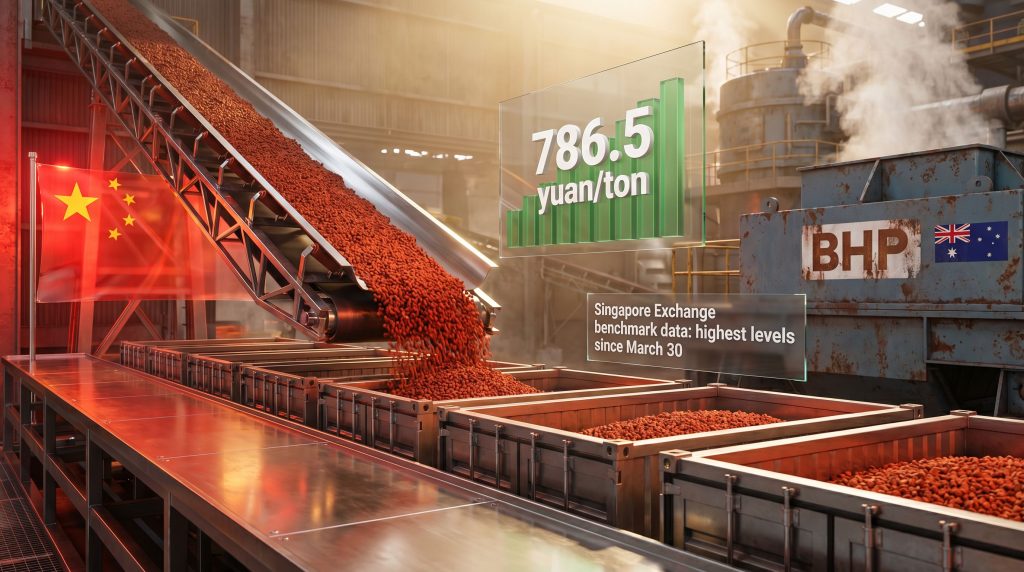
The resolution of the China-BHP iron ore dispute resolution illustrates the complex interplay between state-coordinated procurement strategies and global commodity price discovery mechanisms. Market data from April 16, 2026, revealed that iron ore price trends actually strengthened following the dispute resolution, with the Dalian Commodity Exchange contract closing 0.32% higher at 786.5 yuan ($115.32) per metric ton. This counterintuitive price movement highlights how seasonal demand patterns can override supply normalization concerns in commodity markets.
BHP Group, operating as the world's third-largest iron ore supplier, found itself navigating negotiations with China Mineral Resources Group (CMRG), which functions as the centralised procurement authority for Chinese steel producers. However, this institutional arrangement represents a departure from traditional decentralised buyer-seller relationships common in other commodity markets, creating unique dynamics where state coordination mechanisms can significantly impact global pricing.
The Singapore Exchange benchmark also demonstrated strength, with the May iron ore contract gaining 0.28% to $107.2 per ton, reaching levels not seen since March 30, 2026. These price movements occurred despite theoretical expectations that dispute resolution would increase supply availability and potentially pressure prices downward.
Market correlation analysis revealed synchronised movements across the steelmaking input complex, with coking coal advancing 1.07% and coke gaining 0.63% on the same trading session. Consequently, this correlation suggests that commodity markets were interpreting the dispute resolution as a broader stabilisation signal rather than a simple supply increase for iron ore specifically.
When big ASX news breaks, our subscribers know first
Strategic Mechanisms Behind Procurement Relationship Management
The institutional framework governing China-Australia iron ore trade operates through sophisticated coordination mechanisms that extend beyond traditional commercial relationships. In addition, Australia iron ore leadership enables CMRG's role as the state procurement coordinator, facilitating centralised decision-making that can rapidly alter global supply flows.
High-level executive engagement proved critical to dispute resolution, with BHP senior leadership conducting direct negotiations in China prior to the procurement ban lifting. Furthermore, this diplomatic approach underscores how relationship management at the institutional level has become integral to commodity trade security, particularly in markets where state buyers coordinate purchasing decisions.
The lifting of procurement restrictions required CMRG to communicate authorisation for previously restricted shipment deliveries to domestic steel mills. For instance, this process reveals how centralised procurement decisions flow through to individual mill operations, creating potential for both coordinated restrictions and synchronised market re-entry.
Technical price discovery mechanisms during the resolution period showed resilience, with the Dalian Commodity Exchange contract reaching an intraday peak of 790 yuan. This technical strength suggests that market participants were positioning for sustained demand rather than viewing the resolution as a bearish supply event.
What Role Did Institutional Coordination Play?
The sophisticated nature of the China-BHP iron ore dispute resolution highlighted how state-led procurement mechanisms differ fundamentally from traditional market-driven relationships. The Australian has reported on the diplomatic complexities involved in resolving such high-stakes commercial disputes.
Seasonal Demand Dynamics and Pre-Holiday Market Behaviour
Chinese steelmaker inventory management follows predictable seasonal patterns that significantly influence global iron ore demand. The approach of the May Day holiday period (May 1-5) traditionally triggers pre-holiday restocking behaviour, as steel producers build feedstock inventories to maintain operational flexibility during the holiday shutdown.
According to analysis from Yongan Futures, the market had already incorporated bearish factors related to the dispute into pricing. Analysts noted that "bearish factors have largely been priced in" and expected "prices will consolidate in the short run" supported by robust near-term demand ahead of the holiday break.
This seasonal restocking pattern created a natural demand buffer that absorbed the supply normalisation effects of the dispute resolution. Steel benchmarks on the Shanghai Futures Exchange reflected this complex dynamic, with rebar advancing 0.31% and hot-rolled coil gaining 0.62%. However, wire rod declined marginally by 0.06% and stainless steel retreated 0.5%.
The currency context also influenced price dynamics, with the USD/CNY exchange rate at 6.8203 affecting the relative attractiveness of dollar-denominated iron ore contracts. This exchange rate positioning impacts both procurement costs for Chinese buyers and revenue realisation for Australian suppliers.
Long-Term Supply-Demand Rebalancing Implications
BHP's strategic outlook for seaborne iron ore markets suggests fundamental shifts in global demand geography over the medium term. The company projects that seaborne iron ore demand will plateau at current levels over the coming years, with anticipated reduction in Chinese consumption offset by growth in emerging economies.
This demand rebalancing scenario has significant implications for procurement relationship dynamics. As China's steel consumption moderates from peak levels, the relative importance of Chinese procurement coordination may diminish. Consequently, this could potentially reduce the systemic impact of future procurement disputes on global pricing.
European steel market recovery represents a critical variable in this rebalancing equation. European steel capacity utilisation has faced constraints from energy costs and regulatory pressures. However, recovery patterns could provide alternative demand destinations for major iron ore suppliers seeking to diversify customer concentration away from Chinese markets.
Emerging economy steel demand growth trajectories remain uncertain, with infrastructure development patterns in Southeast Asia, Africa, and Latin America potentially creating new demand centres. Nevertheless, these markets typically operate with different procurement structures and price sensitivities compared to Chinese buyers, requiring suppliers to adapt relationship management approaches.
The integration of alternative pricing mechanisms may emerge as compromise frameworks that address Chinese preferences for reduced dollar exposure. Furthermore, iron ore demand insights suggest potential renminbi-denominated transactions and modified contract structures could maintain supplier revenue predictability.
Cross-Market Integration and Price Discovery Mechanisms
The iron ore market's integration with broader commodity complexes became evident during the dispute resolution period. Related steelmaking inputs demonstrated coordinated price movements, with coking coal and coke performance gaining 1.07% and 0.63% respectively, reflecting market expectations that normalised iron ore supplies would support sustained steel production activity.
Cross-exchange arbitrage opportunities between the Dalian Commodity Exchange and Singapore Exchange contracts highlighted regional price discovery variations. The DCE contract's strength to its highest level since April 8, combined with Singapore contracts reaching levels not seen since March 30, suggests different market interpretations of the resolution timeline.
Technical analysis patterns across both exchanges indicated consolidation within established trading ranges rather than breakout movements. This suggests that professional traders viewed the dispute resolution as a return to market equilibrium rather than a catalyst for significant directional moves.
The stainless steel market divergence, with a 0.5% decline despite strength in carbon steel products, illustrates how specialised steel market segments can react differently to iron ore supply developments. For instance, stainless steel production relies more heavily on nickel and chromium inputs, creating different cost structure sensitivities compared to traditional carbon steel manufacturing.
How Do Mining Industry Changes Affect Market Dynamics?
The broader context of mining industry evolution demonstrates how technological and operational advances continue reshaping global commodity markets. In addition, these changes influence how disputes like the China-BHP iron ore dispute resolution unfold and impact market behaviour.
Risk Management Frameworks for Future Procurement Relationships
The China-BHP iron ore dispute resolution provides important insights for developing more resilient procurement relationship management frameworks. Early warning systems for contract negotiations could help identify potential friction points before they escalate into systematic procurement restrictions.
Geographic demand diversification strategies become increasingly important as major suppliers recognise the concentration risks associated with heavy dependence on single-buyer markets. However, diversification requires long-term relationship building with emerging market buyers who may have different credit profiles and purchasing capabilities compared to established Chinese buyers.
Strategic stockpile management considerations extend beyond traditional inventory optimisation to include geopolitical risk buffers. Steel producers in markets outside China may need to maintain higher inventory levels to protect against potential supply chain disruptions from similar procurement disputes.
The development of alternative contract structures that accommodate both supplier revenue requirements and buyer price predictability needs represents a key area for innovation. Hybrid pricing mechanisms that blend spot market indexation with negotiated base prices could provide greater stability for both parties.
Currency hedging strategies become more complex when dealing with state buyers who may prefer transactions in their domestic currency. Suppliers need sophisticated financial risk management capabilities to handle multi-currency exposure while maintaining competitive pricing flexibility.
Furthermore, understanding how tariffs impact markets provides additional context for managing international commodity trade relationships in an increasingly complex geopolitical environment.
The next major ASX story will hit our subscribers first
Market Psychology and Investor Implications
The market's positive response to dispute resolution, despite theoretical supply increase concerns, demonstrates how risk premium removal can outweigh fundamental supply-demand calculations in commodity markets. Investors appeared to value certainty and relationship stability over potential short-term oversupply risks.
Institutional coordination mechanisms like CMRG's role create unique market dynamics that traditional commodity market models may not adequately capture. Investors need to understand how state-led procurement coordination can create sudden shifts in demand patterns that differ from typical market-driven behaviour.
The seasonal demand overlay that supported prices during the resolution period illustrates how timing factors can significantly influence the market impact of major supply relationship changes. Strategic timing of dispute resolution or contract negotiations can materially affect market outcomes.
Long-term market structure evolution toward greater state involvement in strategic commodity procurement suggests that relationship management capabilities may become increasingly important competitive advantages for major commodity suppliers. Companies with stronger diplomatic and institutional engagement capabilities may achieve more stable market access over time.
The precedent-setting nature of this dispute resolution approach may influence how future procurement disagreements are managed. Reuters has noted how these developments could potentially create more predictable frameworks for conflict resolution that reduce market uncertainty and volatility.
This analysis is based on publicly available market data and reporting from April 16, 2026. Commodity market dynamics involve significant uncertainty, and past dispute resolution outcomes may not predict future market behaviour. Investors should conduct independent analysis and consider professional advice when making commodity-related investment decisions.
Ready to Capitalise on Mining and Commodity Market Opportunities?
Discovery Alert's proprietary Discovery IQ model delivers real-time alerts on significant ASX mineral discoveries, instantly empowering subscribers to identify actionable opportunities ahead of the broader market. Understand why historic discoveries can generate substantial returns by visiting Discovery Alert's dedicated discoveries page, showcasing exceptional outcomes from major mineral finds.