August 14, 2026
China's comprehensive approach to China energy crisis preparation demonstrates sophisticated strategic planning that extends far beyond traditional energy security measures. The nation's multi-layered preparedness framework encompasses extensive reserve infrastructure, diversified supply chains, and innovative crisis response mechanisms that position it uniquely among global energy consumers.
Strategic Reserve Infrastructure Analysis
Strategic Petroleum Reserve Architecture
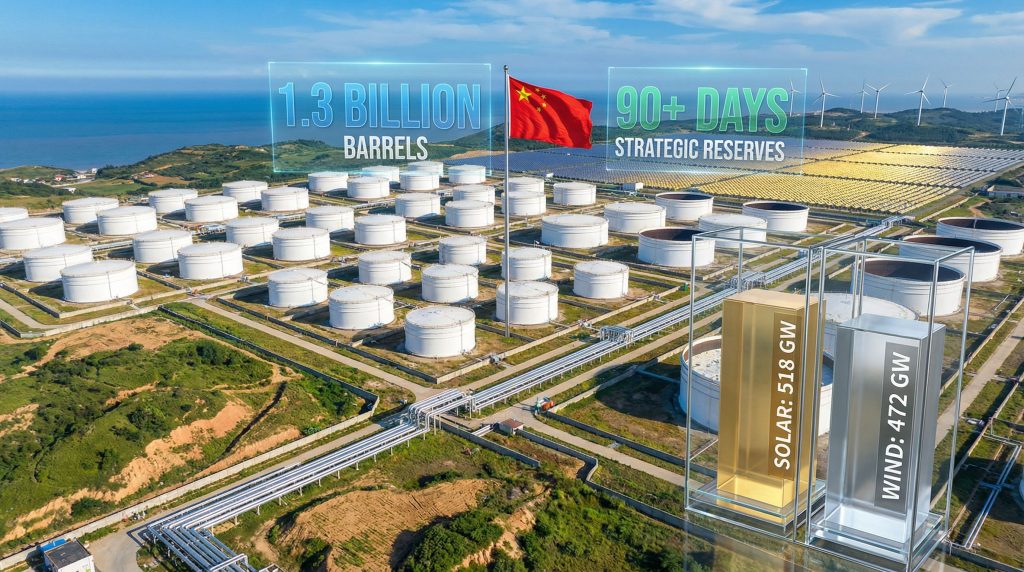
China has developed one of the world's most comprehensive strategic petroleum reserve systems, with capacity approaching 1.3 billion barrels of crude oil storage. This infrastructure represents a significant expansion beyond International Energy Agency emergency reserve standards, which recommend maintaining 90-day import coverage. China's current capacity provides approximately three months of consumption coverage based on historical demand patterns.
The geographic distribution of storage facilities spans both coastal and inland regions, creating redundancy against potential supply route disruptions. Coastal facilities enable rapid procurement during favourable market conditions, while inland storage provides security against maritime transport vulnerabilities. This dual-tier approach reflects sophisticated crisis scenario planning.
Fill rate strategies have demonstrated particular effectiveness during periods of low oil prices. Historical data shows China accelerated stockpiling activities when global crude prices declined below $40 per barrel, maximising cost efficiency while building strategic reserves. This counter-cyclical procurement approach has generated substantial economic value during subsequent price recovery periods.
Critical Mineral Stockpiling Programs
Beyond petroleum reserves, China maintains extensive stockpiles of critical minerals energy transition essential for energy infrastructure development. Rare earth element inventories support renewable energy manufacturing capacity, particularly for wind turbine permanent magnets and solar panel components. These reserves provide supply chain security for domestic clean energy projects.
Lithium and cobalt strategic inventories represent another crucial component of energy security planning. With global battery production concentrated in specific geographic regions, these stockpiles ensure continued electric vehicle and energy storage system manufacturing capacity during supply disruptions. Furthermore, battery recycling innovation complements these stockpiling efforts.
Copper and steel reserves support grid expansion and renewable energy infrastructure development. As renewable energy deployment requires significantly more metal input per unit of capacity compared to conventional power generation, these stockpiles prevent infrastructure delays during commodity price volatility periods.
When big ASX news breaks, our subscribers know first
Energy Mix Diversification Strategy
Renewable Energy Capacity Expansion Metrics
| Energy Source | 2020 Capacity | 2025 Capacity | Growth Rate |
|---|---|---|---|
| Solar Power | 261 GW | 518 GW | +98% |
| Wind Power | 281 GW | 472 GW | +68% |
| Hydroelectric | 370 GW | 423 GW | +14% |
Source: China National Energy Administration
This capacity expansion represents one of the largest renewable energy buildouts in global history. Solar power deployment has nearly doubled within five years, fundamentally altering the electricity generation mix. Wind power growth has maintained steady momentum, with both onshore and offshore installations contributing to total capacity increases.
Hydroelectric capacity growth, while more modest in percentage terms, provides crucial grid stability services. Pumped storage hydroelectric facilities enable large-scale energy storage, addressing intermittency challenges associated with wind and solar generation. However, these developments face energy transition challenges similar to those experienced globally.
Coal-to-Chemicals Industrial Strategy
Industrial fuel switching strategies have reduced petroleum dependency across multiple sectors. Coal-to-chemicals production has expanded dramatically, with 276 million tons of coal used for chemical production in 2024, compared to 155 million tons in 2020. This represents a 78% increase in chemical feedstock production from domestic coal resources.
Nitrogen fertiliser production exemplifies this strategy's effectiveness. During recent global supply shocks, international fertiliser prices experienced significant volatility. However, China's domestic nitrogen fertiliser costs remained stable due to coal-based production capacity.
Petrochemical production from coal gasification provides alternatives to oil-based feedstocks. Advanced coal gasification technologies enable production of olefins, aromatics, and other chemical building blocks traditionally derived from petroleum refining processes. This strategic approach demonstrates how China energy crisis preparation extends beyond traditional energy sectors.
What Role Do Electric Vehicles Play in Energy Security?
Electric vehicles impact on energy security extends beyond transportation decarbonisation. Recent data indicates a 140% surge in electric vehicle exports during oil price volatility periods, demonstrating market responsiveness to energy cost fluctuations. Domestic electric vehicle adoption has accelerated petroleum demand destruction in the transportation sector.
With over 13 million electric vehicles on Chinese roads, gasoline and diesel consumption patterns have shifted significantly. This displacement effect reduces vulnerability to crude oil import disruptions, whilst vehicle-to-grid technology development creates distributed energy storage capabilities.
Vehicle-to-grid systems can provide grid services during peak demand periods or emergency situations. This bidirectional energy flow capability enhances overall system resilience as part of comprehensive China energy crisis preparation strategies.
Crisis Response Mechanisms
Demand Management and Rationing Protocols
Industrial energy consumption prioritisation frameworks enable rapid demand adjustment during crisis periods. Manufacturing facilities operate under tiered priority systems, with essential industries maintaining preferential access to energy supplies during shortages. Rolling blackout prevention systems utilise sophisticated load balancing algorithms.
Real-time demand monitoring enables precise consumption adjustments without triggering cascading grid failures. These systems proved crucial during extreme weather events and supply disruptions, whilst emergency fuel allocation protocols ensure critical sectors maintain operational capacity during shortages.
Transportation infrastructure, medical facilities, and food production receive priority fuel allocation through automated distribution systems activated during declared emergencies. Such protocols exemplify the comprehensive nature of China energy crisis preparation.
Alternative Supply Route Development
Overland pipeline capacity reduces maritime transport dependency for natural gas and crude oil imports. The Power of Siberia pipeline provides direct Russian gas access, while Central Asian pipeline networks diversify supply sources beyond Middle Eastern producers. According to comprehensive energy analysis, these developments significantly enhance energy security.
Discounted crude oil procurement from Iran and Russia during sanctions periods demonstrates supply route flexibility. Despite international pressure, these bilateral energy relationships provide price advantages and supply security during global market volatility, while OPEC production impact continues influencing global pricing dynamics.
Cross-border infrastructure development continues expanding alternative supply options. Projects under construction will further reduce reliance on traditional shipping routes, particularly through geopolitically sensitive maritime chokepoints.
International Energy Security Comparison
Asian Energy Security Comparison Matrix
| Country | Strategic Reserves | Renewable Mix | Import Dependency |
|---|---|---|---|
| China | 90+ days | 31% electricity | 73% oil imports |
| Japan | 200+ days | 22% electricity | 88% oil imports |
| South Korea | 96 days | 8% electricity | 95% oil imports |
| India | 40 days | 11% electricity | 87% oil imports |
Source: International Energy Agency, National Energy Administrations
Japan maintains the largest strategic petroleum reserves relative to consumption, reflecting historical energy security concerns following 1970s oil crises. However, extremely high import dependency limits crisis response options beyond reserve deployment. South Korea's strategic reserves approximate China's coverage duration, but renewable energy development lags significantly.
With 95% oil import dependency, South Korea remains highly vulnerable to supply disruptions despite adequate short-term reserves. India's strategic reserves provide only 40 days of import coverage, representing the lowest buffer among major Asian economies.
Combined with limited renewable capacity, this creates substantial vulnerability during extended crisis periods. Research by Carnegie Endowment suggests that China's diversification strategy provides superior long-term resilience.
European Energy Crisis Lessons Applied
The 2022 European natural gas shortage provided valuable crisis management insights that informed Asian energy security planning. Industrial heating fuel switching capabilities became priority development areas following European manufacturing disruptions. Emergency power generation capacity deployment strategies evolved based on European experiences.
Cross-border energy cooperation mechanisms expanded after witnessing European solidarity during the crisis. Regional energy sharing agreements and emergency supply protocols developed to prevent isolated national shortages during future disruptions.
Limitations of Current Preparedness
Remaining Import Dependencies
Despite extensive preparation efforts, 75% of oil consumption still requires foreign sources. This fundamental dependency creates ongoing vulnerability to global supply disruptions, regardless of strategic reserve capacity. Natural gas import reliance for industrial heating presents seasonal vulnerability windows.
Winter heating demand peaks create temporary supply stress, particularly when combined with reduced domestic production capacity during cold weather periods. Seasonal demand variations challenge reserve management strategies, creating cyclical stress patterns that complicate emergency response planning.
Regional Distribution Challenges
Energy infrastructure concentration in coastal provinces creates internal supply chain vulnerabilities. Interior regions depend on complex distribution networks that may experience bottlenecks during peak demand or emergency situations. Cross-provincial energy transfer bottlenecks limit crisis response flexibility.
Grid interconnection capacity constraints prevent optimal resource allocation between surplus and deficit regions during emergencies. Transportation fuel distribution networks exhibit geographic imbalances, with rural areas maintaining limited fuel storage capacity.
Future Energy Crisis Scenarios
Extended Middle East Disruption Analysis
Modelling a hypothetical 6-month Strait of Hormuz closure reveals strategic reserve depletion timelines under various consumption scenarios. Full economic activity maintenance would exhaust reserves within 120 days, while demand rationing could extend coverage to 180 days.
Economic sectors most vulnerable to prolonged energy constraints include aluminium smelting, petrochemicals, and long-distance transportation. These industries consume significant energy inputs and lack easy substitution options during shortage periods.
Alternative supply route activation could reduce reserve depletion rates by approximately 30%. However, overland pipeline capacity limitations prevent complete replacement of maritime crude oil imports during extended disruptions.
Climate-Related Energy Stress Testing
Extreme weather events pose increasing challenges to renewable energy generation reliability. Prolonged cloud cover can reduce solar output by 60-80% during winter months, while wind droughts create similar challenges for wind power generation.
Flooding risks to coal transportation networks create cascading supply chain vulnerabilities. River transport disruptions during flood seasons can isolate coal-fired power plants from fuel supplies, despite adequate national coal production capacity.
Drought effects on hydroelectric power capacity demonstrate renewable energy vulnerabilities. Major river basin water shortages can reduce hydroelectric output by 40-50% during severe drought years, requiring backup generation capacity activation.
The next major ASX story will hit our subscribers first
Investment Opportunities and Strategic Implications
Critical Infrastructure Development Priorities
Grid modernisation projects supporting renewable integration represent multi-billion dollar investment opportunities. Smart grid technologies, energy storage systems, and transmission capacity expansion require substantial capital deployment over the next decade.
Energy storage technology deployment across provinces creates opportunities for battery manufacturers and grid-scale storage developers. With renewable capacity continuing expansion, storage requirements will grow exponentially as part of ongoing efforts to strengthen preparedness frameworks.
Cross-border pipeline expansion projects with neighbouring countries offer infrastructure investment opportunities while enhancing energy security. These projects require substantial capital but provide long-term supply diversification benefits.
Technology Export Potential
Energy security consulting services for developing nations represent emerging export opportunities. Countries seeking to develop crisis preparedness capabilities require expertise in reserve management, infrastructure planning, and crisis response protocols.
Renewable energy equipment manufacturing for global markets builds on domestic deployment experience. Manufacturing scale advantages and technological expertise create competitive positions in international markets, whilst strategic reserve management systems licensing provides technology export opportunities.
Strategic Planning Framework Implementation
Replicable Strategies for Other Nations
Multi-year strategic reserve accumulation during price downturns requires sophisticated market timing and financial planning. Nations can implement similar counter-cyclical procurement strategies by establishing dedicated reserve funding mechanisms and professional trading capabilities.
Industrial fuel switching capability development demands long-term infrastructure investment and regulatory frameworks. Creating alternative fuel supply chains and conversion technologies provides crisis resilience while supporting industrial competitiveness.
Renewable energy capacity as import substitution strategy requires coordinated policy support and investment incentives. Domestic clean energy development reduces import dependency while supporting climate objectives and industrial development.
Long-term Global Market Implications
China's reduced oil demand growth affects global pricing dynamics by moderating consumption growth in the world's largest energy importing nation. This demand moderation creates structural changes in global oil market balance, demonstrating how effective China energy crisis preparation influences international markets.
Technology transfer opportunities accelerate global energy transition by providing developing nations access to proven renewable energy and energy storage technologies. This technology diffusion enhances global energy security while creating export opportunities.
Strategic reserve coordination between major economies could stabilise global energy markets during crisis periods. Coordinated reserve releases and procurement timing could reduce price volatility while enhancing collective energy security.
Disclaimer: This analysis contains forward-looking assessments and scenario projections that involve inherent uncertainties. Energy security strategies depend on numerous economic, political, and technological factors that may develop differently than anticipated. Investment decisions should consider comprehensive risk assessments and professional advice. Historical performance of energy security measures does not guarantee future effectiveness during different crisis scenarios.
Want to Invest in the Next Energy Security Breakthrough?
Discovery Alert's proprietary Discovery IQ model delivers real-time alerts on significant ASX mineral discoveries essential for energy infrastructure, from critical minerals powering renewable technologies to copper driving grid expansion. Explore Discovery Alert's discoveries page to understand why major mineral discoveries can generate substantial returns, then begin your 14-day free trial today to position yourself ahead of the market.