July 25, 2026
Global energy markets face unprecedented complexity as geopolitical tensions reshape supply chains and challenge traditional stability mechanisms. The intricate relationship between energy security, economic resilience, and international cooperation has never been more critical to understanding modern economic dynamics. As nations navigate volatile pricing environments and supply disruptions, the strategic positioning of major energy consumers becomes a decisive factor in global market equilibrium, particularly as China energy security concerns intensify.
How Does China's Energy Import Dependency Shape Global Economic Stability?
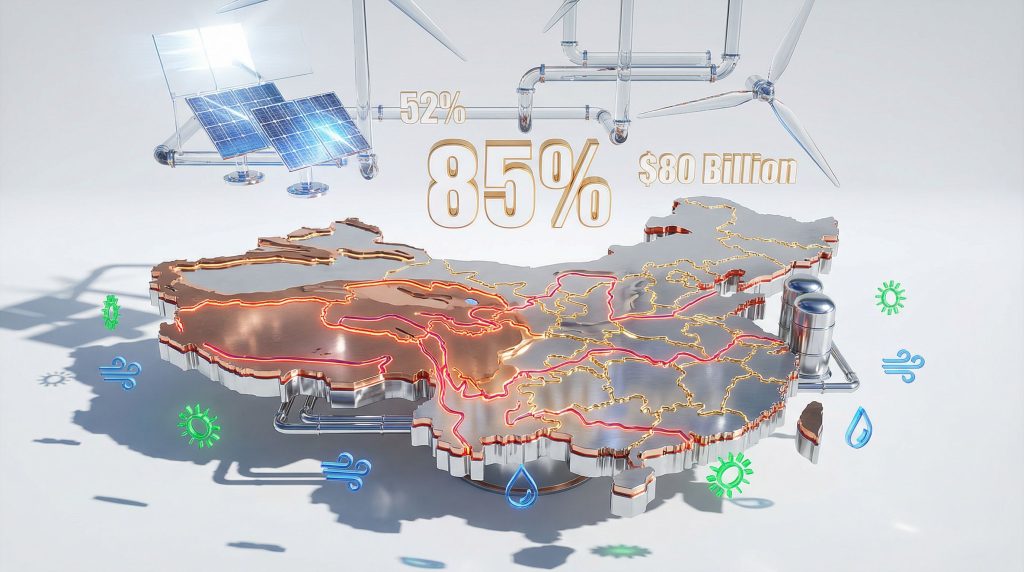
China's energy profile presents a fascinating paradix in global markets. While maintaining approximately 84-86% energy self-sufficiency, the nation still represents the world's largest energy importer by volume, consuming 157.7 exajoules of energy in 2023 alone. This massive consumption, representing 16.5% of global energy demand, creates ripple effects throughout international markets that extend far beyond simple supply and demand calculations.
Furthermore, the complex interplay between domestic production and import requirements demonstrates how China energy security considerations affect global pricing mechanisms. The nation's strategic positioning influences everything from crude oil benchmarks to renewable energy investment flows.
Understanding China's 85% Energy Self-Sufficiency Framework
The architecture of China's energy independence reveals sophisticated risk management strategies. Despite producing the majority of its energy domestically, the remaining 15-16% import dependency creates vulnerabilities that can trigger global market instability. This dependency translates to 503 million tonnes of crude oil imports annually, accounting for approximately 70% of total oil consumption.
The strategic petroleum reserve system provides a crucial buffer, maintaining 900 million barrels across facilities in Zhenhai, Qingdao, Dalian, Huangdao, and Wuyishan. However, this capacity represents only 80-90 days of net crude oil imports, falling short of the International Energy Agency's recommended 90-day minimum for advanced economies.
Key Import Vulnerability Metrics:
• Oil import dependency: 70% of total consumption
• Natural gas imports: 168 billion cubic meters annually
• LNG imports represent 46% of total gas consumption
• Import growth rate: 3.2% annually over the past decade
Middle East Oil Dependencies and Geopolitical Risk Exposure
China's reliance on Middle Eastern crude creates concentrated geopolitical exposure that can destabilise global markets. Approximately 48% of China's crude oil imports originate from the Middle East, with Saudi Arabia alone supplying 16% of total crude imports. This concentration becomes particularly problematic during regional conflicts, as demonstrated by recent saudi exploration licenses developments.
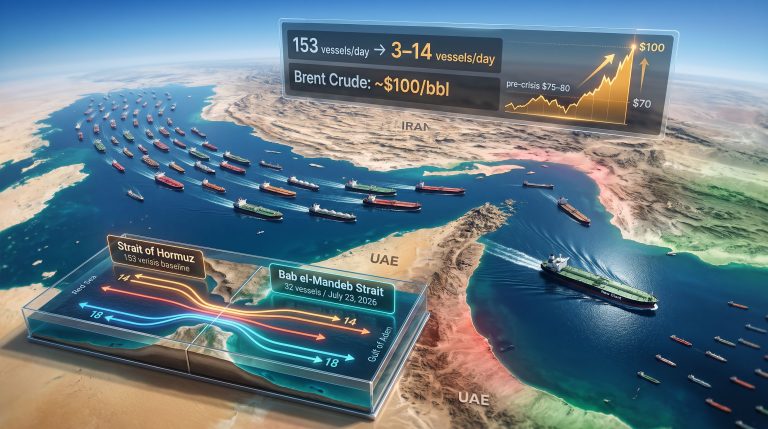
The Strait of Hormuz represents a critical chokepoint, handling approximately 21% of global petroleum flows. China's exposure through this waterway represents roughly 10% of its total oil supply, creating a structural vulnerability that affects not just Chinese markets but global pricing mechanisms.
Recent events in March 2026 demonstrated this vulnerability when Israeli strikes on Iran's South Pars gas field and Iranian retaliation against Qatar's Ras Laffan LNG facility caused Brent crude futures to surge from US$107.38 to US$113-115 per barrel within hours. The effective closure of the Strait of Hormuz eliminated shipping traffic entirely, triggering supply chain disruptions that extended far beyond the immediate conflict zone. This situation exemplifies the broader challenges discussed in analyses of oil price rally dynamics.
Natural Gas Import Vulnerabilities in the Global Supply Chain
China's natural gas import structure reveals additional complexity in global energy security calculations. Liquefied Natural Gas imports reached 62 million tonnes in 2023, with supply sources creating their own geopolitical dependencies:
LNG Supply Distribution (2023):
• Australia: 38% of imports
• Qatar: 22% of imports
• Malaysia: 15% of imports
• Indonesia: 12% of imports
• Papua New Guinea: 8% of imports
Pipeline natural gas adds another layer of complexity, with 41% of pipeline imports originating from Turkmenistan and expanding Russian supplies through the Power of Siberia pipeline system. This diversification strategy aims to reduce spot market volatility exposure through 20-year long-term contracts, yet creates new dependencies on Central Asian political stability.
When big ASX news breaks, our subscribers know first
What Are the Economic Implications of China's Renewable Energy Transformation?
The economic transformation underlying China's renewable energy expansion represents one of the most significant structural changes in global markets. This transition functions simultaneously as environmental policy, economic hedging strategy, and geopolitical positioning tool, with implications that extend far beyond energy markets.
$80 Billion Grid Infrastructure Investment Impact Analysis
China's commitment to renewable energy integration required massive infrastructure investment, with CNY 2.3 trillion (approximately USD $320 billion) allocated to power grid infrastructure during 2023-2024. Remarkably, 65% of this investment targeted renewable energy integration and smart grid technologies, creating a foundation for energy independence that reduces vulnerability to external shocks.
The grid modernisation initiative covers 450+ million customers through smart grid deployment, supported by battery energy storage system capacity reaching 58.3 GW by the end of 2023. This infrastructure investment creates economic multiplier effects throughout the technology sector while simultaneously reducing long-term energy cost volatility.
Grid Investment Breakdown:
• Total infrastructure investment: CNY 2.3 trillion
• Renewable integration focus: 65% of total spending
• Customer coverage: 450+ million smart grid connections
• Battery storage capacity: 58.3 GW installed
Manufacturing Dominance in Solar (92%) and Wind (82%) Technologies
China's manufacturing dominance in renewable technologies creates unprecedented global supply chain leverage. The nation controls approximately 92% of global solar panel manufacturing capacity, producing 486 gigawatts of solar photovoltaic capacity in 2023 alone, representing 86% of global solar manufacturing output.
This manufacturing concentration achieved remarkable cost reductions, with average module prices declining 89% between 2010-2023 through economies of scale. The cost competitiveness extends to wind technology, where Chinese manufacturers produce approximately 82% of global wind turbine capacity, totalling 76.5 GW in 2023.
Manufacturing Capacity Analysis:
| Technology Sector | Chinese Market Share | Annual Production | Cost Reduction (2010-2023) |
|---|---|---|---|
| Solar PV Panels | 92% | 486 GW | 89% price decline |
| Wind Turbines | 82% | 76.5 GW | 60% cost reduction |
| Polysilicon | 76% | 1.3M tonnes | 85% price decline |
| Rare Earth Processing | 90% | Varies | 70% cost advantage |
Critical Mineral Control and Global Supply Chain Leverage
The renewable energy transformation relies heavily on critical minerals, where China maintains dominant processing positions that create additional economic leverage. Chinese control extends across 70% of global lithium processing, 85% of cobalt refining, 90% of rare earth element processing, and 65% of silicon wafer manufacturing. These developments highlight the broader implications explored in discussions of critical minerals & energy transition.
This mineral processing dominance creates supply chain dependencies for global renewable energy deployment. Battery energy storage systems, wind turbine permanent magnets, and solar inverters all depend on materials processed primarily within Chinese facilities, giving China significant influence over global clean energy transition timelines.
Critical Mineral Processing Control:
• Lithium processing: 70% global capacity
• Cobalt refining: 85% global capacity
• Rare earth elements: 90% processing control
• Silicon wafers: 65% manufacturing capacity
The economic implications extend beyond simple market control. This processing capacity creates revenue streams through technology and equipment exports while simultaneously reducing China's exposure to fossil fuel price volatility. When oil prices surge to US$113-115 per barrel during geopolitical crises, renewable energy infrastructure provides both cost stability and export revenue opportunities. Moreover, innovations in chinese battery recycling demonstrate how technological advancement supports China energy security objectives.
How Do Energy Price Shocks Affect China's Economic Growth Trajectory?
Energy price volatility creates cascading effects throughout China's economic structure, with transmission mechanisms that impact everything from manufacturing competitiveness to inflation dynamics. Understanding these relationships becomes crucial during periods of extreme volatility, such as the current situation where oil prices have surged toward US$120 per barrel.
Oil Price Volatility Impact on Manufacturing Costs
Historical analysis reveals consistent patterns in how oil price shocks transmit through China's economy. During the 2008 oil price spike, when crude reached US$147 per barrel, China's GDP growth decelerated dramatically from 14.2% in 2007 to 9.6% in 2008. The 2022 Russia-Ukraine energy crisis provided another data point, with oil prices in the US$110-120 range contributing to China's GDP growth slowing to 3.0%, the lowest rate in 30 years.
Empirical analysis suggests each US$10 per barrel sustained increase reduces China's real GDP growth by approximately 0.2-0.3 percentage points. This relationship reflects the deep integration of energy costs throughout China's manufacturing base, where energy represents a significant portion of total production costs across key industries.
Manufacturing Cost Exposure by Sector:
• Steel manufacturing: 8-12% of production costs
• Cement production: 6-9% of production costs
• Chemical manufacturing: 4-7% of production costs
• Combined employment: 12 million workers
• GDP contribution: 8% of total output
Energy-Intensive Industry Exposure Analysis
The March 2026 oil price surge from US$107.38 to US$113-115 per barrel demonstrates real-time cost transmission mechanisms. This 5-7% price increase in a single trading session creates immediate working capital pressures for energy-intensive industries, particularly given the potential trajectory toward US$120+ per barrel if supply disruptions persist.
Manufacturing cost transmission follows predictable patterns. A 1% increase in energy costs typically translates to approximately 0.15-0.25% increases in manufactured goods prices for energy-intensive exports. This mechanism directly impacts China's export competitiveness, particularly in price-sensitive global markets where Chinese manufacturers often function as price-takers rather than price-setters. These dynamics connect to broader patterns discussed in analyses of energy exports challenges.
The current crisis involving the effectively closed Strait of Hormuz creates particularly severe disruption potential because it combines supply restriction with infrastructure attacks. Unlike previous crises that primarily affected supply availability, the targeting of Qatar's Ras Laffan LNG facility and Iran's South Pars gas field creates production capacity constraints that may persist beyond immediate geopolitical resolution.
Inflation Transmission Mechanisms Through Energy Markets
Energy price shocks transmit through multiple economic channels simultaneously. Direct cost increases for energy-intensive production combine with transportation cost escalation, input cost increases for petrochemical-dependent manufacturing, and eventual wage pressure from consumer price inflation. This creates a compound effect that amplifies the initial energy price impact.
Chinese GDP demonstrates negative elasticity of approximately -0.02 to -0.03 with respect to oil price changes, meaning 1% increases in oil prices correlate with 0.02-0.03% GDP declines. This elasticity has increased over time as China's economy became more trade-exposed and integrated with global supply chains.
Inflation Transmission Timeline:
• Immediate (0-1 months): Oil-linked energy contract adjustments
• Short-term (1-3 months): Working capital stress for energy-intensive sectors
• Medium-term (6-12 months): Supply chain contract renegotiation
• Long-term (12+ months): Wage adjustment and structural adaptations
China's energy price elasticity has evolved as the economy became more globally integrated, creating transmission mechanisms that amplify external shocks through domestic manufacturing and export channels while simultaneously incentivising renewable energy transition as a macroeconomic hedging strategy.
What Role Does China Play in Global Energy Market Stabilisation?
China's position in global energy markets extends far beyond simple consumption patterns. The nation functions as both a source of market stability through strategic reserves and demand management, and as a potential destabilising force when domestic policy changes affect global supply chains. This dual role becomes particularly important during crisis periods when traditional stabilisation mechanisms face stress.
Strategic Petroleum Reserve Deployment Capabilities
China's strategic petroleum reserve system provides crucial market stabilisation capabilities during supply disruptions. The 900 million barrel capacity across multiple facilities enables tactical market interventions, as demonstrated during previous crises. In April 2022, China released 7.4 million barrels from strategic reserves to moderate global oil markets during the Russia-Ukraine crisis, followed by additional releases of 7 million barrels in June 2022.
However, the current scale of disruption, with the Strait of Hormuz effectively closed and major LNG facilities under attack, may exceed the stabilisation capacity of strategic reserves alone. The 80-90 day import coverage provided by current reserves falls short of extended crisis scenarios, particularly if supply disruptions persist beyond immediate conflict resolution.
Strategic Reserve Intervention History:
• April 2022: 7.4 million barrels released (Russia-Ukraine crisis)
• June 2022: 7 million barrels additional release
• Multiple smaller releases throughout 2023 for price moderation
• Current capacity: 900 million barrels (80-90 days coverage)
Alternative Supply Route Development (Russia-China Energy Corridor)
China's development of alternative energy supply routes creates new stabilisation mechanisms while potentially redistributing geopolitical dependencies. The Power of Siberia pipeline system and expanding Russian energy cooperation provide alternatives to Middle Eastern supplies, though they create new dependency relationships with different geopolitical implications.
Central Asian energy partnerships add additional diversification, with Turkmenistan supplying 41% of pipeline imports and Kazakhstan and Uzbekistan providing supplementary capacity. These relationships represent long-term strategic positioning that reduces vulnerability to Middle Eastern conflicts while creating new interdependencies with regional partners.
The effectiveness of these alternative routes becomes particularly relevant during crises like the current March 2026 situation, where traditional Middle Eastern supplies face severe disruption. Pipeline capacity from Russia and Central Asia cannot immediately replace the volume of supplies typically transiting the Strait of Hormuz, but they provide partial mitigation of supply shocks.
Demand-Side Management and Economic Efficiency Gains
China's industrial demand management capabilities provide another stabilisation mechanism through consumption flexibility during supply crises. The ability to temporarily reduce energy-intensive production, implement rolling industrial schedules, and shift consumption patterns creates demand-side responses that can moderate price pressures during supply shortages. According to China's energy security research, these demand management capabilities represent a crucial component of overall energy security strategy.
Energy efficiency improvements across manufacturing sectors reduce the intensity of demand responses to price shocks. Industrial modernisation programs have decreased energy consumption per unit of GDP by approximately 3-4% annually over the past decade, creating structural resilience that reduces vulnerability to external price volatility.
Demand Management Mechanisms:
• Industrial production scheduling flexibility
• Energy-intensive sector temporary capacity reductions
• Strategic reserve releases coordinated with consumption management
• Efficiency improvements reducing baseline consumption intensity
How Does China's Energy Security Strategy Impact Global Investment Flows?
China's approach to energy security creates massive capital flows that reshape global investment patterns, technology development, and infrastructure deployment. These investment streams influence not only energy markets but also financial markets, technological innovation, and geopolitical relationships worldwide. The broader implications of China energy security investments extend throughout the global economy.
Foreign Direct Investment in Chinese Renewable Sectors
The renewable energy manufacturing dominance achieved by China attracts substantial foreign direct investment while simultaneously creating concerns about technological dependency among other nations. International companies seek access to China's cost-competitive manufacturing infrastructure, while governments worry about supply chain concentration risks.
Foreign investment in Chinese renewable energy sectors reached approximately $45 billion in 2023, focused primarily on joint ventures in battery technology, solar panel manufacturing, and wind turbine production. However, this investment flow faces increasing scrutiny from Western governments concerned about technological dependency and supply chain security.
Investment Flow Characteristics:
• Total FDI in renewables: $45 billion (2023)
• Joint venture focus: Battery technology, solar manufacturing, wind production
• Geographic concentration: Jiangsu Province hosts 3,000+ renewable equipment manufacturers
• Supply chain integration: Component suppliers, assembly facilities, testing infrastructure
Belt and Road Initiative Energy Infrastructure Projects
The Belt and Road Initiative channels substantial Chinese capital toward energy infrastructure development globally, creating new market relationships and dependency structures. Energy projects represent approximately 30% of total Belt and Road investment, focusing on power generation, transmission infrastructure, and resource extraction facilities.
These investments create long-term supply relationships that enhance China's energy security while extending Chinese influence over global energy infrastructure. Coal-fired power plants, hydroelectric facilities, and increasingly renewable energy projects establish Chinese technology standards and create maintenance dependencies that persist for decades.
Belt and Road Energy Investment:
• Share of total BRI investment: 30% energy focus
• Project types: Power generation, transmission, resource extraction
• Technology deployment: Chinese equipment and standards
• Long-term implications: Maintenance dependencies, technology lock-in
Technology Transfer and Intellectual Property Considerations
China's renewable energy manufacturing dominance creates complex intellectual property dynamics that affect global investment flows. While Chinese companies have achieved cost leadership through scale and integration, questions persist about technology transfer requirements, patent protections, and innovation incentives for foreign companies operating in Chinese markets.
International companies face difficult choices between accessing China's cost-competitive manufacturing ecosystem and maintaining control over proprietary technologies. This tension influences investment decisions, joint venture structures, and technology development strategies across the global renewable energy sector.
The current geopolitical environment, exemplified by events like the March 2026 Middle East crisis driving oil prices toward US$120 per barrel, intensifies these dynamics by highlighting energy security concerns and accelerating renewable energy transition timelines globally. Furthermore, research from the International Energy Agency provides additional context for understanding China's strategic positioning in global energy markets.
What Are the Long-Term Economic Scenarios for China's Energy Independence?
Long-term economic modelling for China's energy independence reveals multiple pathways with dramatically different implications for global markets, technological development, and geopolitical relationships. These scenarios become particularly relevant as current events demonstrate the economic costs of energy supply disruptions.
2030 Carbon Neutrality Pathway Economic Modelling
China's commitment to carbon neutrality by 2060, with carbon peaking before 2030, requires unprecedented investment in renewable energy infrastructure and industrial transformation. Economic modelling suggests this transition requires annual investments of approximately $300-400 billion through 2030, creating massive domestic demand for clean energy technologies while reducing long-term vulnerability to fossil fuel price volatility.
The economic benefits of this pathway become evident during energy crises. While oil prices surge to US$113-115 per barrel and threaten US$120+ levels, renewable energy infrastructure provides price stability and reduces exposure to geopolitical supply disruptions. The March 2026 crisis demonstrates the economic value of energy independence investments.
2030 Pathway Investment Requirements:
• Annual investment needs: $300-400 billion
• Renewable capacity targets: 1,200+ GW total installation
• Grid infrastructure: Smart grid coverage expansion
• Industrial transformation: Energy-intensive sector modernisation
Technological Innovation Investment Returns
Investment in renewable energy technology development creates multiple return streams through domestic cost savings, export revenue generation, and reduced vulnerability to external shocks. China's 92% solar manufacturing market share and 82% wind turbine manufacturing dominance generate substantial export revenues while providing domestic energy cost advantages.
The technological innovation investment strategy proves particularly valuable during energy price volatility. When traditional energy costs spike due to geopolitical conflicts, renewable energy infrastructure provides both cost stability and export opportunity expansion as other nations seek to reduce their own vulnerability to supply shocks.
Research and development investment in energy storage, grid integration, and advanced materials creates additional technological advantages that extend beyond the energy sector into electronics, transportation, and industrial applications.
Regional Economic Development Through Energy Transition
The energy transition creates regional economic development opportunities that redistribute economic activity away from traditional fossil fuel regions toward renewable energy manufacturing and technology centres. Provinces like Jiangsu, which hosts over 3,000 renewable equipment manufacturers, demonstrate how energy transition investments can create integrated industrial ecosystems.
These regional transformations create employment opportunities in higher-technology sectors while reducing dependence on coal mining and fossil fuel processing industries. The economic diversification reduces vulnerability to commodity price cycles and creates more resilient regional economies.
Regional Development Impacts:
• Manufacturing cluster formation: 3,000+ companies in Jiangsu Province
• Employment transition: Coal sector to renewable manufacturing
• Technology ecosystem development: R&D, manufacturing, testing facilities
• Export base creation: Renewable technology and equipment exports
The next major ASX story will hit our subscribers first
How Do Regional Energy Security Policies Affect Global Market Dynamics?
Regional energy security initiatives create complex interdependencies that influence global market behaviour, supply chain development, and price formation mechanisms. China energy security policies interact with those of other major economies to create system-wide effects that extend far beyond individual national boundaries.
Asia-Pacific Energy Cooperation Framework Analysis
Asia-Pacific energy cooperation frameworks attempt to balance individual national energy security objectives with regional stability requirements. However, the current March 2026 crisis demonstrates the limitations of cooperative mechanisms when faced with severe supply disruptions affecting multiple participants simultaneously.
The Association of Southeast Asian Nations (ASEAN) energy integration initiatives interact with Chinese energy security planning to create regional supply chain interdependencies. Malaysia's 15% share of Chinese LNG imports and Indonesia's 12% share create mutual dependencies that affect both Chinese energy security and Southeast Asian economic development.
Regional Interdependency Metrics:
• Malaysia LNG exports to China: 15% of Chinese imports
• Indonesia LNG exports to China: 12% of Chinese imports
• ASEAN energy integration: Power grid interconnection projects
• Regional cooperation mechanisms: Emergency reserve sharing agreements
Competition with India and Japan for Energy Resources
Regional competition for energy resources creates market dynamics that affect global pricing, supply allocation, and infrastructure development. China's energy demand growth competes with Indian and Japanese import requirements, particularly for LNG supplies where regional buyers often bid against each other in spot markets.
This competition intensifies during supply disruptions. The current crisis, with Qatar's Ras Laffan LNG facility under attack and the Strait of Hormuz effectively closed, forces regional buyers to compete for alternative supplies, driving up prices and creating allocation challenges for suppliers with limited uncommitted capacity.
Japanese energy security policies, focusing on supply diversification after the Fukushima nuclear disaster, compete with Chinese demand for the same supplier relationships and LNG terminal capacity. Indian energy demand growth adds additional competition pressure, particularly for Middle Eastern crude oil and natural gas supplies.
ASEAN Energy Market Integration Opportunities
ASEAN energy market integration creates opportunities for regional supply chain optimisation while potentially reducing individual country vulnerabilities to external shocks. Power grid interconnection projects enable electricity trade that can optimise renewable energy utilisation across different climatic zones and demand patterns.
However, integration also creates shared vulnerabilities. When regional energy infrastructure faces disruption, as in the current March 2026 crisis, integrated systems can transmit supply shocks more rapidly across national boundaries. The balance between efficiency gains from integration and resilience from independence becomes a crucial policy consideration.
Integration Opportunities and Challenges:
| Opportunity | Benefit | Vulnerability Risk |
|---|---|---|
| Grid interconnection | Load balancing efficiency | Cascading failure transmission |
| LNG terminal sharing | Infrastructure cost reduction | Concentrated attack targets |
| Pipeline integration | Supply route redundancy | Single point failure risks |
| Emergency reserves | Regional crisis response | Coordinated depletion risks |
China's role in ASEAN energy integration reflects its broader regional economic influence while creating additional interdependencies that affect both Chinese energy security and regional stability during crisis periods.
China's Energy Security as Global Economic Stabiliser
China's energy security architecture functions as both a source of global market stability and a potential transmission mechanism for economic shocks. The nation's massive scale, strategic reserve capabilities, and renewable energy transition create stabilisation mechanisms while simultaneously generating new forms of market interdependency.
Policy Recommendations for Sustained Economic Growth
Effective policy frameworks must balance immediate crisis response capabilities with long-term structural resilience building. The March 2026 energy crisis, with oil prices surging toward US$120 per barrel and major infrastructure under attack, demonstrates the importance of maintaining multiple policy tools simultaneously.
Strategic petroleum reserve expansion beyond the current 90-day capacity would enhance crisis response capabilities, while accelerated renewable energy deployment reduces long-term vulnerability to external supply shocks. The combination of tactical flexibility and strategic independence provides the most robust approach to energy security policy development.
Policy Framework Components:
• Strategic reserve expansion: Target 120-day import coverage
• Renewable energy acceleration: $400+ billion annual investment
• Alternative supply route development: Pipeline and LNG diversification
• Demand-side management: Industrial flexibility enhancement
International Cooperation Opportunities
International cooperation mechanisms provide opportunities to enhance both Chinese energy security and global market stability. Coordinated strategic reserve releases, emergency supply sharing agreements, and joint investment in alternative energy infrastructure create mutual benefits while reducing individual country vulnerabilities.
However, cooperation requires balancing national security interests with collective benefits. The current crisis demonstrates both the potential for cooperative responses and the limitations of coordination mechanisms when faced with severe supply disruptions that affect multiple participants simultaneously.
Technology cooperation in renewable energy development offers particularly promising opportunities, combining Chinese manufacturing capabilities with international innovation and market access. Joint development of energy storage systems, grid integration technologies, and alternative fuel systems can accelerate global energy transition while strengthening bilateral relationships.
Future Market Outlook and Investment Implications
Future market dynamics will likely feature increased volatility as geopolitical tensions affect energy infrastructure, combined with structural transformation as renewable energy deployment accelerates globally. Investment strategies must account for both short-term crisis management requirements and long-term transition opportunities.
China energy security strategy positions the nation to benefit from global energy transition trends while maintaining resilience during traditional energy market disruptions. The current crisis, with traditional supplies under severe stress and renewable alternatives providing stability, validates the strategic value of diversified energy portfolios.
Investment Outlook Factors:
• Geopolitical volatility: Continued infrastructure vulnerability
• Technology transition: Accelerating renewable deployment
• Market structure evolution: Increased price volatility and supply concentration
• Policy response: Enhanced strategic reserve requirements globally
The convergence of immediate crisis management needs with long-term structural transformation creates complex investment environments where traditional energy security approaches must integrate with renewable energy transition strategies. Success requires understanding both the tactical requirements of crisis response and the strategic imperatives of energy independence through technological transformation.
Disclaimer: This analysis is based on publicly available information and market data as of March 2026. Energy markets involve significant volatility and geopolitical risks that can affect outcomes substantially. Investment decisions should consider multiple scenarios and professional advisory input.
Want to Discover the Next Major Resource Breakthrough Before the Market?
As China's energy security strategy continues reshaping global markets, astute investors recognise that major mineral discoveries often precede significant market movements. Discovery Alert's proprietary Discovery IQ model instantly identifies actionable ASX mineral discoveries, helping subscribers capitalise on opportunities across critical minerals, energy metals, and emerging commodities before broader market recognition. Start your 14-day free trial today to position yourself ahead of the next significant discovery that could benefit from China's ongoing energy transformation.