August 6, 2026
China faces mounting pressure as geopolitical tensions reshape global resource security frameworks, particularly as China export controls demonstrate the weaponisation of critical mineral supply chains. The interconnected nature of modern manufacturing has created vulnerabilities that extend far beyond traditional trade relationships, with rare earth elements emerging as strategic weapons in international relations. Supply chain resilience now demands fundamental restructuring of sourcing strategies, particularly as dominant suppliers leverage their market positions for diplomatic advantage.
Understanding Strategic Export Control Mechanisms
Dual-use export controls represent sophisticated policy instruments that blur the lines between civilian commerce and national security. These regulations target items with both commercial and military applications, enabling governments to restrict trade flows without explicit declarations of economic warfare. The complexity of modern supply chains means that seemingly benign components can have critical defence applications, expanding the scope of potential restrictions.
China's implementation of dual-use controls reflects a systematic approach to trade policy as diplomatic leverage. The Ministry of Commerce operates through administrative mechanisms that provide flexibility in escalation and de-escalation, avoiding the legal constraints of formal trade sanctions. This discretionary framework allows for graduated responses that can be adjusted based on diplomatic developments.
Furthermore, the extraterritorial implications of these controls extend beyond bilateral relationships, creating compliance challenges for multinational corporations. Third-party suppliers must navigate complex regulatory landscapes where their business relationships with restricted entities can trigger secondary sanctions. This enforcement architecture effectively globalises domestic policy decisions, forcing international businesses to align with the implementing country's strategic objectives.
Historical precedents from U.S. and European export control regimes demonstrate how these mechanisms evolve from nonproliferation tools into broader economic statecraft instruments. The Wassenaar Arrangement established multilateral frameworks for controlling dual-use technologies, but unilateral applications have expanded beyond these collaborative structures. China's approach differs fundamentally by explicitly linking trade controls to specific diplomatic disputes rather than maintaining the pretence of neutral security concerns.
Administrative Weaponisation of Trade Policy
Recent developments in China-Japan import curbs rare earths demonstrate the escalating use of administrative tools for diplomatic coercion. The Ministry of Commerce's January 2026 measures targeting dual-use goods represent a calculated escalation ladder designed to impose economic costs whilst maintaining plausible diplomatic cover. These controls affect goods with civilian and military applications, creating uncertainty across multiple industrial sectors.
The legal framework supporting these measures draws from China's 2020 Export Control Law, which provides broad administrative discretion to restrict exports deemed harmful to national security. Unlike the World Trade Organisation dispute from 2014, which challenged quota-based restrictions on rare earth exports, current measures employ licensing mechanisms that are more difficult to contest through multilateral trade frameworks.
Corporate compliance requirements under these new controls create operational bottlenecks that extend processing times and increase transaction costs. Japanese manufacturers report licensing delays averaging three to six weeks for previously routine transactions, forcing companies to maintain larger inventory buffers and seek alternative suppliers. The administrative burden effectively functions as a non-tariff barrier that disrupts just-in-time manufacturing systems.
Three distinct escalation mechanisms emerge from this policy architecture:
• Licensing delays that create operational uncertainty without formal bans
• Temporary suspensions targeting specific product categories or companies
• Comprehensive restrictions that effectively block entire trade relationships
When big ASX news breaks, our subscribers know first
China's Rare Earth Market Dominance
The concentration of rare earth processing capabilities represents one of the most significant supply chain vulnerabilities in modern industrial systems. While global mining operations are relatively distributed, the refining and separation processes required to produce usable rare earth elements remain heavily concentrated in Chinese facilities. This processing bottleneck creates strategic leverage that extends far beyond raw material availability.
Medium and heavy rare earth elements present particularly acute chokepoints due to their specialised applications and limited alternative sources. Dysprosium and terbium are essential for high-temperature permanent magnets used in wind turbines and electric vehicle motors, whilst yttrium enables advanced laser technologies and phosphors for LED displays. China controls approximately 85% of global processing capacity for these critical elements.
China-Japan import curbs rare earths have revealed the extent of Japanese industrial dependence on Chinese processing capabilities. Despite Japan's advanced manufacturing base, the country lacks the integrated supply chains necessary to process rare earth concentrates from alternative sources. Building this infrastructure would require five to seven years and substantial capital investment, during which Japanese manufacturers remain vulnerable to supply disruptions.
| Critical Mineral | China Processing Share | Alternative Suppliers | Supply Risk Assessment |
|---|---|---|---|
| Gallium | 80% | Germany, Kazakhstan | Critical |
| Germanium | 68% | Belgium, Canada | High |
| Heavy Rare Earths | 95% | Myanmar, Vietnam | Critical |
| Graphite (synthetic) | 70% | India, Norway | High |
The economic implications extend beyond direct trade volumes due to multiplier effects throughout interconnected supply chains. Japanese automotive companies require approximately 1.5 kilograms of rare earth elements per electric vehicle, with disruptions potentially affecting production schedules across multiple model lines. Electronics manufacturers face similar vulnerabilities in smartphone and semiconductor production.
Quantifying December 2025 Supply Disruptions
Trade data from December 2025 indicates significant month-over-month declines in rare earth magnet exports to Japan, despite year-over-year growth figures that mask the emerging disruption. Rare earth magnet shipments declined from 305 tons in November to 280 tons in December, representing an 8.2% monthly decrease during traditionally strong seasonal demand.
Forward contract implications for Q1 2026 demonstrate how supply uncertainties translate into market-wide volatility. Japanese manufacturers typically secure rare earth supplies through three to six-month forward contracts, with pricing mechanisms tied to monthly benchmark indices. The administrative delays introduced by new licensing requirements have disrupted these established procurement cycles, forcing companies to accept spot market prices that trade at 15-20% premiums to contract rates.
Corporate stockpiling behaviour provides additional evidence of supply chain stress. Japanese firms are accumulating rare earth inventories at unprecedented levels, with some companies reporting 90-day strategic reserves compared to typical 30-day operational inventories. This defensive positioning reflects expectations of continued supply disruptions and recognition that alternative suppliers cannot immediately scale production to meet Japanese demand.
The shift from systematic supply relationships to opportunistic procurement creates operational inefficiencies that compound the direct costs of material price increases. Manufacturing schedules become less predictable when input availability depends on administrative approvals rather than contractual commitments, forcing companies to maintain higher inventory buffers and develop contingency production plans.
Sectoral Vulnerability Analysis
Japanese industrial sectors exhibit varying degrees of exposure to China-Japan import curbs rare earths based on their technological dependencies and supply chain structures. Automotive, electronics, chemicals, and consumer discretionary sectors face the highest immediate risks due to their reliance on specialised materials with limited substitute sources.
Semiconductor manufacturing presents the most acute vulnerability due to dependencies on gallium and germanium for advanced chip production. Japan imports approximately 85% of its gallium from Chinese processors, with this material essential for gallium arsenide semiconductors used in 5G infrastructure and defence electronics. Alternative suppliers in Germany and Kazakhstan operate at significantly smaller scales and cannot immediately replace Chinese production volumes.
The automotive sector's exposure centres on rare earth permanent magnets required for electric vehicle motors and power electronics. Each electric vehicle contains approximately 1-2 kilograms of rare earth elements, with neodymium-iron-boron magnets providing superior energy density compared to alternative technologies. Japanese automakers' expansion into global EV markets has increased their rare earth consumption by 40% over the past two years, amplifying their exposure to supply disruptions.
Defence contractors face unique challenges due to the dual-use nature of many rare earth applications. Military electronics systems require the highest-grade rare earth elements with stringent quality specifications, limiting the pool of acceptable suppliers. Security clearance requirements for defence supply chains further constrain sourcing options, creating dependencies on established relationships with Chinese processors who maintain appropriate certifications.
Consumer electronics manufacturers experience cascading effects as component suppliers adjust production schedules to accommodate raw material uncertainties. Smartphone production requires 16 different rare earth elements across various components, from displays and batteries to speakers and vibration motors. Supply chain disruptions in any single element can halt final assembly operations across multiple product lines.
Economic Impact Modelling Framework
Economic modelling of potential escalation scenarios reveals three distinct risk tiers based on the scope and duration of trade restrictions. The baseline scenario involving current dual-use controls could reduce Japanese GDP by ¥400 billion through direct manufacturing disruptions and supply chain inefficiencies.
Expanded rare earth restrictions targeting civilian manufacturing could generate ¥1.2 trillion in economic losses as automotive and electronics production adjusts to material shortages. This scenario assumes six to twelve months of supply chain adaptation time, during which manufacturers develop alternative sourcing arrangements and modify product specifications to accommodate substitute materials.
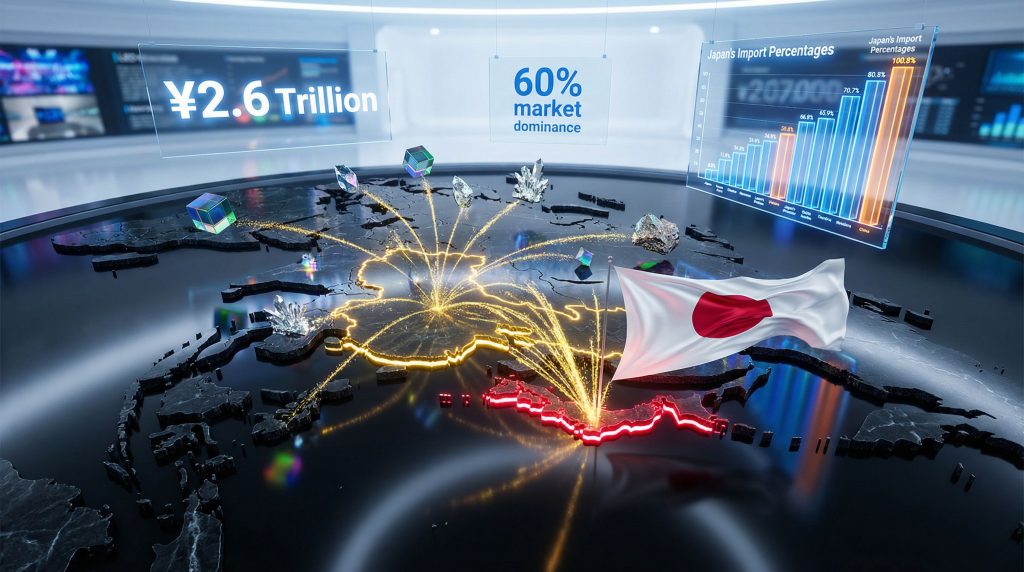
Full economic decoupling could impose ¥2.6 trillion in GDP impacts through comprehensive trade relationship breakdown affecting approximately ¥8 trillion in annual bilateral commerce. This analysis incorporates multiplier effects across interconnected supply chains, where disruptions in one sector cascade through related industries and reduce overall economic productivity.
The methodology underlying these projections considers both direct and indirect economic effects:
• Direct impacts from reduced production in immediately affected sectors
• Indirect effects through supply chain linkages and business-to-business relationships
• Induced effects from reduced consumer spending as employment and incomes decline
Supply chain multiplier effects are particularly pronounced in Japan's integrated manufacturing ecosystem, where automotive and electronics companies maintain extensive domestic supplier networks. Historical analysis suggests multiplier factors of 2.2 to 2.8 for disruptions affecting core industrial inputs, meaning each yen of direct impact generates additional economic losses through interconnected business relationships.
Taiwan's Influence on Trade Relations
The escalation of China-Japan import curbs rare earths directly correlates with statements regarding Taiwan's security situation, demonstrating how territorial disputes drive economic coercion strategies. Prime Minister Sanae Takaichi's November 7, 2025 remarks suggesting Tokyo could justify military response to a Chinese attack on Taiwan triggered immediate economic retaliation through trade policy mechanisms.
Beijing's response framework reveals systematic preparation for using economic leverage in territorial disputes. However, according to industry experts at the Center for Strategic and International Studies, the sequence of escalatory measures following Takaichi's statements demonstrates coordinated policy implementation across multiple government agencies:
• Travel advisory issued to Chinese citizens regarding safety concerns in Japan
• Suspension of Japanese seafood imports citing contamination concerns
• Implementation of dual-use export controls targeting defence-related technologies
• Administrative delays in rare earth export licensing affecting civilian manufacturing
This escalation pattern reflects lessons learned from previous territorial disputes, particularly the 2012 Senkaku/Diaoyu islands crisis that similarly featured economic retaliation against Japanese interests. Nevertheless, current measures demonstrate greater sophistication in targeting specific supply chain vulnerabilities rather than broad sectoral restrictions that might violate World Trade Organisation obligations.
The timing of these measures coincides with broader regional security developments, including Japan's increased defence spending and strengthened alliance relationships with the United States and other Indo-Pacific partners. China views Japan's evolving defence posture as a direct challenge to its regional influence, particularly regarding Taiwan contingency planning.
Strategic Timing and Regional Military Balance
Current tensions emerge within the context of shifting regional power dynamics that extend beyond bilateral China-Japan relationships. Japan's commitment to increase defence spending to 2% of GDP by 2027 represents the most significant military buildup since World War II, with specific emphasis on capabilities relevant to Taiwan strait scenarios.
The deployment of advanced missile systems and intelligence-gathering capabilities demonstrates Japan's evolving role in regional security architecture. Ground-based missile defence systems stationed in southwestern Japan provide coverage extending to Taiwan, whilst enhanced surveillance capabilities contribute to allied intelligence networks monitoring Chinese military activities.
Economic coercion through China-Japan import curbs rare earths serves multiple strategic objectives simultaneously. These measures impose immediate costs on Japanese industrial capacity whilst signalling resolve to other regional partners considering enhanced security cooperation. The choice to target critical materials rather than consumer goods demonstrates sophisticated understanding of supply chain vulnerabilities in advanced manufacturing systems.
Chinese military strategists view economic interdependence as both constraint and opportunity in regional competition. Whilst supply chain disruptions impose costs on Chinese exporters, they also demonstrate credible capability to inflict economic damage on countries that challenge Chinese strategic interests. This dual-edged nature of economic weapon systems requires careful calibration to maximise diplomatic leverage whilst minimising domestic economic costs.
Escalation Probability Assessment
Financial analysis suggests 60% probability of limited escalation maintaining current restriction levels without expanding to additional product categories or geographical scope. This baseline scenario reflects Beijing's preference for calibrated pressure that imposes measurable costs whilst preserving options for future diplomatic engagement.
Anti-dumping investigation scenarios carry approximately 25% probability and would target Japanese steel, chemicals, and automotive exports to Chinese markets. These measures would operate through established trade remedy mechanisms, providing legal cover whilst imposing significant administrative burdens on Japanese exporters. Processing times for anti-dumping cases typically extend 12-18 months, creating sustained uncertainty for affected companies.
Implementation timelines for anti-dumping measures follow predictable administrative sequences:
• Preliminary determinations within 60 days establishing provisional duties
• Detailed industry surveys requiring extensive documentation from exporters
• Public hearings and comment periods extending case duration
• Final determinations potentially imposing permanent restrictive duties
Consumer boycott campaigns represent a 15% probability scenario that would leverage social media platforms and nationalist sentiment to reduce demand for Japanese products. Historical precedents from South Korea-China disputes demonstrate how consumer sentiment can be mobilised to complement official trade measures, with luxury goods and automotive products particularly vulnerable to reputation damage.
The interconnected nature of China-Japan supply chains provides natural constraints on escalation intensity. Chinese manufacturers depend on Japanese precision components and industrial equipment, creating domestic constituencies that oppose measures threatening their own production capabilities. This mutual vulnerability explains why current restrictions focus on materials where Chinese producers maintain dominant market positions.
Corporate Adaptation and Supply Chain Resilience
Japanese manufacturers are implementing comprehensive risk mitigation strategies that extend beyond immediate material stockpiling to fundamental supply chain restructuring. Emergency stockpiling in December 2025 increased rare earth inventories to 90-day levels compared to typical 30-day operational requirements, providing buffer time for longer-term adaptation measures.
Alternative supplier qualification represents the most significant operational challenge, as rare earth processing requires specialised technical capabilities and quality certifications. Vietnamese and Malaysian processing facilities are expanding production capacity, but achieving Japanese manufacturing quality standards typically requires 18-24 month qualification periods involving extensive testing and process validation.
Technology substitution research has accelerated across multiple industrial sectors, with particular emphasis on reducing rare earth content in permanent magnet applications. Japanese companies are investing ¥240 billion annually in materials research, with projects targeting ferrite-based magnets and advanced recycling technologies that could reduce import dependencies by 30-40% within five years.
Investment flows are shifting toward rare earth processing capabilities in politically stable jurisdictions. Australia-Japan partnerships are developing integrated supply chains from mining through final processing, with government support providing financial incentives and regulatory expediting. These strategic investments prioritise supply security over cost optimisation, accepting 15-20% higher material costs for enhanced supply chain resilience.
Global Supply Chain Transformation
The China-Japan import curbs rare earths crisis catalyses broader restructuring of critical mineral supply chains that extends far beyond bilateral trade relationships. Moreover, the critical minerals strategy implemented by European Union and United States supply chain vulnerability assessments identify similar dependencies on Chinese processing capabilities, accelerating coordinated responses to reduce strategic material risks.
Friend-shoring initiatives gain momentum as governments prioritise supply relationships with politically aligned partners over pure cost considerations. The U.S. Inflation Reduction Act and EU Critical Raw Materials Act provide financial incentives for domestic processing development whilst imposing restrictions on materials sourced from strategic competitors.
Investment redirection toward secure jurisdictions creates new patterns of international capital flows that reflect geopolitical risk pricing. Mining projects in Australia, Canada, and Brazil attract premium valuations due to their strategic importance, whilst processing facilities in these countries benefit from government backing and long-term supply guarantees from major industrial consumers.
The global electric vehicle transition faces potential delays as supply chain security considerations compete with cost and environmental objectives. Automakers are accepting 5-10% higher battery costs to source materials from diversified supply chains, whilst battery manufacturers invest in recycling capabilities that reduce dependence on primary mining operations.
Economic Statecraft as Standard Diplomatic Practice
Trade weaponisation has evolved from exceptional crisis response to routine diplomatic signalling, fundamentally altering international business planning requirements. Corporate compliance systems must now incorporate geopolitical risk assessment alongside traditional financial and operational considerations, increasing administrative costs and operational complexity.
Multinational corporations face conflicting compliance requirements as different governments implement competing economic statecraft measures. Supply chain management systems require real-time monitoring of diplomatic developments and regulatory changes across multiple jurisdictions, with automated compliance checking becoming essential for international operations.
The normalisation of economic coercion creates persistent uncertainty that affects long-term investment planning and technological development priorities. Additionally, understanding tariffs' impact on markets becomes crucial as companies are diversifying research and development investments across multiple countries to reduce exposure to single-point-of-failure risks, whilst building redundant manufacturing capabilities in different political jurisdictions.
Financial markets increasingly incorporate geopolitical risk premiums into commodity pricing and equity valuations, reflecting recognition that supply chain security has become a permanent competitive factor rather than temporary crisis consideration.
The next major ASX story will hit our subscribers first
Risk Mitigation Strategies for Stakeholders
Japanese corporations require comprehensive supply chain transformation strategies that balance immediate operational needs with long-term strategic independence. Diversification timelines extending three to five years necessitate substantial capital commitments whilst maintaining current production capabilities during the transition period.
Government support mechanisms include financial incentives for alternative supplier development and strategic material stockpiling programmes. The Japan Oil, Gas and Metals National Corporation provides loan guarantees and direct investment in overseas mining and processing projects, whilst tax incentives encourage private sector research into substitute materials and recycling technologies.
Joint venture opportunities in third countries enable Japanese companies to access alternative supply sources whilst sharing development costs and technical risks. Partnerships with Australian and Canadian resource companies provide geographical diversification whilst maintaining access to allied-nation markets and regulatory environments.
For global supply chain managers, early warning systems for trade disruptions become essential operational tools. Monthly monitoring of diplomatic developments, trade policy announcements, and administrative processing times enables proactive adjustment of procurement schedules and inventory management strategies.
Supplier qualification acceleration programmes reduce dependency transition times through parallel testing and validation processes. Pre-qualifying alternative suppliers before supply disruptions occur enables rapid switching when current sources become unavailable or unreliable.
Strategic inventory optimisation balances carrying costs against supply security benefits, with dynamic adjustment based on geopolitical risk assessments. Advanced inventory management systems incorporate political risk indicators alongside traditional demand forecasting to optimise stock levels across multiple scenarios.
Policy and Investment Framework Implications
Critical mineral security has emerged as a national priority requiring coordinated policy responses across trade, defence, and industrial development agencies. Governments are establishing strategic material reserves whilst providing financial support for domestic processing capability development, as seen in the European CRM facility initiatives.
Public-private partnership structures enable risk sharing for large-scale infrastructure investments that individual companies cannot justify independently. Government backing for processing facility construction reduces private sector financial exposure whilst ensuring strategic supply chain objectives align with commercial viability requirements.
Long-term investment themes in resource security create new sectors within equity markets and commodity trading. Exchange-traded funds focused on critical minerals and specialised investment vehicles targeting supply chain resilience infrastructure attract institutional capital seeking exposure to strategic material appreciation trends.
The integration of geopolitical risk assessment into financial analysis represents a fundamental shift in investment evaluation methodologies, with traditional cost-benefit calculations incorporating political stability and alliance relationship factors as quantifiable variables.
Monitoring Framework for Future Developments
Early indicators of escalation or de-escalation provide essential intelligence for corporate and government decision-making. Administrative processing times for export licences serve as real-time measures of policy implementation intensity, whilst monthly trade volume data reveals the practical impact of regulatory measures on commercial relationships.
Quarterly trade statistics enable systematic assessment of policy effectiveness and economic impact measurement. Japan's critical mineral import data disaggregated by source country provides quantitative evidence of supply chain diversification progress and alternative supplier development success.
Corporate earnings calls offer real-time impact assessments as public companies report supply chain disruptions, cost increases, and operational adjustments to investors. Automotive and electronics company guidance revisions provide leading indicators of broader economic effects from material supply constraints.
Furthermore, analysing the global mining landscape reveals that diplomatic engagement patterns including ministerial meetings, trade delegation visits, and multilateral forum participation signal potential pathways for tension reduction or escalation. G7 coordination on critical mineral policy and ASEAN responses to supply chain disruptions indicate broader international reaction to bilateral trade conflicts.
The evolution of China-Japan import curbs rare earths will likely establish precedents for future trade conflicts involving strategic materials, making careful monitoring essential for understanding emerging patterns in economic statecraft and supply chain weaponisation. Japanese companies are now reassessing their exposure to Chinese rare earth restrictions, highlighting how market participants must develop institutional capabilities for continuous assessment of geopolitical developments and their translation into operational business impacts.
Investment and Policy Considerations: The transformation of rare earth supply chains represents both significant risk and strategic opportunity for market participants. Whilst immediate disruptions create operational challenges, the long-term restructuring of global supply relationships offers investment opportunities in alternative processing capabilities, recycling technologies, and strategic material infrastructure development across politically stable jurisdictions.
Ready to Capitalise on Critical Mineral Market Disruptions?
China-Japan rare earth tensions highlight how geopolitical events create immediate opportunities in ASX-listed mineral exploration companies, particularly those developing alternative supply sources. Discovery Alert's proprietary Discovery IQ model instantly identifies significant mineral discoveries across critical commodities, empowering subscribers to position themselves ahead of supply chain disruption opportunities before broader market recognition occurs.