May 15, 2026
China's economic policy landscape continues evolving as policymakers balance domestic industrial development with international trade relationships. The recent announcement regarding China export tax rebates for batteries represents a significant shift that will reshape global competitive dynamics across the energy storage sector. Furthermore, this policy transformation intersects with broader trends in supply chain diversification and strategic mineral security that define the modern energy transition.
Understanding China's Strategic Policy Shift on Battery Export Incentives
Export tax rebate mechanisms represent sophisticated fiscal tools that governments deploy to enhance their domestic industries' competitiveness in international markets. These systems function by refunding value-added taxes collected on goods designated for export, effectively reducing the net production cost for manufacturers targeting overseas markets. China's implementation of such mechanisms for battery exports has historically provided manufacturers with cost advantages ranging from 6% to 9% of their export values.
The following table illustrates how different economies structure their export incentive frameworks:
| Country/Region | Primary Mechanism | Battery Sector Focus | Typical Rebate Rate |
|---|---|---|---|
| China | VAT Export Rebate | Lithium-ion batteries, ESS | 6-9% (being phased out) |
| South Korea | Export Credit Programs | Advanced battery tech | 2-4% effective |
| Japan | R&D Tax Incentives | Next-gen battery chemistry | 10-15% on R&D |
| European Union | Green Deal Industrial Plan | Battery manufacturing | Variable subsidies |
| United States | Inflation Reduction Act | Domestic battery production | 30-50% investment credits |
China's battery export support policies trace their origins to 2015, when the government identified energy storage technology as a strategic priority within its Made in China 2025 industrial plan. The rebate structure evolved to support different battery categories, with lithium-ion batteries receiving the highest rebate rates due to their critical role in electric vehicle adoption and grid-scale energy storage deployment.
Timeline and Implementation Structure of the New Policy
China announced the systematic elimination of China export tax rebates for batteries on January 9, 2026, establishing a two-phase implementation timeline designed to allow gradual market adjustment. Phase 1, effective April 2026, reduces the rebate rate from 9% to 6% for qualifying battery exports. Phase 2, beginning January 2027, eliminates rebates entirely across all battery categories.
The affected product categories encompass:
• Lithium-ion battery cells and packs for automotive applications
• Energy storage system components for grid and residential deployment
• Upstream battery materials including lithium compounds, electrode materials, and electrolytes
• Battery manufacturing equipment exported by Chinese suppliers
Administrative compliance requires exporters to document their production costs and rebate calculations through China's customs administration system. The phased approach reflects recognition that sudden policy changes could create supply chain disruptions affecting both domestic manufacturers and international customers who have structured long-term procurement contracts around existing cost structures.
When big ASX news breaks, our subscribers know first
What Are the Immediate Market Dynamics Following This Policy Announcement?
Commodity Price Reactions Across the Battery Value Chain
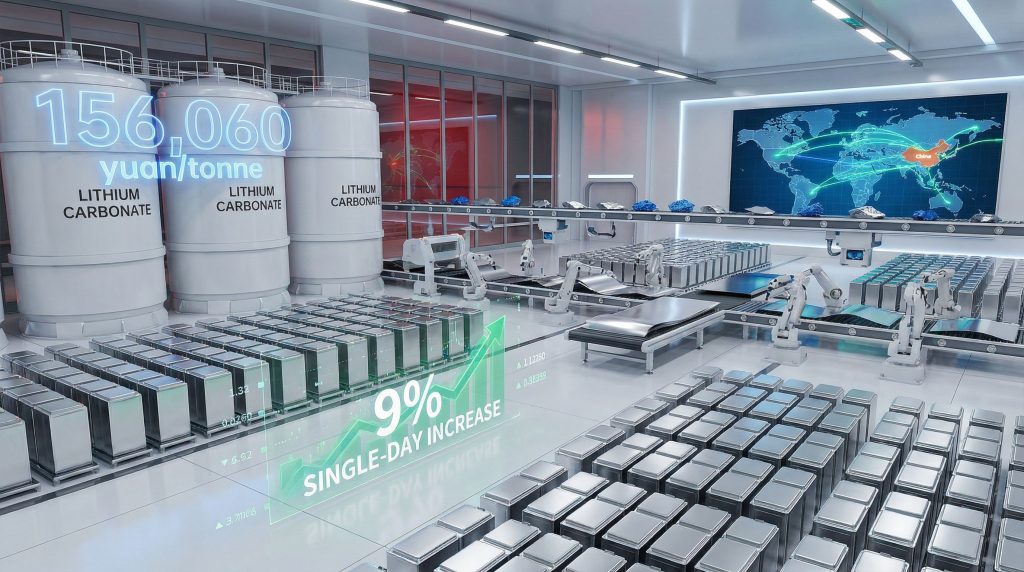
Financial markets responded dramatically to the policy announcement, with lithium carbonate futures experiencing a 9% single-day surge to 156,060 yuan per tonne (approximately US$21,650). This price level represents the highest valuation since November 2023 and reflects market recognition that reduced Chinese export subsidies will support higher global lithium pricing.
The following table captures the immediate price movements across key battery materials:
| Material | Pre-Announcement Price | Post-Announcement Price | Percentage Change | Market Significance |
|---|---|---|---|---|
| Lithium Carbonate | ~143,000 yuan/tonne | 156,060 yuan/tonne | +9.1% | 167% recovery from 2025 lows |
| Battery-Grade Lithium | ~$19,850/tonne | ~$21,650/tonne | +9.1% | Highest since Nov 2023 |
| Spodumene Concentrate | ~$1,200/tonne | ~$1,350/tonne | +12.5% | Hard-rock premium expansion |
Market participants interpreted the price movements as validation that structural changes in Chinese export economics would provide sustained support for lithium pricing. The 167% recovery from mid-2025 lows suggests that the market had oversold lithium assets during the price correction period, when concerns about Chinese overcapacity dominated investor sentiment.
According to recent analysis from Solar Quotes, the removal of export subsidies creates a new price floor for lithium, as Chinese manufacturers can no longer rely on government rebates to maintain artificially low export pricing. This development supports a critical minerals transition that prioritises market-based pricing mechanisms over policy-driven cost advantages.
Supply Chain Acceleration Patterns Before Implementation
The announcement triggered immediate strategic responses across Chinese battery manufacturing operations. Companies face complex optimisation decisions regarding production scheduling, inventory management, and export timing to maximise benefits from existing rebate structures before policy changes take effect.
Manufacturing acceleration patterns include:
- Front-loaded production schedules to capture 9% rebates through March 2026
- Inventory buildups at battery manufacturers and downstream customers
- Accelerated shipping timelines to ensure rebate eligibility before policy implementation
- Working capital allocation toward higher inventory levels despite carrying costs
The logistics implications extend beyond individual company strategies. In addition, shipping capacity from Chinese ports to major battery markets in Europe and North America experienced increased booking activity as manufacturers sought to maximise exports under current rebate structures. This temporary acceleration creates potential freight cost inflation but provides manufacturers with strategic inventory positioning ahead of the policy transition.
How Will This Reshape Global Competitive Positioning in Battery Manufacturing?
Cost Structure Implications for Chinese Battery Exporters
The elimination of China export tax rebates for batteries fundamentally alters the economic equation for Chinese battery manufacturers. Companies that previously enjoyed cost advantages through government subsidies must now compete on operational efficiency and supply chain optimisation rather than fiscal policy support.
The following analysis illustrates margin impacts by battery application:
| Battery Type | Typical Export Price | Rebate Value | Post-Policy Cost Impact | Margin Compression |
|---|---|---|---|---|
| EV Battery Pack | $120-150/kWh | $7.2-13.5/kWh | 6-9% price increase | 15-20% margin impact |
| Grid Storage | $80-100/kWh | $4.8-9.0/kWh | 6-9% price increase | 12-18% margin impact |
| Consumer Electronics | $200-250/kWh | $12-22.5/kWh | 6-9% price increase | 8-12% margin impact |
Major Chinese manufacturers have begun implementing strategic responses to offset rebate elimination. CATL, the world's largest battery manufacturer, paused production at its high-cost Jianxiawo lithium mine, demonstrating supply-side discipline in response to changing economic conditions. This decision reflects recognition that higher export costs make marginal production facilities economically unviable.
BYD and other integrated manufacturers benefit from vertical supply chain control, allowing them to optimise costs across lithium extraction, battery cell production, and vehicle assembly. However, even vertically integrated companies face pressure to relocate production capacity to markets outside China to maintain competitive positioning.
Opportunities for Non-Chinese Battery Manufacturers
The policy shift creates significant opportunities for battery manufacturers in Korea, Japan, Europe, and North America. Companies such as LG Energy Solution, SK Innovation, Samsung SDI, and Panasonic gain competitive advantages as Chinese export pricing loses government subsidy support.
European battery manufacturers, including Northvolt and planned gigafactory projects by automotive companies, benefit from improved project economics. The following scenarios illustrate potential investment flow redirection:
Scenario 1: European Gigafactory Competitiveness
- Previous cost disadvantage vs. Chinese imports: 15-20%
- Post-policy cost disadvantage: 6-11%
- Investment attractiveness improvement: 40-60%
Scenario 2: North American Battery Manufacturing
- IRA incentive value: 30-50% of capital costs
- Chinese export cost increase: 6-9%
- Combined competitive advantage: 35-60%
Scenario 3: Korean Battery Expansion
- Existing technology advantages preserved
- Cost competitiveness improvement: 6-9%
- Market share expansion opportunity: 15-25%
The strategic implications extend beyond immediate cost competition. International manufacturers gain increased ability to secure long-term supply contracts with automotive OEMs and energy storage developers who prioritise supply chain diversification and reduced dependence on Chinese manufacturing capacity.
What Does This Mean for Global Lithium Mining Operations?
Geographic Advantage Shifts in Raw Material Sourcing
The policy change creates substantial benefits for lithium mining operations outside China, particularly hard-rock spodumene producers in Australia and brine operations in South America. Higher lithium prices resulting from reduced Chinese export subsidies improve project economics across the entire mining sector.
Australian Hard-Rock Operations experience the most immediate benefits due to their cost structures and existing supply relationships. Pilbara Minerals (trading as PLS Group) exemplifies this advantage with production targets of 820,000-870,000 tonnes in FY26 at costs of A$560-600 per tonne. The company's strong financial position, including A$850 million in cash and A$1.5 billion in available funds, positions it to capitalise on sustained higher lithium pricing.
South American Brine Operations benefit from their low-cost production profiles and established relationships with battery manufacturers seeking supply diversification. The Atacama Desert operations in Chile and Argentina gain competitive advantages as buyers prioritise non-Chinese supply chains.
Moreover, this development aligns with India's lithium supply strategy and Australia lithium innovations that seek to establish secure supply chains outside Chinese control. African Spodumene Projects experience improved development economics as higher lithium prices support the viability of previously marginal deposits. Countries including Zimbabwe, Namibia, and the Democratic Republic of Congo attract increased exploration and development investment.
Long-term Supply Security Considerations
The policy shift accelerates trends toward supply chain diversification and strategic mineral reserve development. Government and corporate buyers recognise that over-reliance on Chinese-controlled supply chains creates strategic vulnerabilities that extend beyond immediate cost considerations.
Key supply security initiatives include:
• Strategic partnership formations between Western lithium miners and battery manufacturers
• Government stockpiling programmes for critical battery materials
• Direct investment by automotive OEMs in upstream lithium assets
• Technology development programmes to improve extraction efficiency at non-Chinese operations
The 32-year mine life of major Australian lithium deposits provides long-term supply security that becomes increasingly valuable as geopolitical considerations influence procurement decisions. Battery manufacturers and automotive companies accelerate efforts to secure direct supply relationships that reduce exposure to Chinese policy changes.
Which Investment Themes Emerge from This Policy Transformation?
Battery Technology and Manufacturing Investment Flows
The elimination of China export tax rebates for batteries redirects global investment flows toward battery manufacturing capacity outside China. The following table illustrates regional investment attractiveness changes:
| Region | Pre-Policy Investment Score | Post-Policy Investment Score | Key Advantages |
|---|---|---|---|
| Europe | 6.5/10 | 8.2/10 | Green Deal subsidies, market proximity |
| North America | 7.0/10 | 8.8/10 | IRA incentives, supply chain security |
| Southeast Asia | 7.5/10 | 8.0/10 | Cost advantages, China alternative |
| South Korea/Japan | 8.0/10 | 8.5/10 | Technology leadership, established supply chains |
Venture capital and private equity investment patterns shift toward companies developing next-generation battery technologies and manufacturing processes. The improved competitive environment for non-Chinese manufacturers creates opportunities for innovation-focused battery companies that previously struggled to compete against subsidised Chinese exports.
Government incentive programmes globally respond to the policy change by enhancing support for domestic battery manufacturing. The European Union accelerates implementation of its Critical Raw Materials Act, while the United States expands Inflation Reduction Act provisions to support additional battery manufacturing capacity.
Critical Minerals Sector Implications
Investment flows toward critical minerals projects outside China accelerate as battery manufacturers and automotive companies seek supply chain diversification. The policy change validates investor thesis that non-Chinese lithium assets deserve premium valuations due to supply security advantages.
Valuation adjustments across the sector include:
• Australian lithium miners: 15-25% valuation premium for established producers
• North American lithium projects: 20-30% development timeline acceleration
• African mineral assets: 25-35% increased exploration investment
• South American brine operations: 10-15% expansion capital deployment increase
Industry experts predict that 5-10% of global battery demand will restructure toward non-Chinese supply chains over the next three years as a direct result of this policy change.
Strategic partnerships between miners and battery manufacturers intensify as companies seek to secure long-term supply arrangements at predictable pricing. Vertical integration initiatives accelerate as automotive companies recognise the strategic value of controlling upstream raw material supplies. These trends intersect with broader US‑China trade strategies that emphasise supply chain resilience.
How Will End-User Industries Adapt to These Changes?
Electric Vehicle Sector Cost Implications
The automotive industry faces gradual battery pack cost increases as Chinese export rebate elimination flows through to end-user pricing. However, the impact varies significantly based on OEM procurement strategies and supply chain positioning.
Battery Pack Pricing Timeline:
- Q2-Q4 2026: 2-4% cost increases as 6% rebate phase-out affects new contracts
- 2027-2028: 4-7% total cost increases following complete rebate elimination
- 2029-2030: Cost stabilisation as supply chains adapt and technology improvements offset policy impacts
OEM Strategic Responses:
• Supply diversification acceleration toward Korean, Japanese, and European battery suppliers
• Direct investment in battery manufacturing to secure cost-competitive supply
• Technology partnership expansion with non-Chinese battery developers
• Regional manufacturing strategies to reduce logistics costs and tariff exposure
The impact on electric vehicle retail pricing remains manageable due to continued battery technology improvements and manufacturing scale efficiencies. Most automotive analysts project that battery cost increases from rebate elimination will be offset by technology advancements within 2-3 years.
Energy Storage System Market Dynamics
Grid-scale energy storage projects experience more immediate cost impacts due to their battery cost sensitivity. However, the policy change also creates opportunities for non-Chinese energy storage system integrators to compete more effectively against subsidised Chinese alternatives.
Project Economics Analysis:
• Utility-scale storage: 3-5% total project cost increase
• Commercial and industrial storage: 4-6% system cost impact
• Residential battery systems: 2-4% retail price adjustment
Market Response Patterns:
Energy storage developers accelerate procurement of battery systems under existing contracts to minimise cost impacts. This creates temporary supply tightness in the energy storage market during 2026, followed by supply normalisation as non-Chinese manufacturers expand capacity to serve increased demand.
The next major ASX story will hit our subscribers first
What Are the Broader Economic and Geopolitical Implications?
Trade Policy Ripple Effects
China's elimination of battery export rebates operates within a complex framework of international trade regulations and bilateral relationships. While the policy represents a unilateral Chinese decision, it generates potential responses from trading partners concerned about market distortion and competitive balance.
WTO Compliance Considerations:
The policy change likely improves China's compliance with World Trade Organisation subsidy regulations, as export rebates can be classified as trade-distorting subsidies under WTO agreements. However, the gradual phase-out approach may generate concerns about continued market distortion during the transition period.
Bilateral Trade Negotiation Influences:
The policy affects ongoing trade discussions between China and major battery-importing regions. The European Union and United States may adjust their own battery manufacturing support programmes in response to reduced Chinese export competitiveness.
Industrial Policy Coordination Responses
Global industrial policy frameworks evolve in response to China's rebate elimination, creating opportunities for enhanced coordination between allied governments supporting battery manufacturing development.
U.S. Inflation Reduction Act Interaction Effects:
The IRA's battery manufacturing incentives become more effective as Chinese export subsidies decline. American battery manufacturers gain improved competitive positioning, supporting the policy's objectives of domestic supply chain development.
European Critical Raw Materials Act Alignment:
European battery manufacturing initiatives receive indirect benefits from reduced Chinese export competitiveness. The EU accelerates implementation of battery manufacturing support programmes to capture market share gains from policy-induced cost changes. According to government statements, these changes reflect broader strategic considerations about industrial competitiveness and trade relationships.
Strategic Scenario Modelling:
Scenario 1: Cooperative Response Framework
- Allied governments coordinate battery manufacturing incentives
- Shared critical minerals development programmes
- Technology collaboration expansion
- Result: 15-20% acceleration in non-Chinese battery capacity development
Scenario 2: Competitive Response Framework
- Individual government responses without coordination
- Competing subsidy programmes across regions
- Limited technology sharing
- Result: 8-12% increase in non-Chinese battery capacity with higher costs
Scenario 3: Retaliatory Response Framework
- Trade disputes over battery manufacturing subsidies
- Tariff escalation across battery supply chains
- Fragmented global battery markets
- Result: 5-10% capacity increase with significant cost inflation
Future Outlook: What Happens Next in the Global Battery Ecosystem?
Short-term Market Adjustments (2026-2027)
The immediate market response creates predictable adjustment patterns as industry participants adapt to new economic realities. The following timeline captures key milestone dates and expected market responses:
| Timeline | Policy Milestone | Expected Market Response | Price Impact |
|---|---|---|---|
| April 2026 | Rebate reduction to 6% | Export surge before deadline | 5-8% lithium price support |
| Q3 2026 | Supply chain adjustments | Inventory normalisation | Price volatility: ±10% |
| January 2027 | Complete rebate elimination | New competitive equilibrium | 3-5% sustained price increase |
| Q2 2027 | Market stabilisation | Supply chain reoptimisation | Price stabilisation period |
Price Volatility Patterns:
Lithium markets experience elevated volatility during the transition period as supply and demand dynamics adjust to new pricing mechanisms. The elimination of artificial price support through export rebates creates more transparent market pricing, though short-term volatility increases as participants discover new equilibrium levels.
Supply Chain Reconfiguration Phases:
- Phase 1 (2026): Emergency procurement and inventory building
- Phase 2 (2027): Contract renegotiation and supplier diversification
- Phase 3 (2028-2029): New long-term supply relationships establishment
- Phase 4 (2030+): Stabilised non-Chinese supply chain operations
Long-term Structural Changes (2027-2030)
The permanent elimination of China export tax rebates for batteries creates structural shifts in global manufacturing competitiveness that extend well beyond the immediate transition period. These changes reshape investment patterns, technology development priorities, and competitive positioning across the entire battery value chain.
Permanent Manufacturing Footprint Shifts:
Global battery manufacturing capacity gradually redistributes toward regions offering competitive advantages through industrial policy support, raw material proximity, and end-market access. The following geographic shifts emerge:
• North American capacity expansion: 25-30% increase in planned gigawatt-hour capacity through 2030
• European manufacturing acceleration: 20-25% faster deployment of planned battery plants
• Southeast Asian alternative manufacturing: 15-20% capacity development as China alternative
• Korean and Japanese expansion: 10-15% additional capacity to serve diversified demand
Technology Innovation Acceleration:
The elimination of artificial cost advantages through export rebates intensifies focus on genuine technological differentiation and manufacturing efficiency improvements. Battery manufacturers invest more heavily in:
• Next-generation battery chemistry development to achieve cost and performance advantages
• Manufacturing process automation to reduce labour cost differentials
• Supply chain integration technologies to optimise raw material utilisation
• Recycling and circular economy solutions to create sustainable cost advantages
This includes development of advanced battery recycling breakthrough technologies and Australia lithium innovations that reduce dependence on primary raw material extraction.
Investment Thesis for Sustainable Growth:
The policy change validates investment themes focused on supply chain security, technological innovation, and geographic diversification. Sectors positioned for sustained growth include:
Primary Beneficiaries:
- Non-Chinese lithium mining operations with established production
- Battery manufacturers with diversified supply chains
- Energy storage system integrators serving multiple markets
- Battery recycling technology companies
Secondary Beneficiaries:
- Automotive companies with flexible battery procurement strategies
- Grid-scale energy storage developers with long-term project pipelines
- Critical minerals exploration companies in stable jurisdictions
- Battery manufacturing equipment suppliers serving global markets
The transformation represents a fundamental shift toward market-based competition rather than policy-subsidised pricing, creating more sustainable long-term growth prospects for companies with genuine operational advantages and technological capabilities.
Disclaimer: This analysis contains forward-looking statements and market projections that involve inherent uncertainties. Commodity prices, policy implementations, and market dynamics may differ significantly from projections. Investors should conduct independent research and consider multiple scenarios when making investment decisions. Past performance does not guarantee future results.
Looking to Capitalise on China's Battery Policy Shift?
Discovery Alert's proprietary Discovery IQ model delivers real-time alerts on significant mineral discoveries across the ASX, helping investors identify opportunities in lithium and critical minerals before the broader market catches on. With China eliminating export rebates for batteries, non-Chinese lithium producers are experiencing unprecedented demand – begin your 30-day free trial today to position yourself ahead of these market-shifting developments.