June 9, 2026
Reading Aluminium Markets Through the Lens of Inventory Divergence
Few signals in commodity markets carry as much interpretive weight as inventory divergence across product categories within a single producer's portfolio. When different product types within the same supply chain destock at materially different rates, the split tells a nuanced story about where demand is genuinely recovering and where it remains constrained by structural or psychological barriers. China's aluminium market in the first half of 2026 is providing exactly this kind of split signal, and understanding it requires looking closely at the inventory dynamics unfolding at one of the world's most consequential aluminium producers.
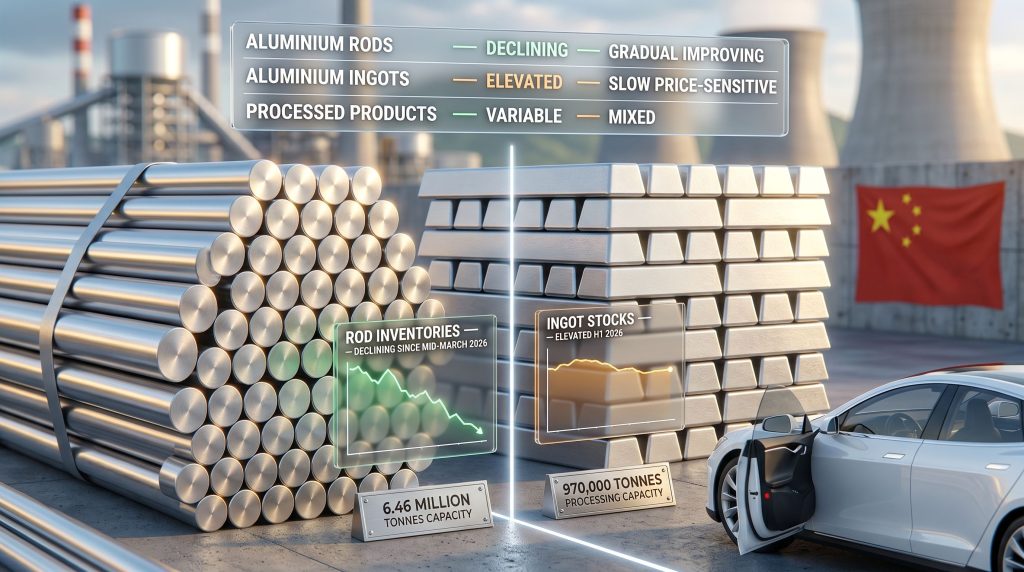
China Hongqiao Group's disclosure during its May 15, 2026 performance briefing that social inventories of aluminium rods have been declining steadily since mid-March 2026, while aluminium ingot stocks remain comparatively elevated, is not simply a routine inventory update. It is a window into the structural mechanics of China's aluminium value chain at a moment of uneven recovery. For traders, fabricators, and investors monitoring China Hongqiao aluminium rod inventories and ingot stocks, this divergence contains actionable intelligence about demand recovery sequencing, price sensitivity thresholds, and the company's strategic repositioning within the aluminium value chain.
When big ASX news breaks, our subscribers know first
Why Hongqiao's Scale Makes Its Inventory Movements a Market Signal
Understanding why Hongqiao's inventory disclosures carry such market weight requires appreciating the sheer operational scale of the company. With approximately 6.46 million tonnes of compliant electrolytic aluminium capacity, Hongqiao represents a substantial share of China's total primary aluminium output, a country that itself accounts for more than half of global primary aluminium production. This concentration means that production and inventory decisions at Hongqiao reverberate through global aluminium pricing dynamics in ways that no other single producer outside of state-controlled entities can match. Consequently, its inventory signals warrant close attention from market participants worldwide.
Critically, Hongqiao also maintains alumina self-sufficiency exceeding 100%, meaning it is not exposed to the upstream input cost volatility that affects most peers who must procure alumina through spot or term contracts. This self-sufficiency grants the company significant cost stability across market cycles and allows it to maintain production continuity even when alumina prices spike, a dynamic that often forces smaller or less integrated producers into output curtailments that inadvertently tighten global supply.
The company's 970,000 tonnes of aluminium processing capacity is equally significant. This internal conversion capability means Hongqiao can redirect primary metal away from external ingot markets and into downstream rod and processed product streams, directly influencing how inventory accumulates or disperses across its product portfolio. For analysts tracking the company's HKEX disclosures, the ratio of processed product output to external ingot sales serves as a valuable proxy for evolving inventory strategy and margin capture priorities.
The Product Split: Why Rods and Ingots Destock at Different Speeds
A fundamental analytical error in commodity market analysis is treating inventory as a monolithic concept. In the aluminium sector, aluminium ingots and aluminium rods serve distinct markets, move through different fabrication chains, and respond to different demand catalysts at different speeds. Understanding this structural difference is essential to interpreting the divergence Hongqiao reported. Furthermore, the commodity price impacts on each product category can vary substantially depending on which fabrication sector is driving near-term demand.
Aluminium ingots are primary, semi-finished metal products held at smelters, warehouses, and distribution points. Their destocking pace is broadly correlated with industrial demand across multiple sectors simultaneously, including construction, transportation equipment, industrial machinery, and packaging. Because ingot demand aggregates across so many end markets, it tends to recover only when broad economic confidence returns and buyers across diverse sectors simultaneously increase procurement activity.
Aluminium rods, by contrast, are value-added products manufactured for specific applications in wire drawing, electrical conductors, and automotive components. Their inventory levels respond to more targeted demand signals from a narrower set of fabrication industries. When wire and cable manufacturers, electrical infrastructure contractors, and automotive component fabricators increase production activity, rod stocks draw down quickly regardless of what is happening in broader industrial demand.
This structural distinction means that rod destocking can accelerate well ahead of ingot destocking during an uneven recovery, with selective downstream sectors pulling specific products while broader purchasing hesitancy in other industries persists. This is precisely the pattern Hongqiao reported in mid-2026, making the split a critical early signal rather than a contradictory data point.
How Does China's Industrial Demand Factor In?
China industrial demand patterns remain a central variable in determining how quickly ingot stocks can normalise. As industrial activity across construction and infrastructure sectors recovers unevenly, ingot destocking will continue to lag behind the more targeted rod drawdown. This dynamic reinforces the importance of monitoring sector-specific production indices rather than relying solely on aggregate industrial output figures.
Three Structural Forces Behind the Ingot Inventory Overhang
Hongqiao's May 15 briefing identified a combination of factors explaining why aluminium ingot destocking has lagged significantly behind rod inventory reduction. These factors do not represent temporary noise; they reflect structural and behavioural forces that require specific conditions to resolve.
| Contributing Factor | Mechanism | Inventory Impact |
|---|---|---|
| Late 2026 Spring Festival timing | Pushed post-holiday demand recovery from late February into late March and April | Created inventory overhang that persisted deep into Q2 2026 |
| Elevated aluminium prices | Compressed downstream buyers' willingness to hold working inventory | Concentrated stocks within upstream producers and distributors |
| Cautious procurement behaviour | Fabricators adopted just-in-time purchasing models | Reduced velocity of inventory drawdown across ingot categories |
The late Spring Festival effect is particularly instructive. China's post-holiday demand ramp is one of the most reliable seasonal patterns in global aluminium markets, with construction activity, manufacturing output, and infrastructure project spending typically accelerating sharply in the weeks following the festival. In 2026, the later-than-usual festival date compressed this recovery window, meaning the seasonal destocking impulse arrived later and with less time to normalise stocks before Q2 market conditions took hold.
The price-inventory feedback loop operating in the current environment is equally important. Strong aluminium prices throughout the 2025–2026 market cycle have created an unusual dynamic where fabricators and processors are actively minimising inventory holdings to reduce working capital exposure. When the price environment is volatile and elevated, buyers prefer to operate on shorter procurement cycles and accept higher spot-price risk rather than commit capital to forward stock positions. This behavioural shift concentrates inventory within upstream producers and trading intermediaries rather than allowing it to disperse efficiently through the value chain.
Hongqiao's Strategic Pivot Toward Value-Added Rod Production
Against this backdrop of uneven destocking, Hongqiao's May 17, 2026 launch of a lightweight aluminium alloy rod project represents a strategic response that goes beyond a simple capacity addition. The project, which includes a 20-tonne mass production line and a 3-tonne pilot line, reflects a deliberate move to shift more of Hongqiao's primary metal output away from commodity ingot markets and toward higher-value, application-specific alloy rod products. This aligns with broader aluminium sector investment trends, where producers are increasingly prioritising downstream processing to capture greater margin.
The strategic logic is compelling on multiple levels:
- Converting molten aluminium directly into alloy rod products reduces the volume of primary metal that would otherwise accumulate as plain ingot inventory at upstream storage points
- Higher-value alloy rod products capture significantly more margin per tonne of primary metal processed, improving revenue quality relative to commodity ingot sales
- The project specifically targets automotive lightweighting applications, a segment experiencing structural demand growth as Chinese electric vehicle production continues to scale at pace
- Internal conversion through processing capacity reduces Hongqiao's exposure to commodity ingot price cycles, partially insulating the company from spot market volatility in standard ingot categories
Why Automotive Lightweighting Changes the Equation
The automotive lightweighting dimension of this project deserves particular attention. Unlike cyclical demand drivers in construction or general industrial manufacturing, the shift toward aluminium-intensive electric vehicles represents a structurally durable consumption trend. Regulatory fuel efficiency standards, EV battery weight optimisation requirements, and structural component lightweighting mandates create ongoing demand for high-performance aluminium alloy rod products that is less sensitive to short-term economic cycles than traditional ingot demand.
Over the medium term, as this processing capacity scales, Hongqiao's ingot inventory exposure may structurally decline as an increasing share of primary metal output is directed into higher-value alloy rod and processed product streams. This is an inventory strategy evolution that investors and analysts should monitor closely through quarterly HKEX disclosures.
Conditions Required for Sustained Ingot Inventory Normalisation
While early signs of improvement in aluminium ingot inventories have emerged, Hongqiao has been explicit that the sustainability of this trend depends on the convergence of multiple market conditions. However, it is worth noting that aluminium tariff impacts on global trade flows could complicate the normalisation timeline by redirecting surplus volumes into certain markets. The following conditions represent the key variables analysts should monitor for evidence of genuine normalisation:
- Downstream production activity must accelerate across construction, power infrastructure, and transportation manufacturing sectors simultaneously, not just in the specific fabrication segments driving rod destocking
- Spot market transaction volumes on SHFE must increase materially, signalling that buyers are transitioning from cautious observation to active procurement at current price levels
- Incoming primary aluminium supply must be managed effectively, as any acceleration in smelter output without commensurate demand growth risks rebuilding stocks that have only recently begun declining
- Price stabilisation or moderation must occur to reduce working capital risk for downstream buyers and encourage fabricators to rebuild working inventory positions from current depleted levels
The interplay between conditions three and four deserves particular attention. A significant softening in aluminium prices, while it would encourage downstream restocking and accelerate ingot destocking, would simultaneously reduce Hongqiao's revenue per tonne and potentially alter production economics. This creates a genuine tension in the recovery narrative: the conditions most favourable for rapid inventory normalisation may not be the conditions most favourable for producer profitability.
The next major ASX story will hit our subscribers first
Comparative Inventory Framework Across Product Categories
Tracking inventory trends across Hongqiao's product portfolio through the first half of 2026 reveals that no single destocking narrative applies uniformly across the company's output mix. The table below synthesises the divergent trajectories across major product categories:
| Product Category | Inventory Trend H1 2026 | Primary Demand Driver | Destocking Rate |
|---|---|---|---|
| Aluminium Rods | Declining since mid-March 2026 | Electrical, automotive, wire drawing fabrication | Gradual but consistent improvement |
| Aluminium Ingots | Elevated, early improvement signals | Broad industrial, construction, export markets | Slow, price-sensitive recovery |
| Processed Aluminium Products | Variable by sub-category | Fabrication, packaging, transport components | Mixed, sector-dependent |
The divergence between rod and ingot destocking trajectories is likely to widen further as Hongqiao's value-added processing capacity scales. As more primary metal is converted internally into rod and alloy products, the external ingot market will receive proportionally less supply from Hongqiao. This could simultaneously tighten ingot availability and accelerate rod inventory turnover as new automotive and electrical applications consume the company's expanding alloy rod output. In addition, top aluminium producers globally are watching these inventory dynamics closely for strategic guidance on their own product mix decisions.
What This Means for Traders, Fabricators, and Market Analysts
For market participants seeking to interpret China Hongqiao aluminium rod inventories and ingot stocks as forward-looking indicators, several practical monitoring priorities emerge from this analysis. Furthermore, Asian aluminium stocks have already shown sensitivity to these supply dynamics, reinforcing why inventory divergence signals are being watched so closely across the region:
- Track the rod-to-ingot output ratio in Hongqiao's quarterly HKEX financial disclosures as a leading indicator of inventory strategy evolution and margin capture prioritisation
- Monitor SHFE aluminium spot transaction volumes alongside futures positioning data to identify when downstream buyer confidence shifts from hesitancy to active procurement
- Watch downstream production activity indices in electrical equipment, wire and cable manufacturing, and automotive components as early signals of when ingot destocking may accelerate to match rod inventory trends
- Follow Hongqiao's alloy rod project development milestones as indicators of the pace at which primary metal is being diverted from ingot streams into higher-value processing channels
The inventory intelligence embedded in Hongqiao's May 2026 disclosures ultimately tells a story of a market in selective, uneven recovery. Aluminium fabrication sectors with active near-term order books are drawing down rod stocks with confidence, while broader industrial buyers remain cautious against a backdrop of elevated prices and uncertain demand trajectories. Notably, inventory trends outside China are diverging in similarly instructive ways, with LME outperforming SHFE in a pattern that underscores the global relevance of these domestic Chinese signals. For any analyst or investor tracking China's aluminium supply chain, that distinction is not a footnote; it is the most important signal available in the current market cycle.
Disclaimer: This article contains forward-looking statements and market analysis based on publicly available information. It does not constitute financial or investment advice. Commodity markets involve substantial risk and past inventory trends are not necessarily indicative of future market conditions. Readers should conduct independent due diligence before making any investment or procurement decisions.
Want to Stay Ahead of the Next Major ASX Mineral Discovery?
Discovery Alert's proprietary Discovery IQ model delivers real-time alerts on significant ASX mineral discoveries, cutting through complex data to surface actionable investment opportunities the moment they emerge — explore historic discovery returns to understand what's at stake, and begin your 14-day free trial at Discovery Alert to position yourself ahead of the broader market.