June 15, 2026
Why Raw Material Security Has Become the Defining Competitive Frontier in Aluminium
The aluminium industry is quietly undergoing one of its most significant structural transformations in decades. Beneath the surface of smelter expansions and capacity announcements lies a more consequential battle: the race to lock in secure, long-term access to bauxite, the foundational raw material without which no aluminium can be produced. For the world's largest aluminium producers, the ability to guarantee upstream supply at predictable costs has shifted from a logistics consideration to a core strategic imperative, one that is increasingly reflected in how investors, analysts, and industry observers evaluate competitive positioning.
It is within this context that the China Hongqiao bauxite supply deal takes on its full significance, not merely as a procurement amendment, but as a window into how vertically integrated producers are thinking about the next decade of aluminium market dynamics.
When big ASX news breaks, our subscribers know first
Understanding China Hongqiao's Scale and Strategic Position
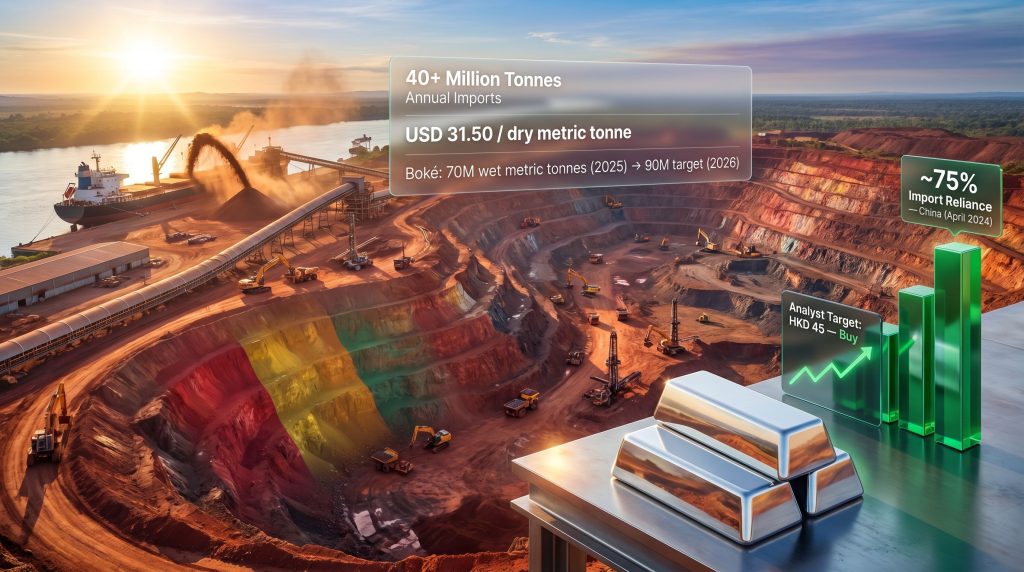
China Hongqiao Group occupies a unique position in global commodity markets. As the world's largest single importer of bauxite, the company processes more than 40 million tonnes of the ore annually, feeding a downstream aluminium smelting operation of extraordinary scale. To put this in perspective, very few nations import as much bauxite in total as Hongqiao does through its own supply chain alone.
This scale creates both an advantage and a vulnerability. On one hand, Hongqiao's purchasing power allows it to negotiate long-term supply agreements on favourable terms. On the other, any disruption to its upstream bauxite flows, whether from geopolitical instability, export policy changes, or logistical bottlenecks, would reverberate through its entire production system.
The response to this exposure has been a deliberate, multi-source procurement architecture that spans three continents, anchored by long-term contractual arrangements rather than reliance on spot market purchasing. Spot buying introduces price volatility and availability risk, neither of which is compatible with the operational certainty required to run aluminium smelters at capacity utilisation rates that justify their capital investment.
Hongqiao's Multi-Source Import Architecture
Hongqiao's bauxite procurement strategy is structured around geographic diversification, with each source playing a distinct role within the broader supply matrix. Furthermore, understanding global bauxite production trends provides essential context for appreciating why this multi-source approach is increasingly common among large-scale integrated producers.
| Supply Origin | Estimated Annual Volume (Hongqiao Share) | Strategic Role |
|---|---|---|
| Guinea (Winning Consortium) | ~30 million tonnes | Primary strategic anchor |
| Indonesia (Cita Mineral Investindo) | Expanding under long-term contract to 2033 | Secondary diversification source |
| Australia | Supplementary volumes | Spot and term blending |
Guinea serves as the cornerstone of this architecture. Through the Winning Consortium, a joint venture arrangement that includes dedicated river port infrastructure and mine development in the Boké region, Hongqiao has constructed what industry observers describe as a structural moat around its primary supply source. Proprietary logistics infrastructure of this kind creates competitive barriers that are difficult and expensive for rivals to replicate, effectively insulating Hongqiao's Guinea supply from third-party competition.
The Boké project operates at an annual nameplate capacity of 45 million tonnes, with export volumes from the facility surpassing 70 million wet metric tonnes in 2025 and a target of approximately 90 million wet metric tonnes for 2026. These figures place the Winning Consortium among the most consequential leading bauxite mines on the planet.
Breaking Down the Indonesia Supply Agreement and Volume Expansion
The Indonesia component of Hongqiao's procurement strategy centres on a long-term agreement between its subsidiary, Well Harvest Winning, and Indonesia-based Cita Mineral Investindo. The contract extends through to 2033, providing nearly a decade of supply certainty from a source that serves as a meaningful diversification buffer against over-concentration in Guinea.
The agreement uses a benchmark pricing structure of USD 31.50 per dry metric tonne, with quality adjustment mechanisms built in to account for variations in ore grade. Periodic pricing reviews are also embedded within the contract framework, ensuring the arrangement can adapt to broader market conditions without requiring a full renegotiation.
What makes the current development notable is not a new contract, but rather a structural amendment to raise the annual volume limits within the existing agreement. This distinction matters for several reasons:
- Preserving the established benchmark pricing rather than exposing procurement to current market rates
- Maintaining the counterparty relationship and contractual protections already negotiated
- Avoiding the transaction costs and timeline associated with new contract formation
- Signalling confidence in medium-term aluminium demand without making irrevocable capacity commitments
The decision to expand volume capacity within an existing long-term framework rather than initiating new procurement reflects a sophisticated understanding of contract economics. Locking in scale at existing pricing terms, while demand fundamentals remain supportive, is a meaningful cost management lever for an operation of Hongqiao's size.
The timing of this expansion is equally telling. By raising volume ceilings now, Hongqiao is signalling that its downstream aluminium smelting capacity is expected to require meaningfully larger quantities of raw ore through the remainder of this decade, a forward-looking statement embedded in a procurement decision rather than a press release.
China's Structural Shift Toward Imported Bauxite
To understand why the China Hongqiao bauxite supply deal carries industry-wide relevance, it is necessary to appreciate how profoundly China's domestic bauxite position has deteriorated over time. Chinese bauxite deposits, predominantly diasporic in mineralogy and historically located in Shanxi, Henan, and Guangxi provinces, have experienced progressive grade decline as higher-quality, shallower ore bodies have been exhausted.
The consequence has been a dramatic structural shift in sourcing dependency. China's reliance on imported bauxite reached approximately 75% of total domestic supply by April 2024, a figure that would have seemed extraordinary just fifteen years ago when domestic production still dominated the input mix. This transition has not been incidental; it reflects the combined effect of:
- Declining average aluminium oxide content in remaining domestic deposits
- Rising extraction costs as miners move to deeper and lower-grade ores
- The increasing cost-competitiveness of high-grade Guinean and Indonesian bauxite on a delivered basis
- Environmental restrictions on domestic mining in ecologically sensitive areas
This structural dependency has elevated the strategic importance of Guinea and Indonesia in ways that extend well beyond any single producer's procurement decisions. In addition, China's raw material demand across multiple commodity categories continues to reshape global supply dynamics.
Comparing Import Regions by Strategic Value
| Import Region | 2024 Share Estimate | Key Risk Factor | Strategic Importance |
|---|---|---|---|
| Guinea | Dominant and growing | Political instability, logistics | Highest, long-term JV infrastructure in place |
| Indonesia | Significant, expanding | Export policy variability | High, diversification anchor under long-term contract |
| Australia | Supplementary | Freight cost sensitivity | Moderate, blending and flexibility role |
Indonesia's inclusion in this risk framework deserves particular attention. The country has a history of adjusting its mineral export policies in ways that have created supply disruptions for Chinese buyers in other commodity categories. Securing long-term contractual arrangements with Indonesian bauxite suppliers, as Hongqiao has done through the 2033 agreement, represents a deliberate effort to insulate procurement from the policy risk inherent in relying on spot or shorter-term purchasing from that origin.
What Bauxite Grade and Quality Mean for Procurement Strategy
One aspect of bauxite supply deals that rarely receives attention outside of technical circles is the significance of ore quality in determining true delivered cost. Not all bauxite is equivalent, and the economics of alumina refining are sensitive to the aluminium oxide (Al2O3) content, reactive silica levels, and moisture content of incoming ore.
The quality adjustment provisions within Hongqiao's Indonesia agreement serve a precise function: they allow the benchmark price to flex based on the actual grade of material delivered, ensuring the buyer is not overpaying for lower-quality ore or, conversely, that the seller is appropriately compensated when higher-grade material is shipped. This mechanism is standard in sophisticated long-term bauxite contracts and reflects an industry understanding that headline price per tonne is less meaningful than cost per tonne of recoverable alumina.
Guinean bauxite, by contrast, is generally regarded as among the highest quality in the world in terms of aluminium oxide content and relatively low reactive silica, which is the primary quality contaminant that increases refining costs. This partly explains why Guinea has become so central to Chinese aluminium producers' supply strategies, not just for volume, but for the refining economics that high-grade ore enables.
Strategic Implications for Global Aluminium Markets
The expansion of Hongqiao's contracted bauxite volumes has implications that extend beyond the company's own cost structure. When large integrated buyers increase their long-term contracted volumes, they effectively remove that material from availability to other market participants. This dynamic, occurring across multiple major Chinese producers simultaneously, contributes to tightening conditions in the bauxite spot market and compresses the availability of high-grade ore for producers without equivalent supply security.
For smaller or less vertically integrated aluminium producers, the competitive implications are meaningful:
- Greater exposure to spot market price volatility in periods of tight supply
- Reduced ability to access preferred-grade material from constrained origins
- Higher financing and procurement planning costs associated with shorter-term supply arrangements
- Potential margin compression relative to integrated producers benefiting from fixed benchmark pricing
As China's domestic bauxite resource base continues to face quality and quantity constraints, producers capable of locking in long-term overseas supply at fixed benchmark prices hold a structurally advantaged cost position relative to peers who remain exposed to spot procurement.
The broader investment community has taken note of these dynamics. Analysts currently maintain a Buy rating on Hongqiao shares with a target price of HKD 45, with supply chain security increasingly cited as a factor in earnings stability assessments. The logic is straightforward: a producer that has removed raw material cost uncertainty from its margin equation is inherently easier to forecast, and more defensible under adverse market conditions, than one whose input costs fluctuate with spot bauxite availability. However, commodity supply chain risks remain a consideration for even the most well-secured producers.
The next major ASX story will hit our subscribers first
How Hongqiao's Approach Differs From Global Peers
Across the global aluminium industry, producers take meaningfully different approaches to bauxite sourcing, with major implications for cost structure and risk exposure. Consequently, comparing Hongqiao with the top aluminium producers globally reveals how distinct procurement philosophies translate into meaningfully different risk profiles.
Fully integrated Western producers such as Rio Tinto and Alcoa have historically maintained equity ownership in bauxite mines, giving them a different form of supply security based on asset ownership rather than contractual relationships. This model carries its own risks, including capital intensity, jurisdictional exposure, and operational complexity, but it provides a degree of insulation from counterparty risk.
Hongqiao's model blends elements of both approaches: joint venture infrastructure ownership in Guinea through the Winning Consortium, and long-term contractual procurement from Indonesia. This hybrid structure allows the company to benefit from the supply certainty of equity-linked arrangements in its primary source while maintaining contractual flexibility in secondary markets.
What the Indonesia volume expansion illustrates is that Hongqiao is not merely maintaining its current procurement architecture but actively scaling it in anticipation of growth. This is a forward-looking posture, and one that reflects confidence in the company's own production trajectory through the end of this decade. The South China Morning Post has reported on Hongqiao's broader efforts to secure bauxite arrangements in Guinea, further underscoring how central this strategy has been to the company's long-term planning.
Frequently Asked Questions: China Hongqiao Bauxite Supply Deal
What is the China Hongqiao bauxite supply deal?
China Hongqiao Group, through its subsidiary Well Harvest Winning, holds a long-term bauxite supply agreement with Indonesia's Cita Mineral Investindo running until 2033. The company is seeking to raise the annual volume limits under this contract to accommodate anticipated growth in its aluminium production requirements.
What price does Hongqiao pay for bauxite under the Indonesia deal?
The agreement uses a benchmark price of USD 31.50 per dry metric tonne, subject to quality-based adjustments and scheduled periodic reviews.
How much bauxite does China Hongqiao import annually?
Hongqiao imports more than 40 million tonnes of bauxite per year, drawing from Guinea, Indonesia, and Australia, making it the world's largest single importer of bauxite.
Why is Guinea so important to China's bauxite supply?
Guinea holds some of the world's largest and highest-quality bauxite reserves in terms of aluminium oxide content and low reactive silica levels. Hongqiao, through the Winning Consortium, has built dedicated mining and river port infrastructure in Guinea's Boké region, giving it a structurally advantaged and low-cost supply position. Consortium exports from Boké exceeded 70 million wet metric tonnes in 2025.
What does raising the volume cap on the Indonesia contract mean?
It means Hongqiao can purchase larger quantities of bauxite annually under the existing agreement without renegotiating the core contract terms, providing procurement flexibility whilst maintaining established pricing and supply conditions.
How import-dependent is China for bauxite?
China's reliance on imported bauxite reached approximately 75% of total supply by April 2024, reflecting the progressive depletion of economically viable domestic deposits and the increasing cost-competitiveness of overseas high-grade sources.
Key Metrics: China Hongqiao Bauxite Procurement at a Glance
| Metric | Detail |
|---|---|
| Annual bauxite imports | 40+ million tonnes |
| Indonesia contract expiry | 2033 |
| Indonesia benchmark price | USD 31.50 per dry metric tonne |
| Guinea project nameplate capacity | 45 million tonnes per annum |
| Hongqiao's Guinea supply share | ~30 million tonnes |
| Boké export volumes (2025) | 70+ million wet metric tonnes |
| Boké export target (2026) | ~90 million wet metric tonnes |
| China import reliance (April 2024) | ~75% of total bauxite supply |
| Analyst rating on Hongqiao | Buy, target HKD 45 |
Disclaimer: This article contains forward-looking statements, market forecasts, and analyst projections that are subject to change. Nothing in this article constitutes financial or investment advice. Readers should conduct their own due diligence before making any investment decisions. All figures cited are sourced from publicly available industry data and company disclosures.
Want to Stay Ahead of Major ASX Mineral Discoveries Before the Broader Market?
Discovery Alert's proprietary Discovery IQ model delivers real-time alerts on significant ASX mineral discoveries — including bauxite and other critical commodities — instantly translating complex data into actionable insights for investors at every level. Start your 14-day free trial today and explore historic discoveries that have generated extraordinary returns to understand why securing early positioning can make all the difference.