June 17, 2026
China's energy security landscape has become increasingly complex as China Iran oil transit negotiations intensify amid regional tensions threatening critical supply routes. The Persian Gulf's strategic waterways have historically served as critical arteries for international energy flows, yet their susceptibility to regional conflicts exposes fundamental weaknesses in current supply chain architectures. Understanding these dynamics requires examining how major energy importers navigate complex diplomatic, economic, and security considerations when traditional transit routes face disruption.
China's Critical Energy Dependencies and Strategic Vulnerabilities
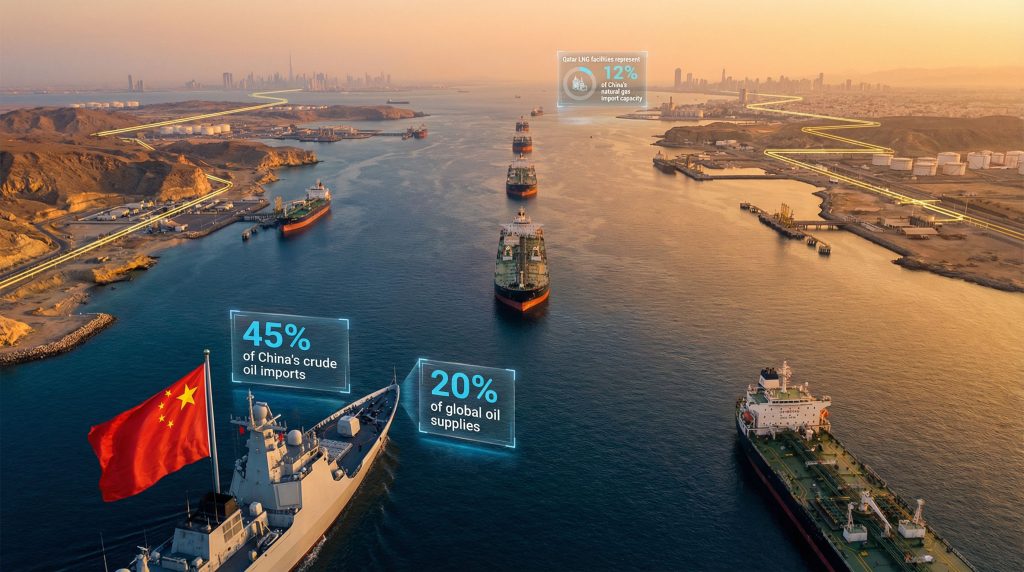
The scale of China's energy reliance on Middle Eastern suppliers reveals profound strategic vulnerabilities that extend far beyond simple import statistics. Current data indicates that approximately 45% of China's crude oil imports transit through the Strait of Hormuz, creating a dependency that could trigger severe supply shortages within weeks of sustained disruption. This concentration risk becomes particularly acute when considering that between 15-23% of seaborne oil originates specifically from Iranian sources at significantly discounted rates.
Quantifying Transit Bottleneck Exposure
The mathematical precision of China's energy vulnerability becomes stark when examining specific capacity metrics. Qatar's liquefied natural gas facilities represent roughly 12% of China's natural gas import capacity, while alternative pipeline routes from Saudi Arabia and the UAE can only cover approximately 40% of Gulf state export capacity during emergency scenarios.
Recent shipping data illustrates the severity of transit disruptions, with vessel movement through the Strait dropping dramatically from 24 vessels per day under normal conditions to merely 4 vessels per day during crisis periods. According to China talks with Iran to allow safe oil and gas passage through Hormuz, this reduction has trapped an estimated 300+ oil tankers within strait boundaries, creating a floating inventory that cannot reach destination markets.
The financial implications extend beyond simple supply constraints. Insurance markets have withdrawn war risk coverage for vessels transiting contested waters, increasing shipping costs by 15% or more. These additional expenses compound the economic pressure on energy importers already facing elevated commodity prices during supply disruptions, contributing to broader oil price movements that affect global markets.
Risk Assessment Frameworks for Extended Disruptions
Strategic planners have identified a critical two-month energy shortage timeline if the Hormuz passage remains completely closed. This assessment incorporates existing strategic petroleum reserves, alternative supply arrangements, and emergency conservation measures. However, the timeline assumes no secondary disruptions to pipeline infrastructure or processing facilities in the region.
The complexity of rerouting energy shipments creates additional vulnerabilities. Alternative routes via the Cape of Good Hope add 2-3 weeks of shipping time, requiring substantially more vessels to maintain equivalent supply levels. This extended transit period places additional strain on global tanker capacity and increases inventory requirements throughout the supply chain, potentially triggering another oil price rally.
When big ASX news breaks, our subscribers know first
Diplomatic Leverage Mechanisms in Energy Security Negotiations
China Iran oil transit negotiations emphasise economic interdependence as a diplomatic tool, leveraging Beijing's position as Iran's largest energy customer to maintain access during regional conflicts. This strategy recognises that China represents approximately 80% of Iran's oil export market, creating mutual dependency that transcends immediate political tensions.
Beijing's Multi-Channel Engagement Strategy
Chinese diplomatic engagement operates through multiple channels simultaneously, including direct communication with Iranian energy ministry officials through state enterprise networks. This approach bypasses traditional diplomatic protocols, allowing for rapid response to emerging supply chain disruptions.
The coordination extends to specific infrastructure protection measures, particularly regarding Qatar's Ras Laffan LNG facility, which represents a critical component of China's natural gas import portfolio. Furthermore, bilateral discussions emphasise mutual economic dependencies while establishing operational protocols for continued energy flows during regional instability.
Strategic messaging through official diplomatic channels reinforces these commercial relationships. The Foreign Ministry's communications emphasise shared economic interests while carefully avoiding explicit political alignment with any party in regional conflicts, particularly as concerns grow about potential US oil production decline.
Economic Incentive Structures and Long-Term Commitments
The financial scale of China-Iran energy cooperation creates substantial leverage for maintaining supply continuity. Discounted Iranian crude pricing provides China with estimated annual savings of $2-4 billion compared to market rates, creating strong economic incentives for maintaining trade relationships regardless of political pressures.
Long-term energy contracts worth more than $400 billion over 25-year periods establish framework agreements that transcend short-term political fluctuations. These agreements often include technology transfer components, linking energy access to broader industrial cooperation initiatives.
Consequently, the currency swap arrangements reduce dependency on US dollar transactions, providing additional insulation from international sanctions regimes. These financial mechanisms enable continued energy trade even when traditional banking channels face restrictions.
Global Energy Transit Security and Market Response Dynamics
The Strait of Hormuz's role in global energy security extends far beyond China's specific dependencies, with 20% of global oil supplies and 17% of world LNG shipments dependent on this single chokepoint. This concentration creates systemic risks that affect energy markets worldwide, regardless of individual country import patterns, and could contribute to oil price stagnation if supply disruptions persist.
Market Volatility and Price Discovery Mechanisms
Energy market responses to transit disruptions follow predictable patterns, with crude oil price volatility typically increasing by 15% or more during significant transit threats. These price movements reflect not only physical supply constraints but also risk premiums incorporated by traders and financial markets.
Tanker charter rates provide another indicator of supply chain stress, with daily rates reaching record highs of $200,000 or more during extended disruptions. These elevated costs ultimately translate into higher energy prices for end consumers as transportation expenses are incorporated into commodity pricing.
Regional refineries must adjust processing schedules to accommodate supply uncertainty, often maintaining higher inventory levels and modifying product slates to maximise flexibility. These operational changes create additional costs that propagate throughout energy value chains.
Emergency Response Protocols and Reserve Management
Emergency fuel allocation protocols activated during transit crises reveal the coordinated nature of international energy security planning. Major importing countries maintain strategic petroleum reserves specifically designed to buffer supply disruptions, though the adequacy of these reserves varies significantly between nations.
China currently maintains strategic petroleum reserves providing approximately 90-day import coverage, which compares unfavourably to Japan's 200+ day coverage or the United States' 180+ day strategic reserves. This disparity in buffer capacity influences diplomatic urgency during supply crises and could affect the OPEC meeting impact on global production decisions.
Alternative Supply Chain Infrastructure and Risk Mitigation
The development of alternative pipeline infrastructure represents a long-term strategy for reducing chokepoint dependencies, though the scale and timeline of these projects often lag behind immediate security needs. Current alternative capacity includes Saudi Arabia's East-West pipeline at 5 million barrels per day and the UAE's Abu Dhabi Crude Oil Pipeline providing 1.5 million barrels per day bypass capacity.
Pipeline Network Development and Capacity Expansion
The proposed Iran-Pakistan pipeline offers potential for Chinese energy diversification, though political and security challenges have delayed implementation. Central Asian pipeline networks provide additional alternatives for reducing Middle Eastern dependencies, particularly for natural gas supplies.
Investment priorities reflect the strategic importance of infrastructure diversification, with China allocating more than $50 billion for alternative pipeline development. These projects typically require 5-10 year development timelines, emphasising the importance of diplomatic solutions for managing immediate supply disruptions.
For instance, strategic reserve expansion programmes target 120-day import coverage to provide additional buffer capacity during extended disruptions. Enhanced storage facilities across coastal provinces enable more flexible response to supply chain interruptions.
Technological and Financial Innovation in Crisis Response
Supply chain financing mechanisms during transit disruptions require innovative approaches to manage payment flows when traditional banking channels face restrictions. Regional energy trading hub development provides additional flexibility for crisis response, allowing for rapid rerouting of cargoes as conditions change.
Futures contract hedging strategies enable price stability during volatile periods, though the effectiveness of these instruments depends on the duration and severity of supply disruptions. Emergency procurement protocols establish framework agreements with alternative suppliers, though activation often requires premium pricing.
Maritime security cooperation agreements with regional navies provide additional protection for energy shipments. However, the effectiveness of these arrangements depends on the political alignment of participating countries during specific conflicts.
Geopolitical Alliance Dynamics and Strategic Partnerships
The evolution of China Iran oil transit negotiations illustrates how energy security considerations drive broader geopolitical alignments. The 25-year comprehensive cooperation agreement framework establishes multiple touchpoints beyond simple energy trade, including technology transfer programmes and joint infrastructure investments.
Regional Balance of Power Considerations
Saudi Arabia's role as an alternative supplier creates competitive dynamics that benefit Chinese negotiating positions. The Kingdom's capacity to increase production during Iranian supply disruptions provides Beijing with leverage in both relationships, though this requires careful diplomatic management to avoid alienating either partner.
The UAE's position as an energy hub and diplomatic intermediary offers additional flexibility for managing regional tensions. Qatar's LNG export priorities amid regional security concerns require separate negotiation tracks, as gas supply agreements operate under different time horizons than crude oil contracts.
Moreover, Russia's growing importance as an energy partner provides China with alternatives to Middle Eastern supplies, though this relationship carries its own geopolitical complexities. The development of northern pipeline routes reduces overall dependency on southern chokepoints while creating new strategic partnerships.
According to The Guardian's coverage of China's calls for protection vessels, Beijing has increasingly emphasised maritime security cooperation to protect energy shipments.
| Strategy Component | China Approach | Alternative Models | Effectiveness Rating |
|---|---|---|---|
| Supplier Diversification | 60% Middle East, 25% Russia, 15% Other | EU: 40% Multiple, 30% Norway, 30% Other | High Risk Concentration |
| Strategic Reserves | 90-day coverage | Japan: 200+ days, US: 180+ days | Moderate Buffer Capacity |
| Transit Route Security | Diplomatic pressure, naval presence | US: Military escort, Insurance backing | Limited Unilateral Control |
| Alternative Infrastructure | Pipeline development focus | LNG terminals, renewable acceleration | Long-term Viability High |
The next major ASX story will hit our subscribers first
Investment Implications and Market Psychology During Energy Crises
Energy sector investment priorities during supply crises reflect both immediate operational needs and long-term strategic positioning. Market psychology during these periods often overreacts to short-term disruptions while undervaluing the importance of infrastructure investments that provide long-term supply security.
Capital Allocation and Risk Management Strategies
Investment decisions during energy crises require balancing immediate supply security with long-term cost optimisation. Emergency procurement often involves premium pricing that creates short-term budget pressures while highlighting the value of diversified supply chains.
The acceleration of renewable energy deployment during fossil fuel supply disruptions demonstrates how crisis periods can accelerate energy transition timelines. These investment shifts often outlast the immediate crisis conditions, creating permanent changes in energy mix preferences.
Regional energy cooperation frameworks strengthen crisis response capabilities while creating new investment opportunities in shared infrastructure projects. These collaborative approaches distribute costs while improving overall system resilience.
Disclaimer: This analysis is based on publicly available information and should not be considered as investment advice. Energy market conditions and geopolitical situations can change rapidly, and past performance does not guarantee future results. Readers should conduct their own research and consult with qualified professionals before making investment decisions.
Understanding the complex interplay between energy security, diplomatic negotiations, and market dynamics requires continuous monitoring of evolving conditions. The strategies employed during current China Iran oil transit negotiations will likely establish precedents for future crisis management, making these developments particularly significant for long-term energy planning and investment strategies.
Ready to Capitalise on Energy Market Disruptions?
Discovery Alert's proprietary Discovery IQ model delivers real-time alerts on significant ASX mineral discoveries, including energy-related opportunities that arise during global supply chain disruptions. These market-moving announcements can provide actionable insights for positioning ahead of energy sector developments by exploring Discovery Alert's discoveries page showcasing historic examples of exceptional market returns.