
August 24, 2026
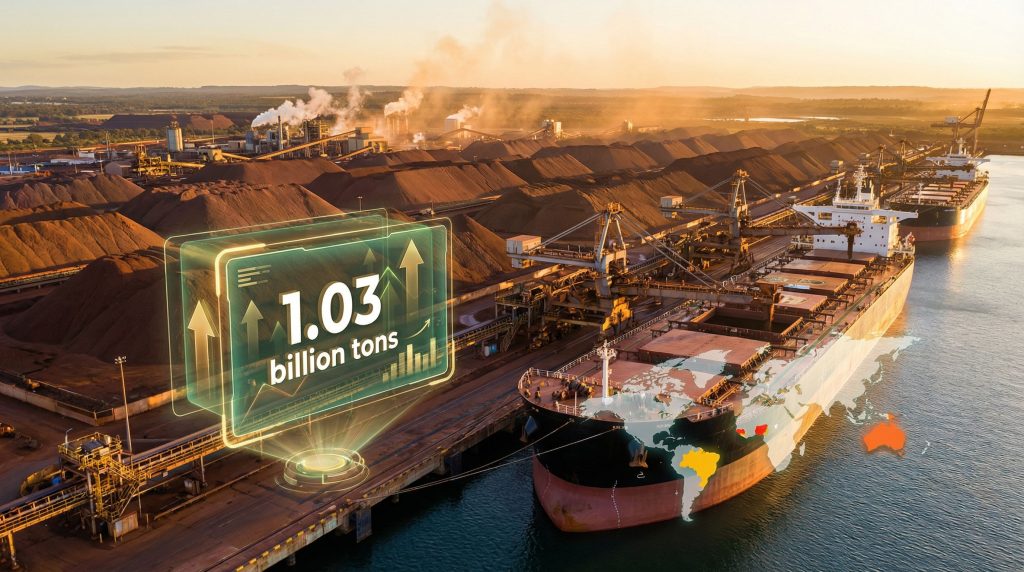
China's iron ore procurement activities have evolved into a sophisticated framework that balances immediate industrial requirements with long-term strategic positioning. The recent surge in China demand prospects reflects this comprehensive approach, demonstrating how iron ore shipment to China operations extend beyond transactional economics into geopolitical maneuvering and supply chain security planning.
The scale of China's iron ore engagement reflects this strategic depth. With imports exceeding 1.03 billion tons in the first ten months of 2025, Chinese procurement operations have become a decisive force in global commodity flows. This volume represents not merely steel production inputs but a comprehensive approach to resource security that anticipates future supply disruptions, price volatility, and geopolitical tensions across multiple decades.
Chinese iron ore strategy operates through three integrated mechanisms: counter-cyclical inventory accumulation during favorable market conditions, systematic diversification away from traditional Australia-Brazil supply concentration, and active participation in new mining project development that creates long-term supply partnerships with resource-rich developing nations.
What Economic Forces Drive China's Record-Breaking Iron Ore Imports?
Inventory Management as Economic Strategy
Chinese steel mills have transformed inventory management from operational necessity into macroeconomic policy instrument. This approach involves deliberate accumulation during periods of favorable pricing, creating strategic reserves that provide buffer capacity against future supply disruptions or price volatility while simultaneously supporting market stability through sustained demand during oversupply conditions.
The surging iron ore demand operates through sophisticated timing mechanisms that coordinate purchasing decisions across multiple mill operators. During favorable market conditions, mills increase stockpile volumes beyond immediate production requirements, creating defensive capacity while taking advantage of temporary price reductions or supply abundance.
This counter-cyclical approach provides multiple benefits:
- Price risk mitigation through accumulation during favorable conditions
- Supply security through maintained reserves during disruption periods
- Operational flexibility enabling sustained production despite supply interruptions
- Market influence supporting price stability through consistent demand patterns
The financial integration of this strategy involves coordination with commodity futures markets, enabling mills to hedge inventory positions while managing exposure to price volatility across different time horizons.
Quality Premium Economics
The economic rationale for high-grade imported iron ore becomes evident through processing efficiency analysis. Domestic Chinese iron ore typically contains 30-40% iron content, while imported alternatives average 60-65% iron content, creating substantial cost advantages across energy consumption, processing duration, and overall production efficiency metrics.
This quality differential translates into tangible economic benefits:
Processing Efficiency Gains:
- Energy reduction through higher-grade ore requiring less processing per unit output
- Time efficiency via reduced impurities enabling faster blast furnace operations
- Waste minimization through lower gangue content reducing disposal costs
- Throughput optimization enabling more efficient production cycles
The cost structure analysis reveals that premium-priced imported ore often delivers lower total production costs despite higher acquisition prices. A Chinese steel mill processing imported 65% iron content ore versus domestic 35% iron content material would require approximately 50% less volume for equivalent iron content, with proportional reductions in energy consumption for roasting and beneficiation processes.
Environmental compliance considerations further support imported ore economics, as higher-grade materials produce fewer waste byproducts requiring environmental remediation and regulatory compliance management.
When big ASX news breaks, our subscribers know first
How Do Global Shipping Markets Respond to China's Import Surge?
Freight Rate Dynamics and Market Impact
Global dry bulk shipping markets have experienced significant disruption from sustained Chinese iron ore import volumes and the emergence of new supply routes. According to Baltic Exchange data, Capesize vessel earnings reached $38,427 per day on December 2, 2025, representing the highest levels in two years and demonstrating direct transmission of Chinese demand patterns through international shipping economics.
The first iron ore shipment from Simandou from Guinea's mining project has created additional demand pressure for large-vessel capacity dedicated to long-distance ore transport. The Winning Youth vessel's departure from Morebaya port, Guinea, bound for Majishan port in Zhejiang Province represents the beginning of a new shipping route that will require sustained Capesize capacity allocation.
Shipping Market Response Mechanisms:
- Route optimization as operators adjust vessel deployment to capture higher earnings
- Capacity reallocation from alternative bulk commodities to iron ore transport
- Contract restructuring enabling shipping companies to benefit from sustained demand
- Fleet expansion planning supporting long-term capacity requirements for emerging routes
The Guinea-to-China route requires approximately 40-45 days transit time, creating sustained vessel commitment that reduces available capacity for other routes and contributing to overall market tightness across Capesize operations.
Port Infrastructure and Logistics Optimization
Chinese port facilities have implemented sophisticated coordination systems to accommodate record-breaking monthly import volumes, with September 2025's 116.33 million tons requiring complex logistics management across multiple coastal provinces and inland distribution networks.
The infrastructure demands encompass both physical capacity and operational integration:
Port Facility Requirements:
- Receiving capacity through specialised Capesize vessel berths with adequate draft depth
- Material handling systems including ore reclaim equipment and stockpile management
- Quality assurance facilities for sampling, testing, and grade verification
- Environmental systems for dust suppression and contamination prevention
Distribution Network Integration:
- Rail connections enabling efficient transport to inland steel mills
- Barge systems supporting distribution along waterway networks to riverside facilities
- Truck transport for regional distribution to smaller mills and processing facilities
- Inventory tracking through real-time management systems coordinating supply flows
The development of Morebaya port in Guinea, specifically constructed for Simandou iron haulage operations, demonstrates the infrastructure investment required to support new supply routes. This purpose-built facility represents coordination between mining project development and port construction to accommodate Capesize vessel loading operations.
What Role Does Geographic Diversification Play in China's Supply Security?
Traditional Supplier Relationships
Australia and Brazil maintain dominant positions in Chinese iron ore supply, accounting for over 80% of total imports through established infrastructure, relationship capital, and production expertise accumulated over decades. This concentration reflects both economic efficiency through competitive supply chains and strategic vulnerability through supplier concentration risk.
Australian Supply Characteristics:
- Major producers: Rio Tinto, BHP Billiton, Fortescue Metals Group
- Infrastructure: Established mine-to-port logistics through Port Hedland, Dampier, Port Walcott
- Quality standards: Typically 62-67% iron content with consistent specifications
- Contract structures: Long-term supply agreements typically spanning 3-5 years
Brazilian Supply Framework:
- Primary producers: Vale, Samarco, CSN with extensive production capacity
- Port systems: Tubarão and Vitória ports with dedicated ore-handling facilities
- Quality grades: Typically 63-67% iron content with established quality specifications
- Relationship depth: Long-term offtake agreements with major Chinese steel mills
The efficiency of these established relationships creates economic advantages through standardised quality specifications, predictable shipping schedules, and negotiated pricing mechanisms that reflect long-term partnership development.
Emerging Supply Chain Partnerships
The $23 billion Simandou project in Guinea represents the most significant challenge to Australia-Brazil supply dominance in decades. Furthermore, this initiative introduces a new major supplier capable of altering global pricing mechanisms and providing China with enhanced negotiating leverage across international iron ore markets.
The project structure involves four mining blocks with participation from Rio Tinto, Winning Consortium Simandou, and other Chinese firms, creating a complex ownership arrangement that reflects both international mining expertise and Chinese strategic investment priorities as a strategic iron ore asset.
Simandou Strategic Significance:
- Production capacity: Potential for substantial volume capable of influencing global supply balance
- Quality advantages: High-grade reserves offering competitive alternatives to traditional suppliers
- Infrastructure investment: Purpose-built port and rail facilities creating long-term operational capacity
- Geopolitical implications: Enhanced Chinese influence in West African resource development
The first commercial shipment of iron ore to China from Simandou, carried by the Winning Youth vessel, marks the beginning of operational production that could fundamentally reshape global iron ore trade patterns over the coming decades.
How Does China's Import Strategy Influence Global Steel Market Dynamics?
Export Competitiveness Through Import Optimization
China's ability to maintain competitive steel export pricing stems partly from sophisticated iron ore procurement strategies that optimise raw material costs through strategic timing, quality selection, and supplier diversification. Lower domestic steel demand has enabled Chinese producers to redirect output to international markets, supported by favourable exchange rates and optimised input costs.
The export strategy operates through several mechanisms:
- Cost optimisation via strategic iron ore procurement during favourable market conditions
- Quality enhancement through selective use of high-grade imported ore for premium steel products
- Market timing enabling export volume adjustments based on domestic demand cycles
- Currency advantages supporting export competitiveness during favourable exchange rate periods
Chinese steel exports have created significant competitive pressure across international markets, particularly affecting producers in Southeast Asia, Africa, and Latin America who must adapt to new pricing realities while creating opportunities for infrastructure development and industrial growth in importing regions.
Regional Market Disruption Patterns
The global impact of Chinese steel export strategies extends beyond simple price competition into structural changes in regional steel industries. Domestic producers in emerging markets face pressure to improve efficiency, specialise in niche products, or integrate with international supply chains to maintain competitiveness.
Regional Impact Analysis:
- Southeast Asia: Domestic mills adapting through specialisation and efficiency improvements
- Africa: Opportunities for infrastructure development supported by competitive Chinese steel
- Latin America: Mixed impacts with displacement in some markets and growth opportunities in others
- Europe/North America: Higher-end market focus as Chinese competition concentrates in commodity grades
This market disruption creates both challenges and opportunities, forcing efficiency improvements while providing affordable steel inputs for infrastructure development and industrial growth in developing economies.
What Long-Term Structural Changes Are Emerging in Iron Ore Trade?
Technology Integration in Supply Chain Management
Advanced shipping tracking systems and real-time cargo monitoring have enabled more sophisticated demand forecasting and inventory optimisation, allowing Chinese importers to respond rapidly to market opportunities and supply chain disruptions while maintaining operational efficiency across complex logistics networks.
Technology Applications:
- Real-time tracking enabling precise cargo management and delivery coordination
- Predictive analytics supporting demand forecasting and inventory optimisation
- Quality monitoring through advanced sampling and testing systems at multiple supply chain points
- Financial integration connecting physical commodity flows with financial risk management systems
These technological advances support more responsive supply chain management, enabling Chinese importers to capitalise on market opportunities while maintaining supply security across multiple suppliers and transportation routes. In addition, these developments align with broader mining industry evolution trends towards digitisation and automation.
Financial Market Integration
Iron ore futures markets have become increasingly sophisticated, with Chinese financial institutions developing complex hedging strategies that integrate physical commodity flows with financial risk management across multiple time horizons, creating more efficient price discovery and risk distribution mechanisms.
The financial integration encompasses:
- Hedging strategies coordinating physical purchases with futures market positions
- Price risk management across multiple suppliers, qualities, and delivery timeframes
- Currency hedging managing exchange rate exposure on international transactions
- Credit facilities supporting large-scale inventory accumulation and long-term supply contracts
This financial sophistication enables more strategic approaches to iron ore procurement that consider not merely immediate costs but long-term value creation through optimised risk management and market timing.
How Will New Mining Projects Reshape Global Supply Dynamics?
Simandou's Strategic Significance
The Guinea project represents more than additional supply capacity; it introduces a new geographic axis in global iron ore trade that could fundamentally alter pricing mechanisms, shipping routes, and diplomatic relationships between major consuming and producing nations over the next decade.
The project's operational commencement, marked by the first commercial iron ore shipment to China aboard the Winning Youth vessel, signals the beginning of production ramp-up that aims for full capacity within 2.5 years. This timeline suggests significant volume additions to global supply that will require market accommodation and price adjustment.
Long-term Supply Implications:
- Market share redistribution as Simandou production competes with Australian and Brazilian suppliers
- Pricing mechanism evolution as three-supplier competition replaces two-supplier dominance
- Infrastructure development creating permanent changes in West African mineral export capacity
- Geopolitical realignment strengthening China-Guinea economic relationships through resource partnerships
The project's success could encourage additional African mineral development projects, creating broader shifts in global commodity supply patterns beyond iron ore into other strategic minerals essential for industrial development.
Infrastructure Development Implications
New mining projects require substantial port, rail, and processing infrastructure that creates long-term economic relationships between China and resource-rich developing nations, extending Chinese influence through industrial development partnerships that support both resource extraction and broader economic development.
Infrastructure Investment Components:
- Port facilities capable of handling large-scale mineral export operations
- Rail networks connecting mining areas to coastal export facilities
- Processing plants enabling value-added mineral processing before export
- Supporting infrastructure including power generation, water systems, and telecommunications
These infrastructure investments create lasting economic relationships that extend beyond immediate resource extraction into broader development partnerships, potentially reshaping economic relationships between China and African mineral-producing nations.
The next major ASX story will hit our subscribers first
What Economic Indicators Signal Future Import Trends?
Steel Production Correlation Analysis
Monthly iron ore import volumes demonstrate increasingly sophisticated correlation patterns with anticipated steel production cycles, reflecting forward-looking strategic planning rather than immediate production requirements. This evolution suggests more advanced demand management approaches that integrate market intelligence with operational planning.
Import Pattern Indicators:
- Seasonal adjustments accounting for construction and infrastructure demand cycles
- Strategic timing coordinating purchases with favourable market conditions
- Quality optimisation selecting ore grades based on planned steel product specifications
- Inventory management building reserves during favourable pricing periods
The correlation analysis reveals that Chinese importers increasingly make purchasing decisions based on medium-term market projections rather than immediate production needs, creating more strategic approaches to raw material procurement.
Currency and Trade Balance Considerations
Iron ore imports represent a significant component of China's trade balance, with import timing influenced by currency fluctuations, international trade relationships, and domestic economic policy priorities that extend beyond immediate steel industry requirements.
Economic Policy Integration:
- Currency management timing large purchases during favourable exchange rate periods
- Trade balance optimisation coordinating iron ore imports with broader trade policy objectives
- Economic stimulus using infrastructure investment and steel production to support domestic growth
- International relationships leveraging resource imports to strengthen diplomatic partnerships
These broader economic considerations increasingly influence iron ore import strategies, creating complexity that extends beyond traditional commodity procurement into macroeconomic policy implementation.
How Do Environmental Regulations Influence Import Strategies?
Energy Efficiency Requirements
Stricter environmental standards favour high-grade imported iron ore over domestic alternatives, creating structural demand for premium international supplies that support cleaner steel production processes and reduced carbon emissions per ton of output, while supporting China's broader environmental policy objectives.
Environmental Compliance Drivers:
- Carbon reduction targets requiring more efficient steel production processes
- Energy efficiency standards favouring high-grade ore with lower processing requirements
- Waste minimisation through reduced gangue content in imported ore
- Air quality improvements via cleaner production processes using premium inputs
These environmental considerations create long-term structural demand for high-quality imported iron ore that transcends immediate cost considerations, supporting sustained import volumes from premium suppliers.
Sustainable Supply Chain Development
Chinese importers increasingly evaluate suppliers based on environmental compliance, labour standards, and sustainable mining practices, potentially reshaping global mining industry standards and operational approaches as Chinese demand influences producer practices worldwide.
Sustainability Evaluation Criteria:
- Environmental impact assessment of mining operations and transportation systems
- Labour standards compliance ensuring ethical mining practices across supply chain
- Community development supporting local economic development in mining regions
- Rehabilitation planning requiring mine closure and environmental restoration planning
These sustainability requirements create competitive advantages for mining companies that invest in responsible practices while potentially excluding suppliers that fail to meet evolving standards, reshaping global mining industry approaches to environmental and social responsibility.
What Investment Implications Emerge from China's Import Patterns?
Infrastructure Investment Requirements
Sustained high-volume iron ore imports require continuous investment in port facilities, inland transportation networks, and storage capacity, creating opportunities for both domestic and international infrastructure developers while supporting broader economic development across multiple sectors.
Investment Categories:
- Port expansion to accommodate larger vessels and higher throughput volumes
- Rail network enhancement supporting efficient inland distribution to steel mills
- Storage facilities enabling strategic inventory management and quality preservation
- Processing equipment for quality testing, blending, and material handling
These infrastructure requirements create sustained investment opportunities that extend beyond immediate commodity handling into broader logistics and transportation development, supporting economic growth across multiple industries.
Mining Sector Capital Allocation
Chinese import patterns directly influence global mining investment decisions, with sustained demand supporting expansion projects and exploration activities across multiple continents and geological formations, while creating competitive pressure that drives operational efficiency improvements.
Investment Decision Factors:
- Demand sustainability based on Chinese long-term import projections
- Quality premiums favouring high-grade deposits that command market premiums
- Infrastructure access requiring proximity to port facilities or development potential
- Geopolitical stability ensuring reliable production and export capability
The investment implications extend beyond iron ore into broader mineral development, as Chinese demand patterns influence capital allocation decisions across multiple commodity sectors and geographic regions.
Disclaimer: This analysis contains forward-looking statements and projections based on current market conditions and available information. Commodity markets are subject to significant volatility and unpredictable changes. Investment decisions should consider multiple factors and seek professional advice appropriate to individual circumstances.
China's iron ore import strategy represents a sophisticated approach to resource security that extends far beyond immediate industrial needs into strategic economic policy implementation. The integration of record-breaking import volumes, geographic diversification efforts, and strategic inventory management creates ripple effects across global shipping markets, mining investment patterns, and international trade relationships that will continue evolving as new suppliers like Simandou begin operations and traditional Australia-Brazil dominance faces its first significant challenge in decades.
Want to Capitalise on Mining Discoveries Before They Hit the Headlines?
Discovery Alert's proprietary Discovery IQ model delivers instant notifications on significant ASX mineral discoveries, empowering subscribers to identify actionable opportunities ahead of the broader market. Explore how major mineral discoveries can generate substantial returns and begin your 30-day free trial today to secure your market-leading advantage.