August 21, 2026
China's manufacturing sector faces unprecedented pressure as precious metal costs surge to record levels, fundamentally reshaping production economics across renewable energy supply chains. The silver market squeeze has particularly impacted solar photovoltaic manufacturing, where China's Longi to replace silver in solar panels represents a strategic response to commodity price inflation that threatens industry profitability. This transformation signals more than cost optimization—it demonstrates how material innovation drives competitive advantage in global clean energy markets.
Advanced solar cell architectures have emerged as potential solutions to this metallization crisis. Back-contact cell designs, in particular, offer unique advantages in material flexibility that conventional front-contact technologies cannot match. The technical feasibility of substituting base metals for silver in these specialised architectures opens new pathways for cost reduction while maintaining performance standards essential for commercial viability.
Economic Drivers Behind Silver Substitution Strategies
Commodity Price Inflation Impact on Solar Manufacturing
The solar industry confronts a stark reality: silver's share of module production costs has increased from approximately 5% to 14% over a two-year period ending in January 2026, according to BloombergNEF data. This 280% relative increase in cost burden has compressed manufacturing margins across the supply chain. Furthermore, the inflation and tariffs impact has created additional pressure for material substitution strategies.
Key Cost Impact Metrics:
• Silver cost share: 14% of total module production costs (2026)
• Historical baseline: 5% cost share (approximately 2024)
• Commodity price level: $76.65 per troy ounce (January 5, 2026)
• Daily price volatility: +4.89% trading session movement
The metallisation cost crisis extends beyond simple commodity price appreciation. Manufacturing enterprises must absorb these increased input costs while competing in markets characterised by aggressive pricing strategies and thin profit margins. This economic pressure has accelerated research into alternative metallisation approaches that maintain electrical performance while reducing precious metal dependency.
Monetary Policy and Safe-Haven Demand Dynamics
Federal Reserve interest rate policies have contributed to silver price escalation through multiple transmission mechanisms. Lower interest rates reduce the opportunity cost of holding non-yielding precious metals, whilst simultaneously increasing investor appetite for inflation hedges and safe-haven assets. Geopolitical tensions have amplified these dynamics, creating additional upward pressure on precious metal valuations.
The intersection of monetary policy and geopolitical uncertainty has created a challenging environment for industrial silver consumers. Solar manufacturers face the dual challenge of rising input costs and increased price volatility. Consequently, this makes long-term production planning increasingly difficult.
Disclaimer: Commodity price movements involve significant uncertainty. Manufacturing cost projections depend on multiple variables including supply chain dynamics, technological adoption rates, and macroeconomic conditions that may differ from current expectations.
When big ASX news breaks, our subscribers know first
Technical Performance Analysis of Base Metal Alternatives
Electrical Conductivity and Efficiency Considerations
Silver's superior electrical conductivity—approximately 63 × 10⁶ S/m—has historically made it the preferred metallisation material for solar cell applications. However, base metal alternatives such as copper can achieve acceptable performance levels when combined with appropriate barrier layer technologies and optimised cell architectures.
The challenge lies in maintaining power conversion efficiency whilst reducing material costs. Base metals typically exhibit lower conductivity than silver, requiring design modifications to compensate for increased electrical resistance. In addition, back-contact cell architectures provide unique advantages in this context by allowing more flexible metallisation patterns that can accommodate alternative materials.
Performance Comparison Framework:
• Electrical conductivity differential: Base metals vs. silver
• Power output maintenance requirements
• Long-term degradation rate implications
• Manufacturing yield considerations during transition
Manufacturing Process Adaptations
China's Longi to replace silver in solar panels through mass production beginning in Q2 2026, demonstrating the technical feasibility of this transition. LONGi's innovative approach utilises back-contact cell technology that enables easier material substitution compared to conventional TopCon architectures, according to statements made in May 2025.
Manufacturing process modifications required for base metal implementation include:
• Production line equipment adjustments for new metallisation materials
• Quality control parameter updates for alternative metal systems
• Supply chain establishment for base metal inputs
• Technical validation protocols for performance verification
The timeline for industry-wide adoption depends significantly on manufacturing equipment compatibility and the availability of qualified base metal suppliers. Furthermore, these suppliers must be capable of meeting solar industry quality standards.
Back-Contact Technology Advantages for Material Substitution
Architectural Benefits of BC Cell Design
Back-contact solar cells position all electrical contacts on the rear surface, eliminating the need for front-side metallisation that creates shading losses in conventional designs. This architectural approach provides several advantages for material substitution strategies:
Technical Advantages:
• Reduced shadowing losses from front-contact elimination
• Enhanced aesthetic appeal for residential applications
• Greater flexibility in metallisation material selection
• Improved performance in high-temperature environments
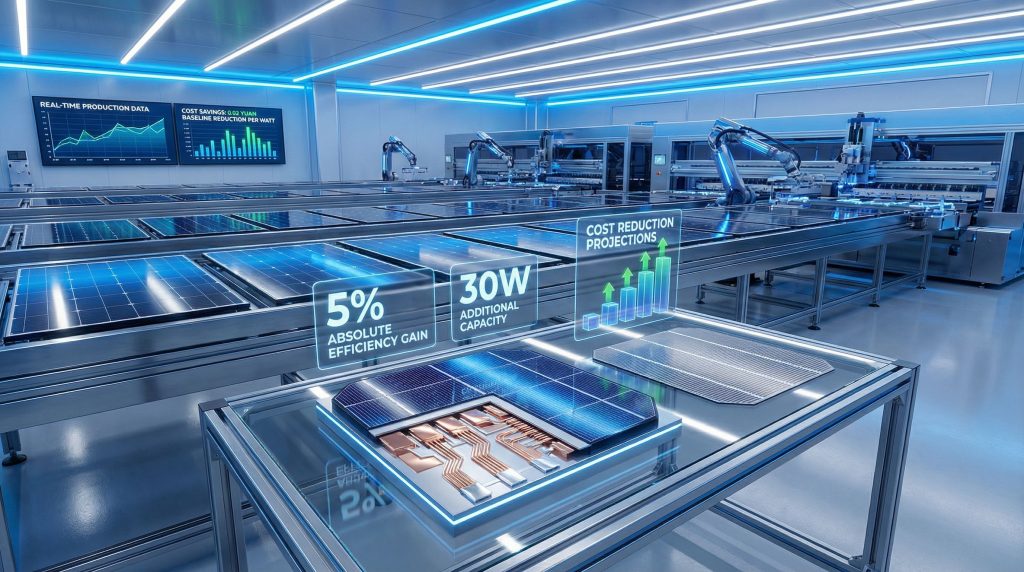
LONGi's BC cell technology reportedly generates more power from equivalent sunlight compared to mainstream TopCon approaches, though specific efficiency metrics require independent verification. The company projects cost reduction of 0.02 yuan per watt through base metal substitution. However, this figure represents only the metallisation component of total manufacturing costs.
Market Position and Competitive Dynamics
Back-contact cells currently represent a smaller market share compared to TopCon technology, according to industry analysis. This positioning may provide strategic advantages for early adopters of base metal substitution, as BC manufacturers face less direct competition in their specific technology segment.
LONGi has indicated focus areas including domestic Chinese markets, Europe, the United States, and Australia for deploying cost-optimised solar products. This geographic strategy suggests confidence in the commercial viability of base metal alternatives across diverse market conditions. Moreover, Australia's green metals leadership position creates attractive market opportunities for these innovations.
Financial Impact Assessment of Material Substitution
Cost Reduction Modelling and Projections
The baseline cost reduction of 0.02 yuan per watt represents a meaningful but incremental improvement in manufacturing economics. To contextualise this figure:
Cost Impact Analysis:
• Per-watt reduction: 0.02 yuan (approximately $0.0028 USD at current exchange rates)
• Percentage of total module costs: Varies by manufacturer and market segment
• Volume scaling potential: Higher savings at increased production levels
• Break-even considerations: Equipment investment recovery timeline
| Production Scale | Annual Cost Savings | Investment Recovery |
|---|---|---|
| 1 GW capacity | Estimated reduction | Equipment dependent |
| 5 GW capacity | Scaled savings | Improved ROI timeline |
| 10 GW capacity | Maximum efficiency | Optimised economics |
Industry-Wide Economic Implications
The transition to base metals could provide significant relief for solar manufacturers facing intense competition and financial pressures. However, the magnitude of industry-wide benefits depends on adoption rates across competing manufacturers and the availability of qualified alternative materials.
Supply chain cost structure transformation may create cascading effects throughout the solar value chain. Module producers adopting base metal substitution could gain competitive advantages through improved pricing flexibility. Consequently, this could potentially accelerate market share gains in price-sensitive segments.
Disclaimer: Financial projections involve significant uncertainty. Actual cost savings may vary based on commodity price movements, manufacturing efficiency improvements, and competitive market dynamics that differ from current expectations.
Silver Market Demand Implications
Industrial Demand Reduction Scenarios
The solar industry's material substitution strategy represents potential demand destruction for industrial silver consumption. While precise consumption figures require detailed industry analysis, the sector's growing importance as a silver consumer suggests meaningful market implications.
Market Impact Framework:
• Current solar industry silver consumption levels
• Projected demand reduction under various adoption scenarios
• Timeline for widespread base metal implementation
• Alternative industrial demand sources for silver
Historical silver consumption patterns in solar manufacturing have grown alongside industry expansion. If significant portions of the market adopt base metal alternatives, this could create structural demand reduction. Furthermore, this might affect silver pricing dynamics independent of safe-haven investment flows.
Investment Market Considerations
Silver's dual role as both an industrial metal and investment vehicle creates complex market dynamics. While solar industry demand reduction may create downward pressure on prices, continued safe-haven demand from geopolitical tensions and monetary policy uncertainty may provide offsetting support.
Investment Implications:
• Portfolio allocation considerations for silver exposure
• Correlation patterns with other precious metals
• Industrial demand vs. investment demand balance
• Mining sector revenue impact from reduced solar consumption
Silver futures trading at $76.65 per troy ounce (up 4.89% on January 5, 2026) reflects current market sentiment. However, longer-term pricing will depend on the balance between investment demand and industrial consumption patterns.
Regional Market Development Opportunities
Geographic Expansion Strategies
Cost-reduced solar technology creates opportunities for market expansion in price-sensitive regions. LONGi's focus on domestic Chinese markets, Europe, the United States, and Australia suggests confidence in the commercial appeal of base metal alternatives. In particular, these span diverse regulatory and economic environments.
Regional Market Considerations:
• Domestic Chinese market penetration potential
• European renewable energy policy support
• US residential and commercial solar adoption rates
• Australian distributed energy resource integration
Manufacturing cost reductions may accelerate solar deployment in markets where financing constraints or grid parity considerations have limited adoption. The 0.02 yuan per watt reduction, whilst modest in absolute terms, represents meaningful savings at utility-scale deployment volumes.
Competitive Market Positioning
Early adoption of base metal substitution could provide competitive advantages for manufacturers willing to invest in production process modifications. First-mover benefits may include improved market positioning, customer relationships, and operational experience that creates barriers for competitors.
However, technological differentiation advantages may diminish as alternative manufacturers develop similar capabilities. The sustainability of competitive benefits depends on continued innovation and manufacturing efficiency improvements beyond initial material substitution. Industry innovation trends suggest that competitive advantages require continuous technological advancement.
The next major ASX story will hit our subscribers first
Implementation Challenges and Risk Assessment
Technical Validation Requirements
Base metal substitution involves technical risks that require comprehensive validation before widespread commercial deployment. Key areas of concern include:
Risk Assessment Matrix:
• Long-term reliability performance under field conditions
• Manufacturing consistency and yield rate maintenance
• Customer acceptance of alternative technology approaches
• Regulatory approval and certification timeline requirements
The solar industry's emphasis on 25-year performance warranties creates particular challenges for new technologies. Base metal alternatives must demonstrate equivalent longevity and degradation characteristics to gain widespread market acceptance.
Supply Chain Development Needs
Successful implementation requires establishment of qualified base metal supply chains capable of meeting solar industry quality standards. This includes:
• Material specification development and standardisation
• Supplier qualification and certification processes
• Quality assurance protocols for base metal inputs
• Logistics and inventory management for new material streams
Supply chain complexity may initially limit the pace of adoption, particularly for manufacturers operating in multiple geographic markets. Furthermore, these markets may have varying supplier capabilities, adding operational challenges.
Future Technology Evolution and Market Transformation
Innovation Trajectory Projections
Material substitution in solar manufacturing represents part of broader cost optimisation trends in renewable energy systems. Historical patterns suggest continued innovation in areas including:
Technology Development Areas:
• Advanced metallisation techniques and materials
• Cell architecture optimisation for cost reduction
• Manufacturing process automation and efficiency improvements
• Integration with energy storage cost reduction trends
The success of base metal substitution may accelerate research into additional cost reduction opportunities. Therefore, this creates cumulative benefits for solar industry economics and market competitiveness, particularly as green transition materials continue evolving.
Market Transformation Timeline
Industry-wide adoption of material alternatives typically follows predictable phases:
| Phase | Timeline | Characteristics |
|---|---|---|
| Early Adoption | Q2 2026 – Q4 2026 | Limited production, technical validation |
| Market Expansion | 2027 – 2028 | Increased capacity, competitive response |
| Industry Standard | 2029+ | Widespread adoption, supply chain maturity |
The pace of transformation depends on technical validation results, competitive dynamics, and continued commodity price pressures. Moreover, these factors maintain economic incentives for substitution.
Disclaimer: Technology adoption timelines involve significant uncertainty. Actual implementation rates may vary based on technical performance validation, regulatory requirements, and market acceptance factors that differ from current projections.
Investment Implications and Strategic Considerations
Equity Market Opportunities
Solar manufacturers successfully implementing base metal substitution may experience improved financial performance through reduced input costs and enhanced competitive positioning. Key investment considerations include:
Company Analysis Framework:
• Technology differentiation and intellectual property positions
• Production capacity and scaling capabilities
• Market exposure and customer relationship strength
• Financial performance improvement potential from cost reduction
LONGi's strategic positioning with Q2 2026 mass production timeline provides specific investment thesis validation opportunities. Consequently, actual financial performance data becomes available through quarterly reporting cycles.
Supply Chain Investment Themes
Base metal substitution creates investment opportunities throughout the solar supply chain, including:
• Base metal processing and refining capacity expansion
• Manufacturing equipment adaptation and development
• Technology licensing and intellectual property monetisation
• Quality assurance and testing service providers
The transformation also creates potential challenges for silver-dependent suppliers who may need to diversify. In particular, they must explore alternative material systems or market segments.
Conclusion: Strategic Material Innovation Reshapes Solar Economics
The solar industry's transition toward base metal alternatives represents a fundamental shift in manufacturing cost structures that extends beyond simple commodity substitution. China's Longi to replace silver in solar panels demonstrates the technical feasibility and economic necessity of this transformation, with broader implications for global renewable energy deployment economics.
Manufacturing cost pressures from precious metal price appreciation have accelerated innovation in cell architectures and metallisation techniques. Back-contact technology provides unique advantages for material substitution, though widespread adoption depends on continued technical validation and supply chain development.
The success of base metal implementation will influence silver market dynamics, regional solar market development, and competitive positioning among manufacturers. Investment opportunities emerge across multiple segments, from technology developers to supply chain participants. However, execution risks remain significant during the transition period.
Disclaimer: This analysis involves forward-looking projections and technical assessments that may differ from actual market outcomes. Investment decisions should consider comprehensive due diligence and risk assessment appropriate to individual circumstances.
Ready to Invest in the Next Major Mineral Discovery?
Discovery Alert instantly alerts investors to significant ASX mineral discoveries using its proprietary Discovery IQ model, turning complex mineral data into actionable insights. Understand why historic discoveries can generate substantial returns by visiting Discovery Alert's dedicated discoveries page, showcasing examples of exceptional outcomes, and begin your 30-day free trial today to position yourself ahead of the market.