
August 14, 2026
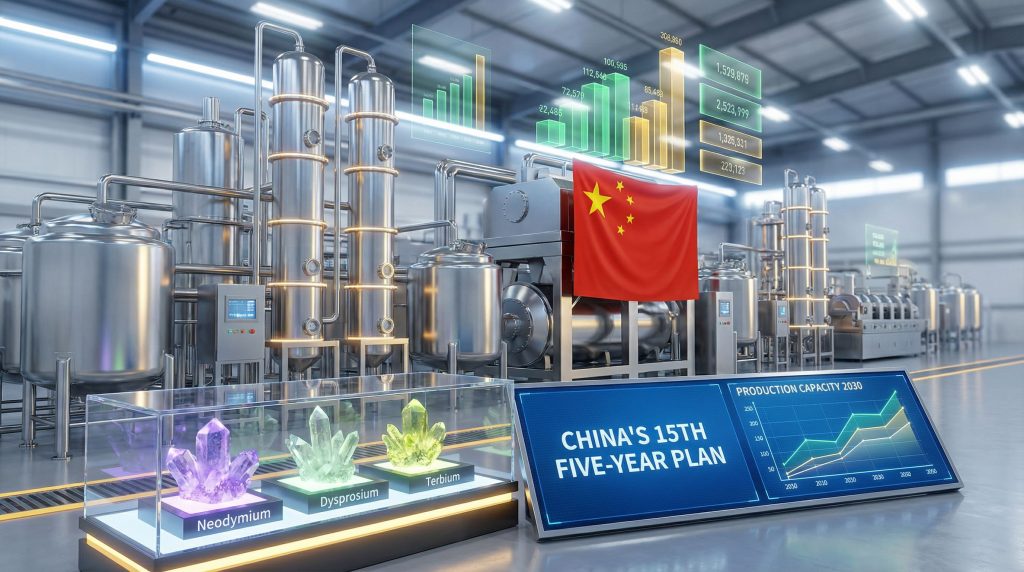
Global supply chains face unprecedented uncertainty as emerging regulatory frameworks reshape critical mineral access patterns. China to strengthen development of rare earth industry through its 2026-2030 five-year plan, creating complex strategic scenarios that extend far beyond traditional market dynamics. Furthermore, the intersection of national security priorities and industrial dependencies creates challenges that require examining how policy architectures influence long-term competitiveness and geopolitical positioning across interconnected economies.
Understanding China's Strategic Rare Earth Expansion Framework
The Five-Year Plan Architecture for Critical Minerals
China's 15th Five-Year Plan establishes the structural foundation for accelerated rare earth industry development through 2030. This planning cycle represents a departure from previous approaches by integrating critical minerals strategy objectives directly into broader economic transformation goals. The framework prioritises technological advancement alongside production capacity expansion, creating synergies between domestic industrial modernisation and global market positioning.
Historical analysis reveals significant evolution in China's planning methodologies. The 14th Five-Year Plan (2021-2025) focused primarily on consolidation and environmental compliance improvements. However, the current cycle emphasises competitive strengthening through enhanced processing capabilities and value chain integration. This shift reflects strategic recognition that controlling downstream applications provides greater leverage than raw material extraction alone.
Economic targets within this framework centre on technological sophistication rather than pure volume increases. Processing facility modernisation receives priority allocation, with particular emphasis on separation technologies that enable higher-purity outputs. Consequently, these capabilities directly support advanced manufacturing applications in electronics, renewable energy systems, and defense technologies.
Industrial capacity benchmarks for 2026-2030 focus on vertical integration across the entire value chain. In addition, mining operations coordinate more closely with processing facilities, while processing plants develop stronger connections to magnet manufacturing and other end-use applications. This integration strategy reduces intermediate market dependencies and enhances control over supply timing and allocation.
Export Control Systems as Geopolitical Leverage Tools
Enhanced licensing mechanisms represent a fundamental evolution in China's approach to rare earth market management. The announcement regarding China export controls signals increased administrative complexity for international buyers. These mechanisms function as both economic tools and diplomatic instruments, creating leverage points in broader geopolitical negotiations.
Dual-use technology restrictions expand beyond traditional military applications to encompass civilian technologies with potential security implications. This broadening scope affects industries previously considered outside security frameworks, including automotive manufacturing, renewable energy development, and consumer electronics production. Furthermore, the classification process itself becomes a strategic instrument, as uncertainty about future restrictions influences international sourcing decisions.
Supply chain weaponisation strategies emerge through coordinated policy implementation across multiple regulatory agencies. Export licensing, quality certification, and environmental compliance requirements work together to create administrative barriers that can be selectively applied. This approach provides plausible alternative explanations for supply restrictions while maintaining strategic flexibility.
Western manufacturing dependencies become more apparent as administrative requirements increase processing times and compliance costs. Companies previously reliant on streamlined purchasing procedures face extended lead times and documentation requirements. These dependencies extend beyond direct rare earth purchases to encompass processed materials and intermediate components manufactured in China.
When big ASX news breaks, our subscribers know first
What Market Dynamics Drive China's Rare Earth Dominance Strategy?
Production Capacity Scaling Across the Value Chain
Mining output expansion targets align with global demand projections while maintaining strategic reserve capacity. China's approach emphasises sustainable production levels that can accommodate demand spikes without depleting long-term resource bases. This strategy contrasts with boom-bust cycles that characterise many mineral extraction industries.
Processing facility investments prioritise technological advancement over simple capacity expansion. Automation systems reduce labour dependencies while improving consistency and quality control. Moreover, advanced separation technologies enable higher recovery rates from lower-grade ores, extending the economic life of existing mining operations. These technological improvements create cost advantages that compound over time.
Vertical integration from extraction to finished magnet production eliminates intermediate market dependencies that could constrain strategic flexibility. Rare earth mining companies develop processing capabilities, while processing facilities establish manufacturing operations for permanent magnets and other high-value applications. This integration provides comprehensive control over supply chains from mine to final product.
Key Production Advantages:
- Advanced processing technologies reducing waste and improving yields
- Integrated supply chains eliminating intermediate market volatility
- Economies of scale across mining, processing, and manufacturing operations
- Strategic coordination between production stages and end-user requirements
Price Control Mechanisms and Competitive Positioning
Market share protection through cost leadership maintenance requires sophisticated understanding of global competitive dynamics. China's integrated production model generates cost advantages through operational efficiencies and economies of scale. These advantages compound through vertical integration, as savings at each production stage accumulate across the entire value chain.
Barrier creation for international competitor entry occurs through multiple mechanisms beyond direct price competition. Technological barriers emerge as Chinese companies develop proprietary processing methods and equipment designs. Scale barriers increase as minimum efficient production sizes grow due to technological advancement and market requirements.
State coordination supports industry development through infrastructure investments, research funding, and regulatory frameworks that facilitate operational efficiency. This coordination extends to environmental compliance systems that balance production requirements with sustainability objectives. The integration of environmental and industrial policies creates competitive advantages for companies operating within this framework.
Competitive positioning strategies emphasise long-term market development over short-term profit maximisation. This approach supports customer relationship building and technology development investments that generate sustainable competitive advantages. Market development activities include technical support for downstream applications and collaborative research programs with international customers.
How Will Enhanced Export Controls Reshape Global Supply Chains?
Critical Element Restriction Impact Analysis
Industrial applications across defence, renewable energy, and electronics sectors face potential supply constraints as export control systems evolve. The strategic value of specific rare earth elements varies significantly based on their unique properties and irreplaceable roles in advanced technologies. Neodymium and dysprosium remain critical for permanent magnet production, while europium and terbium enable advanced lighting and display technologies.
Defence sector vulnerabilities concentrate in advanced weapons systems requiring high-performance permanent magnets. Precision guidance systems, radar arrays, and communications equipment depend on rare earth elements with specifications that cannot be easily substituted. For instance, alternative materials research continues, but replacement timelines extend years or decades for complex systems.
Electric vehicle and renewable energy technology dependencies create civilian sector vulnerabilities that mirror defence concerns. Wind turbine generators require substantial quantities of neodymium and dysprosium for permanent magnet systems. Similarly, electric vehicle motors depend on rare earth permanent magnets for efficiency and performance characteristics that define vehicle range and acceleration capabilities.
Critical Applications by Sector:
- Defence: Precision guidance systems, radar arrays, communications equipment
- Renewable Energy: Wind turbine generators, solar panel inverters
- Transportation: Electric vehicle motors, hybrid vehicle batteries
- Electronics: Advanced displays, LED lighting systems, computer hard drives
Licensing System Evolution and Compliance Requirements
Dual-use technology classification expansions affect previously unregulated products and applications. Manufacturing equipment, processing technologies, and analytical instruments face potential export restrictions based on their capability to support strategic industries. This broadening scope creates uncertainty for technology transfer and international collaboration programmes.
Administrative burden increases for international buyers through expanded documentation requirements and extended approval processes. Companies must demonstrate end-use applications, provide detailed technical specifications, and maintain ongoing compliance monitoring systems. These requirements create operational complexity that favours larger companies with dedicated compliance resources.
Timeline projections for regulatory tightening through 2030 suggest gradual implementation of increasingly sophisticated control mechanisms. Initial phases focus on establishing administrative frameworks and documentation requirements. Later phases may include quantity limitations, destination restrictions, and technology-specific controls based on strategic considerations.
Compliance cost implications extend beyond direct administrative expenses to encompass supply chain modifications and alternative sourcing development. Companies face choices between accepting increased compliance burdens or investing in supply chain diversification programmes. These decisions influence long-term competitive positioning and operational flexibility.
Which Industries Face the Greatest Supply Chain Vulnerabilities?
Defence and Aerospace Sector Exposure Assessment
National security implications for NATO countries emerge from concentrated dependencies on Chinese rare earth supplies. Advanced weapons systems developed over decades incorporate rare earth elements based on availability and cost assumptions that may no longer apply. Replacement programmes require extensive testing and certification processes that extend far beyond material substitution.
Critical weapons systems dependent on Chinese rare earth supplies include multiple categories of advanced military equipment. Fighter aircraft engines require rare earth elements for high-temperature alloys and magnetic systems. Additionally, naval vessels incorporate rare earth permanent magnets in propulsion systems and sensor arrays. Ground-based radar and communications systems similarly depend on rare earth elements for performance characteristics.
Alternative sourcing timeline feasibility presents significant challenges for defence applications requiring security of supply guarantees. Military specifications demand consistent quality and performance characteristics that may take years to establish with new suppliers. Testing and certification processes for critical applications can extend 5-10 years from initial material qualification to operational deployment.
Defence Sector Vulnerabilities:
- Fighter aircraft engines and avionics systems
- Naval propulsion and sensor technologies
- Ground-based radar and communications equipment
- Precision guidance systems for missiles and smart weapons
Clean Energy Transition Dependencies
Wind turbine permanent magnet requirements represent substantial rare earth demand growth as renewable energy deployment accelerates. Modern wind turbines utilise direct-drive generators containing several hundred kilograms of rare earth permanent magnets per unit. Global wind energy targets for 2030-2035 translate to significant rare earth demand increases that may strain supply chains.
Electric vehicle motor manufacturing bottlenecks could constrain transportation electrification programmes worldwide. Each electric vehicle requires 1-2 kilograms of rare earth elements for motor magnets and other components. Global electric vehicle production targets for 2030 imply rare earth demand increases of 300-500% compared to current levels, depending on technology choices and market penetration rates.
Solar panel component supply chain risks extend beyond direct rare earth usage to encompass supporting technologies and manufacturing equipment. While solar panels themselves contain minimal rare earth content, inverter systems and energy storage technologies incorporate rare earth elements for power conversion and management functions. These supporting technologies prove essential for solar energy system operation and grid integration.
Energy storage system dependencies create additional vulnerabilities as renewable energy deployment requires grid stabilisation technologies. Battery management systems, grid-tie inverters, and smart grid technologies incorporate rare earth elements for power electronics and control systems. These applications multiply rare earth demand beyond direct renewable energy generation equipment.
What Alternative Supply Chain Strategies Are Emerging Globally?
Western Diversification Investment Programs
United States strategic initiatives focus on developing comprehensive rare earth supply chains independent of Chinese sources. The Department of Defense coordinates with private sector partners to establish processing capabilities and strategic reserve programmes. These efforts emphasise both near-term supply security and long-term industrial base development objectives.
European Union Critical Raw Materials Act implementation creates regulatory frameworks supporting alternative supply chain development across member nations. Investment incentives target mining projects, processing facilities, and recycling technologies that reduce dependence on Chinese sources. Coordination mechanisms between member states prevent duplicative investments while ensuring supply security for critical applications.
Private sector partnership models emerge through risk-sharing mechanisms that distribute development costs and supply guarantees between government and industry participants. Long-term purchase agreements provide revenue certainty for new production facilities, while government investments reduce private sector capital requirements. These partnerships enable projects that might not proceed under purely commercial financing conditions.
Investment Priorities:
- Strategic reserve establishment and management protocols
- Processing facility development with advanced separation technologies
- Recycling capacity expansion for end-of-life products
- Research and development programmes for alternative materials
Regional Production Hub Development
Indian rare earth development programmes focus on leveraging domestic mineral resources for both domestic consumption and export markets. China to strengthen development of rare earth industry creates opportunities for alternative suppliers like India to expand their coastal mineral sands containing significant rare earth concentrations. Processing facility development requires technology transfer and investment from international partners to achieve competitive capabilities.
Australian mining expansion potential builds on existing mineral resources and established mining industry expertise. Rare earth projects in Western Australia and other states require processing facility development to create value-added products rather than exporting raw materials. Environmental and regulatory approval processes create development timelines extending 5-10 years from project initiation to commercial production.
African mineral resource development partnerships involve multiple countries with significant rare earth reserves. Madagascar, Tanzania, and other African nations possess rare earth deposits that could support international supply diversification. Development programmes require substantial infrastructure investments and international cooperation agreements to reach commercial viability.
Technology transfer requirements for alternative production hubs include rare earth separation processes, quality control systems, and environmental management technologies. These capabilities require years to develop and optimise for specific ore compositions and local conditions. International cooperation programmes facilitate technology sharing while protecting intellectual property interests.
How Do Market Projections Indicate China's Future Position?
2030 Global Market Share Forecasting
Production capacity targets versus international competition suggest continued Chinese market leadership through the remainder of the decade. Alternative production sources under development may capture 15-25% of global market share by 2030, reducing but not eliminating Chinese dominance. Market share distribution depends on successful completion of development projects currently in planning and early implementation phases.
Processing dominance maintenance strategies focus on technological advancement and operational efficiency improvements that create cost advantages independent of raw material costs. Chinese processing facilities incorporate advanced automation and quality control systems that enable consistent high-purity outputs. These capabilities prove difficult to replicate without substantial investment and operational experience.
Technology transfer restrictions and intellectual property protection create barriers for alternative processing facility development. Proprietary separation technologies, equipment designs, and process optimisation knowledge require independent development or technology transfer agreements. These barriers extend development timelines and increase capital requirements for new processing facilities.
Market Share Projections for 2030:
- Mining: China maintains 60-70% of global production
- Processing: China retains 75-85% of separation and refining capacity
- Downstream Manufacturing: China controls 50-60% of magnet and component production
- Alternative Sources: Combined international sources reach 20-30% market share
Economic Impact Modelling for Dependent Nations
Cost implications of supply chain diversification vary significantly based on current dependency levels and alternative development strategies. Countries with established mining industries face lower diversification costs than those requiring complete supply chain development. Processing facility construction represents the largest single investment requirement for most diversification programmes.
Timeline requirements for achieving supply security extend 7-10 years for comprehensive diversification programmes. Mining project development requires 3-5 years from initial investment to commercial production. Processing facility construction and optimisation adds another 3-5 years to achieve competitive capabilities. These timelines assume successful environmental approvals and adequate financing availability.
Investment capital needs for alternative infrastructure total hundreds of billions of dollars globally to achieve meaningful supply diversification. Individual processing facilities require $500 million to $2 billion in capital investment depending on capacity and technology sophistication. Mining projects add $100 million to $1 billion per operation based on scale and development complexity.
Competitive cost structures for alternative suppliers must account for scale disadvantages, learning curve effects, and higher capital costs compared to established Chinese operations. New facilities typically operate at 20-40% higher costs during initial years of operation. Cost competitiveness improves over time through operational optimisation and scale effects, but may require 5-7 years to approach Chinese cost levels.
The next major ASX story will hit our subscribers first
What Strategic Responses Should International Stakeholders Consider?
Government Policy Framework Development
Strategic reserve establishment and management protocols require balancing supply security objectives with inventory carrying costs and storage complexity. Rare earth elements have different storage requirements and degradation characteristics that influence reserve composition and rotation procedures. Reserve levels must accommodate both routine supply disruptions and extended emergency scenarios.
International cooperation mechanisms for resource sharing enable smaller countries to achieve supply security through collective arrangements rather than individual supply chain development. Pooled purchasing agreements, shared strategic reserves, and coordinated development programmes distribute costs while ensuring access for all participants. These mechanisms prove particularly valuable for countries with limited domestic mineral resources.
The US-China trade impact necessitates trade agreement modifications addressing critical mineral security that incorporate supply chain resilience considerations into broader economic relationships. Preferential treatment for strategic materials, technology transfer provisions, and investment protection mechanisms support alternative supply chain development. These agreements require balancing economic efficiency with security considerations.
Policy coordination between allied nations prevents competitive bidding for limited alternative supply sources while ensuring adequate capacity development. Information sharing, joint research programmes, and coordinated investment strategies maximise collective supply security outcomes. Coordination mechanisms must balance national interests with collective security objectives.
Private Sector Risk Mitigation Approaches
Supply chain diversification investment strategies require balancing cost considerations with supply security objectives. Companies must evaluate trade-offs between accepting higher costs for alternative sources versus maintaining dependencies on lower-cost Chinese suppliers. These decisions influence long-term competitive positioning and operational flexibility.
Technology development for recycling and alternative materials offers long-term solutions for reducing primary supply dependencies. Rare earth recycling from electronic waste, automotive components, and industrial applications could provide 20-30% of future supply requirements. Alternative material research focuses on reducing rare earth requirements while maintaining performance characteristics.
The mining industry evolution influences long-term contract negotiation considerations that include supply security provisions, price adjustment mechanisms, and force majeure clauses addressing geopolitical risks. Contracts must balance price competitiveness with supply certainty guarantees. Multi-sourcing strategies distribute risks while maintaining competitive procurement processes.
Risk Mitigation Strategies:
- Diversified supplier portfolios with geographic distribution
- Strategic inventory management balancing costs and security
- Technology investments in recycling and material substitution
- Long-term contracts with alternative suppliers including take-or-pay provisions
Key Takeaways for Navigating China's Rare Earth Strategy
Timeline Expectations for Market Evolution
Short-term supply tightening through 2026-2027 appears likely as enhanced export control systems create administrative complexity and potential allocation constraints. Companies dependent on Chinese rare earth supplies should prepare for extended lead times, increased documentation requirements, and possible supply allocation limitations. These near-term challenges may intensify before alternative supply sources reach commercial viability.
Medium-term alternative capacity development potential suggests meaningful diversification opportunities emerging 2028-2030. Mining and processing projects currently under development could provide 20-30% of global supply by the end of the decade. Success depends on sustained investment, regulatory approvals, and technology transfer programmes currently in progress.
Long-term competitive landscape transformation scenarios range from continued Chinese dominance to more balanced global supply distribution. Outcomes depend on alternative supplier success, technology development progress, and geopolitical stability. Market dynamics will likely favour suppliers offering security of supply guarantees even at cost premiums compared to Chinese sources.
Market adaptation strategies must account for evolving regulatory frameworks and compliance requirements that may change substantially over the next five years. Companies should develop flexible supply chain arrangements that can accommodate both current Chinese sources and emerging alternatives as they become available.
Investment and Policy Implications
Capital allocation priorities for supply chain resilience require substantial long-term investments in alternative infrastructure development. Strategic reserve programmes, processing facility construction, and technology development collectively require hundreds of billions in global investment. These investments face extended payback periods and uncertain returns that challenge conventional project financing approaches.
International cooperation requirements for effective responses extend beyond government-to-government agreements to encompass industry partnerships and technology sharing arrangements. Furthermore, Zijin Mining expansion and similar developments highlight how successful diversification requires coordinated investment in mining, processing, and downstream manufacturing capabilities across multiple countries and companies.
Technology innovation needs for reducing dependency levels include both alternative materials research and improved recycling technologies. Breakthrough developments in permanent magnet alternatives or rare earth recycling could fundamentally alter supply-demand dynamics. These innovations require sustained research investments with uncertain timelines and outcomes, particularly as China's rare earth advantages continue expanding through technological advancement.
The strategic implications of China to strengthen development of rare earth industry through 2030 extend far beyond traditional market dynamics. Success in navigating these challenges requires coordinated responses that balance economic efficiency with supply security objectives while maintaining technological competitiveness in critical applications.
This analysis represents current understanding based on available information. Rare earth market dynamics, geopolitical developments, and technology advancement may significantly alter projected outcomes. Investors and policymakers should conduct additional research and seek professional advice before making strategic decisions based on this analysis.
Looking to Capitalise on Critical Minerals Market Shifts?
Discovery Alert's proprietary Discovery IQ model delivers instant notifications on significant ASX mineral discoveries, including critical minerals companies positioned to benefit from shifting global supply chains. With China strengthening its rare earth dominance through 2030, alternative suppliers and processing companies present exceptional investment opportunities for those who act quickly on major announcements. Begin your 14-day free trial today to gain immediate market intelligence on the next wave of critical minerals discoveries.