
May 16, 2026
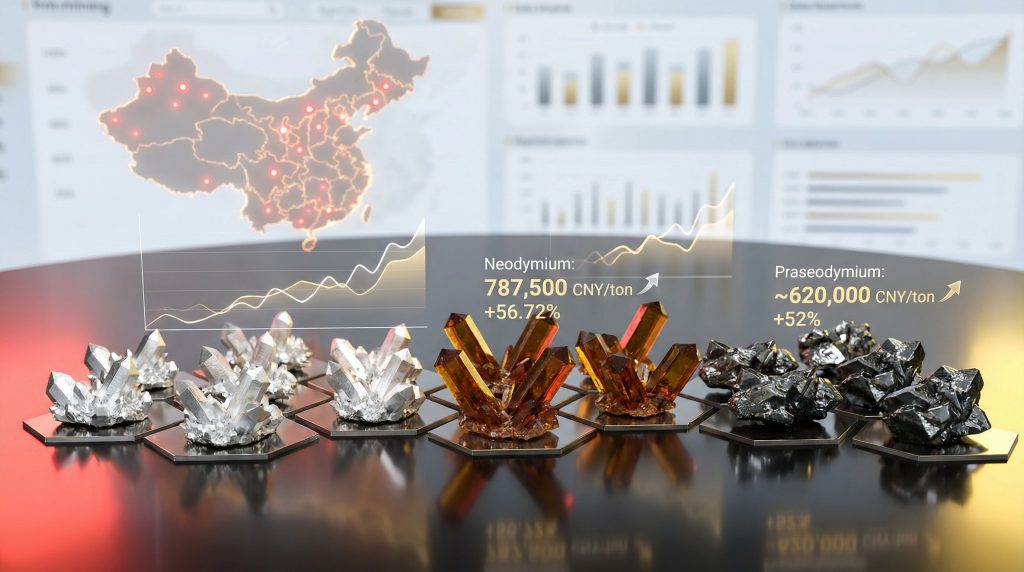
The global rare earth elements market has undergone a fundamental transformation as China consolidates its position as both the dominant producer and price-setter for materials essential to modern technology infrastructure. This shift represents more than traditional market dynamics, reflecting a strategic realignment where supply chains become instruments of economic statecraft. The formalization of centralized pricing mechanisms marks a departure from decentralized commodity markets toward state-administered benchmarks that influence everything from electric vehicle production to defense applications. Furthermore, the implementation of a china rare earth price index has become a critical component in understanding global market dynamics.
Understanding these developments requires examining how China's approach differs from conventional commodity pricing models, where transparent exchanges like the London Metal Exchange facilitate price discovery through open trading. Instead, China's rare earth pricing operates through a complex system integrating production quotas, export licensing, and state enterprise coordination to maintain strategic control over global supply chains.
China's Rare Earth Price Index Framework Architecture
Institutional Foundation and Scope
China's rare earth price index represents a sophisticated state-administered system centered on the Baotou processing hub in Inner Mongolia, which historically processes approximately 70% of China's rare earth elements according to U.S. Geological Survey data. The index covers critical materials including neodymium, praseodymium, dysprosium, and terbium oxides, each serving distinct strategic applications in permanent magnet technology, high-temperature industrial processes, and specialised defense systems.
The integration with financial distribution networks through Xinhua terminals provides real-time pricing signals to domestic and international markets, creating a centralised information flow that contrasts sharply with the decentralised pricing mechanisms typical of traditional commodity exchanges. This architecture enables China to broadcast pricing intentions whilst maintaining control over the underlying supply and production parameters that drive market conditions.
Methodological Distinctions from Market-Based Pricing
The fundamental difference between China's approach and conventional commodity pricing lies in the integration of state policy objectives with market signals. While exchanges like the London Metal Exchange operate through transparent order books where buyers and sellers determine prices through competitive bidding, China's system incorporates production quotas set by the Ministry of Industry and Information Technology and export licences administered by the Ministry of Commerce.
This integration creates a pricing mechanism where supply availability reflects strategic policy decisions rather than purely economic optimisation. Production quotas, formally eliminated in 2015 but informally maintained through state enterprise allocation systems, continue to influence supply availability and pricing dynamics. Export licensing requirements add another layer of control, enabling China to modulate international availability independent of domestic production levels.
The role of major state enterprises, including China Northern Rare Earth Group and Baogang Group, in index formulation ensures that pricing signals align with broader industrial policy objectives. Unlike independent mining companies that optimise for profitability, these state enterprises operate within frameworks that balance economic returns with strategic supply chain control and technology development goals.
When big ASX news breaks, our subscribers know first
Current Market Performance and Price Dynamics
Analysing Recent Price Movements
The rare earth market has experienced significant price volatility, with neodymium oxide reaching elevated levels above 700,000 CNY per ton during recent periods, representing substantial increases from historical baselines. These movements reflect the intersection of structural demand growth from electric vehicle and renewable energy sectors with supply constraints imposed through China's production and export control mechanisms. Additionally, critical minerals demand continues to surge across multiple industries.
Key Market Performance Indicators:
| Element | Strategic Application | Price Sensitivity | Supply Constraints |
|---|---|---|---|
| Neodymium | EV motor magnets | High demand elasticity | Production quota integration |
| Praseodymium | Wind turbine magnets | Moderate substitution | Export licence bottlenecks |
| Dysprosium | High-temperature stability | Critical defence applications | Limited global sources |
| Terbium | Specialised optics | Niche but essential | Highest value concentration |
The sustained price increases reflect multiple converging factors beyond traditional supply-demand mechanics. Strategic stockpiling by consuming nations, including the United States' National Defense Stockpile expansion and Japan's critical materials reserves, creates additional demand pressure independent of end-use consumption patterns.
Supply Chain Bottlenecks and Export Controls
China's export licensing system creates deliberate bottlenecks that influence global availability regardless of domestic production capacity. The Ministry of Commerce requires export licences for rare earth products, with approval processes that can extend delivery timelines and create supply uncertainty for international buyers. This system enables China to modulate international supply flows as a policy tool, particularly during periods of geopolitical tension.
Recent export restrictions targeting Japan demonstrate how rare earth access becomes leveraged in broader diplomatic relationships. These restrictions, implemented through administrative delays rather than outright bans, create supply uncertainty that forces consuming nations to develop alternative sources or accept Chinese pricing terms. Consequently, the china rare earth trade strategy has become increasingly sophisticated.
The downstream impact extends through entire manufacturing supply chains, with electric vehicle manufacturers, wind turbine producers, and electronics companies facing margin compression as rare earth costs increase. Unlike cyclical commodities where substitution provides price relief, rare earth applications in permanent magnet motors and high-performance electronics offer limited technical alternatives without significant performance trade-offs.
Regional Price Variations and Trade Finance Implications
Price variations between China's domestic market, Free on Board (FOB) export prices, and delivered international markets reflect both transportation costs and the premium charged for export availability. FOB China pricing typically includes a premium over domestic prices to account for export licensing requirements and the strategic value of international market access.
Transportation costs from Chinese ports to consuming regions vary significantly based on shipping routes and container availability. Recent freight costs from Shanghai to Rotterdam range between $1,500-3,500 per 20-foot container, whilst Shanghai to Los Angeles routes cost $1,000-2,500 per container, depending on seasonal demand and route congestion.
Currency hedging considerations add complexity for international buyers, as rare earth prices denominated in Chinese yuan create exchange rate exposure independent of underlying supply fundamentals. However, the ongoing us-china trade war continues to influence these dynamics significantly.
Geopolitical Implications and Strategic Responses
Transition from Price-Taker to Price-Setter Dynamics
China's formalisation of rare earth price control represents a fundamental shift in global commodity market power structures. Unlike traditional commodity markets where multiple producers and transparent exchanges determine pricing, China's combined control of production, processing, and now formal price setting creates an unprecedented concentration of market power in strategic materials.
This transition affects downstream manufacturers across multiple industries, from automotive companies designing electric vehicle drivetrains to aerospace manufacturers developing advanced propulsion systems. The shift from market-determined to state-administered pricing introduces new categories of supply chain risk that traditional commodity hedging strategies cannot address.
Defence and aerospace applications face particular vulnerabilities, as these sectors require sustained access to high-purity rare earth materials with limited substitution possibilities. Permanent magnet motors in military systems, rare earth elements in radar and communications equipment, and precision-guided munitions all depend on materials subject to China's pricing and export control mechanisms.
International Diversification Initiatives
Major consuming economies have responded to China's market control through coordinated diversification efforts, though these initiatives face significant technical and financial challenges. The United States' Critical Materials Institute focuses on developing domestic processing capabilities and alternative supply chains, whilst the European Union's Raw Materials Alliance seeks to secure access through partnerships with producing countries outside China.
Global Supply Chain Diversification Progress:
| Region | Current Capacity (tons REO) | Development Timeline | Key Challenges |
|---|---|---|---|
| North America | 45,000 | 2027 expansion targets | Processing technology gaps |
| Australia | 22,000 | Lynas Malaysia operations | Regulatory and environmental approvals |
| Southeast Asia | 8,000 | Processing facility development | Technical expertise and financing |
Japan's response includes strategic stockpiling of dysprosium and terbium, recognising that developing alternative sources requires multi-year timeframes whilst current manufacturing requires continuous supply access. South Korea has similarly established critical materials reserves whilst investing in recycling technology development to reduce primary supply dependence.
The European Union's approach combines supply diversification with circular economy initiatives, supporting urban mining and recycling technologies that could reduce dependence on primary production. However, recycling rare earth elements from end-of-life products faces technical challenges in separation and purification that limit near-term supply contributions.
Investment Analysis and Market Structure Evolution
Impact on Mining Project Economics
China's centralised price control fundamentally alters the economics of rare earth mining projects outside China, creating both opportunities and risks for investors and developers. Whilst higher prices improve project economics for alternative suppliers, the concentration of price-setting power introduces new categories of political and market risk that traditional mining investment models struggle to evaluate. The broader mining industry evolution reflects these changing dynamics.
Exploration and development projects in North America, Australia, and Africa face the challenge of competing with Chinese production whilst depending on Chinese processing capabilities for downstream value addition. Most rare earth mining projects outside China produce concentrate that requires processing in Chinese facilities, creating supply chain vulnerabilities even for diversified mining operations.
The capital requirements for developing integrated mining and processing operations outside China are substantial, with estimates ranging from $1.9 billion to $4.2 billion for meaningful production capacity. These investments face extended payback periods and technology transfer challenges, as China maintains significant advantages in rare earth separation and purification technologies developed over decades.
Sector-Specific Demand Dynamics
Different end-use sectors demonstrate varying price sensitivity and substitution possibilities, creating diverse investment opportunities and risk profiles. The electric vehicle industry represents the largest growth driver for rare earth demand, with global EV sales reaching 14.0 million units in 2023, representing a 35% increase from 2022 according to International Energy Agency data.
Electric vehicle manufacturers face limited substitution options for rare earth permanent magnet motors, which provide superior efficiency and power density compared to induction motor alternatives. This technical constraint creates relatively inelastic demand, allowing rare earth price increases to be absorbed through higher vehicle prices or reduced manufacturer margins.
Wind energy applications similarly demonstrate price inelasticity, as permanent magnet generators enable direct-drive turbine designs that reduce maintenance requirements and improve reliability. Global wind capacity additions reached 86 GW in 2023, up from 75 GW in 2022, according to International Renewable Energy Agency statistics, driving sustained demand growth for neodymium and praseodymium.
Consumer electronics applications offer more substitution flexibility, with manufacturers able to reduce rare earth content through design modifications or alternative materials, though often with performance trade-offs. Defence applications demonstrate the least price sensitivity, as military systems prioritise performance and reliability over cost considerations.
Alternative Supply Chain Investment Opportunities
Investment opportunities in rare earth supply chain diversification span multiple categories, from traditional mining and processing to recycling and substitution technologies. MP Materials' expansion of domestic processing capabilities in the United States represents one approach, developing integrated operations that reduce dependence on Chinese processing services.
Recycling technologies present longer-term opportunities, though current economics remain challenged by collection and processing costs. Urban mining initiatives targeting end-of-life electronics and automotive components could provide meaningful supply contributions within a decade, particularly for high-value elements like dysprosium and terbium.
Substitution research focuses on developing alternative materials or technologies that reduce rare earth intensity without compromising performance. Ferrite magnets, whilst lower performance than rare earth alternatives, may find increased application in cost-sensitive applications where efficiency trade-offs are acceptable.
Technical Analysis of Index Construction
What are the Key Components of Index Calculation?
The china rare earth price index construction involves complex weighting methodologies that reflect both production volumes and strategic importance of different elements. Neodymium and praseodymium, as the highest volume light rare earth elements, receive significant weighting in overall index calculations, whilst dysprosium and terbium command higher per-unit values despite lower volumes.
Quality specifications and purity grade adjustments create multiple price points for each element, with 99.5% purity oxide typically serving as the benchmark specification. Lower purity grades trade at discounts that reflect additional processing requirements, whilst higher purity specifications command premiums for specialised applications requiring minimal impurities.
Seasonal adjustment factors account for production cycles and inventory management patterns within China's state enterprise system. Spring production increases following Chinese New Year, summer maintenance periods, and fourth-quarter inventory building all influence pricing patterns that the index methodology must accommodate.
How are Data Sources Verified?
State enterprise transaction reporting requirements provide the primary data foundation for index calculations, with China Northern Rare Earth Group, China Minmetals, and other major producers submitting pricing and volume data to coordinating authorities. Export declaration cross-referencing systems provide additional verification, ensuring consistency between reported domestic transactions and international shipments.
Downstream manufacturer procurement data integration offers demand-side verification, with major consumers reporting purchase prices and volumes that enable cross-checking of producer-reported information. International market price monitoring mechanisms track delivered prices in major consuming markets, providing external benchmarks for index accuracy assessment through platforms like Metal.com.
The frequency and revision protocols operate on multiple timeframes, with daily index updates reflecting current market conditions whilst weekly settlement pricing provides stability for contract negotiations. Monthly recalibration processes adjust basket weights based on production and consumption pattern changes, whilst annual methodology reviews incorporate stakeholder feedback and market structure evolution.
Future Market Structure Scenarios
What Could Sustained Chinese Dominance Look Like?
Under continued Chinese control of rare earth pricing mechanisms, global technology supply chains face sustained pressure to adapt to state-administered pricing rather than market-determined costs. This scenario involves continued investment flows toward alternative materials research and supply chain diversification, though with limited near-term impact on Chinese market dominance.
Technology manufacturers adapt through long-term supply contracts with escalation clauses, strategic inventory management, and gradual design modifications to reduce rare earth intensity. Consuming nation governments expand strategic stockpiles and provide subsidies for domestic processing capability development, creating parallel supply systems for critical applications.
Geopolitical tensions intensify around trade policy responses, with potential for coordinated export restrictions on technology products to China in response to rare earth market control. This escalation dynamic creates risks for global technology supply chain integration and economic efficiency.
How Viable is Supply Chain Diversification?
Alternative supply chain development requires sustained investment and coordinated policy support across multiple consuming nations and time horizons extending beyond typical political cycles. Meaningful production capacity outside China emerges within 5-7 years under aggressive development scenarios, though still representing minority market share.
Price volatility during transition periods creates opportunities for both producers and consumers, as alternative supply sources command premium pricing whilst Chinese producers potentially reduce prices to maintain market share. Technology transfer and processing expertise development become critical bottlenecks, requiring partnerships between established Chinese producers and emerging international operations.
The timeline for significant supply chain diversification extends beyond 2030 under most scenarios, reflecting the complex technical requirements for rare earth separation and purification. Investment requirements approaching $50-100 billion globally would be needed for meaningful supply diversification across all critical rare earth elements, highlighting the connection between energy transition & minerals.
Could Recycling Transform the Market?
Economic viability thresholds for secondary supply could be reached within the current decade if recycling technologies achieve cost reductions and efficiency improvements currently under development. Urban mining operations targeting end-of-life electronics, automotive components, and industrial equipment could provide 10-20% of total rare earth supply by 2035.
The impact on primary mining project economics would be significant, particularly for high-value elements like dysprosium and terbium where recycling offers the highest economic returns. Primary producers would need to focus on growing overall market demand rather than competing primarily on cost, potentially leading to industry consolidation.
The next major ASX story will hit our subscribers first
Risk Management and Strategic Recommendations
What Should Downstream Manufacturers Consider?
Companies dependent on rare earth materials require comprehensive risk management frameworks addressing both price volatility and supply availability. Long-term contract structuring with price escalation clauses provides some protection against sudden cost increases, whilst maintaining flexibility for demand fluctuations through minimum volume commitments rather than fixed quantities.
Strategic inventory management involves balancing holding costs against supply security, with typical inventory levels ranging from 3-6 months of production requirements. Higher inventory levels provide greater supply security but increase working capital requirements and storage costs, whilst lower levels reduce costs but increase vulnerability to supply disruptions.
Alternative material research and development investments represent longer-term risk mitigation strategies, requiring sustained R&D expenditures over multiple years with uncertain technical outcomes. Companies successfully reducing rare earth intensity through design optimisation or material substitution gain competitive advantages through reduced supply chain vulnerability.
How Should Mining Investments be Structured?
Rare earth mining project development outside China requires risk assessment frameworks addressing technical, financial, and political uncertainties. Technical risks include ore grade variability, processing complexity, and environmental compliance requirements that can significantly impact project economics.
Financing strategies for non-Chinese supply development often require government support or strategic partnerships with consuming companies seeking supply security. Traditional project finance approaches struggle with the long payback periods and market concentration risks typical of rare earth developments.
Partnership structures with consuming nation governments provide political risk mitigation whilst accessing development finance and regulatory support. These arrangements typically involve offtake agreements, development financing, or strategic equity participation that align project success with national supply security objectives.
What Role Should Government Policy Play?
Strategic reserve accumulation and release mechanisms enable governments to moderate market volatility whilst maintaining emergency supply capabilities. The United States National Defense Stockpile, Japanese strategic materials reserves, and European Union critical raw materials initiatives represent different approaches to government supply security strategies.
Trade policy coordination with allied nations creates opportunities for collective bargaining power and shared supply security arrangements. Coordinated response to supply restrictions or price manipulation could include diplomatic initiatives, trade agreement provisions, or reciprocal restrictions on technology exports.
Domestic processing capability development incentives require sustained government support over extended timeframes, as private sector investment in rare earth processing faces significant technical and financial barriers. Tax incentives, development grants, and research support can accelerate capability development whilst sharing investment risks.
Market Evolution and Pricing Mechanisms
Could Alternative Benchmarks Emerge?
The potential emergence of alternative rare earth pricing benchmarks depends on sufficient trading volumes and market participant diversity outside Chinese control. London Metal Exchange or Chicago Mercantile Exchange rare earth contracts require underlying physical markets with multiple producers and consumers willing to participate in transparent price discovery.
Regional pricing hubs in North America and Europe could develop around domestic production and processing facilities, creating alternative reference points for pricing negotiations. These regional markets would likely trade at premiums to Chinese prices, reflecting supply security value and transportation costs.
Financial market integration through futures contracts, options, and other derivative instruments could provide hedging mechanisms for price risk management. However, the concentration of underlying supply sources limits the effectiveness of financial hedging compared to diversified commodity markets.
What Technology Disruptions Could Occur?
Substitution technologies reducing rare earth intensity offer the most significant long-term challenge to current market structures. Ferrite magnet improvements, alternative motor designs, and new materials development could reduce demand growth rates or enable actual demand reduction in specific applications.
Breakthrough recycling methods could fundamentally alter supply chain economics by reducing dependence on primary production. Advanced separation technologies, automated disassembly systems, and improved collection mechanisms could make secondary supply economically competitive with primary sources.
Synthetic alternatives and advanced materials science research target replacement of rare earth elements with more abundant materials or entirely different technological approaches. Whilst technical barriers remain significant, breakthrough developments could rapidly alter demand patterns and market structures.
Strategic Market Outlook
The formalisation of China's china rare earth price index represents a strategic shift toward explicit state control of critical material markets rather than informal influence through production and export controls. This development creates new categories of supply chain risk for technology manufacturers whilst potentially accelerating alternative supply development through higher prices and increased supply security awareness.
Market participants must adapt risk management strategies to address state-administered rather than market-determined pricing, requiring new approaches to contract structuring, inventory management, and long-term planning. The concentration of price-setting power in strategic materials creates systemic risks for technology supply chains that traditional commodity hedging mechanisms cannot address. Real-time pricing data can be monitored through platforms like Trading Economics for market insights.
Investment flows toward supply chain diversification will likely accelerate, though meaningful production capacity outside China requires sustained commitment over timeframes extending beyond typical business planning horizons. Government support for alternative supply development becomes essential for overcoming the technical and financial barriers to competitive rare earth production.
The evolution of rare earth markets toward explicit strategic control rather than economic optimisation reflects broader trends in critical material supply chains, where national security considerations increasingly override purely economic decision-making. Understanding and adapting to these dynamics becomes essential for companies and investors navigating the intersection of technology, geopolitics, and resource scarcity in the global economy.
Could Rare Earth Price Control Impact Your Investment Strategy?
Discovery Alert's proprietary Discovery IQ model delivers instant notifications on significant ASX mineral discoveries, including critical materials and rare earth exploration breakthroughs that could reshape supply chains. Explore how major mineral discoveries have historically generated substantial returns and begin your 30-day free trial today to position yourself ahead of market-moving announcements.