
August 6, 2026
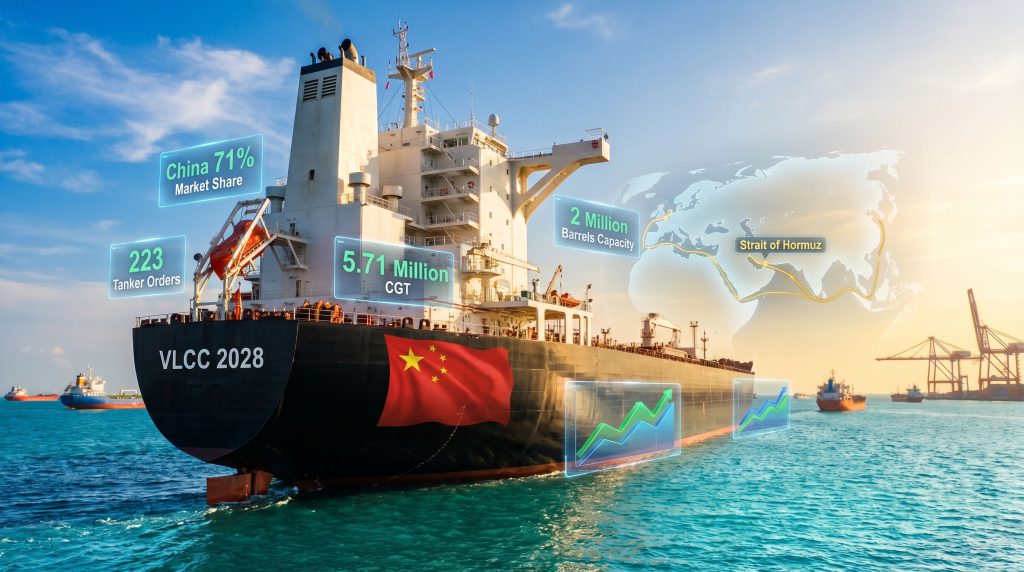
China's shipbuilding industry is experiencing unprecedented growth as geopolitical tensions drive global demand for oil tanker capacity. The surge in China shipyards oil tanker orders reflects fundamental shifts in maritime logistics, with regional conflicts disrupting traditional shipping routes and forcing operators to seek additional vessel capacity. The concentration of new orders in Chinese facilities demonstrates their strategic positioning to capitalise on sustained market demand throughout the coming decade.
How Geopolitical Tensions Are Reshaping Global Tanker Markets
Regional conflicts consistently trigger structural adjustments in maritime transport networks, forcing shipping operators to recalibrate fleet deployment strategies and capacity planning models. The current disruption affecting Persian Gulf shipping lanes demonstrates how chokepoint vulnerabilities can rapidly escalate into industry-wide capacity shortages, creating immediate demand for additional vessel tonnage across multiple tanker segments.
The Strait of Hormuz Crisis and Its Ripple Effects
The strategic waterway connecting the Persian Gulf to international shipping routes handles approximately 25% of global seaborne oil traffic, making any disruption a critical factor in worldwide energy logistics. When this maritime corridor becomes inaccessible or high-risk for extended periods, the immediate consequence involves route diversification that fundamentally alters fleet utilisation calculations.
Alternative routing through the Cape of Good Hope adds 12-14 additional transit days compared to Suez Canal passages, effectively reducing global fleet capacity by extending voyage duration. This mathematical relationship between route length and fleet productivity creates immediate pressure for capacity expansion, as existing vessels cannot maintain previous service frequencies while navigating extended transit paths.
The eight-week blockade period has demonstrated how sustained disruptions compound fleet strain beyond simple route extension calculations. Vessels avoiding risk zones must also factor increased insurance premiums, crew rotation complexities, and fuel consumption adjustments into operational planning, creating multiple efficiency degradation factors that amplify capacity shortfall effects.
Why Oil Transport Bottlenecks Drive Fleet Expansion Demand
Shipping economics operate on tight capacity utilisation models where vessel availability directly correlates with market rates and operator profitability. When established routes become unavailable, the industry cannot simply absorb longer voyage times without corresponding fleet size adjustments to maintain cargo flow continuity.
Key capacity pressure factors include:
- Extended voyage duration reducing vessel productivity by 15-20%
- Insurance risk premiums increasing operating costs for alternative routes
- Cargo scheduling disruptions requiring buffer capacity allocation
- Aging fleet demographics limiting immediate capacity flexibility
- Strategic petroleum reserve filling activities competing for available tonnage
The mathematical relationship becomes evident when considering that a 2 million barrel VLCC operating on 45-day round trips can complete approximately 8 voyages annually under normal conditions. Extended routing reducing this to 6-7 voyages creates immediate demand for additional vessels to maintain equivalent transport capacity.
Market Dynamics Behind Emergency Capacity Orders
Commodity trading houses and shipping operators respond to supply disruptions through accelerated procurement strategies that prioritise delivery speed over traditional cost optimisation. This shift in procurement criteria creates opportunities for shipbuilders offering competitive delivery timelines, regardless of historical supplier relationships.
Market participants recognise that capacity shortfalls translate directly into charter rate premiums, making newbuild investments particularly attractive during disruption periods. Current market conditions demonstrate how geopolitical tensions can transform shipbuilding from a long-term asset allocation decision into an urgent capacity expansion requirement.
The concentration of orders in Very Large Crude Carriers (VLCCs) reflects sophisticated understanding of transport economics during route disruptions. These vessels offer optimal barrel-per-voyage capacity, making them most efficient for extended transit requirements while maintaining competitive unit transport costs.
When big ASX news breaks, our subscribers know first
China's Strategic Position in Global Shipbuilding Markets
Chinese shipyards have systematically captured dominant market share across multiple vessel categories through integrated supply chain advantages, competitive pricing structures, and scalable production capacity. This market position becomes particularly significant during demand surge periods when traditional supplier capacity constraints create opportunities for alternative procurement sources. The OPEC meeting impact on global oil markets further emphasises the strategic importance of maintaining adequate tanker capacity.
Market Share Analysis: China vs South Korea vs Japan
Recent industry data indicates Chinese shipbuilders control approximately 71% of new tanker contracts globally, representing a substantial shift from historical market distribution patterns. This concentration reflects fundamental competitive advantages in steel sourcing, labour cost structures, and production scheduling flexibility.
| Region | Market Share | Key Advantages | Typical Delivery |
|---|---|---|---|
| China | 71% | Cost leadership, capacity scale | 24-28 months |
| South Korea | 20% | Technical sophistication, quality | 26-32 months |
| Japan | 6% | Precision engineering, reliability | 30-36 months |
| Others | 3% | Specialised segments, niche markets | Variable |
The 223 tanker orders totalling 5.71 million CGT (compensated gross tonnage) in recent market activity demonstrate the scale of current demand and China's positioning to capture this business. This order volume represents significant capacity allocation that will influence fleet composition through the decade.
Competitive Advantages Driving Order Migration to Chinese Yards
Chinese shipbuilding facilities benefit from vertical integration advantages that reduce both costs and delivery uncertainty. Steel production, component manufacturing, and assembly operations often occur within coordinated industrial complexes, eliminating supply chain coordination challenges that affect international competitors.
Labour cost differentials remain significant, but the competitive gap has evolved beyond simple wage arbitrage toward productivity and efficiency advantages. Chinese yards have invested heavily in automation and process optimisation, creating sustainable competitive positions that persist despite wage inflation pressures.
Strategic competitive factors include:
- Integrated steel supply chains reducing material costs by 15-20%
- Flexible production scheduling accommodating rush orders
- Government policy support for strategic shipbuilding capacity
- Established relationships with major commodity trading houses
- Proven quality control meeting international classification standards
Cost Structure and Delivery Timeline Comparisons
Procurement decision-making increasingly emphasises total project value rather than initial pricing alone, incorporating delivery certainty, quality consistency, and financial stability factors. Chinese yards consistently demonstrate competitive advantages across multiple evaluation criteria simultaneously.
Delivery timeline advantages become particularly valuable during market disruption periods when operators prioritise capacity availability over marginal cost differences. The ability to commit to 24-28 month delivery windows provides procurement certainty that justifies supplier diversification decisions.
Quality considerations have evolved significantly, with Chinese yards achieving international classification society approvals and demonstrating operational performance comparable to established competitors. This quality advancement eliminates previous concerns that might have limited procurement consideration to cost-focused decisions exclusively.
What Types of Oil Tankers Are in Highest Demand?
Current market conditions demonstrate clear preference patterns favouring larger vessel categories capable of optimising transport economics during extended voyage scenarios. The concentration of China shipyards oil tanker orders in specific tanker segments reflects sophisticated understanding of operational efficiency requirements under disrupted routing conditions.
VLCC (Very Large Crude Carrier) Specifications and Economics
VLCCs represent the optimal balance between cargo capacity and operational flexibility for major crude oil transport routes. These vessels typically range from 280,000 to 320,000 deadweight tonnes, with cargo capacity approaching 2 million barrels per voyage under optimal loading conditions.
The economic advantages of VLCC operations become magnified during extended routing scenarios where larger cargo volumes help offset increased voyage costs. Unit transport costs (measured per barrel) remain competitive even with 15-20% longer transit times, making these vessels particularly valuable during supply chain disruptions.
VLCC operational specifications:
- Typical capacity: 2.0-2.3 million barrels crude oil
- Deadweight tonnage: 280,000-320,000 dwt
- Length overall: 330-345 metres
- Beam: 58-62 metres
- Draft limitations: Restrict certain port access and canal transit
Recent orders focus on vessels in the 307,000-319,000 dwt range, representing modern design standards that optimise cargo capacity while maintaining operational flexibility across multiple trade routes and loading terminal configurations.
Suezmax and Aframax Tanker Market Segments
While VLCC orders dominate current procurement activity, Suezmax and Aframax segments serve specific route requirements where size optimisation differs from maximum cargo capacity priorities. Suezmax vessels offer 120,000-200,000 dwt capacity with design specifications enabling Suez Canal transit under loaded conditions.
Aframax tankers, typically 80,000-120,000 dwt, provide operational flexibility for regional distribution and smaller port access where VLCC draft limitations create operational constraints. These vessel categories remain important for specialised trade routes and cargo parcels requiring size-specific handling.
The current procurement emphasis on larger vessel categories reflects route optimisation during disruption periods, where maximum cargo capacity per voyage provides superior economic performance compared to smaller, more frequent shipments requiring additional vessel rotations.
Product Tanker vs Crude Tanker Order Trends
Product tanker demand demonstrates parallel growth patterns driven by refined petroleum distribution challenges created by crude supply disruptions. LR2 product tankers with 100,000-160,000 dwt capacity represent significant procurement activity alongside crude carrier orders.
The inclusion of product tankers in major procurement programmes indicates sophisticated market analysis recognising that crude transport bottlenecks create secondary effects throughout refined product distribution networks. Commodity trading houses ordering both crude and product capacity simultaneously demonstrate integrated supply chain planning approaches.
Product tanker specifications require more complex cargo handling systems with multiple segregated tanks for different refined products, compared to crude tankers designed for single-cargo operations. This technical complexity influences construction timelines and pricing structures relative to crude carrier alternatives.
Major Chinese Shipyard Capacity and Recent Contract Wins
Chinese shipbuilding capacity allocation demonstrates remarkable ability to absorb large-scale orders while maintaining competitive delivery schedules across multiple customer requirements. Recent contract announcements reveal both individual project scale and aggregate industry capacity utilisation patterns. Furthermore, the US oil production decline has increased reliance on imports, driving additional demand for tanker capacity.
Hengli Shipbuilding's USD 700M+ Order Portfolio Analysis
Hengli Shipbuilding represents one of several Chinese yards capturing significant market share during the current demand surge, with order portfolios exceeding $700 million in committed projects. This concentration reflects both customer confidence in delivery capability and the yard's technical qualification for sophisticated tanker construction.
The scale of individual yard order books demonstrates Chinese shipbuilding industry's evolution from low-cost provider to comprehensive solution provider capable of handling major strategic projects for international commodity trading houses and shipping operators.
Production capacity allocation across multiple projects requires sophisticated project management and resource coordination, particularly when delivery windows span 24-36 month periods with specific quarterly delivery commitments.
COSCO Shipping Heavy Industry's Integrated Fleet Strategy
COSCO Shipping Heavy Industry benefits from vertical integration advantages through parent company relationships with major shipping operations, creating natural demand visibility and capacity planning coordination. This integrated approach provides competitive advantages in project scheduling and resource allocation.
The company's strategic positioning enables both shipbuilding capacity and fleet operation expertise, offering customers comprehensive solutions spanning construction through operational deployment. This integrated capability becomes particularly valuable for complex projects requiring long-term operational planning coordination.
COSCO's established relationships with international commodity trading houses and shipping operators provide consistent order flow that supports sustained capacity utilisation and workforce development across multiple facilities.
Regional Yard Specialisation: Jiangsu vs Guangzhou vs Dalian
Regional specialisation patterns reflect infrastructure advantages and supply chain optimisation across different Chinese coastal areas. Jiangsu province facilities demonstrate particular strength in large tanker construction, with established track records for VLCC and product tanker delivery.
Regional shipbuilding advantages:
- Jiangsu Province: Steel supply integration, skilled workforce, established VLCC capability
- Guangzhou Region: Deep water access, international logistics connectivity
- Dalian Area: Heavy industry integration, cold weather testing capability
- Shanghai Vicinity: Financial services access, international customer proximity
The geographic distribution of major projects reflects customer preferences for specific yard capabilities and regional infrastructure advantages. Advantage Tankers' selection of Jiangsu facilities for multiple projects demonstrates confidence in regional expertise and delivery capability.
How International Shipping Companies Are Diversifying Suppliers
Supplier diversification strategies reflect fundamental shifts in procurement risk management as international shipping companies reduce dependence on single geographic sources for critical fleet expansion requirements. This strategic evolution demonstrates sophisticated understanding of supply chain resilience requirements in volatile geopolitical environments. The US–China trade impact has further accelerated these diversification efforts.
European Tanker Operators' Procurement Strategy Shifts
European shipping operators demonstrate significant procurement pattern changes, moving away from traditional supplier concentrations toward geographic diversification that reduces delivery risk and enhances competitive positioning. These strategic adjustments reflect lessons learned from previous supply chain disruptions affecting established supplier relationships.
Traditional European procurement focused heavily on established relationships with premium yards, emphasising quality and technical sophistication over cost optimisation. Current market conditions require balancing quality requirements with delivery certainty and competitive pricing, creating opportunities for emerging suppliers meeting international standards.
The evolution toward multiple supplier qualification demonstrates sophisticated procurement strategy that maintains competitive options while building operational flexibility for future capacity requirements.
Swiss Trading Houses and Their Fleet Investment Patterns
Swiss commodity trading houses exemplify sophisticated procurement strategy evolution, transitioning from long-standing reliance on South Korean shipyards toward Chinese alternatives offering competitive delivery timelines and cost structures. This strategic shift reflects fundamental recalibration of supplier selection criteria.
Advantage Tankers' recent procurement demonstrates this transition:
- Previous supplier base: South Korean shipyards (established relationships)
- New orders: Two 307,000-dwt VLCCs from Chinese yards
- Delivery schedule: Q2 2028 and Q3 2029
- Existing project: 319,000-dwt VLCC under construction in Jiangsu province
- Asset appreciation: Vessel value increased from $119 million to $152 million
Mercuria Energy Group's diversification strategy includes:
- Order value: Nearly $650 million in Chinese shipyard contracts
- Vessel composition: Up to four VLCCs and two LR2 product tankers
- Delivery timeline: By 2029
- Strategic positioning: Integration of crude and product transport capacity
These procurement decisions reflect sophisticated analysis balancing cost optimisation, delivery certainty, and operational capability requirements across integrated commodity trading operations.
Singapore-Based Maritime Investment Trends
Singapore-based maritime investment strategies demonstrate particular sophistication in balancing regional market knowledge with global procurement optimisation. Yangzijiang Maritime Development's entry into large tanker segments exemplifies strategic capacity expansion targeting high-demand market segments.
The company's eight VLCC orders spanning 2028-2030 deliveries represent its first venture into large-tanker segments, supported by Chinese shipbuilding expertise through backer Ren Yuanlin's industry relationships. This strategic expansion demonstrates confidence in sustained demand for large crude carriers.
Singapore's strategic position as regional maritime hub provides unique advantages for fleet deployment across Asia-Pacific trade routes, making capacity expansion particularly attractive for operators positioned to serve regional crude import requirements and trans-Pacific shipping patterns.
Economic Impact of Extended Shipping Routes on Fleet Requirements
Route optimisation challenges create fundamental mathematical relationships between voyage duration and required fleet capacity, forcing operators to recalculate vessel deployment strategies and investment priorities. Understanding these economic relationships provides insight into fleet expansion decision-making during geopolitical disruptions. Additionally, trade war impact on oil markets has compounded these routing challenges.
Route Optimisation vs Fleet Size Trade-offs
Fleet capacity mathematics demonstrate direct correlation between voyage extension and required vessel quantities to maintain equivalent cargo flow. When standard routes extend from 45-day round trips to 60-day round trips, operators require approximately 33% additional vessel capacity to maintain previous service levels.
Economic calculation framework:
- Standard route productivity: 8 voyages annually per vessel
- Extended route productivity: 6 voyages annually per vessel
- Capacity adjustment requirement: 33% additional vessels
- Alternative optimisation: Accept reduced service frequency
- Market rate impact: Premium pricing for available capacity
The decision matrix involves comparing newbuild acquisition costs against charter market premiums and service level maintenance requirements. During sustained disruptions, newbuild procurement often provides superior economic returns compared to spot charter alternatives.
Fuel Cost Implications for Longer Voyages
Extended routing creates compound cost pressures through increased fuel consumption, crew rotation requirements, and vessel maintenance scheduling adjustments. Cape of Good Hope routing adds approximately 6,000-8,000 nautical miles to typical Persian Gulf to Asia routes, representing significant operational cost increases.
Fuel consumption calculations become particularly complex during market volatility when both crude oil prices and bunker fuel costs fluctuate simultaneously. Operators must factor fuel cost escalation into charter rate calculations while managing operational cash flow requirements across extended voyage periods.
The economic optimisation involves balancing fuel efficiency improvements through slower steaming speeds against customer delivery requirements and competitive service level maintenance across different trade routes.
Insurance and Risk Management for Alternative Routes
Insurance premium structures reflect route-specific risk assessments that can significantly impact operational economics during extended routing scenarios. War risk premiums and hull insurance adjustments for alternative routes often exceed 50-100% of standard coverage costs.
Risk management strategies require comprehensive evaluation of insurance cost increases versus operational revenue potential from premium charter rates available during capacity shortage periods. These calculations influence fleet deployment decisions and newbuild investment justification across different market scenarios.
Insurance cost factors include:
- War risk premium escalation for Persian Gulf operations
- Extended voyage duration increasing general maritime risk exposure
- Cargo value fluctuations affecting insurance cost calculations
- Port risk assessments for alternative loading/discharge facilities
- Crew insurance and evacuation coverage for extended routing
The next major ASX story will hit our subscribers first
Technology and Environmental Standards in New Tanker Orders
Contemporary China shipyards oil tanker orders incorporate sophisticated environmental compliance and fuel efficiency technologies reflecting both regulatory requirements and operational optimisation strategies. These technological specifications influence construction costs, delivery timelines, and long-term operational competitiveness.
Dual-Fuel and Methanol-Ready Engine Specifications
Modern tanker designs increasingly incorporate dual-fuel engine capabilities enabling operation on conventional marine fuels and alternative fuel sources including LNG, methanol, and ammonia. These specifications reflect anticipation of evolving fuel availability and environmental compliance requirements throughout vessel operational lifetimes.
Methanol-ready engine systems provide particular operational flexibility for commodity trading house fleets that may have access to methanol fuel supplies through integrated operations. The technology enables fuel source optimisation based on regional availability and cost considerations across different trade routes.
Engine specification decisions influence both initial construction costs and operational flexibility over 20-25 year vessel lifetimes, making technology selection critical for long-term economic performance under evolving regulatory frameworks.
Ammonia-Fuel Readiness and Green Propulsion Systems
Ammonia-fuel readiness represents forward-looking technology investment preparing vessels for potential hydrogen-based fuel systems development over extended operational periods. While current ammonia fuel infrastructure remains limited, vessel design preparation enables future conversion capability without major structural modifications.
Green propulsion system integration includes advanced hull design optimisation, propeller efficiency improvements, and energy recovery systems that reduce overall fuel consumption across all fuel types. These improvements provide immediate operational benefits while supporting environmental compliance objectives.
The technology selection demonstrates sophisticated understanding of regulatory trajectory and fuel market evolution, enabling vessels to maintain competitive operational performance under varying regulatory and fuel cost scenarios throughout their operational lifetimes.
IMO 2030 Compliance Requirements for New Builds
International Maritime Organisation (IMO) 2030 compliance requirements mandate specific environmental performance standards for new vessel construction, influencing design specifications and technology selection across all contemporary tanker orders.
Key IMO compliance elements include:
- Carbon intensity reduction targets (40% by 2030 vs 2008 baseline)
- Energy Efficiency Existing Ship Index (EEXI) compliance requirements
- Ship Energy Efficiency Management Plan (SEEMP) implementation
- Alternative fuel capability preparation
- Greenhouse gas emission monitoring and reporting systems
Compliance requirements influence both construction specifications and operational procedures, making regulatory alignment critical for international trade route access and charter market competitiveness throughout vessel operational periods.
Market Valuation Trends for Oil Tanker Assets
Tanker asset valuations demonstrate significant appreciation during supply constraint periods, creating attractive investment returns for operators with available capacity and supporting newbuild investment justification across multiple market scenarios. The OPEC's influence on oil markets continues to drive these valuation trends.
VLCC Asset Appreciation During Supply Constraints
Current market conditions demonstrate substantial VLCC asset appreciation with vessels increasing value by 25-30% during extended supply disruption periods. The Advantage Visual example illustrates this trend, with vessel valuation increasing from $119 million to $152 million over construction period.
Asset appreciation reflects both replacement cost inflation and earnings potential premium during tight market conditions. Vessels under construction benefit from fixed construction costs while market values adjust upward based on contemporary replacement costs and earning capability.
Valuation factors driving appreciation include:
- Replacement cost inflation due to steel and component price increases
- Charter rate premiums during capacity shortage periods
- Extended delivery timelines limiting near-term supply additions
- Quality premium for modern, compliant vessel specifications
- Strategic value for integrated commodity trading operations
Newbuild vs Secondhand Market Price Dynamics
Newbuild pricing typically maintains stability through fixed-price construction contracts, while secondhand market values fluctuate based on immediate earning potential and replacement cost considerations. This pricing divergence creates opportunities for strategic asset acquisition and fleet expansion timing optimisation.
Current market conditions demonstrate newbuild delivery premiums where vessels under construction command higher values than equivalent delivered vessels due to specification certainty and delivery timeline advantages during capacity shortage periods.
The market dynamics support newbuild investment decisions when delivery timelines align with anticipated continued capacity constraints and charter rate premium periods extending through delivery and initial operational periods.
Charter Rate Impact on Investment Returns
Charter rate escalation during supply constraint periods provides compelling investment return justification for newbuild projects, particularly when construction costs remain fixed while earning potential increases throughout construction periods.
Current charter market indicators:
- VLCC spot rates: Premium to historical averages during routing disruptions
- Time charter rates: Extended period premiums for modern, compliant tonnage
- Product tanker rates: Parallel appreciation reflecting integrated supply chain constraints
- Route-specific premiums: Additional compensation for extended voyage requirements
Investment return calculations demonstrate attractive economics when charter rate premiums persist through vessel delivery and initial operational periods, supporting newbuild procurement decisions across multiple customer categories and financing structures.
Delivery Timeline Analysis: 2028-2030 Fleet Expansion Wave
Fleet expansion timing reflects both construction capacity allocation and market demand anticipation, with delivery concentration in 2028-2030 timeframe indicating sustained industry confidence in continued capacity requirements throughout the decade.
Production Scheduling Across Chinese Shipyard Networks
Chinese shipyard production scheduling demonstrates sophisticated capacity allocation managing multiple large projects simultaneously while maintaining competitive delivery commitments. 24-28 month delivery windows for VLCC construction represent industry-leading timeline performance.
Major delivery schedule examples:
- Advantage Tankers: Two VLCCs delivering Q2 2028 and Q3 2029
- Mercuria Energy Group: Four VLCCs and two LR2s by 2029
- Yangzijiang Maritime: Eight VLCCs spanning 2028-2030
- Existing projects: Advantage Visual completing Q4 2026
Production scheduling coordination across multiple yards enables Chinese shipbuilding industry to absorb substantial order increases without significant delivery timeline extension, providing competitive advantage during demand surge periods.
Steel Supply Chain and Component Sourcing Considerations
Steel supply chain integration provides Chinese yards significant advantages in material cost management and delivery certainty, reducing construction timeline risks that affect international competitors dependent on global steel sourcing.
Component sourcing advantages include:
- Integrated steel production reducing material delivery uncertainty
- Local engine and equipment manufacturing providing cost and timeline benefits
- Established supplier relationships enabling rush order accommodation
- Quality control integration across supply chain reducing defect risks
- Financial coordination enabling flexible payment and delivery scheduling
The supply chain integration enables competitive pricing maintenance even during material cost inflation periods affecting international competitors dependent on global sourcing for critical construction components.
Quality Control and Classification Society Standards
China Classification Society standards and international classification society approval processes ensure Chinese-built vessels meet global operational and safety requirements, eliminating previous quality concerns that limited international market acceptance.
Quality control processes incorporate international best practices with additional oversight ensuring vessels meet or exceed customer specifications and regulatory requirements for global trade route operations.
The quality assurance framework enables Chinese yards to compete directly with established international competitors on technical capability while maintaining competitive advantages in cost and delivery timeline performance.
Long-Term Implications for Global Oil Transport Infrastructure
Fleet expansion decisions made during current market conditions will influence global oil transport capacity allocation and operational patterns throughout the 2030s, creating strategic implications extending beyond immediate supply disruption responses.
Fleet Age Renewal Cycles and Replacement Demand
Contemporary fleet expansion accelerates natural fleet age renewal cycles as operators prioritise modern, compliant tonnage over aging vessels requiring increasing maintenance and operational restrictions. This renewal trend creates sustained demand for newbuild capacity beyond immediate disruption response requirements.
Fleet renewal drivers include:
- Environmental compliance requirements favouring modern tonnage
- Fuel efficiency advantages reducing operational costs over vessel lifetimes
- Maintenance cost escalation for aging vessels affecting operational economics
- Charter market preferences for modern, reliable tonnage
- Insurance and classification advantages for contemporary vessel specifications
The renewal cycle implications suggest sustained newbuild demand throughout the decade as operators balance immediate capacity requirements with long-term fleet modernisation strategies.
Regional Trade Route Diversification Strategies
Current routing disruptions accelerate permanent trade route diversification as commodity trading houses and shipping operators develop alternative supply chain strategies reducing dependence on traditional chokepoints and established routing patterns.
Route diversification creates demand for vessel deployment flexibility and strategic positioning capability across multiple trade corridors, influencing vessel specification and capacity allocation decisions throughout the fleet expansion cycle.
The strategic evolution toward route diversification supports sustained capacity demand as operators maintain flexible deployment capability across multiple scenarios rather than optimising for single-route efficiency maximisation.
Strategic Petroleum Reserve Logistics Planning
Strategic petroleum reserve logistics requirements create additional capacity demand as nations prioritise energy security through increased stockpiling and diversified supply source development. This demand supplements commercial transport requirements with strategic capacity allocation requirements.
Reserve logistics planning influences both vessel capacity requirements and strategic positioning considerations, as governments coordinate with commercial operators to ensure adequate transport capacity for emergency supply scenarios and strategic stockpile management operations.
The integration of strategic and commercial capacity planning creates sustained demand patterns supporting long-term fleet expansion investment decisions across multiple customer categories and operational requirements throughout the decade.
For additional insights into global shipbuilding trends, Chinese shipyards have been securing substantial new orders as China continues to consolidate its shipbuilding supremacy in the global maritime industry.
This analysis is based on publicly available information and should not be considered investment advice. Market conditions, geopolitical situations, and industry dynamics can change rapidly, affecting the accuracy of forward-looking statements and projections. Readers should conduct independent research and consult qualified professionals before making investment or business decisions related to maritime assets or shipbuilding investments.
Looking to Capitalise on Maritime Industry Growth Opportunities?
Discovery Alert's proprietary Discovery IQ model delivers real-time alerts on significant ASX mineral discoveries, instantly empowering subscribers to identify actionable opportunities in resource companies that could benefit from global supply chain disruptions and infrastructure demand. Explore how historic discoveries have generated substantial returns and begin your 14-day free trial today to position yourself ahead of the market.