June 8, 2026
Understanding China's Industrial Transformation Through Steel Market Dynamics
Global commodity markets are experiencing a fundamental shift as traditional demand patterns undergo structural reorganization. The China steel production drop represents a pivotal moment where the world's largest industrial economy is demonstrating how macroeconomic transitions can create seemingly contradictory market signals that challenge conventional supply-demand relationships. Understanding these dynamics requires examining not just production figures, but the complex interplay between policy frameworks, resource allocation strategies, and long-term economic transformation objectives.
When big ASX news breaks, our subscribers know first
Understanding the Magnitude of China's Steel Output Contraction
Quantifying the Production Shortfall
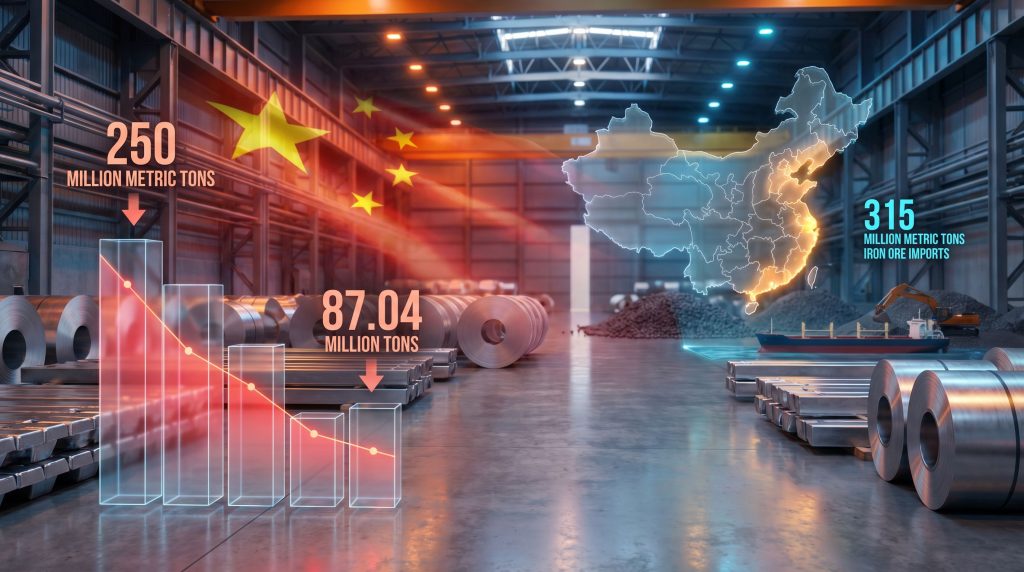
China's steel production landscape has reached a critical inflection point, with Q1 2026 output declining 5% year-on-year to approximately 250 million metric tons. This contraction represents more than a cyclical downturn; it signals a deliberate rebalancing of industrial capacity amid evolving economic priorities.
| Production Metric | Q1 2025 | Q1 2026 | Change |
|---|---|---|---|
| Steel Output (million metric tons) | ~263 | 250 | -5.0% |
| Iron Ore Imports (million metric tons) | ~284 | 315 | +11.0% |
| Current Iron Ore Price (USD/metric ton) | ~95 | 105 | +10.5% |
The production decline occurs against a backdrop of sustained input accumulation, creating what industry analysts describe as an import-production paradox. Despite reduced steel manufacturing, Chinese companies increased iron ore imports by 11% to 315 million metric tons, suggesting strategic inventory positioning rather than immediate consumption needs.
Regional Production Patterns and Geographic Shifts
While comprehensive provincial data remains limited, the production decline appears concentrated in traditional steelmaking regions where older, less efficient facilities face mounting environmental compliance pressures. Capacity utilization rates have fallen below optimal levels as companies prioritize higher-margin products over volume-based production strategies.
The disconnect between raw material imports and finished steel production indicates Chinese steelmakers are building strategic reserves while optimizing operational efficiency across their production networks.
How Are Raw Material Dynamics Reshaping the Steel Supply Chain?
Iron Ore Import Paradox Analysis
The 11% surge in iron ore imports to 315 million metric tons represents a fundamental shift in procurement strategy. Chinese steelmakers are demonstrating sophisticated supply chain management by accumulating raw materials during periods of reduced production intensity. This trend aligns with broader China demand prospects that suggest strategic stockpiling behaviour.
Current iron ore pricing at USD 105 per metric ton sits significantly above Morningstar's long-term marginal cost estimate of USD 75 per metric ton by 2030, creating substantial value premiums for major mining operations. This pricing environment reflects:
• Geopolitical risk premiums from Middle East conflicts affecting shipping routes
• Strategic stockpiling demand as Chinese companies hedge against supply disruptions
• Quality preference shifts toward higher-grade ore requiring greater import volumes
• Inventory accumulation strategies during production optimization periods
Cost Structure Pressures on Chinese Steelmakers
Elevated energy costs from geopolitical tensions have created dual pressures on steel production economics. Companies face simultaneously reduced demand and increased input costs, compressing margins across integrated and independent producers.
The Iran conflict has introduced significant volatility into global commodity markets, with shipping disruptions and elevated energy prices affecting both operational costs and demand patterns. Furthermore, these trade war impacts continue to influence steel production decisions and export strategies.
Featured Analysis: Current spot iron ore pricing significantly exceeds medium-term forecasts, with Morningstar projecting an average of USD 100 per metric ton from 2026-2028 before normalizing to long-run marginal costs.
What Structural Forces Are Driving China's Steel Demand Weakness?
Real Estate Sector's Cascading Impact
China's property market correction continues reverberating through steel-intensive sectors, fundamentally altering consumption patterns for construction-grade steel products. The relationship between housing market health and steel demand remains one of the most critical factors determining future production trajectories.
Key demand drivers experiencing structural changes include:
• New construction projects facing financing constraints and regulatory restrictions
• Infrastructure investment programs requiring government stimulus activation
• Manufacturing sector demand shifting toward higher-value applications
• Export market challenges from international trade policy uncertainties
Export Market Challenges and Policy Constraints
Chinese steel exporters face increasingly complex international market conditions, with potential export restrictions and licensing frameworks affecting overseas sales volumes. The combination of domestic production optimization and export market constraints creates pressure for companies to focus on higher-margin domestic applications.
According to recent reports on China's commitment to reducing steel capacity, the government aims to cut production capacity significantly by 2026. However, the China steel production drop reflects immediate market pressures rather than policy-driven capacity reductions.
China's position as the dominant source of global commodity demand means any economic deceleration creates bearish pressure across multiple commodity sectors. However, government intervention capacity provides potential downside protection through stimulus measures should economic growth materially soften.
How Will Government Policy Shape Future Production Trajectories?
Capacity Rationalization Strategy
Chinese industrial policy demonstrates sophisticated approaches to managing overcapacity while maintaining economic stability. The government possesses both fiscal and monetary tools to respond to economic weakness, suggesting steel production declines may be temporary rather than permanent.
Policy intervention mechanisms include:
• Stimulus spending on infrastructure projects requiring steel-intensive construction
• Environmental compliance standards accelerating obsolete capacity retirement
• Technology upgrade incentives promoting more efficient production methods
• Regional development programs redistributing industrial capacity geographically
Carbon Emission Goals and Industry Transformation
China's decarbonization agenda intersects with steel industry transformation, creating opportunities for companies implementing advanced production technologies. The transition toward electric arc furnace technology and hydrogen-based steel production requires substantial capital investment but offers long-term competitive advantages.
In addition, the analysis of iron ore demand insights suggests that while production may decline temporarily, strategic material accumulation continues.
Government stimulus response capacity provides a potential floor for steel demand, with infrastructure investment serving as a primary transmission mechanism for economic support policies.
What Are the Global Commodity Market Implications?
Iron Ore Price Dynamics and Forecasting
Current iron ore pricing reflects multiple competing factors, with USD 105 per metric ton representing a significant premium to long-term sustainable levels. Major mining companies are trading at substantial premiums to fair value estimates based on elevated commodity pricing.
| Company | Moat Rating | Fair Value | Current Premium | Primary Driver |
|---|---|---|---|---|
| Fortescue | No-moat | USD 16.60 | +30% | Iron ore pricing |
| Vale | No-moat | USD 15.00 | +20% | Iron ore demand |
| Rio Tinto | No-moat | USD 125.00 | +40% | Iron ore + aluminum |
| BHP | No-moat | USD 44.00 | +25% | Diversified exposure |
| Mineral Resources | No-moat | AUD 75.00 | -15% | Lithium concerns + debt |
Copper and Aluminum Market Spillover Effects
Strong copper and aluminum prices contribute to elevated valuations across diversified mining companies, with Rio Tinto benefiting particularly from aluminum price strength. The correlation between Chinese industrial activity and base metals demand remains robust despite steel production declines.
Cross-commodity demand patterns suggest Chinese manufacturing continues consuming industrial metals for non-steel applications, including:
• Electronics manufacturing driving copper and rare earth demand
• Transportation infrastructure requiring aluminum and specialized alloys
• Renewable energy systems consuming various base metals for solar and wind installations
• Technology sector growth creating demand for high-purity metals and semiconductors
The next major ASX story will hit our subscribers first
Which Investment Sectors Face the Greatest Impact?
Mining Company Valuation Reassessment
Current commodity pricing creates challenging valuation decisions for resource-exposed companies. While near-term cash flows benefit from elevated prices, long-term fair value estimates assume normalization toward marginal cost levels. Consequently, understanding iron ore surplus trends becomes crucial for investment timing decisions.
Investment Considerations:
• Premium valuations reflect temporary price advantages rather than sustainable competitive positions
• Dividend sustainability depends on companies' capital allocation discipline during price cycles
• Geographic diversification provides protection against China-specific demand fluctuations
• Technology adoption capabilities determine long-term competitiveness in evolving markets
Steel-Dependent Industries and Downstream Effects
Industries with significant steel exposure face varied impacts depending on their specific market segments and geographic focus. Automotive manufacturing, shipbuilding, and construction equipment sectors demonstrate different sensitivities to Chinese production changes.
Moreover, developments in the mining sector, such as Zijin Mining strategy, highlight how companies are adapting to changing demand patterns.
Scenario Analysis: Recovery timelines across steel-dependent sectors will likely vary based on:
- Government stimulus timing and infrastructure investment prioritization
- Real estate market stabilization and new construction project approval
- Export market recovery and international trade policy normalization
- Technology transition success in implementing more efficient production methods
What Does This Signal About China's Economic Transition?
Industrial Policy Evolution and Economic Rebalancing
China's steel production decline reflects broader economic transformation objectives, shifting from quantity-focused growth models toward quality-driven development strategies. This transition emphasizes service sector expansion and reduced dependence on heavy industrial production.
The evolution demonstrates sophisticated policy coordination between:
• Environmental objectives requiring cleaner production technologies
• Economic efficiency goals prioritizing higher-value manufacturing
• Global competitiveness strategies emphasizing technological advancement
• Resource utilization optimization reducing waste and improving productivity
Stimulus Response Mechanisms and Effectiveness
Chinese government intervention capacity remains substantial, with multiple policy tools available for economic support. The effectiveness of stimulus measures in reviving steel demand depends on their focus and implementation timeline.
Recent data from CISA indicating daily crude steel production shows that key steel enterprises are maintaining production levels around 22.693 million metric tons in March, despite the overall China steel production drop trend.
China's economic rebalancing journey involves managed transitions rather than abrupt industrial restructuring, providing predictable frameworks for investment planning and resource allocation decisions.
How Should Investors Position for Long-Term Commodity Cycles?
Strategic Asset Allocation Considerations
Commodity investment strategies require balancing exposure to Chinese demand cycles with diversification across geographic regions and end-use applications. The current environment favours flexible approaches that can adapt to changing demand patterns.
Portfolio Construction Principles:
• Geographic diversification across mining jurisdictions reduces China-specific risks
• Technology exposure captures value from production efficiency improvements
• Sustainability themes align with long-term regulatory and market trends
• Quality focus emphasises companies with strong balance sheets and operational flexibility
Scenario Planning for Multiple Market Outcomes
Bull Case: Rapid Chinese economic recovery driven by aggressive stimulus spending
- Infrastructure investment surge driving steel demand rebound
- Property market stabilisation supporting construction steel consumption
- Export market recovery improving overseas demand
Base Case: Gradual stabilisation with structural demand evolution
- Managed production optimisation balancing efficiency and capacity
- Technology upgrade investments supporting long-term competitiveness
- Service sector growth offsetting heavy industry decline
Bear Case: Prolonged weakness and persistent overcapacity
- Extended property market correction limiting construction demand
- Export market challenges constraining production growth
- Environmental compliance costs pressuring marginal producers
Key Monitoring Indicators:
• Government policy announcements regarding stimulus timing and focus
• Infrastructure investment approvals and project implementation progress
• Property market stabilisation indicators and construction activity data
• Export volume trends and international trade policy developments
• Technology adoption rates across steel production facilities
Disclaimer: This analysis involves forecasts and speculation about future market conditions. Commodity prices are inherently volatile and subject to numerous factors beyond those discussed. Investors should conduct thorough due diligence and consider professional advice before making investment decisions. Past performance does not guarantee future results, and all investments carry risk of loss.
Ready to Capitalise on China's Industrial Transformation?
Discovery Alert's proprietary Discovery IQ model delivers real-time alerts on significant ASX mineral discoveries, instantly empowering subscribers to identify actionable opportunities ahead of the broader market during periods of global commodity volatility. Begin your 14-day free trial today at Discovery Alert and secure your market-leading advantage as China's steel dynamics reshape global mining opportunities.