
August 14, 2026
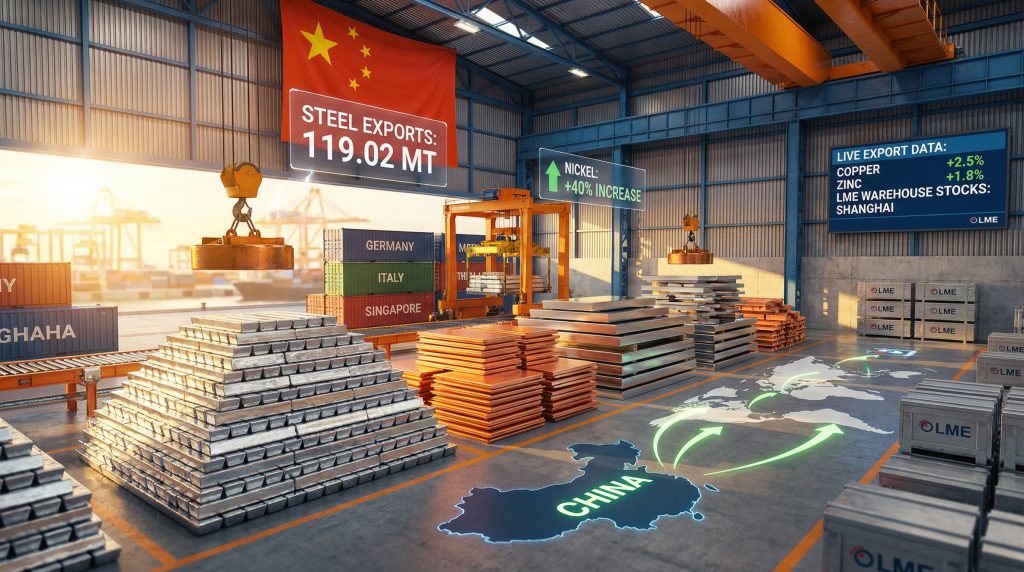
The global commodity landscape is undergoing unprecedented transformation as China's surging metal exports reshape traditional trade patterns. Furthermore, this shift represents more than cyclical market adjustments—it signals fundamental restructuring of international supply chains and strategic positioning ahead of regulatory changes.
Global Supply Chain Architecture Faces Unprecedented Disruption
The fundamental architecture of global metal supply chains encounters a transformative phase as traditional import-export patterns dissolve into complex bidirectional flows. This restructuring reflects deeper structural forces beyond cyclical demand fluctuations, signaling permanent shifts in how base metals move between nations and processing centres.
While historical commodity trade followed predictable one-way channels from mining regions to consuming markets, today's landscape reveals sophisticated processing hubs that simultaneously absorb raw materials and distribute refined products across multiple geographic zones. These evolving patterns indicate structural overcapacity meeting strategic positioning rather than simple market arbitrage.
When big ASX news breaks, our subscribers know first
Understanding China's Strategic Metal Export Transformation
China's surging metal exports represent a calculated response to domestic industrial restructuring combined with international market opportunities. The nation's refined copper net imports dropped to their lowest levels since 2017, reaching only 3.03 million metric tons in 2025, while simultaneously exporting approximately 800,000 tons of refined copper.
This dramatic shift from traditional one-way import dependency demonstrates how processing capacity expansion has created surplus output seeking international markets. Moreover, the transformation extends beyond copper into multiple base metal sectors.
Chinese refined nickel exports surged 40% year-over-year to reach 171,000 tons in 2025, establishing new annual records. Similarly, refined zinc exports accelerated to 78,500 tons during the fourth quarter alone, while tin shipments approached 3,000 tons as international prices rallied.
Strategic Processing Capacity Deployment
China's aggressive smelting infrastructure buildout across zinc, nickel, and tin sectors has created structural overcapacity that operates independently of domestic demand cycles. This expansion originally targeted electric vehicle battery manufacturing support, particularly for nickel processing facilities designed to handle Indonesian raw materials.
However, when EV battery chemistry shifted toward lithium iron phosphate configurations that require minimal nickel content, surplus refining capacity naturally redirected toward export markets. Consequently, the mining industry evolution has adapted to new technological demands.
The strategic nature of this capacity deployment becomes evident through simultaneous import and export activities within the same metal categories. While commercial smelters export refined products to capture international price premiums, state entities continue accumulating strategic reserves through imports from geopolitically aligned suppliers including Russia and Norway.
Bonded Warehouse Integration Mechanisms
China's bonded warehouse zones function as sophisticated trade facilitation infrastructure that enables complex import-export arbitrage strategies. These designated areas allow customs tariff deferral while merchandise awaits domestic consumption or re-export decisions.
The system has evolved beyond temporary storage to become active trading infrastructure that responds to international price differentials and regulatory changes. During periods of US tariff uncertainty, Chinese bonded warehouses dispatched 203,000 tons of copper to American markets while US customs registered only 17 tons of direct Chinese imports through October 2025.
This discrepancy reveals how bonded zones facilitate movement of non-Chinese branded metals that enter China temporarily before redirection to final destinations. Furthermore, this mechanism demonstrates sophisticated supply chain management capabilities.
What Economic Forces Drive China's Record-Breaking Metal Exports?
Domestic Overcapacity Meets Export Opportunity
China's metal export surge stems from fundamental misalignment between expanded processing capacity and evolving domestic demand patterns. The property sector downturn has reduced internal construction material consumption, while manufacturing efficiency improvements have lowered production costs sufficiently to enable competitive international pricing across multiple base metal categories.
Processing capacity expansion reflects long-term strategic planning that anticipated continued domestic industrial growth. When residential construction demand failed to materialise at projected levels, Chinese smelters faced capacity utilisation decisions that favoured maintaining production levels through export channel development rather than reducing operational intensity.
Key drivers include:
- Smelting infrastructure buildout: Aggressive capacity additions across zinc, nickel, and tin processing facilities
- Construction demand reduction: Property sector weakness redirecting steel and aluminium output toward international markets
- Production cost advantages: Manufacturing efficiency gains enabling competitive export pricing
- Strategic timing considerations: Companies maximising unrestricted trade opportunities before regulatory changes
Pre-Regulatory Rush Dynamics
Anticipated regulatory changes scheduled for 2026 have accelerated export activities as companies attempt to maximise final quarters of unrestricted international trade. The forthcoming licensing system covering 100+ steel product categories will require government approval for export activities, potentially introducing volume restrictions based on domestic priority assessments.
Export operators recognise that administrative compliance costs and potential quota limitations may significantly reduce future profitability margins. This understanding has motivated front-loading of international shipments during 2025, contributing to record-breaking export volumes across multiple metal categories.
Which Metals Are Leading China's Export Revolution?
Steel: The Dominant Export Category
Steel exports maintain leadership by volume, demonstrating China's continued dominance in large-scale commodity steel production. Total steel exports grew 7.5% year-over-year from 110.7 million tons in 2024 to 119.02 million tons in 2025, with December 2025 shipments reaching 11.3 million tons, representing 15.3% growth compared to the previous December.
According to recent industry analysis, this growth pattern indicates strategic positioning toward finished and semi-finished product categories.
Table: China's Steel Export Performance
| Metric | 2024 | 2025 | Growth Rate |
|---|---|---|---|
| Total Exports (MT) | 110.7 | 119.02 | +7.5% |
| December Peak (MT) | 9.8 | 11.3 | +15.3% |
| Steel Bars (MT) | 0.72 | 1.29 | +79.8% |
The 79.8% growth in steel bar exports specifically indicates strategic positioning toward finished and semi-finished product categories rather than basic commodity-grade materials. This shift suggests value-addition strategies that capture higher margins while reducing transportation costs per unit value.
Refined Base Metals Breakthrough Performance
Refined base metals have demonstrated exceptional growth rates that exceed steel's expansion pace, indicating structural transformation rather than cyclical fluctuation. Chinese brands now represent 79% of London Metal Exchange-warranted copper tonnage and 69% of registered nickel stocks, demonstrating successful integration into international commodity trading infrastructure.
Notable achievements include:
- Nickel exports: 171,000 tons (40% increase) establishing annual records
- Zinc shipments: 78,500 tons in Q4 2025 directed to Taiwan, Singapore, and Hong Kong
- Tin acceleration: Nearly 3,000 tons responding to LME price strength
- Aluminium exports: Strongest performance since 2006
LME Warehouse Integration Success
Chinese smelter brands have achieved substantial representation within LME warehouse inventory systems, indicating successful quality standard compliance and international trading infrastructure integration. This development enables Chinese producers to supply both Asian regional markets and international customers through standardised warehouse mechanisms.
The high percentage representation of Chinese brands in LME warehouses reflects significant capital investment in quality assurance systems and regulatory compliance procedures. Chinese refineries have demonstrated ability to meet international specification requirements while maintaining production cost advantages over traditional Western suppliers.
How Are Global Markets Responding to China's Export Flood?
International Trade Defence Mechanisms
Global markets have implemented sophisticated adaptation strategies that blend protective measures with strategic procurement optimisation. Rather than viewing Chinese exports solely as competitive threats, experienced market participants have developed procurement approaches that capture geographic price differentials while maintaining supply chain flexibility.
Western purchasing managers recognise that Chinese metal integration into LME warehouse infrastructure at 69-79% representation levels indicates permanent supply chain alteration rather than temporary arbitrage opportunities. This recognition has prompted long-term sourcing strategy adjustments that incorporate Chinese brands alongside traditional suppliers.
Price Discovery Disruption Patterns
China's surging metal exports have created sustained arbitrage opportunities between CME-priced US delivery contracts and LME international benchmarks. US aluminium delivery premiums have reached $2,177 per ton over LME cash basis pricing, while copper premiums have achieved unprecedented levels due to tariff-driven supply chain disruption.
Critical Market Development: Chinese metal exports are fundamentally altering international price discovery mechanisms by introducing new supply sources that respond rapidly to geographic price differentials and regulatory changes.
Geographic flow redirection has become systematic rather than opportunistic:
- Copper destinations: Germany, Italy, Netherlands replacing Chilean units diverted to US markets
- Aluminium routes: South Korea, India avoiding direct US tariff exposure
- Zinc flows: Taiwan, Singapore, Hong Kong accessing LME warehouse systems
- Strategic positioning: Chinese producers establishing permanent presence in multiple regional markets
Warehouse Inventory Transformation
LME warehouse composition has undergone dramatic transformation as Chinese-branded metals achieve dominant representation across multiple base metal categories. This shift indicates structural integration rather than temporary inventory positioning, suggesting permanent alteration of international commodity storage patterns.
Table: Chinese Brand LME Warehouse Representation (End 2025)
| Metal | Chinese Brand Share | Strategic Implication |
|---|---|---|
| Copper | 79% | Dominant supply integration |
| Nickel | 69% | Processing capacity success |
| Overall | 69-79% | Permanent market presence |
Traditional supplier premiums from Chilean, Russian, and Norwegian producers face erosion pressure as market participants develop comfort with Chinese brand quality consistency. This development threatens historically stable premium structures that favoured established suppliers.
What Role Do US Trade Policies Play in Redirecting Chinese Metal Flows?
Tariff-Driven Arbitrage Exploitation
US trade policy implementation has inadvertently created lucrative arbitrage opportunities that Chinese exporters have systematically exploited through sophisticated logistics and warehouse management strategies. The Trump administration's copper tariff threats generated substantial price premiums for US delivery that reached levels sufficient to justify complex international routing arrangements.
Chinese bonded warehouse operators have developed specialised expertise in managing inventory flows that capitalise on regulatory timing and geographic price differentials. These facilities function as active trading centres rather than passive storage locations, enabling rapid response to emerging arbitrage opportunities.
The US‐China trade war impact has created complex market dynamics beyond simple bilateral tensions. Additionally, understanding how tariffs impact markets reveals broader economic implications.
Strategic Flow Redirection Impact
US tariff policies have accelerated Chinese metal export diversification across multiple geographic markets. Primary aluminium exports approached 300,000 tons in 2025, with South Korea and India representing major destination markets alongside smaller volumes reaching Netherlands and direct US shipments during fourth quarter trading.
This geographic diversification reduces Chinese dependence on any single export market while establishing sustainable trade relationships across multiple regions. European destinations have become particularly significant as Chinese suppliers replace traditional South American sources that redirect output toward US markets to capture tariff-protected premiums.
Bonded Warehouse Strategic Utilisation
Chinese bonded warehouse zones have evolved into sophisticated trade facilitation infrastructure that enables complex arbitrage strategies while maintaining regulatory compliance. These facilities process both inbound raw materials for domestic smelting and outbound refined products for international distribution.
The mechanism allows traders to:
- Import metals into bonded zones without immediate tariff obligations
- Monitor international price differentials across multiple markets
- Execute export decisions based on optimal arbitrage opportunities
- Re-export through bonded infrastructure without triggering domestic tariff consequences
The next major ASX story will hit our subscribers first
Why Is China Simultaneously Importing and Exporting the Same Metals?
Dual-Track Strategy Implementation
China's simultaneous import and export activities within identical metal categories reflect sophisticated strategic positioning that balances commercial optimisation with strategic security objectives. Commercial smelting operators respond to international price signals and arbitrage opportunities, while state entities pursue counter-cyclical accumulation strategies for strategic reserve development.
This dual-track approach creates complex bidirectional trade flows that often confuse traditional supply-demand analysis. Chinese refined nickel imports reached 231,000 tons in 2025 (highest since 2021) while exports simultaneously achieved record 171,000 tons, indicating completely separate buyer bases and strategic objectives.
Analysis of China demand prospects reveals these complex market dynamics. Moreover, commodity trading trends show how companies adapt to these changing patterns.
Quality Differentiation Strategies
Chinese importers demonstrate preference for premium-grade materials from traditional suppliers including Russia and Norway, while export operations focus on LME-specification products that meet international warehouse standards without commanding supplier premiums. This quality segmentation allows optimisation of both domestic strategic reserves and international market positioning.
Strategic Considerations:
- Premium imports: Long-term relationships with geopolitically aligned suppliers
- Standard exports: LME-compliant products for international price discovery
- Processing arbitrage: Raw material imports for value-added export production
- Reserve building: Strategic stockpiling independent of commercial considerations
Processing Capacity Optimisation
China's expanded smelting infrastructure requires continuous feedstock supply to maintain optimal capacity utilisation rates. Importing raw materials from established suppliers enables maximum processing throughput while export sales optimise revenue generation from surplus refined output capacity.
This processing model transforms China from simple consuming market into integrated refining hub that adds value to imported raw materials before redistribution to international markets. The approach captures both processing margins and strategic material access through diversified supply relationships.
How Will 2026 Regulatory Changes Impact Export Dynamics?
Licensing System Implementation Framework
The comprehensive export licensing system scheduled for 2026 implementation will introduce government approval requirements across 100+ steel product categories, fundamentally altering the operational environment for Chinese metal exporters. This regulatory framework represents transition from relatively unrestricted export activities toward managed trade flows based on domestic priority assessments.
Export quota management systems will enable Chinese authorities to balance international revenue generation with domestic supply security objectives. The administrative framework provides tools for reducing export volumes during periods of domestic shortage while maximising international sales when surplus capacity exists.
Market Adjustment Expectations
Industry analysts anticipate that 2026 regulatory implementation will create export volume plateau effects despite continued downstream pressure from surplus processing capacity. Administrative compliance costs and potential volume restrictions will reduce profitability margins for export operations while creating market uncertainty for international buyers.
Predicted Changes:
- Steel export volumes: Likely flat performance in 2026 despite capacity surplus
- Margin compression: Administrative costs reducing export operation profitability
- Supply reliability: Potential disruption to established international trade relationships
- Strategic prioritisation: Government preference for domestic supply security over export revenue
International Supply Chain Adaptation
Global purchasing managers are preparing contingency strategies to address potential Chinese export availability reductions following 2026 regulatory implementation. These preparations include diversified sourcing arrangements, strategic inventory building, and development of alternative supplier relationships outside Chinese processing infrastructure.
Western economies are accelerating efforts to reduce dependency on Chinese processing capacity through domestic smelting infrastructure investment and strategic partnership development with non-Chinese refiners. However, the scale of Chinese processing dominance makes rapid diversification challenging without substantial capital investment and timeline commitment.
What Are the Long-Term Implications for Global Metal Markets?
Processing Dominance Consolidation Trajectory
China's expanding smelting capacity across multiple base metal categories creates structural dependency risks that mirror existing rare earth market dynamics. The nation's processing dominance extends beyond simple capacity scale to include technical expertise, integrated supply chains, and cost optimisation capabilities that competitors struggle to replicate.
This consolidation trajectory suggests permanent alteration of global metal processing geography, with China potentially achieving dominant market positions across zinc, nickel, tin, and aluminium sectors similar to its existing steel industry leadership. Such dominance creates strategic vulnerability for consuming nations that lack alternative processing options.
Bidirectional Trade Evolution Patterns
Traditional one-way commodity flows are evolving into complex bidirectional patterns that reflect multiple strategic objectives operating simultaneously within Chinese metal markets. This evolution creates analytical challenges for market participants accustomed to straightforward import-export relationships.
Scenario Analysis Framework:
- Price differential exploitation: Arbitrage opportunities driving export timing and destinations
- Strategic reserve requirements: Import patterns independent of commercial considerations
- Processing capacity utilisation: Export volumes maintaining optimal smelter operations
- Geopolitical relationship management: Trade flows supporting strategic partnerships
Investment Strategy Realignment Requirements
Global mining companies face strategic imperatives to develop processing capabilities outside Chinese infrastructure or accept permanent dependency on Chinese refining services. This realignment requires substantial capital investment in smelting technology and skilled workforce development across multiple geographic regions.
Investment Consideration: Western governments are implementing strategic material stockpiling programmes and domestic processing incentives to reduce Chinese supply chain dependency, potentially creating investment opportunities in non-Chinese smelting infrastructure.
Supply security premiums for non-Chinese processed materials may command higher prices as government and corporate buyers prioritise reliability over cost optimisation. Long-term supply contracts incorporating geographic diversification requirements could reshape pricing structures across base metals markets.
Strategic Competition Intensification
China's surging metal exports signal intensifying competition for critical material access and processing control. Nations seeking strategic autonomy must balance economic efficiency against supply security considerations while developing alternative processing capabilities that can compete with established Chinese infrastructure.
This competition extends beyond simple capacity development to include technology transfer, skilled workforce development, and integrated supply chain creation. Success requires coordinated government-private sector collaboration over extended timeframes rather than short-term market interventions.
According to recent analysis on metals market dynamics, the ultimate outcome will determine whether global base metals markets evolve toward Chinese processing dominance or achieve more balanced geographic distribution of refining capabilities. Current trends suggest Chinese dominance expansion unless substantial alternative capacity development occurs rapidly.
Navigating Permanent Metal Trade Transformation
China's surging metal exports represent fundamental restructuring of global commodity flows rather than temporary cyclical phenomena. The transformation reflects massive overcapacity investments, strategic positioning ahead of regulatory changes, and sophisticated exploitation of international arbitrage opportunities created by trade policy disruptions.
The 2026 licensing system implementation will test whether administrative controls can effectively balance domestic supply priorities with international market obligations. However, China's achieved processing dominance across multiple base metal categories suggests structural dependency that transcends short-term regulatory adjustments.
Global markets must adapt to bidirectional trade flows, complex arbitrage patterns, and strategic competition for critical material access. Western economies accelerating domestic processing development face substantial capital requirements and timeline challenges competing against established Chinese infrastructure advantages.
Disclaimer: This analysis incorporates market predictions and speculative assessments that involve inherent uncertainty. Investors should conduct independent research and consider professional advice before making financial decisions based on commodity market forecasts or trade policy speculation.
Ready to Capitalise on the Next Major Metal Discovery?
Discovery Alert's proprietary Discovery IQ model delivers real-time alerts on significant ASX mineral discoveries, instantly empowering subscribers to identify actionable opportunities ahead of the broader market. Begin your 14-day free trial today and secure your market-leading advantage whilst these global metal market shifts create unprecedented investment opportunities.