May 16, 2026
Understanding China's Vulnerability to Global Economic Pressures
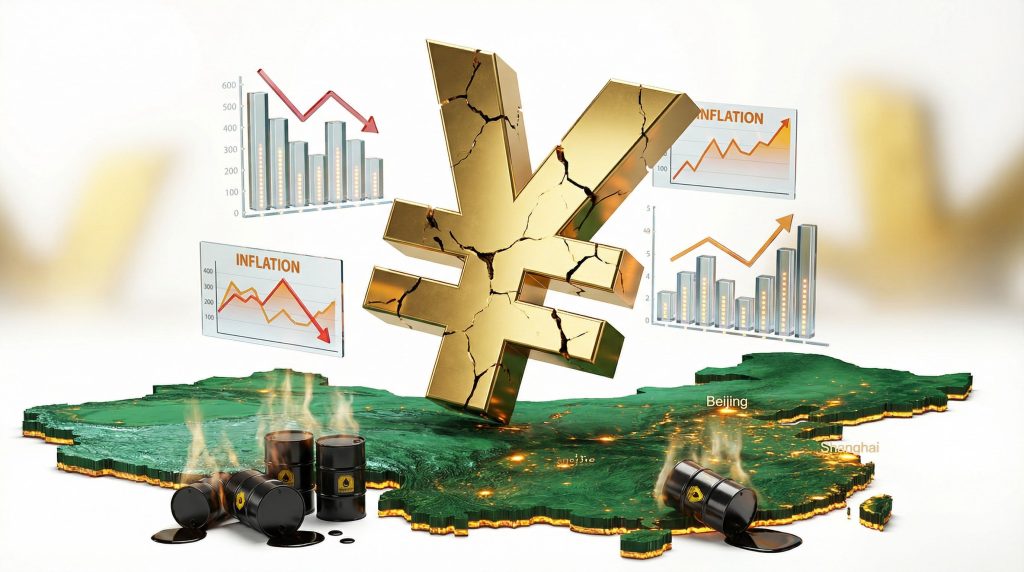
The stagflation impact on China's economy represents one of the most complex challenges facing policymakers and businesses today. As the world's second-largest economy grapples with unique structural vulnerabilities, the convergence of stagnant growth, rising inflation, and increasing unemployment creates unprecedented policy dilemmas. Furthermore, China's manufacturing-export dependency, combined with substantial energy import requirements, creates a complex web of vulnerabilities that could transform external shocks into prolonged economic malaise.
Understanding these dynamics becomes crucial for policymakers, investors, and business leaders navigating an increasingly uncertain global landscape. Moreover, the nation's current deflationary environment creates additional complications that could mask early warning signals.
When big ASX news breaks, our subscribers know first
What Is Stagflation and Why Should China Be Concerned?
Defining the Economic Triple Threat
Stagflation represents one of economics' most perplexing phenomena, where stagnant economic growth collides with rising inflation rates and increasing unemployment levels simultaneously. This combination defies traditional economic theory, which typically assumes an inverse relationship between inflation and unemployment through the Phillips Curve. When stagflation occurs, central banks face an impossible choice: stimulating growth risks accelerating inflation, while tightening monetary policy to combat inflation further dampens economic activity.
The term gained prominence during the 1970s global oil crises, when developed economies experienced prolonged periods of economic stagnation coupled with double-digit inflation. During the 1973 Yom Kippur War, OPEC's oil embargo caused crude prices to quadruple within months, triggering widespread stagflation across oil-importing nations. Similarly, the Iranian Revolution of 1979 and subsequent Iran-Iraq War created another wave of energy-driven stagflation that persisted into the early 1980s.
China's Unique Vulnerability Profile in 2026
China's economic structure creates several distinct vulnerabilities to stagflation pressures:
- Manufacturing sector dominance accounting for approximately 28% of GDP
- Export dependency linking domestic production to global demand patterns
- Energy import reliance exposing the economy to geopolitical supply disruptions
- Deflationary environment potentially masking early stagflation warning signals
According to Su Jian, economics professor at Peking University and director of the Centre for National Economic Research, rising oil prices could lead to stagflation conditions that increase inflation rates while simultaneously causing economic growth decline and unemployment increases. This assessment becomes particularly relevant given China's current battle against deflationary pressures, which may initially welcome energy-driven price increases before recognising their growth-dampening effects.
The nation's current deflationary environment creates a unique complication. While most economies fear inflation, China has struggled with persistently weak prices, making initial energy cost increases appear beneficial. However, this deflation-to-stagflation transition could prove more damaging than traditional inflationary pressures, as it combines the worst aspects of both economic conditions.
In addition, the us economy and tariffs dynamics add another layer of complexity to China's economic challenges.
How Do Energy Price Shocks Create Stagflation Conditions?
The Oil Price Transmission Mechanism
Energy price shocks propagate through multiple channels to create stagflation conditions. The transmission mechanism operates through both supply-side cost pressures and demand-side spending constraints, creating a simultaneous squeeze on economic growth and price stability.
| Historical Oil Crisis | Price Impact | Economic Consequence | Duration |
|---|---|---|---|
| 1973 Yom Kippur War | Oil prices quadrupled | Global recession with 10%+ inflation | 2-3 years |
| 1979 Iranian Revolution | Prices doubled | Sustained stagflation period | 4-5 years |
| 2008 Financial Crisis | $140+ per barrel peak | Demand destruction and recession | 1-2 years |
| 2022 Ukraine Conflict | 40%+ price increase | Regional energy crisis | Ongoing |
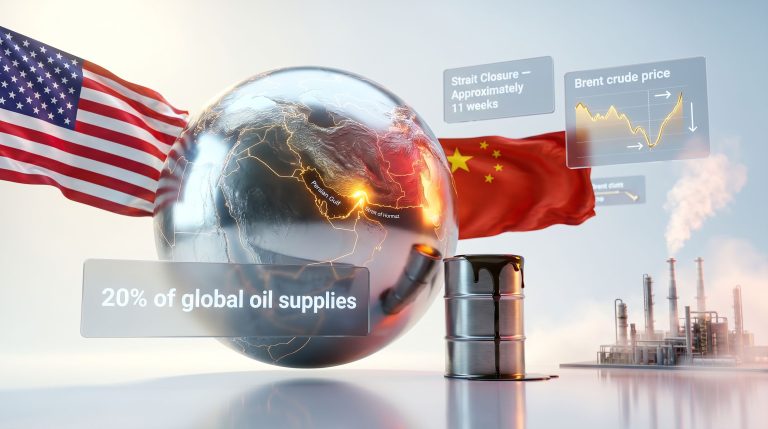
Recent energy market movements demonstrate this mechanism in action. As of March 4, 2026, Brent crude traded above $84 per barrel, representing a 16% increase from the previous Friday, while West Texas Intermediate crude rose 15% to above $77 per barrel. These rapid price movements, triggered by military confrontation between Iran and US-Israeli forces, highlight how geopolitical events can quickly translate into broad economic pressures.
Consequently, oil price rally dynamics demonstrate how geopolitical tensions can rapidly escalate into broader economic challenges. Higher energy costs force manufacturing facilities to reduce production capacity and implement workforce reductions while consumer goods prices continue rising despite economic slowdown.
China's Energy Security Challenges
China's substantial import dependency for crude oil and natural gas creates direct exposure to global energy price volatility. The nation's strategic petroleum reserve capacity provides limited buffer against sustained price increases or supply disruptions, particularly when combined with alternative energy transition timeline constraints.
Current Middle East tensions underscore these vulnerabilities. The military confrontation entered its fifth day as tensions escalated, creating heightened risks to a region vital to global energy flows and maritime trade. The Strait of Hormuz, through which approximately 20-25% of global petroleum trade passes, represents a critical chokepoint for Chinese energy security.
Key vulnerability factors include:
- High import dependency ratios for both crude oil and natural gas
- Geographic concentration of supply sources in politically unstable regions
- Limited strategic reserve capacity relative to consumption needs
- Slower renewable energy deployment compared to import dependency growth
What Are the Early Warning Signs of Stagflation in China?
Inflation Indicators to Monitor
Identifying stagflation risks requires monitoring specific economic indicators that signal the simultaneous development of inflationary pressures and growth constraints. Producer Price Index acceleration often provides the earliest indication of cost-push inflation, while core inflation measures help distinguish between temporary energy shocks and broader price pressures.
The rapid 15-16% oil price increase over four days during early March 2026 represents precisely the type of leading indicator that precedes stagflation development. Energy prices function as forward-looking signals, with manufacturing impacts typically appearing within 1-3 months of initial price movements.
Critical monitoring framework: Oil price movements should be interpreted as leading indicators of potential stagflation, with changes in energy costs preceding broader economic impacts by several quarters. The challenge lies in distinguishing between temporary price volatility and sustained energy cost inflation.
However, China's stagflation risks are creeping up as trade war pressures escalate, adding another dimension to economic vulnerability.
Growth Stagnation Metrics
Manufacturing Purchasing Managers' Index deterioration patterns often coincide with energy price shocks, as higher input costs squeeze production margins and reduce new order volumes. Fixed asset investment deceleration trends provide another crucial signal, as businesses postpone capital spending amid cost uncertainty and demand weakness.
Export competitiveness erosion represents a particularly important metric for China's economy. When domestic production costs rise faster than competitor nations, export volumes typically decline, creating a negative feedback loop that amplifies the stagflation impact on China's economy.
Key metrics for early detection:
- Producer Price Index month-over-month acceleration
- Manufacturing PMI readings below 50 for consecutive months
- Export volume growth deceleration or contraction
- Fixed asset investment growth rate decline
- Real wage growth lagging behind inflation rates
How Would Stagflation Impact Different Sectors of China's Economy?
Manufacturing and Industrial Production
The manufacturing sector faces the most direct impact from stagflation conditions through multiple channels. Input cost pressures squeeze profit margins while simultaneously reducing production capacity utilisation as demand weakens. Supply chain disruption amplification occurs when both domestic cost increases and international demand destruction combine to create compound pressures.
Energy-intensive industries including steel production, cement manufacturing, chemical processing, and aluminium smelting would experience the most severe margin compression. These sectors typically operate with thin margins and limited pricing power, making them particularly vulnerable to sustained energy cost increases.
Furthermore, the tariffs impact on markets compounds these challenges by creating additional cost pressures on manufacturers. Higher costs have historically forced factories to implement production cuts and workforce reductions while goods prices continue rising despite economic slowdown.
Consumer Markets and Household Spending
Real income erosion through inflation represents the primary household impact of stagflation. When energy and goods prices rise faster than wages, consumers experience declining purchasing power that forces discretionary spending reductions. This demand destruction then feeds back into the economic slowdown, amplifying stagflation effects.
Regional economic disparity amplification occurs as export-dependent coastal regions face dual headwinds from rising costs and reduced international demand. Meanwhile, domestic consumption-focused inland regions may experience uneven impacts depending on local economic structure and energy dependency.
Household impact patterns:
- Transportation and heating cost increases reducing discretionary income
- Food price inflation affecting lower-income households disproportionately
- Regional variation in impact severity based on economic structure
- Savings rate changes as households adjust to reduced real income
Financial Markets and Investment Flows
| Sector | Vulnerability Level | Primary Risk Factors | Mitigation Strategies |
|---|---|---|---|
| Energy-Intensive Manufacturing | Very High | Direct cost transmission | Energy efficiency, alternative sources |
| Export Manufacturing | High | Cost increases + demand destruction | Market diversification |
| Domestic Services | Medium | Reduced consumer spending | Cost flexibility |
| Technology | Low-Medium | Limited energy dependency | Innovation focus |
| Financial Services | Medium | Credit quality deterioration | Risk management |
Foreign direct investment flows typically decline during stagflation periods as international investors seek more stable economic environments. Currency stability challenges emerge as central banks struggle to balance growth support with inflation control, creating exchange rate volatility that further complicates investment decisions.
For instance, gold price forecast trends show increased investor interest in safe-haven assets during periods of economic uncertainty.
What Policy Tools Can China Deploy Against Stagflation?
Monetary Policy Limitations and Options
Traditional monetary policy faces severe constraints during stagflation episodes. Interest rate reductions risk accelerating inflation, while rate increases worsen economic stagnation. This creates a policy paradox where conventional tools become counterproductive, forcing central banks to consider unconventional approaches.
Exchange rate management strategies become crucial during energy price shocks. A stronger currency can help offset imported inflation, but may damage export competitiveness. Conversely, currency weakness reduces import costs in local terms but makes energy imports more expensive, potentially accelerating stagflation pressures.
Monetary policy considerations:
- Limited effectiveness of traditional interest rate tools
- Exchange rate management trade-offs between inflation and growth
- Liquidity provision versus inflation control balance
- Communication strategy importance for managing expectations
Fiscal Policy Intervention Mechanisms
Fiscal policy offers more flexibility than monetary tools during stagflation periods. Targeted stimulus focused on supply-side improvements can address both growth and inflation concerns simultaneously. Infrastructure investment acceleration may provide demand support while improving long-term productivity growth.
Tax policy adjustments for supply-side support represent another avenue for stagflation response. Reducing business tax burdens on energy costs or providing temporary relief for affected sectors can help maintain production levels while moderating price increases.
Supply-side fiscal measures prove most effective during stagflation:
- Energy efficiency incentives reducing cost pressures
- Infrastructure investment improving productivity
- Targeted tax relief for affected industries
- Research and development support for alternative energy
- Trade policy adjustments reducing import costs
Structural Reform Acceleration
Energy diversification initiatives become critical for reducing stagflation vulnerability. Accelerating renewable energy deployment, expanding nuclear capacity, and developing alternative energy sources can reduce import dependency and price volatility exposure over time.
Domestic consumption enhancement programmes help rebalance the economy away from export dependency, reducing vulnerability to external demand shocks. Innovation-driven productivity improvements provide the most sustainable path to managing stagflation pressures while maintaining long-term growth potential.
The next major ASX story will hit our subscribers first
How Does China's Stagflation Risk Compare Globally?
Developed Economy Comparison Framework
China's stagflation risk profile differs significantly from developed economies due to structural economic characteristics. Higher manufacturing intensity creates greater energy price sensitivity, while export dependency amplifies external shock transmission. However, policy flexibility and state capacity may provide advantages in implementing coordinated responses.
| Economy | Energy Dependency | Policy Flexibility | Structural Resilience | Overall Risk Level |
|---|---|---|---|---|
| China | High | High | Medium | Medium-High |
| United States | Medium | Medium | High | Medium |
| European Union | High | Low | Medium | High |
| Japan | Very High | Medium | High | Medium-High |
| South Korea | Very High | Medium | Medium | High |
Policy response capacity differences reflect varying fiscal space and monetary policy independence. China's unified policy framework may enable more rapid and coordinated responses compared to politically fragmented systems, potentially reducing stagflation duration and severity.
Emerging Market Context Analysis
Among emerging markets, China's stagflation risk falls into the medium-high category due to its unique combination of manufacturing intensity and energy import dependency. However, strong fiscal capacity and policy coordination mechanisms provide mitigation tools unavailable to smaller emerging economies.
Currency stability comparison metrics show China's managed exchange rate system may provide more stability during energy shocks compared to freely floating emerging market currencies. Meanwhile, us–china trade war effects continue to influence economic relationships and policy responses.
Emerging market risk factors:
- Commodity price exposure variations across different economies
- Current account balance sensitivity to energy costs
- Foreign exchange reserve adequacy for import financing
- Domestic energy production capacity and efficiency levels
What Are the Long-Term Implications for China's Economic Model?
Growth Strategy Reassessment Requirements
Recurring stagflation risks may necessitate fundamental reassessment of China's export-led growth model. Sustainability questions arise when external demand volatility combines with energy cost pressures to create recurring economic instability. Domestic demand cultivation becomes increasingly urgent as a strategic priority for reducing external vulnerability.
Technology self-reliance acceleration takes on new importance in this context. Reducing dependency on energy-intensive manufacturing while developing higher value-added industries can improve stagflation resistance. Innovation-driven productivity growth provides the most sustainable path to maintaining competitiveness while managing energy cost pressures.
Strategic rebalancing priorities:
- Domestic consumption enhancement reducing export dependency
- Energy-efficient technology development and deployment
- Service sector expansion decreasing manufacturing intensity
- Regional development balancing reducing coastal concentration
- Innovation ecosystem development supporting productivity growth
Global Economic Position Shifts
Supply chain reconfiguration implications extend beyond immediate stagflation impacts. Persistent energy cost pressures may accelerate deglobalisation trends as companies seek shorter, more resilient supply chains. This could affect China's position as global manufacturing hub, requiring adaptation strategies.
Regional economic leadership challenges emerge when domestic economic instability reduces China's capacity for international economic coordination. However, successful stagflation management could demonstrate policy effectiveness and strengthen regional influence through crisis leadership.
Consequently, studies examining China's economic model suggest it will continue to alarm trading partners, highlighting the need for strategic adjustments.
How Can Investors and Businesses Prepare for Stagflation Scenarios?
Investment Strategy Adaptations
Portfolio construction during stagflation periods requires fundamental strategy shifts away from traditional growth-inflation assumptions. Asset allocation must account for the simultaneous occurrence of weak growth and rising prices, conditions that challenge conventional diversification approaches.
Asset allocation during stagflation typically favours: Real assets including commodities, energy infrastructure, and inflation-protected securities tend to outperform during stagflation periods. Traditional growth stocks often struggle while value stocks with pricing power may demonstrate resilience. International diversification becomes crucial for reducing single-country exposure to stagflation impacts.
Inflation-protected securities offer partial hedging against purchasing power erosion, though they may not fully compensate for stagflation's growth-dampening effects. Real asset exposure through commodity funds, real estate investment trusts, and infrastructure investments provides more direct inflation protection.
Strategic allocation considerations:
- Commodity exposure for direct inflation hedging
- Energy sector investments benefiting from higher prices
- Consumer staples companies with pricing power
- International diversification reducing single-country risk
- Shorter-duration bonds reducing interest rate sensitivity
Business Operational Adjustments
Cost structure flexibility becomes paramount for businesses operating in stagflation environments. Companies must develop capacity to maintain operations during both demand weakness and input cost increases. Supply chain diversification strategies help reduce dependency on single-source suppliers vulnerable to energy cost shocks.
Pricing power development represents a crucial competitive advantage during stagflation. Businesses with strong brand loyalty, unique products, or essential services can better pass through cost increases to customers. Those lacking pricing power face margin compression and potential viability challenges.
Operational resilience strategies:
- Energy efficiency improvements reducing cost sensitivity
- Supply chain diversification minimising disruption risks
- Flexible workforce arrangements enabling cost adjustment
- Pricing strategy development for inflationary environments
- Cash flow management during uncertain demand conditions
Frequently Asked Questions About China's Stagflation Risk
Timeline and Probability Assessment
When could stagflation conditions emerge? Historical precedents suggest energy price shocks translate into broader economic impacts within 2-3 quarters. The March 2026 oil price increases of 15-16% over four days represent the type of trigger event that could initiate stagflation development if sustained over several months.
Probability assessments depend heavily on energy price persistence and policy responses. If oil prices remain elevated above $80-85 per barrel for Brent crude, manufacturing cost pressures will likely manifest within 3-6 months. However, effective policy coordination could mitigate severity and duration.
Stagflation persistence typically ranges from 18 months to several years depending on underlying causes and policy effectiveness. Energy-driven episodes tend to resolve faster than those caused by fundamental structural imbalances, suggesting the stagflation impact on China's economy may prove more manageable than worst-case scenarios.
Historical Precedent Analysis
China's experience during previous global energy crises provides limited precedent given the economy's structural transformation since the 1970s-1980s oil shocks. However, the 2008 financial crisis demonstrated the economy's vulnerability to external demand shocks combined with domestic policy constraints.
International lessons suggest coordinated fiscal and monetary responses prove most effective for stagflation management. Countries that maintained policy flexibility while implementing structural reforms typically recovered more quickly than those constrained by political or institutional limitations.
Most effective historical responses included:
- Supply-side policies reducing production costs
- Energy diversification initiatives decreasing import dependency
- Fiscal stimulus targeted at productivity improvements
- International coordination on strategic reserve releases
- Structural reforms improving economic resilience
Conclusion: Navigating China's Economic Crossroads
Key Risk Mitigation Priorities
China's approach to stagflation risk requires coordinated policy implementation across multiple dimensions. The unique combination of deflationary pressures and energy vulnerability creates both challenges and opportunities for economic management.
Critical policy implementation steps:
- Energy security enhancement through diversification and strategic reserve expansion
- Fiscal policy coordination balancing growth support with inflation management
- Monetary policy flexibility adapting tools for stagflation rather than traditional recession
- Structural reform acceleration reducing long-term vulnerability to external shocks
- International cooperation leveraging multilateral frameworks for crisis response
Stakeholder coordination requirements extend beyond government policy to include business adaptation and household preparation. Success depends on maintaining economic confidence while implementing necessary adjustments to reduce structural vulnerabilities.
Monitoring Framework for Economic Decision-Makers
Effective stagflation risk management requires continuous monitoring of leading indicators combined with flexible response capabilities. The framework must balance early intervention against policy overreaction to temporary market volatility.
Essential indicators for early detection include oil price sustainability, manufacturing cost transmission, export demand patterns, and employment trends across energy-sensitive sectors. Response trigger mechanisms should activate when multiple indicators confirm developing stagflation rather than temporary market disruptions.
Adaptive strategy development protocols ensure policy responses remain appropriate as conditions evolve. The most successful stagflation management typically involves graduated responses that intensify as risks materialise whilst maintaining capacity for policy reversal if conditions improve.
This analysis represents current market conditions and historical precedents. Economic forecasts involve inherent uncertainty and actual outcomes may differ significantly from projections. Investment and business decisions should incorporate comprehensive risk assessment and professional consultation appropriate to specific circumstances.
Looking to Navigate Economic Uncertainty Through Strategic Investments?
Discovery Alert's proprietary Discovery IQ model delivers real-time alerts on significant ASX mineral discoveries, helping investors identify actionable opportunities during volatile market conditions like potential stagflation scenarios. When economic uncertainty creates market volatility, mineral discoveries can provide portfolio diversification and inflation hedging opportunities that traditional assets may not offer during challenging economic periods like those China faces. Begin your 14-day free trial today to position yourself ahead of market movements and discover why major mineral discoveries have historically generated substantial returns even during periods of economic uncertainty.