
June 21, 2026
What's Driving China's Strategic Gold Production Expansion?
The global monetary system stands at a crossroads, with traditional currency hierarchies facing unprecedented pressure from technological innovation, geopolitical fragmentation, and economic realignment. Within this transformative landscape, precious metals have emerged as critical anchors for national economic sovereignty, driving strategic resource policies that extend far beyond conventional market dynamics. Furthermore, gold market performance has demonstrated remarkable resilience amid global economic uncertainties.
China's approach to China gold production surge represents a multifaceted response to these macro-economic shifts, encompassing technological advancement, resource security, and strategic positioning within an evolving international framework. The nation's commitment to expanding domestic output reflects broader themes of economic resilience and strategic autonomy that characterize contemporary policy development.
De-dollarisation Momentum as Economic Catalyst
China's gold production surge aligns with systematic efforts to diversify foreign exchange reserves and reduce dependency on dollar-denominated assets. The People's Bank of China has consistently added to gold holdings, with recent additions of 27 tonnes reflecting ongoing portfolio optimization strategies. This expansion supports broader de-dollarisation objectives while strengthening the yuan's international positioning within alternative monetary frameworks.
The correlation between increased domestic production and currency diversification creates multiple strategic advantages. Enhanced domestic output reduces import dependencies while providing greater flexibility in reserve management decisions. These dynamics position gold production as both an economic and strategic priority within China's broader financial architecture.
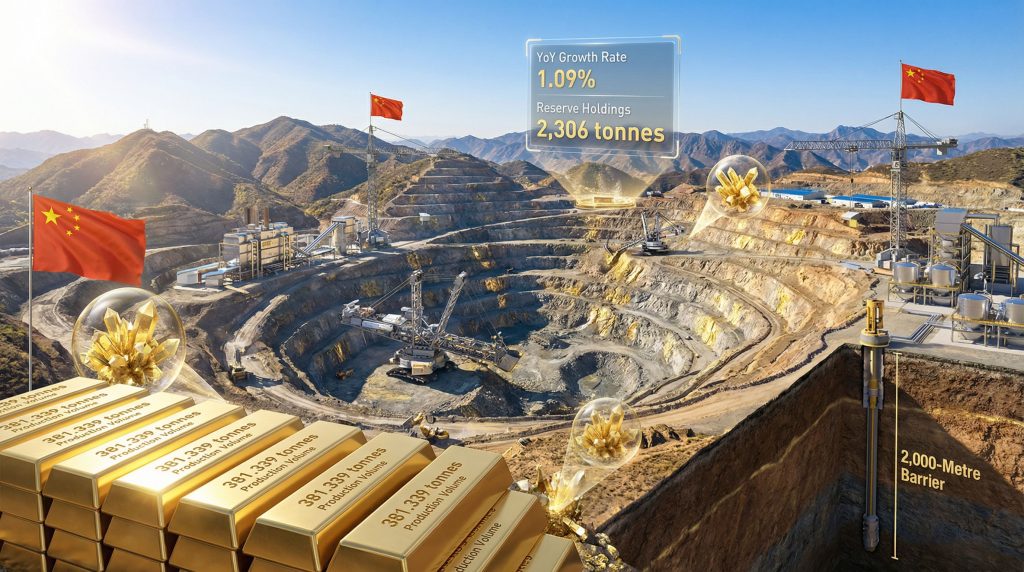
Current production levels of 381.339 tonnes represent approximately 10% of global output, maintaining China's position as the world's largest gold producer. The measured 1.09% year-over-year growth indicates a stabilization focus rather than aggressive expansion, suggesting sustainable development priorities within the sector. However, China eyes gold production surge amid de-dollarisation drive, aiming to hedge against global risks.
Geopolitical Risk Hedging Through Domestic Resource Security
Elevated global tensions have reinforced gold's traditional role as a geopolitical hedge, with domestic production capacity serving as a critical component of resource security frameworks. China's emphasis on technological advancement in mining reflects recognition that supply chain vulnerabilities extend beyond immediate market considerations to encompass broader strategic resilience requirements.
The focus on breaking technological barriers, particularly in deep-shaft mining beyond 2,000 metres, demonstrates commitment to accessing previously unreachable reserves. This technological push addresses both resource depletion concerns and strategic autonomy objectives by reducing reliance on international mining partnerships or technology transfers.
Industry representatives have identified resource security as foundational to stable sector development, emphasising the connection between domestic production capacity and broader economic stability. This perspective reflects understanding that gold production extends beyond commercial considerations to encompass national economic security priorities. Moreover, record high gold prices continue to drive strategic investment in domestic capabilities.
Technology Sector Demand for Advanced Gold Materials
The integration of nanogold technology into China's production strategy reflects recognition of evolving demand patterns within high-technology applications. Advanced gold materials, including ultra-small nanogold particles used in electronics, biomedicine, and specialised manufacturing, represent significant value-addition opportunities beyond traditional bullion production.
Nanogold applications span multiple sectors:
• Electronics: Integrated circuits, connectors, semiconductor packaging
• Biomedicine: Diagnostic imaging, therapeutic agents, medical device coatings
• Advanced Manufacturing: Specialised industrial applications requiring enhanced conductivity and biocompatibility
The commitment to research and development in high-value gold materials indicates strategic positioning within technology supply chains. This approach transforms gold from a primarily monetary asset into a critical industrial input for advanced manufacturing processes, creating additional demand drivers beyond traditional financial applications.
When big ASX news breaks, our subscribers know first
How Deep Mining Innovation Could Transform China's Gold Output
China's ambitious deep mining objectives represent a fundamental shift in extraction capabilities, targeting technological breakthroughs that could unlock previously inaccessible mineral reserves. The commitment to developing deep-shaft mining techniques beyond the 2,000-metre barrier during the 15th Five-Year Plan period (2026-2030) reflects understanding that future production growth depends on accessing deeper geological formations.
Breaking the 2,000-Metre Barrier: Technical Challenges and Solutions
Deep mining beyond 1,500 metres presents extraordinary technical challenges that have historically limited extraction capabilities. Understanding these challenges provides insight into the magnitude of China's technological commitments and the potential transformation of domestic production capacity.
Primary Technical Obstacles:
• Geothermal Management: Temperature increases of approximately 30°C per 1,000 metres depth
• Structural Integrity: Elevated rock stress and potential seismic activity
• Ventilation Systems: Complex cooling and air circulation requirements
• Equipment Durability: Higher operational costs and maintenance demands
International precedents demonstrate the feasibility of ultra-deep mining, with South Africa's operations in the Witwatersrand Basin reaching depths of 3,900 metres and Canada's historical operations extending to 2,600 metres. These examples provide technical benchmarks for China's deep mining objectives while illustrating the operational complexity involved.
Chinese operations currently average 1,000-1,500 metres depth, indicating substantial technological advancement requirements to achieve the 2,000-metre target. The commitment to this technological leap demonstrates recognition that shallow and moderate-depth mines are approaching depletion phases, necessitating access to deeper reserves for sustained production growth.
Advanced Extraction Equipment Investment Priorities
The development and deployment of advanced extraction equipment represents a critical component of China's deep mining strategy. While specific technologies and manufacturers remain unidentified in industry statements, the commitment to equipment advancement indicates substantial capital investment requirements and potential partnerships with international technology providers.
Equipment Development Priorities:
• Deep-shaft drilling systems capable of maintaining precision at extreme depths
• Thermal management technologies for equipment operation in high-temperature environments
• Advanced ventilation systems supporting worker safety and equipment functionality
• Automated extraction processes reducing human exposure to hazardous deep-mining conditions
The emphasis on advanced extraction equipment reflects understanding that conventional mining technologies become increasingly inadequate at greater depths. Investment in specialised equipment represents both a technical necessity and a strategic opportunity to develop domestic capabilities in ultra-deep mining technology.
Recovery Rate Optimisation for Complex Ore Bodies
Complex ore bodies present unique challenges that require specialised processing techniques to maximise resource extraction. China's focus on recovery rate optimisation indicates recognition that technological advancement must encompass both extraction and processing capabilities to achieve production objectives. Additionally, zijin mining global expansion strategies complement these domestic technological developments.
International benchmarks for advanced operations typically achieve recovery rates of 70-85% for complex ores, providing performance targets for Chinese optimisation efforts. The emphasis on improving recovery rates suggests current operations may be operating below these benchmarks, creating opportunities for technological enhancement.
Recovery Optimisation Strategies:
• Advanced ore characterisation techniques for improved processing design
• Multi-stage extraction processes maximising valuable mineral recovery
• Tailings reprocessing to recover previously lost resources
• Process automation ensuring consistent recovery performance
What Role Does Nanogold Technology Play in Production Strategy?
Nanogold technology represents a strategic pivot towards value-addition within China's gold production framework, transforming portions of domestic output into specialised materials for high-technology applications. This approach creates additional demand drivers beyond traditional financial and jewellery markets while positioning China within advanced manufacturing supply chains.
Electronics and Biomedicine Applications Driving Demand
The integration of nanogold into electronics and biomedical applications reflects growing demand for specialised materials with unique physicochemical properties. Nanogold particles, typically ranging from 1-100 nanometres, exhibit enhanced catalytic properties and modified optical characteristics that make them valuable for advanced technological applications.
Electronics Applications:
• Printed Electronics: RFID tags, flexible circuits, conductive inks
• Semiconductor Packaging: Advanced connection technologies requiring enhanced conductivity
• Miniaturised Components: Applications requiring precise electrical properties at microscopic scales
Biomedical Applications:
• Diagnostic Imaging: Enhanced contrast agents for medical imaging procedures
• Therapeutic Delivery: Experimental drug delivery systems advancing through clinical trials
• Medical Device Coatings: Biocompatible surfaces for implantable devices
The global nanotechnology market, valued at approximately USD 28.4 billion in 2024 with projected growth to USD 45-50 billion by 2030, provides context for the strategic significance of nanogold development. While nanogold represents a specialised segment within this broader market, its applications span multiple high-growth sectors.
High-Value Manufacturing Integration Opportunities
The commitment to developing high-value gold materials reflects recognition that traditional gold production faces limitations in value creation. By developing nanogold capabilities, China positions itself to capture higher margins while creating strategic advantages in advanced manufacturing sectors.
Nanogold synthesis requires specialised processes including citrate reduction, thermal evaporation, or laser ablation methodologies that add significant value to base gold material. These processes represent technological capabilities that could provide competitive advantages in specialised manufacturing applications.
Research and Development Investment Allocation
While specific investment allocations remain undisclosed in industry statements, the commitment to nanogold research and development indicates substantial resource dedication to advanced materials research. The strategic emphasis on lifting gold's value across manufacturing and technology sectors suggests coordinated investment in both basic research and commercial application development.
R&D Focus Areas:
• Synthesis Technology: Advanced production methods for consistent nanogold quality
• Application Development: Expanding use cases across industrial sectors
• Scale-up Processes: Transitioning from laboratory to commercial production
• Quality Control Systems: Ensuring consistent performance in specialised applications
Can China Achieve Sustainable Gold Mining Expansion?
China's sustainability commitments within gold mining expansion reflect recognition that environmental compliance and resource optimisation are essential for long-term sector viability. The integration of advanced environmental technologies and processing efficiency improvements indicates systematic approaches to balancing production growth with environmental stewardship.
Cyanide-Tailings Technology Implementation
Cyanide-tailings technology represents a critical component of sustainable mining practices, addressing both environmental concerns and resource recovery opportunities. Cyanide is utilised in approximately 80-90% of global gold extraction processes, making tailings treatment essential for environmental compliance and operational sustainability.
Treatment Methodologies:
• Destruction Methods: Thermal oxidation, hydrogen peroxide oxidation, electrochemical processes
• Recovery Methods: Gravity separation, flotation, chemical extraction for remaining valuable minerals
• Monitoring Systems: Comprehensive groundwater and surface water quality assessment
The broader adoption of cyanide-tailings technology would support sustainable production by simultaneously addressing environmental remediation requirements and maximising resource extraction from waste streams. This dual benefit aligns economic and environmental incentives within operational frameworks.
Environmental Regulation Compliance Frameworks
Chinese environmental regulations have become increasingly stringent through successive Five-Year Plan periods, with escalating compliance requirements anticipated in the 15th Plan period (2026-2030). Gold mining operations must comply with comprehensive frameworks including Environmental Impact Assessments and specific discharge standards for mining operations.
Regulatory Requirements:
• Water Discharge Standards (GB 20426-2006): Specific pollutant limits for gold and silver mining operations
• Tailings Disposal Regulations (GB 18597-2001): Standards for pollution control in waste storage
• Environmental Impact Assessments: Comprehensive evaluation requirements under Environmental Protection Law
The emphasis on sustainable expansion indicates industry recognition that regulatory compliance costs are increasing, requiring technological solutions that address both production and environmental objectives simultaneously.
Low-Grade Ore Processing Efficiency Improvements
Focus on low-grade ore processing efficiency reflects understanding that sustainability partially depends on maximising resource extraction from lower-quality ore bodies. This approach reduces environmental footprints by minimising new mine development requirements while extending the productive life of existing operations. Consequently, China's strategic gold buying supports these efficiency initiatives.
Efficiency Enhancement Strategies:
• Advanced Ore Characterisation: Improved understanding of mineral distribution and processing requirements
• Multi-stage Processing: Sequential extraction techniques maximising recovery from lower-grade materials
• Process Automation: Consistent processing parameters ensuring optimal recovery performance
• Energy Optimisation: Reducing power consumption per unit of recovered gold
How Does China's Gold Strategy Compare Globally?
China's position within global gold markets reflects both production leadership and strategic positioning advantages that distinguish its approach from other major producing nations. Understanding these comparative dynamics provides insight into the strategic implications of China's expansion objectives.
| Metric | China 2025 | Global Context | Strategic Impact |
|---|---|---|---|
| Production Volume | 381.339 tonnes | 10% of world output | Market leadership maintained |
| YoY Growth Rate | 1.09% | Modest vs. historical peaks | Stabilisation focus |
| Overseas Production | ~90 tonnes (+25%) | Led by Zijin Mining | Supply chain diversification |
| Reserve Holdings | 2,306 tonnes | PBOC additions of 27 tonnes | Monetary policy support |
Production Capacity Analysis vs. International Competitors
China's production leadership provides strategic advantages in global market positioning, though the measured growth approach indicates prioritisation of sustainable development over aggressive expansion. This contrasts with some international competitors who have pursued more aggressive growth strategies with higher environmental and economic risks.
International Comparison Context:
• Russia: Second-largest producer with approximately 330 tonnes annually
• Australia: Third-largest producer focusing on technological innovation and sustainability
• United States: Fourth-largest producer with emphasis on domestic resource security
• Canada: Fifth-largest producer with advanced deep-mining expertise
China's overseas production, led by companies like Zijin Mining with approximately 90 tonnes representing a 25% increase, demonstrates supply chain diversification strategies that complement domestic expansion efforts.
Technology Transfer and Innovation Leadership
China's commitment to technological advancement positions it as a potential leader in next-generation mining technologies, particularly in deep-shaft mining and advanced materials processing. This technological focus could create opportunities for international technology transfer and collaboration while establishing competitive advantages in specialised applications.
The emphasis on nanogold technology and advanced extraction methods indicates strategic positioning within high-value segments of global gold markets, potentially creating differentiation advantages beyond simple production volume leadership.
Supply Chain Security Implications
China's integrated approach to gold production, processing, and strategic reserves creates comprehensive supply chain security that many competitors lack. The combination of domestic production capacity, overseas operations, and central bank reserve management provides multiple layers of resource security within a coordinated framework.
This integrated approach contrasts with countries that may excel in individual aspects of gold strategy but lack comprehensive coordination across production, processing, and strategic reserve management.
What Are the Investment Implications of China's Gold Expansion?
China's gold expansion strategy creates multiple investment implications spanning state-owned enterprise development, private sector opportunities, and infrastructure requirements. Understanding these implications provides insight into the broader economic impact of production expansion objectives.
State-Owned Enterprise Production Targets
State-owned enterprises play a central role in China's gold production strategy, with companies positioned to lead technological advancement and production expansion initiatives. The integration of SOE capabilities with national strategic objectives creates coordinated approaches to sector development that extend beyond purely commercial considerations.
SOE Strategic Advantages:
• Capital Access: Enhanced financing capabilities for large-scale technological investments
• Coordination Capacity: Alignment with national strategic objectives and policy frameworks
• Technology Integration: Systematic approaches to advanced mining and processing development
• International Expansion: Capabilities for overseas operations supporting supply chain diversification
Private Sector Participation Opportunities
The emphasis on technological advancement and specialised applications creates opportunities for private sector participation in equipment development, specialised processing, and technology services. These opportunities complement state-owned enterprise capabilities while fostering innovation and efficiency within the sector.
Private Sector Opportunities:
• Equipment Manufacturing: Advanced mining and processing equipment development
• Technology Services: Specialised consulting and technical services for deep mining operations
• Materials Processing: Nanogold production and specialised materials development
• Environmental Solutions: Technologies supporting sustainable mining practices
Infrastructure Development Requirements
China's gold expansion objectives necessitate substantial infrastructure investments spanning transportation, processing facilities, and technological capabilities. These infrastructure requirements create additional economic impact beyond direct mining operations while supporting broader regional development objectives.
Infrastructure Investment Areas:
• Transportation Networks: Enhanced logistics capabilities for remote mining operations
• Processing Facilities: Advanced refining and specialised materials production capabilities
• Research Facilities: R&D infrastructure supporting technological advancement
• Environmental Infrastructure: Waste treatment and environmental monitoring capabilities
The next major ASX story will hit our subscribers first
How Will Exploration Breakthroughs Impact Future Output?
China's commitment to advancing gold exploration represents a critical component of long-term production sustainability, with new deposit discoveries potentially transforming the nation's resource base and production capacity. Understanding exploration dynamics provides insight into the sustainability of expansion objectives beyond current technological improvements.
New Deposit Discovery Potential
China's geological complexity provides opportunities for significant new discoveries, particularly in regions where advanced exploration technologies may reveal previously undetected deposits. The commitment to a new round of gold exploration indicates systematic approaches to expanding the resource base beyond current known reserves.
Exploration Focus Areas:
• Deep Geological Structures: Utilising advanced geophysical techniques to identify deep-seated deposits
• Previously Unexplored Regions: Systematic evaluation of areas with limited historical exploration
• Satellite Deposit Identification: Extensions of known mineralisation in established mining districts
• Reprocessing Historical Data: Advanced analytical techniques applied to existing geological information
The potential for significant new discoveries provides strategic advantages by expanding China's resource base while reducing dependence on increasingly challenging extraction from existing operations.
Geological Survey Technology Advancement
Advanced geological survey technologies enable more precise identification of mineralisation and reduce exploration risks while improving discovery success rates. China's investment in exploration technology reflects understanding that successful expansion requires both improved extraction capabilities and expanded resource identification.
Technology Enhancement Areas:
• Geophysical Survey Methods: Advanced magnetic, gravitational, and electrical survey techniques
• Geochemical Analysis: Enhanced analytical capabilities for trace element detection
• Remote Sensing Applications: Satellite and aerial imagery for geological mapping
• Data Integration Systems: Advanced modelling combining multiple exploration datasets
Resource Base Expansion Timeline
The timeline for exploration breakthroughs and resource base expansion extends beyond the immediate 15th Five-Year Plan period, requiring sustained investment and technological development over multiple planning cycles. Understanding these timelines provides realistic expectations for the impact of exploration initiatives on production capacity.
Timeline Considerations:
• Initial Discovery Phase: 2-5 years for systematic exploration and initial resource definition
• Development Phase: 5-10 years for mine development and production initiation
• Full Production: 10-15 years for major deposits to reach full production capacity
• Technology Integration: Ongoing advancement in exploration and extraction technologies
What Market Forces Shape China's Gold Consumption Patterns?
China's gold consumption patterns reflect complex interactions between investment demand, industrial applications, and traditional jewellery markets. Understanding these dynamics provides insight into the domestic demand structure that influences production strategy and market positioning. In addition, technical analysis of gold markets reveals important trends affecting consumption decisions.
Key Consumption Shifts (2025):
• Total Consumption: 950.1 tonnes (-3.57% YoY decline)
• Jewellery Demand: -31.61% significant decrease
• Investment Bars/Coins: +35.14% substantial surge
• ETF Holdings: Doubled to 247.852 tonnes
Investment Demand vs. Industrial Applications
The dramatic shift from jewellery consumption to investment demand reflects changing consumer behaviour during economic uncertainty. The 35.14% surge in investment bars and coins indicates strong domestic appetite for gold as a store of value, while the doubling of ETF holdings to 247.852 tonnes demonstrates sophisticated investment approaches.
This consumption pattern shift creates strategic implications for production allocation, with increased domestic investment demand potentially reducing export availability while supporting domestic market stability during global economic volatility.
Industrial Application Growth:
• Electronics Manufacturing: Increasing demand for specialised gold materials in technology production
• Medical Device Production: Growing biomedical applications requiring gold components
• Advanced Manufacturing: Industrial applications utilising gold's unique properties
• Research Applications: Scientific and technological development requiring high-purity gold
Consumer Behaviour Changes During Economic Uncertainty
The 31.61% decline in jewellery demand contrasts sharply with the surge in investment products, indicating fundamental changes in consumer priorities during periods of economic uncertainty. This behavioural shift reflects growing recognition of gold's role as a financial asset rather than primarily a luxury consumption item.
Behavioural Pattern Changes:
• Risk-Averse Preferences: Consumers prioritising wealth preservation over luxury spending
• Investment Sophistication: Growing understanding of gold's portfolio role
• Economic Uncertainty Response: Gold purchases as hedge against inflation and currency risks
• Generational Preferences: Younger consumers favouring investment over traditional jewellery
Central Bank Reserve Policy Impact
The People's Bank of China's consistent gold reserve additions create institutional demand that supports domestic production while demonstrating government confidence in gold's strategic value. The 27 tonnes in recent additions reflect systematic reserve diversification that complements production expansion objectives.
Central bank demand provides stable institutional support for domestic production while reducing market volatility that might otherwise affect mining sector investment decisions.
Why Is Resource Security Central to China's Gold Strategy?
Resource security represents a foundational element of China's gold strategy, with domestic production capacity viewed as essential for broader economic stability and strategic autonomy. Understanding this security framework provides insight into the strategic rationale underlying production expansion investments. Furthermore, gold stock market guide analysis demonstrates the importance of resource security in portfolio strategies.
Import Dependency Reduction Goals
China's emphasis on domestic production capacity reflects systematic efforts to reduce import dependencies that could create vulnerabilities during periods of international tension or supply chain disruption. Enhanced domestic production provides greater strategic flexibility while reducing exposure to international market volatility.
Import Dependency Considerations:
• Supply Chain Resilience: Reduced vulnerability to international supply disruptions
• Price Stability: Domestic production providing buffer against international price volatility
• Strategic Autonomy: Enhanced decision-making flexibility during geopolitical tensions
• Economic Security: Reduced foreign exchange requirements for gold imports
Strategic Stockpile Management
China's approach to gold reserves encompasses both central bank holdings and strategic stockpile management, creating multiple layers of resource security. The integration of production capacity with reserve management provides comprehensive approaches to strategic resource security.
Stockpile Management Elements:
• Central Bank Reserves: Official monetary holdings supporting currency stability
• Strategic Stockpiles: Government reserves for emergency economic support
• Commercial Inventories: Private sector holdings supporting market stability
• Industrial Reserves: Strategic materials for critical technology applications
Critical Minerals Security Framework
Gold's inclusion within broader critical minerals security frameworks reflects understanding of its strategic importance beyond traditional monetary applications. The integration of gold production with technology applications creates dual-use strategic value that enhances overall resource security.
Framework Integration:
• Technology Supply Chains: Gold's role in critical technology applications
• Financial System Stability: Gold's monetary and financial system functions
• Economic Resilience: Gold's role in economic stability during crises
• Strategic Material Classification: Gold's inclusion in critical materials planning
What Challenges Could Limit Production Growth?
China's gold production expansion faces multiple challenges that could constrain growth objectives, requiring systematic approaches to risk management and strategic planning. Understanding these constraints provides realistic assessment of expansion prospects and investment requirements.
Environmental Compliance Costs
Increasingly stringent environmental regulations create substantial compliance costs that could limit production expansion, particularly for operations utilising conventional extraction methods. The emphasis on sustainable technologies reflects recognition that environmental compliance represents both a constraint and an opportunity for technological advancement.
Compliance Cost Factors:
• Technology Upgrades: Investment requirements for advanced environmental systems
• Monitoring Systems: Comprehensive environmental monitoring and reporting requirements
• Remediation Costs: Environmental cleanup and restoration obligations
• Regulatory Uncertainty: Potential changes in environmental standards affecting operational costs
Aging Mine Infrastructure Constraints
Many of China's established mining operations utilise infrastructure developed during periods of less stringent environmental and safety standards, creating constraints on production expansion without substantial infrastructure investment. The transition to deeper mining operations compounds these infrastructure challenges.
Infrastructure Constraint Areas:
• Transportation Systems: Aging logistics infrastructure limiting operational efficiency
• Processing Facilities: Outdated processing equipment requiring modernisation
• Safety Systems: Infrastructure upgrades necessary for deeper mining operations
• Power Supply: Enhanced electrical infrastructure requirements for advanced equipment
Skilled Labour Shortage in Deep Mining Operations
The transition to ultra-deep mining requires specialised technical expertise that may be limited within China's current workforce, creating potential bottlenecks in operational expansion. Training and development programmes require time and investment that could delay expansion timelines.
Labour Challenge Areas:
• Technical Expertise: Specialised knowledge required for deep mining operations
• Safety Training: Enhanced safety protocols for hazardous deep mining conditions
• Equipment Operation: Skilled operators for advanced extraction equipment
• Engineering Support: Technical engineering expertise for complex operations
How Does the 15th Five-Year Plan Shape Industry Direction?
China's 15th Five-Year Plan (2026-2030) provides the strategic framework for gold industry development, establishing priorities and resource allocation that will determine sector evolution over the coming decade. Understanding this planning framework provides insight into government commitment levels and strategic coordination approaches.
Government Policy Alignment with Production Goals
The integration of gold production objectives within broader economic planning reflects government recognition of the sector's strategic importance. This alignment ensures coordination between industry development and broader economic policy objectives while providing stable policy support for investment decisions.
Policy Integration Elements:
• Economic Development Goals: Gold sector contribution to broader economic objectives
• Technology Development: Alignment with national innovation and technology priorities
• Environmental Standards: Integration with national environmental protection goals
• Resource Security: Coordination with broader critical materials security strategies
Technology Development Funding Priorities
The 15th Five-Year Plan period represents a critical window for technology development investments that will determine China's long-term competitive positioning within global gold markets. Funding allocation priorities reflect strategic assessments of technological opportunities and competitive advantages.
Technology Funding Priorities:
• Deep Mining Technology: Investment in ultra-deep extraction capabilities
• Processing Innovation: Advanced materials processing and nanogold development
• Environmental Technology: Sustainable mining and waste treatment systems
• Exploration Technology: Advanced geological survey and discovery capabilities
International Cooperation Framework
China's approach to international cooperation within the gold sector balances technology acquisition needs with strategic autonomy objectives. The framework for international partnerships reflects careful assessment of technology transfer opportunities and strategic risk management.
Cooperation Framework Elements:
• Technology Partnerships: Selective collaboration for advanced mining technologies
• Equipment Sourcing: International partnerships for specialised equipment development
• Research Collaboration: Academic and scientific cooperation in mining technology
• Market Development: International market access for Chinese gold products and services
What Does This Mean for Global Gold Markets?
China's China gold production surge creates significant implications for global market dynamics, influencing everything from supply-side pricing mechanisms to competitive positioning among major producing nations. Understanding these broader market implications provides insight into the international significance of China's strategic objectives.
Supply-Side Impact on International Pricing
China's production capacity as 10% of global output creates substantial influence on international gold pricing mechanisms, with expansion objectives potentially affecting global supply-demand balance. The measured 1.09% growth rate suggests stable supply additions rather than disruptive market interventions.
Pricing Mechanism Influences:
• Supply Stability: Consistent production growth supporting market stability
• Quality Differentiation: Nanogold and specialised products creating premium market segments
• Processing Capacity: Enhanced refining capabilities affecting global processing markets
• Market Integration: Chinese production integration with international trading systems
Competition with Major Producing Nations
China's technological advancement objectives create competitive pressures on other major gold-producing nations, particularly in areas of deep mining technology and advanced materials processing. This competition could drive global technological advancement while affecting market share distribution among producing countries.
Competitive Dynamic Areas:
• Technology Leadership: Competition for advanced mining technology development
• Cost Efficiency: Operational efficiency competition affecting global cost structures
• Market Access: Competition for international market share and customer relationships
• Strategic Partnerships: Competition for technology transfer and international cooperation agreements
Long-term Market Structure Changes
China's integrated approach to production, processing, and strategic reserves could influence long-term global market structure evolution, potentially affecting traditional trading patterns and market relationships. The emphasis on high-value applications creates opportunities for market differentiation and premium positioning.
Structural Change Implications:
• Value Chain Integration: Vertical integration from mining to advanced materials processing
• Market Segmentation: Differentiation between commodity gold and specialised applications
• Regional Market Development: Enhanced Asian gold market development and integration
• Technology Transfer: Global diffusion of advanced mining and processing technologies
Disclaimer: The analysis presented contains forward-looking assessments based on stated policy objectives and industry commitments. Actual outcomes may differ significantly due to technological, economic, environmental, or geopolitical factors not fully predictable at the time of analysis. Investment and policy decisions should consider the inherent uncertainties in long-term strategic planning and technological development timelines.
Ready to Invest in the Next Major Mineral Discovery?
Discovery Alert instantly alerts investors to significant ASX mineral discoveries using its proprietary Discovery IQ model, turning complex mineral data into actionable insights. Understand why historic discoveries can generate substantial returns by visiting Discovery Alert's dedicated discoveries page, and begin your 14-day free trial today to position yourself ahead of the market.