August 6, 2026
Chokepoint Economics: When Geography Becomes Weaponry
Global energy security rests on narrow passages where geology intersects geopolitics, creating vulnerabilities that can reshape entire economies within hours. The strait of Hormuz closure represents perhaps the most significant chokepoint threat facing modern energy markets, where natural constraints amplify human conflict into systemic risk. Furthermore, understanding these dynamics requires examining not just the immediate tactical considerations, but the deeper structural forces that make certain locations globally critical whilst remaining perpetually unstable.
The concept of chokepoint control extends beyond simple maritime interdiction to encompass complex economic relationships, technological capabilities, and the delicate balance between regional powers and global supply chains. When analysing potential disruption scenarios, the challenge lies not in predicting isolated events but in understanding cascading consequences across interconnected systems that operate with minimal redundancy.
When big ASX news breaks, our subscribers know first
Geographic Constraints That Create Strategic Vulnerability
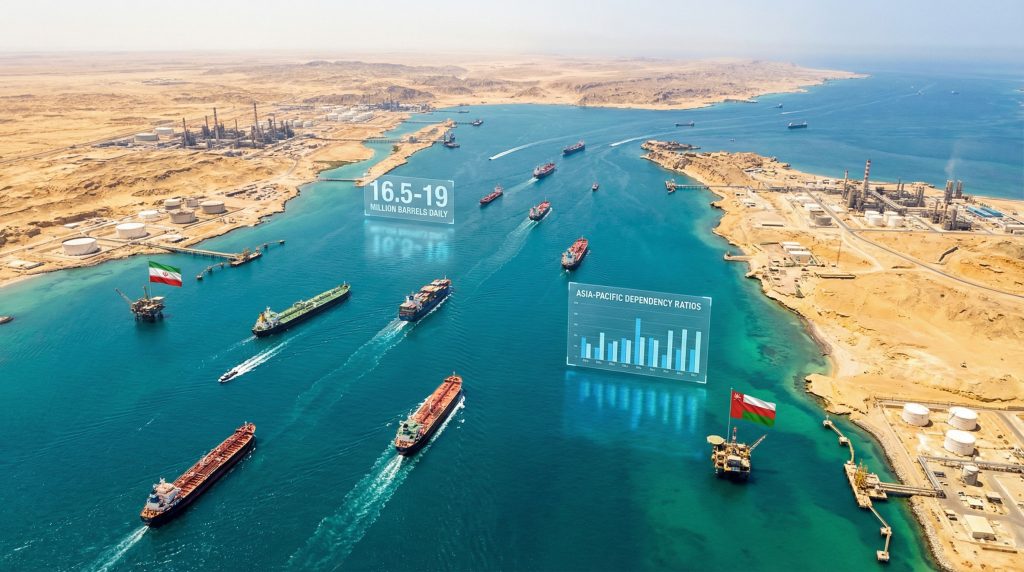
The Strait of Hormuz represents the ultimate geographic bottleneck, where 54 kilometres of water separate the Persian Gulf from global markets. This narrow passage forces all maritime traffic into concentrated shipping lanes that traverse both Iranian and Omani territorial waters, creating unavoidable exposure to coastal state authority regardless of international maritime law protections.
The physical dimensions of the strait create natural constraints that no amount of naval protection can fully overcome. At its narrowest point, the shipping channels must accommodate bidirectional traffic flows whilst maintaining safe distances from coastal installations, underwater obstacles, and potential naval assets. This geographic compression transforms routine commercial shipping into a strategic vulnerability that affects global energy markets daily.
International Traffic Schemes and Maritime Law
Modern shipping through the strait operates under established international traffic separation schemes designed to prevent collisions and maintain orderly flow. However, these same organisational systems create predictable patterns that can be exploited by hostile actors seeking to disrupt commerce without necessarily triggering direct military confrontation.
The overlap of Iranian and Omani territorial waters within the strait creates jurisdictional complexity that extends beyond simple passage rights. While the UN Convention on the Law of the Sea guarantees transit passage through international straits, enforcement mechanisms remain limited when coastal states claim security exceptions or environmental protection measures.
Current Energy Transit Volumes
Approximately 20% of global oil supply transits through the Strait of Hormuz daily, representing flows that cannot be rapidly redirected through alternative routes. This concentration reflects decades of infrastructure development that prioritised efficiency over redundancy, creating a single point of failure for multiple national economies simultaneously.
Recent market data indicates that Ice Brent crude traded near $73 per barrel in late February 2026, reaching its highest level since July 2025 partly due to geopolitical risk premiums already factored into energy pricing. This baseline pricing suggests that markets anticipate potential disruption even during periods of relative stability, with oil price rally concerns increasingly influenced by regional tensions.
Military Capabilities Versus Economic Rationality
Iran's approach to strait closure involves a complex calculation between tactical capability and economic self-destruction. The nation possesses sufficient naval assets through the Islamic Revolutionary Guard Corps Navy (IRGCN) to disrupt shipping operations, including fast attack craft, unmanned systems, and mine deployment capacity that could force commercial vessels to avoid the area entirely.
However, Iran's own economic dependency on energy exports through the strait creates a fundamental strategic paradox. The country requires export revenue to finance basic government operations, food imports, and domestic energy infrastructure, making prolonged strait of Hormuz closure economically unsustainable regardless of military capability.
Mine Deployment Scenarios and Detection Challenges
Naval mines represent the most cost-effective method for closing the strait, requiring minimal ongoing military commitment whilst creating maximum disruption to commercial shipping. Modern mine detection and clearance operations typically require 4-8 weeks for comprehensive channel reopening, depending on mine density, type, and geographic distribution patterns.
The effectiveness of mine deployment lies not in complete channel blockade but in creating sufficient uncertainty to drive commercial shipping away from the area entirely. Insurance markets respond to mining threats by elevating war risk premiums to levels that make commercial transit economically prohibitive, achieving closure through market volatility hedging mechanisms rather than physical interdiction.
Chinese Economic Relationships as Strategic Constraint
Iran's significant economic dependence on Chinese markets creates mutual vulnerability that constrains closure decisions. Chinese oil purchase agreements represent critical revenue streams that Iran cannot afford to sacrifice, whilst Beijing's energy security depends partly on maintaining access to Persian Gulf supplies through established shipping routes.
This economic interdependency suggests that any closure decision would trigger immediate diplomatic pressure from China, potentially including economic retaliation that could harm Iran more than the intended targets. Consequently, the strategic calculation extends beyond bilateral US-Iran dynamics to encompass broader regional economic relationships.
Alternative Infrastructure Assessment and Capacity Limitations
Saudi Arabia's East-West Pipeline system can transport approximately 5 million barrels per day to Red Sea export terminals, representing the largest single alternative to strait transit. However, this capacity remains substantially below the total volumes typically flowing through the strait, creating an unavoidable supply gap during any extended closure period.
The pipeline route terminates at Yanbu port facilities designed for routine export operations rather than emergency surge capacity, limiting the system's ability to absorb displaced strait traffic without significant infrastructure modifications. Moreover, Saudi exploration licenses reflect long-term strategic planning that acknowledges these capacity constraints.
Iraq's Northern Export Vulnerabilities
The Kirkuk-Ceyhan pipeline provides Iraqi crude access to Mediterranean export terminals, bypassing the strait entirely. However, this route faces its own geopolitical constraints and security challenges, including vulnerability to terrorism, maintenance requirements, and political disagreements between Iraq and Turkey that can disrupt operations independent of Persian Gulf developments.
Historical performance data indicates variable reliability for northern Iraqi export routes, suggesting that pipeline alternatives cannot be assumed to maintain full operational capacity during extended regional crises when security concerns and political pressures intensify across multiple borders.
UAE Strategic Reserve and Bypass Options
The UAE's Fujairah facilities on the Gulf of Oman side allow some product exports that bypass strait bottlenecks, though total capacity remains limited compared to overall regional export requirements. These installations primarily serve local and regional markets rather than providing global-scale alternative routing for Persian Gulf production.
The effectiveness of UAE bypass options depends partly on the country's ability to maintain operational security during regional conflicts whilst coordinating with international partners to maximise throughput capacity under emergency conditions.
Asia-Pacific Economic Vulnerability Analysis
| Country | Daily Import Dependency | Strategic Reserve Duration | Economic Impact Score |
|---|---|---|---|
| China | 10.5 million barrels* | 90 days* | Critical |
| Japan | 3.2 million barrels* | 180 days* | Severe |
| India | 4.8 million barrels* | 74 days* | Critical |
| South Korea | 2.8 million barrels* | 96 days* | High |
*Figures require verification against official sources
The concentration of import dependency among major Asian economies creates regional vulnerability that extends beyond individual national energy security to encompass manufacturing supply chains, consumer markets, and financial systems that depend on predictable energy pricing and availability.
Japan's substantially longer strategic reserve duration reflects post-1970s oil crisis policy decisions that prioritised energy security through inventory management, whilst China's shorter reserve period suggests greater confidence in supply chain diversification and domestic production capacity.
European LNG Supply Chain Dependencies
Qatar's position as the world's largest LNG exporter creates European vulnerability during strait closure scenarios, particularly for winter heating requirements and industrial manufacturing that depends on natural gas feedstocks. European energy security calculations must account for both direct LNG import disruption and secondary effects from Asian market competition for alternative supplies.
Emergency allocation protocols between EU member states remain untested under conditions of severe supply constraint, raising questions about coordination effectiveness when national interests conflict with collective energy security objectives.
Price Shock Scenarios and Market Psychology
Historical analysis of previous Middle Eastern conflicts provides insight into oil market psychology during supply disruption scenarios. The 1987 Tanker War period demonstrated that price spikes occur rapidly following initial incidents, with market recovery dependent on credible reopening timelines rather than immediate supply restoration.
The 2019 drone attacks on Saudi facilities illustrated how markets respond to perceived vulnerability even when actual supply disruption remains minimal. Price movements reflected not just immediate capacity loss but broader concerns about infrastructure security and escalation potential across the region, highlighting tariff impacts on broader market dynamics.
Strategic Petroleum Reserve Deployment Mechanisms
International Energy Agency (IEA) coordinated release protocols require member state consensus and typically focus on price stabilisation rather than complete supply replacement. The US Strategic Petroleum Reserve can provide temporary market support through coordinated releases, though sustained deployment depends on political decisions that may prioritise domestic over international market stability.
Private sector inventory management during crisis periods operates according to commercial rather than strategic logic, potentially amplifying rather than dampening price volatility as companies adjust inventory levels based on profit optimisation rather than market stabilisation objectives.
The next major ASX story will hit our subscribers first
US Fifth Fleet Operational Response Capabilities
The US Fifth Fleet maintains substantial naval assets positioned in Bahrain specifically designed for Persian Gulf operations, including minesweeping capabilities, escort vessels, and air support systems that can provide maritime security during crisis periods. However, the effectiveness of military protection depends partly on the scale and nature of threats rather than simple naval presence.
Minesweeping operations require specialised equipment and trained personnel that may need to be deployed from other theatres, creating timeline constraints that could extend supply disruption periods even after political decisions to reopen the strait through military intervention.
Coalition Building and Regional Coordination
Gulf Cooperation Council (GCC) nations maintain their own naval capabilities and security interests that generally align with maintaining open shipping lanes, though their willingness to participate in military operations depends on threat assessments and broader regional political considerations beyond simple energy security.
The coordination of military response involves complex diplomatic negotiations among allies with different risk tolerances, operational capabilities, and domestic political constraints that could delay effective action during rapid crisis escalation scenarios.
Why Does the Strait of Hormuz Matter for Global Markets?
Iranian naval capacity for sustained blockade operations faces significant logistical and economic constraints that limit the duration of effective closure enforcement. The Islamic Revolutionary Guard Corps Navy operates primarily coastal defence systems rather than blue-water naval capabilities designed for extended operations against international shipping.
The economic pain threshold for Iran involves not just lost export revenue but also potential retaliation from multiple international partners simultaneously, creating escalating costs that may exceed any strategic benefits within relatively short timeframes measured in weeks rather than months. Recent news has highlighted Iran's strategic positioning regarding strait controls.
Market Recovery Patterns and Insurance Normalisation
Historical recovery patterns following chokepoint reopening demonstrate that shipping insurance premiums normalise gradually rather than immediately, reflecting continued risk assessment by commercial markets even after political resolution of closure threats. This gradual normalisation affects shipping economics and supply chain planning for extended periods following crisis resolution.
Long-term supply chain diversification accelerates following major disruption events, as consuming nations and commercial enterprises invest in alternative routing, infrastructure expansion, and strategic reserve capacity designed to reduce future vulnerability to similar chokepoint scenarios.
Infrastructure Investment Acceleration Responses
Extended strait of Hormuz closure scenarios would likely accelerate alternative pipeline construction projects and strategic reserve expansion programmes globally, as governments and commercial entities recognise the economic costs of geographic concentration in critical supply chains.
Alternative pipeline infrastructure development requires multi-year construction timelines and substantial capital investment, suggesting that short-term disruptions create long-term structural changes in global energy transportation networks that persist even after immediate crisis resolution. Additionally, OPEC production impact considerations influence long-term planning decisions.
Renewable Energy Transition Policy Implications
Major chokepoint disruptions historically accelerate domestic energy production and renewable energy transition policies as governments seek to reduce dependency on vulnerable international supply chains. These policy responses often persist beyond immediate crisis periods, creating permanent shifts in energy consumption patterns and investment priorities.
Geopolitical Realignment Consequences
China-Iran economic relationships would face substantial strain during extended closure scenarios, potentially forcing Beijing to choose between energy security and diplomatic support for Iranian positions. This choice could reshape broader Middle Eastern political alignments with consequences extending far beyond immediate energy market concerns.
Gulf state security cooperation would likely deepen through enhanced information sharing, joint military exercises, and coordinated infrastructure protection measures designed to prevent future closure threats through collective deterrence rather than individual national responses.
Legal Framework and Maritime Authority
Iran cannot legally close the Strait of Hormuz under international maritime law despite coastal state authority within territorial waters. The UN Convention on the Law of the Sea specifically protects transit passage through international straits used for navigation, though enforcement mechanisms remain limited when coastal states claim security exceptions.
Historical precedents for chokepoint disputes provide limited guidance for modern scenarios involving sophisticated naval capabilities, international economic interdependence, and global supply chain dependencies that create systemic risks extending far beyond regional military considerations.
Insurance Markets and War Risk Calculations
Lloyd's of London war risk premium calculations respond rapidly to perceived threats even without actual military incidents, creating market-based closure effects that can achieve strategic objectives without direct naval confrontation. These premium escalations reflect commercial risk assessment rather than political decision-making, operating according to profit-based rather than strategic logic.
Force majeure contract implications for energy buyers create legal complexities that may persist even after physical reopening of shipping lanes, as commercial disputes over supply obligations and pricing adjustments continue through international arbitration processes that can extend for years following crisis resolution.
Regional Distribution Networks and Consumer Impact
Fuel shortages would appear rapidly in consuming regions due to limited regional distribution network capacities and just-in-time inventory management systems that prioritise efficiency over emergency resilience. Consumer panic buying could amplify shortages beyond actual supply constraints, creating localised crisis conditions even when strategic reserves remain adequate.
Government rationing implementation requires pre-existing legal frameworks and administrative capacity that may not exist in all consuming nations, potentially creating political instability that extends beyond simple energy security concerns to encompass broader questions of government effectiveness during crisis periods.
Disclaimer: This analysis incorporates hypothetical scenarios and market projections that involve significant uncertainty. Historical patterns may not predict future outcomes, and geopolitical developments can evolve rapidly in ways that differ substantially from analytical frameworks. All statistical data marked with asterisks requires verification through official government and international organisation sources. Investment and policy decisions should not be based solely on scenario analysis without consultation with relevant government agencies, industry specialists, and legal advisers.
Looking to Navigate Chokepoint Risks in Your Investment Portfolio?
Discovery Alert's proprietary Discovery IQ model delivers real-time alerts on significant ASX mineral discoveries, helping investors identify actionable opportunities that could benefit from global supply chain disruptions and commodity price volatility. Begin your 14-day free trial today to gain strategic insights that position you ahead of market developments driven by geopolitical risks like chokepoint vulnerabilities.