August 14, 2026
The global metallurgical landscape operates through cycles of competitive advantage shifts, driven primarily by energy cost differentials and industrial policy decisions. Energy-intensive processing industries like ferrochrome production represent particularly sensitive barometers of these macroeconomic forces, where electricity pricing can determine entire nations' industrial competitiveness over relatively short timeframes. Furthermore, these developments reflect broader global trade impacts that reshape international supply chains.
Recent developments in chrome processing illustrate how rapidly established industrial hierarchies can be restructured when fundamental cost structures change. The transformation of global ferrochrome production patterns demonstrates the interplay between resource endowments, energy policy, and manufacturing economics in determining where value-added processing occurs within international supply chains.
The Structural Transformation of Chrome Processing Economics
Chrome processing requires understanding the distinction between raw ore extraction and value-added ferrochrome production. Ferrochrome represents an iron-chromium alloy essential for stainless steel manufacturing, requiring extensive electrical input during high-temperature smelting operations. This energy dependency creates direct linkages between electricity pricing and global processing competitiveness, particularly as China ore demand trends continue evolving.
The production process demands consistent power availability, with electricity consumption representing 40-60% of total production costs in typical ferrochrome operations. These ratios make energy pricing the primary determinant of processing location decisions, overshadowing traditional factors like labour costs or raw material proximity.
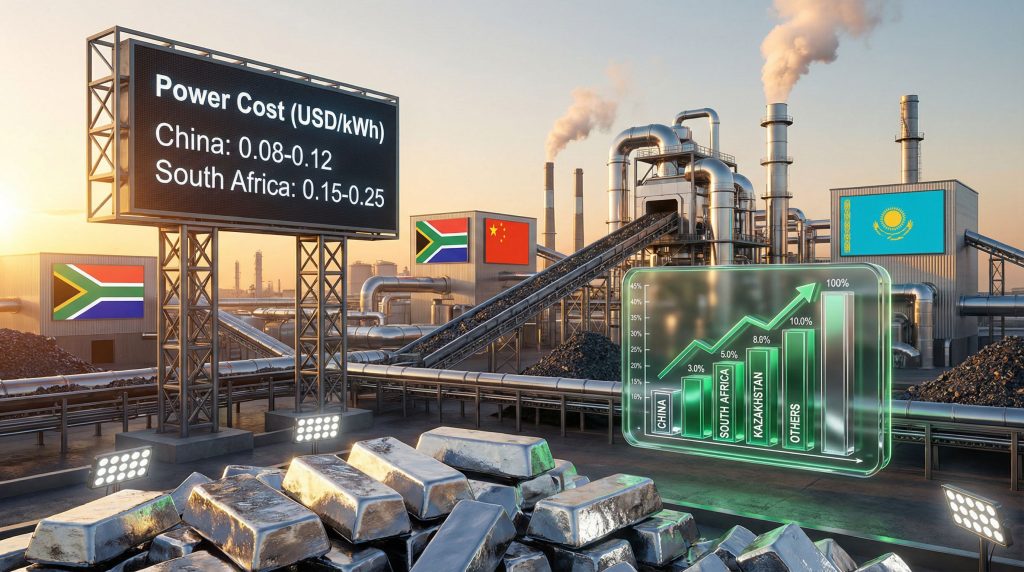
China's ascension as the world's leading chrome processor reflects strategic advantages in coal-based power generation costs. Chinese facilities benefit from integrated domestic energy supply chains, allowing processing operations to achieve cost structures that have proven challenging for competitors relying on more expensive grid electricity.
Industrial Applications Driving Global Demand
Ferrochrome serves multiple industrial applications beyond stainless steel production:
- Aerospace components requiring corrosion-resistant alloys
- Automotive manufacturing for exhaust systems and decorative elements
- Chemical processing equipment demanding high-temperature durability
- Construction materials in architectural and structural applications
This diversified demand base creates relatively stable consumption patterns, making processing capacity decisions strategic long-term commitments rather than cyclical adjustments. However, energy transition challenges present new complexities for traditional processing approaches.
When big ASX news breaks, our subscribers know first
Energy Cost Dynamics Reshaping Global Competition
South Africa's position in global chrome processing illustrates the dramatic impact of electricity tariff escalation on industrial competitiveness. Since 2008, electricity costs increased by over 900%, fundamentally altering the economic viability of energy-intensive smelting operations.
The scale of this cost escalation created operational crisis conditions across the ferrochrome sector. By early 2026, only 11 of 66 ferrochrome furnaces remained operational, representing approximately 17% capacity utilisation compared to historical production levels.
| Tariff Evolution | Rate (ZAR/kWh) | Impact Period |
|---|---|---|
| End-2025 Level | 1.36 | Widespread closures |
| Interim 2026 Rate | 0.8774 | Limited operations |
| Negotiated Rate | 0.62 | Selective relief |
The 29% tariff reduction to 62 cents per kilowatt-hour for anchor producers Samancor Chrome and Glencore's joint venture with Merafe Resources demonstrates targeted government intervention aimed at preserving core industrial capacity.
Comparative Regional Energy Advantages
China's processing dominance stems partly from integrated energy supply chains providing consistent, low-cost electricity. Coal-fired generation capacity supports industrial operations with pricing stability that proves difficult for grid-dependent competitors to match.
Kazakhstan maintains competitive energy costs through abundant domestic coal reserves, though production capacity remains more limited than Chinese facilities. India presents mixed energy cost structures, with regional variations affecting processing economics across different manufacturing zones.
The Decline of African Value-Added Processing
Despite remaining the world's largest chrome ore producer, South Africa has experienced systematic erosion of downstream processing capabilities. This transformation represents broader challenges facing African industrial development when energy infrastructure constraints limit value-addition opportunities. Additionally, the tariff impact on investments compounds these structural challenges.
Electricity Minister Kgosientsho Ramokgopa characterised the smelter closures as representing major impacts on industrial output and employment. The minister's assessment highlighted how infrastructure limitations translate directly into reduced manufacturing competitiveness and job displacement.
Government Intervention Strategy
South African authorities established specific restoration targets:
- 45 operational smelters by December 2024 (timeline status requires verification)
- 49 operational smelters by December 2027 through continued intervention
- Selective tariff relief prioritising anchor producers with immediate restart potential
Initial relief measures focused on two smelters that had already initiated retrenchment processes, indicating reactive rather than preventive policy implementation. This approach suggests government recognition of industrial capacity losses already in progress.
"The restoration timeline depends on sustained electricity cost relief and infrastructure reliability improvements, both requiring structural energy sector reforms beyond temporary tariff adjustments."
Infrastructure Reliability Constraints
Beyond tariff levels, South African chrome processors face grid instability challenges that create operational uncertainty. Power outages and supply interruptions disrupt high-temperature smelting processes, leading to equipment damage and production inefficiencies that compound direct energy cost disadvantages.
These reliability issues create planning difficulties for capital-intensive operations requiring consistent energy supply. Smelter economics depend on continuous operation cycles, making intermittent power availability particularly damaging to financial performance.
Supply Chain Reconfiguration Patterns
The geographic shift from African processing to Asian manufacturing creates fundamental supply chain restructuring. China overtakes South Africa as world's top chrome processor while South Africa maintains raw ore production leadership, illustrating the separation of extraction and processing activities across international boundaries.
This reconfiguration affects transportation economics, with raw ore shipments from Africa to Asia for processing, followed by finished product distribution to global end markets. The logistics restructuring reflects cost arbitrage opportunities where shipping expenses prove less significant than processing cost differentials.
Vertical Integration Advantages
Chinese processors benefit from vertical integration combining domestic ore access with low-cost energy and proximity to stainless steel manufacturing. This integration creates competitive advantages through:
- Reduced transportation costs between processing stages
- Supply chain coordination enabling just-in-time production
- Quality control integration across the value chain
- Market responsiveness through integrated demand forecasting
Technology Transfer Implications
The processing shift involves industrial knowledge migration as technical expertise moves with operational capacity. Former South African smelter personnel and operational knowledge increasingly relocate to active processing centres, creating long-term competitive disadvantages for regions losing industrial capacity.
Investment Opportunity Analysis Across Market Restructuring
The ferrochrome industry restructuring creates differentiated investment opportunities across the value chain. Upstream ore production benefits from increased Chinese processing demand, while downstream processing investments face geographic concentration risks and energy cost dependencies. Consequently, understanding industry evolution trends becomes essential for strategic planning.
Scenario-Based Investment Framework
Optimistic Recovery Scenario (2027-2030):
- 45-49 operational smelters through sustained government support
- Electricity cost stabilisation enabling competitive processing economics
- Renewed foreign investment in South African downstream operations
- Market share recovery in global ferrochrome production
Base Case Scenario:
- Selective capacity restoration focused on anchor producers
- Continued ore export orientation with limited processing growth
- Market share stabilisation rather than recovery to historical levels
- Gradual improvement dependent on energy sector reforms
Pessimistic Scenario:
- Additional smelter closures due to sustained energy cost disadvantages
- Permanent processing capacity loss to Asian competitors
- Ore export dependence as primary business model
- Technical expertise migration creating long-term competitive disadvantages
Capital Allocation Considerations
Investment decisions require evaluating brownfield restoration versus greenfield development opportunities:
Brownfield Advantages:
- Lower capital requirements for restarting existing facilities
- Established infrastructure and supply chain connections
- Existing workforce and technical knowledge base
Brownfield Risks:
- Ageing equipment requiring modernisation investment
- Historical maintenance backlogs increasing restart costs
- Regulatory uncertainty affecting long-term viability
Navigating Chrome Market Volatility Through Strategic Positioning
The chrome processing transformation creates divergent investment opportunities between upstream ore production and downstream processing segments. Chinese processing expansion simultaneously increases ore demand while creating ferrochrome supply pressures, affecting different value chain participants differently.
Geographic Diversification Strategy
Investors require regional risk distribution across processing locations with different energy cost structures and regulatory environments:
- China: Low energy costs but policy and geopolitical risks
- South Africa: Recovery potential but execution and infrastructure risks
- Kazakhstan: Stable energy costs with limited capacity expansion
- India: Growing capacity with mixed energy source advantages
ESG Investment Considerations
Environmental factors increasingly influence chrome processing investment decisions:
Environmental Impact Assessment:
- Coal-fired processing facilities create carbon emission liabilities
- Renewable energy integration possibilities for future competitive advantage
- Environmental regulation compliance costs affecting processing economics
Social Impact Evaluation:
- Employment displacement in traditional processing regions
- Community economic impacts in mining-dependent areas
- Workforce transition requirements for industrial restructuring
Governance Risk Analysis:
- Resource-dependent economy stability affecting regulatory predictability
- Government intervention patterns in industrial policy decisions
- International trade policy impacts on cross-border processing chains
The next major ASX story will hit our subscribers first
Alternative Technology Pathways and Future Processing Economics
Emerging processing technologies could reshape chrome industry economics beyond current energy cost optimisation strategies. Plasma-based reduction and hydrogen-based processing methods show potential for reducing electricity intensity requirements, though commercial viability remains several years from large-scale implementation.
These technological developments could alter geographic competitive advantages if energy intensity requirements decrease or if renewable energy integration becomes economically viable for high-temperature metallurgical processes.
Hydrogen Reduction Potential:
- Reduced carbon emissions compared to traditional smelting
- Integration with renewable energy hydrogen production
- Capital investment requirements for technology adoption
- Timeline uncertainty for commercial scalability
The global chrome processing industry restructuring demonstrates how energy policy decisions create cascading effects across international supply chains. While china overtakes south africa as world's top chrome processor, the transformation illustrates broader dynamics affecting energy-intensive industries worldwide.
Investment success requires understanding both immediate market adjustments and longer-term technological possibilities that could reshape processing economics beyond current energy cost optimisation strategies.
Investment decisions in commodity processing industries should consider multiple scenarios and risk factors. This analysis is for educational purposes and does not constitute financial advice. Potential investors should conduct independent research and consult qualified professionals before making investment commitments.
Ready to Capitalise on Commodity Processing Shifts?
Discovery Alert's proprietary Discovery IQ model delivers real-time notifications on significant ASX mineral discoveries, including chrome and other critical metals processing opportunities that could benefit from global supply chain restructuring. Stay ahead of market movements by accessing instant alerts that transform complex mining announcements into actionable investment insights — begin your 14-day free trial today to secure your competitive advantage.