August 5, 2026
The Circular Economy Foundation for Sustainable Metal Production
The global transition toward circular economy principles has fundamentally transformed how industries approach resource management and environmental stewardship. Within this paradigm shift, aluminum emerges as a cornerstone material that exemplifies the potential for aluminum sustainability at scale. The metal's unique properties enable continuous recycling cycles without degradation of structural integrity or performance characteristics, positioning it as a critical component in achieving ambitious climate targets across multiple sectors.
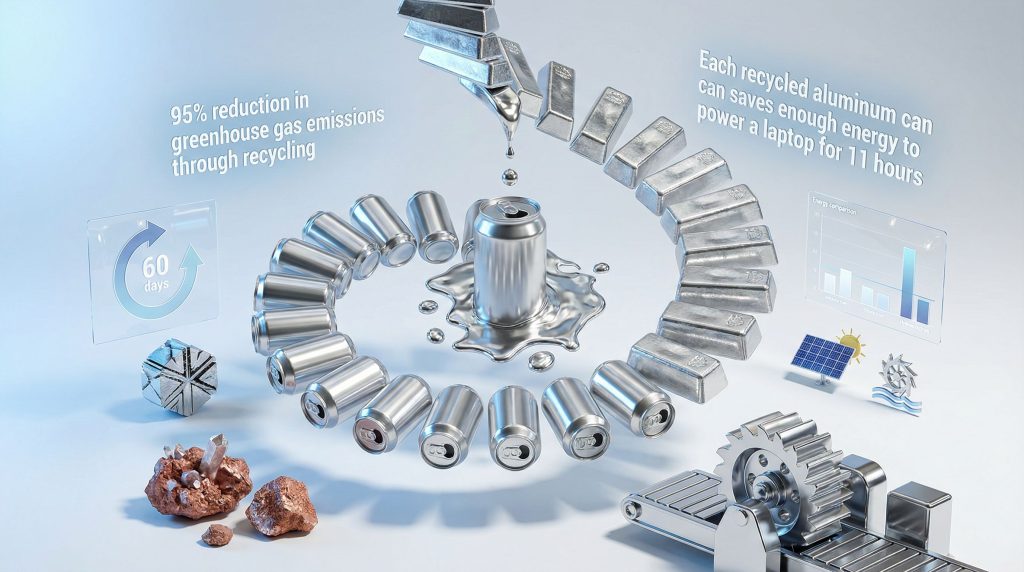
Modern aluminum production systems demonstrate remarkable energy efficiency gains through closed-loop recycling processes. Secondary aluminum production requires approximately 95% less energy compared to primary extraction methods, creating substantial opportunities for carbon footprint reduction across manufacturing supply chains. This energy differential translates directly into operational cost advantages while simultaneously addressing environmental compliance requirements that continue to evolve across global markets.
The Science Behind Aluminum's Environmental Advantage
Aluminum's environmental benefits stem from its fundamental atomic structure and crystalline properties. The Hall-Héroult process, used for primary aluminum production, demands significant electrical input of approximately 14-16 kWh per kilogram of metal produced. In contrast, secondary aluminum recycling through reverberatory furnaces requires only 0.5-0.7 kWh per kilogram, representing a transformational improvement in resource efficiency.
The greenhouse gas emission reductions associated with aluminum recycling extend beyond direct energy savings. When accounting for grid carbon intensity variations, recycled aluminum production typically generates 2-15 kg CO2 equivalent per kilogram depending on regional electricity sources, compared to 11-17 kg CO2 equivalent for primary production. This differential becomes increasingly significant as manufacturers scale recycling operations to meet growing demand for sustainable materials.
Water conservation represents another critical sustainability metric. Primary aluminum production consumes approximately 13-15 cubic meters of water per ton for cooling and processing requirements, while recycling operations typically require 0.5-2 cubic meters per ton depending on cooling system design and local climate conditions.
Quantifying the Circular Economy Impact
The aluminum industry's circular economy performance can be measured through multiple quantitative frameworks that demonstrate both environmental and economic value creation. Modern aluminum recycling facilities achieve material recovery rates exceeding 95% for clean scrap inputs, with technological advances continuing to improve contamination tolerance and processing efficiency.
Each ton of recycled aluminum conserves approximately 4 tons of bauxite ore, 2 tons of alumina, and 14 megawatt-hours of electricity compared to primary production pathways.
Collection and processing infrastructure has evolved to support increasingly rapid recycling cycles. In optimised European systems, the complete can-to-can recycling timeline averages 45-60 days, while North American operations typically require 60-90 days depending on collection efficiency and transportation logistics. These timeframes continue to improve as automated sorting technologies and regional processing capacity expand.
The economic implications of these recycling cycles extend throughout industrial supply chains. Manufacturers utilising recycled aluminum content typically achieve 15-25% cost reductions in raw material expenses, while simultaneously meeting sustainability targets that increasingly influence consumer purchasing decisions and regulatory compliance requirements.
When big ASX news breaks, our subscribers know first
Revolutionary Impact on Industrial Sustainability Systems
Industrial sustainability frameworks increasingly recognise aluminum recycling as a foundational technology for achieving sector-wide environmental targets. The integration of recycled aluminum content into manufacturing processes enables companies to simultaneously address cost pressures and environmental performance metrics without compromising product quality or operational efficiency. Furthermore, these developments align with broader energy transition strategies that prioritise resource efficiency across multiple industrial sectors.
Advanced Recycling Process Engineering
Modern aluminum recycling operations employ sophisticated thermal management systems that optimise energy recovery throughout the melting and refining process. Regenerative burner technologies capture waste heat for reuse, improving overall facility energy efficiency by 20-30% compared to conventional furnace designs. These systems incorporate automated temperature control and atmosphere management to minimise oxidation losses and maintain alloy specifications.
Salt cake byproduct management presents ongoing technical challenges, with recycling operations generating approximately 200-500 kg of salt cake per ton of aluminum melted. Advanced processing facilities now implement salt cake recovery systems that extract additional aluminum content while converting remaining materials into useful industrial chemicals, reducing waste disposal costs and improving overall material utilisation rates.
Contamination control represents a critical technical consideration for maintaining aluminum alloy integrity through multiple recycling cycles. X-ray fluorescence sorting systems and optical recognition technologies enable precise separation of different aluminum alloys, preventing contamination that could compromise material properties in downstream applications.
Energy Economics and Production Optimisation
The energy economics of sustainable aluminum production vary significantly based on regional electricity grid composition and facility design characteristics. Hydroelectric-powered aluminum recycling operations in regions like Quebec and Norway achieve carbon intensities approaching 0.5-1.5 kg CO2 per kg aluminum, representing best-in-class environmental performance for industrial metal production.
| Production Method | Energy Requirement (kWh/kg) | Carbon Intensity (kg CO2/kg) | Water Usage (m³/ton) |
|---|---|---|---|
| Primary (Coal Grid) | 14-16 | 15-17 | 13-15 |
| Primary (Hydro Grid) | 14-16 | 2-4 | 13-15 |
| Secondary (Mixed Grid) | 0.5-0.7 | 2-8 | 0.5-2 |
| Secondary (Renewable) | 0.5-0.7 | 0.5-2 | 0.5-2 |
Return on investment calculations for manufacturers adopting recycled aluminum content demonstrate compelling financial benefits. Automotive manufacturers typically achieve payback periods of 18-36 months when transitioning to high-recycled-content aluminum components, driven by material cost savings and reduced environmental compliance costs.
Diverse Applications Across Industrial Sectors
Aluminum sustainability initiatives span multiple industrial sectors, each presenting unique technical requirements and performance specifications that influence recycling strategies and material optimisation approaches. In addition, these applications demonstrate how industry innovation trends are reshaping traditional manufacturing processes across diverse market segments.
Automotive Lightweighting and Electric Vehicle Integration
The automotive industry's transition toward electrification has accelerated aluminum adoption across vehicle platforms, with electric vehicles typically containing 50-100% more aluminum than comparable internal combustion engine vehicles. This increase stems from the need to offset battery weight while maintaining structural integrity and crash safety performance.
Weight reduction impacts on vehicle efficiency demonstrate measurable environmental benefits. Each kilogram of weight reduction in an internal combustion engine vehicle typically saves 0.5-0.8 kg of CO2 emissions over the vehicle's operational lifetime through improved fuel efficiency. For electric vehicles, weight reduction translates to increased driving range of approximately 2-4 kilometres per kilogram of weight saved, depending on battery technology and driving conditions.
Advanced aluminum space frame construction, as implemented in vehicles like the Audi A8 and Jaguar XJ, achieves total vehicle weight reductions of 200-300 kg compared to steel-intensive designs. These platforms demonstrate aluminum's capability to maintain crashworthiness standards while delivering substantial efficiency improvements across diverse vehicle segments.
Recycled content integration in automotive aluminum applications currently averages 30-50% across global automotive production, with some manufacturers achieving 70-80% recycled content in non-critical structural components. The automotive industry's closed-loop recycling initiatives target 90% recycled content in select applications by 2030.
Next-Generation Packaging Solutions
Aluminum packaging demonstrates superior sustainability metrics compared to alternative materials across multiple lifecycle assessment categories. Aluminum beverage cans achieve recycling rates of 50-75% globally, significantly outperforming plastic bottles at 5-20% and glass containers at 30-55% in most regional markets. These performance characteristics support the implementation of sustainable aluminum practices across packaging supply chains.
| Packaging Material | Recycling Rate | Recycled Content | Energy Recovery | Transportation Efficiency |
|---|---|---|---|---|
| Aluminum Cans | 50-75% | 30-50% | 95% material recovery | High (lightweight) |
| Glass Bottles | 30-55% | 20-40% | 80% material recovery | Low (heavy) |
| Plastic Bottles | 5-20% | 10-30% | 50% material recovery | High (lightweight) |
| Steel Cans | 70-85% | 25-35% | 90% material recovery | Medium |
Supply chain efficiency metrics for aluminum packaging demonstrate significant advantages in distribution logistics. Aluminum cans require 40-50% less transportation energy per unit volume compared to glass containers due to weight differences, while maintaining superior product protection and shelf-life extension properties.
Consumer behaviour research indicates 70-80% of consumers express preference for aluminum packaging when sustainability attributes are clearly communicated, representing a significant market opportunity for brands prioritising environmental positioning.
Green Building and Construction Applications
Aluminum's role in sustainable construction extends beyond basic structural applications to encompass advanced building envelope systems that contribute to overall energy efficiency performance. Thermal bridge mitigation through aluminum thermal break technology reduces building energy consumption by 15-25% in climate-controlled structures.
LEED certification pathways for aluminum building components provide multiple credit opportunities including recycled content contributions, regional materials sourcing, and end-of-life recyclability factors. Buildings incorporating 50-70% recycled content aluminum systems typically achieve 2-4 additional LEED points across materials and resources categories.
Durability characteristics of aluminum building components contribute to lifecycle cost optimisation through reduced maintenance requirements and extended service life. Aluminum building envelope systems demonstrate 50-year service life expectations with minimal maintenance, compared to 20-30 years for many alternative materials requiring periodic refinishing or replacement.
Technical Challenges and Innovation Opportunities
Despite aluminum's established sustainability advantages, several technical challenges require ongoing innovation and industry collaboration to optimise environmental performance across global supply chains. However, emerging electrification and decarbonisation technologies present new opportunities for addressing these operational challenges.
Primary Production Environmental Costs
Bauxite mining operations generate substantial environmental impacts that influence aluminum's overall sustainability profile. Red mud waste production averages 5 tons per ton of aluminum produced through primary smelting, creating long-term storage and environmental management challenges for producing regions.
Ecosystem impact assessments for bauxite extraction indicate significant biodiversity effects, particularly in tropical regions where mining operations intersect with sensitive ecological areas. Advanced rehabilitation techniques and concurrent reclamation practices are developing to minimise long-term environmental impacts, though implementation costs remain substantial.
Greenhouse gas emission breakdown by production stage reveals that alumina refining accounts for 15-20% of total primary aluminum emissions, smelting operations contribute 70-80%, and casting and fabrication represent 5-10% of lifecycle emissions. This distribution highlights the critical importance of smelting energy sources in determining overall environmental performance.
Advanced Contamination Management
Alloy segregation challenges in recycling operations continue to limit maximum recycled content potential in high-performance applications. Mixed aluminum scrap streams require increasingly sophisticated sorting technologies to maintain material specifications demanded by aerospace, automotive, and electronics applications.
Coating removal systems for recycled aluminum feedstock employ thermal and chemical processes that generate secondary waste streams requiring specialised treatment. Organic compound emissions from paint and coating removal average 50-100 kg per ton of processed scrap, necessitating air quality management systems that add operational complexity and cost.
Quality control innovations including real-time alloy composition monitoring and automated impurity detection enable higher recycled content utilisation while maintaining product specifications. These technologies typically increase processing costs by 5-15% while enabling 20-30% increases in recycled content utilisation rates. Furthermore, these advances contribute to more accurate aluminium scrap assessments across regional markets.
Technology Transformation in Aluminum Production
Emerging technologies across the aluminum value chain present opportunities for substantial improvements in environmental performance and operational efficiency, driven by both regulatory requirements and market demand for sustainable materials. Consequently, these innovations align with comprehensive approaches to aluminum sustainability across industrial applications.
AI-Powered Optimisation and Automation
Machine learning applications in aluminum recycling operations enable predictive maintenance systems that reduce equipment downtime by 15-25% while optimising energy consumption patterns. Neural network algorithms analyse furnace performance data to predict optimal charging schedules and thermal profiles for diverse scrap input compositions.
Computer vision systems for scrap sorting achieve accuracy rates exceeding 98% for aluminum alloy identification, compared to 85-90% accuracy for manual sorting operations. These systems process 2-5 tons of material per hour while reducing labour requirements and improving worker safety in recycling facilities.
Process optimisation algorithms integrate real-time data from furnace sensors, metal composition analysers, and energy monitoring systems to minimise energy consumption while maintaining product quality specifications. Facilities implementing advanced process control typically achieve 8-12% energy savings compared to conventional operational approaches.
Renewable Energy Integration Strategies
Solar-powered aluminum recycling facilities represent emerging applications for distributed renewable energy systems. Rooftop photovoltaic installations of 1-5 megawatts capacity can supply 20-40% of recycling facility energy requirements depending on local solar resources and facility operational schedules.
Grid-scale energy storage using aluminum-air battery technology offers potential for renewable energy integration across primary aluminum smelting operations. These systems provide long-duration storage capabilities of 8-12 hours while utilising aluminum as both energy storage medium and industrial feedstock material.
Power purchase agreements for renewable electricity enable aluminum producers to secure long-term price stability while meeting sustainability targets. 20-year renewable energy contracts typically provide 15-25% cost savings compared to conventional electricity procurement while ensuring predictable carbon intensity performance. Moreover, these initiatives support aluminum's unique sustainability attributes across global production networks.
Future Trajectory for Sustainable Aluminum Systems
The aluminum industry's sustainability evolution will be shaped by technological innovation, regulatory development, and market demand for environmentally responsible materials across diverse applications and geographic markets.
Market Projections and Industry Transformation
Global aluminum recycling capacity is projected to expand 40-60% by 2030, driven by regulatory requirements and economic incentives for circular economy implementation. Investment flows into recycling infrastructure average $2-3 billion annually across North America and Europe, indicating strong industry commitment to capacity expansion.
Beverage can recycling targets of 90% collection rates by 2030 represent ambitious goals requiring coordinated efforts across collection systems, processing capacity, and consumer education initiatives. Current recycling infrastructure would require capacity increases of 25-40% to achieve these targets while maintaining processing quality standards.
Post-consumer recycled content requirements are expanding across multiple jurisdictions, with European Union regulations targeting minimum 50% recycled content for aluminum packaging applications by 2030. North American initiatives focus on voluntary industry commitments and economic incentives rather than regulatory mandates.
Regulatory Evolution and Policy Frameworks
Extended producer responsibility programmes for aluminum products are expanding globally, creating financial incentives for manufacturers to design products for recyclability and establish collection systems. These programmes typically generate $50-150 per ton in funding for recycling infrastructure development and operation.
Carbon pricing mechanisms significantly impact primary versus secondary aluminum economics. Carbon tax rates of $50-100 per ton CO2 create cost advantages of $200-800 per ton for recycled aluminum compared to primary production, depending on regional electricity grid composition and facility efficiency.
International trade regulations increasingly incorporate environmental standards that favour sustainable aluminum production methods. Carbon border adjustments and sustainability certification requirements are reshaping global aluminum trade patterns and encouraging investment in clean production technologies.
The next major ASX story will hit our subscribers first
Performance Measurement and Implementation Strategies
Effective aluminum sustainability programmes require comprehensive measurement frameworks and strategic implementation approaches that balance environmental objectives with operational and financial constraints. In addition, these strategies must integrate with broader investment strategy components to ensure long-term viability and competitive positioning.
Environmental Impact Assessment Methodologies
Lifecycle assessment protocols for aluminum products encompass cradle-to-gate analysis including mining, refining, smelting, fabrication, use, and end-of-life management phases. Standardised methodologies following ISO 14040 guidelines enable consistent comparison across different production pathways and geographic regions.
Carbon footprint tracking systems integrate real-time energy consumption data, grid emission factors, and process efficiency metrics to provide monthly sustainability reporting capabilities. Advanced facilities achieve measurement accuracy within 5% for scope 1 and scope 2 emissions using automated monitoring systems.
Water conservation metrics include both direct consumption for cooling and processing operations and indirect consumption associated with electricity generation for facility operations. Water footprint assessments typically reveal 10-15% reduction opportunities through process optimisation and recycling system improvements.
Economic Sustainability Indicators and ROI Analysis
Total cost of ownership models for sustainable aluminum incorporate material cost differentials, energy savings, waste disposal cost reductions, and regulatory compliance benefits. Payback periods for recycled content adoption typically range 2-4 years depending on application requirements and regional cost structures.
| Investment Category | Typical Cost | Payback Period | Annual Savings | Risk Factors |
|---|---|---|---|---|
| Recycling Infrastructure | $5-15M per facility | 3-5 years | $2-5M annually | Market volatility |
| Process Optimisation | $1-3M per line | 1-2 years | $0.5-2M annually | Technology risk |
| Renewable Energy | $2-8M per MW | 4-7 years | $0.3-1M annually | Policy changes |
| Quality Control Systems | $0.5-2M per facility | 2-3 years | $0.2-0.8M annually | Technical complexity |
Market premium analysis for sustainable aluminum products indicates price premiums of 2-8% depending on recycled content levels and certification standards. Consumer willingness to pay for verified sustainable aluminum products averages 5-12% premium across packaging and consumer goods applications.
Corporate Integration and Supply Chain Optimisation
Procurement guidelines for maximising recycled aluminum content require supplier qualification programmes that verify recycling capabilities and environmental management systems. Supplier scorecards typically include recycled content percentage, energy efficiency metrics, and environmental certification status as primary evaluation criteria.
Supply chain transparency initiatives employ blockchain technology and digital tracking systems to verify aluminum provenance and recycling content throughout multi-tier supply networks. These systems provide real-time visibility into material flows while ensuring compliance with sustainability commitments and regulatory requirements.
Risk assessment frameworks for aluminum sustainability programmes address supply disruption scenarios, regulatory changes, technology obsolescence, and market volatility factors. Scenario planning exercises typically evaluate 3-5 different future pathways to ensure programme resilience across diverse operating environments.
Investment allocation strategies for sustainable aluminum initiatives balance short-term operational improvements with long-term technology development and infrastructure capacity expansion. Capital budgeting models typically allocate 60-70% to proven technologies and 30-40% to emerging innovations to optimise risk-adjusted returns while maintaining competitive positioning.
Disclaimer: The projections and market analysis presented in this article are based on current industry trends and available data. Actual performance may vary due to technological developments, regulatory changes, and market conditions. Investment decisions should be made based on comprehensive due diligence and professional consultation.
Ready to Discover the Next Sustainable Aluminium Breakthrough?
Discovery Alert's proprietary Discovery IQ model delivers instant notifications on significant ASX mineral discoveries, including aluminium and other critical metals driving the circular economy revolution. Understand why major mineral discoveries can lead to substantial market returns by exploring Discovery Alert's dedicated discoveries page, showcasing historic examples of exceptional outcomes.