June 12, 2026
The circular economy in mining represents a transformative approach that is revolutionising how extractive industries manage resources and create value from waste streams. Modern mining operations face mounting pressure to revolutionise their approach to resource utilisation and environmental stewardship. The traditional linear model of extraction, processing, and disposal is giving way to sophisticated circular frameworks that transform waste streams into valuable assets. This shift represents more than operational efficiency; it embodies a fundamental reimagining of how extractive industries can contribute to sustainable economic development while maintaining competitive advantages.
Understanding the Circular Mining Framework
The circular economy in mining operates on principles that dramatically differ from conventional waste management approaches. Rather than viewing tailings, sterile rock, and processing byproducts as disposal challenges, circular systems treat these materials as secondary resources requiring strategic valorisation. This paradigm shift demands comprehensive integration across the entire mining value chain, from initial geological assessment through final closure planning.
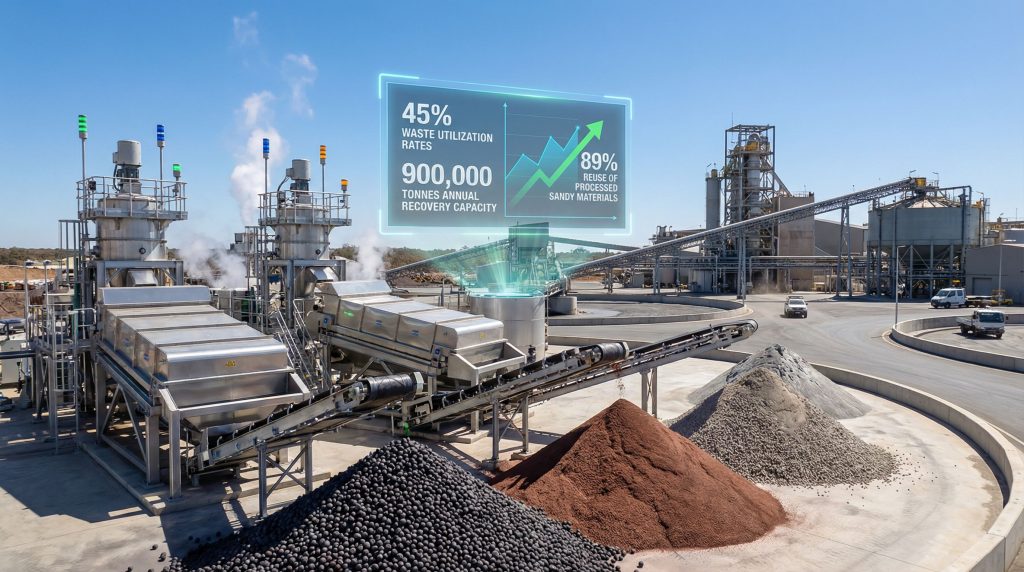
Key differentiators between linear and circular mining models include material flow optimisation, where waste streams undergo systematic evaluation for potential reintegration into productive processes. Advanced operations achieving 45% total waste utilisation rates demonstrate that substantial portions of previously discarded materials can contribute to operational efficiency and revenue generation.
The integration points across mining value chains extend beyond traditional processing boundaries. Furthermore, modern facilities incorporate waste stream characterisation protocols that identify specific applications for different material categories. For instance, sandy tailings with appropriate geotechnical properties can replace virgin aggregates in infrastructure projects, while ultrafine materials may undergo secondary processing for metal recovery.
Waste stream valorisation fundamentally alters operational economics by converting disposal costs into revenue opportunities. Mining operations implementing systematic circular principles report significant reductions in waste disposal expenses while simultaneously generating new product lines from previously valueless materials. Additionally, many operations are exploring mine reclamation innovation to further enhance their sustainability profile.
When big ASX news breaks, our subscribers know first
Core Technical Components of Circular Mining
Material Flow Optimisation Systems
The foundation of effective circular mining lies in sophisticated material characterisation and reclassification protocols. Modern operations deploy advanced analytical systems to evaluate the physical, chemical, and economic potential of waste streams in real-time. These systems enable precise segregation of materials based on their optimal utilisation pathways.
Waste rock characterisation protocols now incorporate detailed geochemical analysis to identify materials suitable for conversion to marginal-grade ore products. Operations achieving 15% conversion rates of sterile material to commercial products demonstrate the economic viability of systematic waste rock evaluation. This approach requires comprehensive sampling programmes and advanced analytical techniques to ensure consistent material quality.
Tailings processing methodologies have evolved beyond simple disposal to include filtration systems that produce geotechnically viable materials for infrastructure applications. Post-filtration sandy tailings exhibit characteristics suitable for topographic grade correction, structural reinforcement, and drainage enhancement in decharacterisation works. However, these applications extend the operational lifespan of existing disposal structures while reducing virgin aggregate procurement costs.
Quality control frameworks for repurposed materials must meet stringent performance standards across multiple application categories. Materials destined for concrete applications require specific grading curves and chemical composition limits, while those used in road construction must satisfy compaction and bearing capacity requirements. In addition, advanced operations implement comprehensive testing protocols to ensure consistent material performance across diverse end uses.
Process Integration Technologies
Concentrator efficiency enhancement through waste incorporation represents a significant advancement in circular mining technology. Modern facilities integrate 22% of ultrafine tailings back into primary concentrate streams through strategic process modifications. This integration simultaneously improves metallurgical recovery rates while reducing overall tailings generation.
Magnetic separation systems for ultrafine material recovery enable operations to extract valuable metallic content from previously discarded streams. Planned installations with 900,000 tonnes annual capacity demonstrate the scale at which these technologies can operate. Post-delimng magnetic concentrators target specific size fractions to maximise recovery efficiency while maintaining concentrate quality specifications.
Filtration and dewatering technologies serve as critical separation points where materials transition from waste classification to productive use. Advanced filtration systems produce materials with consistent moisture content and physical properties suitable for immediate application in infrastructure projects. These systems eliminate the need for secondary processing while ensuring material performance reliability.
Real-time monitoring systems for circular material flows provide operational visibility essential for optimising recovery processes. Data-driven mining operations enable IoT-enabled sensors to track material quality parameters throughout the processing chain, enabling immediate adjustments to maintain product specifications. This monitoring capability ensures consistent output quality while maximising recovery rates.
Industries Benefiting from Mining Waste Stream Integration
Construction and Infrastructure Applications
The construction sector represents the most immediate market opportunity for mining waste valorisation. Processed tailings demonstrate superior performance characteristics in specific applications, with concrete blocks incorporating 33% recovered tailing content validating structural viability in infrastructure projects. These applications extend beyond experimental implementations to commercial-scale utilisation in ecological pavement systems.
Road construction applications benefit from the unique drainage properties of filtered tailings materials. The geotechnical characteristics of processed mining waste provide superior water management capabilities compared to conventional aggregates, making them particularly suitable for projects requiring enhanced drainage performance. Operations directing 89% of sandy tailings to infrastructure works demonstrate the scale of potential market integration.
Civil engineering projects increasingly recognise the cost-effective advantages of tailings-derived fill materials. Cumulative utilisation volumes reaching 22 million tonnes over five-year periods illustrate the substantial quantities that can be productively employed in large-scale infrastructure development. These applications provide essential material resources while reducing project costs through local sourcing.
| Material Type | Primary Application | Performance Advantage | Market Readiness |
|---|---|---|---|
| Filtered Sandy Tailings | Infrastructure Fill | Enhanced drainage properties | Commercially viable |
| Processed Waste Rock | Road Base Materials | Cost-effective aggregate substitute | Widespread adoption |
| Recovered Concentrates | Concrete Additives | Consistent quality specifications | Growing acceptance |
| Ultrafine Tailings | Specialised Applications | Unique particle size distribution | Development stage |
Manufacturing Sector Opportunities
Manufacturing industries present diverse opportunities for mining waste integration across multiple product categories. Metal recovery from historical waste deposits enables extraction of valuable commodities from previously uneconomic materials. These applications become increasingly viable as metal prices appreciate and processing technologies advance.
Chemical industry feedstock development represents an emerging application area where mining waste provides raw materials for industrial processes. The consistent chemical composition of certain waste streams makes them suitable for specialised manufacturing applications, creating new revenue streams while reducing virgin material consumption.
Technology sector critical mineral recovery from waste streams addresses supply chain vulnerabilities while improving resource efficiency. As demand for rare earth elements and specialty metals increases, systematic recovery from waste deposits provides strategic material security while generating additional revenue from existing operations. Moreover, projects like the green iron metal project are demonstrating how circular principles can be applied to create sustainable metal production processes.
Measuring Circular Economy Success in Mining
Key Performance Indicators Framework
Effective measurement of circular economy implementation requires comprehensive KPI frameworks that capture multiple dimensions of performance. Waste utilisation rates serve as primary indicators, with leading operations achieving 45% total waste and sterile material utilisation. This metric encompasses all waste categories and provides a holistic view of circular economy integration.
Recovery efficiency metrics quantify the effectiveness of material processing systems. Sandy tailing utilisation rates reaching 89% of generated material demonstrate the potential for near-complete waste stream diversion. These metrics must account for material quality variations and end-use requirements to ensure meaningful performance assessment.
Modern mining operations measuring circular economy success focus on three critical metrics: waste diversion percentages, economic value creation from secondary materials, and environmental impact reduction through material reuse.
Economic value creation measurement captures the revenue generation potential of circular systems. Operations converting 15% of sterile material to commercial products create new income streams while reducing disposal costs. This dual benefit significantly improves project economics and demonstrates the financial viability of circular approaches.
Environmental impact reduction quantification requires systematic tracking of emissions, water usage, and land disturbance avoided through material reuse. Transportation emission reductions from on-site material utilisation, combined with avoided environmental impacts from virgin aggregate extraction, provide quantifiable environmental benefits that support regulatory compliance and stakeholder engagement.
Benchmarking and Industry Standards
International frameworks provide standardised approaches to circular economy measurement and reporting. The International Council on Mining and Metals (ICMM) guidelines establish industry benchmarks for sustainable mining practices, including circular economy in mining implementation. Operations aligning with these standards demonstrate commitment to global best practices while enabling peer comparisons.
Regional regulatory compliance frameworks increasingly incorporate circular economy requirements into mining approvals and operational permits. These frameworks create regulatory drivers for waste utilisation while providing standardised measurement methodologies. Compliance with these requirements becomes essential for operational licences and social acceptance.
Third-party certification systems validate circular economy claims through independent verification processes. These systems provide credible assurance to stakeholders while establishing industry credibility for circular mining practices. Certified operations gain competitive advantages through demonstrated environmental performance.
Technologies Enabling Advanced Waste Processing
Separation and Recovery Technologies
Advanced magnetic separation systems represent the technological frontier for ultrafine material recovery. These systems target specific mineralogical characteristics to extract valuable content from previously discarded streams. Installation capacity modelling suggests 900,000 tonnes annual recoverable concentrate production from ultrafine tailings, demonstrating the substantial scale of potential recovery operations.
Flotation process optimisation enables enhanced recovery of valuable minerals from complex waste streams. Modern flotation circuits incorporate advanced reagent systems and process control technologies to maximise separation efficiency while maintaining product quality. These improvements enable economic recovery from materials previously considered waste.
Hydrometallurgical recovery techniques provide alternative processing pathways for materials unsuitable for conventional mineral processing. These chemical-based recovery methods enable extraction of valuable elements from complex mineralogical assemblages, expanding the range of materials suitable for circular economy applications.
Sensor-based sorting technologies enable real-time material classification and separation based on physical and chemical properties. These systems provide rapid material characterisation capabilities that support optimal waste stream allocation to different utilisation pathways. In addition, flash joule heating recycling technologies are emerging as innovative solutions for material recovery and processing.
Digital Integration Solutions
IoT monitoring systems provide comprehensive visibility into waste stream characteristics and processing performance. Continuous monitoring enables real-time optimisation of recovery processes while ensuring consistent product quality. These systems support predictive maintenance and operational efficiency improvements.
AI-powered material characterisation systems analyse complex datasets to optimise waste stream utilisation decisions. Machine learning algorithms identify optimal processing pathways based on material properties and market conditions. These systems enable dynamic optimisation of circular economy operations.
Blockchain technology provides transparent tracking of circular material provenance throughout supply chains. This capability enables verification of recycled content claims while supporting premium pricing for certified circular products. Furthermore, blockchain systems enhance stakeholder confidence in circular economy implementations.
Implementation Opportunities and Geographic Potential
Global Hotspots for Circular Mining Development
Brazil's iron ore sector demonstrates advanced implementation of circular mining principles through large-scale tailings reprocessing operations. The country's regulatory framework supports waste valorisation while providing technological expertise for systematic implementation. Brazilian operations serve as global benchmarks for circular economy integration in iron ore mining.
Australian critical minerals processing facilities incorporate circular principles to address supply chain security concerns while improving operational efficiency. The integration of waste recovery systems in lithium and rare earth operations demonstrates the applicability of circular approaches across diverse commodity types.
Chilean copper industry applications focus on historical tailings reprocessing to recover valuable metals from decades of accumulated waste. These operations address environmental legacy issues while generating economic returns from previously discarded materials.
Commodity-Specific Applications
Iron ore operations present the most developed circular economy applications due to favourable material characteristics and established processing technologies. The scale of iron ore operations enables economic implementation of advanced recovery systems while providing substantial volumes of materials for infrastructure applications.
Copper waste stream valorisation addresses both environmental and economic objectives through systematic recovery of valuable metals from historical deposits. Advanced processing technologies enable economic extraction from low-grade materials while reducing environmental liabilities.
Critical minerals recovery from legacy mining sites provides strategic material security while addressing environmental remediation requirements. These applications align environmental cleanup obligations with resource recovery objectives, creating multiple value streams from single projects. However, the battery recycling process demonstrates how mining industry innovations can contribute to broader circular economy applications.
The next major ASX story will hit our subscribers first
Economic Drivers and Financial Considerations
Cost Reduction Mechanisms
Reduced waste disposal expenses represent immediate economic benefits from circular economy implementation. Operations eliminating substantial waste disposal costs through material reuse achieve rapid payback on circular system investments. These cost reductions improve project economics while reducing long-term environmental liabilities.
Lower raw material procurement costs result from substituting recovered materials for purchased aggregates and additives. Infrastructure projects incorporating 33% recovered tailings content demonstrate substantial cost savings compared to virgin material alternatives. These savings improve project viability while supporting circular economy development.
Extended asset lifecycle value emerges from utilising existing disposal structures for longer periods through waste volume reduction. Operations incorporating 89% of generated sandy tailings into productive uses significantly extend disposal facility lifespans while deferring capital expenditures for new facilities.
Revenue Generation Opportunities
New product line development from waste streams creates additional revenue sources while improving overall project economics. Operations commercialising 15% of sterile material as marginal-grade ore demonstrate the potential for significant revenue generation from previously valueless materials.
Technology licencing opportunities emerge as operations develop proprietary circular economy solutions suitable for broader industry application. Successful implementations create intellectual property assets with significant commercial potential across global mining operations.
Carbon credit generation through emissions reduction provides additional revenue streams while supporting climate change mitigation objectives. Quantified emission reductions from reduced transportation and virgin material extraction generate marketable carbon credits that improve project economics.
Regulatory Frameworks Supporting Circular Mining
Policy Enablers and Incentives
Extended producer responsibility regulations increasingly require mining operations to address waste management throughout material lifecycles. These regulations create strong incentives for circular economy implementation while providing competitive advantages for early adopters.
Waste-to-resource reclassification frameworks enable regulatory recognition of recovered materials as products rather than waste. This reclassification reduces regulatory burden while enabling broader market access for circular economy products.
Tax incentives for circular economy investments provide financial support for system development while demonstrating government commitment to sustainable mining practices. These incentives improve project economics and accelerate technology adoption. Furthermore, the role of mining in the circular economy is increasingly recognised by policymakers worldwide.
International Cooperation Mechanisms
Technology transfer agreements between mining regions facilitate knowledge sharing and accelerate circular economy implementation. Collaborative research initiatives between Finland, Chile, and Australia demonstrate the global nature of circular mining development.
Joint research initiatives provide platforms for sharing technical knowledge and development costs across multiple operations and jurisdictions. These collaborations accelerate technology development while reducing individual project risks.
Standardisation efforts for circular material specifications enable broader market acceptance while ensuring consistent product quality. International standards provide credibility for circular products while facilitating global trade in recovered materials.
Implementation Challenges and Barriers
Technical and Operational Constraints
Material quality variability in waste streams presents ongoing challenges for consistent product development. Seasonal variations, ore body changes, and processing modifications create fluctuations in waste material characteristics that complicate utilisation planning. Operations must develop flexible processing systems capable of accommodating material variability while maintaining product specifications.
Processing technology adaptation requirements involve significant capital investments and technical expertise development. Existing facilities require substantial modifications to incorporate circular economy systems, while new operations must integrate these considerations from initial design phases. Technology adaptation costs can substantially impact project economics.
Infrastructure development for material handling demands specialised transportation, storage, and processing capabilities. Circular economy implementation requires dedicated infrastructure for material characterisation, processing, and quality control. These infrastructure investments represent significant upfront capital requirements.
Market and Economic Challenges
Price volatility for recycled versus virgin materials creates economic uncertainty that complicates investment decisions. Market prices for recovered materials must remain competitive with virgin alternatives to ensure economic viability. Price fluctuations can significantly impact circular economy project returns.
Limited market demand for certain waste-derived products constrains implementation opportunities for specific material types. Market development requires sustained effort to establish customer confidence and demonstrate product performance. New product categories may require extended market development periods.
Capital investment requirements for advanced processing equipment represent significant financial commitments that require careful economic evaluation. High-capacity magnetic separation systems and specialised processing equipment demand substantial initial investments that may challenge smaller operations.
Future Technological Development and Industry Evolution
Emerging Technology Trends
Advanced artificial intelligence applications for waste characterisation enable real-time optimisation of material allocation decisions. Machine learning systems analyse complex datasets to predict optimal utilisation pathways while maximising economic returns. AI integration represents the future of circular economy in mining optimisation.
Biotechnology applications in mineral recovery offer innovative approaches to metal extraction from complex waste materials. Biological processing systems provide environmentally friendly alternatives to conventional hydrometallurgical techniques while enabling recovery from previously uneconomic materials.
Nanotechnology applications for enhanced separation processes enable recovery of valuable elements from ultrafine materials. Advanced separation technologies operating at nanoscale provide unprecedented precision in material recovery while improving overall process efficiency.
Strategic Development Priorities
Research partnerships with academic institutions accelerate technology development while providing access to specialised expertise and facilities. Collaborative research programmes enable shared development costs while reducing individual project risks.
Integration of circular principles in project design phases ensures optimal system performance while minimising retrofit costs. New mining projects incorporating circular economy in mining considerations from initial planning achieve better integration and performance compared to retrofitted operations.
Disclaimer: Future technology developments and market projections involve inherent uncertainties and may not materialise as anticipated. Investment decisions should consider multiple scenarios and conduct thorough due diligence before implementation.
The transformation of mining operations through circular economy principles represents a fundamental shift toward sustainable resource utilisation and enhanced economic performance. Successful implementation requires comprehensive integration of advanced technologies, systematic performance measurement, and strategic market development. As regulatory frameworks evolve and environmental expectations increase, circular economy approaches will become essential components of competitive mining operations worldwide.
Want to capitalise on the next sustainable mining breakthrough?
Discovery Alert's proprietary Discovery IQ model identifies ASX mining companies pioneering circular economy innovations and sustainable practices before these developments drive significant market movements. Stay ahead of the curve with real-time notifications on mineral discoveries and sustainability breakthroughs that could reshape mining portfolios—begin your 14-day free trial at Discovery Alert today.