
June 27, 2026
The Uncomfortable Truth Powering the Clean Energy Revolution
The global push toward renewable energy and electric mobility rests on a foundational assumption: that transitioning away from fossil fuels is, by definition, a more ethical and sustainable path forward. But when you trace the physical supply chains behind solar panels, electric vehicle batteries, and grid-scale storage systems back to their geological origins, a far more complicated picture emerges. The minerals that make clean energy possible, including cobalt, copper, and lithium, are not appearing from thin air. They are being extracted from communities across Africa under conditions that increasingly challenge the moral legitimacy of clean energy mining rights abuses in Africa itself.
This is not a peripheral concern. It sits at the structural centre of how the world's energy future is being financed and built. Furthermore, the critical minerals transition to renewables is accelerating the very pressures that make accountability so difficult to enforce.
When big ASX news breaks, our subscribers know first
What the Numbers Actually Reveal About Clean Energy Mining Rights Abuses in Africa
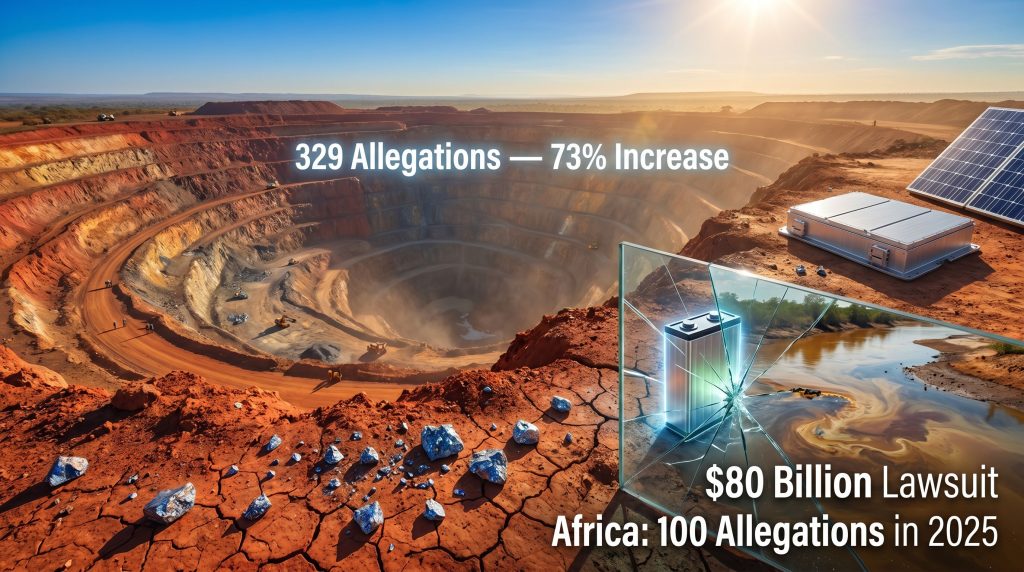
The scale of the problem has become measurable in ways that are difficult to dismiss. The Business and Human Rights Resource Centre's 2025 Transition Minerals Tracker recorded 329 allegations of human rights abuses connected to transition mineral extraction globally, representing a 73% increase on the prior year's figures. Africa registered the steepest escalation of any region tracked, accounting for 100 of those allegations in 2025 alone.
To understand how significant that is, consider the historical baseline: the entire period from 2010 through 2024 produced only 178 allegations across the African continent. In a single year, more than half of that cumulative total was recorded again. The trend line is not levelling off. It is accelerating.
| Metric | Data Point |
|---|---|
| Global abuse allegations (2025) | 329 |
| Year-on-year increase | 73% |
| Africa-specific allegations (2025) | 100 |
| Historical Africa allegations (2010 to 2024) | 178 |
| DRC share of African allegations | Over 50% (91 cases) |
| Annual trend in Africa: 2023 to 2024 | 26 rising to 45 allegations |
| Large international companies implicated | 10 (linked to roughly 50% of Africa's allegations) |
| DRC-related lawsuits filed | 5 in DRC, 2 in Zambia |
Critically, just 10 large international mining companies were associated with approximately half of all African allegations. This is not primarily a story about informal artisanal operations operating beyond reach of law. Major corporate players with governance structures, ESG reporting obligations, and institutional investor bases are directly implicated.
Why Are Allegations Rising Rather Than Falling?
The intuitive expectation might be that growing global scrutiny of mining supply chains would lead to improved conduct. The data suggests the opposite dynamic is at work. As critical minerals demand intensifies, the competitive pressure to secure supply and reduce per-unit extraction costs increases correspondingly. When commercial urgency is not matched by enforceable accountability mechanisms, the result is a deterioration of conditions on the ground.
There is also a structural lag effect. Many of the bilateral mineral agreements being signed between African governments and major global powers were negotiated without binding human rights or environmental safeguards, and with minimal engagement of the communities most directly affected. The rights organisation's Africa regional manager noted publicly that this acceleration is occurring precisely as such agreements proliferate, creating a governance vacuum at the moment when oversight is most critical.
DRC: Where Cobalt Extraction and Armed Conflict Converge
The Democratic Republic of Congo produces roughly three-quarters of the world's cobalt, the mineral essential for lithium-ion battery cathodes used in electric vehicles and consumer electronics. That concentration of supply in a single country, combined with chronically weak institutional governance, has created conditions that advocacy organisations describe as a near-perfect environment for exploitation. The DRC cobalt market remains, consequently, one of the most closely watched and contested in the world.
The Militarisation of Mining Zones
The 2025 tracker identified allegations that mining companies operating in the DRC had directly enlisted law enforcement and military personnel to provide site security. What followed, according to the report, was not protection but a further deterioration: soldiers originally deployed to remove artisanal miners from industrial concessions subsequently began participating in the illegal takeover of those same concessions.
In areas where mines have been heavily militarised, local residents have reported incidents of shooting and described soldiers manning checkpoints for the purpose of extracting bribes. The presence of armed actors has not produced security. It has produced a different and more dangerous form of insecurity.
The M23 Connection: When Mineral Revenue Funds Conflict
The situation is further complicated by the presence of the M23 rebel group, which controls significant portions of eastern DRC and uses that territorial control to extract value from mineral operations. The United States announced sanctions targeting networks it identified as smuggling conflict minerals out of the DRC to support M23 operations. The group's control over mineral-rich territory in the east provides a revenue stream that directly funds its military capacity.
Rights organisations have documented M23-linked atrocities including violence against civilians across an area now also contending with ebola. The entanglement of mineral extraction and armed conflict in the DRC represents perhaps the most severe manifestation of what clean energy mining rights abuses in Africa can look like at their worst. Moreover, the broader Congolese cobalt rivalry between global powers adds a geopolitical layer that further complicates accountability efforts.
South Africa's Institute for Security Studies has found evidence of widespread smuggling and corruption at cobalt operations, while at least one major mining company has formally complained to the Congolese government about senior military figures it alleged were involved in looting at its operations.
Advocacy organisations have made clear that proposals to create additional paramilitary units to protect DRC mines carry serious risks of compounding existing patterns of looting, violent displacement, and community harm rather than resolving the underlying conditions that produce them.
Artisanal Mining: The Invisible Workforce
A dimension of the DRC crisis that receives comparatively little attention involves the conditions facing artisanal and small-scale miners, a workforce that operates largely outside formal regulatory structures. These workers, including children in documented cases, extract cobalt under dangerous physical conditions without protective equipment, formal employment rights, or access to grievance mechanisms. Their labour feeds directly into supply chains that ultimately produce battery components for premium electric vehicles sold in Western markets.
Zambia: When a Dam Failure Becomes an Environmental Catastrophe
The Sino-Metals Leach Zambia Copper Mine dam collapse in February of the prior year released at least 50 million litres of toxic material into a tributary connected to the Kafue River, Zambia's primary inland waterway and a critical resource for drinking water, fishing, and agricultural irrigation across a large portion of the country.
The communities downstream from the spill have filed legal proceedings against Chinese-owned Sino Metals seeking compensation and remediation costs exceeding $80 billion, a figure that makes this one of the largest environmental liability claims in the history of African mining litigation. The Southern African Litigation Centre, an organisation focused on advancing rule of law across the region, is directly involved in supporting that case.
What the Kafue Case Reveals About Corporate Accountability
The Kafue River litigation matters beyond its immediate context because it tests whether communities in African resource-producing nations can achieve meaningful legal accountability against well-capitalised international mining operators. If successful, it could establish a precedent that makes operators conducting similar activities in comparable environments more cautious about infrastructure maintenance and environmental risk management.
The executive director of the Southern African Litigation Centre has described the situation across African transition mineral producers as increasingly shaped by a combination of inadequate government oversight and insufficient respect for local regulatory requirements by corporate operators. The concern expressed publicly by that organisation is that the pace of demand growth is outrunning the development of accountability mechanisms, leaving communities exposed without recourse. Evolving copper supply trends are, however, placing even greater pressure on Zambia's extractive sector to produce at scale.
Ghana, Zimbabwe, and Uganda: A Broader Pattern of Displacement
The DRC and Zambia represent the most acute cases, but the pattern of harm associated with clean energy mining rights abuses in Africa extends across the continent. Several other nations present distinct but structurally related forms of community impact.
| Country | Mineral | Primary Documented Harm |
|---|---|---|
| Ghana | Lithium | Destruction of agricultural land; absence of community consultation; inadequate compensation |
| Zimbabwe | Lithium | Land dispossession; environmental degradation linked to expanding mine footprints |
| Uganda | Carbon offset plantations | Community displacement for eucalyptus plantations; loss of fertile agricultural land |
The Uganda case introduces a dimension that challenges even the broader framing of environmental sustainability. Carbon offset plantations, which generate credits sold to companies seeking to offset their emissions, have in some documented instances displaced farming communities from productive agricultural land. This phenomenon has been described as green land grabbing: the appropriation of community land for activities framed as environmentally beneficial while producing immediate and measurable harm to the populations displaced.
The Systemic Failures Enabling Persistent Abuse
Understanding why these conditions persist requires looking at structural factors rather than treating each incident as isolated. Several interconnected failure modes create the environment in which abuse becomes normalised:
- Regulatory weakness at the national level: Many African resource-producing nations lack the institutional capacity, funding, or political independence required to enforce environmental and labour standards against well-resourced international operators.
- Corporate due diligence that functions as compliance theatre: Large companies with formal ESG frameworks and published supply chain policies continue to appear in abuse allegation data, suggesting that existing voluntary due diligence mechanisms are not translating into improved outcomes for affected communities.
- Mineral agreements lacking binding protections: Bilateral deals negotiated between governments and foreign investors frequently omit enforceable human rights clauses, leaving communities with no contractual basis for claiming protection.
- Corruption as a structural enabler: Where regulatory officials can be induced to overlook violations, the incentive structure for operators shifts toward minimising compliance costs rather than meeting standards.
- Absence of free, prior, and informed consent (FPIC): International human rights frameworks recognise FPIC as a foundational requirement before resource extraction can proceed on or near indigenous and community lands. In practice, genuine FPIC processes are rare across African mining jurisdictions.
The next major ASX story will hit our subscribers first
Who Bears the Heaviest Burden?
The distribution of harm from clean energy mining rights abuses in Africa is not uniform. Certain populations face compounded exposure:
- Artisanal and small-scale miners who lack employment protections, safety equipment, and access to formal grievance channels.
- Indigenous peoples and customary land rights holders whose tenure is not recognised under national law and who have no legal standing to resist displacement.
- Downstream communities facing water contamination, soil degradation, and loss of productive agricultural capacity.
- Human rights defenders who document and publicise abuses often operate in environments where doing so carries personal safety risks.
- Women and children, who face disproportionate exposure to unsafe conditions in artisanal mining communities and carry the primary burden of health impacts from environmental contamination.
The Greenwashing Dimension: When Clean Energy Claims Obscure Supply Chain Reality
Perhaps the most significant long-term reputational and ethical risk facing the clean energy sector is not regulatory. It is the growing evidentiary record demonstrating that minerals marketed as components of a sustainable future are being extracted under conditions that directly contradict that framing. As Human Rights Watch has documented, the energy transition must respect human rights or risk undermining its own legitimacy.
The minerals powering electric vehicles, battery storage systems, and solar panel infrastructure are being extracted under conditions that frequently and demonstrably contradict the ethical commitments that clean energy transition advocates publicly espouse, creating a fundamental credibility problem for the entire sector.
Toxic contamination profiles at many mine sites include arsenic, cyanide compounds, and heavy metals that enter water systems and accumulate in food sources. Infectious disease risks are elevated in overcrowded artisanal mining settlements. And the financial value generated flows predominantly to shareholders in OECD countries while health costs are borne locally.
What Ethical Transition Mineral Extraction Would Actually Require
Identifying the problem is insufficient without mapping what genuine solutions would look like. The following conditions would need to be met for clean energy supply chains to align with the values they claim to represent:
- Binding human rights and environmental standards embedded in mineral agreements, with third-party verification and enforceable remedies for affected communities.
- Genuine implementation of FPIC, not as a procedural checkbox but as a substantive process that gives communities real power to refuse or shape extraction activities.
- Benefit-sharing arrangements that direct a meaningful proportion of mineral revenues toward the infrastructure and development priorities of host communities.
- Investment in domestic regulatory capacity within African resource-producing nations, so that governments have the tools to enforce existing law against foreign operators.
- Supply chain traceability systems that allow downstream manufacturers and consumers to verify the conditions under which minerals were extracted, creating market incentives for better behaviour upstream.
Frequently Asked Questions: Clean Energy Mining Rights Abuses in Africa
What minerals are most associated with human rights abuses in Africa?
Cobalt, copper, and lithium are the minerals most frequently implicated. Cobalt extraction in the DRC is particularly associated with child labour, armed group involvement, and forced displacement. Copper mining in Zambia has produced major environmental incidents. Lithium extraction in Ghana and Zimbabwe is linked to land dispossession and inadequate community consultation.
Which countries have the highest rates of mining-related rights violations?
The DRC accounts for over 50% of African allegations, with 91 documented cases. Zambia is the second most affected country. Ghana, Zimbabwe, and Uganda also feature prominently in documented abuse patterns.
Are international mining companies legally responsible for abuses at their African operations?
Legal liability depends on the jurisdiction and the specific nature of the harm. Emerging due diligence legislation in some jurisdictions is beginning to create parent company liability for subsidiary conduct overseas. The Kafue River litigation against Sino Metals represents a test case for this principle in the African context.
What is green land grabbing?
Green land grabbing refers to the appropriation of community and indigenous land for projects framed as environmentally beneficial, including carbon offset plantations and mine expansions linked to clean energy mineral production. The communities displaced often receive inadequate or no compensation and lose productive agricultural resources.
What legal remedies are available to affected communities?
Options include domestic litigation in the host country, proceedings brought in the home country of the parent mining company, and engagement with international human rights bodies. The capacity to pursue these remedies is constrained by financial resources, legal access, and the risks faced by community advocates in high-risk environments.
Is the clean energy transition making conditions better or worse?
Based on available data, conditions are currently deteriorating. The 73% single-year increase in abuse allegations, combined with the acceleration of mineral demand and the absence of binding accountability frameworks, suggests that without structural intervention, the trajectory will continue to worsen before improving. Amnesty International's energy transition research similarly concludes that systemic reform is urgently needed across the entire mineral supply chain.
Accountability Is Not Optional: The Prerequisite the Green Transition Cannot Avoid
The evidence assembled across the 2025 tracking cycle points to a transition mineral sector operating under conditions of systematic accountability failure. The communities hosting the mines that supply the world's clean energy ambitions are bearing costs — environmental, physical, economic, and cultural — that are not reflected in the commodity prices paid at the point of extraction.
The executive director of the Southern African Litigation Centre has stated publicly that the mineral boom is increasingly characterised by a dangerous combination of weak governmental oversight and corporate disregard for existing legal obligations. That framing captures the structural nature of the problem: this is not a series of isolated incidents but a pattern produced by predictable institutional conditions.
Without enforceable human rights standards embedded directly into mineral supply chains and mineral agreements, the clean energy transition risks producing one of the most consequential examples of institutionalised impunity in modern economic history, extracting value from Africa's most exposed communities while distributing the benefits of that extraction primarily elsewhere.
The clean energy sector cannot credibly claim to represent a more ethical form of resource utilisation if the foundational materials enabling that transition are sourced under conditions that would be immediately unacceptable if they occurred within the countries consuming those materials. That double standard is not sustainable — either ethically or, as litigation and regulatory scrutiny intensifies, commercially.
This article is provided for informational purposes only and does not constitute financial, legal, or investment advice. Readers should conduct their own research and seek independent professional guidance before making any decisions based on the information presented here. Allegations referenced in this article reflect data from advocacy and tracking organisations and have not all been independently verified or adjudicated through legal processes.
Further reading: The Business and Human Rights Resource Centre and the Southern African Litigation Centre both publish ongoing tracking of legal proceedings and corporate accountability developments across Africa's mining sector. Current reporting from Reuters.com provides additional coverage of evolving developments in transition mineral supply chain accountability.
Want to Invest in the Minerals Powering the Clean Energy Transition?
Discovery Alert's proprietary Discovery IQ model delivers real-time ASX alerts on significant mineral discoveries — including the critical minerals at the centre of the global energy transition — instantly translating complex data into actionable insights for investors at every level. Explore Discovery Alert's dedicated discoveries page to understand the historic returns major mineral discoveries have generated, and begin your 14-day free trial to position yourself ahead of the broader market.