June 18, 2026
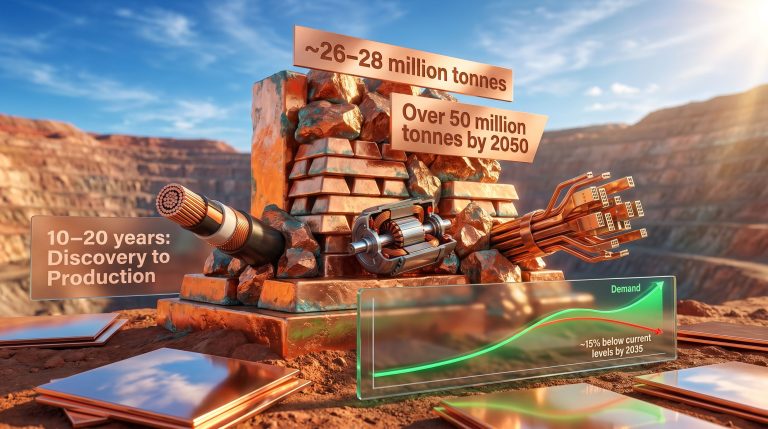
The global copper industry stands at a technological crossroads, where traditional high-temperature processing methods face mounting economic and environmental pressures. Rising energy costs, tightening environmental regulations, and the need for more flexible processing capabilities are driving unprecedented innovation in mineral extraction technologies. This transformation represents more than incremental improvement; it signals a fundamental shift toward cleaner copper production technology that could reshape how the industry approaches ore processing and regional mining economics, as evidenced by the global copper production forecast showing significant shifts in production methods.
What Makes Traditional Copper Smelting So Energy-Intensive?
Traditional copper smelting remains one of the most energy-demanding processes in modern mining, requiring sustained temperatures of 1,200°C to enable the chemical reactions necessary for metal extraction. This extreme heat requirement creates a cascade of operational challenges that extend far beyond simple fuel consumption.
The 1,200°C Furnace Problem
The fundamental challenge lies in the pyrometallurgical process itself, which demands continuous thermal energy input to maintain three critical stages: flash smelting, converting, and anode furnace refining. Each stage requires sustained combustion, with copper smelting accounting for approximately 10-15% of total mining energy use globally, consuming between 4,000-5,000 kWh per tonne of refined copper.
Natural gas price volatility has created additional operational uncertainty, with costs increasing 40-60% across key copper-producing regions between 2021-2025. This price pressure directly impacts operational margins, particularly for facilities processing lower-grade concentrates where energy costs represent a larger proportion of total processing expenses.
The carbon footprint implications are equally significant, with traditional smelting producing approximately 2-3 tonnes of CO₂ per tonne of refined copper. This emission intensity stems not only from fuel combustion but also from the oxidation of sulfur-bearing concentrates, creating sulfur dioxide that requires additional energy-intensive capture and treatment systems.
Why Current Methods Struggle with Complex Ores
Arsenic-rich copper concentrates present particular challenges for conventional processing. When ore contains more than 0.5% arsenic content, traditional smelting creates arsenic trioxide volatilization at high temperatures, generating both air pollution risks and occupational health concerns. These contamination issues have rendered many deposits economically unviable due to the additional infrastructure required for safe processing.
The scale requirements of traditional smelters compound these challenges. Economic viability typically requires minimum processing volumes of 100,000+ tonnes annually, with facilities needing substantial operational workforces of 500-1,000+ employees. This creates geographic concentration pressures that increase transportation costs for regional mines and limit processing flexibility for smaller operations.
Furthermore, low-grade sulfide deposits below 1% copper content often remain unprocessed because traditional smelting cannot achieve profitable margins on such material. The energy intensity required to process large volumes of low-grade ore, combined with environmental management costs, creates economic barriers that exclude significant mineral resources from production.
When big ASX news breaks, our subscribers know first
How Do Hydrometallurgical Processes Replace High-Heat Smelting?
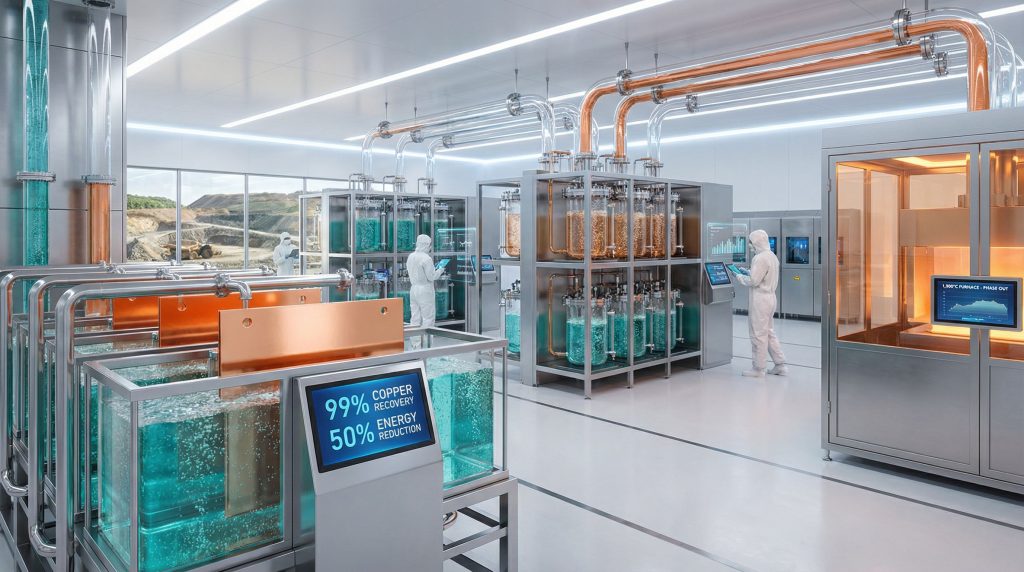
Hydrometallurgical processing represents a paradigm shift from thermal-based extraction to chemical dissolution systems operating at ambient temperatures. This fundamental change eliminates the need for high-temperature furnaces while potentially achieving 50% energy reductions compared to conventional smelting methods.
The Science Behind Saline Solution Processing
The hydrometallurgical approach utilizes hypersaline solutions with chloride concentrations typically ranging from 3-5 M to dissolve copper directly from concentrate. These highly saline environments enable selective copper dissolution while maintaining solution stability at room temperature, typically 20-60°C.
The process operates through three distinct phases: dissolution, where metals enter solution via electrochemical mechanisms; separation, utilizing selective precipitation or solvent extraction; and recovery, employing electrodeposition to produce cathode copper. This sequence eliminates sustained high-temperature combustion while achieving equivalent or superior purity levels of >99.5% copper.
Electrical current systems enable controlled metal deposition with energy conversion efficiencies of 75-85% compared to thermal smelting at 35-45%. The electrochemical cells operate at 2-4 V DC with current densities between 100-500 A/m², producing cathode copper that meets international trading standards including Grade A specifications under ASTM B115.
Energy Efficiency Comparisons
The energy advantages extend beyond simple temperature reduction. Hydrometallurgical systems consume 0.5-1.5 kWh per kg copper compared to 1.5-2.5 kWh for traditional processing. This reduction stems from eliminating continuous furnace operation, reducing auxiliary heating requirements, and minimising ventilation and pollution control energy demands.
Water requirements for hydrometallurgical processing typically range 20-50 m³ per tonne copper, which, when combined with proper water recycling systems, can be significantly lower than the total water footprint of traditional smelting plus environmental management requirements.
Capital expenditure advantages become apparent in smaller-scale operations. While traditional smelters require $300-500 million for 50,000 tonne/year capacity, hydrometallurgical facilities can achieve similar processing capacity for $50-150 million, representing potential savings of 50-90% depending on configuration and scale.
What Are the Key Cleaner Copper Production Technologies?
Several distinct technological pathways have emerged as viable alternatives to traditional smelting, each offering specific advantages for different ore types and operational scales. These technologies range from advanced electrochemical systems to biological processing methods that leverage microorganisms for metal extraction. The Rio Tinto Nuton technology represents one of the most promising approaches currently being deployed commercially.
Advanced Electrochemical Leaching Systems
Vanadium-based reductive leaching represents one of the most promising cleaner copper production technology approaches, utilising vanadium redox couples (V²⁺/V³⁺) to enable selective copper dissolution. The system maintains efficiency through controlled oxidation-reduction potential (ORP) between +400 to +600 mV, with vanadium recovery rates exceeding 95% in closed-loop configurations.
MIT's electrochemical innovations have demonstrated 99% copper recovery rates from concentrates in processing times measured in minutes rather than hours. The technology operates through direct electrochemical leaching that bypasses traditional roasting and smelting stages entirely, achieving processing efficiency through precise voltage and current control.
These systems offer particular advantages for processing complex concentrates containing multiple metals, as the electrochemical parameters can be adjusted to selectively target copper while managing other valuable minerals through separate recovery circuits.
Biological Leaching Applications
Microorganism-based extraction employs specialised bacteria including Acidithiobacillus ferrooxidans and Leptospirillum ferrooxidans to process sulfide ores at temperatures between 30-50°C. These biological systems achieve 80-90% recovery rates from sulfide ores over 20-40 day cycles, producing 40-50% lower carbon emissions compared to traditional smelting.
The biological approach offers two distinct operational pathways:
- Mesophilic consortia: Operating at 25-40°C with slower kinetics but minimal energy input
- Thermophilic consortia: Operating at 45-75°C with faster processing but moderate heating requirements
Aerated heap processing utilises controlled oxygen introduction to maintain optimal microbial activity, achieving processing costs of $0.40-0.60 per kg copper compared to $0.60-0.80 for traditional methods. The biological pathway particularly excels with low-grade primary sulfides where conventional processing becomes uneconomical.
Enhanced Heap Leaching for Primary Sulfides
Enhanced heap leaching technologies have expanded the economic processing threshold for primary sulfide deposits, enabling 40-80% recovery from previously uneconomical ores containing 0.3-1.0% copper content. These systems utilise controlled acid application with 15-25 kg H₂SO₄ per tonne ore, operating over 60-150 day cycles depending on ore characteristics.
The technology offers 30-45% lower operating costs compared to pyrometallurgical processing, with economic viability thresholds extending down to 0.25% copper content under optimal processing conditions. This expansion of economically recoverable resources represents a significant increase in available copper reserves globally.
On-site processing advantages eliminate concentrate transportation costs while enabling simultaneous processing of oxide and sulfide zones within the same deposit, maximising resource utilisation across varied ore types.
How Do These Technologies Handle Challenging Ore Types?
Cleaner copper production technology demonstrates particular advantages when processing ore types that create operational or environmental challenges for traditional smelting. These include low-grade sulfide deposits, arsenic-rich ores, and secondary mineral recovery from mine waste streams, similar to developments in the Argentina copper system which faces similar processing challenges.
Processing Low-Grade Sulfide Deposits
Sub-1% copper content extraction capabilities represent a crucial advantage of alternative processing methods. Traditional smelting typically requires minimum 15-20% copper in concentrate to achieve economic viability, while hydrometallurgical systems can process ore with sub-0.5% copper content profitably under appropriate conditions.
| Ore Grade Range | Traditional Smelting | Hydrometallurgical | Biological Leaching |
|---|---|---|---|
| >2% Cu | Highly profitable | Highly profitable | Moderate profitability |
| 1-2% Cu | Profitable | Profitable | Good profitability |
| 0.5-1% Cu | Marginal | Profitable | Good profitability |
| 0.25-0.5% Cu | Uneconomical | Marginal to profitable | Potentially profitable |
| <0.25% Cu | Uneconomical | Uneconomical | Special applications only |
This grade flexibility enables processing of massive tonnages previously considered waste material, effectively increasing copper reserves without additional exploration investment. The modular nature of many alternative processing systems allows operators to adjust capacity based on grade variations, optimising processing economics across diverse ore bodies.
Arsenic-Rich Ore Management
Arsenic contamination management represents one of the most significant advantages of cleaner copper production technology. Traditional smelting of arsenic-rich ores creates arsenic trioxide volatilisation at processing temperatures, requiring extensive air pollution control systems and creating occupational health risks.
Hydrometallurgical processing operates at temperatures insufficient to volatilise arsenic compounds, enabling safe processing of ores with >0.5% arsenic content without air pollution generation. This capability unlocks deposits previously considered unprocessable due to environmental regulations or community health concerns.
Solution chemistry control allows selective copper extraction while maintaining arsenic in stable, manageable forms. Advanced processing circuits can even concentrate arsenic into separate waste streams suitable for safe disposal or potential commercial applications, transforming a contaminant into a manageable byproduct.
Mine Waste and Tailings Recovery
Secondary mineral extraction from historical tailings and waste rock represents a significant opportunity for cleaner copper production technology. Many legacy mining operations contain substantial copper values in tailings facilities, often with 0.1-0.3% copper content that was uneconomical to recover using historical processing methods.
Biological leaching systems particularly excel at tailings processing, as the material is already finely ground and exposed to weathering processes that enhance bacterial access to mineral surfaces. Processing costs for tailings material typically run 20-40% lower than fresh ore due to reduced crushing and grinding requirements.
However, gold and silver co-recovery presents ongoing technical challenges. These secondary minerals often represent 15-25% of total revenue from copper operations, requiring specialised circuit design to prevent value losses during processing. Chloride-based processing solutions can complicate precious metal recovery, necessitating careful flowsheet design and potentially separate processing circuits.
What Are the Economic Advantages of Cleaner Production Methods?
The economic case for alternative copper processing extends beyond simple energy savings to encompass capital efficiency, operational flexibility, and geographic optimisation advantages that traditional smelting cannot match. This is particularly relevant when considering the copper-uranium investment outlook and broader market dynamics.
Capital Cost Analysis
| Technology Type | Capital Cost vs Traditional | Processing Capacity | Energy Requirements | Workforce Requirements |
|---|---|---|---|---|
| Traditional Smelting | Baseline ($300-500M) | 50,000-200,000 TPY | 4,000-5,000 kWh/tonne | 500-1,000 employees |
| Hydrometallurgical | 50-70% reduction | Modular 5,000-50,000 TPY | 2,000-2,500 kWh/tonne | 50-200 employees |
| Biological Leaching | 40-60% reduction | 10,000-100,000 TPY | 1,500-2,000 kWh/tonne | 25-150 employees |
| Enhanced Heap Leaching | 60-80% reduction | 25,000-150,000 TPY | 500-1,000 kWh/tonne | 15-75 employees |
The modular nature of alternative processing enables staged development, allowing operators to begin with smaller capacity installations and expand based on proven performance and market conditions. This approach significantly reduces initial capital requirements while maintaining future growth options.
Equipment cost advantages stem from eliminating specialised high-temperature materials, complex furnace systems, and extensive pollution control infrastructure. Standard industrial equipment can handle most processing requirements, reducing both initial costs and maintenance complexity.
Operating Cost Breakdown
Power consumption represents the primary cost variable across all processing methods, typically accounting for 25-45% of total operating expenses. Alternative technologies' energy efficiency advantages translate directly to operational margin improvements, particularly significant during periods of high electricity costs.
Transportation cost reductions become substantial for regional operations. Traditional concentrate shipping to distant smelters can add $50-150 per tonne in logistics costs, whilst on-site processing eliminates this expense entirely. For remote operations, this saving alone often justifies alternative processing investment.
Maintenance cost comparisons favour simpler processing systems operating at ambient temperatures. Traditional smelter maintenance requires specialised high-temperature materials and extensive refractory replacement, whilst alternative systems utilise standard industrial components with longer service lives and lower replacement costs.
Labour cost optimisation reflects the reduced complexity and automation potential of alternative processing systems. While traditional smelters require specialised operators for high-temperature processes, alternative systems can operate with standard process industry personnel, reducing both wage costs and training requirements.
How Do Modular Processing Plants Change Regional Mining?
The shift toward modular processing represents a fundamental change in mining industry economics, enabling distributed production networks that better match regional resource distributions and reduce infrastructure dependencies. This trend is particularly evident in the US copper production overview and similar regional developments.
Distributed Processing Network Benefits
Multiple smaller facilities offer operational advantages over centralised smelters, particularly for regional mining districts with numerous smaller deposits. This distributed approach reduces concentrate transportation costs whilst enabling customised processing for specific ore characteristics.
The Queensland mining corridor exemplifies this opportunity, where numerous copper deposits currently depend on Mount Isa smelter services. Transportation costs add 15-25% to final processing expenses, creating economic opportunities for distributed processing networks that eliminate these logistics burdens.
Modular plants enable fit-for-purpose design approaches where processing parameters match specific ore characteristics rather than requiring ore blending to meet centralised smelter specifications. This customisation can improve recovery rates whilst reducing processing costs for challenging ore types.
Risk diversification benefits emerge from distributed processing, as operational disruptions affect smaller production volumes compared to large centralised facilities. This resilience becomes particularly important for regional mining economies dependent on single processing facilities.
Regional Implementation Strategies
Infrastructure requirements for distributed processing vary significantly based on technology selection. Hydrometallurgical facilities require reliable electrical supply and water access, whilst biological leaching systems need moderate infrastructure with emphasis on environmental management.
Grid connection capabilities become critical factors, as processing facilities require consistent power supply for optimal performance. Many alternative technologies integrate well with renewable energy systems, offering opportunities for off-grid or hybrid power solutions in remote locations.
Regional implementation must consider skilled workforce availability and training requirements. Whilst alternative technologies generally require fewer specialised skills than traditional smelting, successful operations still depend on competent process control and maintenance capabilities.
Regulatory framework adaptation presents ongoing challenges as many jurisdictions have established regulatory systems designed for traditional mining and processing operations. Alternative technologies may require new permitting approaches and environmental monitoring protocols.
The next major ASX story will hit our subscribers first
What Challenges Must These Technologies Overcome?
Despite significant advantages, cleaner copper production technology faces several technical and economic hurdles that must be addressed for widespread commercial adoption. The ABC News report on cleaner copper technology highlights some of these ongoing challenges.
Secondary Mineral Recovery Issues
Gold and silver extraction complications represent the most significant technical challenge for many alternative processing routes. These precious metals often contribute 15-25% of total operation revenue, making their efficient recovery essential for project economics.
Chloride-based processing solutions can interfere with traditional precious metal recovery circuits, requiring specialised extraction techniques or separate processing streams. Solution chemistry optimisation becomes critical to maintain copper processing efficiency whilst preserving precious metal recovery capabilities.
Chloride solution management presents ongoing operational challenges, including solution purification, chloride recycling, and environmental management. High chloride concentrations require corrosion-resistant materials and specialised waste management protocols, adding complexity and cost to processing operations.
Scale-Up and Commercial Viability
Pilot plant development timelines extending to 2028 reflect the technical complexity of transitioning from laboratory-scale success to commercial operation. Many promising technologies require extensive testing across diverse ore types and operating conditions before achieving commercial readiness.
Processing volume requirements for profitability vary significantly across technologies but generally require minimum 5,000-10,000 tonnes annual capacity for economic viability. This scale requirement can challenge smaller mining operations or limit applicability to higher-grade deposits.
Technology maturation pathways require continued research and development investment, with particular focus on process optimisation, equipment reliability, and operational automation. The mining industry's conservative approach to new technology adoption creates additional barriers for innovative processing methods.
Technical Limitations and Solutions
Processing time variations across different ore types create operational planning challenges. Furthermore, some concentrates process efficiently within hours, complex mineral associations may require extended processing times that affect facility throughput and economics.
Quality control requirements become more complex with alternative processing methods, as solution chemistry monitoring and process parameter optimisation require sophisticated analytical capabilities not always available at remote mining locations.
Integration with existing operations presents practical challenges, as many mines have existing infrastructure designed for traditional concentrate production and shipping. Retrofitting operations for alternative processing requires careful planning and potentially significant additional investment.
How Will These Technologies Transform Global Copper Production?
The emergence of viable alternatives to traditional copper smelting arrives at a critical time when global copper demand continues accelerating whilst traditional production faces increasing constraints. This transformation aligns with broader copper investment strategies being developed across the industry.
Market Demand Projections
Renewable energy sector requirements drive unprecedented copper demand growth, with wind turbines requiring 3-5 tonnes copper per MW capacity and solar installations consuming 4-6 tonnes per MW. Global renewable energy expansion targets through 2030 could require additional 5-8 million tonnes annual copper production.
Electric vehicle manufacturing intensifies demand pressures, with each electric vehicle containing 60-80 kg copper compared to 20-25 kg in conventional vehicles. Industry projections suggest EV production could require additional 2-3 million tonnes annual copper by 2030, creating supply pressure that traditional production struggles to meet.
Infrastructure development in emerging economies adds baseline demand growth of 2-3% annually, requiring consistent production increases from existing resources plus new capacity development. This sustained demand growth creates economic incentives for processing technologies that access previously uneconomical resources.
Environmental Impact Reductions
Carbon footprint improvements across the production chain offer significant environmental advantages. Alternative processing technologies typically reduce CO₂ emissions by 40-60% compared to traditional smelting, contributing meaningfully to mining industry sustainability goals.
Air quality benefits for mining communities become particularly important as environmental regulations tighten globally. Eliminating high-temperature combustion and associated emissions improves local air quality whilst reducing regulatory compliance costs and community opposition.
Water usage optimisation through closed-loop processing systems and reduced environmental management requirements can decrease total water consumption by 20-40% compared to traditional processing plus environmental remediation needs.
What Does the Future Hold for Cleaner Copper Technology?
The trajectory toward widespread adoption of cleaner copper production technology depends on successful demonstration of commercial viability, continued cost reductions, and supportive regulatory frameworks that recognise environmental advantages.
Investment and Development Timeline
Funding milestones including the $5 million ARENA investment in pilot plant development represent early-stage commercialisation support, with additional funding likely required for full-scale demonstration projects. Industry analysts project total investment requirements of $100-500 million for technology maturation across multiple processing pathways.
Commercial deployment schedules suggest initial operations by 2028-2030 for leading technologies, with broader industry adoption occurring through the 2030s as operational experience demonstrates reliability and economics. Early adopters will likely focus on challenging ore types where traditional processing faces the greatest difficulties.
Industry adoption rates will depend significantly on commodity price dynamics and traditional smelter availability. Higher copper prices accelerate adoption of higher-cost alternative technologies, whilst smelter capacity constraints force consideration of alternatives regardless of cost premiums.
Integration with Renewable Energy Systems
Solar and wind power compatibility offers particular advantages for cleaner copper production technology, as many alternative processing methods operate well with variable power supply through appropriate energy storage systems. This compatibility enables off-grid processing installations in remote locations with excellent renewable energy resources.
Grid-scale energy storage applications create additional opportunities as copper demand for battery systems continues growing. Processing facilities could potentially integrate with energy storage systems, utilising excess renewable energy during peak production periods whilst contributing to grid stability.
Circular economy opportunities emerge through improved waste processing capabilities and reduced environmental footprints. Alternative technologies enable processing of historical mine waste, tailings, and low-grade materials previously considered uneconomical, effectively extending resource availability whilst remediating environmental legacies.
The convergence of environmental pressures, economic incentives, and technological capabilities positions cleaner copper production technology at the forefront of mining industry transformation. Success will require continued technical development, supportive regulatory frameworks, and industry recognition that alternative processing methods offer not just environmental benefits but also economic advantages that traditional smelting cannot match.
Disclaimer: This analysis includes forward-looking statements and projections based on current technology development trends and market conditions. Actual results may vary significantly based on technological developments, market conditions, regulatory changes, and other factors. Readers should conduct independent research and consult qualified professionals before making investment or business decisions related to copper production technologies.
Ready to Invest in the Next Major Copper Discovery?
Discovery Alert instantly alerts investors to significant ASX copper discoveries using its proprietary Discovery IQ model, turning complex mineral data into actionable insights ahead of the broader market. With the copper industry undergoing this technological transformation, understanding which discoveries could benefit from these cleaner production methods gives you a crucial investment edge—begin your 14-day free trial today to position yourself ahead of the competition.