June 8, 2026
Climate Risk and Infrastructure Vulnerability in Australia's Resource Corridors
Australia's western seaboard represents a critical nexus where extreme weather patterns intersect with global commodity supply chains, creating vulnerabilities that extend far beyond regional boundaries. The concentration of iron ore and liquefied natural gas (LNG) export infrastructure along this coastline has transformed weather events from localised disruptions into catalysts for worldwide market volatility. Understanding these interconnected risks requires examining both the physical realities of infrastructure exposure and the economic mechanisms that amplify regional disruptions into global consequences.
The evolution of extreme weather patterns in this region reflects broader climatic shifts that are reshaping risk assessments across commodity markets. As weather systems intensify and become less predictable, the traditional approaches to infrastructure protection and supply chain management face unprecedented challenges. This transformation affects not only the immediate operational environment but also the long-term strategic planning required for sustainable resource extraction and export operations.
When big ASX news breaks, our subscribers know first
Geographic Concentration Creates Systemic Vulnerabilities
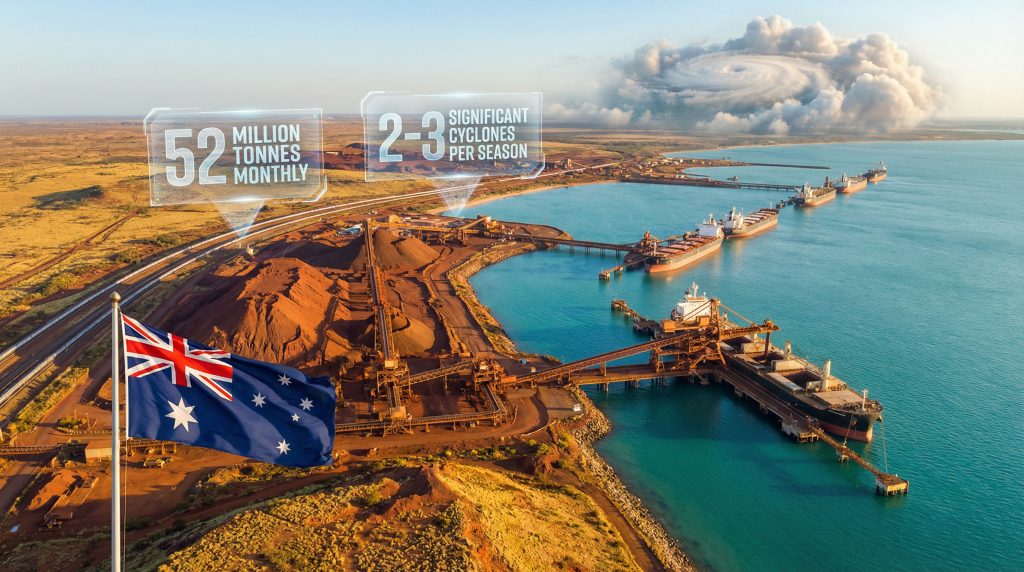
The Pilbara region's emergence as a global commodity export hub represents both an economic triumph and a strategic vulnerability. This coastal zone handles extraordinary volumes of materials that fuel industrial production across Asia, with Port Hedland alone processing 52 million tonnes of iron ore in December 2025, according to industry data. The geographic concentration that enables such efficiency also creates systemic risks when weather events threaten multiple facilities simultaneously.
Key Infrastructure Concentrations:
• Port Hedland: Primary iron ore export facility handling over 50 million tonnes monthly
• Dampier port: Dual-purpose facility managing both LNG exports (1.4 million tonnes in December 2025) and iron ore shipments (15 million tonnes)
• Integrated rail networks: Connecting inland mining operations to coastal export terminals
• Supporting infrastructure: Power systems, water supplies, and transportation networks
The engineering challenges of protecting such concentrated infrastructure extend beyond individual facility hardening to encompass entire supply chain networks. When Tropical Low 21U threatened the region in February 2026, port authorities implemented coordinated closure protocols across five major facilities simultaneously: Ashburton, Cape Preston West, Dampier, Varanus Island, and Port Hedland. This synchronised response illustrates how geographic concentration necessitates system-wide risk management approaches.
Historical Weather Pattern Analysis
The frequency and intensity of cyclonic activity in this region create recurring operational challenges that compound over time. During the January-February 2025 period, four consecutive cyclones affected Pilbara operations, demonstrating the seasonal concentration of extreme weather risks. This clustering effect means that multiple disruptions can occur within short timeframes, preventing full recovery between events.
The meteorological patterns driving these events reflect broader oceanic and atmospheric changes. Sea surface temperature increases in the Indian Ocean contribute to more intense tropical cyclone development, whilst shifting pressure systems alter traditional seasonal patterns. These changes require infrastructure planners to reassess historical risk models and develop more robust protection strategies.
Climate adaptation initiatives increasingly focus on infrastructure resilience rather than simple capacity expansion. The traditional approach of building larger facilities must now incorporate enhanced weather resistance, redundant systems, and rapid recovery capabilities. Furthermore, this shift represents a fundamental change in how commodity export infrastructure is conceived and constructed.
Emergency Response Protocols Balance Safety and Economics
The protocols governing port closures during extreme weather events reflect sophisticated risk management frameworks that prioritise personnel safety and infrastructure protection over short-term economic considerations. These systems operate through tiered alert levels, with Cyclone Alert 2 status triggering preparation protocols that precede full facility evacuation. The implementation of such systems during Tropical Low 21U's approach demonstrated the coordinated decision-making required across multiple stakeholders.
When Australia Pilbara shuts LNG and iron ore ports on storm warnings, the operational complexity extends beyond simply halting loading operations. Vessel evacuation procedures require careful coordination with international shipping schedules, cargo commitments, and weather forecasting. Ships must be moved to safe distances from port infrastructure whilst maintaining communication capabilities and emergency response readiness.
Port Closure Implementation Timeline:
• February 3-5, 2026: Cyclone Alert 2 status implemented across Pilbara ports
• February 6, 16:00 local time: Berths cleared at Ashburton, Cape Preston West, Dampier, and Varanus Island
• February 6, 21:30 local time: Port Hedland closure completed
• February 8, early morning: Forecast period for maximum weather impact
Risk Assessment Methodologies
Modern port closure decisions integrate multiple data streams including wind speed forecasts, storm surge predictions, and infrastructure vulnerability assessments. The Australian Bureau of Meteorology provides specialised maritime forecasting that enables port authorities to make closure decisions with sufficient lead time for safe vessel evacuation. This predictive capability represents a significant advancement over historical approaches that relied primarily on current conditions.
The integration of satellite monitoring, oceanographic sensors, and atmospheric modelling creates increasingly accurate weather prediction capabilities. These technological improvements extend warning periods and enhance the precision of impact forecasts, enabling more efficient resource allocation during emergency responses. However, the inherent uncertainty in extreme weather prediction continues to require conservative safety margins in operational decisions.
Emergency management protocols also account for the cascading effects of port closures on inland operations. Mining facilities must coordinate production shutdowns, rail transport scheduling, and inventory management to minimise waste and optimise recovery timing. Consequently, this coordination becomes particularly complex when multiple facilities face simultaneous closures, requiring system-wide resource reallocation.
Global Market Dynamics Amplify Regional Disruptions
The transformation of localised weather events into global market disruptions reflects the concentrated nature of commodity supply chains and the interconnected dependencies that characterise modern industrial systems. The immediate effects ripple through commodity markets worldwide, creating price volatility that extends far beyond the duration of actual operational disruptions.
| Market Impact Category | Immediate Effects | Extended Consequences |
|---|---|---|
| Iron Ore Pricing | Spot price increases of 5-15% | Supply contract renegotiations |
| LNG Supply Chains | Cargo delays and rerouting | Force majeure clause activations |
| Steel Production | Inventory drawdowns in Asia | Alternative sourcing cost increases |
| Energy Security | Regional supply tightening | Strategic reserve utilisations |
The scale of these impacts reflects the volumes involved in Pilbara operations. With Dampier and Port Hedland combined handling 67 million tonnes of iron ore in December 2025 alone, even brief disruptions affect substantial global supply flows. LNG exports from the region, whilst smaller in absolute terms at 1.4 million tonnes monthly from Dampier, represent critical energy security supplies for multiple Asian economies.
Current iron ore price trends demonstrate how regional supply disruptions translate into immediate market volatility, with spot prices often increasing disproportionately to actual supply shortfalls.
Asian Steel Industry Dependencies
The concentration of Australian iron ore supply to Asian steel producers creates time-sensitive vulnerabilities that extreme weather events can exploit. Japanese and South Korean steelmakers operate sophisticated just-in-time inventory systems optimised for cost efficiency and quality control. These systems minimise storage costs and reduce working capital requirements but create exposure to supply disruptions that can halt production lines within days.
Chinese steel production, representing the world's largest iron ore consuming market, demonstrates similar vulnerabilities despite greater absolute inventory capacity. The integrated nature of Chinese industrial complexes means that iron ore supply disruptions can cascade through multiple manufacturing sectors, affecting everything from construction materials to automotive components. This systemic interdependence amplifies the economic significance of individual weather events in Australia.
The geographic distance between Australian export facilities and Asian steel mills compounds these vulnerabilities. Ocean transport times of 10-20 days mean that supply disruptions create immediate shortages that cannot be quickly resolved through alternative sourcing. Emergency sourcing from Brazilian or other suppliers typically involves significant cost premiums and longer delivery times, making such arrangements economically challenging for routine use.
Corporate Risk Profiles Vary with Operational Diversification
The major mining and energy companies operating in the Pilbara region demonstrate varying levels of vulnerability to weather-related disruptions based on their operational diversification strategies and infrastructure configurations. These differences create distinct risk profiles that influence both immediate operational responses and long-term strategic planning.
BHP Group's Integrated Operations:
• Port Hedland throughput capacity: 52 million tonnes monthly
• Diversified global mining portfolio reducing regional concentration risk
• Integrated rail and port infrastructure creating operational efficiency but concentrated vulnerability
• Advanced weather monitoring and response protocols
BHP's scale of operations at Port Hedland creates both opportunities and vulnerabilities. The company's ability to process massive volumes efficiently during normal operations translates into equally significant disruption impacts when extreme weather forces facility closures. However, BHP's global diversification across multiple continents provides some mitigation through alternative production sources and market flexibility.
Historical Disruption Case Studies
The January 2025 Cyclone Sean incident provides valuable insights into how facility-specific damage can create localised disruptions whilst operational flexibility enables broader system resilience. Rio Tinto's East Intercourse Island facility at Dampier experienced railcar dumper flooding on January 20, 2025, which halted loadings until early March 2025, creating a six-week operational disruption at that specific site.
Despite this significant facility-level impact, Rio Tinto maintained iron ore export capabilities by redirecting operations through alternative Western Australian facilities. This operational flexibility demonstrates the value of redundant infrastructure and diversified port access, enabling companies to maintain supply commitments even when individual facilities face extended outages.
LNG Operator Considerations:
• Woodside Energy: Pluto LNG and North West Shelf facility coordination during weather events
• Shell: Prelude floating LNG facility storm management protocols
• Chevron: Gorgon LNG operational contingency planning
• Emergency shutdown procedures and restart protocols
The LNG sector faces distinct challenges during extreme weather events due to the continuous nature of gas processing and the safety requirements for handling cryogenic materials. Unlike solid commodity loading, which can be suspended and resumed relatively easily, LNG operations require careful shutdown and restart procedures that can extend operational impacts beyond the duration of weather events themselves.
Supply Chain Resilience Strategies Evolve Under Pressure
The recognition of Australia's weather-related supply chain vulnerabilities has catalysed significant changes in how global commodity buyers approach sourcing strategies and inventory management. These adaptations reflect both immediate operational necessities and longer-term strategic planning aimed at reducing dependency risks.
Asian Steel Industry Adaptation Measures:
• Enhanced inventory management systems extending storage durations
• Diversified sourcing agreements incorporating Brazilian and other suppliers
• Strategic stockpile development for critical raw materials
• Flexible production scheduling accommodating supply interruptions
Japanese steelmakers have pioneered sophisticated inventory optimisation systems that balance cost efficiency with supply security. These systems use predictive analytics to anticipate potential disruptions and automatically adjust ordering patterns and storage allocations. The integration of weather forecasting data into supply chain management represents a significant evolution in industrial planning methodologies.
South Korean manufacturers have focused particularly on developing alternative supplier relationships that can be activated during Australian supply disruptions. These arrangements often involve maintaining smaller ongoing relationships with non-Australian suppliers specifically to ensure activation capability during emergencies. In addition, whilst more expensive than single-source approaches, these strategies provide crucial flexibility during crisis periods.
Energy Security Implications
LNG supply disruptions create particularly complex challenges for energy security planning due to the limited global flexibility in natural gas transport and storage. Unlike oil markets, where strategic reserves and alternative suppliers can provide relatively quick substitution, LNG markets require specialised infrastructure and long-term contracts that limit short-term flexibility.
Regional energy security strategies increasingly incorporate weather risk assessments for major supplier regions. Government energy agencies across Asia have developed contingency protocols that include temporary fuel switching capabilities, strategic reserve utilisation, and emergency supply coordination mechanisms. These preparations reflect the critical importance of energy supply continuity for economic stability and national security.
The development of floating storage and regasification units (FSRUs) has enhanced regional flexibility by enabling more rapid deployment of emergency supply capabilities. These facilities can be positioned strategically to provide backup capacity during planned or unplanned supply disruptions, though their deployment requires significant advance planning and coordination.
The next major ASX story will hit our subscribers first
Infrastructure Modernisation Addresses Climate Resilience
The increasing frequency and intensity of extreme weather events affecting the Pilbara region has accelerated infrastructure modernisation initiatives focused on climate resilience rather than simple capacity expansion. These efforts encompass both physical infrastructure hardening and technological integration for enhanced monitoring and response capabilities.
Engineering Solutions for Storm Resilience:
• Enhanced breakwater construction incorporating higher storm surge design parameters
• Underground utility systems reducing wind damage vulnerability
• Automated equipment securing systems enabling rapid storm preparation
• Redundant power systems maintaining critical operations during outages
The modernisation of port infrastructure reflects updated engineering standards that account for changing climate conditions and more intense weather events. Traditional design parameters based on historical weather patterns are being replaced by forward-looking models that incorporate climate change projections and extreme event probability distributions.
Advanced materials and construction techniques enable infrastructure to withstand higher wind speeds and storm surge levels than previous generations of facilities. These improvements often require significant capital investments but provide enhanced operational reliability and reduced long-term maintenance requirements. Consequently, the economic justification for such investments reflects both direct operational benefits and reduced insurance and financing costs associated with lower risk profiles.
Current mining innovation trends emphasise climate-resilient infrastructure design as a critical component of modern facility development.
Technology Integration for Risk Management
The integration of advanced monitoring and control systems enables more precise risk assessment and faster emergency responses during extreme weather events. Satellite-based weather monitoring provides extended warning periods, whilst automated systems can implement protective measures without requiring human presence in dangerous conditions.
Advanced Weather Monitoring Systems:
• Satellite imagery and atmospheric modelling for extended forecast accuracy
• Real-time oceanographic monitoring for storm surge prediction
• Automated alert systems for coordinated emergency responses
• Predictive maintenance systems identifying vulnerability points
Artificial intelligence applications in weather prediction and risk assessment provide increasingly sophisticated decision support for operational managers. These systems can analyse multiple data streams simultaneously and provide probabilistic risk assessments that enable more informed closure and evacuation decisions. The integration of machine learning algorithms continues to improve prediction accuracy and extend useful forecast horizons.
Remote operation capabilities reduce human exposure during extreme weather whilst maintaining some operational capacity during marginal conditions. Automated loading and unloading systems, remote-controlled equipment, and distributed control systems enable operations to continue longer into deteriorating conditions and resume more quickly after weather events pass.
Financial Market Responses Reflect Systemic Risks
The financial markets' response to weather-related disruptions in Australia's commodity export infrastructure demonstrates the systemic importance of this supply corridor for global economic stability. Insurance markets, commodity exchanges, and equity valuations all reflect the concentrated risks and cascading effects associated with extreme weather events in this region.
Risk Pricing Mechanisms:
| Risk Category | Premium Adjustments | Market Response Timeline |
|---|---|---|
| Property Insurance | 20-30% increases post-major events | Immediate policy reviews |
| Business Interruption | Extended waiting periods and exclusions | 6-12 month adjustment cycles |
| Supply Chain Coverage | New product development and pricing | 12-24 month innovation cycles |
| Commodity Derivatives | Higher volatility premiums | Real-time price adjustments |
Insurance markets have responded to increasing weather-related losses by developing more sophisticated risk assessment models and pricing mechanisms. These models incorporate climate projections, infrastructure vulnerability assessments, and cascading economic impact analyses to better reflect the true cost of weather-related risks. The resulting premium adjustments often create significant cost increases for operators in vulnerable regions.
Commodity futures markets demonstrate immediate sensitivity to weather disruption announcements, with iron ore and LNG prices typically experiencing rapid increases when port closures are announced. These price movements often exceed the proportional supply impact, reflecting market psychology and speculative positioning around perceived supply shortages. The volatility creates both risks and opportunities for market participants with appropriate hedging strategies.
Investment Strategy Implications
Long-term investment strategies increasingly incorporate climate risk assessments and infrastructure resilience considerations when evaluating mining and energy projects. Environmental, social, and governance (ESG) investment frameworks now routinely include climate adaptation and resilience metrics in project evaluation criteria.
Investment Considerations:
• Infrastructure resilience and climate adaptation investments
• Geographic diversification to reduce weather concentration risks
• Technology investments for enhanced monitoring and response capabilities
• Insurance and hedging strategies for weather-related operational risks
The shift toward resilience-focused investment reflects both regulatory requirements and market demands for sustainable long-term returns. Investors increasingly recognise that climate-vulnerable assets may face higher operating costs, insurance premiums, and regulatory burdens over time, making climate adaptation a financial necessity rather than simply an environmental consideration.
Private equity and infrastructure investors have begun incorporating detailed climate risk assessments into due diligence processes, often requiring specific adaptation measures as conditions for investment. These requirements drive additional capital allocation toward resilience improvements and influence the competitive dynamics of infrastructure development and operation.
Regulatory Frameworks Adapt to Climate Realities
The regulatory environment governing emergency response and port operations continues to evolve in response to changing climate risks and the growing recognition of infrastructure vulnerability. Australian maritime safety authorities, state emergency management agencies, and federal trade regulators all play roles in managing weather-related disruptions and their economic consequences.
Australian Maritime Safety Authority (AMSA) Protocols:
• Mandatory vessel evacuation procedures during extreme weather warnings
• Coordinated communication systems for international shipping
• Safety zone enforcement and access restrictions
• Post-event damage assessment and reopening procedures
AMSA's regulatory framework provides the legal foundation for coordinated emergency responses across multiple ports and jurisdictions. These regulations enable rapid decision-making during crisis periods whilst maintaining safety standards and international maritime law compliance. The framework continues to evolve based on lessons learned from previous events and changing weather patterns.
State government emergency powers provide additional regulatory flexibility during extreme weather events, enabling resource reallocation, temporary regulatory relief, and coordinated response efforts across multiple agencies and private operators. These powers reflect the recognition that extreme weather events require government intervention beyond normal market mechanisms.
International Trade Agreement Implications
Long-term commodity supply contracts increasingly incorporate sophisticated force majeure provisions that address weather-related disruptions whilst maintaining reasonable supply security for buyers. These contractual arrangements must balance seller protection during genuine emergencies against buyer needs for reliable supply and reasonable price stability.
Contract Evolution Trends:
• Enhanced force majeure definitions addressing climate-related events
• Supply security clauses with alternative sourcing requirements
• Price adjustment mechanisms for weather-related cost increases
• Dispute resolution procedures adapted for climate-related disruptions
International trade law continues to evolve in response to changing climate risks and the increasing frequency of weather-related force majeure claims. Legal frameworks must balance legitimate protection for suppliers facing genuine weather emergencies against prevention of abuse and maintenance of reasonable supply security for importing nations.
The development of climate-adapted trade agreements reflects the growing recognition that traditional contract frameworks may be inadequate for managing the risks associated with changing weather patterns and increasing extreme event frequency. For instance, these adaptations often involve government-to-government agreements that complement private commercial arrangements.
Long-term Strategic Planning Incorporates Climate Projections
The integration of climate change projections into long-term strategic planning represents a fundamental shift in how commodity infrastructure development and operation decisions are made. This evolution affects everything from site selection and engineering design to financial planning and risk management strategies.
Strategic Planning Evolution:
• Infrastructure design incorporating projected climate conditions rather than historical patterns
• Geographic diversification strategies reducing regional weather concentration risks
• Technology investment priorities emphasising resilience and remote operation capabilities
• Financial planning incorporating higher weather-related operational costs
Climate projection integration requires sophisticated modelling capabilities that combine meteorological science, engineering analysis, and economic assessment. These integrated models help planners understand how changing weather patterns might affect operational costs, infrastructure requirements, and market dynamics over project lifespans that often extend decades into the future.
The uncertainty inherent in climate projections creates additional complexity for strategic planning, requiring scenario-based approaches that account for multiple possible future conditions. These planning methodologies often incorporate real options valuation techniques that account for the value of flexibility and adaptability in infrastructure investments.
Modern sustainable iron production initiatives increasingly prioritise climate resilience alongside environmental sustainability, recognising the interconnected nature of these challenges.
Economic Diversification Initiatives
Recognition of weather-related vulnerabilities has accelerated economic diversification initiatives aimed at reducing dependency on weather-vulnerable infrastructure and creating alternative revenue streams. These efforts include development of inland processing facilities, alternative transport routes, and value-added manufacturing capabilities.
Inland processing development reduces dependence on coastal infrastructure by moving some value-added activities away from weather-vulnerable zones. Whilst these initiatives often involve higher capital costs and logistical complexity, they provide operational flexibility during coastal weather events and create additional employment and economic development opportunities.
Alternative transport route development, including railway expansion and alternative port facilities, provides redundancy that reduces the systemic risks associated with concentrated coastal infrastructure. These investments often require significant government support due to their public goods characteristics and long payback periods.
Understanding energy transition risks becomes crucial as diversification efforts must balance traditional resource dependencies with emerging renewable energy infrastructure requirements.
International Cooperation Enhancement
The global implications of Australia's weather-related supply disruptions have catalysed enhanced international cooperation in emergency planning, supply security, and climate adaptation. These cooperative frameworks encompass government-to-government agreements, industry coordination mechanisms, and shared technology development initiatives.
Cooperation Framework Elements:
• Shared weather monitoring and forecasting systems
• Coordinated strategic reserve management and emergency supply protocols
• Joint technology development for climate-resilient infrastructure
• Information sharing agreements for supply chain risk management
International energy and commodity security initiatives increasingly incorporate climate risk assessment and adaptation planning as core components. These frameworks recognise that climate-related supply disruptions affect global stability and require coordinated responses that extend beyond traditional market mechanisms.
The development of multilateral climate adaptation funding mechanisms provides financial support for infrastructure resilience improvements in critical supply regions. These initiatives reflect the global public goods nature of climate adaptation in critical commodity supply chains and the need for shared investment in resilience improvements.
Recognition of mining decarbonisation benefits drives international cooperation in developing lower-emission infrastructure that simultaneously provides enhanced climate resilience. This dual focus creates synergies between environmental and operational objectives.
Disclaimer: This analysis incorporates market data, weather forecasting, and economic projections that involve inherent uncertainties. Infrastructure vulnerability assessments and climate projections are subject to revision based on new scientific understanding and changing conditions. Investment and operational decisions should incorporate comprehensive risk assessment and professional consultation appropriate to specific circumstances.
Looking for Climate-Resilient Investment Opportunities?
Discovery Alert's proprietary Discovery IQ model delivers real-time alerts on significant mineral discoveries across Australian markets, helping investors identify opportunities that could benefit from Australia's evolving resource infrastructure and climate adaptation investments. Explore Discovery Alert's track record of historic discovery returns and begin your 14-day free trial today to gain market-leading insights into climate-resilient commodity opportunities.